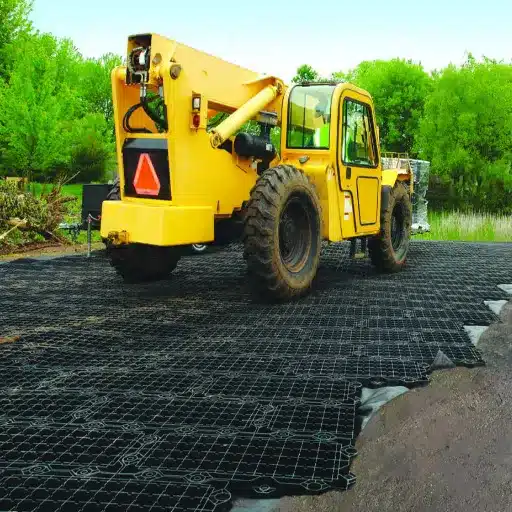
The construction team installed the drainage system three weeks after their project because they selected an incorrect geotextile weight for their work. The first blockage of the drainage system occurred because Chen Engineering used their 6 oz geotextile material. The solution worked because a 4-oz nonwoven geotextile restored proper water flow while stopping additional soil saturation.
People tend to underestimate how often this particular situation actually takes place. Selecting the appropriate geotextile weight requires more consideration than mere expenses and convenience factors. The selected weight affects drainage system effectiveness, together with project lifespan and building system operation. The 4 oz nonwoven geotextile exists as a distinct geosynthetic material because it provides both extreme permeability and standard civil engineering material strength.
This guide provides complete technical specifications for 4 oz nonwoven geotextiles along with detailed installation guidelines and performance requirements. The material understanding enables you to make engineering decisions that will remain valid throughout time for your projects that involve drainage system design, soil stabilization efforts, and geomembrane liner protection work.
What is a 4 oz Nonwoven Geotextile?
Definition and Weight Classification
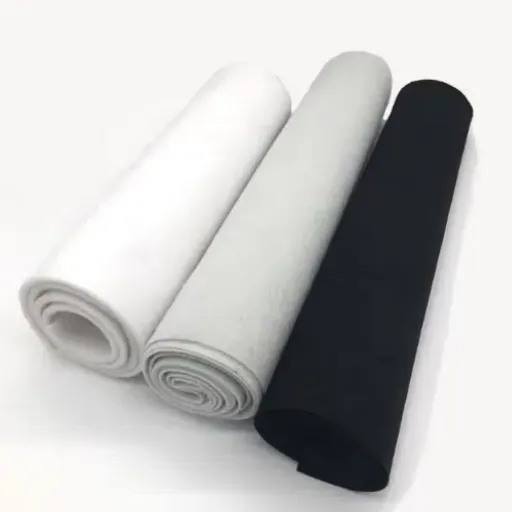
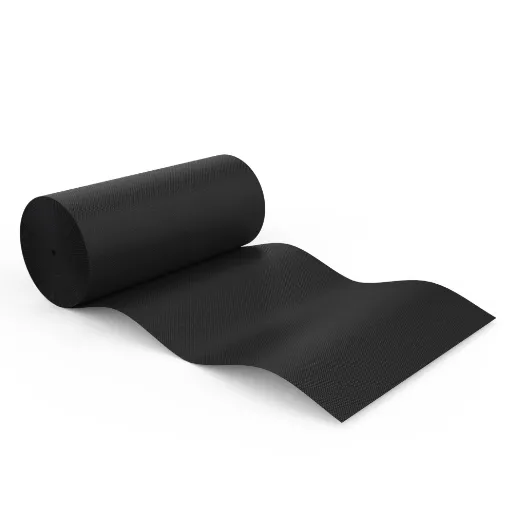
The 4 oz nonwoven geotextile functions as a synthetic fabric that allows water flow while it filters and separates materials for use in civil and environmental engineering projects. The “4 oz” designation refers to the fabric weight: 4 ounces per square yard (approximately 136 grams per square meter), making it one of the lighter commercial grades available.
Manufacturers produce nonwoven geotextiles through either needle-punching or heat-bonding methods, which differ from the woven geotextile process that uses thread interlacing. The production method results in fabric production through the following mechanism:
- The fabric shows multidirectional strength because its fibers extend in every direction.
- The fabric permits water to move through it because of its exceptional ability to let water pass through.
- The fabric permits water to flow through while it keeps soil particles contained.
- The fabric retains its original thickness during the entire process of material production.
Material Composition
Most 4 oz nonwoven geotextiles are manufactured from:
- Polypropylene (PP): The most common choice, offering excellent chemical resistance and UV stability
- Polyester (PET): Higher tensile strength and creep resistance for demanding applications
- Polyethylene blends: Specialized formulations for specific chemical environments
The selection of polymer material determines the performance attributes, which include temperature endurance, chemical resistance, and durability across time. For drainage and separation applications, polypropylene delivers optimal performance at this weight category.
Technical Specifications of 4 oz Nonwoven Geotextile
Physical Properties
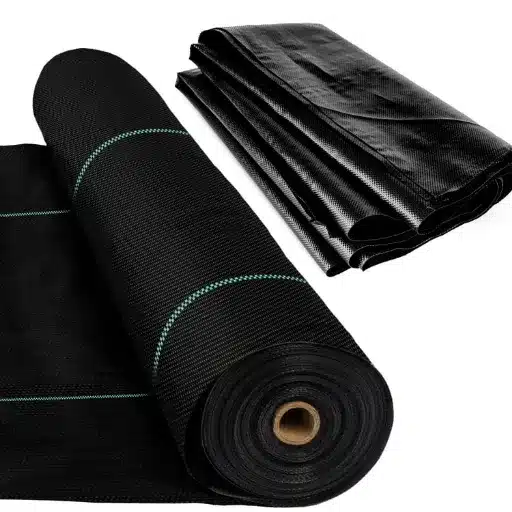
Understanding the precise specifications enables proper material selection for engineering applications:
| Property | Typical Value | Test Method |
|---|---|---|
| Weight | 4.0 oz/yd² (136 gsm) | ASTM D5261 |
| Thickness | 30-40 mils (0.75-1.0 mm) | ASTM D5199 |
| Grab Tensile Strength | 100-120 lbs (445-535 N) | ASTM D4632 |
| Elongation at Break | 50-70% | ASTM D4632 |
| Trapezoidal Tear | 40-60 lbs (180-270 N) | ASTM D4533 |
| CBR Puncture Resistance | 300-400 lbs (1.3-1.8 kN) | ASTM D6241 |
| Apparent Opening Size | 70-100 US Sieve (0.15-0.21 mm) | ASTM D4751 |
| Permittivity | 1.5-2.0 sec⁻¹ | ASTM D4491 |
| Flow Rate | 100-140 gal/min/ft² | ASTM D4491 |
| UV Resistance | 6-12 months (unburied) | ASTM D4355 |
Hydraulic Performance
Among all drainages, the 4oz nonwoven is the most notable one due to its hydraulic characteristics:
This is measured by the fabric, indicating that the water flows quite easily through it perpendicular to its surface. The geotextile 4oz when obtained at 1.5 to 2.0 sec-1 contributes a high flow rate in collecting solid pieces to prevent the geotextile from turning flow restrictive in a drainage system.
Flow 100-140 gallons per minute per square foot runs quickly through the geotextile during a heavy rain event. Now this becomes critical in French drains, retaining wall drainage, as well as in any type of underground drainage systems.
The U. S. major companies rate this filtering product much smaller at 70 to 100 sieve (0.15-0.21 mm), making this class much more effective for filtering fine sands and silty soils-contributing to hassle-free filtering without any piping and erosion of the underlying material.
Would you like to know how such specifications fit into your land’s conditions? [Request a Technical Consultation →]
Primary Applications and Use Cases
1. Drainage Systems and Water Management
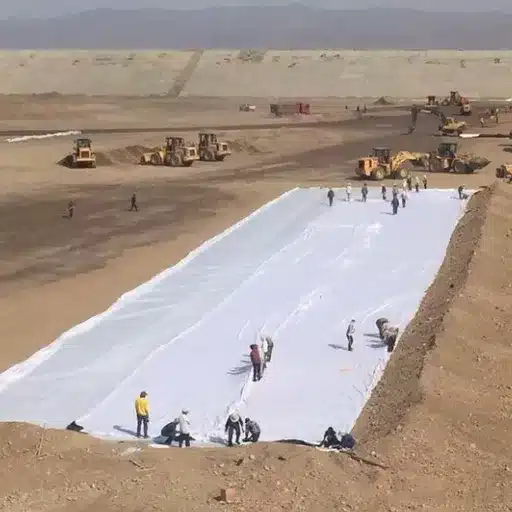
The most common application for 4 oz nonwoven geotextile is in drainage infrastructure, where high permeability is essential:
French Drains and Perimeter Drains
French drains serve as an effective solution when groundwater starts to damage foundations or landscapes. The 4 oz geotextile wraps the aggregate fill, preventing soil intrusion while allowing water to enter the drainage channel. The system operates normally because its lightweight design allows water to flow through even during wet conditions.
Retaining Wall Drainage
Retaining walls experience catastrophic failure when hydrostatic pressure accumulates behind them. A 4 oz geotextile placed against the wall with drainage aggregate creates a clear path for water escape. The fabric prevents the aggregate from clogging with soil while maintaining the drainage pathway’s integrity.
Roof Garden and Planter Drainage
The lightweight nature of 4 oz geotextiles benefits green infrastructure projects. The material functions as a separation and drainage layer in intensive and extensive green roofs because it provides needed strength without increasing the structural load.
2. Soil Separation and Filtration
Pavement and Road Base Separation
The implementation of subgrade soil control measures in road construction projects will enhance the durability of asphalt pavements, which thus results in extended pavement lifespan. The 4 oz geotextile system delivers adequate strength for traffic protection in light-duty roads, parking spaces, and pedestrian walkways while it enables builders to complete their work more efficiently.
Railroad Ballast Separation
Railroad tracks need clean ballast that allows water to drain freely because it provides track stability. The installation of geotextile material between the subgrade and ballast system stops subgrade fines from moving into the ballast, which would diminish track drainage efficiency and track stability, leading to track instability.
Riprap and Armor Stone Underlayment
A 4 oz geotextile system provides protection against soil erosion for riprap installation because it prevents soil from eroding through armor layer gaps that separate water bodies from riprap. The system operates effectively in areas that experience low to moderate energy conditions, which create waves and flow velocities that remain below the fabric’s capacity limits.
3. Geomembrane Protection
Pond and Reservoir Liner Protection
The installation of HDPE or LLDPE geomembrane liners requires a 4 oz nonwoven geotextile to function as a protective layer, which prevents subgrade irregularities from causing membrane damage. The application requires heavier geotextiles, which weigh between 6 and 8 ounces, but 4-oz material proves sufficient for smaller installations that use smooth, well-prepared subgrades.
Landfill Cap Protection
The deployment of geotextile layers on landfill closure projects creates a protective barrier that prevents damage to the underlying geomembrane cap during soil placement and subsequent settlement. The area needs 4 oz material because it handles double the weight of 4 oz material while requiring less weight to be constructed.
4. Erosion Control
Slope Stabilization
The geotextile material, which weighs 4 ounces, provides immediate erosion protection on moderate slopes with stable soil because vegetation needs time to grow. The fabric stops surface soil from washing away during rain and sheet flow events, but it still permits water and plant roots to enter the ground
Construction Site Sediment Control
The construction industry uses 4 oz geotextile material as a filter element in both sediment barriers and inlet protection devices. The fabric traps sediment-laden runoff while allowing clarified water to pass, helping construction sites maintain compliance with stormwater regulations
4 oz vs Other Geotextile Weights: Selection Guide
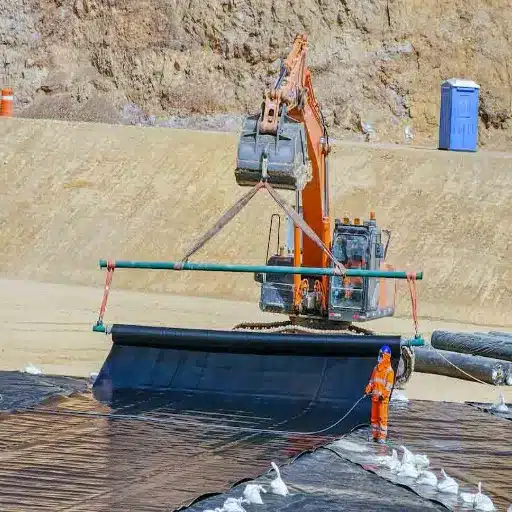
Comparison Chart
| Weight | Best Applications | Tensile Strength | Flow Rate | Cost Factor |
|---|---|---|---|---|
| 3 oz | Very light drainage, landscaping | 80-90 lbs | 120-150 gpm/ft² | $ |
| 4 oz | Standard drainage, separation, protection | 100-120 lbs | 100-140 gpm/ft² | $$ |
| 6 oz | Heavy-duty drainage, moderate loads | 140-160 lbs | 80-100 gpm/ft² | $$$ |
| 8 oz | High-strength applications, heavy loads | 200-250 lbs | 60-80 gpm/ft² | $$$$ |
When to Choose 4 oz
The specifications require 4 oz nonwoven geotextile when.
- The system needs maximum drainage performance because it handles more water than heavier materials.
- The application requires light to moderate loads, which include pedestrian and light vehicle traffic.
- The system needs cost-effective solutions that provide performance equivalent to existing solutions.
- The team needs to conduct work with well-graded non-cohesive soils.
- The project needs installation in locations that experience no major point loads.
When to Upgrade to Heavier Weights
Consider 6 oz or 8 oz geotextiles when:
- The installation area will experience movement from heavy equipment.
- Cohesive clay soils need higher puncture resistance because they require extra strength to resist damage.
- Sustained load testing needs long-term creep resistance, which remains essential for the assessment.
- Riprap or armor stone causes substantial point loading, which creates significant weight on the surface.
- The use of geomembrane material protects the area that has rough subgrade conditions.
The 4 oz weight represents the optimal balance for many common applications. Engineers need to confirm their selection through project-specific load assessment and assessment of soil conditions and design life requirements.
Installation Best Practices
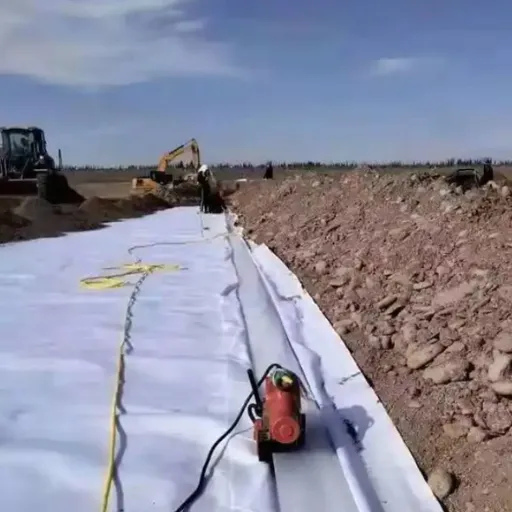
Site Preparation
Subgrade Evaluation
Inspectors must check the subgrade area to find any objects that extend above the ground surface, which include rubble and sharp items that could harm the geotextile material. The process needs to begin with the removal of all stones that exceed 1 inch in size while filling the remaining spaces and soft areas. A compacted surface that has a smooth texture allows for even weight distribution, which prevents failure at specific points.
Material Storage
Geotextile roll storage requires an area that has a flat surface, which protects the rolls from ultraviolet radiation, rain, and other contaminants. Outdoor storage requires protection through the use of opaque tarps. The correct equipment must operate the roll movement because it prevents damage to the roll during the operation.
Placement Procedures
Unrolling Technique
The geotextile should be unrolled according to the construction traffic path whenever this method exists. The process requires that operators maintain control over the fabric while they work to eliminate all wrinkles that need to be removed. The fabric should not be pulled over uneven ground because this will cause damage through either abrasion or tearing.
Seaming and Overlaps
Adjacent rolls require adequate overlap to maintain continuity:
- Manual installation requires 12 to 18 inch overlaps, which need to follow the water flow direction.
- Mechanically stressed areas need sewn or heat-bonded seams, which will create stronger connections.
- End joints require 18 to 24-inch overlaps, which need to be staggered between adjacent rolls.
Factory-sewn seams deliver better performance than basic overlap connections for essential applications. The construction documents need to include seam strength requirements which should match 90 percent of the parent material strength.
Securing Methods
Use these methods for holding geotextile in place during aggregate placement:
- The steel landscape staples have a length of 6 to 8 inches, which need to be installed at 3 to 6 foot intervals.
- Geotextile pins function as specialized slope anchoring pins.
- The initial aggregate lift should be installed with precision to maintain fabric position.
Common Installation Mistakes
Tension Wrinkles
The installation process needs geotextiles to undergo tight stretching because this practice generates stress points. Natural draping, together with minor fabric wrinkling, should receive approval because these movements enable settlement processes without causing fabric damage.
Insufficient Overlap
The seam overlap requires correct measurement because dangerous conditions happen when there is too little overlap, which permits soil to enter through existing openings. When in doubt, increase overlap rather than minimize it.
Puncture During Placement
The process of dropping aggregate material onto geotextile from elevated positions results in material damage. The lift thickness should remain below 12 inches for initial coverage, while equipment should not operate on exposed fabric areas.
UV Exposure
Prolonged sunlight exposure leads to polypropylene fiber degradation. The installation of protective cover needs to happen within the exposure period specified by the manufacturer, which lasts between 6-12 months maximum for 4 oz geotextiles.
Standards and Quality Assurance
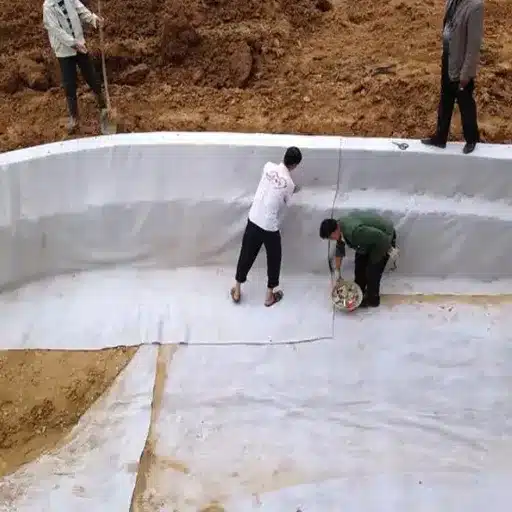
Relevant ASTM Standards
The testing standards for 4 oz nonwoven geotextiles require them to meet these exact standards or exceed them through testing:
- ASTM D4491: Permittivity and flow rate testing
- ASTM D4632: Grab tensile strength and elongation
- ASTM D4533: Trapezoidal tear resistance
- ASTM D6241: Static puncture resistance (CBR test)
- ASTM D4751: Apparent opening size determination
- ASTM D4355: UV resistance and weathering
Quality Control Indicators
When sourcing 4 oz nonwoven geotextile, verify:
- Mill certificates documenting test results for the production lot
- Consistent roll weight matching specification (within ±5%)
- Uniform thickness without thin spots or defects
- Proper labeling with manufacturer, product designation, and roll dimensions
- Appropriate packaging material during transport
Reputable manufacturers retain quality control samples for extended periods, enabling verification of material properties years after installation if questions arise.
Cost Considerations and Availability
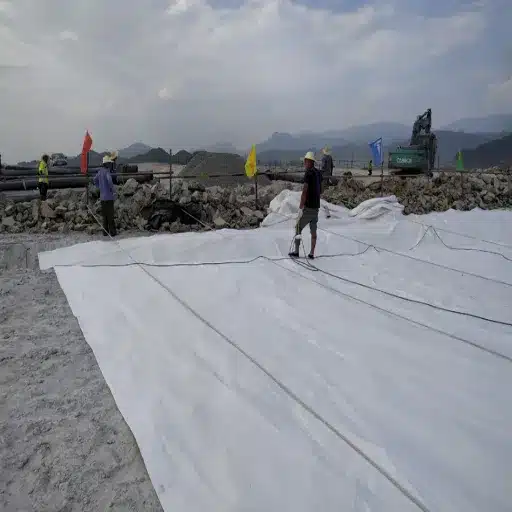
Pricing Factor
The cost of a nonwoven geotextile of 4 oz will depend on the following:
- Size of the roll: Standard widths such as 12.5-15 feet usually give a higher value than slit according to specifications
- Order size: Prices per yard reduce significantly with increased volume
- Distance to shipping: Affects the landed cost of material to the job site\
- Polymer type: Usually costs around 10-15% higher in polyester type than in polypropylene formulations
- The extent to which the technology influences the material: Brands with enhanced UV stabilizer carry high prices
Typical price range: 0.12 – 0.12-0.12-0.28 per square foot, depending on specifications and volume.
Roll Sizes and Coverage
These are the most efficient rolls to install:
- Standard in rolls: 12.5′ x 360′ or 15′ x 300′
- Size of roll: 4,500-4,500 square feet average.
- Roll weight: 600-750 pounds (requires mechanical handling).
- Custom sizes: Offered primarily for projects requiring a large number with specific dimensions
Always add 10 to 15% extra material in estimating the material needs to account for overlaps, waste, and a seam allowance.
Conclusion
The non-woven geotextile of 4 oz is characterized by its versatility when it comes to drainage, separation, and protection applications consuming high permeability and moderate strength to meet the requirements of a particular project. Know if the weight class is one perfectly suited for the task at hand, and if not, chances are alternatives offered with the same purpose will still be very much within budget and at the same time rewarding in terms of engineering performance.
Our takeaways for a future project:
- 4 oz geotextile is ideal for drainage needs calling for high flow rates with light to moderate loads
- Proper installation includes the requirement of overlaps with appropriate UV protection against deterioration to ensure the best performance for design life
- Material specifications must always be verified according to its compliance to ASTM standards related to better quality
- Weight selection reflects the required load number of projects, soil conditions, and expected project life
- Cost optimization generally comes from having greater specifications specified since no performance is sacrificed from coming close to the right weight, which is by far much simpler
It is very true that the principles still keep on moving as the geosynthetics get better. Matching material properties to project requirements, the best practice for installing them, and testing them for quality assurance by using recognized testing standards at any number of accelerated labs. Once installed properly, however, the four-ounce nonwoven geotextile is famous for its long-standing service, which can be trusted on the civil engineering and environmental engineering field.
Technical Specifications Summary
4 oz Nonwoven Geotextile Quick Reference:
- Weight: 4.0 oz/yd² (136 gsm)
- Grab Tensile: 100-120 lbs
- Flow Rate: 100-140 gal/min/ft²
- AOS: 70-100 sieve
- UV Resistance: 6-12 months
- Primary Applications: Drainage, separation, light protection
Get Expert Support
Need help specifying the right geotextile for your civil engineering project?
Our technical team provides product selection guidance, specification review, and application engineering support for geosynthetic materials.
[Contact Shanxi Shengxing Engineering Support →]
Or browse our complete range of geotextile and geomembrane solutions: