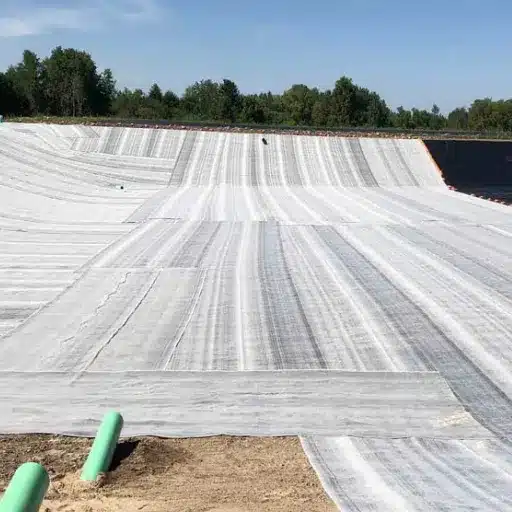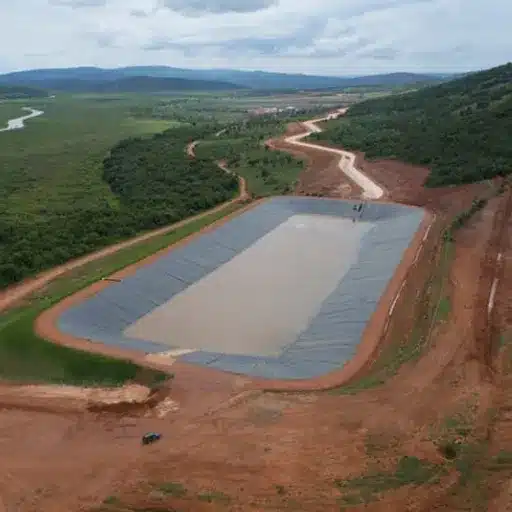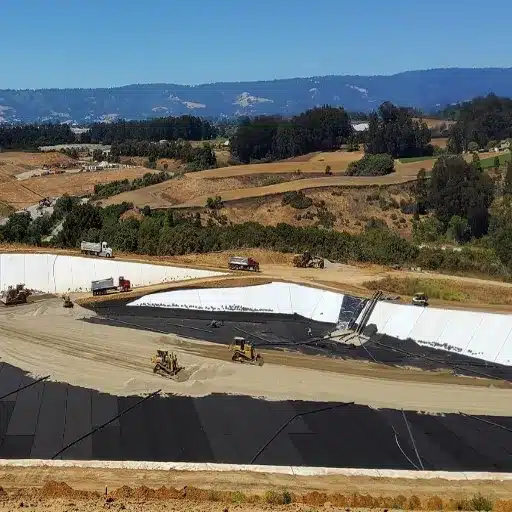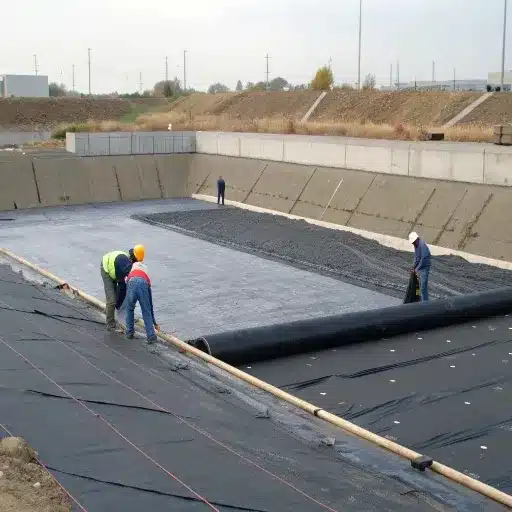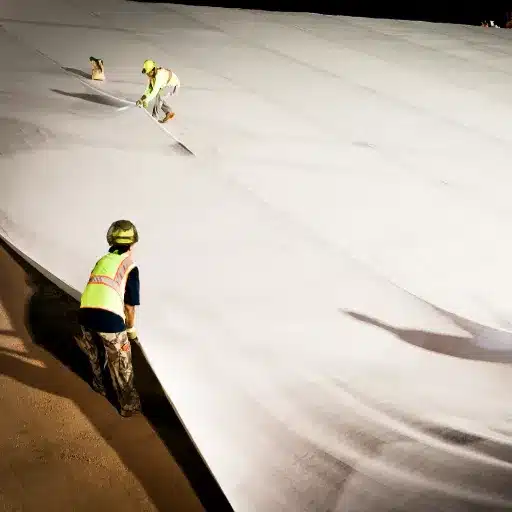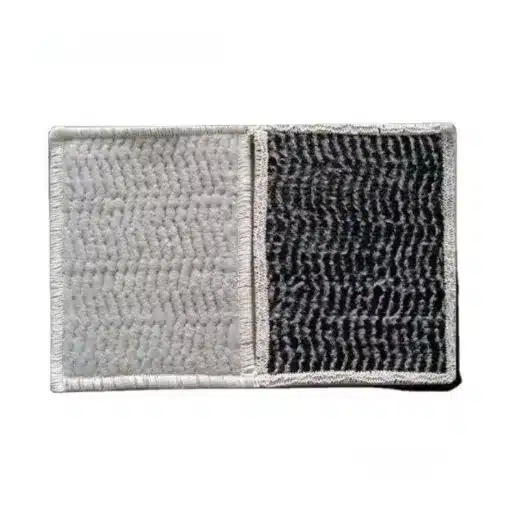
Geo clay products (GCLs) have revolutionized the way in which the construction and civil and environmental engineering practices are carried out, augmented by buried structures. They augment different environmental mitigation measures or technologies, often referred to as landfill caps and layers slurred with bentonite and other materials to protect the groundwater. Hence, what does the phenomenon ‘GCL’ entail and why is it so significant at present times in respect of infrastructure development and/or development activities or practices tied to environmental concerns? This article seeks to discuss Geo clay liner products, the structure of geosynthetic clay liners (GCLs), and some of their environmental uses, including the advantages of using the designs. This guide will benefit anyone, whether in practice, an environmentalist, or wanna explore the new sustainable infrastructure hype and how GCLs are relevant in today’s world.
Introduction to Geosynthetic Clay Liners
Definition of Geosynthetic Clay Liners
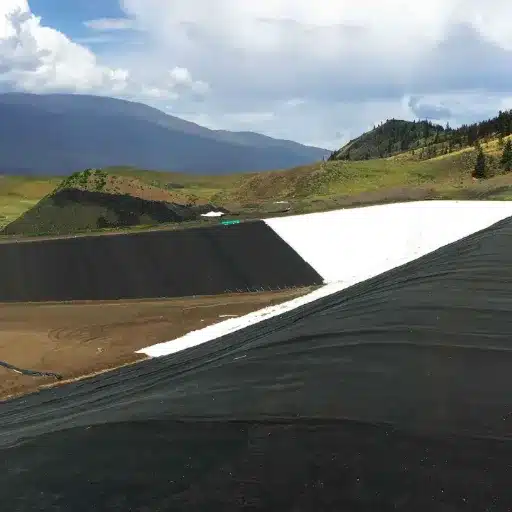
The Geo Clay Liner (GCL) range is made up of diverse composite layers that improve the chemical and geotechnical aspects of bentonite filling by either sandwiching it between geotextiles or attaching it to a geo-membrane. These materials are frequently used in constructions related to civil engineering in order to control sources of water and different types of waste management facilities. In the manufacturing of the GCLs, bentonite is used, which is capable of water absorption and swelling, thereby hindering permeation through the formation of a membrane.
The major advantages that GCLs have when compared to conventional applications of compacted clay liners (CCLs) are in their thickness, ease of application, and also the shortened period of time required for putting the materials into use. Current research suggests a barrier of 10-12 m/s for GCLs, which is more than 1000 times better than the clay barrier of landfills, basements of mines, and even reservoirs, in which geosynthetic clay liner is also used.
Predictably, because of logistical concerns arising from transportation and relocation of large volumes of clay, the geo clay liner (GEL), as a concept, was going to win. Moreover, they were suitable to use in complex terrains, resisting chemicals readily were some of the additional factors that forced their use in modern-day systems of environmental protection.
Importance of GCLs in Various Industries
Most industries continue to appreciate the importance of geo clay liner thanks to its capability, robustness, and environmental friendliness (the environmental impact is also significant). It is especially beneficial in industries like disposal, mining, and water exploitation. The current data that they have presented estimates the jell management industry reaching up to $20.8 billion and has geo clay liner as a significant interest. This growth and development are due to the integration of sustainable architecture and building designs and international environmental legislation.
In most landfills as well as other constructions, GCLs are used to prevent any dangerous leachate from percolating through to the water table below. Even though it needs to be buried, there is the advantage of self-sealing cracks around punctures and its high resistance to chemicals and rubbish.
Geo clay liner, or more commonly referred to as geosynthetic clay landfill liner (GCL), has become very popular in the mining industry, especially in the tailings dams and green waste management systems for practicing mining farmers. For example, as in one of the green mining sectors, GCLs are used as barriers that contain or prevent the dispersion of the chemical being used to particular areas noticeable within specific threshold limits, according to environmental safety guidelines. Recent advances in the technology of GCLs, for example, with the incorporation of multiple-layer designs, have enhanced mining in extreme conditions.
Moreover, GCLs are used within various water containment structures, such as dams and various reservoir structures. Such would include, for example, the use of very low-permeable liners that confine the water within the structures designed for storage. This is particularly vital in arid places where no water resource is extremely comforted.
There has been widespread use of GCLs in these key areas, and it is important to note that these materials are not just about going green, but they also help in tackling infrastructure problems facing contemporary societies. Results from studies reveal that with the inclusion of GCLs, the duration and the expenses of building processes might be reduced by nearly fifty percent as compared to the conventional geo clay liner method, thus increasing the objectives of performance perfection and resource saving.
Overview of Compacted Clay and Its Role
The usage of improved clay barrier and its relevance is widely noted in geological engineering and environmental science, especially in making barriers and coatings from geo materials. The dense geo clay liner is used to limit the horizontal displacement of dangerous ground. Refining other chemicals in soils or waste pits, as an example to a combination of clay within an oil field, also making use of clay beneath turnpike and constructions as well.
All these efforts need to be accompanied by careful and proper installation for compacting clay to work from a construction standpoint. Upon proper dressing of the clay, a permeability quasi devoid of close mother’s effect is obtained within the limit of 1×10⁻⁷ cm/s, which matches the standard requirements of use in environmental issues. Such intricacy, however, might come accompanied with an increased premium for material clays, as well as precise application of moisture management and workmanship that further translates into accrued expenditure and elongation of the overall period of construction.
Fresh research and evidence reveal that compacted clay can be trusted, although it can exhibit high susceptibility to desiccation cracking, as in the case of arid weather conditions, if it is not properly maintained. Desiccation cracking can cause a marked deterioration of its barrier system function. Additionally, conventional compacted clay liners may need a more space-occupying design to achieve required permeability standards specific to a part of the project and which demand more than 3 feet of thickness. Such a practice can be a difficulty for areas where space is limited.
Even though more advanced materials such as Geosynthetic Clay Liners (GCLs) exist, it should be noted that compacted clay has its place in areas where natural clay materials are readily available, and labor is relatively inexpensive. Nevertheless, with the rise in preference towards more sustainable and effective measures, it has been noted that the geo clay liner is chosen over alternatives because it requires less time to install, has a smaller thickness of materials, and works better under specific conditions. Lastly, it is worth mentioning that the merging of compacted clay with today’s geosynthetics technology is swiftly taking over as it attempts to overcome both the cost-effectiveness and functionality issues, and yet bring better environmental results.
Key Features of Geosynthetic Clay Liners
Composition and Structure of GCLs
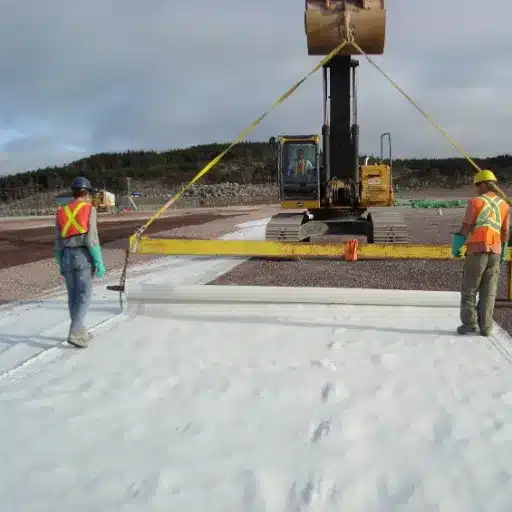
Geo Clay Liners (GCLs) refer to a composite of a thin bentonite clay in the layers of the soil composite in contact with the soil in the place. Such bentonite is the essential ingredient because it swells and seals on contact with water, making it waterproof; it is perfect for such applications.
The geotextile sheets of woven, nonwoven polypropylene or nonwoven polyester are quite popular as they serve as support and protection to the bentonite’s core cudgel. Such geotextiles are sewn, needle-punched, or adhesive-bonded in order to ensure that the geoclay liner maintains its tension and structural quality. Needle-punching improves the strength of the liner through the incorporation of internal strength, which proves advantageous when using landfill, ponding, and treatment or containment of environmental contaminants.
Modern geo clay liner sheets are about 6 to 10 mm thick and have a protective permeability of 5×10-11 m/s, much less than ordinary compacted clay linings. Statistics also prove that geo clay – related products, which make use of woven or non-woven materials, including geotextile, have a tensile capacity of about 15 kN/m and can deal with multiple loads.
Bringing about a fresh approach to GCLs, those can include modification with special polymer processing or additives, within their structure, meant for purposes such as mining leachate or industrial waste containment. Other developments in materials science have also enhanced the economics, efficiency, and/or sustainability of GCLs and the concerns thereof.
Comparison with Traditional Compacted Clay Liners
Although for quite a long time compacted clay liners (CCLs) have been acting well within containment systems for quite a long time, a different modern perspective of geosynthetic clay liners (GCLs) has been much more widespread, and this could be attributed to their many benefits. It is worth noting that these two classes of liners differ in thickness: GCL’s have a thinner thickness and can be in several millimeters, while CCLs have thicknesses of up to one meter or more in order to achieve the same hydraulic conditions. Such a minor thickness has helped to save transportation and even structural construction costs.
The GCLs’ permeability is another beneficial aspect and ensures that they work optimally. Let it be known that a GCL on its own can have an approximate permeability of 5 x 10^-12 m/sec as compared to a CCL, which may be in the range of 1×10⁻⁹ m/sec in most good conditions. These values show that a geo clay liner helps to protect the contents in a few conditions where corrosion is more of a problem, and even moisture is a concern.
When it comes to installation, the benefits of using geo clay liners (GCLs) instead of compact clay liners (CCLs) are many. undoubtedly Fitting of compact clay liners (CCLs) takes longer in a project since a lot of traffic and manpower are involved in compacting and placing the clays properly. The former, in contrast, does not take much time from many people because the GCLs are built-in, ready-to-use panel or sheet form. Studies indicate that using GCLs in construction tends to lead to at least 50% reduction in the installation time, which increases construction schemes while at the same time minimizing the labor costs.
The interesting issue, which is not very common while dealing with CCL barriers, is that they degrade in extreme moisture deficit, while GCL barriers ‘internal bentonite’ is protected against erosion by clay swelling. This intriguing problem helps in the better use of geo clay liner in arid zones or with the necessity of reinforcement, protecting the liners for a longer period of time.
Overall, the dynamics of progress in consideration of such factors as display the construction helps in many instances where compared with standard CCLs, the GCLs stand out as cost-effective and more efficient, which are very beneficial to the environment.
Durability and Performance Characteristics
Geosynthetic clay liners are an important part of any geomembrane system that aims to function for a long time, so the ability of these liners to withstand certain environmental conditions over time must be assessed. Even if the temperature changes or there is a prolonged period of dryness, the geo clay liner will not readily crack or shrink. Compacted bentonite lining systems swell and seal with punctures or outrages very rare, and even when they do occur around the flowing wick cores of gcls, the flows are small enough that they can still be contained.
According to numerous studies, GCL can usually attain a percolation level of 1×10⁻⁹ to 1×10⁻¹¹ m/s, which is far less than the performance of CCLs. This is due to the fact that one of the major tasks of a liner is to summarize the waste and not allow it to interact with the surrounding or the environment, and the GCLs do that quite well. Other than landfill liners, there are other GCL applications that involve mining geotextiles and waste water treatment plant technologies, and they can also be useful even when the GCL is made in a hostile chemical environment. The clay, for example, used in geo clay liner, is effective even when it has to be in contact with any medium that is highly acidic, i.e., pH 3 or highly basic, pH 12.
With regard to the shearing stability of the slope, the geosynthetic clay liners can be associated with the required shear strength of slope stability in landfills and reservoirs. The highest strength required also varies regarding the product composition, the methods of testing, as well as exposure methods, and typically varies in the 20-30 KPa range, which is deemed sufficient for the carrying capacity and stability of the slopes.
To sum it up, geosynthetic clay liners are considered to have some levels of durability and enhanced performance; thus, the use of geosynthetic clay liners on different levels of containment and environmental protection has been supported. The fact of relying on such solutions because of their durability in the long run brings the element of soft factors influencing the application of such solutions in various industries in the field.
Benefits of Geosynthetic Clay Liners
Cost-Effectiveness in Construction Projects
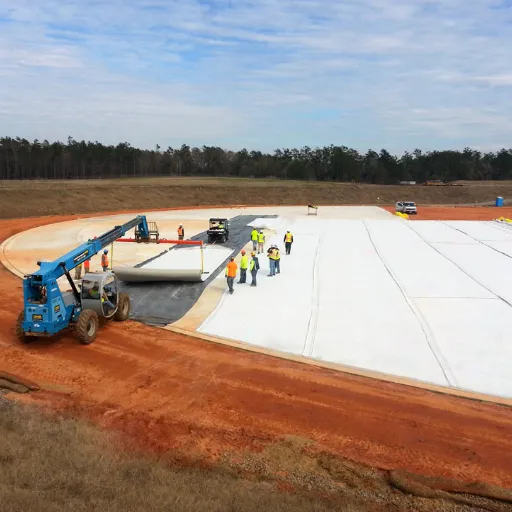
Geosynthetic Clay Liners are an example of one such application, which is both convenient and cost-effective. Geosynthetics Clay Liners have many cost advantages that conventional compacted clay liner sheets do not have. For example, the transportation of compacted clay materials involves the need for much truck loads of clay over a long distance in order to construct a single compacted clay liner, whereas GCLs, as they are sold in rolls, require less material and work in installing as they weigh less compared to clay. It is estimated that all these approaches will help lower the cost of the project by 50% if the geo-clay liner ballast is used.
This can also be tied in with their thickness profile that shows their cost efficiency. Given that the suspended density of the filled geo clay liner was insufficient, the HI-8 geometry for the filled GCL was approximately three to five folds as compared to the performance parameters of GCL density. The thinner thickness of the GCL allows for increases in the active volumes and internal functional dimensions, which is vital in cases where the infill practices are to be controlling elevations. Decreasing the thickness of GCL illustrates its shortcoming because GCLs are known to have a very low hydraulic conductivity prediction ability (less than 1 x 10^-9 m/s) to a degree that it became more acceptable to fill such containers if properly warranted by the external set standards.
Again, one can implement a GEO Clay Liner even with relatively low levels of site preparation as opposed to other systems and still help in reducing the timeline of the project in question. According to recent data on this field, cheaper clay polymer liners help save time and 25-40% of the construction budget due to improved surface for application of the liner and faster mounting.
It seems that the use of geo clay liner is busily capturing modern civil engineering practice because less material, fewer labor costs, and significantly reduced construction ties aid greater cost effectiveness without compromising on any of the benefits or safety features.
Environmental Benefits and Containment Efficiency
As far as waste treatment is concerned, the first step in the process for practically any kind of material would be geosynthetic clay liners. These materials are well regarded due to the tendency to protect native lands and landscapes against nitrates, pesticides, or similar pesticide agents. The modern environmental science claims that a voltaic barrier, as a geo clay liner, is able to produce a seal capable of decreasing permeability to 1×10⁻¹⁰ m/s. Sealing is more reliable than any other positive barrier.
The main problem with GCLs could be the change in manufacturing costs from clay to synthetic liner, which has a compact design, reducing transport costs as well as other environmental challenges, including the generation of minimal carbon footprints, among others. The GCL manufacturing process, in addition to transportation, produces lower emissions, all of which help preserve the environment. In addition, the features of GCL, being supple and easy to move and install, would also help with such reinforced construction due to less provision of cost-effective component transport and the cost of assembling.
It is needless to say that geo clay liner is a unique solution that has proven itself to be very useful in different cases, such as landfill and mining applications. In a landfill construction, the geo clay liner’s performance utility has been measured and found to be in the reduction of leachate formation incidents, which has been evident in some cases where restrictions are put in place to some levels that cannot be achieved in decades with zero restrictions at all.
This is made possible by the distinct properties of materials known as bentonite, which are used in making GCLs and have been known to heal on their own, especially when they add additional water. Containment is not the only purpose served by the GCLs; it also serves in the use of sustainable building practices. As their component materials are non-hazardous and can be used for several other purposes, the use of the GCLs in the design process also aims at decreasing wastage and encouraging recycling. There is a symmetry regarding the functions of the GCL’s and the environment. One thing that is very important in this century is hardening the environment.
Ease of Installation and Maintenance
Geo clay liner shell is distinguished by ease of integration, hence making it very popular amongst contractors and designers. GCLs are simple to work with as it is neither very heavy nor made from industry-standard perforated liners, which makes the work far easier than making use of compacted clay liners. GCLs, according to relevant bodies, can be installed much faster, nearly twice as fast as that required for conventional liners, thus minimizing the time spent and expenses associated with development.
The maintenance of geo clay liner seals is very simple since any damage to the mat is soon repaired on its own. This is because the principal sealing material, bentonite, is a type of clay that swells upon wetting and stops any small punctures or leaks that may exist. GCLs are known to ensure sealing for tens of years, probably meaning that they do not need to be changed or serviced often. Indeed, stiffening of the geomembrane with GCLs and other geometric features increases efficiency and durability of the unit and, at the same time, extends the serviced intervals of the unit.
The easy installation and maintenance of long duration of the geo clay liner systems make them cost-effective in many containment and pollution control applications, thus minimizing the costs of operation and increasing efficiency over time.
Applications of Geo Clay Liners in Various Sectors
Use in Landfill Management
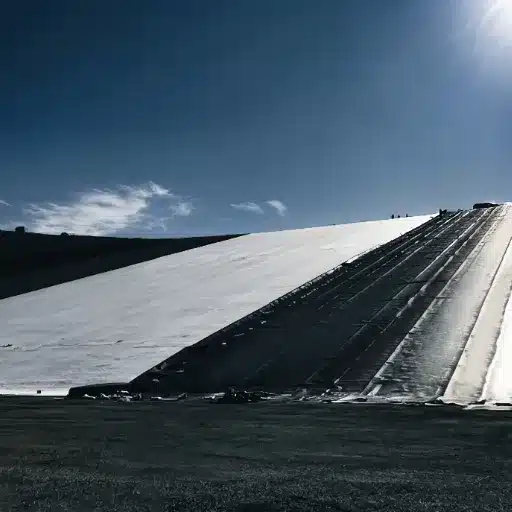
Geo clay liners, GCLs as they are abbreviated, commonly feature in construction processes in waste sites because their material seeps over the rubbish become wet. Basements and caps geo clay liners the landfill with an overall protection for water infiltrating into the ground, and thus water and soil pollution from the hazardous waste that forms, such as leachate, is largely avoided. Further, a study conducted in an industry showed that hydraulic conductivity level is achieved by most of these gcl’s up to an average value of 5*10^-9 cm/s, which is very good in helping to contain the water inside.
During the construction process of the present landfills, a bentonite layer is formed within the geomembrane surfaces more often. The research shows that a system that is able to lessen the leakage of the system by more than 99% is the incorporation of a GCL over the HDPE membrane. It has also been introduced the fact that bentonite technology in the GCL has improved the self-healing ability of the material to fill up the impact in such a geo clay liner that might have been due to minor perforations or movements, and that too at the initial stage and upon the formation of the filled-up area.
When it comes to overall expenditures, a geo clay liner system potentially saves up to 40% on installation expenses in comparison with traditional compacted or engineered clay earthenware alternatives due to its simple design and lightweight composition. Moreover, the accommodation of this barrier is narrow and therefore allows for the attainment of the greatest available landfill capacity, especially due to the scarcity of land in urban settlements. Construction and amelioration of the environment over a long period of time, fittingly in the present landfill challenges, GCLs, therefore, have their own benefits.
Application in Pond Liners and Water Containment
Geo clay liner, or geosynthetic clay liner, as derived from its full form, is greatly transforming water retention structures, especially systems like pond liners and other water containment units. In an engineering outlook, GCLs are preferred because they offer perfect or optimum prevention of water seepage and therefore adequately hold the water intact for a period of time. The design of these liners, according to Japhet, includes a layer of bentonite (sodium bentonite) clay, which is sandwiched in the form of geotextile and an extended geomembrane, which interacts with water, absorbing it and swelling, thus preventing water from passing through them.
Even as far as geo clay liner walls being developed to offer very substantive levels of workmanship, and at an affordable range of costs, in general, they fall within the limit of the percentage allocation of benefit or cost derived from an implementation. To illustrate, a case study where the installation costs of this specialized type of clay liner and some of the clay systems are discussed. It clearly demonstrated that this GCL system is able to lower the clay system installation cost by 50%. In fact, GCL water retention is also strong irrespective of the pressure and temperature conditions, with even a hydraulic conductivity of 5 × 10⁻¹² m/s.
One more factor that evokes the need for embankment at the pond base is its geoclay liner, which has a plastic design. As the liner is quite thin, it implies that the installable bench will require less time for transport and for construction. Depending on the construction works, for example, in forested sites where one has to level ponds formed with GCLs that tend to retain those especially present.
And most importantly, there is an eco-friendly aspect of GCL’s application. Bentonite, other than functioning as clay, does away with the synthetic material component in sheets that belongs enhancinв saving of the fluid held within the basin and thus, protection of the soil and water underneath it against pollution. Usages are as different as ornamental garden ponds or low fish limits and covers every sector ranging from agriculture ponds, fish farming tanks, Hydropower and irrigation reservoir dams constructions, to mention еркт and many more methods of the modern day GCL’S.
Finally, thanks to their widespread use and a stable growth demand due to positive characteristics, the geo clay liner has been and still is an alternative to water liner since it has no harmful effects on the environment, and cumbersome lining materials are unnecessary.
Role in Infrastructure Development
Geo clay liner is quite a common product in the construction industry, and the reason for that is that it is very strong and affordable. In fact, it has been noticed that its usage is prevalent in many industries ranging from landfill containment, mining protection, restoration, and restoration or clean up aspects. Since the function of containment with respect to GCLs is hydraulic, they are often used where protection against waste is required. For instance, it has been claimed that GCLs produce a permeability level as low as 5 x 10^-11 m/s with almost zero emissions at extremely high compressions above the effluent.
Additionally, using a geo clay liner is more economical during the construction of significant projects. Traditional clay liners require much clay, and this will mean that transport and construction costs of geosynthetic materials are quite high. Modern technology has enabled the construction of buildings on concrete surfaces, which is difficult to accomplish, given that the materials are heavy and constitute just 50% of the minimum construction materials as per a recent engineering paper. Furthermore, the installation process takes quite a few hours, which is a bonus for large-scale work.
With the growing emphasis by governments on sustainable development, the need for geo-composite liner systems is on the rise due to barriers imposed by scrupulous environmental laws. It is projected that, in 2027, the market for geosynthetics worldwide will reach $17.3 billion, which is to say that there is no denying the fact that GCLs are in demand as it plays a vital role in upgrading and even maintaining the infrastructure. Accordingly, they not only serve the purpose of water retention but also contribute to ecoengineering activities by reducing carbon emissions, which renders the traditional materials more disadvantageous.
The factor enhancing the use of global geo clay liner materials (GCLs) in various civil engineering works is an increasing need for efficient, effective, and safe methods of containment and waste management of liquids.
Reference Sources
-
MDPI – Sustainability Journal
- Article: State-of-the-Art Review of Geosynthetic Clay Liners
- Link: https://www.mdpi.com/2071-1050/9/11/2110
-
Springer – Sādhanā Journal
- Article: Geotechnical Properties of Materials Used in Landfill Clay Liners: A Critical Review
- Link: https://link.springer.com/article/10.1007/s12046-023-02124-0
-
Springer – Geotechnical Practice for Waste Disposal
- Chapter: Clay Liners
- Link: https://link.springer.com/content/pdf/10.1007/978-1-4615-3070-1_7.pdf
Frequently Asked Questions (FAQs)
What Are Geosynthetic Clay Liners (GCLs)?
A geo clay liner (GCL) is a type of civil engineering material that has been used successfully in providing water containment mechanisms in construction work. It consists of a layer of bentonite clay sandwiched between different layers of synthetic substances like geotextiles or any other geosynthetics. These liners’ efficiency is attributed to the material bentonite, which swells and has very low permeable characteristics, best used in water containment and in preserving the environment.
How does the GCL prevent any loss of water?
The problem of water loss from GCLs is averted by the innate qualities of bentonite clay. The feature of the clay is its swelling property on hydration, which now increases its density, knowing that drier clay, where there is air, spreads, and the water seeps through. This behavior most appropriately achieves the function of GCLs, which are efficient substitutes for geo clay liner systems, as they save on the amount of material used and further reduce the turnaround time of the installation without affecting the performance.
What are the benefits of geo clay liner towards sustainability?
Geo clay liner is a very essential component in constructing eco-friendly structures due to its various advantageous properties. During its construction, the utilization of this material reduces the excavation and transportation of soil materials, for instance, compacted clay, and consequently lowers the carbon footprint brought about by infrastructural developments. Also, GCLs are beats enhance most importantly waste disposal rounds, minimizing water pollution, which is also a direction of green engineering and ultimately environmental sustainability.
Where Are Geo Clay Liner Used?
Geo clay liner (GCL) usage is common in several cases, such as landfill liners, wastewater treatment plants, mining sites or operations, and canal linings. Rise in their application can be attributed to the fact that they are flexible and more economically effective compared to other comparable products for industries that require containment systems, which aemincludensively effective and resistant to wear and tear for very long periods.
Are Geo Clay Liners Able to Substitute Conventional Liners?
Geo Clay Liners are increasingly being used more than the ordinary compacted clay CIBLs. This is explained by the fact that they are quite thinner than the other liners, and they are easy to install. They are not less effective than liners when it comes to increasing the reduction of permeability or containment, rather better and, thus, save in costs of manpower and materials as well. Furthermore, in their assembly, there is perfect uniformity and complete elimination of risk during their installation at a particular location, which is favorable for big and complex applications.
Is it Feasible to use Geo Clay Liner with Other Materials?
Yes, it is easy to integrate GCLS with other materials, such as geomembranes for very efficient and effective geosynthetic liners. Combining these structures is necessary in high-performing and relevant circumstances where containment is highly desired in order to maintain some barriers. The purpose of other geotextiles in conjunction with GCLS is to increase the durability of the liner and the function of the barrier for a long time, even in the harshest of environments without him.