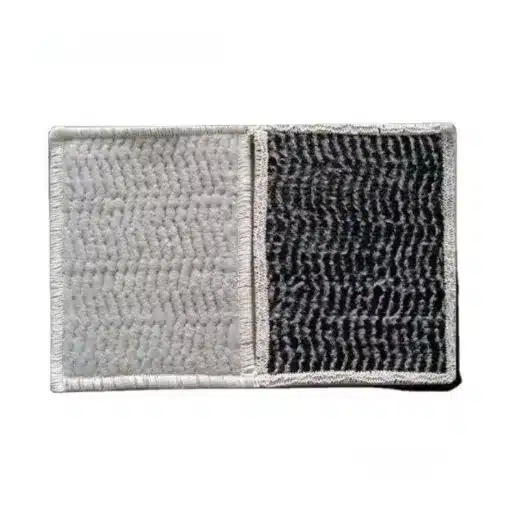
The successful operation of major projects and the protection of delicate natural areas require effective ground protection solutions. Composite mats provide a dependable and flexible foundation that construction, utility, event, and environmental industries can use for their operations. What makes composite mats different from other products, and what operational benefits do they bring while reducing environmental damage to your business operations? The guide presents all essential information about composite mats available for purchase, including their primary advantages and their actual usage, to assist you in choosing the best option for your upcoming undertaking. The article provides solutions for improving safety, efficiency, and sustainability at your organization.
Introduction to Composite Mats
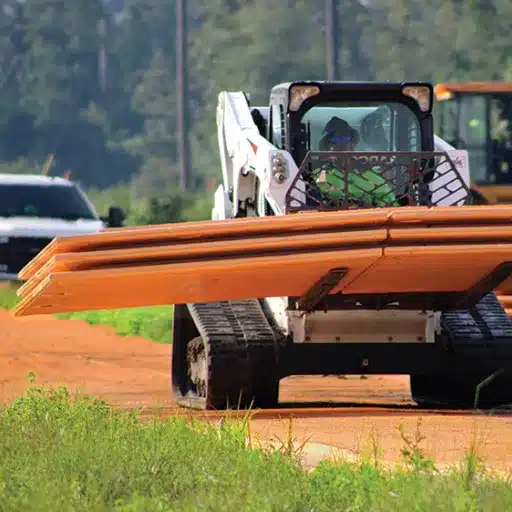
Importance of Composite Mats in Various Industries
Multiple industries that include construction, oil and gas, utilities, and infrastructure use composite mats to fulfill their temporary ground protection requirements. The design of the mats enables stable surface construction, which prevents equipment damage and ground damage while improving worker safety in wetland areas, rough terrain, and soft soil environments.
The latest developments in composite mat technology demonstrate their essential role in modern technology. The global composite mat market will experience a market research forecast of 6.1% compound annual growth rate (CAGR) between 2023 and 2030 because customers increasingly seek durable ground protection solutions that have environmental sustainability and reusable features. The performance of composite mats outmatches that of wooden mats because they can endure multiple weather conditions while remaining lighter and functioning for extended periods. Many modern composite mats use HDPE and other recycled materials as their main production materials, which helps lower their environmental footprint.
The oil and gas industry uses composite mats because their different models offer high load capacity, which allows them to support loads of 600 tons. The interlocking design of their components creates secure surfaces that stop both vehicle and personnel movement from sliding. The use of composite mats by companies leads to better operational performance, which helps them reach sustainability objectives because it decreases their need for single-use products and products that lack durability.
Overview of Material Types: HDPE and Timber
Composite mats deliver distinct benefits because their performance capabilities depend on their specific material composition.
- HDPE Mats
The exceptional strength and durability of HDPE composite mats enable their use in demanding industrial settings. The material HDPE operates as a lightweight yet powerful substance that protects against chemical deterioration and maintains its functional abilities under extreme heat and severe weather. The latest research demonstrates that HDPE mats can support weights beyond 600 tons, which enables their use in projects that involve heavy machinery and large vehicles. The non-absorbing properties of HDPE mats enable them to resist water, oil, and chemical penetration, which results in lower maintenance expenses and extended mat durability. The product achieves full recyclability, which creates an environmentally friendly solution that complies with current sustainable development standards. - Timber Mats
Timber mats deliver reliable strength, which makes them appropriate for both construction work and industrial activities because of their widespread availability. Timber mats provide effective ground support in softer or uneven areas, although their lifespan does not match that of HDPE mats. Research shows that timber mats use hardwood species to create durable materials, but their strength decreases when exposed to moisture for extended periods. Timber mats become less sustainable because they usually require single-use after their initial project deployment, despite having lower initial expenses than HDPE mats.
Comparison and Recommendations
The choice between HDPE and timber mats requires assessment of project length and environmental effects, and expenses, together with the particular conditions present at the site. The reusable and durable nature of HDPE mats makes them suitable for extended use, while timber mats serve as a solution for projects that require short-term equipment at lower costs.
Current Trends in Composite Mats for Sale
The market for composite mats keeps expanding because industrial sectors adopt sustainable practices and develop long-lasting materials that improve their operational performance. The global composite mats market will grow at a compound annual growth rate of 6 to 8 percent between 2023 and 2030 based on current market analysis. The construction, oil and gas, and renewable energy industries drive this increase because they require temporary roadways and stable ground support.
High-Density Polyethylene (HDPE) mats are achieving increasing popularity because they provide exceptional durability and reusability. The HDPE composite mats enable heavy load support while decreasing maintenance expenses and offering recyclability, which makes them a preferred option for environmentally sustainable projects. The data shows that companies achieve material cost savings of up to 30% through HDPE mats, which cost between $7 and $10 per square foot, because they have a longer lifespan.
Material engineering development enables manufacturers to produce composite mats that weigh less while maintaining greater strength, thus reducing both transportation costs and labor expenses. Advanced composite materials research shows that their implementation enables weight reductions exceeding 20%, which simplifies handling and installation processes across different types of terrain.
The industry experiences increasing demand for anti-slip and interlocking mat designs because these features improve safety while performing in oil and gas and heavy equipment environments. The new developments enhance worksite productivity while maintaining compliance with occupational safety standards.
The industry responds to environmental regulations by choosing composite mats that contain no hazardous substances and create minimal ecological damage. Eco-friendly composite mat solutions will become the leading market segment by 2030 because industries are moving towards sustainable development methods.
The current trends highlight the need for advanced composite mat technology, which helps modern projects while providing financial benefits and environmental sustainability throughout their lifecycle.
Types of Composite Mats
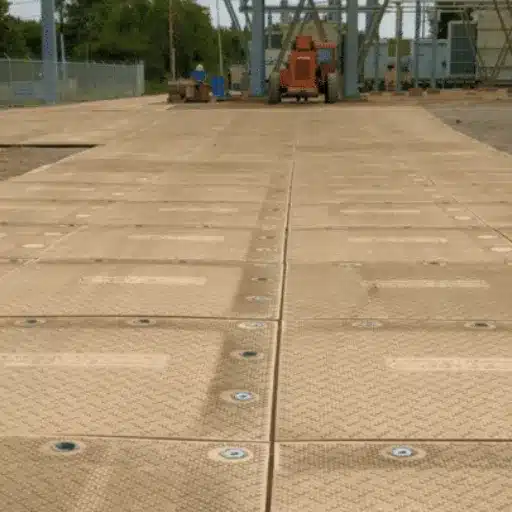
Heavy-Duty Composite Mats
The construction industry, oil and gas sector, and renewable energy sector use heavy-duty composite mats because the materials can withstand extreme weight loads and harsh environmental conditions. The mats provide a dependable foundation for heavy machinery, which prevents soil compaction while keeping the ground stable. The global composite mats market will achieve a compound annual growth rate (CAGR) of 6.5%, which will extend from 2023 until 2030, according to recent market analyses. The increasing number of infrastructure developments, the growing renewable energy investments, and the strict environmental regulations create the conditions for this market expansion. The wind farm industry requires heavy-duty composite mats because their design enables maintenance of solid ground support, which varies across different terrains.
The primary components of heavy-duty composite mats include high-density polyethylene (HDPE), fiberglass, and various reinforced polymer materials. The materials enable the mats to remain light, while their strong structural integrity enables them to endure weight loads of 600 tons according to their design and material type. The environmentally friendly nature of these mats stems from their ability to replace traditional wooden and steel mats, which become damaged and deteriorate through environmental exposure.
The combination of interlocking systems with anti-slip surfaces creates safer and easier installation processes for job sites. The developments have increased the use of heavy-duty composite mats in various industries because these products help achieve operational efficiency while protecting employee safety.
Medium-Duty Composite Mats
Medium-duty composite mats operate as flexible solutions that enable dependable support throughout construction work, infrastructure development, and utility operations. The mats have lower weight and better portability than heavy-duty mats, which makes them suitable for projects that need to move equipment frequently. The product uses high-performance materials, which include high-density polyethylene (HDPE) to achieve exceptional durability, chemical resistance, and environmental protection.
The latest information shows that medium-duty composite mats can support weights between 20,000 and 50,000 pounds based on their construction and specific usage requirements. The solution provides effective ground protection for medium-sized operations that involve moderate vehicle traffic, temporary road construction and event building. The implementation of interlocking systems and textured surfaces provides increased stability and reduced slippage danger, which protects both equipment and workers from accidents.
The construction industry gains environmental benefits from medium-duty composite mats because they offer reusable and fully recyclable materials. Industry reports indicate that companies adopting composite mats achieve a 75% reduction in carbon emissions when compared to traditional timber mats. The product serves as a cost-efficient solution because its extended lifespan and minimal upkeep needs enable businesses to achieve their financial goals while maintaining eco-friendly practices.
Composite Crane Mats and Access Mats
The composite crane mats and access mats, which engineers designed for industrial use in construction, oil extraction, and utility work, all create stable surfaces that maintain their strength throughout their total operational time. The mats are constructed from advanced thermoplastic materials and composite materials that engineers created to withstand heavy loads while maintaining their strength and supporting efficient operations at construction sites.
The main advantage of composite crane mats and access mats provides operators with the capacity to handle extremely heavy loads. The advanced models can handle weights that surpass 600 psi, which makes them suitable for operating heavy equipment like cranes, bulldozers, and drilling rigs. The product’s interlocking system allows users to complete installation and removal processes, which helps to reduce work-related delays through its operational functions.
The environmental benefits of composite mats establish their use as a common practice. The composite mats present a sustainable alternative to traditional wooden mats because they maintain durability for an extended period and enable complete recycling after use. The latest research demonstrates that composite mats enable work sites to achieve 50% waste reduction because they can be reused multiple times.
The mats use sustainable technology to create designs that reduce their impact on the ground base that exists below their surface. This aspect holds particular significance when dealing with environmentally sensitive areas, which include wetlands and protected national regions. The composite mats distribute weight over their entire surface area, which leads to reduced soil compaction while preserving plant life through the prevention of lasting damage.
The popularity of composite access mats derives from their ability to deliver cost savings. Timber mats require more money to buy, but composite mats provide better value because they last longer and need less upkeep throughout their operational life. Research shows that businesses that adopt composite mats can reduce their replacement expenses by almost 40% throughout a decade of project operations.
The introduction of advanced anti-slip surfaces and weatherproof coatings to composite mat technology brings about improved operability and safety features for operating in extreme conditions. Work crews can maintain their work schedule during adverse weather conditions because these features allow them to operate equipment without interruptions to their productivity.
The industry now uses composite crane mats and access mats as the standard solution for temporary ground applications because these products deliver exceptional durability and environmental sustainability, and strong operational performance.
Benefits and Applications of Composite Mats
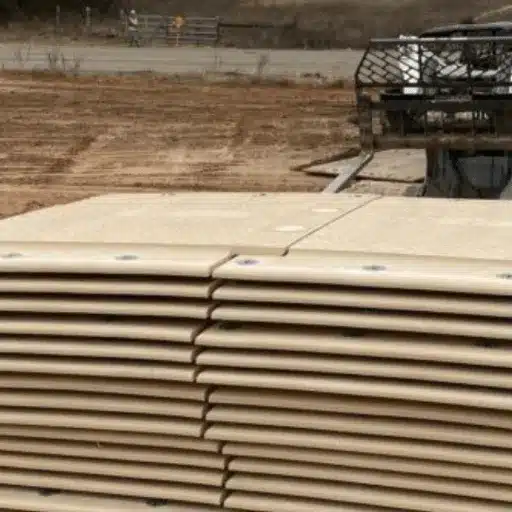
Ground Protection and Site Access Solutions
The composite mats function as ground surface protectors, which permit entry into multiple industrial fields that include construction, oil and gas work, and renewable energy development. The mats establish secure paths for people to walk because their surfaces maintain solid and non-slippery conditions while they prevent ecosystem damage through their ability to stop soil compaction. The product reduces ground disturbance by 70%, which compares to traditional wooden mats because its eco-friendly design produces environmental benefits.
The composite mats enable operators to handle equipment that produces pressure of 600 psi or greater because the mats can support the weight of heavy machinery, including cranes, excavators, and trucks. The companies achieve operational efficiency because their products weigh less than traditional wood or steel mats, which results in faster installation processes and transportation cost savings that reach 40%. The organization developed advanced technologies, which include anti-static features and water-resistant coatings, that provide consistent performance under various weather conditions, which range from extreme heat to heavy rainfall.
The remote access requirements of industries have led to increased use of composite mats for temporary road construction in wetlands and uneven terrain stability control. The global composite mat market reached a value of over $1 billion in 2022, and it is expected to grow steadily because of increasing demand for permanent, eco-friendly ground solution systems. The present trends show that composite mats serve as modern solutions that address current infrastructure challenges.
Durability and Weight Considerations
The composite mats, through their design framework, can endure extreme weather conditions while their strength capacity for heavy loads remains intact. The mats that use high-density polyethylene (HDPE) and fiberglass as their primary material components exhibit superior durability against wear and chemical damage, resulting in them having longer operational life compared to conventional wooden mats. The HDPE composite mats can support loads that exceed 250000 pounds, which makes them suitable for heavy equipment and vehicles that operate within the energy, construction, and logistics industries.
The research results show that lightweight yet strong composite materials have become essential for modern applications. Composite mats can be moved and installed more easily than other solutions because their modular design and weight reduction feature make their operations simpler. The industry requires this benefit because it results in lower expenses for workers while companies can finish their work more rapidly, which helps them meet their project deadlines. The Trends data shows that people have been increasingly searching for “lightweight composite mats” during the last five years, which indicates that people are becoming more interested in these innovative materials that help improve efficiency.
The advancement of manufacturing processes enables companies to create mats that achieve 30% weight reduction compared to conventional mats while maintaining their original strength. The transportation emissions reduction benefit enables composite mats to become sustainable materials that eco-friendly projects select as their primary material choice. The composite mat industry shows significant growth potential because market reports predict a 6.8% compound annual growth rate (CAGR), which will continue until 2030.
Applications in Construction and Heavy Equipment Operations
The construction and heavy equipment operations need composite mats because these mats create temporary roadways and stable working platforms, which function effectively in difficult environmental conditions. The durable mats are designed to endure extreme weight conditions, which makes them suitable for use in oil and gas operations and renewable energy projects, utility work, and infrastructure construction.
The current research demonstrates that renewable energy projects now increasingly use composite mats as their primary solution. The wind energy sector creates a substantial market requirement because wind farm construction needs permanent access routes and working areas that can support the weight of turbines and cranes. The composite mats work best in these situations because they prevent water absorption and maintain their performance throughout different weather conditions.
The composite mat market reached a value of roughly USD 1.4 billion in 2023, and it will grow to approximately USD 2.3 billion by 2030 because of increasing infrastructure projects that are happening around the globe. The Asia-Pacific region leads the market due to rapid industrialization and urbanization, and North America follows because its energy infrastructure development continues.
Composite mats provide environmental advantages, which make them popular in various industries that seek to decrease their greenhouse gas emissions. Composite mats provide an environmentally friendly and economical solution because they last longer than traditional wooden mats and can be recycled.
Comparison with Other Matting Solutions
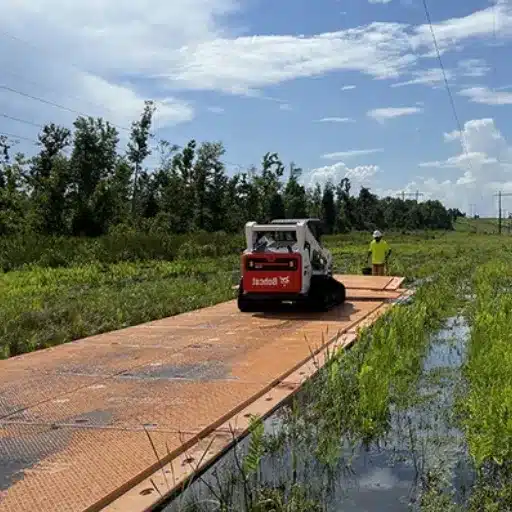
Composite vs. Timber Mats
The study of composite mats against traditional timber mats shows multiple central distinctions that demonstrate the superiority of composite materials. The design of composite mats uses high-performance materials, which include HDPE (High-Density Polyethylene), because these materials provide superior strength and offer better protection against moisture, rot, and insect damage throughout their entire lifespan. The timber mats exhibit resistance to damage under extreme weather conditions and humid environments, whereas the timber mats cannot withstand these conditions.
The weight of composite mats makes them easier to transport and install, which leads to cost savings for operations. Sources indicate that composite mats weigh approximately 7 pounds per square foot, while timber mats can exceed 20 pounds per square foot, depending on wood density. The weight difference between these materials affects freight operations because composite solutions require fewer transportation trips, which results in decreased fuel usage.
Recent data indicate that composite mats provide a service life between 10 years and beyond, which exceeds the 3-to-5-year duration of timber mats under equivalent conditions. The long lifespan of composite mats results in reduced expenses throughout their entire duration despite their higher initial costs. The design of composite mats enables their usage in different projects, which allows users to create custom solutions for handling heavy equipment and stabilizing unstable ground.
Composite mats exhibit better environmental sustainability compared to timber mats. The industry reports show that composite mats become recyclable after reaching their end-of-life stage, which helps decrease waste production. Timber mats end up in landfills or face incineration, which results in deforestation and carbon emissions that occur during their manufacturing process. The use of composite mats allows industries to achieve their sustainability targets while running their operations efficiently.
Composite mats represent an ideal solution for construction, energy, and infrastructure industries because they offer better durability, reusability, and environmental sustainability. The construction industry seeks affordable solutions that protect the environment while delivering effective performance results.
Cost-Effectiveness of Heavy-Duty Composite Mats
Heavy-duty composite mats provide superior cost savings compared to traditional wood or steel matting options. Recent industry data shows that composite mats achieve a lifespan that exceeds that of traditional mats by ten times because of their superior resistance to moisture, rot, and decay. The extended lifespan of these mats decreases both the need for replacement and associated costs, which makes them a better financial option throughout their entire lifespan. The decreased requirement for maintenance makes composite mats more affordable because operational costs for their use go down. The lightweight design of the mats allows for more mats to be shipped together, which results in lower transportation expenses, better logistical operations, and less fuel consumption. Studies show that using composite mats instead of heavier wooden mats leads to transportation cost reductions of up to 30%.
The use of composite mats allows projects with environmental protection requirements to skip expensive reclamation costs. Their eco-friendly design ensures ground protection, reducing soil compaction and damage during operations. The construction, oil and gas, and utility industries benefit from this because they must protect the natural environment according to legal and ethical standards.
The durability of composite mats leads to long-lasting financial savings for businesses, which results in operational expense reductions between 25 and 40 percent, thus showing their value as a business investment across all sectors.
Performance in Various Ground Conditions
Composite mats are designed to function properly through different challenging ground conditions, which include both soft wet soils and rocky uneven terrains. The mats maintain their stability on ground surfaces because their engineered surface design prevents them from sinking into the ground, which enables them to support heavy equipment and vehicles. Composite mats demonstrate their capability to handle extreme loads that reach 120 tons* through their specific design parameters, which make them appropriate for use in pipeline construction and energy projects.
The weather resistance of composite mats protects them from damage that results from heavy rain, freezing temperatures, and prolonged exposure to UV radiation. Composite mats differ from traditional wooden mats because they do not take in water, which results in almost no expansion or distortion despite harsh weather conditions. The latest industry findings show that proper maintenance enables composite mats to last more than 10 years while timber alternatives suffer from premature deterioration because they cannot withstand the same environmental conditions.
This approach provides reliable site operation together with effective ground stability management, which enables projects to execute all tasks according to their scheduled time and budget objectives.
Reference Sources
-
Composite Materials – History, Types, Fabrication Techniques, Advantages, and Applications
Link to source -
Composites: Manufacture and Application
Link to source
Frequently Asked Questions (FAQs)
What Are Composite Mats and How Are They Used?
Composite mats function as durable ground protection materials that provide temporary access paths at construction sites, energy operations, and locations with high foot traffic. The mats function to stabilize soft or uneven terrain while protecting sensitive ground surfaces and creating a stable base for heavy machinery and equipment operations.
What Makes Composite Mats Different from Timber Alternatives?
Composite mats deliver superior performance to timber mats because their extended lifespan and reduced environmental impact exceed the performance of timber mats. The materials used in our composite construction process retain their full strength during both wet conditions and severe weather events because they remain intact without developing any decay or absorption of water. The lightweight nature of composite mats enables simple transportation, while their reusable design creates an environmentally friendly and budget-friendly solution for extended use in projects.
Are Composite Mats Available for Sale or Rental?
Composite mats can be purchased or rented according to your project requirements and financial capacity. Companies that need composite mats on a regular basis should consider buying them, while short-term users should choose rental services. Multiple suppliers provide customized plans that meet the requirements of different industries.
How Long Do Composite Mats Last?
Composite mats achieve a minimum lifespan of 10 years when users implement proper maintenance procedures. The material provides strong protection against impacts and ultraviolet rays, and chemical spills, which results in longer-lasting performance than standard timber mats that typically experience failure within shorter periods. Regular cleaning and inspection practices extend the lifespan of composite mats.
Can Composite Mats Be Recycled at the End of Their Lifespan?
Yes, most composite mats are manufactured to be environmentally friendly and recyclable. The materials can be processed after their usable lifespan ends, which results in reduced landfill waste and sustainable practice development for the construction and industrial sectors.
Do Composite Mats Work in Extreme Weather Conditions?
The composite mats have been created to withstand all weather conditions, from extreme heat to freezing temperatures. The product’s non-slip surface provides enhanced safety during rainy conditions because its moisture-resistant design prevents any warping or degradation that would occur in wet conditions. The product’s ability to perform in various conditions throughout the year makes it a reliable option for continuous operations.