The success of environmental protection efforts depends on the material quality used in waste containment and water conservation projects. The LLDPE geomembrane liners have achieved global acceptance because they provide flexible and durable performance across multiple applications. Your search for industry-leading companies becomes difficult because multiple manufacturers exist in the market. The blog presents six LLDPE geomembrane liner manufacturing facilities that operate worldwide to showcase their innovative capabilities, specialized knowledge, and dedication to producing high-quality products. This article aims to help you choose the best materials for environmental protection and major infrastructure projects. The article reveals which candidates achieved success and the reasons for their selection.
Introduction to LLDPE Geomembranes
Understanding LLDPE and Its Importance
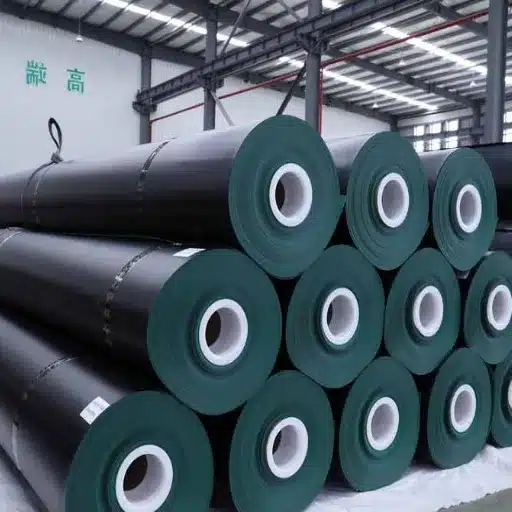
LLDPE geomembranes are now necessary materials that businesses and environmental projects require for their work. The LLDPE polymer material exhibits flexible characteristics that enable it to maintain exceptional tensile strength and elongation capacity. The agricultural, construction, waste containment, and water management systems all require LLDPE geomembranes as their ideal lining solution.
The primary benefit of LLDPE lies in its ability to withstand both chemical substances and ultraviolet light, which enables it to maintain operational capabilities throughout demanding conditions. The global geomembrane market will experience a 4.9% compound annual growth rate from 2023 to 2028, according to market research findings, which show that LLDPE geomembranes will drive market growth because of their economical pricing and versatile usage.
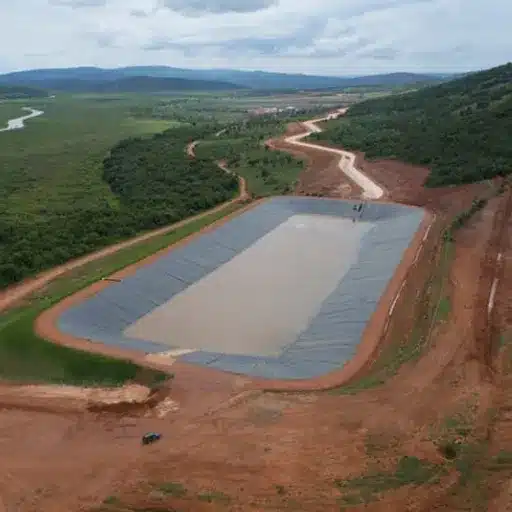
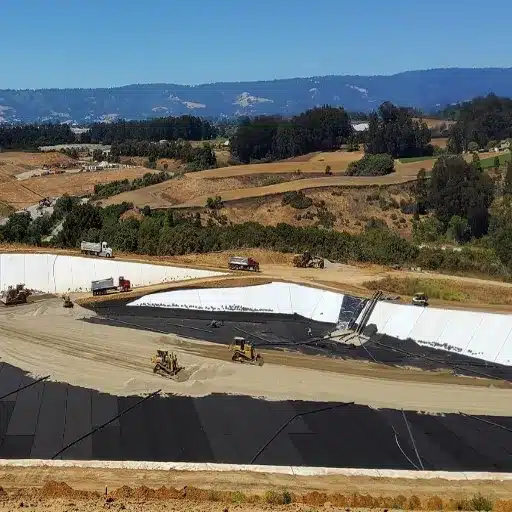
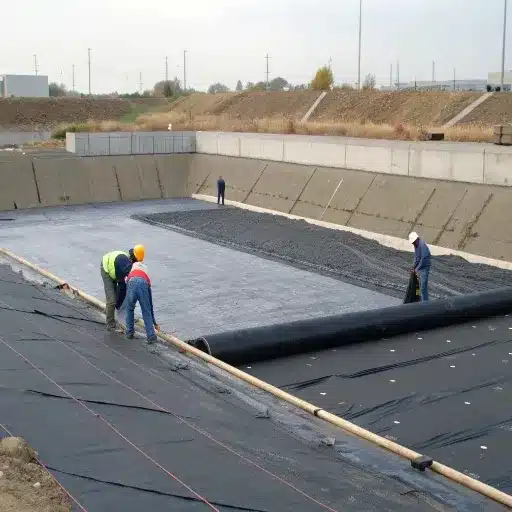
LLDPE geomembranes serve as crucial elements within landfill liner systems because they successfully prevent leachate from escaping, which protects soil and groundwater from contamination. The agricultural sector uses them as pond liners because they help preserve water resources while decreasing water loss through seepage. The development of recent innovations has improved their environmental sustainability because manufacturers now use recycled materials during their manufacturing process.
Industrial facilities that require secure material storage solutions have selected LLDPE geomembranes because these products deliver strong and trustworthy performance. The continuous development of LLDPE material, combined with its increasing worldwide demand, will secure its position as an essential resource for upcoming building and environmental sustainability initiatives.
Challenges Faced by Industries in Sourcing Geomembranes
The process of acquiring geomembranes creates multiple hurdles for industries, which disrupt their project timelines, increase their operational costs, and decrease their work efficiency. The main raw material used to produce geomembranes is polyethylene, which leads to significant price changes that impact their production expenses. The global polyethylene market has experienced price increases and product shortages because supply chain disruptions, crude oil price increases, and rising demand from multiple industries have affected the market.
The supply chain problems that have emerged during the COVID-19 pandemic and ongoing geopolitical conflicts present another obstacle for organizations. The construction industry has faced delays in vital projects because manufacturers cannot complete work on time due to shipping delays and logistical problems, which involve geomembrane containment systems.
Industrial applications require geomembranes to demonstrate consistent quality because they must meet demanding performance and durability requirements. The use of outdated manufacturing equipment combined with insufficient staff training results in production defects and reduced product lifespan.
The procurement methods companies use today are being reshaped by environmental regulations and sustainability requirements. Organizations must fulfill growing demands for environmentally friendly geomembrane materials that contain recycled content yet maintain their operational capabilities. The process of locating suppliers who can deliver both environmental sustainability and the required technical specifications presents difficulties because only a limited number of manufacturers practice large-scale sustainable manufacturing methods.
Strategic partnerships provide the solution to these challenges because they enable industries to maintain high-quality geomembrane supplies through advanced material testing and multiple sourcing methods. Manufacturing efficiency improves through technological advancements because companies use automated systems and new polymer materials to produce products for the rising global demand.
How LLDPE Geomembrane Liners Provide Solutions
The LLDPE geomembrane liners demonstrate superior performance because they combine durable material characteristics with flexible design and chemical resistance. The agricultural, mining, wastewater treatment, and landfill containment industries use these liners because they create waterproof barriers that stop liquid and gas movement.
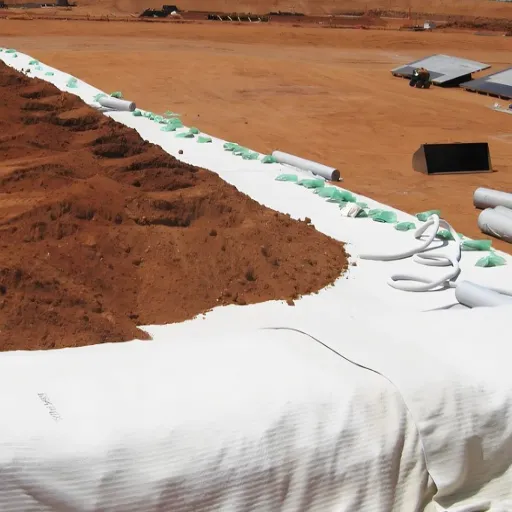
According to the latest industry data, the global geomembrane market size reached approximately $2.1 billion in 2022, which will grow at 9.5% CAGR through 2023 until 2030. The combination of environmental regulations with infrastructure development projects and sustainable waste management requirements creates a rising demand for LLDPE liners. LLDPE geomembranes serve as protective liners for heap leach pads in the mining industry because they stop leachate from contaminating ground and underground water.
The technical specifications of LLDPE membranes demonstrate exceptional performance because they achieve high tensile strength levels while maintaining extended break elongation capabilities, which makes them appropriate for applications that require operation on surfaces with uneven heights. The manufacturing process advancements enable LLDPE geomembranes to achieve better UV resistance and enhanced anti-oxidant capacity, which enables them to maintain their performance throughout extended periods of exposure to extreme environmental conditions.
LLDPE liners provide companies with two main benefits because they improve safety for the environment while also decreasing the financial impact of environmental violations and leakage incidents. LLDPE geomembrane liners provide industrial applications with both practical and sustainable solutions through their unique combination of essential characteristics.
Benefits of LLDPE Geomembrane Liners
High Durability and Puncture Resistance
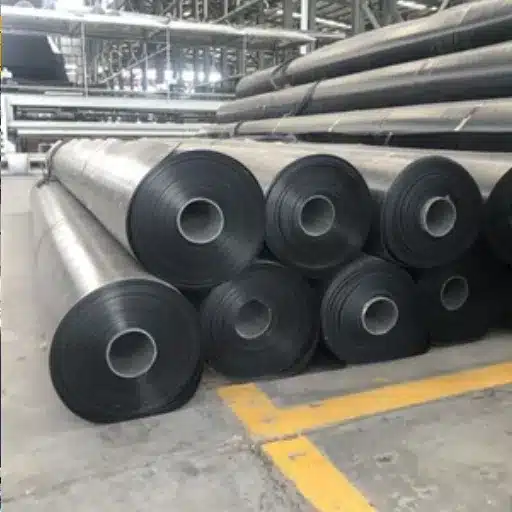
LLDPE geomembrane liners provide outstanding durability together with puncture resistance, which makes them suitable for high-demand usage in mining, agriculture, and waste management operations. Engineers discovered through research that LLDPE liners endure tensile stress until reaching 600% of their initial length before breaking, which confirms their capacity to operate in extreme conditions throughout extended periods. The material’s flexible properties enable it to follow the shape of irregular surfaces, which decreases the possibility of material damage during installation and operation.
LLDPE geomembranes demonstrate effective leakage protection when applied to containment systems. Data indicates that properly installed LLDPE liners achieve permeability levels below 1×10⁻¹³ cm/s, which enables them to control seepage more effectively than other materials used for liners. The material achieves complete impermeability, which prevents hazardous substances from reaching soil and groundwater sources while providing environmental protection benefits.
The design of LLDPE geomembranes ensures their ability to withstand both ultraviolet radiation and extreme temperature changes. The testing demonstrates that these liners maintain their original physical characteristics between the temperature range of -60°C to 60°C, which makes them suitable for use in different global climate conditions and multiple industrial applications. The material properties contribute to their prolonged operational life, which allows many installations to continue working successfully for more than twenty years.
Cost-Effectiveness: Factory-Direct Pricing
The main advantage of LLDPE geomembranes results from their low costs, which customers can obtain at a better value through direct purchases from factories. The current market data shows that LLDPE geomembranes cost between $0.70 and $1.20 per square footbased on their thickness and quality. When customers purchase through factory direct pricing, they gain access to significant price savings, which decrease their overall project expenses. Manufacturing technologies now enable companies to create affordable products that preserve both product strength and operational performance through their advanced production methods.
The initial cost of LLDPE geomembranes becomes highly economical because they provide more than 20 years of service life. LLDPE liners used in agricultural construction and mining projects lead to cost savings of up to 30% when compared with alternative lining methods because they require fewer materials and their products have extended durability. LLDPE geomembranes function as the best choice for major environmental projects and industrial applications because they combine affordable pricing with reliable operational capabilities.
Flexibility and Elongation Properties
The exceptional flexibility and high break elongation of LLDPE geomembranes make them suitable for situations that need materials to adapt and maintain their properties during stress conditions. The latest research shows that LLDPE liners can achieve more than 800% elongation, which enables them to stretch and conform to surfaces that have different height levels while they keep their original shape. The material’s ability to stretch makes it less likely to get damaged in difficult situations, which happen in mining pits and landfills because the ground surfaces there become unpredictable.
The development of new manufacturing techniques has led to better performance results for LLDPE geomembranes. The current product range demonstrates better tensile strength results because its measurement now reaches above 20 MPa, which allows it to endure both substantial weight and environmental stress. The materials demonstrate excellent protection against ultraviolet light and an extensive array of chemicals, which enables them to maintain functionality throughout extended periods of exposure to extreme conditions. The project results improve through these features, while the environmental safety standards are fulfilled, which establishes LLDPE as the leading material choice for infrastructure projects and industrial applications.
Applications of LLDPE Liners
Use in Ponds and Water Containment
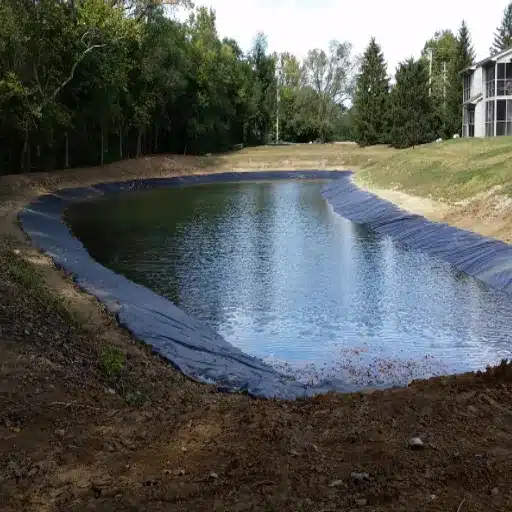
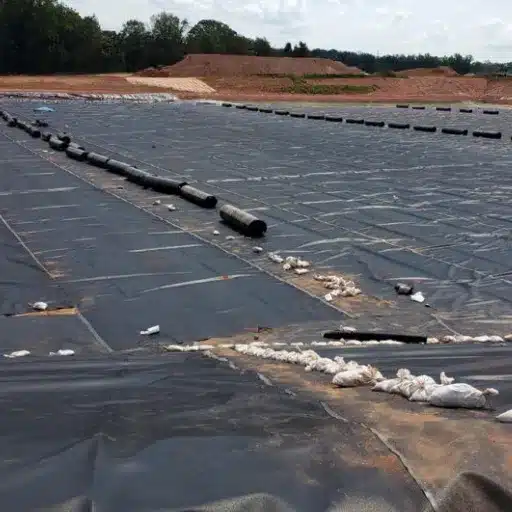
The LLDPE liners function as necessary elements that keep water enclosed while safeguarding pond ecosystems. The outstanding flexible and impermeable properties of the liners create a barrier that stops water from seeping through, which helps to protect vital water resources and lower maintenance costs. The LLDPE liners now include advanced protection systems that stop punctures while maintaining their operational strength through all conditions that small residential ponds, large agricultural facilities, and aquaculture systems require.
Recent studies demonstrate that LLDPE liners decrease water loss through their use in traditional earthen ponds, which maintain water retention at up to 80% efficiency. The material maintains its original strength for more than 20 years because of its UV-resistant properties, which protect it from standard environmental conditions. The installation process has become more affordable because manufacturers now operate with prefabricated panels and custom sizes, which they can easily modify to suit different projects. The advantages of LLDPE liners lead both domestic users and industrial companies to choose them as their primary solution for water management needs.
Geosynthetic Applications in Landfills
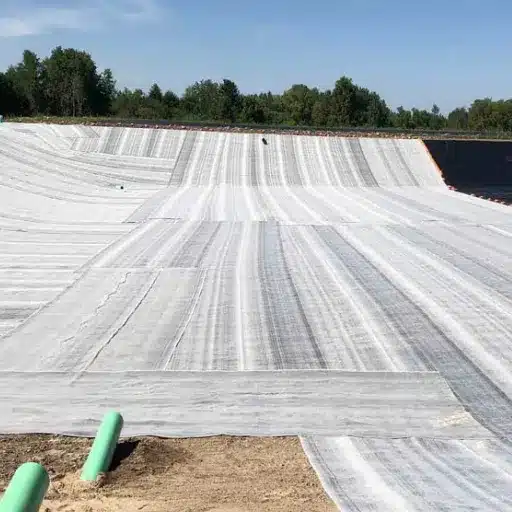
The current landfill operations use geosynthetics because they create environmental protection while fulfilling all environmental protection requirements. Landfill operations use geomembranes together with geotextiles, geonets, and geosynthetic clay liners to perform various tasks that increase the operational effectiveness of landfills.
The main material which landfill operators use to create geomembranes for their projects consists of high-density polyethylene (HDPE) and linear low-density polyethylene (LLDPE) products. The impermeable barrier of the system protects groundwater from leachate contamination, which serves as a vital method to safeguard water resources. According to recent studies, HDPE geomembranes achieve their maximum containment capacity through extremely low permeability rates of 10⁻¹² cm/sec, which create a protection system that lasts multiple decades.
Geotextiles serve their function as materials that separate and filter waste in landfill operations. The materials used in these products consist of polypropylene or polyester, which functions as a protective barrier that prevents geomembrane damage while allowing necessary water and gas transmission. The Geosynthetic Institute reports that high-quality geotextiles have the capability to reach tensile strength levels beyond 100 kN/m which enables them to withstand extreme weight situations.
Geosynthetic clay liners (GCLs) use their self-sealing ability as an extra layer that protects against all potential dangers. The GCL system consists of bentonite clay, which geotextiles encase to create a system that provides an alternative to standard compacted clay liners since its hydraulic conductivity reaches 5 × 10⁻¹¹ m/s. The construction of this system enables effective leakage control for difficult site environments.
The use of geonets in landfills improves performance because these systems provide effective solutions for managing both liquid and gas waste. Geonets function with geomembranes to establish composite drainage systems, which help decrease hydraulic head pressure while improving leachate management efficiency.
The combination of these geosynthetic solutions creates an advanced method for landfill engineering that achieves three objectives: cost savings, environmental protection, and extended operational lifespan. The waste management industry has adopted these solutions as standard methods because of ongoing research and development work focused on environmentally sustainable materials.
Role in Agricultural and Environmental Projects
The essential nature of geosynthetics in agricultural and environmental projects has emerged because these materials provide successful outcomes in various fields of application. Agricultural projects use geosynthetic liners as water protection systems for irrigation ponds and canals because research shows that properly installed liners can reduce water loss by up to 90 percent. Agricultural fields use geotextiles as soil stabilizers, which improve drainage and soil structure to produce better crop results.
Environmental projects depend on geosynthetics because these materials create essential components that protect natural habitats. Hazardous waste containment systems that operate landfills use geomembranes as protective barriers to prevent dangerous substances from leaking into nearby earth and water resources. Geosynthetic barrier systems, which need 20 years of upkeep according to industry standards, show environmental advantages through their ability to protect the environment.
Geosynthetics enable a new method of erosion control through the combination of geocells and geotextiles, which create slope and riverbank protection against soil erosion. The materials show they can decrease erosion rates by 70 percent, which leads to permanent site stability and controlled sediment movement into aquatic environments.
The use of geosynthetics in these fields grows because new materials become available, especially through the ongoing research into biodegradable geotextiles, which scientists are developing. The innovations enable organizations to fulfill their immediate project requirements while achieving their long-term goals for environmental sustainability.
Top LLDPE Geomembrane Liner Factories Worldwide
1. ShengXing (Shanxi Shengxing Building Materials Sales Co., Ltd)
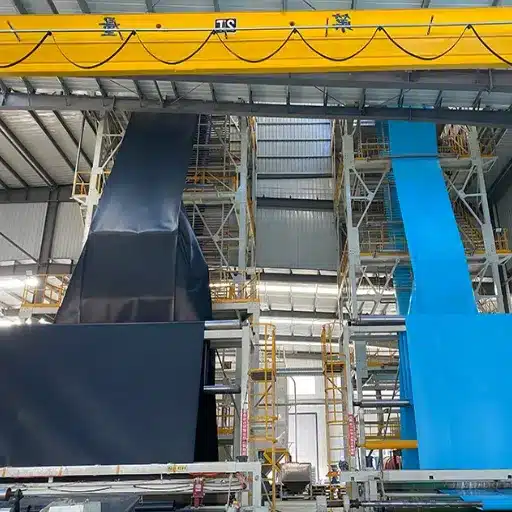
ShengXing has developed into an international geosynthetics enterprise that operates its main office in Shanxi, China. The company, located in Shanxi, China, has established itself as a manufacturer of LLDPE geomembranes, which combine high quality with affordable prices while complying with strict international standards. ShengXing uses its advanced production technologies together with its material science expertise to create solutions that address environmental challenges and civil engineering problems. The company demonstrates its dedication to customer satisfaction by providing complete support, which begins with initial consultation and continues through post-installation assistance. By focusing on innovation and quality control, ShengXing ensures its products provide long-term performance and reliability, which makes them a preferred partner for projects worldwide. Their efficient supply chain, together with their strategic location, enables them to provide competitive pricing while maintaining product quality, which allows them to serve customers from different regions of the world.
2. Solmax International
Solmax, which operates its main office in Quebec, Canada, stands as the largest and most widely known geosynthetics producer throughout the entire world. Solmax has achieved market dominance through its strategic purchases of major companies, which include GSE Environmental and TenCate Geosynthetic,s while it has developed new technological resources. The company has dedicated 30 years to research and development of containment technologies, which it applies to essential industries such as mining, waste management, and water preservation.
3. AGRU America
AGRU America, which maintains its main office in Georgetown, South Carolina, operates as the American division of the Austrian company AGRU Kunststofftechnik. The company produces thermoplastic products that meet exacting standards of quality and precision. AGRU operates advanced manufacturing facilities that create various geomembranes and plastic products that serve environmental, civil, and industrial needs. Their “CleanSeam” technology serves as a significant advancement that enhances both welding quality and installation productivity.
4. Atarfil

Atarfil operates its business from the Spanish city of Granada because its manufacturing methods use advanced calendering technology together with flat-die extrusion techniques. The company is especially known for manufacturing the widest geomembrane rolls, which enable installers to save installation time while decreasing potential leak points through their reduced need for seams. Atarfil operates its business worldwide while delivering solutions for water management and waste containment needs.
5. NAUE GmbH & Co. KG
NAUE is a German engineering company that has operated as a manufacturer since it began to offer advanced geosynthetic products throughout its existence. NAUE develops system-based solutions through its engineering-first approach, which it uses to create its products. Their Carbofol® geomembranes have achieved global recognition because they provide exceptional performance and reliable results for difficult applications in landfill capping and groundwater protection.
6. Layfield Environmental Systems
Layfield operates as a complete company from Canada because it produces geomembranes while providing both fabrication and installation services. The company uses its business model to provide customers with complete containment system solutions, which compete against other system providers who handle containment projects. Layfield operates in the North American energy, mining, and water management markets, which demonstrates its ability to create custom solutions for complex projects.
Frequently Asked Questions (FAQs)
What Are LLDPE Geomembrane Liners and Their Primary Applications?
Engineers use LLDPE (Linear Low-Density Polyethylene) geomembrane liners as robust synthetic membranes, which they use to build secure containment systems that safeguard environmental protection. The liners find their main use in landfill containment, pond lining, canal lining, and mining operations because they effectively stop contaminants from escaping into nearby soil and water sources. The materials provide lasting performance because of their outstanding ability to resist chemicals and their protection against ultraviolet radiation.
How Do Geosynthetics Contribute to Erosion Control?
The implementation of geosynthetics through LLDPE geomembrane liners and geotextiles creates fundamental erosion control systems, which maintain soil stability while preventing water runoff. The materials function as erosion control solutions for areas that include slopes, riverbanks, and construction sites. The materials support environmental stability because they reduce sediment displacement and runoff, which helps to decrease sediment pollution that affects nearby water bodies.
What Are the Benefits of Using Biodegradable Geotextiles in Projects?
The product provides an eco-friendly method for temporary soil stabilization, together with erosion control through its biodegradable geotextile properties. Natural fibers, which originate from jute and coir, make up the product, which will break down over time while producing minimal environmental damage. The materials do not function as long-lasting solutions like LLDPE liners, but they serve short-term reinforcement needs that comply with current sustainable development objectives.
How Do Geosynthetics Support Sustainable Development Goals?
The use of geosynthetics, which include LLDPE geomembrane liners and advanced biodegradable materials, brings sustainable development benefits because these materials reduce waste while protecting natural resources and minimizing environmental damage. Industries use these materials to protect the environment from containment leaks while they enable the implementation of sustainable solutions in particular applications. The use of these materials shows commitment to building environmentally sustainable infrastructure.
How Do Top LLDPE Geomembrane Liner Factories Ensure Quality?
The main manufacturers of LLDPE geomembrane liners use stringent quality control procedures to achieve international standards of product quality. The factories use advanced manufacturing systems that test their products through continuous durability assessment and chemical resistance testing while they meet environmental protection standards. The company achieves its product performance objectives by implementing methods that test its products under different environmental conditions.
Can Geosynthetics Be Used in Extreme Environmental Conditions?
The geosynthetics, which include LLDPE geomembrane liners, are designed to perform effectively under extreme weather conditions, which include hot weather and freezing temperatures, and high chemical exposure. Their flexible design, combined with their latest production techniques, enables them to preserve their structural strength when facing difficult industrial and environmental challenges.