The innovative use of Bentonite Geosynthetic Clay Liners, or GCLs or may I say, the tremendous change in environmental containment and infrastructure development. There are a lot of materials that are compatible enough with one another to be installed across the board, such as a landfill liner or even a water reservoir, and the obvious advantage of utilizing such materials varies. We are presenting here a comprehension of what GCLs are, how they work, and who benefits most from using them. Builder, if not an environmental engineer outlook, or just an enthusiast of the recent construction materials and the development of the 12st century experimentation, this paper shall point out and enable the readers to understand or appreciate the bentonite geosynthetic clay liner in context and usefulness. And indeed, you shall come with us to open up the wonders enclosed in that subject, the reasons for it existence, or the benefits and uses.
Introduction to Geosynthetic Clay Liners (GCLs)
1. Definition and Composition of GCLs
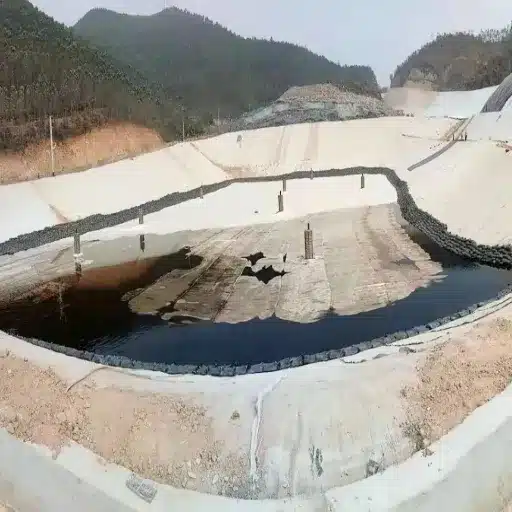
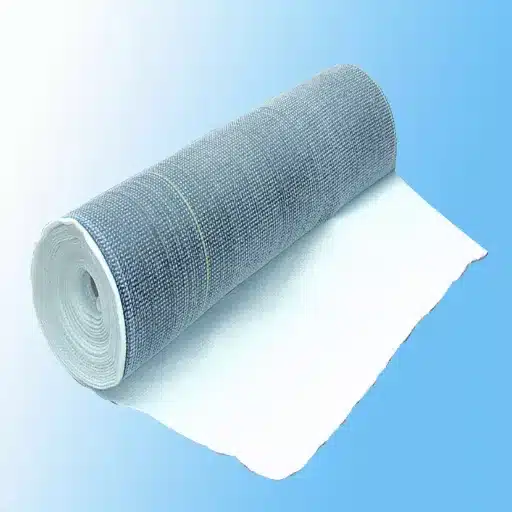
A bentonite geosynthetic clay liner structurally consists of at least two major parts: an intervening bentonite clay core layer bound on each side with respective geotextiles and/or, in some cases, geomembranes. The latter parts are equipped either with reinforcing elements or other protective elements appropriate for certain conditions of use. Layers can be joined one to another either through mechanical means or through the use of adhesive, and, where applicable, reinforcement entails the incorporation of reinforcement elements such as needle-punched nonwoven geotextiles.
The primary layers that will be addressed hereinafter, as the liners, are predominantly constructed from the material montmorillonite, or bentonite, which tends to expand on contact with water by 10-15 times its volume. When such a reaction takes place, a barrier surface is formed, with water or any other fluid being unable to penetrate through it as the resultant layer is almost impervious. Presently available GCLs are characterized by hydraulic conductivities of up to 5 x 10⁻⁹ cm/s, such materials being appreciated in applications for the lining of sanitary landfills, mining installations, and wastewater basins.
Some of the beneficial aspects of geomaterials, including geotextiles that fall within the domain of bentonite geosynthetic clay liner (GCL), include enhancing the tensile as well as damage resistance properties so as to increase the longevity of the composite liner. As far as tensile and filtration concerns go, there are both woven and nonwoven geotextiles in stock, and the preference for one type over the other is determined by the performance requirements.
In order to increase the stability of the product even in very demanding conditions, additional layers, stricter design criteria, and even design techniques such as the application of heated (melt) locks to GCLs have been developed over recent years. With such improvements, GCLs can successfully be used in such cases, such as the installation of protection systems in which the bentonite geosynthetic clay liner is employed.
⚡ Key Technical Properties
- Water Expansion: Bentonite expands 10–15× its volume upon contact with water
- Hydraulic Conductivity: As low as 5 × 10⁻⁹ cm/s
- Thickness: Only 10–15 mm compared to 1-meter CCL equivalents
- Structure: Needle-punched nonwoven geotextile reinforcement layers
2. The Role of Sodium Bentonite in GCLs
Bentonite barriers, such as geosynthetic clay liners (GCLs), find application because of the presence of sodium bentonite, which is known for its high swelling ability. Bentonite has the capacity to absorb water up to 15 times its volume, resulting in dust or vapor-tight areas. The ability for this is due to the configuration of the molecules in layers, such that the clay particles can take in water.
The facts have also shown that the water permeability of sodium bentonite, if embedded and covered with geosynthetic clay liner (GCL) layers, can be as low as 1 x 10⁻⁹ cm/s. Such a low permeability level means that its application in landfills, mining sites, and other environmentally sensitive projects is possible. The clay also strongly depends on the rust, which ensures containment of dangerous substances at specific points.
More evidence than that, however, states that adding or mixing sodium bentonite geosynthetic clay liner with other materials like polymers or any compound that will improve its performance even in an environment with high salt content or strongly acidic and basic mediums. Further relevance of this is the increase in the workings of GCLs in the long run and their use in these harsh environments encourages the use of these materials in most fields.
3. Comparison of GCLs with Other Liner Systems
When evaluating GCLs in the context of liner performance comparison versus the other available technologies, such as CCLs and geomembranes, they provide excellent benefits due to less thickness, superior installation efficiency, and greater hydraulic properties. To clarify, for instance, essays indicate that GCLs can reach the 1×10⁻⁹ m/s permeability depth as a 1-meter-long CCL does, which is altogether a potential substitute for GCL’s 5 to 10 mm.
Perhaps more importantly, the data suggest that GCLs are cost-efficient in handling the material and manpower needed. Previously, the Geosynthetic Research Institute has published that the bentonite geosynthetic clay liner would take only 2-3 times less time compared with CCL, as the level of work is highly minimized in comparison with CCL.
The inclusion of GCLs features in liner systems with geomembranes as composites produces a prolonged and very efficient performance of the whole structural member. According to the existing studies in the subject matter, literature shows that GCLs within the composite liner structures can lead to a leakage rate reduction by as much as a hundred times compared to single geomembrane configurations. Additionally, and perhaps most importantly, they are useful for the most valuable and critical uses, such as landfill cover and mining, and even sewage isolation, among others.
GCLs can, therefore, perform in adverse conditions which can demonstrate the advances made in its technology, especially in the case of a bentonite geosynthetic clay liner the which is fully enhanced when polymers are incorporated This is because, and most recently, it has been demonstrated and indicated that introduction of polymers in GCLs makes the products chemical tolerant and applicable in most of the radical industries such as hazardous materials and brine storage handling.
Advantages of Bentonite Clay in Containment Systems
|
💧
Hydraulic Conductivity10-9 to 10-11 m/s — polymer-enhanced GCLs achieve <10-12 m/s even in high-saline leachate. |
🌱
Environmental BenefitsReduces contamination up to 90%. Market projected to reach ~$740 million by 2027. Up to 30% lower GHG emissions vs. traditional systems. |
💰
Cost-EffectivenessHalf the cost of compacted clay liners. Premium GCLs last more than 30 years with reduced labor and materials requirements. |
1. Hydraulic Conductivity of Geosynthetic Clay
Traditionally, the materials used as a border material for bentonite geosynthetic clay liner (GCL) contain low-permeability material, but if not all such materials possess low hydraulic permeability. Bentonite is a clay material characterized by very low permeability – about 10-9 to 10-11 m/s conductivity. What this signifies for bentonite clay liners is that the physical structure of the clay barrier is preserved. Polymer-enhanced GCLs, on the other hand, at least according to some publications in the internet, are the most resistant to chemical and mechanical attack and extend the range of applications as well.
For instance, there’s a 2023 study showing that the polymer-replaced GCLs hold hydraulic conductance of less than 10-12 m/s even in the presence of high saline concentration leachate solutions. These initiatives are towards keeping up with the changing environmental requirements within the industry, mining and municipal waste management systems. In addition, evidence from the field practice shows that nearly a century has passed, whilst the premature degradation of the GCLs is practically evident.
It serves to show that improving the structure of the GCL is impossible because the composition of the overwhelming danger is very specific. Revolutions in the techniques aimed at modifying clay minerals for additional functions also provide for the use of GCLs even in extreme and normal performance, in other words, applying new reinforcement containment of bentonite geosynthetic clay liner diffusion of waste.
2. Environmental Benefits and Sustainability
The use of bentonite geosynthetic clay liner for waste containment and pollution control is significant due to its positive effect on the environment. In addition, other studies reveal that Geosynthetic liner systems reduce contamination up to 90 per cent, therefore, preserving hoof water of existing aquifers. From the findings, it has been established that there has been a steady rise in the usage of GCLs, with this sector expected to grow across the globe, reaching around $740 million in 2027, particularly after the demand for water and waste handling services rose the market’s achievable demand.
Another advantage of bentonite geosynthetic clay liner is its excellent sealing properties due to the fact that bentonite clay is a water-absorbing mineral in neutral form, which can hold water for as much as five times more than its dry weight. And, thus, the detailed membrane construction is not required in this case. The same is more effective than CCLs. Sometimes CCLs are even carried on such non-plastic soils with wetting. These techniques are heavy such that they cannot be well carried, and this is very expensive to do. Thus, in the case of GCLs, the amount of greenhouse gases that will be emitted may be decreased by as much as 30 per cent compared to containment systems of higher pgcs.
There has also been an improvement in the ability to produce GCL of the required quality with no degradation of the GCL’s function when they are used in such regions where repeated freezing and thawing, or high concentrations of salts, prevail. The term ‘versatility’ could be circumscribed to all the other possible utilities of GCLs as constructed containment and enclosure systems.
3. Cost-Effectiveness and Longevity
When a bentonite geosynthetic clay liner is used, the cost of materials and installation rate is slashed in half, leading to its more competitive pricing than of the clay liner. As per recent research, the cost comparison of the GCL to compacted clay liner is equivalent to half the cost of the entire clay liner, as here the material, building time, and site preparation is less. Such a cost-saving advantage is very noticeable in heavy projects such as landfills, the mining industry, plant wastewater treatment, and even ponds that are lined with palladium-based membranes.
Taking into account their ability to resist, bentonite geosynthetic clay liner also has a very good tolerance of harsh environmental conditions. Research indicates that compared to inferior GCLs, the effective function of premium GCLs, enabled by the same deterioration mechanisms last more than 30 years. The problem with such systems is that most materials do not degrade over time, but because they provide other solutions, like structural integrity of bentonites through the modification of their components with other materials such as polymers. Offering a solution for containment that is not expensive and that does not get worn out very easily is something that GCLs can do effectively in most industries.
Applications of GCLs in Civil Engineering
🏗 Use of GCLs in Landfills
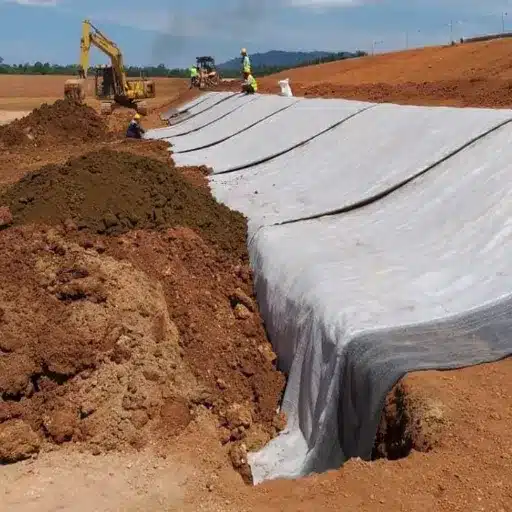
One of the important waste disposal landfill designing techniques, in modern time is the use of a bentonite geosynthetic clay liner. Industry surveys processed in recent periods indicate that GCLs as mostly related to the composite liner systems, which prevent or contain the harmful leachates already hazardous to soil and groundwater. Such materials generally are geo-sheets with the natural bentonite of sodium underlying actively working at the thickness of these geo-sheets of around 10-9 m/s to 10-11m/s.
In the current rainy period, practically all the landfills constructed contain a provision for either replacing or augmenting compacted clay liners (CCLs) with constructed GCLs. This is associated with the fact that GCLS are very thin (even up to 10 mm – 15 mm thickness) and still perform such functions as required, even better, thus allowing increased dump site capacity. Reports suggest that, relative to compacted clay liners, GCL installation accounts for at least half of the installation time and costs.
Environmental statistics have shown that the application of GCLs considerably reduces the possibility of contaminants reaching the environment. For example, the inclusion of GCL as a composite sealing technique has brought down the demon leakage levels as much as 0.5 liters per hectare per day. This, however, is as compared to the levels achieved by conventional systems. This shows how such technologies are incorporated in regulating landfill activities as per the legal requirements.
With the help of more Understanding of the depth increased after excavation processes, the helpfully constructed GCL membrane reactions have been made lately to fit more challenging conditions and works. For example, it has been found that bentonite products mixed with a polymer backbone have better resistance to chemicals, including liner aging in a landfill composed of multiple waste conditions and high pressure levels.
The use of geomembranes and, more importantly, let us consider, bentonite geosynthetic clay liner (GCL) systems in landfill applications helps practitioners meet the minimum environmental regulatory policies and guidance in waste management without compromising the feasibility of landfilling in the long term.
📊 Landfill Performance Highlight
GCL composite sealing has reduced leakage levels to as low as 0.5 liters per hectare per day — a dramatic improvement over conventional liner systems.
⛰ Applications in Slope Stability
In recent times, slope stability issues have been gradually alleviated due to the use of geosynthetic clay liners as a solution to the unstable conditions, and thus, the materials work well together as they are meant to. Indeed, as can be observed in the recent body of work, the use of a textured geomembrane has used GCL’s advantage as it increases the interface contact shearing resistance, in which is important, especially with steep walls of geomembrane-lined structures in waste and containment facilities, etc.
Significant case studies of GCLs indicate that in some cases, such joints obtain internal friction angles of 15° and yet elsewhere 25°, depending on the moisture content or pressure. In addition, small holes and rips may be taken care of in the case of these barriers by self-sealing. This, in fact, significantly enhances the integrity of the system. This in turn reduces the chances of geotechnical failures even when high loads on the structure have been thrust or instances of uniform settlements or harsh aysander environments are experienced.
The membrane, which has been improved with a polymerized modified bentonite geosynthetic clay liner, ensures the GCLs of today can withstand not only sloping geometrically engineered biotopes but ecologically as well. This is because, based on coup engineering company assays, the present-day GCLs can go up with stabilizing angles as high as 3H:1V and have nearly zero hydraulic conductibility (< 5×10-12 m/s).
The Use of Bentonite Geosynthetic Clay Liner (GCLs) in Constructed Slopes Enhances The Capability of The Structural Designers In That They can implement the latest environmental standards without extra costs, and also design structures with limited use of any additional materials in the present and eliminate the need for any of these materials in the future, such as maintenance of the structures.
🔬 GCLs in Contaminated Site Remediation
Although the term bentonite geosynthetic clay liner (GCL) was coined as a technical jargon in the industry since the 1980s, it can be said now to be part of the engineering norms for drainage design, but its practicality in improvement projects cannot be fully vouched for. This is as a matter of fact, plenty of landfill applications where the system works as a bin to hold the leachate in place adjacent to a slope or other structures that have harmful waste, has been the case.
Enhancements in GCL, on the other hand, have made the materials so advanced that under very low physico-axial conditions exhibiting hydraulic conductivity of 1 × 10-11 m/s, they still provide adequate sealant to prevent contamination. An additional advantage of utilizing bentonite geosynthetic clay liner is the fact that it can be tailored to suit quite a number of different and technical site configurations; thus being quite simple and cheap to put in compared to cement column liners (CCLS). Furthermore, as it is discussed in this paper, GCLs have a fifty percent reduction in construction costs, relative to other designs since they are simple to install, and the materials requirements are not paramount.
The meaningfulness and validity of compositional desires have always found a backdrop in natural materials, though it often leaves one’s aspirations vulnerable to contaminants. For example, GCLs and geomembranes may be coupled for improving chemical resistance of the liner system in environmental restoration work. They are capable of protecting a wide range of pollutant types, including hydrocarbons, heavy metals, and other organics. A Study conducted in 2022, for example, clearly highlights the use of high-grade GCL in reducing benzene emissions in over 99.9%, thereby attributing the credit of this remarkable ability to the presence of a bentonite geosynthetic clay liner.
In addition, bentonite geosynthetic clay liner technology is being widely adopted in restoration efforts in most developed nations, including the United States and the European Union. These are also used to achieve the objectives of the Resource Conservation and Recovery Act (RCRA) in the United States and the Landfill Directive in Europe. Their materials development and application, which are continuously being enhanced and successfully applied in practice, lead to an extremely important task of restoring degraded lands.
⚖️ Regulatory Compliance
GCLs support compliance with the Resource Conservation and Recovery Act (RCRA) in the United States and the Landfill Directive in the European Union — helping project teams meet evolving environmental obligations.
Installation Best Practices for Optimal GCL Performance
📋 Installation Overview — 3 Key Stages
- Site Preparation & Compaction — Level surface, remove sharp objects, achieve ≥90% relative compaction, target 12–16% moisture content
- Overlapping & Seaming — 6–12 inch overlaps, sewing or thermal seaming, hydration to ~13% moisture at seam zones
- Monitoring & Maintenance — Regular inspections, maintain 10–20% moisture, electrical resistivity leak detection, resealing damaged seams
1. Site Preparation and Compaction Techniques
Proper site preparation before installing geosynthetic clay liners is crucial to ensure that the liners perform their intended functions. The site for the placement of the GCLs must be level and fitted with any sharp objects that may destroy the liner. Ground grading is an important process in laying the base smooth to avoid punctures during the installation process, and more especially for laying the under base of the bentonite geosynthetic clay liner.
A further factor is the pre-consolidation, which is very significant in the cases of soft substrates. It is recommended to ensure that the derived data is closely examined to ensure the utmost effective support at a specific level, for instance, if the suggested values for compaction are more than 90%, for instance, minimum relative compaction. Take, for example, reported findings which emphasized that already disturbed polypropene fabrics were used even before the GCL was laid, consequent into non-compacted substratum, which evidently caused differential settlement and thus the bentonite geosynthetic clay liner may be negatively impacted. Not to mention the fact that the latest technologies, vertical fencing and horizontal fences, would be of use in cleaning out any substantial levels from the substrate and leveling the substrate accordingly.
Besides physical preparation, there are more factors to consider like evaluation of the environmental condition such as available moisture. Current observational records on site show placement of additional hydration on GCL, and complete sealing of the slope is best achieved when the base material has moisture contents of 12-16%. Furthermore, since the slope includes angles, traditionally, the minimum 3H:1V prohibition is established in order to avoid any slippage effect and to enhance the structure in the future. In cases where the substructure is properly prepared, and the soil is carefully compacted as per the above specifications, then the use and the mode of bentonite geosynthetic clay liner, especially during remediation, is effective.
2. Proper Overlapping and Seaming of GCLs
The performance of Geosynthetic Clay Liners (GCLs) can be ensured by lapping them and ensuring these lap joints are completely sealed. The current guidance proposes that overlaps should range from 6 inches to 12 inches, depending on various site-specific factors such as slope angles or expected settlement and much more. Such a warning is important to avoid lifting systems and low pressure in bridge application zones.
As per the evidence obtained from recent investigations, the use of seaming methods such as sewing or thermal seaming in joining the layers increases the strength of the system, and correspondingly, such findings have been confirmed. It is particularly useful when there is an increase in the gradient as well as in the load that is applied. The installation of a bentonite geosynthetic clay liner in a geomembrane type should offer better performance compared to using the lap connect technique, given that the latter tends to raise the liner’s other layers from the subsoil in cases where the lining may use layers.
Testing has proved that, more often than not, it is possible to estimate seaming and overlapping assessment in bentonite layers based on the moisture content. During the installation, good seaming is often achieved by directing hydration to specific areas through spraying devices or other means of water application. For instance, hydration up to 13% has been shown to cause the greatest swelling of bentonite geosynthetic clay liner to occur at the seams, allowing for great seaming with no air gaps.
When good seaming is done and controlled overlapping is achieved the standard of manufacture of GCL containment systems is maintained very high even in the face of some field difficulties. This approach is entirely consistent with attempts to restore the environment of a contaminated site over an extended period.
3. Monitoring and Maintenance Considerations
It is essential to have regular checks and rehabilitation intervals of the Geosynthetic Clay Liners, so as to ensure optimum performance. Such intervals and scopes of inspection should aim at identifying constituting factors such as drying, formation of cracks and even dislocation that result from external disruptive conditions which can be controlled at a given time and place. However, more dynamic strategic practices focus on the delivery of innovations such as drones and geographical representation of surveys aimed at greater coverage and precision.
Lately published papers emphasize the significance of assessing alterations in moisture levels present in the GCLs so as to avoid their shrinkage or decrease in natural efficiency. To that end, it is expected that the moisture content shall not drop below 10% barrela nor exceed 20% while ensuring the swelling and sealing properties of the bentonite geosynthetic clay liner under study. Field data also confirm that without in-situ measurements and regular assessment, these activities tend to happen at least 30% more frequently over time.
Another activity included in the maintenance should be resealing of damaged seams, reinstating of protective coatings, and checking the soil condition around the containment to also eliminate the risk of erosion. Modern market dynamics demonstrate that implementing such functions as leakage monitoring and other leak detection strategies, using, in particular, electrical resistivity methods without the need of boring holes, eliminates many of the negative consequences, including the emergence of significant complexities. There is also the potential to use these advancements in the bentonite geosynthetic clay liner or GCL systems, which will be designed in such a way as to prolong the useful life of the systems and respective service periods.
GCL vs. Other Liner Systems — Comparison Table
| Feature | GCL (Geosynthetic Clay Liner) | CCL (Compacted Clay Liner) | Geomembrane (Single Layer) |
|---|---|---|---|
| Thickness | 10–15 mm | ~1,000 mm (1 m) | 1–3 mm |
| Hydraulic Conductivity | 10-9 to 10-11 m/s | 10-9 m/s (at 1 m) | Near zero (intact) |
| Installation Speed | 2–3× faster than CCL | Slow (bulk earthworks) | Moderate |
| Relative Cost | ~50% of the CCL cost | High (baseline) | Moderate |
| Self-Sealing Ability | ✅ Yes (bentonite swells) | Limited | ❌ No |
| Chemical Resistance (Polymer-Enhanced) | ✅ Excellent | Moderate | Good (material-dependent) |
| Leakage Reduction (Composite) | Up to 100× vs. single geomembrane | Baseline | Baseline (single layer) |
| Expected Lifespan | 30+ years (premium GCL) | Decades (site-dependent) | Variable (damage-prone) |
Frequently Asked Questions (FAQs)
Q: What is a Bentonite Geosynthetic Clay Liner (GCL)?
The bentonite geosynthetic clay liner (GCL) is a geosynthetic panel used in building waterproofing. A layer of this material is placed in between 2 soft fabric sheets and a synthetic membrane in either of a wet or an osmotic form. Said layers of nonwoven sheets are then needle punched through these two layers of soft fabric and synthetic membrane to achieve each waterproof function. These can mainly be used where sealed waterproofing is required, such as landfills and mining dams, because of its high barrier properties and ease of use.
Q: How does a GCL function in containment systems?
Bentonite geosynthetic clay liner is considered one of the best composite materials due to its functionality as a semi-permeable membrane. The reason is that if the bentonite is supplied with moisture, it expands and ‘seals’ with the textile fabrics, saturating the void spaces towards creating an impermeable and flexible barrier. This results in enhanced containment systems, which do not undergo leakage or seepage for extensive usage time. Consequently, the use of GCLs in combination with other materials, such as geomembranes, is common to design composite liner structures.
Q: Why is it better to utilize geosynthetic clay liners over standard clay liners?
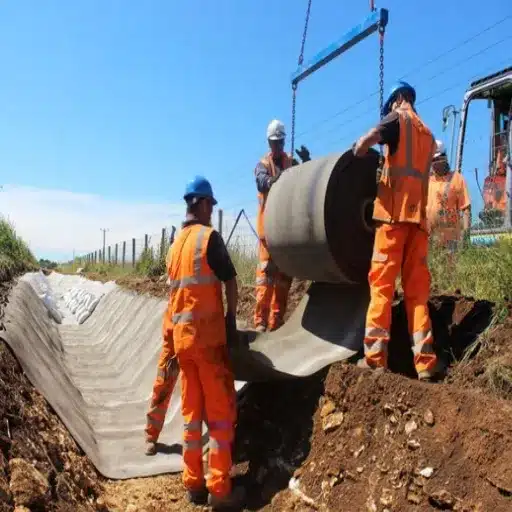
There are several benefits of using GCLs as opposed to compacted clay liners. One of the main advantages of GCLs is their ease of installation, which occurs faster due to the lightweight rolled modules. Additionally, the GCL requires very limited space for construction, owing to the fact that the bentonite geosynthetic clay liner can replace meters of compacted clay. They are malign-comprenant, that is, they perform well even under harsh conditions while costing much less due to reduced cost of construction materials and labor. Furthermore, other sophisticated techniques, such as the use of electrical resistivity tests, have helped to enhance these.
Q: Are GCLs environmentally friendly?
GCLs are indeed considered green technology. Usually, mineral sodium bentonite is mainly used in a bentonite geosynthetic clay liner (GCL), which is sourced with very minimal environmental resources. The application of GCL also provides freedom of operation for green practices construction or rehabilitation without resorting to any extreme intervention in the process.
Q: What industries commonly use GCLs, and for what applications?
The application of a bentonite geosynthetic clay liner (GCL) is diverse; it is not only used in waste management but also in other areas such as mining and civil engineering. Among other materials and structures, GCLs can be used in the construction of landfill liners and covers, tailings of a mine, impoundments, ponds, stormwater embankments, and any other underground structures. Therefore, GCLs being flexible are appropriately utilized in advanced containment scenarios with a preferred additional structural enhancement of composite liners.
Q: How can the performance of GCLs be enhanced?
The performance of GCLs can be improved through various ways, such as correct installation and technologically advancing the processes. For instance, the employment of electrical resistivity leak detection systems helps in ensuring there are no leakages at a very early stage. In line with this, it is recommended to examine the layers made of GCLs and regulate the hydration of bentonite, which will help the bentonite geosynthetic clay liner to perform its functions longer. Polymeric membranes and other reinforcement types of materials can be used alongside GCLs for additional safety within containment structures.
📚 Reference Sources
-
“Geosynthetic Clay Liners Used in Municipal Solid Waste”
A report by the EPA highlighting the benefits of GCLs, such as low hydraulic conductivity, ease of installation, and self-repair capabilities.
-
“Hydraulic performance of polymer-modified bentonites for development of modern geosynthetic clay liners: a review”
A comprehensive review of polymer-modified bentonites to improve GCL performance.