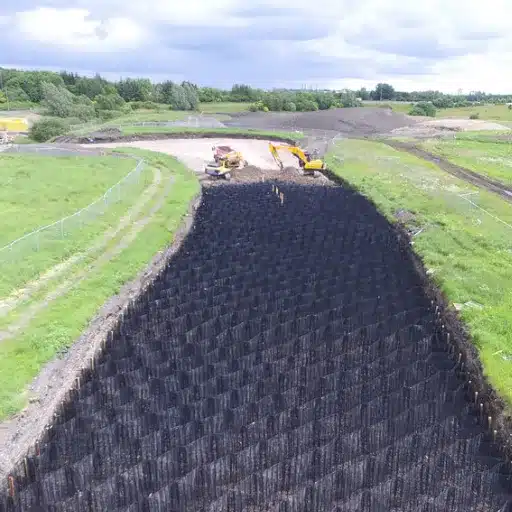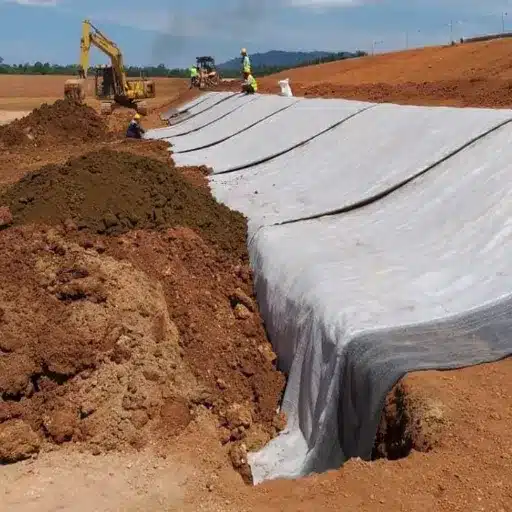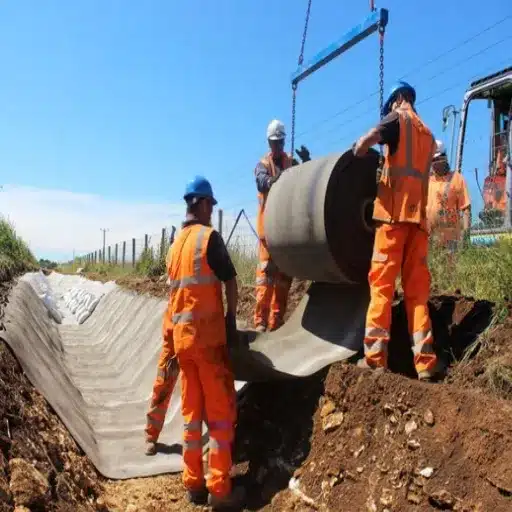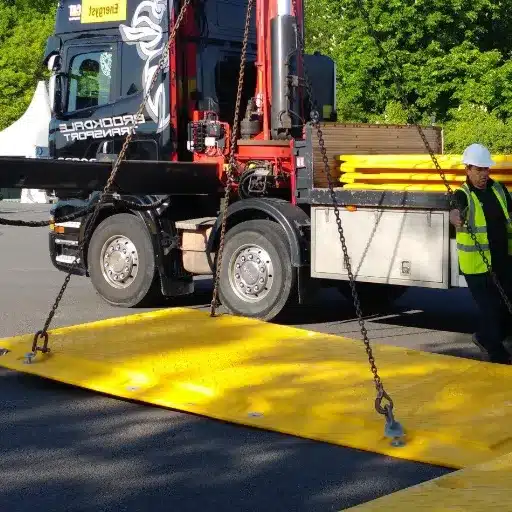
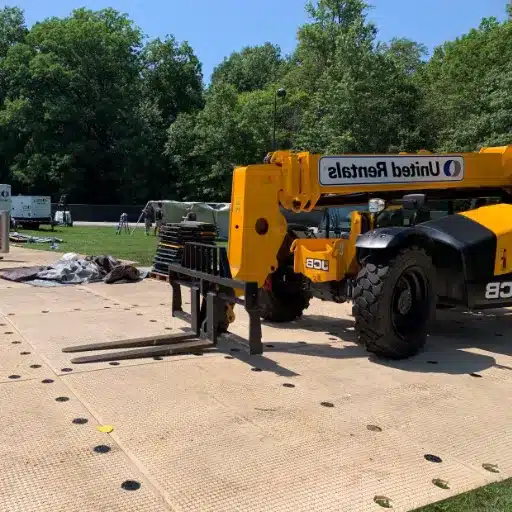
When overseeing endeavors in which the machinery is under use, or there is much earthwork, factors of subsoil condensation become very essential. Let’s get concrete and talk about composite ground protection mats, which have brought great change in various disciplines, such as construction, infrastructure, and even in events. Also, they are strong, and they do not weigh much, hence portable. This guide explains all composite ground protection mats constituents, use, advantages, maintenance, application, and the appropriate type to use; in detail. It does not matter if you need to maintain a delicate nature from the havoc of construction works, or have a good working surface. This particular article answers all the few questions you can appreciate are relevant.
Understanding Composite Ground Protection Mats
Definition and Construction
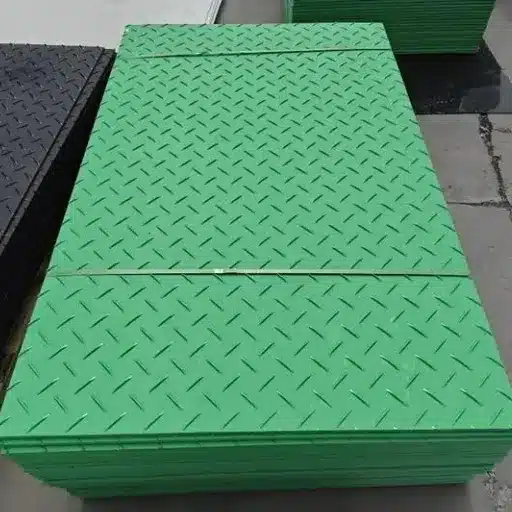
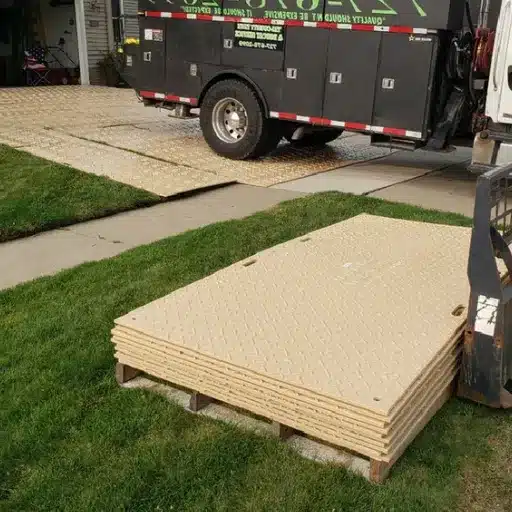
Composite ground protection mats are mobile and ground barriers to the issue of protecting soils from damage when developing land or associated heavy machines. For example, construction-based hybrid ground protection mats with heavy-duty ground resistance to conveniently prevent the splitting of the land beneath are such uses. These types of devices utilize the latter due to high-impact bearing polymers, with the high-density polyethylene (HDPE) being cited as high in strength and elasticity, as well as non- tolerant to environmental warping. Additional durability and perhaps other attributes can be achieved through the inclusion of other materials, such as plastic material components or composite materials technologies.
Slip-resistant features of existing composite mats have addressed safety concerns. Strength is added by the presence of interlock systems, which can be connectors or for anchoring each panel fast during manufacture. As these are light in weight and stable structurally, they are easy to transport and there is no fuss or frustration over cutting and joining pieces of plywood or sheet metal.
According to available market data, some of the composite ground protection mats can support loads from 60 to more than 300 tons, depending on the type or the material used. This explains the presence of these floors in construction, oil & gas, utilities, and even in some outdoor events. Moreover, such surfaces do not corrode in the presence of any chemical contamination, intense exposure to the ultraviolet rays or tough weather conditions, thus can be used several times over longer periods.
The usage of composite ground protection mats enables the firms to significantly reduce if not completely do away with ecological footprint, preserve the most fragile grounds, comply with the environmental protection regulations, and aid organizations in cutting down costs and time.
Material Composition and Benefits
The first solution is in the class of composite ground protection mats and other plastics made of high-density polyethylene (HDPE); it also possesses an excellent strength-to-weight ratio. Even though this still bears the traffic of heavily loaded vehicles weighing up to 120t, the boards of high strength do not affect each knee joint among them. It’s lighter weight than other construction materials on the market, which also possesses cracking, breakage, wear and tear, degradation resistant properties makes it a wonderful material for construction even in cases of extreme cold or heat.
Another important characteristic of HDPE that makes it more eco-friendly is its range. A great attribute of HDPE that is efficient due to its properties is that, whereas wooden mats do blister, the removal or degradation of composite mats is not a common factor as they do not rot. This, therefore, also prevents the overuse of Weigh-lo mats in a very short time. In this regard, HDPE is very eco-friendly regarding its use as being able to reduce waste by mixing it with other building elements or by incorporating supporting structures. Furthermore, the tearing of the substance, which is unlike the chemical bonds, UVI, which is through the weakening of the bonds by attacks, does not occur because there are no properties of that nature.
Studies indicate that HDPE composite mats have an unusually long service life and can last over 10 years without necessarily requiring replacement, depending on the maintenance. For that reason, the mats are cost-saving because the consumers do not have to incur the cost of replacing and repairing them as often. Added to that, these motor mats have anti-slipping surfaces and are fitted together for stability of usage even on soft ground.
At last, the benefits of composite ground protection mats are the use of the best technical solutions existing in the industry’s nomenclature and at the same time efficient expenditure of resources associated with lightweight, innovative, and reusable ground protection techniques that do not destroy the surrounding.
Comparison with Traditional Materials like Plywood
Composite mats offer many makeshift flooring solutions that are more cost-effective than washers. Recent industry assessments on paid services show that the field composite mats are made from serve a lot longer – a maximum of ten years of operation, provided one stores and carries them in thin cases (whereas for plywood, this is a few uses and then the plywood bursts or becomes cheap). Further, composite ground protection mats can bear more load than an equivalent thickness of plywood means 600 PSI (pounds per square inch) of bivings can be withheld, which is much greater than the corresponding index in plywood.
One more reason to use compact grown materials is their high weather resistance. There are no such harmful effects that cause any change in performance from the composite ground protection mats, even in freezing or scorching situations. Plywood, on the other hand, absorbs water, and such water retention leads to the weakening of the structure over a period of time. In addition, chemicals, oils, and some sorts of fuels can not penetrate composite mats, which is very good for those used in, for example, industries, where spillage of such liquids is in question.
One encouraging fact is that, for instance, composite ground protection mats, unlike traditional plywood mats, are on the lighter side. The above difference in weights enhances the price and the ease of setting up the mats. Take an instance where the average weight of a composited mat is 250 pounds; for a similarly sized plywood mat, the weight will be higher than 300 pounds. The aforementioned reduction in weight also increases the performance of the machinery in stacking the mats.
The price of these mats is higher compared to their counterparts because of being durable and reusable, which makes them quite affordable over time. Wherever plywood is replaced with composite ground protection mats, a firm’s burden lies heavily on the cost of purchase, as well as disposal diminishes greatly. Stylistically speaking, composite ground protection mats are able to strongly ‘rhythm with’ the current ecological trends, as they are always disposed of by recycling, whereas plywood disposal encourages landfill filling.
Such advantages of composite ground is an advantageous option for those industries that have heavy activities on the surface, and these are cases aplenty where protective systems are used. Hence, the composite ground protection mats offer a practical ground protection solution for heavy operations in a green and cost-effective way.
Primary Benefits of Using Composite Mats
Durability and Reusability
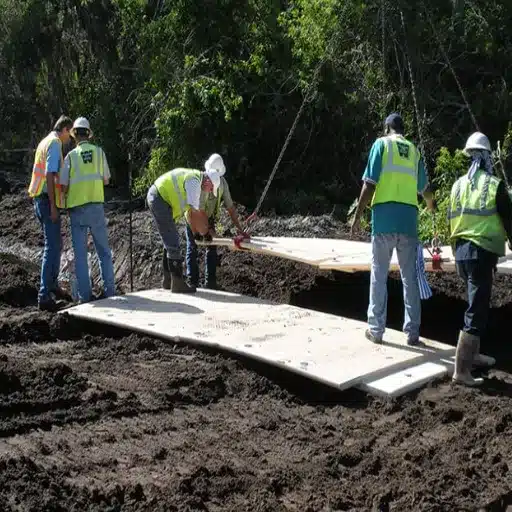
Composite ground protection mats, unlike plywood mallets, are heavy-duty mats, meaning they can withstand harsh conditions for a long period of time; thus, they should be more rigid and avoid frequent damage. And just of late, there came out certain information about the industry that the composite ground protection mats serve at least tenfold better than the plywood mats before they need replacement. This is because they are very strong and therefore they can bear weights of about 600 psf and more, which gives them a wide range of applications such as construction or energy activities.
Mats of composite materials have the advantage of being made with durable, stable surfaces that do not need to be laundered with frequent washings, and washing, or keeping them in such good condition for so long contributes to its longevity. Perspex or any other thicker mats made of plywood assist moisture absorption during periods like the rainy season, resulting in warping up the mat and splitting it apart, but composite ground protection mats are impervious to water, resistant against adverse chemical reactions, and respond minimally to high temperatures. This enhances the product applications across diverse areas, such as muddy and rainy areas where work is performed or high-temperature industrial environments. This is crucial because it not only reduces the need to replace them often, as would have been the case but also reduces the cost that would have been borne.
Cost-Effectiveness Compared to Alternatives
With this information, it is important to bear in mind that composite materials such as Ground Protection Mats are cheaper than the conventional Plywood mats. According to the various reviews, there are high chance that a person will use a composite mat for a maximum of ten years without any damage. On the other hand, plywood is replaced after a few uses, especially when working in severe environments. Even though the price of composite mats is higher, it is imperative to remember that they serve for a longer period, which means that they can be reused, trying to analyze the equivalent cost per unit. Composite ground protection mats will, for instance, reduce the operating costs in excess of 50%.
More significantly, these mats are carbon-neutral, considering that a few uses can destroy plywood mats, resulting in disposals. These types of mats are highly resistant to deformation and do not react caustically with different chemicals, thus reducing the costs of cleaning. The composite clients also place and remove them much faster and easier, and in most cases cut down both the time and money. They have used composite ground protection mats in the industrial sector, battling a lowering productivity by 20-30 %. That is why their application can be found in many new fields, for example, housing development, oil and gas extraction, etc.
Environmental Impact and Eco-Friendliness
People working in the construction field are getting more knowledgeable about the usefulness of other surface protection mats within the work area. As an example, the composite lace ground protection mats have more advantages compared to wood. They are popularly used in the dewatering ponds, excavation works, and the like. These matings are not eco-friendly because they are made from solid timber, which leads to deforestation, which leads to the depletion of particular resources. Composite matting on the other hand, does not use wood but uses recycled HDPE (high-density polyethylene). Therefore, a lot less strain is put on nature. It is known that wooden material, such as wood, accounts for almost 50 percent of the carbon emissions. These, in contrast with the latter, can go without a scratch for decades because they are multiple times usable, and encumbrances could do little to scratch them.
Moreover, composite mats complete their full cycle, being entirely recyclable, considering that they are produced for routine purposes only. This contributes substantially to the fact that the landfill disposal of these composites is not practiced. Such waste management systems are in place. Waste induced by large infrastructure on the other hand, is estimated, among many other numbers, to have drastically reduced this number every year by many thousands of tons. Also, such an advancement from the manufacturer can easily be extended to recycling as well when it comes to producing textured mats, because in the structures, there can be up to ninety percent recycled material. Flexible ways of adopting composite ground protection mats instead of aimless genie engineering.
Moreover, composite ground protection mats render additional advantages as they help in preserving fragile ecosystems. The stabilisation of load is provided by the evenly distributed surface structure of the mat while ensuring no compromise towards soil properties that could propagate root damage or water routing. Therefore, they are suitable for carrying out construction activities even on environmentally sensitive areas like marshlands and animal sanctuaries. Industries can incorporate the use of composite mats in their assignments to achieve high levels of environmental safety, and it also further contributes to global sustainability.
Common Applications Across Industries

Construction Sites
The construction industry also appreciates its vital role, for they help to build more long-lasting roads / duraplatforms in places where they are needed. Mats may be placed and geometry minimized while the surface is upheld. This conclusion comes from a study conducted in 2020 to explore the consequences that composite ground protection mats have in the communities where their services are offered, i.e., that even on bare and existing open spaces, the high percentages of damage both cause are cut in half by switching to ready-to-use APEL. Certainly, these are of great advantage in terms of anti-burnout measures and possession of natural resources. They are lightweight, which is beneficial for easier/cost-effective transportation, thus less completion.
For instance, considering contemporary wooden product industry reports, there is a tenfold difference in the number of uses a single composite mat and a single wooden one can withstand, which provides long-lasting financial and ecological benefits. Urban centers and other areas with soft ground that require reinforcing are now widely using these materials. Since the composite ground protection mats are reusable, it provides for little or no wastage from disposal, which is one of the concepts of green building practices.
Outdoor Events and Festivals
When it comes to carrying out any outdoor activity, there is a concern about ground protection, ease of access, and ecological aspects, always suggesting demands for durable solutions that stand the test of time. Composite mats are finding their application in fields such as the construction of jetties for enhanced serviceability of the mat due to the material make-up being resistant to the elements as the years go by. On this account, it has been approximated that the composite ground protection mats market will grow from 2023 to 2030 at a rate of 4.5% per annum, owing to an increased demand for safer and more environmentally friendly options not only during events but also in construction. As many of these types are designed to bear some level of equipment use or walking on them, a feature of these mats is that they are designed to flatten the weight of equipment on the ground so that the ground is not destroyed by it.
Furthermore, most of these can be reused across multiple events, which is invaluable in keeping logistical costs to a bare minimum. An example of this involves building composite mats in such a manner that they are able to control crowds of thousands of people and not let them litter the festival compound, make mobility easy for the disabled, and protect the land-vegetation from being destroyed. This is the problem that composite ground protection mats are designed to tackle, and it’s commonly found in event set-ups that are found outdoors today more than ever, as green practices are on the rise.
Utilities and Landscaping
Composite mats are integrated into the landscaping and utility industries because of how well they work and how easy they are to use. These mats always have temporary roads, and the ground surface provides protection and is applicable in any type of utility construction where aerial or excavation works are needed. Presently, it is alleged that while the installation of normal wooden mats would mean saving 60% of the ground, composite mats help conserve up to 60% more on the cost of rehabilitation of land. This is because the ground is not affected as well as the surface in which the heavy machinery is used. Composite ground protection mats are used in natural settings.
In a comparable manner, the composite ground protection mats find application in the field of landscaping to safeguard lawns or any gardening space, and other delicate spaces, during construction works or even when maintenance works are being undertaken. These mats are made with the purpose of being very light, while also having restraint and toppling strength when necessary, hence their deployment requires a minimum of equipment and ropes. Due to the additional redundant rotation, the problem is now not so much relevant as to most of the prominent annotators who claim that these composite board reinforcements can play integral roles in the construction project, where they last longer than wooden trading boards usually by a factor of between three and five, making them three times cheaper and relatively green. D However, it pays to try and consider such positive aspects, especially the innovative designs propagated, over quite a few factors, people would no longer take kindly to expect those trends to turn out well.
Oil and Gas Industry
Various issues are associated with infrastructure, the environmental impact of the oil and gas business, and operational effectiveness concerns. These issues have been increasing over time and composite ground protection mats are a significant solution to maintain the requisite levels, especially in sectional temporary worksites deployment, and safety. Studies reveal that the composite mat industry will keep expanding within the period of four years to the end of 2030, so that the industry will reach 2 billion US growth per annum by then despite the annual 5.6% increase. Their effective usage is so popular in the oil and gas industry because of their ability to withstand extreme temperatures, the durability of work materials to chemical attacks and their platforms present on such weak soils that are not capable of supporting the weight of machinery.
Ecologically sensitive areas require great care, including minimizing the risk of soil degradation and depletion of vegetation, and one of the ways of achieving these is through the use of composite ground protection mats, which also helps the company in adhering to its policy and achieving set targets. Over 90% of high-end composite mats are reusable, which means that they are efficient economically over a period of time. To give an example, a composite mat in respect of strength and duration of use can replace quite a few wooden mats, thereby reducing the material wastage.
Most importantly, companies using composite mats cut on the time spent on site maintenance or infelicitous grounds, making it possible to increase the level of operations by up to 20%. This is useful in the context of shortening the calendar of projects, but this innovative approach greatly lowers costs in aggressive oil and gas operations as well. However, also in the same spirit of quick innovation and environmental conservation orders as per industry, composite ground protection mats are projected to be of great need.
Comparing Different Types of Composite Mats
Design Variations and Weight Differences
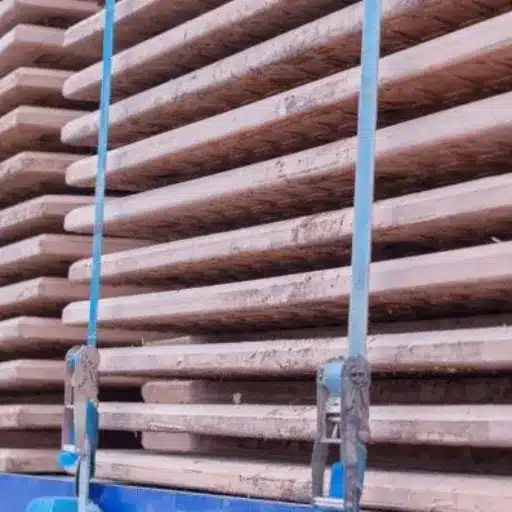
In their design and construction, composite ground protection mats take different forms depending on the anticipated conditions in which they will be used. In this regard, other factors such as the weight of the composite mat also play a role in its purpose and functioning. Specifically, there exist basic types such as interlocked types, solid types, and perforated types. The interlocking type of mats offers extra stability, making them applicable to soft grounds or areas with terrain. Single-piece solid mats can bear much more weight, for example, in construction sites where large machinery is used. Perforated mats, on the other hand, cannot bear much weight, but in areas with lots of water, especially, help to release extra amounts of water.
When it comes to weight, composite mats tend to be much lighter than the wooden or steel mats for installation, which in turn results in significantly lower transportation costs. For example, composite ground protection mats made of polyethylene materials (HDPE) are forty to sixty percent less dense than wood mats of the same purpose. HDPE composite mats weigh in the range of 200-300lbs while, while heavy-duty timber mats would be as much as 1000lbs. Also, lighter mats come in handy since they are easily manipulated, especially when installing them and fixing the site as well, which increases productivity on the site.
Boosting the resistance of composite ground protection mats without increasing their overall weight is also possible with specially strengthened Mats that include, among others, fiberglass and carbon fiber. Such repositionable mats with high strength-to-mass ratio are common in such industries to allow cheaper use, as the mats can easily be moved after use to different locations.
Soft ground protection, containing the composite lightweight mats, makes the work of organizers more efficient with regard to the site as they don’t increase the mobilization and operational costs. These mats’ adhesion is in the construction industry, oil and gas industry, and among other utilities such as telecommunications, eliminating the effects of construction as well as enhancing its value, besides its weight and the type of materials used in the mat.
Size Options and Compatibility with Heavy Equipment
There are different measurements for such boards. Composite ground protection mats of different measurements are specifically made to fulfill the provision of the exact infrastructure that is required, the extent of risk assessment, and the available equipment that will be operated within the confines of such construction works. Generally, these materials are available in 8 or 4-foot widths and 14, 8, or other lengths if the specific size is required for the place where they will be installed. The boards work well to accommodate the heavy weights as most of them have a pressure resistance, which exceeds six hundred psi. As such, all types of businesses where a crane is used for construction activities, digging or anything else that requires using heavy machinery are going to require these kinds of boards.
Recent studies highlight that in some composite mats, the reinforcing mechanism is such that the mats-shaped restrict or retains the controlled movement within the assembled structure. This is achieved by including or attachment materials such as high-density polyethylene (HDPE) or fiberglass composites that do not bend easily or get corroded even when exposed to tough environmental conditions. Hydrodemolition labor composite mats are reported to be more maintenance-friendly and wear-friendly than the trestles made of wood, and thus the replacement labor, which has been estimated at around 20%, is cut down.
Further, this aspect also reflects the fact that the materials used, meaning the weight, were also an aggravating factor as it allowed completion of movement in significantly less time due to easy transportation or installation at the site. In contrast and without prejudice to other factors, the average weight of new generation composite ground protection mats is within 10-30% less than that of composite covers with similar characteristics, resulting in lower estimated costs for transportation and improved logistics management associated with such developments.
Pros and Cons of Each Type
Composite mats
Composite mats have seen robust growth over the years, particularly due to their durable, renewable, and green nature. Primarily, these types of mats are fabricated using HDPE, which stands for high-density polyethylene. This compound is largely used in harsh and weight-bearing environments. Several examples provide a basis for the use of composite mats for a decade, while a wooden mat would have been used for only several years. Beyond that, the mats do not allow water penetration, there is no concern regarding chemical penetration and other relevant spills. This naturally makes such Composite mats more eco-friendly in industries such as construction, oil and gas, and Utilities.
Some data readings infer that, though the composite mats are priced for a higher amount or even significantly higher initial purchase price, which is between $400 and $700, these same mats in replacement or disposal cost less than wooden mats, between $100 and $300, as one composite mat can be used longer with the necessary modifications. The other issue of concern is that the composite ground protection mats being lighter in weight are advantageous in terms of logistics, which sometimes cut down the cost of freight by about 30%.
Traditional Wooden Mats
Temporary wooden flooring solutions, ideally available for short periods, are fabricated out of dense materials like wood trees, mostly oak or pine. This is because they are economical, easy to understand, and established in the market. They serve in this way by carrying out short-term preparation of the ground in areas that are away from civilization or in forested areas. These panels are by themselves, very slippery and will come off in good environments. According to different reports, this suggests the replacement of wood flooring systems every 2-3 sittings, depending on the circumstances of installation and use, thus incurring the expenses for more than a few days in application.
In addition, the industry of wooden mats is a great contributor to deforestation, as for their production, the cutting of trees is in millions every year. After their useful life, a high proportion of such mats end up in landfill sites, complicating the waste management efforts. Also, not all of the treated wooden mats are properly disposed of; however, the compounds found in some of them are quite poisonous, which makes it difficult in terms of their environmental impact.
Comparing Sustainability and Economic Impacts
When it comes to sustainability considerations, composite mats are a better solution because most of them can be recycled and thus scrapped (whereas wooden mats, in general, cannot be). On the other hand, wooden mats are cheaper and can be used when it is a project that is price-sensitive or does not serve any permanent purpose.
All these findings, whether they come from project lengths, environmental issues or budgeting, enable companies to adopt or plan for the best matting that will suit their purposes.
Reference Sources
-
Data Bridge Market Research
- Title: Global Ground Protection Mats Market Size, Share, and Trends
- Key Insights: This report discusses the growth of the ground protection mats market, highlighting their demand in the construction and event sectors for creating safe and stable surfaces.
- Link: Data Bridge Market Research
-
USDA Analytics
- Title: Ground Protection Mats Market Demand and Growth
- Key Insights: This report provides insights into the increasing demand for temporary access and ground protection solutions, emphasizing their role in industrial and infrastructure projects.
- Link: USDA Analytics
-
Transparency Market Research
- Title: Ground Protection Mat Market | Growth, Trends & Forecast 2035
- Key Insights: This source highlights the durability and robustness of ground protection mats, their applications in protecting surfaces from heavy machinery, and their role in sustainability-focused projects.
- Link: Transparency Market Research
Frequently Asked Questions (FAQs)
What Are Composite Ground Protection Mats, and How Do They Work?
Reinforcement of spacious and flat surfaces situated upon porous and weak bases against high loads is perfectly performed by composite ground protection mats. They are made from the most expensive materials such as HDPE and several other composites that possess high tensile and compressive strengths, and are used to minimize ground compaction, and groundwater erosion, and mechanical damage while construction, landscaping, and special operations are in progress. This is particularly useful in winters where such mats need to be used so that there is no salt ice melt; therefore, grass or fertile soil does not die due to pedestrians or machines used for removing snow.
How Do Composite Mats Compare to Traditional Wooden Mats?
In construction, the use of composite mats for ground protection is better for businesses than wood, even in the sense that it neither gets compromised when in contact with fire, nor would it discolor. It is not degradable within a short time, causing splinters or rotting. This is because it does not get soaked in water to a degree to make it pulpable. It is also common that composite mats are made of recyclable material, and as such, there is quite a low impact on the environment. Bear in mind that wooden mats may be cheaper, especially on smaller, low-scale projects but ultimately, the business behemoths would scope to use composite ground protection mats given the logic of cost and the green economy principles.
Can Composite Mats Be Used for Temporary Roadways?
Composite mats can certainly be considered to be perfect for temporary roadways. They are composed of solid material with a unique locking design allowing any traffic from vehicles and gears to easily navigate even in sloppy or uneven terrains. One can more easily reach remote or operating locations safely and easily while using these mats. No surface gets damaged directly while driving on these mats. The use of these mats is more popular, particularly in the construction industry, than in any other industry because they provide effective technology and one that has a long life for different reasons. For instance, one can make use of composite ground protection mats for these purposes.
Are Composite Ground Protection Mat Materials Eco-Friendly?
It may be perceived as fair to consider that composite mat materials are environmentally friendlier than their older models since they can be recycled at the end of their useful life, thus eliminating the material from the landfill. In addition, in order to preserve such habitats, they do not alter or disturb the soil or any other surfaces where it may be laid down. Composite mats are also known for being very firm and durable; thus, more rarely than the aforementioned wooden mats, and less carbon emissions are produced from them.
What Factors Should Be Considered When Selecting Ground Protection Mats?
Several essential factors can influence what type of ground protection mat an individual should get. Such issues might range from costing to available options. Of importance in this context is the rapid intervention as opposed to the permanency. In terrain which is often frequented by large machinery, the Usage of composite floor sheets becomes inevitable. Use of this technology also increases the forces applied against and outside impact remarkably. Finally, every individual in today’s society will prefer the option of a composite mat due to the immense pressure of environmental protection. When funds are rare or there is a need to use mats briefly, the Most can be constructed out of leashed ground slabs and pay wherever such a service is available.
Can Composite Mats Be Used in Extreme Weather Conditions?
Certainly, the combination highway mats are developed for use in all types of weather conditions, whether cold or hot, wet or snowy or stormy. This is possible since the type of mat is made of materials that water cannot penetrate, and so it does not get socks or warp or simply rot in the manner of wood mats. These specific safety mats may not be very useful yet, but the anti-slip property is among the most important features for safety reasons. Also, one cannot disagree that these mats are a worry to central, they are used in any season.