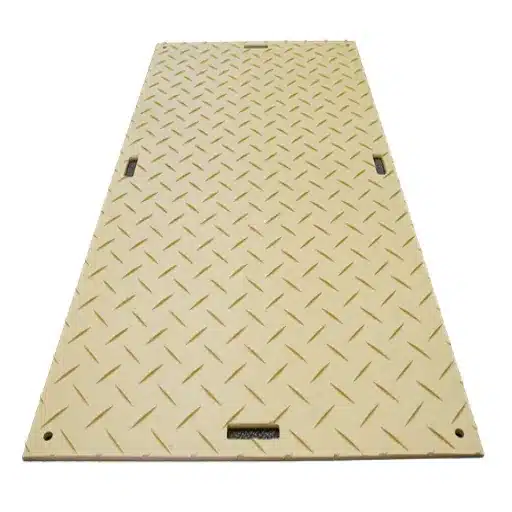
Mats are available in a wide range of materials that can be used for different purposes and working environments. This is because there are several advantages associated with its use, especially in terms of adaptability, durability, and safety. In certain applications, it is advisable only to use composite mats, while in others, fiberglass reinforced mats are best suited. Nevertheless, how do you choose? This piece attempts to do just that by elaborating a comprehensive load-bearing analysis of each material, looking at what purposes certain types may be useful and which are not. After reading the article, you will be better informed to make your choice with ideas and suggestions.
Introduction to Heavy-Duty Mats

Importance of Load-Bearing Capacity
It is important to highlight that the bearing capacity of the majority of the mats is crucial, as it is essential that these mats do not collapse under enormous amounts of mass or pressure. This is because there are such activities common with construction, oil and gas, and even transportation using cranes, lorries, and other machinery which can produce high levels of pressure on the ground.
Composite Mats, for example, are very well capable of carrying 250 psi and over to even 600 psi, which ensures usage in medium and heavy-duty conditions, respectively. However, other heavy duty matting systems can take up to 750 psi steel included sunbathing mats included and are thus very super-strong heavy mats. Thousands upon thousands of High-Density Polyethylene (HDPE) mats are also very much in use, and they can bear loads pretty well up to 120 tonnes, being relatively lightweight structurally but having tough operable exteriors.
Progress in material composition has made the weight-bearing capacity of structures even a notch higher than before. Such advancement is seen in the improvement of technologies in many ways; these ways include materials such as hybrid composites varying as ultra-high molecular weight polyethylene (UHMWPE), and still being more pronounced in that it ensures longer service delivery while allowing the user to still use the rough equipment with lots of protection and no rigidity. Hence, being so, such developments are very crucial for ensuring safety, as well as minimizing damage to the ground, and even maximizing the impact of any activity.
Composite Mats Knowing the loads that are necessary for a grid, as well as the materials and specifications of any available mats, will help one to attain efficient performance in the long run.
Overview of Composite and Fiberglass Reinforced Mats
In recent times, the demand for mats made from composites and fiberglass has been on the rise in many industries due to their enduring quality and green design that can be utilized in many platforms. As such, what is a proper engineering practice is to anticipate such loading when designing them, and for certain mats of a certain performance, they can readily hold even 600 tonnes. Thus, composite mats are gainfully used in sectors such as heavy construction, oil and gas, utilities such as power and water, as well as renewable energy resources.
Rising volumes of research point out the need to substitute very efficient materials commonly utilized for certain time spans, with similar raw materials, which can be recycled. Whereas Composite Mats constitute extreme cases, since they are designed from metals that can be recycled, this combo presented another chance for the reusable temporary floor bracing systems that are currently in use. On the other hand, they do not require replacement for many years because they do not undergo decomposition, corrosion or destabilization from high and low temperatures and weather fluctuations, compared to wooden mats, and performance maintenance is affordable.
The construction mats industry is projected to increase moderately by 5.40% every year on average in 2023-2030 due to the growth of infrastructure and energy project activities in almost all parts of the world, particularly. Thanks to technological development, which has caused the Adhesion Properties Enhancing Mats to be used at any other level in every country. The normal mat market, which is the construction mat composite mats market. This market is largely unique because of its very low mat composite weight, making it very easy to install and not requiring a great deal of direct labor.
For the Glass Woven Mats, they confer an advantage in that they are electrical non-conductors and as a result are appropriate in utility as well as power line tensioning works. Graph 17 illustrates purposes within an institution where composite mats and fiberglass can be applied effectively and appropriately, enabling users to avoid the risk of electric shock.
Composite Mats Also Known As Fiberglass Strengthened And Matweight Reduced Fillers With Ground Level Annulars In Between The Two Aspects Of Sub Aggregates Any of the two aspects of sub-aggregates, have been praised in the matting spacing and mound surface solutions industry. This trend could be maintained within the industry with an, among other things, an appropriate choice of materials and proper maintenance.
Applications in Construction and Crane Operations
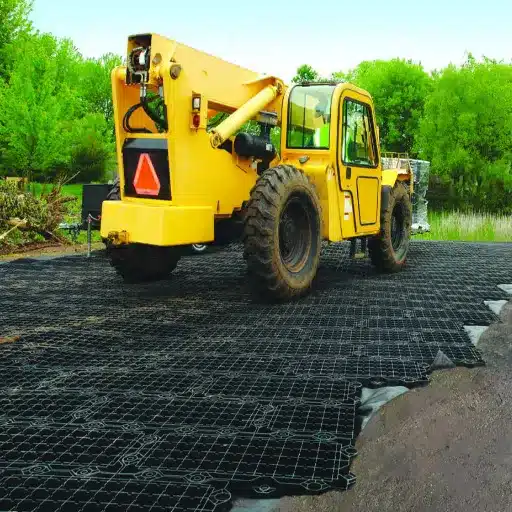
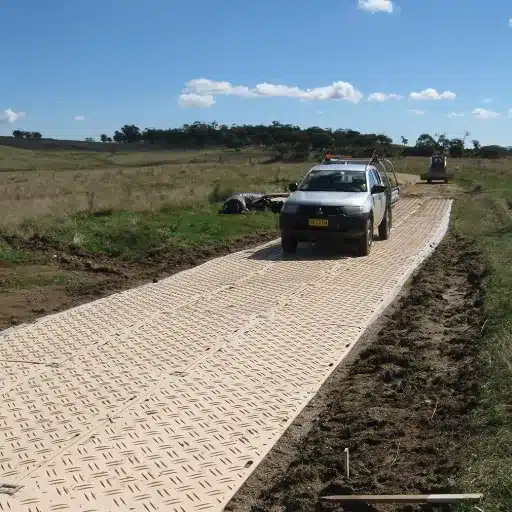
It should also be noted that composite materials and mats reinforced with fiberglass are more and more widely used in building constructions and lifting works with cranes, as they do not allow the entrance of heavy machinery in conditions where the soil cannot be fortified, and also improve the safety of activities on hard soils. According to statistics, these mats can take a compressive strength of more than 600psi, meaning they are engineered to bear the weight of heavy equipment such as a crane, trucks, excavators, and other portable heavy equipment where timber sheeting would not suffice.
Furthermore, further understanding of these systems has proven quite beneficial for a structural engineer in the sense that such solutions are lighter, faster to install, and move, helping in reducing the project’s delays by approximately 40% as compared to conventional protection board usage. Even with maximum allowable impact loads, composite constructions are the shortest way to reduce the wear in the working machines up to 15%, since it means that heavy loads are facilitated to drive over a flat surface. Composite Mats.
One such added advantage with these mats is that they are non-steel, which is a good thing, especially when cranes are used around power lines and electrical hazards. Composite Mats also have a tendency to include environmentally friendly materials, thanks to the evolution of such products, which can last three times longer than any other existing solutions in the market, specifically designed for durable applications.
Material Composition of Composite Mats
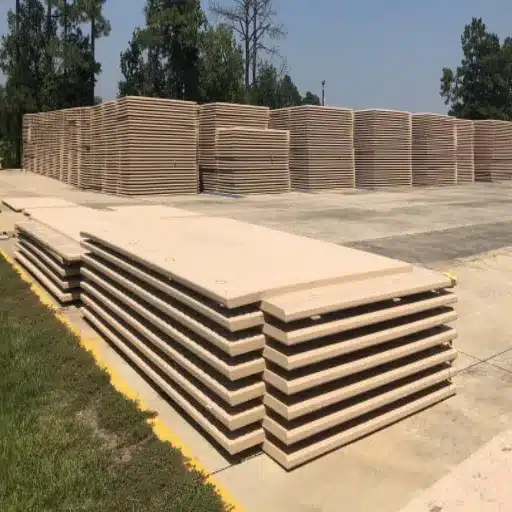
Types of Materials Used
Composite Mats are produced using advanced materials and plastics such as HDPE, fibreglass, and the like. It is this property of the materials that makes them so effective and robust. For instance, transportation, handling, and installation of HDPE can be done easily, because of its very low weight and high elongated strength characteristics. In the same manner, fiberglass reinforced plastic is incorporated to strengthen the composite so that it doesn’t corrode due to acids or sun rays or the action of several chemicals.
Studies have shown that HDPE composite mats can support over 300,000 pounds and allow for some deformation, which makes its use appropriate in the transport of such heavy machinery normally used in construction and the energy sector. Additionally, such materials are very strong and could perform their functions even at −40°F to +140°F; some are meant for such conditions in which the most volcanic regions are found.
Many composite mat manufacturers have, understandably, addressed the issue of environmental apprehensions by substituting virgin HDPE with either recycled HDPE or recyclable HDPE. For example, according to the report on the same industry of 2023, the percentage of recycled materials in the commodities of a composite mat can reach as high as 80%, of either post-consumer or pre-consumer plastic. With these steps, it becomes more or less reasonable why composite mats are quite attractive to virtually most modern organizations from a practical point of view, apart from the ethical considerations пага більше. Further, further spreading the load on the underlying soil thus reducing the pressure and most importantly eliminating the possibility of damage of the Composite Mats.
Durability and Resilience of Composite Mats
Composite Mats are made to withstand harsh environments and therefore, prove to be instrumental in major operatory areas, including construction and infrastructure development, oil and gas, and some other utility services. This is attributed to a larger extent to what they are made of – HDPE and several other advanced polymer composites, and any other material that is not without efficacy. For instance, as far as I am concerned, the recent information practices indicate that the composite mats in question can support in excess of 600 pounds per square inch, and this makes them suitable for use with cranes and other similar equipment, which is not permitted with some of the big machines.
It is also important to mention that numerous studies provide composite mats that can endure water, chemicals, and even high and hot temperatures without affecting the surface. For example, the solutions are efficient in use within the given range of temperature, between -40 degrees Fahrenheit and 140 degrees Fahrenheit or -40 degrees Celsius and 60 degrees Celsius, respectively. It is vital due to the fact that this situation may arise, and it is possible that, as time passes, the wood or steel mat may be bent or damaged.
In addition, assembly points are significantly improved as composite mats sometimes comprise devices that assist in slip control or load cages that evenly distribute the loads. They come in some of the forms provided by design engineers who keep on addressing more issues of wear and tear; it is a case where they are even pledged for a decade by some of the producers. These advantages prove effective composite mats for minimizing replacements and work stoppages.
Environmental Resistance of Composite Materials
The report states that composite materials, such as mat, demonstrate considerable endurance in harsh conditions or extremely high temperatures. Unlike Composite Mats that are made with either wooden or steel mats, these types of mats have some challenges that include moisture, u rays expand the mats and their contraction and expansion. This explains the latest report that states how, in some types of composites, elements, as a result of the manufacturing process in question, can be at a temperature of 40° F to 140° F at any given weather, and based on the weather conditions, their properties are still maintained. and forms not distort or even corrode conventional construction patterns. In this manner as well, polyethylene resin based composites mats are very protective to chemicals and highly resistant to any exposure, including hazardous ones.
A number of research studies indicate that if traditional mats are used instead of the Composite Mats, it will be possible to use the composite mats twice as long as the traditional ones, resulting in a considerable economy of resources in the future, and companies become environmentally friendlier. Because these mats are very light and strong, they are also portable and easy to carry around, which means less fuel consumption and less air pollution, unlike in the case of transport during use. These qualities of composites, including durability, functionality, and ‘green’ material characteristics, encourage the use of these materials as opposed to any other available material meant for industries such as construction, petroleum, gas, and occasional events.
Performance Characteristics of Fiberglass Reinforced Mats
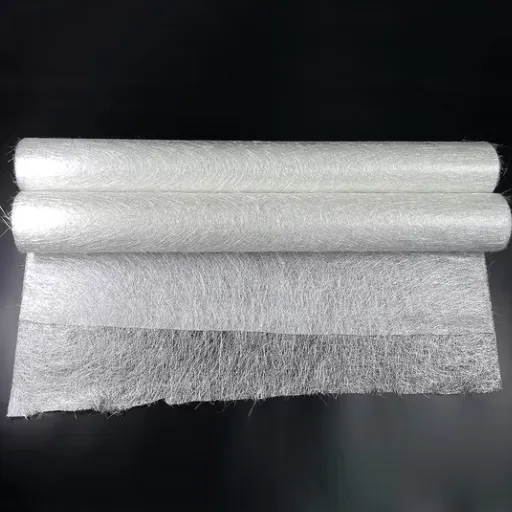
Load-Bearing Capacity Under Static and Dynamic Loads
Composite Mats with fiberglass modification can operate easily under the heavy and oscillating loads. The reason for that is explained by the research that these mats have already been subjected to loads ranging from 400 – 700 psi where only elastic or static factors were put into consideration during applications, thus making these mats ideal for construction and industrial use. Furthermore, the matting systems are efficient in shearing in dynamic conditions, i.e., through cross-truck stress in the physically carried out vehicles and equipment, minimizing ground disturbance.
Advancements in technology in this particular area indicate the introduction of Composite Mats, which are very stiff and can sustain very heavy pieces of equipment, such as trucks and cranes, even reaching 120 tons without much leakage or cracking. The introduced compounds have tensile strengths greater than 210 MPa (per meter hour MPa), thus they are crash-resistant. Additionally, the mats have a superior fiberglass tissue reinforced multilayer structure, for the mats particularly suitable for an oil area or any other kind of busy temporary or work roads.
Moreover, in studies, mats appear to carry loads and don’t break down, particularly in harsh environments, both very hot or cold, primarily making them very useful and easy to use in any region and eliminating the usage of thick wooden steel members that are harmful to nature.
Resistance to Chemicals and Moisture
Composite Mats are mainly reinforced to withstand chemical interactions and absorption of moisture, thus being ideal for surfaces like shop floors that experience spills or brine rains, cleaning solutions, among others. There is exposure to moisture; wood absorbs it, and rotting begins, unlike the case of composite mats, which do not absorb water. All these factors increase the lifetime usage and its counterpart, the reduction of contamination in specific locations.
It has been established that these composite mats do not develop any surface transformations or liquefaction upon contact with any of the industrial hydrocarbon fluids like oils, diesel, or hydraulic oil. In one test case, the Test Composite Mats were submerged in chemicals for 24 hours, holding 90% of the intended load. Furthermore, nonporous bottoms eliminate any spills, which makes the work safer and faster to do.
Composite Mats are significant assets in most industries as they can be used in the energy and utilities sector, building aegis as well as health and safety. This is most noteworthy because of their strength and safety features that facilitate chemicals in the hostile environment.
Temperature Tolerance and Impact Resistance
There are special Composite Mats that are manufactured for use in different temperatures, as these temperatures are likely to be harsh. Modern composites are available that can withstand temperatures within the range of -40 to 140 degrees Fahrenheit (-40 to 60 degrees Celsius), allowing them to be deployed in polar regions as well as hot and humid ones. The study explains how the composites’ structure resists the deformations that come in the form of bending or cracking due to abrupt temperature changes.
In addition to the above, it is well appreciated that high impact resistance is a characteristic of Composite Mats. It is well documented that high stress levels will not damage the more advanced Composite Mats because they stay true and functional for the working load in buildings and heavy equipment operations. The civil engineers resolved that the mats withstand loads as high as wastage-free facts per square inch longer, making them useful on meandering terrains. These aspects encourage their use, which makes them very valuable to use in harsh conditions where high strength and elasticity are required for such activities.
Composite vs. Fiberglass Reinforced Mats Comparison
Load-Bearing Capabilities: Data and Case Studies
Composite Mats have a variety of presentations in load- capacity. Therefore, composite mats are the perfect example for this since they are designed for high load capacity but have very low weight and material volume, meaning composite mats can take such force-bearing loads and will not easily yield. Recent studies have shown that high-density mats enhance higher bearing ranges owing to a smooth extension of the mat up to around 600 psi on soft mats or to around 1,500 psi on stiff beacons. This is the case in oil and gas industries or even infrastructure construction, where weight is a challenge, and the load capacities need to be tested.
Rather, Bitumen mats are regarded as some of the easiest mats to work with due to their stiffness and fiber-reinforced blanks, allowing work under high pressures. The thickness of these mats is much greater on comparison with composite mats that are only 400 psi (volleys); they can stand up to 800 psi, hence can be used and are perfect for heavy machines and tough conditions also. Moreover, they are capable of holding all the structural walls in place and many layers of insulation as well as enabling elevation of the walls only after completion, for example, in the heavy-duty under-lift slabs where cranes fill the gap or along the pipelines where the www composite mats are placed.
In any construction or development project, it is always preferred to use the two main types of mats as they increase the ability of work areas to withstand damage, which always delays the processes involved, while having a fair demarcation on construction equipment. The composite mats are, in many cases, lightweight and can be reused, making them competitive, while the fiberglass reinforced mats are more expensive, but the utilized strength and long service duration cannot go unnoticed. One of the two is dependent on one or more elements, which can be the respective loads, surfaces, and other factors such as cost, etc. As can be seen in the semiotics of translation.
Durability in Various Site Conditions
When carrying out a durability study, it is necessary to test every mat you can find in the scenario where atmospheric and topographical features change. Composite Mats My Cut—these are also such covers that withstand a range of temperature extremes, where they do not curl up from the heat of the sun, nor buckle due to the cold ambient conditions. It has been discovered in recent reviews that most composite mats’ advantages do not exceed temperatures ranging from -40°F to 140°F. It, therefore, implies that they can be used absolutely anywhere, including at the equator or at the poles.
It is the fibreglass-mat system that has industrially available applications, especially when accidents or rough industrial surfaces are involved. The numerous pieces written also say that the weight of a concrete mat would be higher than that of a composite material. This means that such materials can be used in certain projects with particular rotations of heavy mechanical work without any risk. Besides, unlike in other materials, the penetration of harmful substances in glass is minimal, which explains why this particular material contains indices of chemical spills and such.
There are two variants of Composite Mats, and each of them has a bow. However, or unlikely that both of them are used in reality, but there is no disadvantage. As an illustration, a composite mat can stand for example for 10 years being in use if it is cleaned each time it is worn out, whereas a fiberglass mat can be used for a longer period of time without raptors repair. Durability considerations incorporate weather-related aspects as some of the recently manufactured composite mats are fully recyclable, as per the contemporary eco-friendly tendencies.
Cost-Effectiveness Analysis
When evaluating something from a point of view of effectiveness in cost, both current and future expenditure must be considered and balanced. The current market price of a fiberglass mat is approximately $8-$12 for a square foot, though this may vary depending on material type and the supplier. Composite materials used to produce mats of a greater quality than common fiberglass mats go for $10 per square foot and above, which is twice that of a fiberglass mat costing only $6 per square foot. However, they have proved to be more durable as the cost of maintenance is minimized. It has been observed that back in 2023, some facilities took up Composite Mats and witnessed up to 20% fall in production downtime because of breakdown or reconfiguration, a particularly useful situation in jobs of that magnitude.
In addition, there is also some degree of vulnerability in financial aspects such as logistics and transportation. Composite Mats come in many makes; there are a few models which can be as much as 40% lighter than a similar fibreglass Mat. The charges for transportation in this manner are saved, especially if these mats are plentiful and are to be taken over long distances. Expenses for eWaste Clean Up decrease as the emulsion mates can be recycled, hence in this regard, there is a disposal fee decrease for them, which is good for the environment.
Every item has its own specificity and specific features; however, the choice should be made in each particular case in terms of the project budget, the frequency of use, and the environmental impact of such activities.
Reference Sources
- Handling of Glass Mat Thermoplastic – Explores the use of glass mat thermoplastic composites and their benefits. Read more here
-
Fiberglass Reinforced Plastics: Manufacturing Techniques and Applications
This book serves as a reference on the manufacturing techniques and applications of fiberglass-reinforced plastics.
Source
Frequently Asked Questions (FAQs)
What are the differences in load-bearing capacity between composite mats and fiberglass-reinforced mats?
Both composite and fiberglass reinforced mats are created using different material designs and the strength bearing capacity also differs. For instance, heavy-weight, high-impact composite mats provide optimum load distribution to support heavy vehicles as well as other heavy items. Even though fiberglass mats are strong, they are lighter compared to composite mats. Consequently, unlike a composite mat, the load distribution is not even, but medium and heavy weights can be supported depending on its use.
How do composite mats perform in extreme weather conditions compared to fiberglass-reinforced mats?
Composite Mats exhibit high resistance to harsh weather conditions that include heavy rains, extreme heat, and freezing temperatures. They retain their structure when exposed to varying climates and are hence suitable for use in all seasons. While fiberglass reinforced mats have durability, they tend to be more prone to brittleness in very cold temperatures. Nevertheless, the two types of mats feature coats that increase their resistance to the adverse effects of environmental factors.
Are fiberglass-reinforced mats or composite mats more cost-effective in the long run?
Composite Mats have high initial costs; nevertheless, their usage is cost-effective due to their durability and recycling benefits, which make them far less expensive in the long run, particularly for repetitive tasks. Composite Mats or fiberglass reinforcement and the use of other reinforced mats may be more economically appropriate for shorter duration or less intensive usages than others, but in some cases, they take a shorter time before a replacement is necessary, which shall end up escalating the cost in the long run.
Which mat type is better for sustainability goals?
Composite Mats are normally considered more sustainable because they are reusable. Waste Minimization and sustainability can be expected in Composite Mats as they can usually be recycled into newer products upon expiry of their useful lives. However, some glass linear tanks cannot be recycled based on the constituent materials available at local recycling centers – hence, their environmental protection capacity is limited.
How does weight affect transportation and handling for composite and fiberglass-reinforced mats?
Composite mats are made for easy transfer and movement to carry out huge projects at a lower cost since they take care of the strength-weight factor. Although glass-reinforced mats are a bit lighter than composite mats, they are not as durable as their counterpart. Cross-border shipping of both options caused cost and maintenance issues. The Factors weighing against the option are the weight consideration in one’s case versus the performance objectives achievable.
What safety features do composite and fiberglass-reinforced mats offer?
Composite Mats and fiberglass-covered mats promote safety in the workplace. For structural mats, the production of these mats increases the safety of infrastructure, as equipment sinking or deployment during construction is impossible. In contrast to the latter, fiber reinforced mats assure the same kind of safety, but not all of them can compare in terms of wear resistance with certain composite mats that tend to be very durable. Respectively, in their own work, this allows the operator to safely work in the surroundings by leveling the ground surfaces and making them work conducive.