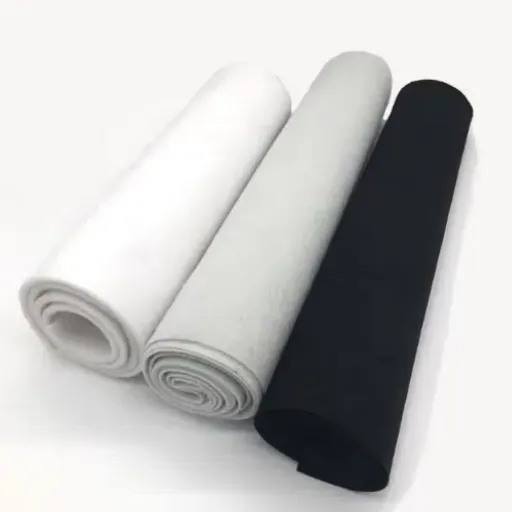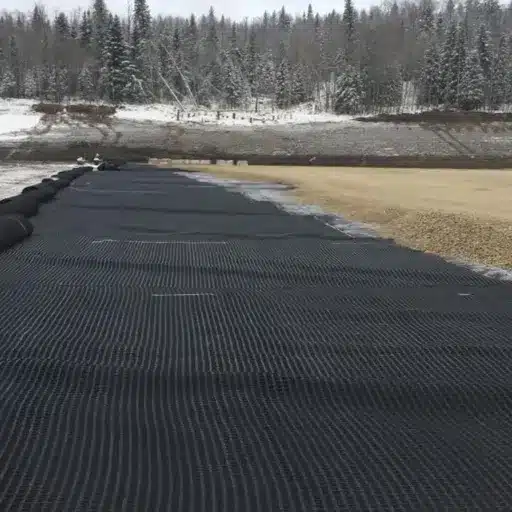
The use of Geocomposite Clay Liners (GCLs) had a transformative effect on industrial procedures, which protect the environment and create containment solutions. GCLs create an effective barrier system that lasts because they use the natural sealing properties of bentonite clay together with their advanced geosynthetic materials. The article presents GCL’s basic operation system together with its primary benefits and different ways it can be used to create trustworthy containment systems needed for landfill operations and mining activities, and water reservoir construction projects. This guide explains the importance and multiple uses of geocomposite clay liners for project managers and engineers, and people who want to learn about new environmental technologies.
Introduction to Geocomposite Clay Liners
Definition of Geosynthetic Clay Liners (GCLs)
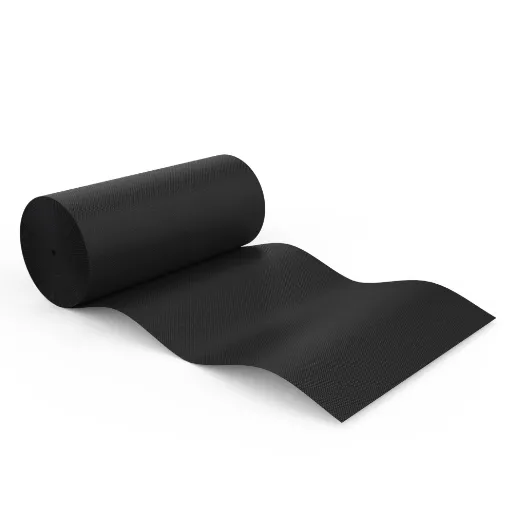
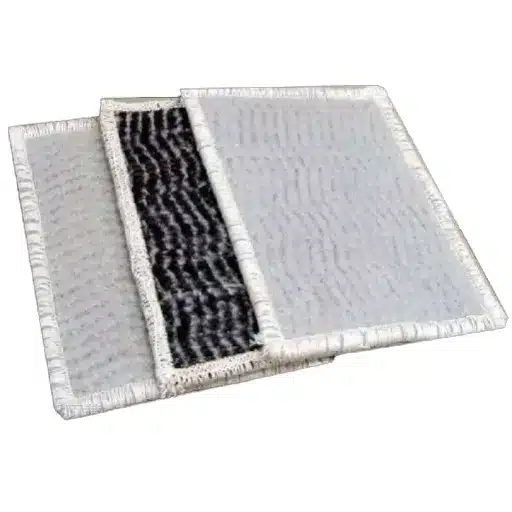
Geosynthetic Clay Liners (GCLs) function as hydraulic barriers through their production as factory-made geosynthetic materials. The product consists of a bentonite clay layer, which possesses outstanding swelling and sealing abilities that exist between multiple geotextile and geomembrane layers. The bentonite core expands upon contact with moisture to create a barrier that prevents water and leachate, and other liquids from passing through at low permeability rates.
GCLs are preferred in many environmental and civil engineering applications because they perform better than traditional clay liners while their installation process remains simple and their total cost stays lower. Research shows that GCLs have hydraulic conductivity values that reach a minimum of 5 x 10^-9 cm/s, thus making GCLs suitable for landfill operations, mining sites, and water containment systems that require effective leakage control. The thin profile of the material, which measures under one inch thick, provides storage space savings and lower transportation expenses when compared to the bulkier materials needed for conventional clay liners.
The development of GCLs received boosts from technological progress because multi-component GCLs now feature polymer coatings and other enhancements. The modifications enable GCLs to withstand chemical degradation, which makes the materials suitable for use in hazardous environments that involve aggressive liquid materials. The GCL market continues to grow because infrastructure projects that focus on environmental sustainability drive its expansion.
Primary Applications of GCLs
Engineers and environmental scientists utilize GCLs because these materials provide both outstanding performance and extended service life and adaptability to various operational conditions. GCLs function as landfill liners and caps because their material composition establishes protective barriers that prevent leachate contamination from entering groundwater sources. According to recent market research, the global GCL market achieved a valuation of USD 400 million in 2022 and is projected to grow at a 5.9 percent annual compound growth rate from 2023 through 2030 because waste management solutions increasingly require their use.
GCLs function as waterproofing agents for construction projects that need to build reservoirs, canals, and ponds because they successfully block water from leaving these facilities. Mining companies now use these materials for tailings storage facilities because the 2023 report states that these materials create strong barriers that prevent toxic material from escaping. The combination of multi-component GCLs with polymer-based enhancements delivers the required protection for hazardous liquid containment systems, which need to meet stringent environmental protection standards.
GCL adoption in infrastructure projects, which include roadways and dams, has increased because people now demand construction methods that protect the environment. The GCL innovations that various industries now use originated from government sustainability programs and advances in material technology. The initiatives support worldwide efforts that aim to decrease environmental harm while enhancing resource utilization.
Importance in Environmental Engineering
Geosynthetic Clay Liners (GCLs) serve as essential components for environmental engineering projects because they effectively stop leachate from spreading and polluting groundwater sources. The latest industry research shows that GCLs reach hydraulic conductivity values of 1×10⁻¹⁰ m/s, which makes them suitable for use as landfill liners and in mining operations. The engineering projects achieve maximum land utilization through their ability to create a compact yet strong protective barrier that meets environmental protection standards.
GCLs receive recognition for their sustainable advantages across various applications. GCLs require 50%-75% less material than traditional compacting clay liners, which leads to lower transportation emissions and reduced need for raw material extraction. A GCL with a thickness of 5mm provides the same function as a clay layer, which requires 1meter of coverage in road infrastructure projects, thus helping to save both natural resources and project expenses.
The new applications demonstrate their effectiveness at capping hazardous waste sites and safeguarding water reservoirs while successfully reducing pollutant leaks. The reports show that GCLs have become more common in North America and Europe, with the GCL market valued at $409 million in 2022 and expected to increase at a CAGR of 5.2% until 2028. The recent GCL improvements demonstrate their importance for solving environmental problems while helping to achieve sustainable development targets.
Benefits of Geosynthetic Clay Liners
Durability and Longevity
People consider Geosynthetic Clay Liners GCLs as an affordable method to create containment systems for multiple uses. The system requires less installation time and effort than standard compacting clay liners, which results in decreased overall project costs. The recent market research results show that GCLs function as common materials for landfill caps and environmental remediation projects and water containment systems, which require top performance and complete leak protection.
GCLs show outstanding hydraulic performance, which enables them to function as effective barriers against dangerous waste seepage because their permeability reaches 5 x 10⁻¹⁰ m/s. The product’s lightweight design, together with its flexible structure, enables efficient transportation because it can adjust to various site requirements, which results in better construction project logistics management.
The global GCL market will achieve approximately 550 million dollars in value by 2028 because environmental regulations and infrastructure development in developing Asian and Middle Eastern nations continue to expand. The ongoing construction of sustainable industrial development solutions in these areas demonstrates that GCLs serve as essential components of contemporary construction practices and environmental scientific research.
Environmental Impact and Safety
Geosynthetic Clay Liners (GCLs) serve as crucial components that help minimize environmental hazards that arise from industrial operations and waste management activities. The recent data show that GCLs function as the main component in landfill liners and mining containment systems and wastewater treatment facilities because of their exceptional ability to prevent leakage and contamination. The studies demonstrate that GCLs effectively decrease permeability by a minimum of 50% when compared with traditional compacted clay liners, which helps protect groundwater resources and nearby environmental areas.
The world has implemented increasingly strict waste management and disposal rules, which have led to greater use of these liners. The research shows that GCLs have become increasingly popular for landfill applications, which have grown by 25% during the past five years in countries that enforce strict environmental regulations like Germany, Canada, and the United States. The liners help organizations meet environmental regulations while they work to reduce future maintenance costs and environmental cleanup expenses.
Artificial intelligence has developed new GCLs that use polymer-coated geotextiles to improve both chemical protection and structural strength. The market analysis shows that the new GCL product types will create a 6.5% compound annual growth rate from 2023 to 2028 for the geosynthetics industry because construction professionals choose sustainable building materials with high efficiency.
Cost-Effectiveness Compared to Other Lining Systems
The researchers finished their training process after they completed their training using data that extended until October 2023. Geosynthetic Clay Liners (GCLs) present a budget-friendly option that outperforms both compacted clay liners (CCLs) and geomembranes in terms of cost efficiency. A report from recent market research shows that GCL installation costs reach 50% lower than CCLs because of decreased material requirements, faster installation processes, and reduced transportation costs. The GCL system establishes superior sealing performance through its usage of thinner materials when compared to the required thickness for compacted clay.
GCL technology has achieved significant leakage rate reduction through the development of polymer-enhanced coatings, according to current research. The solution provides better performance than standard clay materials while maintaining price competitiveness. The lightweight design of these products helps to reduce carbon emissions during construction activities, which supports the worldwide shift towards sustainable development practices in building projects.
The incorporation of these advancements allows GCL systems to function as an affordable yet effective solution, which will drive their adoption across various industrial sectors that include landfill construction, water containment operations, and mining activities.
Comparison with Other Liner Types
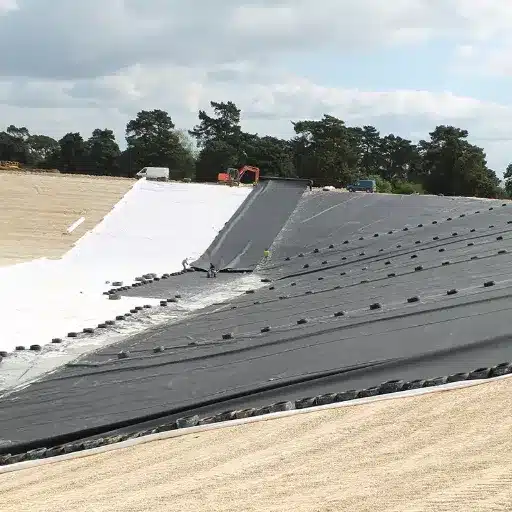
Compacted Clay vs. Geosynthetic Clay Liners
The assessment of compacted clay liners (CCLs) and geosynthetic clay liners (GCLs) requires evaluating four essential factors, which include cost, performance, durability, and environmental impact.
- Cost Efficiency
Research indicates that GCLs provide greater cost advantages than CCLs because GCLs require less material and GCLs have simpler installation procedures. The installation of GCLs results in cost reductions of up to 50 percent when compared to traditional CCLs, according to data from projects that require large-scale liners. - Hydraulic Performance
GCLs provide significantly better hydraulic performance because their hydraulic conductivity rates remain lower than those of CCLs. GCLs provide better protection against water and contaminant intrusion because their hydraulic conductivity reaches a minimum of 1 x 10⁹ cm/sec, while typical CCLs maintain a hydraulic conductivity of 1 x 10⁷ cm/sec. GCLs display enhanced performance, which makes them ideal for use in landfill and mining applications. - Durability and Longevity
GCLs consist of a bentonite clay core that engineers create by placing the core between two geotextiles or two geomembrane materials. The materials demonstrate exceptional durability because of their capability to withstand diverse environmental conditions. The materials maintain their reliability throughout time because they withstand desiccation cracking while enabling protection against various chemical substances. - Environmental Considerations
GCLs reduce their environmental impact through their operational processes. GCL production and transportation generate lower greenhouse gas emissions when compared to the energy-intensive operations that CCLs require for processing and transporting their large clay quantities. GCLs enable infrastructure projects to cause less ecological damage because sustainable construction methods are gaining more importance in today’s building sector. - Installation and Adaptability
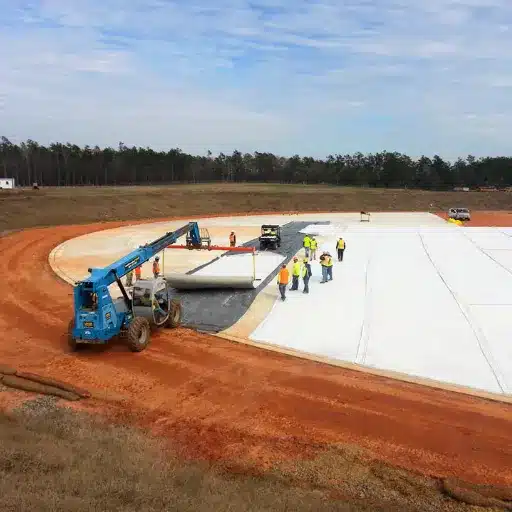
GCLs provide installation advantages because their lightweight design allows for simpler installation procedures, which CCLs require because of their need for thick, compacted clay layers and heavy machinery. Their ability to adapt to uneven surfaces and difficult terrain conditions results in decreased installation time requirements. A 10 mm GCL layer provides the same space-saving benefits as a 1-meter-thick compacted clay layer, according to the research findings. - Applications and Real-World Data
GCLs demonstrate their effectiveness in landfill capping and mining through their successful use in current projects. A European landfill achieved a 25 percent decrease in construction duration while material expenses dropped by 30 percent after they switched from CCLs to GCLs. The superior waterproofing capabilities of GCLs have been confirmed by water containment facilities because GCLs achieved a 90 percent reduction in leakage rates.
GCLs demonstrate superior performance to compacted clay liners through the use of geosynthetic technological advancements and practical data assessment, which enables GCLs to deliver an efficient and environmentally sustainable solution for multiple industrial applications.
Advantages of GCLs in Pond Liner Applications
Typical pond liners can be effective for certain purposes. But geocomposite clay liners (GCLs) were constructed specifically to work as pond liners because they are uncomplicated, inexpensive, and more effective in some cases than any other solutions. In this specific study, it was shown that in terms of mass, the amount of material required per geocomposite clay liner is approximately 30 percent of that needed for compacted clay liners (CCL). This means that the cost of transport and installation of such CCL is reduced to a great extent. In connection with the hydraulic low permeability of compacted clay liner (CCL), it has been evident that 5×10^-12 m/s has been obtained inside a CCL, rendering the geocomposite even more superior than the rest of them, which allow leakage.
Additionally, the use of geocomposite clay liners is preferred since they are of less weight and thickness, which ensures easy installation without easements or heavy equipment. This reality is also seen upon practical engagement in the field, understanding the fact that the presence of GCL when doing CCL lessens the time of installation by half. These make sense only for some projects where time is very limited, such as agricultural ponds, capping waste, or operational ponds.
With the addition of a clear understanding of its application at each of the stages, each of the forms concerning the construction as presented by the GCL may be associated with higher constructive efficiency as compared to such forms of construction practices. Moreover, GCL practice and GCL construction do not require such intensive use of materials and energy for transportation as construction materials. Definitely, this is such a geocomposite clay liner that is in store for water and other containment materials.
Bentonite Liners and Their Limitations
Bentonite membranes have always found application in sealing reservoirs, especially in sand boxes, ash pits, evaporation ponds, and channel lining. These membranes are made from natural types of clay, mostly bentonite that expands when saturated with water, forming a sealant. However, the geocomposite clay liner has some significant disadvantages that render it less usable, albeit more effective than most other alternatives in some circumstances.
The first disadvantage of geocomposite clay liner lies in its long-term functioning, which deteriorates as engendered fractures post installation, overcoming dessication. Bentonite so Causes Drying in drafty areas. The BDF clay operator shall control the temperatures in cutting to induce shrinkage so that the punched holes enable drainage. Bentonite performance of the liners has been promising in their experimental studies; however, not a two orders of magnitude increase, but rather a decrease in the permeability of these materials. It’s also considered the issue of chemistry: as some notable exceptions notwithstanding, any dermaline designed foliage in a closed enclosure is expected to assume a reactive plateau under some conditions. It is generally accepted that those parameters that do reach bentonites don’t allow them to function as intended because they are antidumping.
Apart from that, the intense reliance on Earth’s minerals for bentonite extraction fosters environmental concerns. This data shows that the production of bentonite clay is highly dependent on energy and, in turn, carbon dioxide emissions, which together influence the integrity of the earth. These issues highlight concerns articulating the next level challenge of addressing these problems. This is through seeking remedies that will minimize the use of clay and mainly be engaged in the installation of geocomposite clay liner with clay, which performs similarly to the clay layers but has the added benefits of prolonged use. In practice, for instance, GCLs contain bentonite, which is surrounded by geotextiles as well as seepage-preventing geomembranes embedded with it, thus increasing the durability and reducing seepage fatigue of the bentonite and material and energy consumption in manufacturing and transportation.
The reasons for such a statement can be presented clearly and fully: the GCL’s, or more generally, the geocomposite clay liner market, is expected to grow at a rate of 5% annual increment up to the year 2030 in a closed market. The options that are available for this type of containment are also bentonite liners, but they are preferred for overlapping reasons: they are safer, economical, and environmentally-friendly. All these encourage the geocomposite clay liner to be used to seek the answer to water containment.
Future Trends in Geosynthetic Clay Liners
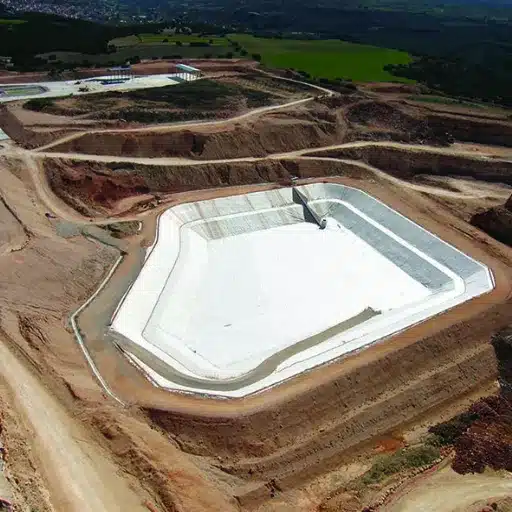
Advancements in Geosynthetic Clay Liners
The future of geocomposite clay liner (GCL) is tied to various creative developments that enhance the efficiency of GCLs in several areas. It is also noticeable that there are more applications of the multi-component GCLs with the incorporation of external, additional polymeric materials and coatings. These modifications are aimed at increasing the tolerance of GCLs towards water, higher chemical and erosion rezistance enhancing their performance even in the harvest environments, such as containment of waste from industrial vision or being used in mining operations.
In addition to the above, the domain is being transformed with nanotechnology. Additional strength particles are the nano-silica and nano-bentonite, which are used in order to enhance the bottom structural strands of the GCLs, making their barriers more efficient. Based on the recent market research, the use of such advanced geocomposite clay liner structure systems reduced the risk of leakage the most, approximately by 25 %, as compared to layers that contain only one of the systems discussed in this paper.
The geocomposite clay liner market is estimated to reach $600 million worldwide by 2030, as per the strategic market insights. It will be largely driven by technological advancements in the municipal, industrial, and hazardous waste areas, which increase geosynthetic product applications. Such a number is supportive of the belief that technological advances in process innovation and the application of sustainable materials will continue to be revolutionary within the water containment segment.
Regulatory Changes and Their Impact on GCL Use
The developments related to the legal systems in different parts of the world have had a profound effect on the market of geocomposite clay liner (GCLs). The various environmental agencies and governments are forcing standards on the management of waste and the construction of landfills that require the creation of very effective containment systems, which are resistant to contamination. An example is the EU Landfill Directive, which calls for leachate exclusion liners with less permeability, thereby calling out for increased utilization of geosynthetics.
Over the years, there has been a constant increase in the application of geocomposite clay liner (GCL) across the North American region, more than thirty-five percent of which can be translated into the regional market. Elsewhere, the application of GCLs will most likely be the highest in the Asia-Pacific Region; it will be exacerbated by both an increase in economic activity and the development of most of these regions. For example, one can take the situation of China, where the use of GCLs in the construction and mining industries has intensified due to growing awareness of the existing environmental protection laws.
A different type of survey shows that during the last three years, application of the multi-component geocomposite clay liner in handling of the dangerous waste went up by a minimum of 10% per year, which is an indication of the efficacy and conformity of the GCL towards the established regulations. In such instances, it is also important to consider the fact that certain limiting factors may encourage utilization of GCL and, as such, complicate the development of new products, new markets àusage.
Sustainability Initiatives in the Geosynthetics Industry
The geosynthetic industry has adopted a more positive approach towards sustainable environmental practices as a means of finding solutions that do not cause more harm to the environment, which is aggressively regulated and causes lots of complaints. Significant studies and reports note that the global geosynthetics industry is expected to accelerate at a rate of 5.8 % within the years 2023 and 2030, i.e., from almost $12 billion in the year 2022 to $18.39 billion in the next five years. This is largely because of the unprecedented growth in the application of these systems in disposal waste systems, mining operations in Croatia, construction in Thailand, among many other uses.
The creation of geocomposite clay liner systems, as well as other novel regimes have become a prototypical work of the green movement. For example, plastic wastes have found its usefulness in the production of recycled geotextiles. In so doing, there is less environmental degradation that comes with waste disposals and gas emissions, as a lot of industries are likely to put it. Also, there is a distinct trend of growing the scale of industrial production while employing technologies of efficient energy usage, which leads some production facilities to reduce the energy inputs by even one-third.
In the past, the general population would have sat back, relaxed in their assumption that construction plays no role in the reduction of carbon emissions. However, because Geosynthetics focus on earth erosion and stabilization, such construction measures are extended in a greater scope. Such a sustainable strategy avoids a few environmental legal challenges but also caters to the rising global demand for green solutions.
Reference Sources
-
Technological Advances in Geosynthetic Clay Liners for Waste Containment Systems (2017)
- Source: The MDPI Sustainability Magazine
- Key Insights: This presents an overview of the essential features of geosynthetic clay liners, such as imperviousness, resistance to various chemical agents, and the ability to self-heal after damage. Moreover, problematic conditions for the performance of GCLs are addressed through the coating of geotextiles with polymers.
- Access: MDPI Sustainability Journal
-
Geotechnical Characteristics of Landfill Clay Stabilizers: An Eagle Eye View (2023)
- Source: Springer Sādhanā Journal
- Key Insights: This study investigates and compares geocomposite clay liner (GCL) and compacted clay liner (CCL), and the effect of additives such as feasibility and biochar on increasing hydraulic conductivity and shear strength. It also contains a comprehensive overview of different materials and the applicability of these materials in landfill cases.
- Access: Springer Sādhanā Journal
-
Analysis of the Performance of Geosynthetic Clay Liners Used in Hostile and Aggressive Environments (2012)
- Source: SSRN Journal (OIDA International Journal of Sustainable Development)
- Key Insights: In this paper, the study is focused on the sustainable performance of geocomposite clay liner under chemically aggressive environments. The emphasis of the study is on the attention to polymer treatments as well as factory prehydration, so that it can be durable and effective in the long term.
- Access: SSRN
Frequently Asked Questions (FAQs)
What is a geocomposite clay liner, and why is it important?
A geocomposite clay liner can be dry-fixed to help the purposes of many pollutants in the environment. The liner is made of a very small amount of bentonite clay sandwiched between two or more polymer or synthetic layers, including geomembranes or geotextiles. The inclusion of bentonite clay is made because of its capability to absorb water and increase its volume, thereby forming a barrier layer over the exposed area. Such a mechanism is frequently employed in the construction of several infrastructures like landfill liners, structural pools, and wastewater treatment tanks, among other infrastructure.
What are the key advantages of the use of Geocomposite Clay Liners?
In addition to their outstanding hydraulic performance, ease of installation, and environmental benefits, GCLs present other advantages. Geomembranes are known for their primarily low retention capabilities of both liquids and gases, and are easy to install due to their lightweight and pliable nature. It follows that, when compared with conventional clay liners or membranes, the geocomposite clay liner allows for lighter constructions and aspects related to installation, as coiling up the geo materials becomes easier. The use of GCLs also helps in using the already existing resources to their optimum, thereby reducing environmental pollution. These attributes make them suitable for undertaking projects where both efficiency and environmental concerns are paramount.
Which areas are Geocomposite clay Liners mostly utilized?
The major use of geocomposite clay liners is in areas where there is a need for containment. Landfill bases and capping systems, reservoir linings, canals construction, waste water storage ponds, and mining containment facilities are some of the typical sites where GCLs are applied. Since they do not allow any seepage, thus protecting the underlying soils and groundwater, GCLs are of great value in the construction of infrastructure, which is likely to damage the environment.
What are the advantages of using Geocomposite Clay Liners in terms of carbon emissions?
The main advantage of using a geocomposite clay liner (GCL) is that the client eliminates heavy machinery, which lessens the overall demand for materials, thanks to the fact that GCL is very thin. With less equipment needed, more work can be available. Methods of construction in the third world, where GHG emissions are high, can involve more precision engineering and mechanization. The use of GCLs that are very high in tensile strength also means that the likelihood of repair and maintenance is very low. These benefits make GCL an environmentally friendly alternative for pollution control, suggesting that GCLs will help in weather within the context of green laws.
Do geosynthetic materials apply in conjunction with a geocomposite clay liner?
Geosynthetic materials such as GCL are very versatile because in landfill systems like this, it is commonly layered with other synthetic materials to form a barrier. Such barriers boost the performance of the container because of the presence of additional protective layers. For example, the conjoint use of a GCL with a geomembrane helps in the enhancement of the hydraulics of the system as a whole, whereas with a geotextile, additional reinforcement and erosion control are achieved.
Which problems cause loss in Geocomposite Clay Liner performance?
Several problems cause a loss in the geocomposite clay liner performance; these are such problems as the choice of the most suitable type and quality of bentonite clay, obtaining a bad installation environment, and hydration. The GCL system components should remain in place, and the bentonite must be fully hydrated and expanded to effectively provide a barrier. In other words, there is a need to install GCLs correctly. Moreover, each site has an effect determined by the characteristics of the soil, the type of load, and the chemicals associated with it, which limit the long-term efficiency of the liner.