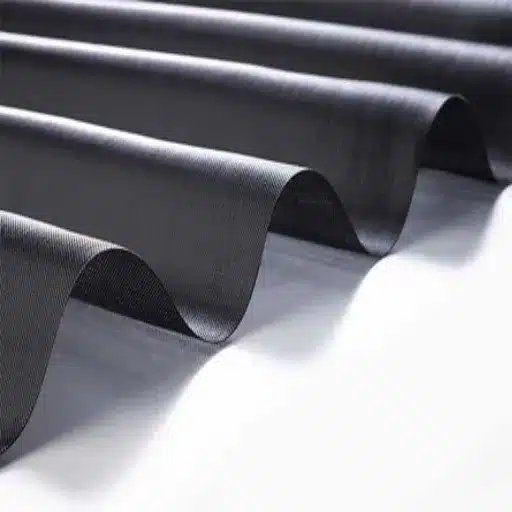
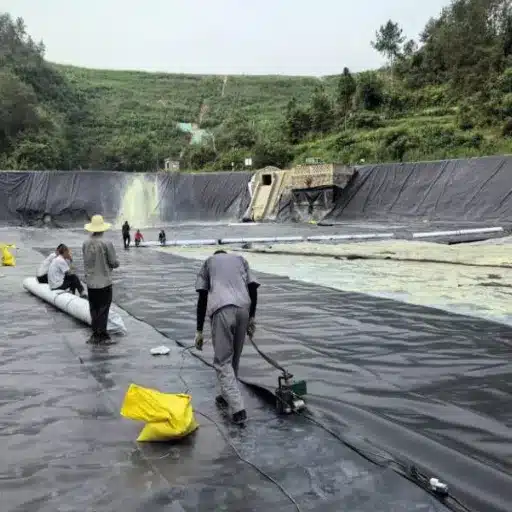
In 2019, a Chilean mine disaster exemplified a reflection of all the failures caused by improperly installed geomembranes. The said geomembrane would have developed microscopic tears while being installed at the tailings pond. With the rains came heavy missed detection of these tears, causing hundreds of thousands of tons of tailings to flow directly into a canal. It costs the company approximately $47 million for both the restoration and fines imposed by the regulators. Moreover, this tragic event resulted from somber material selection without proper chemical compatibility testing.
Nowadays, this occurrence is so rampant globally; it keeps happening on construction sites and environmental projects. What usually turns out to be the difference between success and utter collapse of a project is just the ability to understand the most critical material, the geomembrane.
You have been aware that barriers should contain reliable containment. So, it would be of great interest to you to know what selection, specification, and installation of the accurate geomembrane would be done for the particular application that you propose. But this is your guide for that. We will go over materials, characteristics, selection criteria, and best installation methods again according to actual projects from the industry standards, right up to the real project outcomes.
Here is what you will learn:
- How geomembranes function as impermeable barriers in containment systems
- The critical differences between HDPE, LLDPE, and PVC geomembrane materials
- Application-specific guidance for landfills, water containment, and mining operations
- Installation protocols that prevent the most common failure modes
- Quality standards and certifications that verify long-term performance
Let us start with the fundamentals.
What Is a Geomembrane?
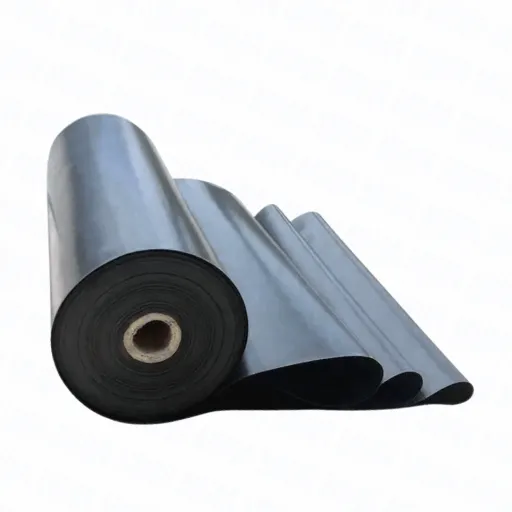
Definition and Core Function
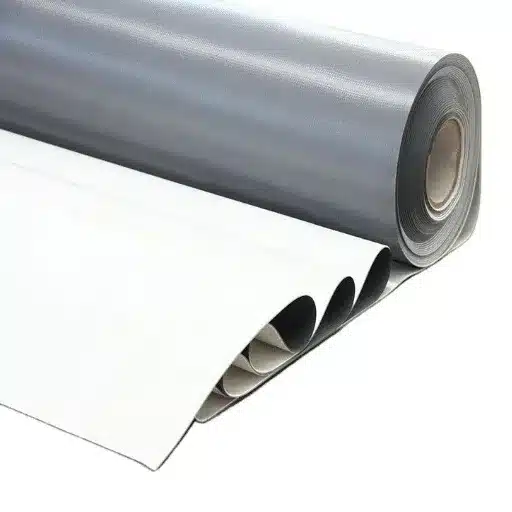
An engineered synthetic membrane liner is what a geomembrane is all about, and it is purposely made impermeable to fluids or gases alike. This liner is opposite conventional materials in failing regard as it has a low enough hydraulic conductivity (down to 10^-14 meters per second). You are unlikely to find seepage in containment applications with a geomembrane.
Systems where the isolating effect of fluid is particularly required hold within their structure these man-made barriers as their primary containment layer. It goes beyond proofing against water. It is essential to cover mechanical loading, chemical attack, ultraviolet exposure, and cycling of temperature conditions, preserving the integrity of the barrier over lifespans ranging from 20 to 100 years.
The development of polymer technology during the 1950s and 1960s consequently allowed the application of carbon black in the compound for its UV stabilization, addition of anti-oxidant for thermal protection, and specific resin variants for resistance against chemicals. These have been refined over decades of evolution in the geomembrane society today through materials.
How Geomembranes Work in Containment Systems
The geomembrane serves an important role as an isolation barrier in multi-layer systems. In the classic landfill setup, it is placed on top of a compacted clay liner or GCL (geosynthetic clay liners) with geotextile protection on top and, to some extent, drainage geonet below.
This composite approach serves multiple functions:
- Primary barrier: The geomembrane is the primary barrier, impermeable to leachate migration
- Secondary protection: Backup lining from the underlying clay or GCL layers
- Mechanical protection: Geotextile to prevent puncture by overlying materials
- Drainage management: Geonets collect and channel fluids to the collecting systems.
When selecting a geomembrane liner for your project, understanding this system context proves essential. The geomembrane does not function in isolation. Its performance depends on proper integration with complementary geosynthetic materials.
Types of Geomembrane Materials
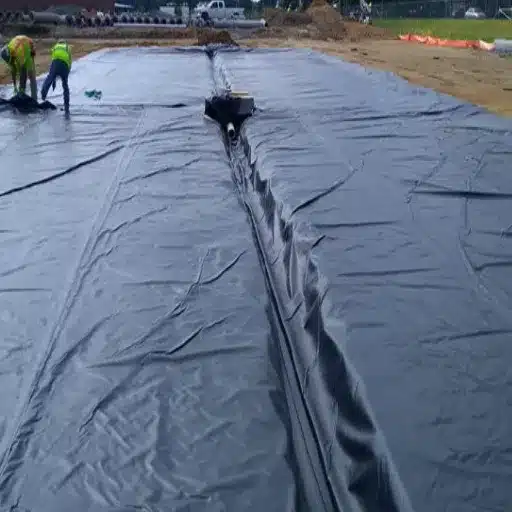
Material selection represents the most critical decision in geomembrane specification. Three primary polymer types dominate the market: HDPE (High-Density Polyethylene), LLDPE (Linear Low-Density Polyethylene), and PVC (Polyvinyl Chloride). Each offers distinct performance characteristics suited to specific applications.
HDPE Geomembrane
High-density polyethylene (HDPE) geomembranes prove their worth in high-performance containment applications, setting the standard. These HDPE geomembranes with a density of around 0.941 g/cm³ rank among the top with regard to unbeatable resistance to chemicals and mechanical strength.
Key Properties:
- Tensile strength: 27-60 MPa (highest among geomembrane materials)
- Chemical resistance: Best performance towards acids, bases, oils, and solvents.
- UV stability: 80% property waiting for long exposure
- Temperature range: Functioning from -60°C to +80°C
- Service life: If properly installed and protected, it lasts 50-100 years
HDPE geomembranes are standardized to conform with GRI-GM13, which stipulates minimum requirements including density, tensile properties, puncture resistance, and stress cracking resistance from the environment. These standards ensure high-performance consistency across batches of manufacturing.
The main limitation of the rigidity of high-density polyethylene (HDPE). Because of the low fracture % elongation, it is less desirable for any service of long travel in the underlying soil, or if the subgrade is somewhat textured. Thermal expansion should also be properly attended to during installation.
Best Applications for HDPE:
- Municipal and hazardous waste containment liners and caps
- Mining heap leach pads and tailings storage facilities
- Commercial wastewater containment
- Secondary Containment for Chemical Storage
- Tanks and canals require absolute impermeability.
LLDPE Geomembrane
Compared to HDPE, linear low-density polyethylene geomembranes possess a far superior elasticity and puncture resistance, which is primarily due to the branched form of the polymer’s molecular structure, which contributes to elongation ranging from 800-900%, accommodating settlements and subgrade irregularities.
Key Properties:
- Tensile strength: 13-30 MPa (moderate compared to HDPE)
- Elongation at break: Up to 900% (ultimate flexibility)
- Puncture resistance: More than with equivalent thicknesses of HDPE
- Installation characteristics: 15-20% faster installation due to its flexibility
- Stress crack resistance: High resistance to environmental stress cracking
LLDPE geomembranes are in compliance with GRI-GM17. LLDPE geomembranes have tensile strength lower than HDPE. But the cost savings achieved in terms of field productivity–particularly in ground conditions where subgrade preparation is difficult or likely to result in ground movement–can be more than offset by other advantages of the material: Simply put, less efficient installation can seem worthwhile overall if it is easier to install.
Less dense material will be less resistant to chemicals compared to HDPE. LLDPE is highly versatile in the applicability of general environmental and most water containment-related demands; however, it is limited to the deployment of aggressive chemicals by very careful scrutiny.
Best Applications for LLDPE:
- Pond liners used in agriculture and aquaculture
- Landfill closure caps serving to cater for subsidence
- Water features designed to beautify the place, and the amazing geometry of the water decorations
- Cold region installation: flexibility will help a lot in welding the materials
- These areas of installation are expected to have ground settlement or very active seismic activities.
PVC Geomembrane
Polyvinyl chloride (PVC) geomembranes are among the softer and most flexible options common amongst materials. With plasticizers to adjust formulations, PVC is most suitable for situations very limited in scope, such as projects for temporary usage.
Key Features:
- Tensile strength: Less than Polyethylene Options
- Flexibility: Highest for All Types of Geomembrane Materials
- Welding characteristics: Hot-air welding without specialized wedge equipment
- Cost: Generally, the most economical option
- UV sensitivity: Needs cover or shows degradation with prolonged exposure
PVC geosynthetics are best suited for simplicity in installation and low front-end cost applications. However, the presence of plasticizers in the material will tend to migrate and cause embrittlement over time. Presumably, the material will degrade rapidly if it is kept outside, making it not suitable for long-term installations pertaining to the open area.
Best Uses for PVC:
- Temporary containment structures
- Ornamental ponds and water features.
- Project generated through some medium time
- Website application frequent accessed
- Replaced the cost of material, planned surgery, and designed for profit through completion
Material Selection Comparison
| Property | HDPE Geomembrane | LLDPE Geomembrane | PVC Geomembrane |
|---|---|---|---|
| Tensile Strength | High (27-60 MPa) | Moderate (13-30 MPa) | Low |
| Flexibility | Low | High | Very High |
| Elongation at Break | ~700% | 800-900% | 300-400% |
| Chemical Resistance | Excellent | Good | Moderate |
| UV Resistance | Excellent | Good | Fair |
| Typical Lifespan | 50-100 years | 40-80 years | 20-30 years |
| Installation Speed | Standard | 15-20% faster | Fast |
| Relative Cost | Higher | Moderate | Lower |
When to choose each material:
Select HDPE when chemical resistance is critical, long-term durability (50+ years) is required, or the application involves hazardous materials requiring maximum containment security.
Select LLDPE when flexibility matters more than ultimate strength, the subgrade is irregular, ground movement is expected, or installation conditions favor easier material handling.
Select PVC for temporary applications, decorative features, or projects where the initial cost outweighs long-term performance requirements.
Key Applications by Industry
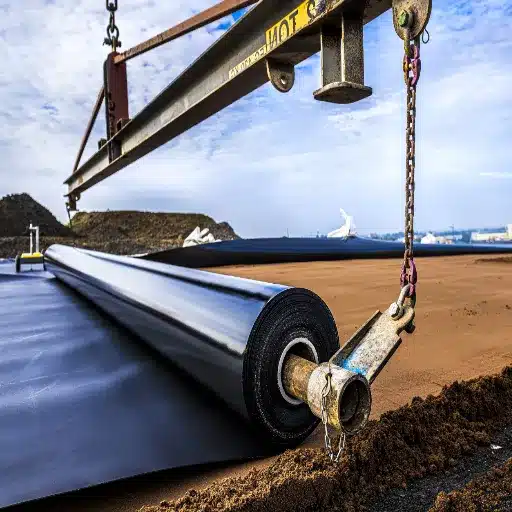
Geomembranes serve critical functions across diverse industries. Understanding application-specific requirements helps guide material selection and design decisions.
Environmental Protection
Landfill Liners and Caps
What began as a trend nowadays is landfill having a multi-layer liner system. The issue is not merely leachate migration into groundwater, which makes the use of geomembranes as the primary barrier in these systems, but rather that such geomembranes are usually specified at 1.5-2.0 mm-thick for municipal waste and 2.0+ mm for hazardous waste applications.
Such a geomembrane is designed to function with this composite of layers: clay or GCL underlay and overland drainage systems. This method is aimed at giving protection against redundant leaks in the process of collecting leachate. In accordance with this, EPA regulations in the US and similar targets worldwide have established specific designs for specific categories.
The concept of comprehensive treatment for caps, which will come after forming a liner for Landfill capping that is reflective with precipitation infiltration, will lead to leachate generation from precipitation infiltration. Caps on geological liners, however, have to accommodate settlement when waste decomposes, so many designs provide for the use of LLDPE, which has the best elongation properties.
Groundwater Protection
Secondary containment prevents leaks of industrial materials so that they do not contact the below-ground water. The rules usually demand a containment capacity of 110% for the largest container. This is because high-density polyethylene is again the most widely used geomembrane on account of its capacity to withstand chemical attacks and meet various regulations.
Water Management
Reservoir and Pond Lining
Water loss through seepage represents a significant challenge in water management infrastructure. A 10-hectare reservoir with 5 mm/day seepage loses 500 cubic meters of water daily. Geomembrane liners eliminate this loss while preventing contamination from underlying soils.
Material selection depends on the application:
- Potable water: NSF-certified HDPE or LLDPE required
- Irrigation reservoirs: HDPE or LLDPE based on site conditions
- Wastewater lagoons: HDPE preferred for chemical resistance
- Aquaculture: LLDPE is often selected for flexibility and fish safety
Canal and Irrigation Systems
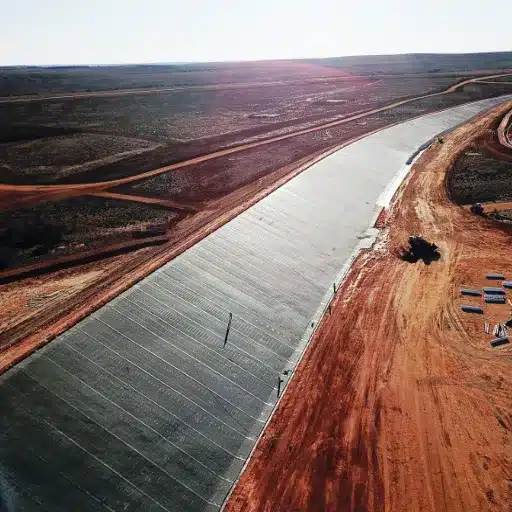
Water losses from unlined canals can amount to 30%-50%. Installation of geosynthetic liners reduces these losses to 1% or less, thus considerably improving water use efficiency. For canal applications, the most common textured HDPEs are favored for slope stability and mechanical resistance to daily maintenance that can cause a lot of damage.
Mining Operations
Heap Leach Pads
Geomembranes made of High-Density Polyethylene (HDPE) are a widely used example of a crush heap leach facility. They are supposed to endure acidic environments and contain virtually all types of aggressive chemical solutions, including cyanide and sulfuric acid, whilst heavily bearing thermal cycling from application to solution.
HDPE geomembranes eclipse all types of heap leach applications at the time of its attrition and good penetrability. They are usually from 1.5 to 2.0 mm thick, lying essentially on some sloped textured surfaces. Doubly lined, leak detection system provides a redundancy in case of potential problems.
Tailings Storage Facilities
Here, when mining operations are completed, acidic georeacted capillary solutions and often mineral slurry basins (which include process chemicals and heavy metals) are formed. These kinds of facilities may take up to 20 or 30 years of operational life, thus relying on the handling methods of geomembrane systems having robust evidence of long-term performance. Dual-liner systems with leak detection among layers are now widely accepted for the highest-risk situations in tailings.
Agriculture and Aquaculture
Irrigation Ponds
Nowadays, geomembrane-lined ponds are advantageous for agricultural operations, and their source of water is irrigation. Their primary concern is cost-effectiveness, because long-term, to be sure, they are pretty durable. LLDPE falls between the two factors of agricultural installations in terms of economy and performance.
Aquaculture Systems
Now, another consideration that the operator of fish farming and shrimp farming might really have is, if he had a liner to be able to handle fish or shrimp, and not cause the death of aquatic life. Food-grade LLDPE formulations offer all these features as well as the much-needed flexibility for irregular shapes. Exposure to ultraviolet radiation can, thus, be minimized because it is required in aquaculture ponds in such climates.
Choosing the Right Geomembrane
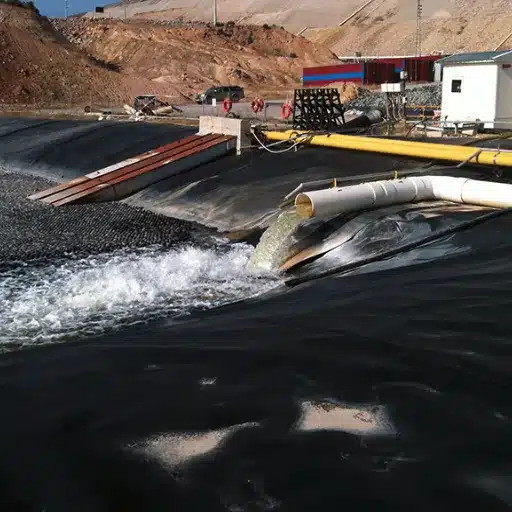
When the environmental engineering firm Atkins reviewed its project database in 2023, it discovered a striking pattern: 68% of geomembrane-related change orders stemmed from material selection decisions made without adequate site assessment. The wrong material in the wrong application generates costs far exceeding any initial savings.
Selection Criteria Framework
Effective geomembrane selection requires systematic evaluation of project-specific factors:
1. Chemical Exposure Assessment
Enumerate all the geomembranes with the following chemicals:
- Primary containment fluid (leachate, process solution, wastewater)
- Secondary exposures (cleaning chemicals, maintenance products)
- Potential unanticipated leaks
Always refer to polymer-fluid charts with regard to chemicals. Usually, in this regard, the HDPE type is the broadest chemical resistant; taxpayers should consider this while checking compatibility for the project-specific chemistries.
2. Mechanical Load Requirements
Evaluate mechanical stresses, including:
- Overburden loads from waste or cover materials
- Equipment loads during operation and maintenance
- Wind loads for exposed applications
- Seismic loads in earthquake-prone regions
Higher tensile strength requirements favor HDPE, while applications requiring deformation accommodation favor LLDPE.
3. Subgrade Conditions
Assess subgrade characteristics:
- Surface regularity and preparation requirements
- Presence of angular rocks or debris
- Expected settlement or ground movement
- Moisture conditions during installation
Rough or irregular subgrades favor LLDPE’s puncture resistance and conformance. Well-prepared subgrades can utilize HDPE’s cost-effectiveness.
4. Climate and UV Exposure
Consider environmental conditions:
- UV exposure duration (temporary cover vs. permanent exposure)
- Temperature extremes and thermal cycling
- Wind conditions affecting installation
- Precipitation patterns
Exposed applications in harsh climates favor HDPE’s superior UV resistance. Covered applications may utilize cost-effective alternatives.
5. Project Lifespan Requirements
Match material durability to project duration:
- Permanent infrastructure (50+ years): HDPE recommended
- Medium-term projects (20-40 years): HDPE or LLDPE
- Temporary applications (<20 years): LLDPE or PVC
Material Selection Decision Tree
Choose HDPE when:
- Chemical resistance is critical
- Long-term durability (50+ years) is mandatory
- High mechanical strength requirements exist
- Compliance with strict regulatory standards is required
- The project budget allows for premium material costs
Choose LLDPE when:
- Subgrade preparation is challenging
- Ground settlement or movement is expected
- Installation speed affects project economics
- Cold climate conditions favor flexible materials
- Project lifespan is 40-80 years
Choose PVC when:
- Installation simplicity is paramount
- Initial cost is the primary constraint
- Application is temporary or short-term
- Complex geometries require maximum flexibility
- UV exposure will be minimal or short-duration
Installation Best Practices
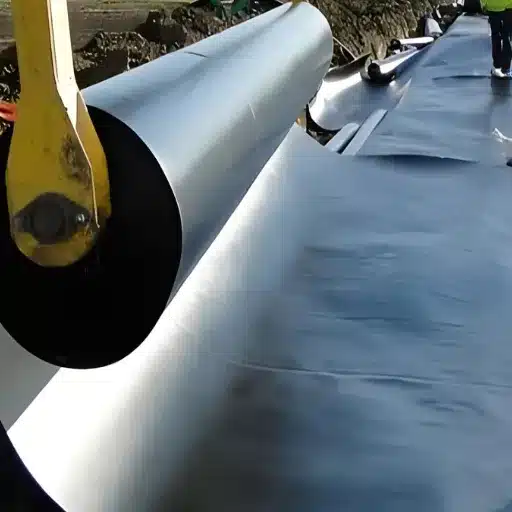
Even the highest-quality geomembrane fails when improperly installed. Industry data indicates that 85% of geomembrane failures originate from installation errors rather than material defects. Following established best practices prevents these costly mistakes.
Pre-Installation Preparation
Underground Preparation and Building the Subgrade
This is the base on which a geomembrane reacts, and that is the subgrade. In general, its readiness usually involves the following:
- Clearing and grading: No trees, shrubs, or rubbish would be left behind.
- Compaction: Less or more than less than 90-95% Proctor density is found (ASTM D698), and it has a smooth surface.
- Surface inspection: A lack of anything like sharp projections from the upper surface, and suchlike.
- Moisture control: Water maintains the sub-base at optimum moisture content.
Install 150-300g/m underlay of geotextile protective to provide cushioning and puncture protection. This little extra cost is about the most economical way to extend the life of your liner.
Installation of Anchor Trench
The anchor trench envelopes the structure, keeping the geomembrane against wind uplift and thermal movement. It could even be said that 30-60 cm deep and 30-60 cm wide would be the standard requirement for trench implant, and would be placed on top of the slope or near the designated anchor point.
Material Check and Site Layout Planning
Before implementation, the following activities are carried out:
- Checking of rolls upon delivery for possible impairments
- Check certifications of fabrics and reports on tests
- Make drawings of panels that would have the smallest number of seams
- Seams should be located in areas of minimal stress, preferably away from edges or breaks in that area.
Deployment Guidelines
Unrolling and Positioning
Deploy geomembrane panels according to these principles:
- Direction: Unroll with the direction of water flow or slope
- Tension: Maintain zero tension with 0.5-1% slack for thermal expansion
- Securing: Use sandbags or temporary weights to prevent wind displacement
- Wrinkle management: Minimize wrinkles and “fishmouths” that concentrate stress
Never stretch the material too tightly. HDPE expands and contracts significantly with temperature changes. Adequate slack prevents thermal stress that can cause seam failures.
Overlapping Seams
Standard overlap specifications:
- Flat surfaces: 10-15 cm overlap
- Slopes >10%: 20 cm overlap
- Critical applications: Follow project-specific specifications
Ensure overlap zones remain clean and dry. Moisture or contamination prevents proper fusion during welding.
Welding and Seaming
Hot Wedge Dual-Track Welding
The primary welding method for polyethylene geomembranes produces two parallel seams with a sealed cavity between them. This approach allows air pressure testing of the seam cavity.
Key welding parameters:
- Temperature: Typically 400-450°C (varies by material and thickness)
- Speed: Adjust based on trial weld results
- Pressure: Maintain consistent pressure across seam width
Perform trial welds at the start of each shift and whenever conditions change. Test trial welds for peel and shear strength before proceeding with production welding.
Extrusion Welding
Use extrusion welding for:
- T-joints and pipe penetrations
- Repairs and patches
- Areas inaccessible to wedge welders
- Termination details
Extrusion welding requires compatible welding rod material and skilled operators. The technique applies molten polymer through a specialized welding gun.
Quality Testing Protocols
Non-Destructive Testing (NDT):
- Air pressure testing (ASTM D5820): Pressurize dual-track seam cavities and monitor for pressure drop
- Vacuum box testing (ASTM D5641): Apply soapy water and vacuum to detect leaks through bubbles
- Visual inspection: Check for gaps, air bubbles, and irregular fusion
Destructive Testing:
- Peel and shear testing (ASTM D6392): Sample seams daily to verify strength
- Target: 80-95% of parent material strength
- Repair sample locations immediately after testing
Common Installation Mistakes to Avoid
1. Inadequate Surface Preparation
Even small rocks or debris create stress concentrations that lead to punctures. One case study documented a 40% increase in puncture incidents when subgrade preparation was rushed.
2. Poor Seam Welding Technique
Cold welds represent the most common failure mode. Welders must maintain proper temperature, speed, and pressure throughout the seam. Automated wedge welders improve consistency over hand-welding.
3. Insufficient Anchoring
Inadequate anchoring allows geomembrane movement that stresses seams. The 2017 failure of a California reservoir liner was traced directly to insufficient anchor trench depth.
4. UV Exposure Before Covering
Exposed geomembrane experiences rapid degradation. Cover the liner within 72 hours of installation to prevent UV damage. If delays occur, deploy temporary protective covers.
5. Direct Equipment Traffic
Never drive equipment directly on the geomembrane. Place a minimum of 15 cm of protective fill before allowing vehicle access. Use low-ground-pressure equipment when working near the liner.
Quality Standards and Certifications
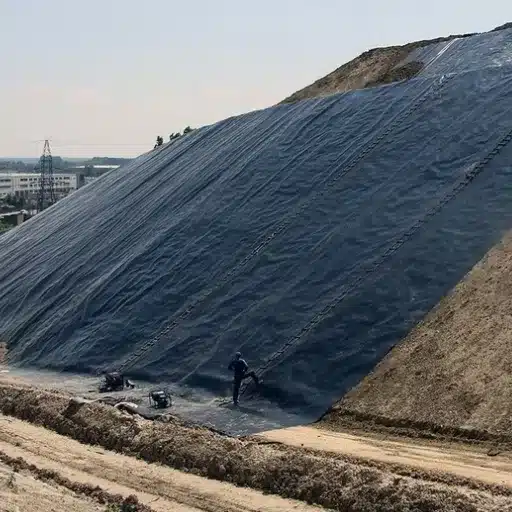
Quality assurance separates professional-grade geomembranes from commodity products. Understanding relevant standards helps procurement teams verify material suitability and ensure regulatory compliance.
International Standards
ISO9001 Quality Management
Manufacturers implementing ISO9001 quality management systems demonstrate systematic process control. This certification indicates consistent manufacturing practices and documented quality procedures.
GRI-GM13 and GRI-GM17 Standards
The Geosynthetic Research Institute publishes standards specifying minimum properties for HDPE (GM13) and LLDPE (GM17) geomembranes. Key requirements include:
| Property | GRI-GM13 (HDPE) | GRI-GM17 (LLDPE) |
|---|---|---|
| Density | ≥0.939 g/cm³ | 0.939 g/cm³ |
| Tensile Strength | ≥27 MPa | ≥14 MPa |
| Elongation at Break | ≥700% | ≥800% |
| Puncture Resistance | ≥495 N | ≥300 N |
| Carbon Black Content | 2-3% | 2-3% |
Specify GRI-compliant materials for critical applications. Request certified test reports verifying conformance.
ASTM Testing Protocols
Standard test methods provide consistent measurement of geomembrane properties:
- ASTM D5199: Thickness measurement
- ASTM D638: Tensile properties
- ASTM D4833: Puncture resistance
- ASTM D5397: Environmental stress crack resistance
- ASTM D5885: Carbon black content
- ASTM D5820: Seam air pressure testing
- ASTM D6392: Seam peel and shear testing
Testing Requirements
Manufacturing Quality Control
Reputable manufacturers test every production lot for:
- Thickness uniformity
- Tensile strength and elongation
- Puncture resistance
- Carbon black dispersion
Request lot-specific test certificates with material shipments.
Sample Retention Protocols
Quality-focused suppliers retain production samples for extended periods. Shanxi Shengxing maintains samples for five years, enabling future testing if questions arise about material performance. This practice provides accountability and supports warranty claims.
Geomembrane Market Overview
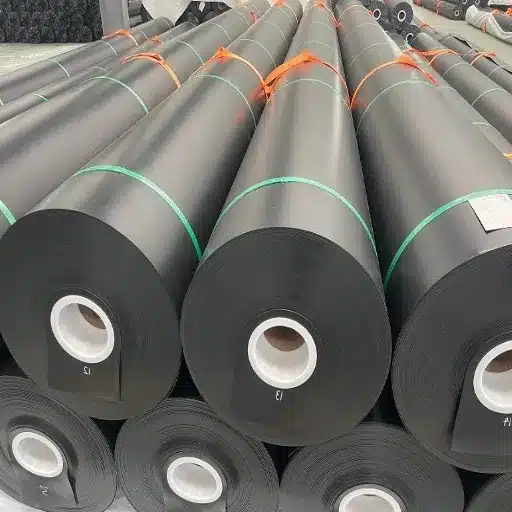
Understanding market dynamics helps procurement teams anticipate pricing trends and supply availability.
Global Market Statistics
The global geomembrane market was sized at USD 2.23-3.31 billion in 2025, depending on the scope definition. Analysts predict that the compounded annual growth rate from 2022 to 2032 will reach 5-8%, driven by infrastructure investment and following environmental regulations.
Key market segments:
- HDPE: With a share of around 45%, most used for landfill and mining.
- LLDPE: High growth is anticipated and captures water containing increases.
- PVC: It holds a stable portion in temporary and decorative applications.
Regionally, North America has a demand for 35-42% of geomembranes worldwide and is similar to Asia-Pacific, with high growth, which is eventually caused by infrastructure growth within developing economies in the region.
Growth Drivers
Stricter Environmental Regulations
Tightening environmental regulations are being implemented globally on waste management, coupled with groundwater regulations, which increase the demand for geomembranes. The Landfill Directive of the European Union and other such rules around the globe set forward the requirement for lined systems and have become a driving factor in the progress of the industry.
Water Scarcity and Conservation
One of the solutions to scarce water supply and increasing demand is the use of geomembrane-lined leak-proof retention tanks and channels within high water-loss areas. Major growing markets include the Middle East, North Africa, and parts of South Asia, where limitations on the construction of dams or reservoirs prevent the construction of traditional water containment infrastructure.
Mining Industry Expansion
Continued investment in mining is supported by high-value, precious metal prices and tight demand for industrial minerals. Each new heap leach pad or tailings facility needs thousands of square meters of geomembrane for lining.
Infrastructure Development
Geomembranes are being incorporated as part of transportation, energy, and industrial infrastructure projects, in addition to using them for environmental and water management protection. In different countries, this actively promotes public investment programs.
Conclusion
The choice and installation of geosynthetics determine how well a project is executed, with various implications for environmental, water resource, environmental engineering, and structural engineering works. Whether the project, during four or five decades, succeeds or fails is determined by the type chosen and how it has been put to use.
Key takeaways from this guide:
- HDPE geomembranes-This is known to offer the highest resistance to chemicals and durability needed for high-risk applications: garbage dumps- for hazardous waste containment.
- LLDPE geomembranes-For structures set on wet or unstable base soils or where ground movement is expected, the LLDPE geomembrane has increased tensile strength, elastic behavior, and higher tear resistance.
- The material selection-This must be based on elution of chemicals, mechanical loading, subgrade, and so on, plus the basis of the project life span.
- Installation quality–performance to expect more than material specifications. Test for developing subgrade preparation, welding, and quality.
- Quality levels are evaluated by GRI-GM13/GM17 and ASTM test methods, which set reliable standards for comparing one material against another
Usually, the cost difference between materials of geomembrane does not go beyond 20%, but it is almost sure that the lives of roof sectors traversed range and well exceeded at least some decades. The savings deficit is more than the greater failure/rehabilitation cost in the expenditure of proper materials and their installation.
Ready to specify the right geomembrane for your project?
Contact our engineering team for technical consultation and product recommendations tailored to your specific application requirements. We provide specification support, material selection guidance, and export-ready geomembrane solutions delivered to project sites worldwide.
Frequently Asked Questions
What would one use a geomembrane for?
Indeed, geomembranes are utilized as impervious barriers in containment systems. The prime end uses include landfill liners, water reservoir lining, heap leach pads in mining, treatment lagoons in wastewater programs, and secondary containment for chemical storage. They keep the flow of fluid and gas well checked; thus, there is no migration, except to protect the valuable groundwater and soil resources.
How thick should a geomembrane liner be?
That is dependent on the use, but it is generally as follows: 1.0-1.5 mm for general water containment, 1.5-2.0 mm for municipal solid waste landfill areas, and 2.0+ mm for hazardous waste or highly valuable mining projects. In order to appropriately measure the thickness, the GRI standards and all the relevant regulatory requirements for this need to be soundly referenced by the project.
How are geomembranes manufactured?
The most common are HDPE (High-Density Polyethylene), LLDPE (Linear Low-Density Polyethylene), and PVC (Polyvinyl Chloride). The HDPE has maximum endurance and resistance to chemicals. The LLDPE is the most flexible, and PVC can be installed easily and temporarily.
How long does a geomembrane last?
If properly installed, liners can easily live more than a century. Normally, most exposed geomembranes made of HDPE last around 20-30 years. LLDPE liner stays strong for 40 to 80 years. PVC installed with good planning usually can endure around 20-30 years. UV exposure obviously affects the above values.
How are geomembrane seams welded?
There are two seams that go parallel in dowel hot wedge dual-track welding, and they have a space in between them, which can be tested. For repairing complex geometries and T-joints, it is added. Before using these processes, surfaces must be cleaned, and air pressure/vacuum-box non-destructive testing shall be conducted. Materials may also be examined periodically with peel and shear samples, with inspectors checking that seams must first be dry and dust-free.