In the case of vast environmental and industrial ventures, the very first thing one should secure is yhe durability, reliability and the cost-effectiveness. There is a great demand for geomembrane liners in many fields such as waste management and water containment because they not only provide high performance but also protect the environment. Given the fact that there are different types of materials, prices, and suppliers, it is easy to get lost in this market. This article will give you the basic knowledge about geomembrane liners such as pricing insights, cost factors and how to find the right supplier for your specific needs. If, on the other hand, you are in charge of a construction project or are looking for an eco-friendly containment solution, this extensive guide is meant to bring you clarity and practical information to help you make a wise choice.
Introduction to Geomembrane Liners
Importance of Geomembranes in Various Industries
- Mining Industry
The use of geomembranes in the mining sector is essential as they are used for heap leach pads, tailings dams, and the containment of wastewater. Yet, according to recent industry projections, the use of geomembranes in the mining industry is expected to grow to a compound annual growth rate (CAGR) of 6.5% by 2030. Their application curtails the contamination of soil and water with hazardous mining by-products, thus being a crucial part of eco-friendly mining operations.
- Waste Management
Geomembranes are the mainstay of contemporary landfill design, and their use as liners prevents leachate from mingling with the surrounding soil and groundwater. High-density polyethylene (HDPE) liners are the most popular, and their installation is a major factor in the downfall of environmental hazards. The worldwide need for geomembranes in the waste management sector is a sign of more strict regulations, and this market is thought to surpass $2 billion by the year 2027.
- Agriculture
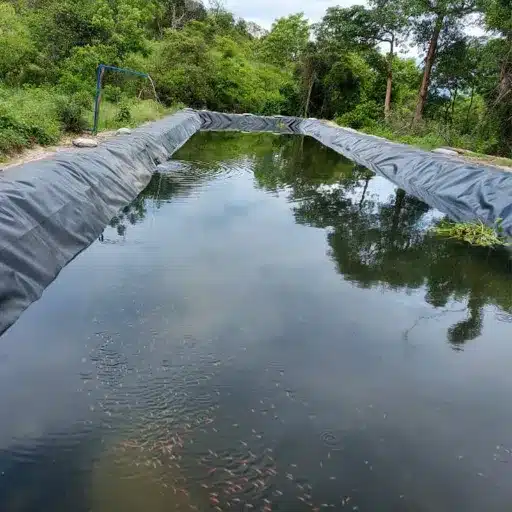
In agriculture, geomembranes provide an efficient solution for water reservoirs, lining of the canals as well as building silage pits. Crop yield is enhanced throughout the process whereby linings reduce water loss from seepage. India, for instance, has witnessed the immediate use of geomembranes in water-scarce areas, thus highlighting their role in solving irrigation problems.
- Water Conservation and Infrastructure
Water conservation and infrastructure projects often involve the use of geomembranes to secure water and to prolong the project’s life. Research reveals that the lining of canals with geomembranes virtually eliminates water loss due to seepage, which is a vital benefit to dry and semi-dry lands.
Overview of Geomembrane Liner Types
High-Density Polyethylene (HDPE) Geomembranes
HDPE geomembranes are the most popular of all types due to the fact that they have the best resistance to chemicals, are very durable, and are also cost-effective. These are just some of the good features that they possess which make them suitable for landfills, mining, and aquaculture. HDPE membranes generally have a long-term life of more than 20 years if the right conditions are present. Recent reports indicate that HDPE geomembranes have a market share of over 40%) globally thus making them the favored selection for major industrial applications across the world.
Linear Low-Density Polyethylene (LLDPE) Geomembranes
Gaining popularity largely due to their high flexibility, LLDPE geomembranes are the go-to choice when the application requires changing the shape of the surface underneath, which can be the case in the lining of reservoirs and canals. LLDPE membranes’ slight disadvantage in terms of durability as compared to HDPE can still be compensated for by the flexibility which is always an advantage in difficult installation areas. At the same time, the demand for LLDPE is growing steadily since it is so versatile.
Polyvinyl Chloride (PVC) Geomembranes
Short for PVC, these geomembranes are characterized by their low resistance to chemicals and UV rays as compared to HDPE and LLDPE; thus, their use is not recommended in very harsh conditions. Still, PVC membranes are cost-effective and efficient when little durability is required.
Factors Influencing Geomembrane Liner Costs
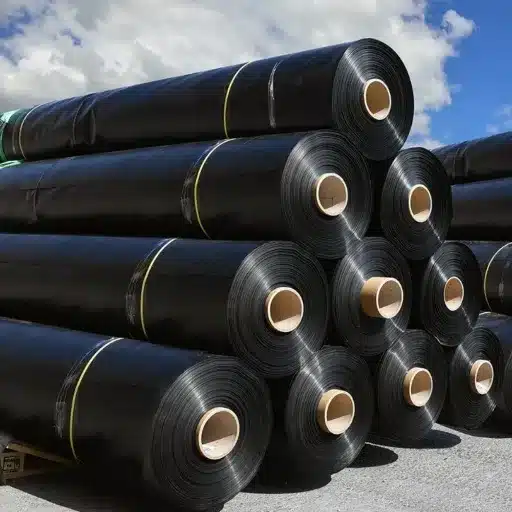
Key Factors Affecting Geomembrane Prices
Raw Material Costs
The costs of certain raw materials such as High-Density Polyethylene (HDPE), Low-Density Polyethylene (LDPE), and Polyvinyl Chloride (PVC) have a very strong and direct influence on the overall price of geomembranes. To illustrate, the global crude oil market’s ups and downs can be directly mirrored in the price of resin-based materials that are the main sources of the polymers, thereby creating a situation of price changes. As per the latest report, the international prices of polyethylene went up by roughly 5% over the last year as a result of regional supply chain interruptions and increasing feedstock prices.
Production and Manufacturing Processes
The production of geomembranes which are not only durable but also high performance through advanced manufacturing techniques can result in the increase of production costs. The use of multi-layer extrusion and co-extrusion processes that demand a lot of sophisticated machinery and expertise can push up the price. Also, the cost of energy is a factor that is related to energy-intensive production; thus, in a place where electricity tariffs are unstable, one bears the costs of higher expenses due to that correlation between production and increased power consumption.
Transportation and Logistics
Given that geomembranes are large and heavy, the cost of shipping them significantly contributes to the total cost. Besides, the transportation charges are affected by various factors such as freight costs, import/export duties, and fuel prices. For instance, the hike in diesel prices in the year 2023 has led to a worldwide rise in the costs of logistics by around 7% to 10%, which in turn has contributed to the increase of retail prices of the products.
Material Types: HDPE vs LLDPE
HDPE (High-Density Polyethylene)
HDPE is the primary geomembrane material that is used mostly due to its very high durability and chemical resistance. It is characterized by its high strength-to-density ratio which makes it suitable for the areas of landfills, aquaculture, and mining. HDPE geomembranes usually possess a wider range of operating temperatures (-40°F to 176°F) and exhibit excellent resistance to UV radiation, thus ensuring a long time performance in the open. But its inflexible nature and to some extent limited pliability can create issues during its installation phase especially in the case of the projects that require intricate layouts or have uneven surfaces. The price of the material lies between $0.75 to $1.50 per square foot depending on the thickness and the manufacturer.
LLDPE (Linear Low-Density Polyethylene)
LLDPE is another widely used geomembrane material and it is opposite to HDPE in that LLDPE has better flexural and elongation properties. The flexibility of LLDPE makes it less challenging during installation on rugged or intricate surfaces making it the go-to material for applications like gardens, water reservoirs, and ornamental ponds. Moreover, LLDPE geomembranes possess a fair degree of chemical resistance and are thus useful in liners for wastewater containment. However, LLDPE as compared to HDPE might have a little less UV resistance and tensile strength thus restricting its lifespan in a few exposed environments. The general cost of LLDPE geomembranes is on the same level as that of HDPE, subject to material specification and market forces.
Comparative Analysis of Different Types of Geomembranes
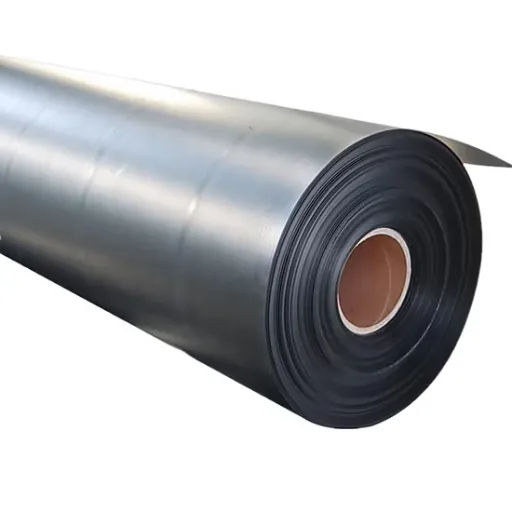
Cost Comparison: HDPE vs LLDPE Geomembranes
To commence with the cost comparison between HDPE (High-Density Polyethylene) and LLDPE (Linear Low-Density Polyethylene) geomembranes, it is crucial to weigh up their material characteristics, project requirements, and value in the long run. In general, HDPE geomembranes possess the advantage of lower raw material and production costs, thus making them a suitable option for projects with a need for durability and chemical resistance, that are cost-sensitive at the same time. The range of typical costs for HDPE geomembranes is $0.50 to $0.85 per square foot based on thickness and supplier.
On the other hand, LLDPE geomembranes are slightly more costly typical of their higher flexibility and elastic property which are very important for installation where the surface is not even or the geometry is complex. The price of LLDPE wind up being in between $0.60 and $1.00 per square foot. Holding LLDPE means a higher initial outlay but reversing it could be labor and installation costs cut in areas where handling is made easier, thus the project is getting full benefit of LLDPE cost saving.
Performance and Longevity versus Price
The trade-off between performance, longevity, and cost tends to influence the decision-makers’ choice when assessing geomembranes. HDPE (High-Density Polyethylene) has gained the reputation of being one of the most durable materials and having very long lifespan, sometimes even more than 30 years, if proper installation and maintenance are carried out. For this reason, they are regarded as being the best choice for projects with the need for long-term containment such as landfills, and mining. However, the initial material costs of HDPE can be more than those of LDPE (Linear Low-Density Polyethylene), for example.
In contrast, LLDPE membranes are mostly appreciated for their flexibility and, hence, easy installation. Their low rigidity can cause the overhead in labor to go down as well as the deployment on-site to happen faster. Although LLDPE’s life expectancy is generally shorter than HDPE— usually between 15 and 20 years— it could still deliver very good performance in the case of applications that do not require long-lasting durability. Furthermore, the total cost of LLDPE per square foot usually ends up being lower thus constituting a budget-friendly option for short to medium-term projects.
Cost-Benefit Analysis for Various Industries
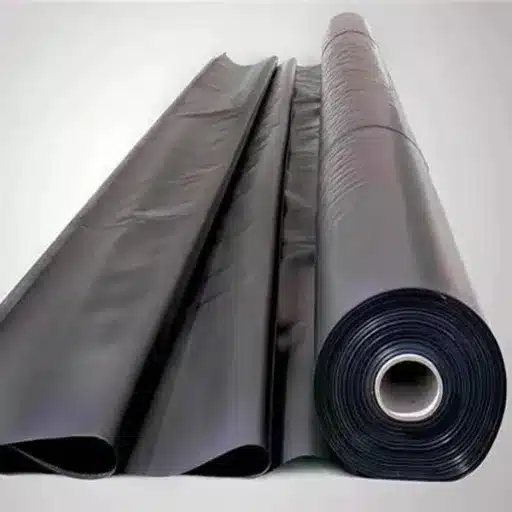
Geomembrane Use in Landfills
The performance of geomembranes is very significant in the management of landfills in the present world as they form a trustworthy barrier against the pollution of the nearby soil and groundwater. The most widely-used type of landfill liners, High-Density Polyethylene (HDPE) geomembranes, are continuing to be the first choice of manufacturers for their outstanding resistance to chemicals, long life, and almost zero permeability.
Permeability test results indicate that HDPE geomembranes were capable of providing a permeability rate of only 1 x 10^-13 cm/sec, hence becoming the best materials for isolation of toxic wastes and leachate in the landfills. Besides, they are made so as to be able to endure the severest conditions anticlimactically, such as continuous exposure to sunlight (ultraviolet), heat, and cold and even during heavy mechanical loads.
Economic Impact Across Industries
Agriculture
The geomembrane liners ensure the effective management of irrigation systems and water reservoirs. The farmers using such systems are able to save water as well as cut down evaporation losses. By using the lined ponds for irrigation, one can save water to the maximum of 70% in contrast to using unlined ponds. This would not only be a raise in the agricultural output but also a decline in the operational cost which is a direct advantage to agriculture economies.
Mining
Liners are an indispensable part of the mining industry as they are the only means to stop the leakage from waste ponds and heap leaching pads. The International Council on Mining and Metals published a report that indicated the use of top-notch geomembranes has the potential to lessen the environmental fines and cleanup costs by millions while at the same time increasing the safety factor in operations. Also, the better containment offered by the liners makes chemical recovery effective thus improving the profitability of mining.
Waste Management
Geomembrane liners are the mainstay of modern landfills which rely on the liners for the safe containment of waste and prevention of leachate that is toxic from contaminating groundwater and surface water. In the light of the recent findings, it has been reported that the establishment of long-lasting liners has resulted in a decrease of 40% in environmental remediation expenditures making waste management activities more economical and at the same time complying with the stringent environmental regulations.
Tips for Reducing Expenses in Procurement
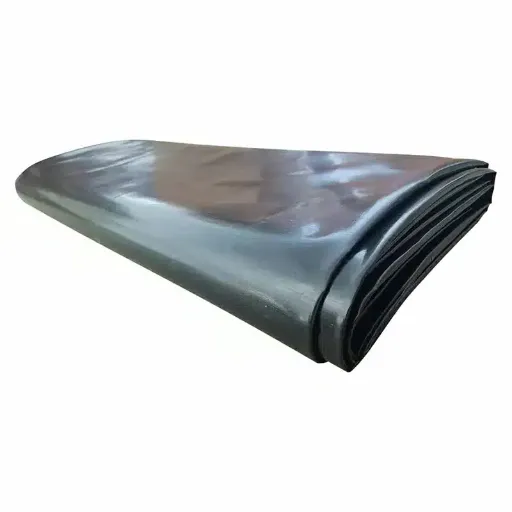
Bulk Purchasing and Supplier Negotiations
Cost cuts for geomembrane liners are made possible to a large extent by bulk buying, mainly in the case of large-scale projects. Volume pricing is often offered by suppliers, and the discount rises as the number of ordered products increases. For example, many makers offer a 10-20% price drop for large quantities over certain limits. Also, getting suppliers for long-term contracts can bring good terms to the pricing aspect and aid in stabilizing costs during market fluctuations.
The good nagotiation with the suppliers is essential for the best prices. It is prudent to solicit suggestions from a number of different sellers in order to have a choice of competitive options. Additionally, a vendor is more likely to give a discount to their regular customer or in the case of a project with a long period of supply. A market survey done recently has claimed that buyers who merge bulk buying with strong negotiation tactics can get a reduction of 15-25% on cost depending on the materials and specifications.
Fifty Percent Efficiency Utilizing the Standard Specifications (ASTM)
ASTM standards outline the technical requirements, testing methods, and material standards which are the basis of the consistency and reliability that all manufacturers and suppliers expect across industries.
For instance, if a company uses the ASTM D6400 standard specification for compostable plastics, it may not only be capable of meeting the regulations but also saved the costs associated with waste disposal. On the other hand, if it is an industry where geomembranes are being used, quoting ASTM D5994 that specifies how to measure thickness makes sure the materials are of the correct dimensions and thus no one’s money is lost on either overdesign or underperformance which can lead to financial losses.
Reference Sources
-
Costs and Benefits of Geomembrane Liner Installation CQA
This study evaluates the costs and benefits of geomembrane liner installation, including quality assurance measures and their impact on overall project expenses.
Read more here -
Using Geomembrane Liners to Reduce Seepage Through the Base of Tailings Ponds
This research reviews the cost implications of using geomembrane liners in tailings ponds, emphasizing life cycle costs and sustainability improvements.
Read more here -
Efficiency and Durability of the Linings Channels of Geosynthetics
This article discusses the efficiency and durability of geomembrane liners, including cost considerations related to filtration and damage over time.
Read more here
Frequently Asked Questions (FAQs)
What is the cost of a geomembrane per square foot as a pond liner?
The prices for geomembrane liners per square foot for ponds fluctuate greatly based on the type of material used (HDPE, PVC, textured HDPE), the thickness of the liner (1.5 mm HDPE, 2.0 mm HDPE) and the distributor. The regular retail prices of hdpe for basic smooth HDPE might be around the low single dollar per square foot to textured or thicker liners for several dollars; besides that, installation costs and site preparation increase the total per square foot.
What are the price ranges for hdpe geomembrane liners per square meter?
Per square meter price ranges depend on the mm liners chosen and the condition of the market. Simple smooth HDPE will sit at the lower price range while textured hdpe and 2.0 mm HDPE or sensor-embedded liners will push the prices higher. The ranges by professional geomembrane manufacturers and suppliers are disclosed but the price of the specific liner for bigger projects or special applications (landfills and mining) will reflect the cost of raw material, manufacture, and logistics.
What are the major factors that affect the price and installation cost of the geomembrane liners?
Among the principal factors that define geomembrane costs are thickness (the thicker the more expensive), material (between hdpe and pvc), the size of the project (increased projects can reduce unit price), location (slope, vegetation, and risk of puncture), required testing, and professional geomembrane installation. Moreover, critical factors such as seam welding and anchoring along with leakage control measures (e.g., geotextile cushions) will contribute to the total cost.
What do I need to consider to make the right choice of geomembrane liner for your project HDPE geomembrane liner or PVC?
The decision for the proper geomembrane relies on chemical compatibility, UV exposure, flexibility needs and budget. HDPE geomembranes withstand longer, have lesser permeability, and are thus widely used in landfills as well as in mining phase, whereas PVC liners are the ones that provide flexibility for irregularly shaped areas. Take into account such aspects as available geomembrane liners in the market, the chance of puncture, the temperature range, and whether you need frictional textured HDPE.