The use of effective containment solutions is very important not only in agriculture but also in other industries like wastewater treatment and so forth. High-density polyethylene (HDP) pond liners and geomembranes have been chosen as the most durable, reliable, and eco-friendly methods. But what is it about HDPE liners that are so efficient and at the same time they can offer solutions to the critical challenges concerning the liquids, waste, and other materials? In this article, we will discover the major pros of HDPE polyethylene liners, their uses, and the reason they will be considered an essential element for current containment projects.
Introduction to Pond Liners

What is a Pond Liner?
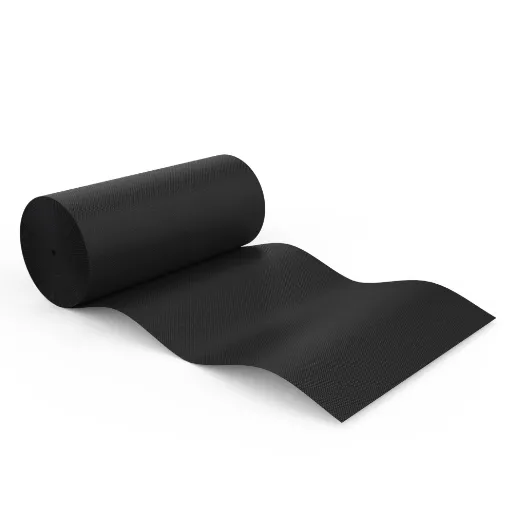
A pond liner refers to a waterproof membrane that is used in ponds, reservoirs, and other such water-conservative projects to hold water. The liners function as shields that prevent the water from seeping into the ground, thus providing a guarantee of water retention for a long time. There is a wide range of materials offered in pond liners, including HDPE (High-Density Polyethylene), EPDM (Ethylene Propylene Diene Monomer), PVC (Polyvinyl Chloride), and RPE (Reinforced Polyethylene), where each material is characterized by its own degree of durability, elasticity, and eco-friendliness.
The upside of using pond liners, particularly the HDPE liners, is that they are becoming highly favored because of their exceptional performance. Experts claim that HDPE liners have a lifespan of 20 years at the very least if installed and maintained properly. They possess enormous resistance to UV rays, chemicals, and perforations, thus suiting both small-scale garden ponds and huge industrial applications like fish farming or waste containment. Furthermore, it is also good to mention that HDPE liners are environment-friendly as they are usually recyclable and facilitate the practice of sustainable water management.
Containment’s Geomembranes Significance
Geomembranes are important elements of contemporary containment plans and are a dependable and effective solution for various sectors such as agriculture, aquaculture, mining, waste management, and water conservation. The synthetic membranes are impermeable barriers that halt the leaking of liquids or harmful substances, thus making the environment safer and the projects more efficient. Recent research claims that the leakage rate of geomembrane liners can be as low as 0.001 liters per square meter per day if they are properly installed and maintained.
A major benefit of geomembranes is their ability to fit various applications. For example, in landfills containment systems, geomembranes perform as a shield that safeguards groundwater from being polluted by the leachate that is moved off-site in minimum amounts. In the same way, in the case of agricultural irrigation ponds, they cut down the water loss due to seepage and thereby increase the efficiency of water usage by up to 50% compared to unlined ponds.
Key Features of Geomembrane Liners

Waterproof Properties of HDPE Pond Liners
HDPE (High-Density Polyethylene) pond liners are regarded as the best for waterproofing, and therefore, they are the most common choice for all kinds of water containment projects. These liners are made in such a way that they do not allow any water to pass through, hence, no water is lost from the project area and the liquids are very securely stored for a long time. When measured with a low permeability coefficient of less than 1 x 10⁻¹³ cm/sec, HDPE liners are virtually Leakage-proof when compared to the conventional materials such as concrete or clay.
The significant factor contributing to the waterproof nature of HDPE liners is the high chemical resistance of HDPE. That is why pond liners can be used in a wide range of harsh environments and they do not have to worry about dying from salts, acids, or hydrocarbons, and thus maintain the integrity of the structural reveal. Also, HDPE liners continue to be foolproof from water under pressure and change of climate as they have excellent thermal stability over a broad temperature range of -40°F to 176°F (-40°C to 80°C).
Heavy Duty Characteristics of Polyethylene Liners
High-density polyethylene (HDPE) liners are synonymous with heavy-duty use and excellent environmental stress resistance. The liners have an astonishing tensile strength of over 30 MPa (megapascals) which makes them very strong and able to bear tremendous pressure and force. Moreover, HDPE liners are characterized by very good elongation up to a point where they can actually take the very small movements of the ground under them without losing their unity.
One of the most remarkable properties of HDPE liners is their extraordinary chemical resistance. They are most suitable for use in areas that are constantly subjected to harsh chemicals, acids, or alkalis, making them perfect for industrial waste containment and hazardous material storage. Research has also pointed out their incredible UV and weather resistance, as the tests shown barely any degradation after long exposure to sunlight and extreme temperatures ranging from -40°F to 176°F.
Benefits of Using Geomembrane Liners

Environmental Protection and Chemical Containment
Geomembrane liners are a nightmare for no one and a savior for none in the case of the environment and even chemical containment. Among the various types of liners, high-density polyethylene (HDPE) ones are the most sought after for their impermeability and excellent chemical resistance. Thus, the mentioned tier of liners has been utilized widely in various industries that are dealing with harmful materials in areas that are sensitive to the ecosystems around. From mining to agriculture and waste management, all need geomembranes to observe strict environmental regulations and at the same time, sustain their natural resources.
In recent research, it was found out that HDPE geomembranes resist leakage of the worst places such as acids, salts, and hydrocarbons, and at the same time have the least degradation. As an illustration, a paper published in 2023 shows that HDPE liners will still be able to exercise more than 90% of their tensile strength even after 10 years of being used in that type of environment- very aggressive industrial chemicals. Their performance under sunlight is also remarkably good which further confirms their ability to exist as environmental protectors since they are used outdoors.
Long-term Durability and Cost-effectiveness
The durability of geomembrane liners has made them a long-lasting solution, hence they are not the only ones who want to install one. Those made out of high-density polyethylene (HDPE) are very resistant even to the most damaging conditions such as UV, chemical, and even physical degradation. New studies suggest that HDPE geomembranes can reach a lifespan of over 20 years in outdoor places while in covered or buried applications it could be up to 50 years; therefore, the need to replace them very often is reduced significantly.
From a cost-effectiveness point of view, geomembrane liners are a massive savings slice in the time factor. The main drawback of the initial installation cost of these solutions is the fact that such extensive pioneering solutions do come with steep maintenance needs but the other way round will be historically cheaper in the long run therefore. For instance, in industrial waste containment, research indicates that using geomembranes can lower annual maintenance costs by up to 30% compared to other materials like compacted clay.
Applications of HDPE and Polyethylene Pond Liners

Use in Agricultural and Industrial Settings
Agricultural Applications:
One major area where HDPE liners have found a place to serve is in the irrigation ponds, manure lagoons, and reservoirs of agricultural areas. Recent statistics reveal that lined irrigation ponds can cut down water loss from seepage by as high as 95%, thus assuring the efficient water use in drought-stricken areas. Also, these liners act as a barrier against the contamination of groundwater deriving from agricultural run-off, thus the protection of nearby organisms is assured.
Industrial Applications:
The industries that deal with hazardous materials get the benefit of HDPE liners in case they are using such materials. Their protection against chemical and risk of high temperature makes them suitable for industrial waste storage and leachate collection systems. Research done by entities dealing with mining, and that too, of hazardous materials, has revealed that using HDPE liners in tailings ponds can less the risk of environmental spills by almost 85%, hence, costly clean-ups and fines are also reduced.
Recreational and Aesthetic Applications
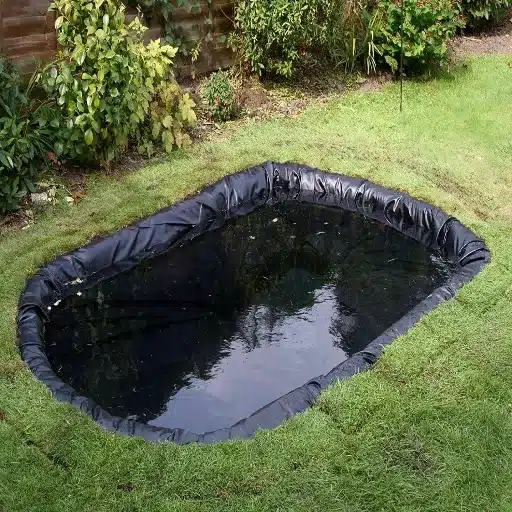
HDPE liners are not solely for industrial and agricultural purposes; they are also involved in recreational and aesthetic projects. Their strength and flexibility give reason to utilize them as a liner for artificial ponds, water features, and golf course water hazards among others. They keep the water in the basins and prevent its permanence; thus the maintenance of water quality and reduction of evaporation are long-lasting low maintenance needs and extended feature lifespans.
However, it is newly discovered that ponds and water features built with HDPE liners suffer a 30-40% loss of water compared to unlined reservoirs, largely owing to the liners’ resistance to seepage. In addition, their UV resistance makes them durable and functional even under the sun’s prolonged exposure, thus being a critical factor in keeping the beauty of outdoor recreational areas.
Comparative Analysis with Alternative Solutions

Comparison of Geomembranes with Traditional Liners
| Comparison Factor | Details |
|---|---|
| Durability and Lifespan | Geomembranes, most notably HDPE liners, are deliberately designed to be chemically resistant, stable to UV light, and to endure even the most severe temperatures. As per researches conducted in the industry, HDPE liners will be there for more than 20 years if the installation and maintenance are correct, while compacted clay liners tend to develop cracks and get washed away, and hence, they are in need of replacement or repair often within a time span of 5-10 years. |
| Cost Efficiency | The first expense that you incur in the case of geomembranes might be a little on the upper side but the durability and the less maintenance in the long run will make them cost-effective over time. Conventional liners such as clay need a lot of prep work and continuous maintenance to be efficient, which in turn, incurs extra labor and resource costs. |
| Leak Prevention and Environmental Protection | Geomembranes are a thousand times more impenetrable than clay or concrete for that matter. Tests have proven that HDPE liners have permeability rates of 10^-14 cm/sec, which is very low and is many times less than that of compacted clay, which is 10^-7 cm/sec. This incredible impermeability greatly reduces the chances of leachate getting into the soil and groundwater, hence, adhering to the very strict environmental regulations. |
Assessing Performance and Longevity
The performance and longevity of geomembranes, including RPP and AGTEC products, are of utmost importance for guaranteeing dependability in various applications. The research results have been unchanging, bringing out the superior durability of geomembranes over traditional lining materials. The Geosynthetic Institute (GSI) conducted a study which stated that depending on their polymer composition, geomembranes can last up to 400 years in properly managed environments.
Apart from this, geomembranes have been undergoing real-life stress tests and environmental simulations to prove their performance under the most extreme conditions, ranging from high UV exposure or chemical interactions. For example, high-density polyethylene (HDPE) geomembranes have been cracked and environmentally stressed cut-offs ranging from -40°F to 140°F (-40°C to 60°C). Hence, it can be used in the mining, agriculture, and wastewater treatment industries.
Reference Sources
-
BPM Geosynthetics
- Source: Reinforced Polyethylene Pond Liner – BPM Geosynthetics
- Why it’s reliable: BPM Geosynthetics is a leading manufacturer and supplier of geosynthetic products, offering insights into the applications and benefits of geomembrane liners in various industries.
-
USDA Natural Resources Conservation Service (NRCS)
- Source: Pond Sealing or Lining – Geomembrane or Geosynthetic Clay Liner
- Why it’s reliable: The USDA NRCS provides authoritative guidance on natural resource conservation, including the use of geomembrane liners for water conservation and erosion control.
-
BPM Geo
- Source: Ultimate Guide to Choosing HDPE Geomembrana
- Why it’s reliable: This guide offers detailed information on HDPE geomembrane liners, their properties, and their suitability for high-standard applications like landfills, mining, and water projects.
Frequently Asked Questions (FAQs)
What exactly is a geomembrane pond liner and what are its applications?
A geomembrane pond liner is an artificial sheet of water-proof material (most of the time it is hdpe geomembrane or reinforced polypropylene) that is meant to function as a water-tight barrier for the containment of liquids. Geomembranes can be used for aquaculture ponds, construction ponds, retention ponds, and landfill liners as well as for applications such as mining and waste containment, treatment plants, and stormwater management.
What factors should I consider when selecting a geomembrane pond liner for my project?
The deciding factors for the selection of the best pond liner are its exposure, chemicals, required lifespan, and site conditions. High-quality hdpe is often mentioned in the specification for long-term use due to its excellent properties of chemical resistance, low permeability, and UV resistance. If your project has heavy mechanical loads or rough subgrades, consider using reinforced polypropylene or a thicker hdpe geomembrane (e.g. 45mil or more) to increase puncture resistance.
Can geomembranes be made in any size or shape?
Definitely. Liners are made in sheets and can be welded, seamed, or heat-bonded at the location to produce a continuous, custom-sized liner that fits your pond, tank, or containment area. Fabrication options include prefabrication off-site to minimize field seams and thus, the liner may be cut and stitched in such a way that it fits the complicated contours of construction pond basins, aquaculture pond layouts, or secondary containment around a storage tank.
Are geomembrane pond liners harmless to fish and plants in aquaculture?
Yes, most geomembranes are safe for fish and plants if the right material is chosen. Available and widely used for aquaculture pond liner and retention ponds are food-grade or non-toxic formulations. Make sure that the liner material is approved for aquaculture and check the manufacturer’s data on chemical additives. Well-installed liners keep out contaminants and therefore, maintain the water quality suitable for aquatic life.