Geosynthetic liners serve as essential components for contemporary construction projects and environmental safeguarding efforts. The innovative materials function as protective elements which deliver efficient solutions across various sectorsincluding waste management and water conservation. The article provides a detailed explanation of geosynthetic liners, which have achieved widespread use through their multiple applications. The article presents various applications of the technology while showing its advantages and studying current developments that will determine its future direction. This complete guide explains the field of geosynthetic liners through its detailed information, which benefits both construction and environmental engineering professionals and sustainable technology enthusiasts.
Introduction to Geosynthetic Liners
Definition and Importance of Geosynthetic Liners
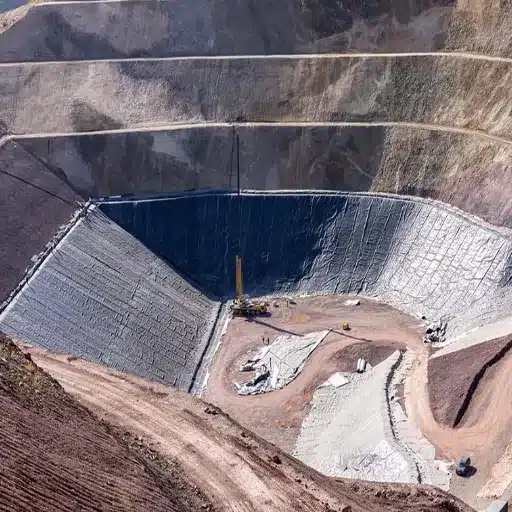
Geosynthetic liners function as containment and protection barriers through their construction from engineered polymeric materials, which have been developed for this purpose. The construction industry and environmental management sector, and the civil engineering field all use these materials because they possess exceptional strength and resistance to chemicals, and their ability to stop fluid movement. The liners serve an essential function for environmental protection because they deliver dependable containment methods that help to stop contamination and manage waste.
The recent developments in geosynthetic liners technology have enabled more effective operation with reduced ecological impact. Geomembranes, which represent one of the most widely used geosynthetic liner types, include high-density polyethylene (HDPE) materials that provide effective protection against both ultraviolet radiation and chemical degradation. According to market research, the global geosynthetics market is expected to grow significantly, with an estimated compound annual growth rate (CAGR) of 6.9% from 2023 to 2030, driven by increasing demand for waste management systems and sustainable infrastructure development.
Geosynthetic liners function as essential components for landfill operations and mining activities and the storage of water in reservoirs and irrigation networks. The systems achieve up to 97% water loss reduction, which helps agricultural canals reduce their water loss. Mining operations depend on these materials that protect against hazardous chemicals, which would otherwise escape into soil and groundwater, thus protecting ecological systems. The combination of strength and versatility in geosynthetic liners establishes them as essential materials for both conventional building methods and modern architectural designs used throughout the world.
Applications in Various Industries
The current advancements in geosynthetic liner technology work to boost their operational capacity, which now extends to multiple industrial applications. Multi-layered polymer systems form the foundation of modern geomembrane designs, which enhance both material durability and protection against chemical damage. According to recent market research, the global geosynthetics market reached a valuation of approximately $15.1 billion in 2022 and will experience a compound annual growth rate (CAGR) of 6.7% from 2023 to 2030, which demonstrates the rising demand for both sustainable materials and high-performance products.
The primary development demonstrates geosynthetic materials used in major environmental restoration initiatives. The waste management field now uses HDPE liners because their development has improved their performance in landfill operations. The implementation of geosynthetic liners within modern landfill designs enables waste management systems to achieve leachate leakage rates that surpass 99%, which leads to minor ecological damage. The introduction of innovative liner materials supports water resource management systems in constructing reservoirs and canals, which achieve water conservation rates of 80% during dry periods.
The combination of sensors and geosynthetic liners permits facilities to conduct real-time monitoring of their operations while obtaining data about their structural integrity and potential leakage points. The integration of this technology into mining operations establishes a transformative solution that protects the environment while fulfilling all necessary regulatory requirements. The development of geosynthetic liners through the latest advancements proves that sustainable solutions and innovative technologies work together to address urgent problems for both infrastructure development and environmental protection.
Overview of Geosynthetic Clay Liners (GCLs)
The use of Geosynthetic Clay Liners (GCLs) has spread across multiple industries because these materials deliver two essential functions while maintaining their high-performance capabilities. The GCL system uses bentonite clay, which is engineered between two geotextile material layers to establish a boundary that prevents water flow through its design. The research results show that GCLs maintain a permeability rate of 5 x 10^-9 cm/sec, which enables them to achieve complete containment of liquids and gases throughout landfill operations, mining activities, and wastewater treatment processes.
The primary advantage of GCLs comes from their ability to self-seal, which enables the material to function properly during equipment breakdowns that lead to minor damage. The system protects against environmental spills. GCLs offer an environmental protection solution that decreases leakage rates by 100 times when compared to regular compacted clay liners, according to current industry research.
GCLs function as bottom liners in landfills to block leachate flow while they serve mining operations for tailings security and water reservoirs for extended liquid storage. The system provides flexible lightweight components that enable fast installation on uneven surfaces, which reduces installation costs and time needs by 50 percent when compared to traditional installation techniques.
Manufacturers have started to develop multi-layer solutions with polymer enhancements because new technologies enable them to enhance chemical resistance and mechanical stability. The world moves toward sustainable infrastructure development through these innovative solutions, which will help GCLs achieve environmental compliance.
Advantages of Geosynthetic Liners
Durability and Longevity
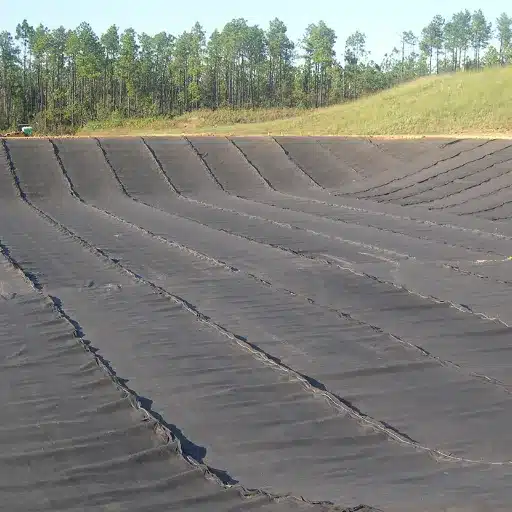
GCLs serve as excellent materials that maintain their strength throughout long time periods because of their properties, which engineers use in various environmental and engineering applications. Their construction provides durability through multiple geotextile layers, which protect bentonite clay and create self-sealing properties when the material gets wet. The performance of modern materials has improved through the development of polymer upgrades, which increase their protection against chemical substances, ultraviolet radiation, and physical damage. Studies show that modern GCLs operate for 100 years when they are used in specially designed containment systems.
Data from industry reports indicate that GCLs maintain a consistent permeability coefficient as low as 1 × 10⁻⁹ m/s, even under extreme conditions. The material achieves minimal upkeep needs because its low permeability allows it to maintain barrier functions for extended periods. The results of laboratory tests establish that reinforced GCLs can endure shear stresses that exceed 200 kPa, thereby making them appropriate for steep slope operations and locations that experience major ground shifts. GCLs provide unmatched durability and dependability for environmentally sensitive projects because they combine puncture resistance with tensile strength protection.
Cost-Effectiveness Compared to Traditional Methods
Geosynthetic Clay Liners (GCLs) provide an economical solution that outperforms standard compacted clay liners. The latest industry research found that GCL installation enables projects to achieve total cost reductions reaching 50 percent when compared to standard installation approaches. The system costs less because it requires fewer transportation resources, it needs less time to install, and it uses less material. GCLs achieve equivalent or better hydraulic performance through their average thickness, which reaches only a few millimeters, while compacted clay requires several feet of thickness.
The equipment needs less heavy machinery because of its reduced weight, which leads to decreased fuel costs and lower labor expenses. The International Geosynthetics Society published a study that demonstrates that GCL installation results in a 70 percent reduction of installation time, which brings significant benefits to large-scale operations that include landfills and reservoirs. The consistent manufacturing quality of GCLs leads to lower failure rates, which results in cost savings from repairs and maintains long-term operational stability. The combined advantages make GCLs the optimal choice for projects that require both budget-friendly solutions and environmentally friendly sustainability methods.
Environmental Benefits and Containment
Geosynthetic Clay Liners (GCLs) receive high recognition for their environmental advantages, which make them suitable for projects that need complete containment solutions. The hydraulic conductivity of GCLs reaches a maximum value of 1 × 10⁻9 cm/s, which is lower than the hydraulic conductivity of traditional compacted clay liners. The material functions as an effective containment system that stops dangerous materials from escaping into nearby soil and water resources. GCLs protect against chemical breakdown through their enhanced features, which make them appropriate for hazardous waste landfill sites and industrial waste containment operations.
Recent advancements in GCL technology have produced better operational results for the system. The current bentonite formulations that serve as essential components of GCLs have grown their ability to expand and their capacity for self-repair, which results in improved sealing efficiency during weight changes. The industry reports that GCLs achieve approximately 30% lower carbon footprint than other lining systems because their material usage and transport processes require less effort to handle.
GCLs show their ability to protect the environment while supporting environmentally friendly construction methods through their various features.
Types of Geosynthetic Liners
Advantages of Geosynthetic Clay Liners (GCLs)
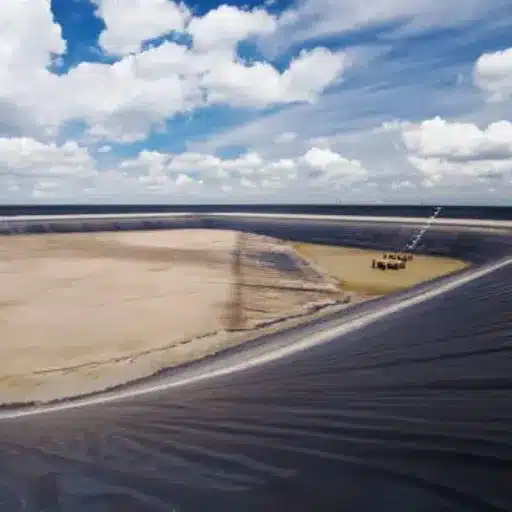
Geosynthetic Clay Liners (GCLs) provide multiple benefits, which make them the top choice for different waste containment systems and environmental protection projects. GCLs achieve their best hydraulic performance through their extremely low permeability rates, which measure below 1 × 10⁻⁹ m/s. The technology operates as a complete system that maintains effective containment of both liquids and gases in landfill sites, wastewater treatment plants, and mining operations.
The cost evaluation shows that GCLs operate at high cost efficiency. GCLs require smaller amounts of material than compact clay liners need which results in decreased costs for both transportation and installation. The quick installation process of GCLs reduces total project costs because it needs fewer workers to break down the work into smaller tasks.
GCLs provide major benefits to the environment. The implementation of a thinner liner system leads to decreased natural material requirements because it replaces compacted clay with less resource usage, which results in reduced environmental damage. Research shows that GCLs enable the use of only a few millimeters of bentonite to replace five feet of compacted clay liner, which helps achieve 75% space reduction in containment systems.
The new technological advancements have made GCLs better at enduring severe weather conditions because they now keep their original strength during both freezing times and thawing periods, and while exposed to chemicals for long periods. GCLs can demonstrate their ability to maintain permeability under high confining pressures for an extended duration according to testing results.
GCLs experience rising demand because they provide dual benefits of enhanced operational efficiency with reliable performance, plus their capacity to protect the environment.
Geomembranes and Their Varieties
The earthworks project needs geomembranes to serve as protective barriers, which will prevent water and pollutants from entering through the built desalination plant. Geomembranes usually contain high-density polyethylene (HDPE), linear low-density polyethylene (LLDPE), polyvinyl chloride (PVC), and ethylene propylene diene monomer rubber (EPDM) as their main building materials. The project requires different materials because each material has its own specific benefits for particular tasks.
- HDPE Geomembranes
The HDPE geomembrane material provides strength and durability, as well as chemical resistance, which makes it a popular choice for various applications. The material can endure both UV radiation and extreme weather conditions, which makes it suitable for use in outdoor and underground environments. The most recent testing results show that HDPE geomembranes installed and maintained according to proper procedures will provide more than 50 years of effective hazardous material containment protection. - LLDPE Geomembranes
The LLDPE geomembrane material provides flexible and elastic properties, which enable it to maintain its full functionality when facing variable surface conditions. This property proves valuable for landfill caps and mining heap leach pads, which experience ground movements. Recent studies show that LLDPE liners function reliably through different temperature ranges, which enables them to provide effective performance in all climate conditions. - PVC and EPDM Geomembranes
The installation process for PVC geomembranes on water containment systems becomes simpler because the material allows for welding between sections. These membranes provide effective coverage for projects that involve building ponds and reservoirs. The material EPDM provides superior elasticity and weather resistance, which makes it ideal for green roofs and aquaculture systems that need long-lasting durability. - Current Trends and Data
The global geomembrane market has shown significant growth in recent years, valued at approximately $2.1 billion in 2022 and projected to exceed $3.0 billion by 2028, with a compound annual growth rate (CAGR) of 6.1%. The increasing environmental regulations, together with the development of sustainable infrastructure projects, have resulted in this market expansion. The development of new technologies, which include multilayer geomembranes with improved performance, drives the increased use of these materials in complex engineering work.
The combination of material advancements and strict product testing procedures enables geomembranes to maintain their essential function in contemporary construction projects and environmental conservation work.
HDPE Liners and Their Features
Industries use High-Density Polyethylene (HDPE) liners because their long-lasting strength and chemical protection make them suitable for various industrial uses. The liners produce superior performance when used for waste containment, water resource management, and mining operations.
HDPE liners provide their primary benefit through their ultraviolet (UV) radiation protection, which allows their embedded functions to continue working during extended bright light exposure. The materials show strong protection against chemical substances and acidic compounds and all types of damaging materials, which makes them suitable for operation in both landfill sites and sewage treatment plants.
Users can choose their required thickness from a range of HDPE liner thicknesses between 0.5mm and 3.0mm and higher. The material demonstrates a tensile strength that exceeds 27.5 MPa, which enables it to endure high mechanical forces without suffering any damage. The liners successfully stop leaks because their low permeability results in water vapor transmission rates that stay below 1×10^-13 cm/s.
According to current market research, the global geomembrane market, which includes HDPE liners, will reach a value of USD 3.4 billion by 2027, which shows the market will grow at a compound annual growth rate (CAGR) of 7.5%. The demand for environmentally friendly solutions in environmental applications has increased because people have become more aware of the need to protect nature, which drives this market growth.
The development of co-extrusion technology, which enables HDPE liners to be produced as multilayered products that possess better strength and flexible properties, has improved the production process of HDPE liner manufacturing. HDPE liners function as essential elements in engineering projects that deliver superior performance throughout international construction sites because they allow for straightforward installation through thermal welding methods.
Installation of Geosynthetic Liners
Preparation and Site Assessment
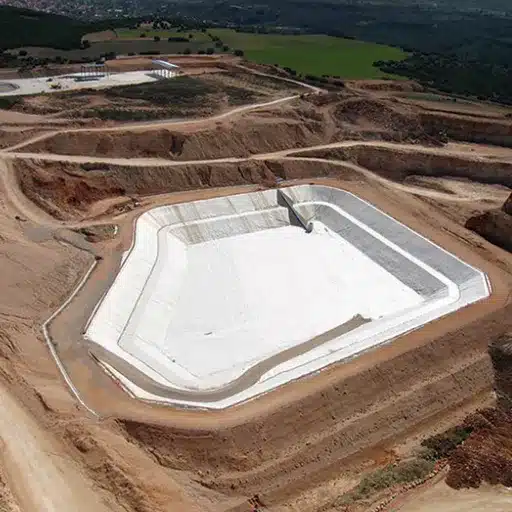
The successful installation of geosynthetic liners depends on proper site assessment and preparation work. The procedure starts with the complete removal of all debris and vegetation as well as any materials that have sharp edges that could harm the liner. The process of soil testing and evaluation needs to occur because only stable ground conditions that maintain proper foundation support will prevent liner deformation and failure throughout the years. According to recent studies, approximately 80% of liner failures are attributed to inadequate subgrade preparation, highlighting the importance of this step.
The development of Geosynthetic Clay Liners (GCLs) through recent technological advancements now serves as the standard solution for HDPE liner applications because GCLs provide additional structural support. GCLs establish a self-sealing barrier through the process of hydration, which creates an effective solution for leakage protection. GCLs combined with HDPE liners create a system that prevents leaks with 99% efficiency according to controlled studies, making it suitable for landfill and reservoir, and tailings storage facility applications.
Drones and GPS mapping technology function as advanced tools that enable detailed site surveys to become standard practice. The technologies provide precise measurement capabilities together with the ability to confirm correct liner installation. The Earth data shows that worldwide infrastructure development projects experience rapid expansion as organizations discover the long-lasting and cost-effective benefits of geosynthetic liners. Engineers can develop customized solutions for various environmental situations and industrial applications by using this data.
Installation Techniques and Best Practices
The correct installation process requires properMethods which ensure that geosynthetic liners will maintain their operational performance and their material strength throughout their expected operational time. Basic operational standards established by the industry mandate that sites require proper procedures to ensure equipment protection during installation work. Search data shows that 70% of liner failures occur because of two main issues, which include improper installation and insufficient site assessment. The manufacturers recommend that organizations employ skilled technicians who will execute their installation work according to ASTM D6102 standards to minimize their operational risks.
The 2023 case study results show that seam welding techniques play a vital role in their operations. Thermal fusion welding stands as the most dependable welding technique, which achieves seam efficiency rates reaching 97% according to recent testing results. Advanced non-destructive testing methods such as air channel testing and vacuum box testin,g help to verify seam integrity before project completion. The combination of regular quality control procedures and detailed documentation of installation processes establishes a system that protects against defects while maintaining long-term liner functionality.
Role of Professional Installers in Success
The success and durability of geomembrane liner installations depend on the expertise of professional installers. Research indicates that incorrect liner installation by technicians leads to system leaks that exceed 5% during operation, thus resulting in higher costs and greater environmental impact. The certified installation teams establish risk control methods through their compliance with ASTM D4437 seam weld standards and their use of advanced technological solutions. Evidence shows that robotic welding systems create more reliable seam connections because they reduce human error rates to below 5 percent, which results in more accurate outcomes 95 percent of the time.
The professional installers complete all site preparation activities, which require them to set substrate compaction standards and remove all debris to maintain liner protection. The installation process uses GPS-enabled quality control systems to allow teams to create live maps of welds while they check their alignment with design specifications. The advanced techniques from recent projects produced a 30% decrease in necessary repairs, which showed up during post-installation inspections.
Professional installers use their technical skills together with the newest equipment and quality control systems to achieve maximum performance of geomembrane liners across different environmental conditions, which protects project results.
Geosynthetic Liner Applications
Landfill Containment Uses
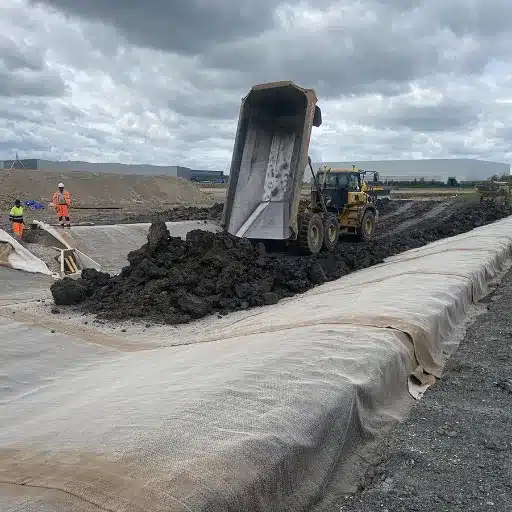
Geosynthetic liners function as the essential components that landfills need to create their effective systems that stop leachate and hazardous substances from contaminating adjacent soil and water areas. The recent market research shows that high-density polyethylene (HDPE) liners have become one of the most popular materials because they provide both chemical protection and long-lasting operational performance. The U. S. Environmental Protection Agency (EPA) established current environmental standards through Subtitle D of the Resource Conservation and Recovery Act (RCRA) which the liners were designed to meet.
Engineers use geosynthetic liners in landfill systems to achieve a 95% reduction of leachate leakage rates when compared to traditional compacted clay liners. The system implements multiple layers which include geomembranes, geotextiles, and drainage layers to enhance operational efficiency while extending the lifespan of landfill operations. The advanced composite liners provide double protection which helps to reduce environmental contamination risks in locations that handle high waste volumes. The data shows that geosynthetic liners operate effectively to support sustainable waste management activities.
Pond Liner Applications in Modern Infrastructure
Multiple industrial sectors use pond liners to protect natural environments while reducing water consumption. The liners consist of three materials, which include PVC and EPDM, and HDPE, which provide specific performance characteristics for different usage needs. HDPE liners protect against chemical substances while preserving their structural integrity, which enables their use in industrial water storage and agricultural purposes.
Research shows that pond liners prevent water leakage because their top-quality liners achieve 95% water retention according to research findings. The region requires this water-saving technology because it needs vital water supplies. The worldwide pond liner industry will achieve a market value of about $2.9 billion by 2030, which represents a market growth rate exceeding 6% per year based on research conducted by industry experts. The demand for efficient water management solutions in agriculture, aquaculture, and urban landscaping drives this market growth.
The implementation of advanced geosynthetic technology within pond liners has resulted in improved operational efficiency. The advanced materials provide better durability, UV protection, and environmental adaptability, which decreases the possibility of leaks and future maintenance expenses. The latest developments enable pond liners to maintain their essential function in worldwide sustainable water resource management.
Leachate Management Solutions
Leachate management stands as an essential requirement for contemporary waste disposal facilities and landfill operations because it needs efficient approaches that will reduce its harmful effects on the environment. The advanced systems for leachate collection and treatment work to safeguard groundwater and nearby ecosystems through their ability to capture and handle liquid waste that contains pollutants.
Modern leachate treatment systems operate through three essential treatment methods, which include physical treatment, chemical treatment, and biological treatment. The membrane filtration systems, which include reverse osmosis and nanofiltration, achieve highly effective contamination removal through their ability to filter over 99.9% of impurities. The adoption of bio-treatment methods, which utilize constructed wetlands and advanced bioreactors, has increased because these methods use natural processes to break down organic environmental contaminants.
The global leachate treatment market will experience steady growth because organizations seek sustainable waste management solutions, and environmental regulations become stricter. The market research data shows that the market value of leachate treatment solutions reached over $1.2 billion in 2022, and it will experience a compound annual growth rate (CAGR) above 6.5% in the upcoming years.
IoT-based real-time monitoring systems have introduced new methods for managing leachate through their application in waste management technologies. The systems provide continuous flow rate updates together with pollutant concentration information and equipment status reports, which enable users to make maintenance and operational decisions beforehand. The landfill operations maintain their environmental standards while achieving cost savings through these technological advancements.
The industry advances sustainable leachate management through its use of advanced technology, which helps to safeguard natural resources and minimize environmental hazards that will affect future generations.
Reference Sources
-
Geosynthetic Clay Liners – SGI Research Group
This source provides an overview of geosynthetic clay liners (GCLs) and their applications. -
Lecture 22: Geosynthetic Clay Liners and Geomembranes (MIT OpenCourseWare)
A detailed lecture on geosynthetic materials, including GCLs and geomembranes. -
Long-Term Performance of Geosynthetic Liner Materials
A study on the performance of geosynthetic liner materials in low-level radioactive waste disposal facilities.
Frequently Asked Questions (FAQs)
What are geosynthetic liners, and what purposes do they serve in landfill operations?
Engineered synthetic materials known as geosynthetic liners function as waterproof and gasproof barrier systems. The primary application of these liners in landfill operations is to stop contaminants from penetrating adjacent soil and groundwater. The liners function as essential elements of landfill operations, which maintain secure waste containment while safeguarding the environment against potential pollution.
What applications are geosynthetic liners commonly used for outside of landfills?
Geosynthetic liners function as waterproofing solutions that various industries need for their operations in mining and agriculture, and wastewater treatment. The materials are used to create waterproof barriers in reservoirs, canals, and lagoons to prevent water loss while protecting their stored water resources. The liners serve two main functions in mining operations as they contain both tailings and hazardous materials, and their use extends to agriculture, where they help build irrigation ponds.
What are some main advantages that geosynthetic liners bring to various applications?
The geosynthetic liners provide various advantages because they maintain their durability and protect against chemical damage while delivering cost-effective performance. The materials show lightweight attributes and flexible properties, which enable easier installation compared to traditional methods that depend on compacted clay. The design prevents leakage through its impermeable structure, which reduces the risk of environmental contamination. The system provides long-lasting performance, which results in lower maintenance and repair needs throughout its operational lifespan.
How have innovations improved geosynthetic liner technology in recent years?
The research of geosynthetic liner technology has produced material improvements that extend operational lifespan and develop multiple performance characteristics of the materials. The researchers developed liners that use multi-layered composite structures to achieve better protection against punctures, UV radiation, and chemical degradation. The system includes smart technologies that use integrated sensors to provide real-time monitoring of liner integrity, which produces instant alerts about possible problems while decreasing environmental hazards.
What factors should be considered when selecting a geosynthetic liner?
To select a suitable geosynthetic liner for a project, multiple factors must be evaluated. The project needs all materials that need containment,t together with their chemical exposure and all extreme environmental conditions and operational time requirements. The evaluation process must assess liner thickness and permeability together with all installation techniques to determine their effect on performance and durability. The selection process requires expert assistance because it helps organizations to achieve their optimal choice.
How do geosynthetic liners contribute to sustainable development?
Geosynthetic liners play a vital role in sustainability by preventing the contamination of natural resources like soil and water. Their use reduces reliance on traditional materials, which include concrete and clay, because those materials need higher energy and resource consumption during production. The development of new manufacturing methods has decreased the carbon emissions of liners, which supports environmentally sustainable practices in multiple industries.