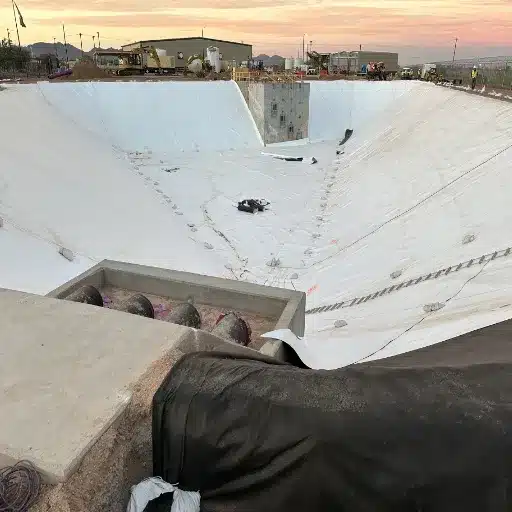
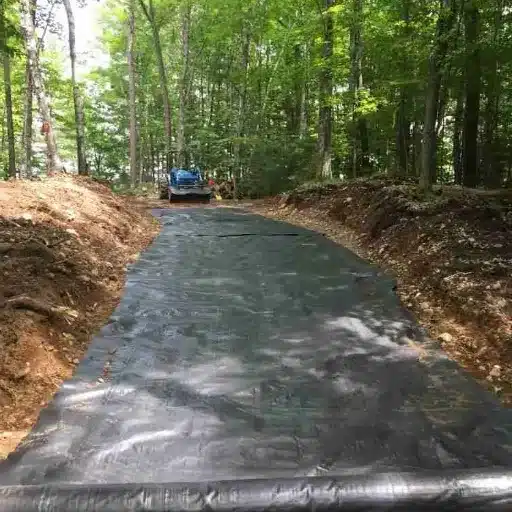
The gravel driveway’s strength and dependability are determined by the foundation likewise the surface. Driveway fabric is the perfect tool for the task; it will support you in designing a solid and enduring base for your gravel or landscape. This incredibly useful material, also referred to as geotextile fabric, plays a very important role in the controlling of the gravel movement, the deterrence of weed growth and the moisture flow support. The subsequent sections will discuss in detail the benefits of driveway fabric, its operation principles and the reasons that make it an indispensable investment for both, residential and commercial landscapes. Whether the homeowner wants to increase the curb appeal of the house or the landscaper needs a professional and perfect result, everyone will gain from this guide because it includes everything about the geotextile fabric usage in the upcoming project.
Introduction to Geotextile Fabric
What is Geotextile Fabric?
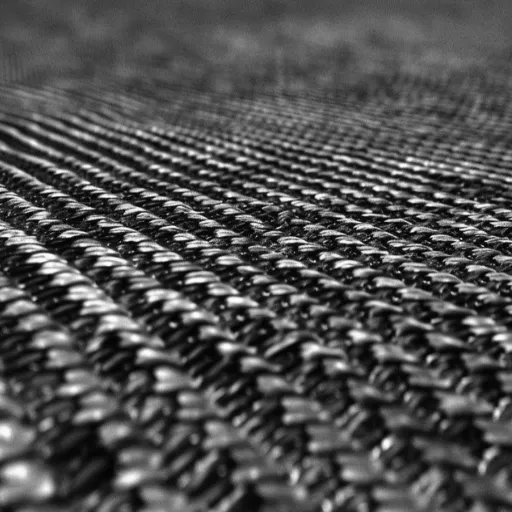
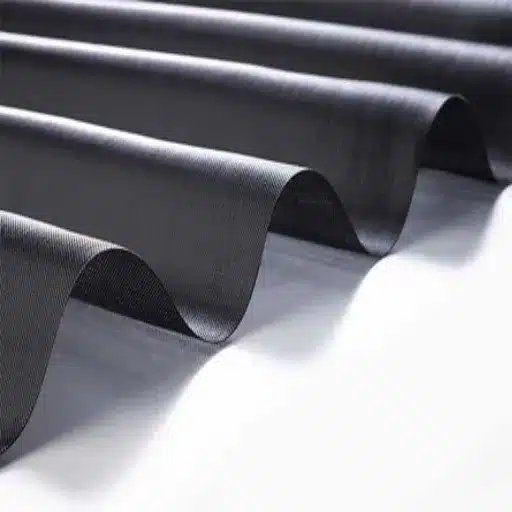
Geotextile fabric is a very flexible and multifaceted material that normally consists of synthetic fibers such as polypropylene or polyester. Depending on the manufacturing technique, the fabric can be woven, non-woven, or knitted. Namely, it is meant to perform functions like separating, filtering, draining, reinforcing, and protecting in construction or gardening projects. Furthermore, it is a fabric that lasts long time auras and is very versatile, thus having its use in a wide range of applications like road making, controlling erosion, and stabilizing driveways.
The geotextile fabrics have been the main topic of discussion and research as their widespread and proper use could be the foremost factor to greatly lengthen the life span of the entire infrastructure. For example, when such fabrics are applied to the construction of roads and driveways, the total maintenance cost for the entire 20 years span might be reduced by no more than 30%. Like a wall, they prevent mixing of soil and aggregate but at the same time they allow water through, thus lowering erosion and keeping the base layers strong and stable at the same time.
Filtration and drainage are the main applications of non-woven geotextiles, and they are really effective controlling the water flow in projects such as retaining walls and French drains. On the contrary, woven geotextiles have the highest tensile strength and they are thus fit for heavy load-bearing applications like driveways or parking lots. The permeability of geotextile fabric is a significant factor in proper drainage and therefore in avoidance of water pooling, frost heaving, and structural damage.
Importance of Fabric in Driveway Construction
Geotextile fabric application in driveway construction is one of the pivotal aspects of the whole process that will result in a surface that lasts long and is durable. In case the installation is not done properly, the driveways will face issues of sinking, cracking and wearing out unevenly due to the shifting of the base material and also due to water and soil erosion. When a layer of geotextile fabric is placed between the subgrade soil and the base course, it results in the driveway getting a lot of structural strength.
Geotextile fabric works by separating soil from the aggregate base which not only eliminates the mixing of materials but also lowers the likelihood of subsidence over time. Studies show that proper installation of geotextile fabric can lead to an increase in the lifespan of a driveway by as much as 25%, thus the frequency of repairs and maintenance would be lessened. Additionally, the fabric is responsible for removing moisture from the foundation thus ensuring better drainage and is particularly beneficial in locations where there is a lot of rain or frequent changes in temperature that cause freeze-thaw cycles.
Benefits of Using Geotextile Fabric for Driveways
Separation and Stabilization Properties
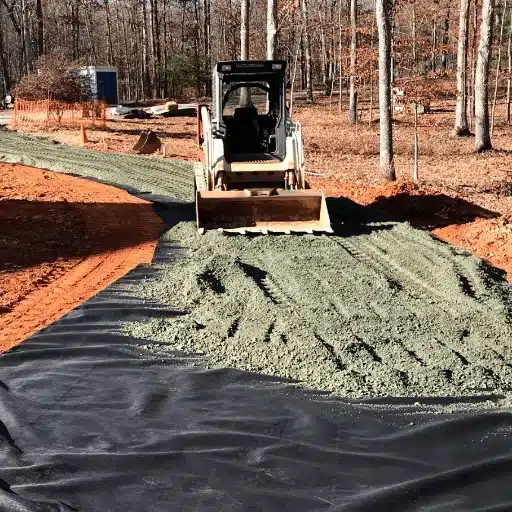
Woven geotextile fabrics have become an indispensable material for driveways in terms of foundation support and separation. They are specially made so that no mixing of layers occurs, which is an important factor in areas prone to soil degradation and instability. Thus, these fabrics prevent the mixing of subgrade and aggregate layers and the base remains sound and stable for a long time.
More and more studies suggest that the inclusion of geotextile fabrics in driveways can not only have a lifespan of up to two times longer but also the maintenance costs will be reduced by 50%. First of all, the right positioning of woven geotextile fabrics is one of the top methods to control ruts formed by continuous traffic loads. An industry rumor states that this material has a tensile strength of 200-400 lbs per inch depending on the type which infers to be very strong and long-lasting even under very heavy stress.
Cost-Effectiveness and Longevity
Using woven geotextile fabrics in driveways not only gives the best cost-effectiveness but also has an over-the-toplong-lasting factor. The reason is that these fabrics will prevent the need for the base material of high thickness to a certain extent, and they will distribute the load of the area uniformly and give excellent support to the subgrades. To put it in numbers, the use of geotextile fabrics projects worldwide material usage could be reduced by 30% at most which means the construction costs have been greatly reduced.
When speaking of longevity, woven geotextile fabrics are the ones that last longest, with a life span of 20-50 years depending on soil and climate. These fabrics can withstand extreme conditions, and moisture can get through them but the sun’s rays cannot. Research indicates that driveways with geotextile foundations are 2-3 times more durable than those without which is a great return on the investment. It also makes woven geotextile fabrics a green and economical option for any driveway construction project in terms material and maintenance costs reduction.
Installation Process of Geotextile Fabric in Driveways
Preparation of the Site
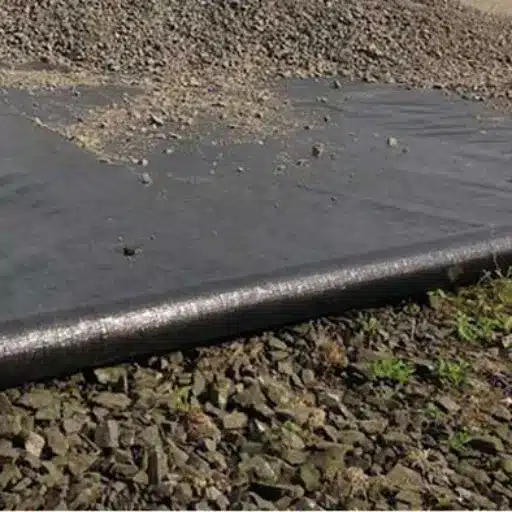
Clear the Area: The first thing to do is to get rid of all types of vegetation, garbage, and, if any, the buildings in the area around the driveway you want for your project. The clearing of the site will make it easier for the installation of the driveway without the problems of uneven surfaces or fabric breaking underneath. Moreover, it is advised by professionals that all the hard debris of size greater than 2 inches be removed for the best results.
Excavate the Site: Make a cut in the earth according to the load the driveway will carry and its purpose. According to the latest recommendations, cutting down to 8-12 inches is normally sufficient for a standard car driveway but in the case of heavy trucks, an 18 inches depth would be required.
Grade the Subgrade Surface: The subgrade is to be expertly shaped and rendered so that a solid base is guaranteed. This process will help in reducing the water retention and providing a flat surface for the geotextile fabric placement. A report from the U. S. Department of Transportation says that if done properly, grading will be able to prevent up to 90% of the possible drainage problems.
Address Drainage Needs: Proper drainage is a must for the longevity of the driveway. If needed, water runoff can be facilitated by creating a minor slope (around 2-5%). For the regions that get heavy rainfall, it might be necessary to provide additional ways for draining, like installing culverts or French drains, to cope with the overflow.
Compact the Soil: Make the soil really tough by using either a vibratory plate compactor or roller and compact it until it is very hard. Research indicates that proper compaction can increase the stability of the subgrade by as much as 25%, thus preventing settlement in the long run.
Steps for Proper Installation of Geotextile Fabric
Excavate and Level the Site: First of all, the site has to be cleared absolutely so that no rubbish, plants, or large stones remain on the site. Checking the excavation depth to be compatible with the intended load and the planned thickness of the base and sub-base layers would certainly be a good idea. Using laser leveling equipment particularly in large projects to smooth out the area will be worth your effort.
Choose the Right Geotextile Fabric: The selection of nonwoven or woven geotextile fabric depends on the project requirements. Nonwoven fabrics are highly effective in filtration and drainage, while woven fabrics are strong enough to be very supportive and so offer stability. A super-strength woven geotextile fabric with a tensile strength of at least 200 lb/in is typically recommended for heavyweight driveways.
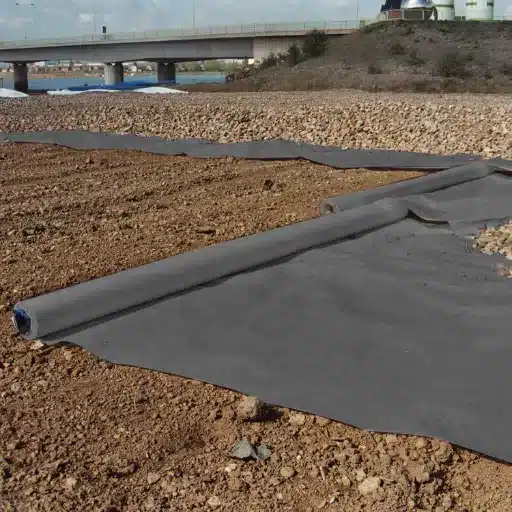
Cut and Lay the Fabric: The area prepared for the geotextile fabric should be unrolled. Areas next to each other should have at least 1 or 2 feet overlapping to prevent gaps from being left and to guarantee adequate coverage. To restrain the fabric somewhat in its position during the placement, it should be secured with ground stakes or pins about 3-4 feet apart.
Add an Edge Restraint System: Whether made of plastic, steel, or wood, edge restraints should be installed to hold the base material in place during backfilling and to prevent lateral movement of the material at the same time. A solid edging system can greatly extend the life of your driveway by ensuring the building’s strength is not compromised.
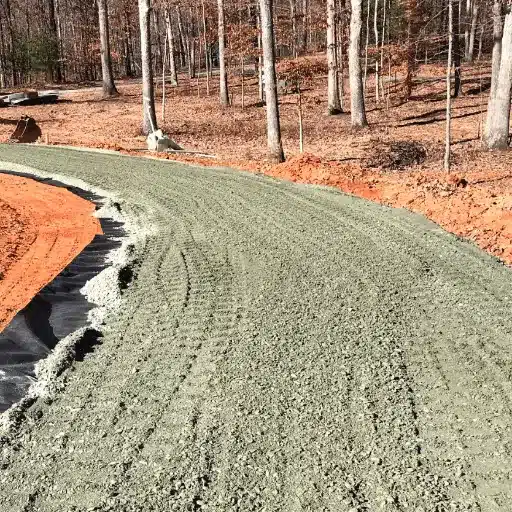
Spread the Base Material: The geotextile fabric will have a layer of crushed stones or aggregate placed over it as a base. The aggregates should ideally be angular to enable interlocking and to withstand the force of displacement. The thickness of the base usually ranges from 6-12 inches which is dependent on the traffic load. The layer must be compacted very well by machines such as compactors or rollers to attain a density of 95% Proctor or even more.
Check Drainage Features: It is absolutely necessary to check that the design has good drainage. French drains can be installed or the driveway can be sloped at 1% to 2% for water runoff. The combination of drainage systems with geotextiles not only decreases the moisture retention in the base material but also boosts the performance of geotextiles.
Maintenance Tips for Geotextile Fabric Driveways
Routine Inspection and Care
The lifespan and performance of your geotextile fabric driveway can be maximally extended if you carry out regular inspection and maintenance. The first step is a visual inspection which should be done every 3 to 6 months; the inspection aims to identify problems such as surface unevenness, weed growth, or water pooling that might indicate poor drainage. Early detection and treatment of those problems can help prevent further deterioration of your driveway.
The surface will undoubtedly be clean and free of any contaminants, including fallen leaves and dirt, which can create a moisture trap that hastens the wear-out process. If the area is prone to heavy rain or snow, power washing the driveway once annually can be a good maintenance tip to keep the drive spotless and operational.
According to the latest findings from the maintenance studies, the timely sealing of surface cracks and, if necessary, the restoring of compacted gravel can add 25% to the average driveway life span. The edges of the driveway require care since they are the first to become eroded or the geotextile fabric becomes frayed. Adding more gravel or edge retention materials to these areas can be one of the efficient methods to avoid intrusion which, in turn, keeps the driveway from being weakened.
Weed Management Strategies
Regular Monitoring: Habitually checking your driveway is a good practice to catch and kill the weeds at a very early stage. If you take action at the right time, you will be able to prevent the weed from spreading and also the geotextile fabric’s strength from being ruined.
Chemical Control: Use eco-friendly herbicides according to the guidelines of the top professionals. For example, glyphosate-based products can be very effective against weeds having deep roots. Studies suggest that herbicide application during the growth phase of weeds can lead to a reduction in regrowth rate by as much as 80%.
Physical Removal: You can either pull the weeds out by hand or use some tool, both of which are very effective for small infestations. For full effectiveness, make sure to remove the entire root system.
Mulching and Gravel Replenishment: Adding a fresh layer of gravel on a regular basis acts as a physical deterrent to weed growth. It is said that a 2-3 inch layer of gravel can reduce the weed germination rate by 70-85%.
Geotextile Fabric Maintenance: The geotextile layers may build up dirt and debris with time which will form a medium for the weeds to grow. By cleaning and replacing the gravel layer to keep the fabric operational, you ensure that weed growth is kept to a minimum.
Cost Considerations for Driveway Fabric
Evaluating Long-Term Savings
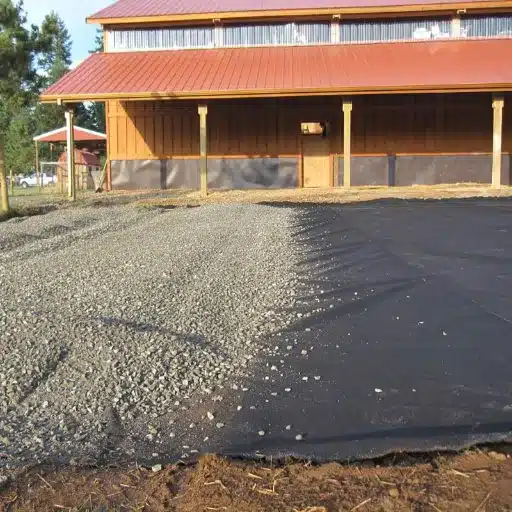
Investing in top-notch driveway fabric is a choice that entails an initial financial burden but in the long run, the savings can outweigh the investment. Proper installation of fabric not only cuts down on the number of repairs to be made but also prevents problems like rutting, weed growth, and soil erosion to a large extent. A research from 2023 on the costs of driveway maintenance found that, on average, $300 to $1,000 is needed each year for repairing cracks or paying the price for the poor quality base, this varies according to the location and climate.
Additionally, one of the benefits of driveway fabric installation is less reliance on gravel or a base layer over time. Periodic restocking of driveways with gravel layers can cost $500 to $2,000 a year depending on the size of the driveway. The driveway fabric acts as a stabilizer that distributes the weight evenly and prevents the materials from sinking or shifting thus eliminating such recurring costs.
The fabric covers not only the entire driveway but also significantly increases the life span of it, so the total replacement of the driveway is delayed. A cost on a redoing driveway can be anywhere between $4,000 to $8,000 for asphalt and over $10,000 for concrete, going by the latest industry statistics. Driveway fabric keeps the homeowners from incurring such huge costs for many years by avoiding premature wear.
Commercial Grade vs. Heavy Duty Choices
Most Commercial Grade driveway fabric is normally created for the residential market. It typically bears the weight of moderate loads from cars and light trucks. That is why this fabric is the ideal choice for regular driveways. This type of fabric is affordable and dependable at the same time; the price per square foot varies between $0.30 and $0.50 depending on the manufacturer and durability characteristics.
Heavy-duty driveway fabric is made to endure the tough conditions and heavy loads experienced in commercial or industrial environments. This material has high tensile strength and is resistant to puncturing and tearing, making it ideal for areas where heavy trucks and machinery operate frequently. The price of heavy-duty options ranges from $0.50 to $1.00 per square foot reflecting their superior performance and durability among the average.
Reference Sources
-
“Fabric For Reinforcement and Separation In Unpaved Roads”
- Key Findings: This study explores the use of geotextile membranes for reinforcement and separation in unpaved roads. It highlights the role of geotextiles in reducing rutting and extending the lifespan of roadways.
- Methodology: The research involves field tests and simulations to evaluate the performance of geotextile membranes under various load conditions.
- Read more
-
“Application guide and specifications for geotextiles in roadway applications”
- Key Findings: This guide provides detailed specifications and best practices for selecting and using geotextiles in roadway construction. It emphasizes the importance of material selection for different applications, including driveways.
- Methodology: The study compiles data from various roadway projects and provides a decision-making framework for geotextile use.
- Read more
Frequently Asked Questions (FAQs)
Are geotextiles suitable to be the underlayment for driveway and road project?
Surely, geotextile fabric as an underlayment will not only prevent the soil below from becoming too soft but also ensure that no aggregate gets mixed and moreover pavers or asphalt can be placed on top of it without any problem. A very strong fabric or stabilization fabric below the base will cut down the occurrences of potholes and ruts since it will be allowing the roadway materials to remain distinct from the soil underneath.
Is road fabric the same as a weed barrier for driveways?
There are areas where road fabric and weed barrier have overlapping functions, but the designs are different. Road fabric (stabilization fabric) has been built for tensile strength, puncture resistance and long-term separation under the weight of vehicles, while the weed barrier or landscape fabric is meant only for weed control and light-duty filtration. For driveways, choose heavy-duty, UV-stabilized road fabric instead of a basic weed control fabric to guarantee durability.
Should I use a woven or non-woven fabric for a paver driveway?
Woven fabric, in general, is the material of choice under the pavers because it has higher tensile strength and good dimensional stability, which is needed in driveways and road applications. Non-woven, on the other hand, is more needle-punched and thus provides better filtration and drainage (flow rate) but less lateral stability. For heavy loads or poor soil conditions, woven polypropylene fabric heavy duty options are usually recommended.
How effective is it that a woven polypropylene weed barrier can control weed growth completely?
A top-quality woven polypropylene weed barrier, when used as geotextile driveway fabric, offers good weed control by blocking light and preventing root penetration while still being permeable so that water can flow through and not pool. Use landscape staples or pins to secure the weed barrier and keep the fabric flat and thereby effective over time.