A French drain is one of the most reliable ways to manage water drainage properly so that there is no water accumulation and no damage to your property. However, the drain’s efficiency and durability are mainly determined by the materials that are chosen. One of the materials that are sometimes overlooked yet very important is the landscape fabric, particularly the geotextile non-woven fabric, as it not only stops soil from getting into the drain but also allows water to flow through easily and therefore keeps the drainage system working. This article explains the landscape fabric’s most significant part in French drain systems, the reasons why non-woven geotextiles are the best choice, and their function in facilitating drainage and cutting down maintenance at the same time.
Introduction to Geotextile Fabric
What is Geotextile Fabric?
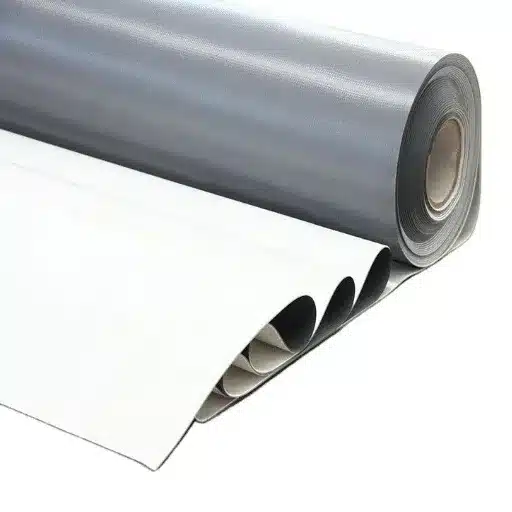
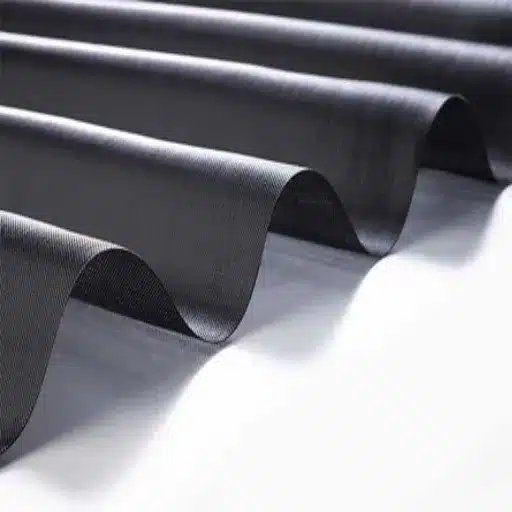
Geotextile material is a completely biodegradable and environment-friendly synthetic fabric which can be made using natural and synthetic fibers such as polypropylene and polyester. It can be applied in many areas such as civil engineering, landscaping and the environment. Its primary functions are to act as a filter and a barrier, to stabilize the soil, to facilitate the drainage, and to prevent the migration of soil particles. The geotextile fabric is usually classified into two main groups depending on the production and the type of use—woven and nonwoven fabrics.
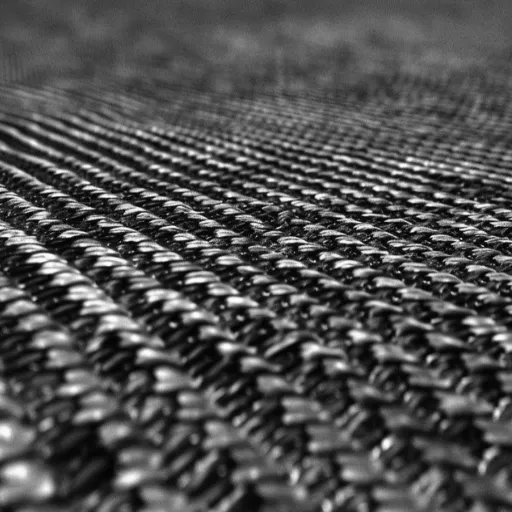
Woven geotextiles are produced by intertwining the fibers which results in a fabric that is incredibly strong and durable. They are suitable for the situations that require very high tensile strength, such as road construction, and material processing for stabilization. The other type, non-woven geotextiles, on the contrary, are made by melting, chemically changing, or mechanically joining the fibers. Thus, the fabrics are very water-permeable and excellent in providing water filtration and, therefore, can be used for making French drains and such drainage systems.
Different Types of Geotextile Fabric: Woven vs. Non-Woven
Woven geotextiles are made from synthetic fibers of such a quality that they can be used interlaced and they form a material that is both strong and very durable. This quality of tough materials makes them favored by the builders for stabilization and reinforcement, but they also have very forgiving properties in terms of tensile strength and load-bearing capacity, which is why they are usually used in the applications that need soil stabilization and reinforcement. For instance, woven fabrics are commonly used in road mi construction, and making of retaining walls and in other areas where there is heavy lifting and pressure. The tensile strength of woven geotextiles can be between 200 to 2,000 pounds per square inch (psi) according to different manufacturers’ specifications, depending on the geotextile chosen.
- Non-Woven Geotextile Fabric
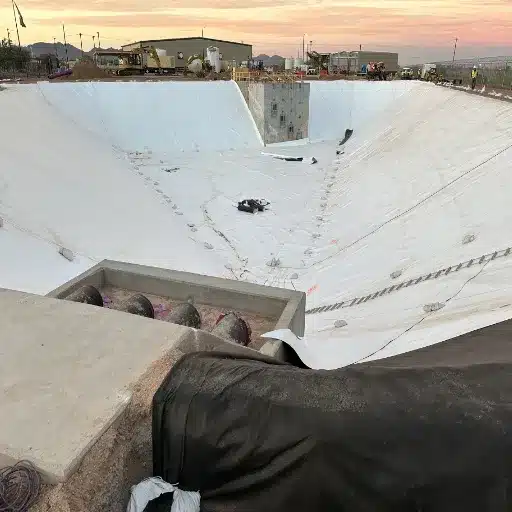
Non-woven geotextiles are being very soft and open materials as their fibers can be made by various methods (mechanical, chemical or thermal) and they are glued together. These fabrics can be applied in the specific fields like water filtration and drainage management according to the specific applications. For example, non-woven geotextiles are routinely used in French drains, erosion control, and landfill liners. Industry statistics state that nonwoven geotextiles can have water permeability rates of 0.08 to 0.3 cm/sec. or greater while still being very resistant to clogging.
Benefits of Geotextile Fabric in French Drains
Enhancing Drainage Efficiency
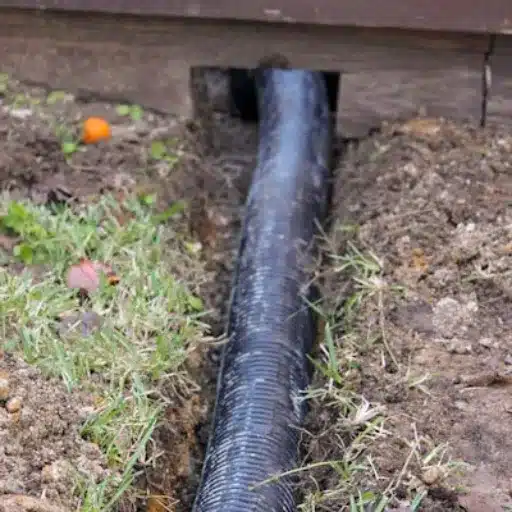
Geotextiles are important materials in the modern landscape of construction and gardening that offer great drainage solutions. They play the role of a filtering and separating layer, as they stop the soil and sediment from mixing with the drainage layer, hence, the drainage system will continue to work well for a long time. New findings reveal that the application of non-woven geotextile fabrics in French drains can lead to an increase in the draining rate by as much as 30% compared to a situation where no membrane protection is provided over the gravel-filled drains.
Non-woven geotextiles are particularly advantageous for regions with high water tables or heavy rains, as they change the way water flows without altering the soil structure. In addition, the evolution of geotextile material technology has facilitated the production of fabrics with better resistance and permeability. An example would be the polyethylene-based geotextiles that boast of tensile strengths above 3,000 pounds per square inch (psi), and therefore, can be deployed in places where the conditions are extremely harsh.
Prevention of clogging and sediment buildup
To be efficient and functional, draining systems cannot be allowed to freeze and sediment deposition; thus, clogging and sediment buildup prevention is going to be very important for their efficiency and functionality over time. The use of cutting-edge geotextile fabrics as filters gives water the ability to pass through while trapping very fine particles, like silt and debris. Studies show that non-woven geotextiles with a pore size of 70-100 microns are efficient in cutting down the inflow of sediments and the risk of blockages has reduced by up to 35% compared to traditional materials.
Besides this, the multi-layered filtration systems have been credited for the increase in the life span of the drainage infrastructure by as much as 40% which eventually leads to the reduction of maintenance costs through lesser replacements. For instance, the layering of geotextiles with gravel or sand has been demonstrated to be effective in trapping sediments, thus improving the flow rates and the quality of water in the surrounding ecosystems. The adoption of high-end materials coupled with good techniques is critical for long-term performance and the realization of cost savings.
How to Install Geotextile Fabric in French Drains
Preparation Steps Before Installation
Site Assessment and Planning
Initially, the area where the French drain will be laid has to be evaluated. The edges, soil, and possible water flow directions need to be indicated. It is also very necessary and advisable to keep the site free of major litter, roots, and other irregularities. The American Society of Civil Engineers mentions that if an assessment of the site is done in an accurate manner, then there will be a 30% reduction of errors during installation.
Excavation and Soil Testing
Dig a trench that is not only wide but also deep enough to accommodate the drainage system you are going to use, which is usually from 6 to 12 inches wide and 18 to 24 inches deep depending on the required water capacity. Concurrent with the soil test moisture content checks, and the water permeability will be evaluated, and the geotextile fabric that you have chosen for the site will be confirmed.
Select High-Quality Geotextile Fabric
Select a nonwoven geotextile fabric that is specifically designed for drainage applications. Nonwoven fabrics provide not only filtration but also permeability which enables the water to flow easily and thus prevents clogging. The tensile strength of 50 pounds and the permeability coefficient of 0.1 to 0.3 cm/s are the conditions for fabric performance recommended for this purpose.
Prepare the Materials
Accumulate all the materials required including gravel, perforated pipe, and geotextile fabric. Only clean, angular gravel with the size range of 0.5 to 1.5 inches should be used for proper drainage. Experts agree that angular gravel will increase the water flow by 20% over rounded gravel.
Step-by-Step Installation Guide
Excavate the Trench
Initially, the trench needs to be dug in accordance with the predetermined route. The depth of the trench will be approximately 18-24 inches and the width around 12-18 inches, depending on the seriousness of the drainage issue. The trenches will have to be deeper and wider in the case of heavy rainfall or poor soil drainage.
Line the Trench with Geotextile Fabric
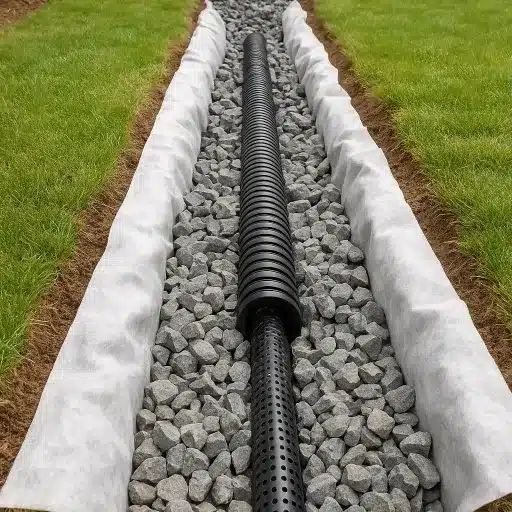
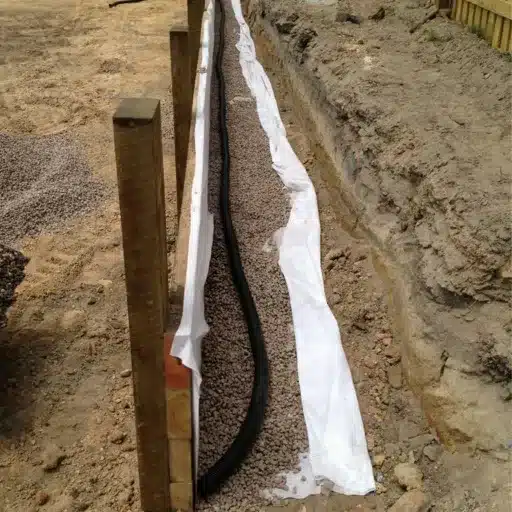
To keep the drainage system free from soil blockage, a waterproof geotextile fabric should be installed in the trench. The fabric should be wide enough to completely cover the trench with some extra along the edges which will be used to wrap over the gravel and drainpipe later. This layer enhances the system’s life by allowing water to flow without interruption while at the same time preventing the accumulation of debris.
Add a Layer of Gravel
A layer of 2-3 inches clean gravel or crushed stone should be laid on the bottom of the trench. Gravel has a dual role to play: it supports the perforated pipe and holds the water for efficient draining. A size of ¾ inch diameter gravel is specifically chosen for this purpose because of its maximum efficiency.
Install the Perforated Pipe
Now the time has come to place the perforated drainage pipe into the gravel with the holes pointing downwards. This way it will absorb water in the correct manner. If necessary, use couplings to join pipe sections and place the pipe in a way that it has the proper slope towards the drainage outlet. The outlet can be a ditch for draining, storm sewer, or any other convenient discharge site.
Backfill with Gravel
Fill the trench with another layer of gravel surrounding the perforated pipe up to within a few inches from the top. The gravel layer acts like a filter permitting the water to flow into the pipe freely while at the same time stopping the larger particles from entering the system and causing blockage.
Wrap the Geotextile Fabric
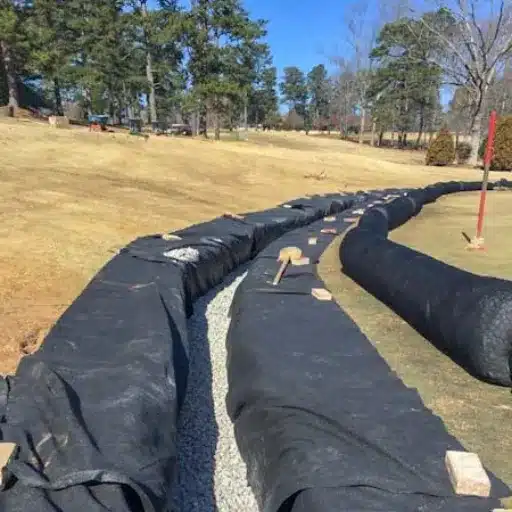
The extra geotextile fabric should be put back over the top gravel layer. This action creates a barrier that will not only keep the soil and debris out but also will be durable thus prolonging the life of the drainage system. To ensure that the fabric does not change its position over time, secure the edges properly.
Cover with Topsoil
On the contrary, a layer of topsoil will be an advantage in the imperceptible blending of a French drain with your landscape. Provide enough soil to cover the entire area completely and then compact it to be at the same level as the surrounding ground. In addition, you can plant grass or any other ground cover over the drain gaining two benefits at once, the increased stability and the aesthetically pleasing appearance.
Test the System
Finally, prior to the implementation of the plan, the highest part of the trench should be flooded with water to verify that the flow is being correctly done through the pipe and then the outlet. If there is a problem, change the slope or position of the pipe to fix it.
Choosing the Right Geotextile Fabric
Factors to Consider: Weight and Permeability
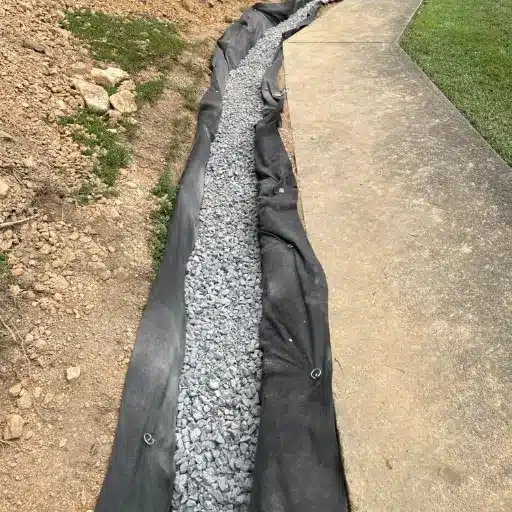
Weight: The weight of the geotextile fabric, which is primarily measured in ounces per square yard, is a crucial criterion for determining the fabric’s strength and lifespan. Heavy-duty fabrics (8 oz or more), in general, are regarded as the strongest and consequently the best for heavy-load applications. Their strength is complemented by their resistance to soil or debris-induced punctures and tears. Conversely, the lighter fabrics (approx. 4-6 oz) are likely to have lower durability but will be more pliable and accessible during installation, which is why they are the ideal option for small or residential French drain systems.
Permeability: The term “permeability” refers to the geotextile’s ability to allow water to flow through while also preventing the entry of soil and sediment. The flow rate in gallons per minute per square foot is the unit of measurement used. For the application of French drains, at least a very permeable fabric with a flow rate of 100 gallons per minute per square foot is recommended as this will enable the draining of water without the system getting clogged. Besides, non-woven geotextiles generally have greater permeability than the woven ones and thus they are more often used in drainage applications.
Comparing Woven and Non-Woven Geotextile Options
Woven Geotextile
Woven geotextiles are produced by weaving the polyester or polypropylene yarns in specified patterns. They are extremely durable, have excellent elongation strength, and are adapted to load-bearing applications like paved areas, paths, and large construction sites. Woven textiles are mainly employed in stabilization and reinforcing as they can take and dissipate the load very effectively. However, their draining ability is not up to par with woven fabrics, so they are perhaps the least suitable for such configurations.
Non-Woven Geotextile
Non-woven geotextile fabrics are manufactured by joining fibers through various methods, mostly needle punching or thermal bonding, which results in the production of a soft, flexible, and very permeable fabric; hence, it is very suitable for filtering and draining applications. Non-woven geotextiles, due to their low weight, will allow water to pass through with the least resistance, and thus they will not contribute to water clogging. These fabrics have permeability ratings of 0.2 to 0.5 cm/s, and they also meet the ASTM D4491 standards for water flow, which makes them suitable for use in French drains, underdrain systems, and erosion control.
Maintenance of Geotextile in Drainage Systems
Regular Inspections and Cleaning
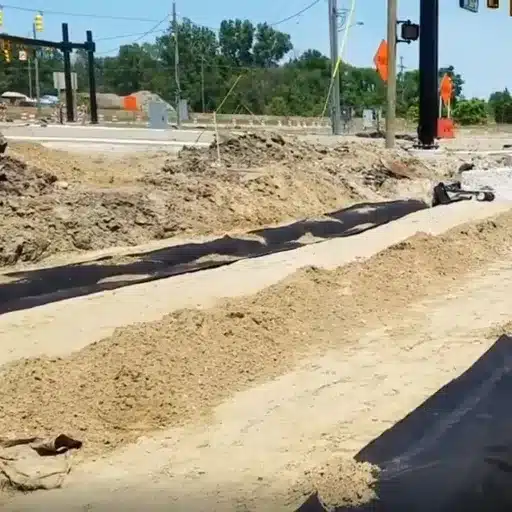
The installation of geotextiles in drainage systems represents a very efficient method, yet their efficiency is dependent upon regular inspections and cleanings to avoid clogging and to ensure their long-term performance. Over time, soil particles, organic matter, and sediments would form a thick layer that would reduce the permeability of the fabric. In order to prevent such issues, a geotextile layer inspection is recommended twice a year at minimum, with the wet season’s end or after heavy rains being the best time. Keep an eye on the surfaces for sediment build-up or reduced water flow which can indicate clogging.
Cleaning of geotextiles can be performed in two methods: either by utilizing a water jet or by air blowing off. Research has indicated that a pressure of approximately 30 psi is just right for soil particle removal and at the same time keeping the fabric unharmed. Furthermore, the cases have indicated that cleaning can actually restore up to 80% of the original permeability of the fabric. Cleaning occasionally may not suffice in case of serious blockages and thus cutting off the affected piece of the fabric and replacing it with new one would be necessary to get the function back.
Worn-out Signs and When to Change Fabric
The drainage system fabrics are subject to wearing and degrading with time, and this is not to be overlooked as it would result in the system being ineffective and ultimately failing. Some of the most common signs of wear include ripping, thread unravelling, and drainage being blocked due to the accumulation of sediments along with the fabric becoming discoloured through soaking and UV exposure. Besides, less flow of water through and formation of water pools in certain places of the drainage system is very often an indication that the fabric is not working anymore.
The most recent views from the industry maintain that under ordinary circumstances, non-woven geotextile fabrics will last around 20-25 years while the woven ones will last even longer depending on the kind of soil, water flow, and maintenance practice. Nonetheless, in areas with high sediment content or extreme weather, the fabrics’ life may be significantly shortened. The results obtained through search engine queries suggest that the most effective preventive measure for unnoticed damage is to have a set regular inspection every 3-5 years and a detailed evaluation every 10 years.
Reference Sources
-
Geosynthetics–A Sustainable Construction Material
- Key Findings: This study discusses the use of geotextiles in sustainable construction, including applications in drainage systems. It highlights the use of non-woven paving fabrics and geotextile-encased materials for runoff management.
- Methodology: The research reviews various geotextile applications, including case studies from Brazil where compressed plastic bottles encased in geotextiles were used in runoff drains.
-
The Use of Reed Beds for Treatment of Landfill Leachates
- Key Findings: This paper examines the use of geotextiles in reed bed systems for treating landfill leachates. It mentions the integration of French drains lined with geotextiles to capture and manage leachate.
- Methodology: The study involves the construction and monitoring of a reed bed system, with geotextiles used as part of the drainage infrastructure.
-
The Use of Geotextiles as Drain Envelopes in France in Connection with Mineral Clogging Risks
- Key Findings: This research focuses on the use of geotextiles as drain envelope materials in France, addressing the risks of mineral clogging. It emphasizes the effectiveness of non-woven geotextiles in preventing clogging and maintaining drainage efficiency.
- Methodology: The study analyzes the performance of geotextiles in various drainage applications, with a focus on their role in mitigating clogging risks.
Frequently Asked Questions (FAQs)
What is the best geotextile surface umbra for a French drain, a landscape-free era or a non woven geotextile?
A non woven geotextile filter fabric is the best geotextile type for a French drain because is water permeable, dimensionally stable, and specially built to let a great amount of water flow while at the same time blocking soil and clay. Heavy-duty and commercial-grade options like 6 oz or 8 oz non-woven geo textile fabric offer additional power and resistance against tearing, and thus can be used in residential applications with 4 oz lighter materials.
What role does permeable landscape fabric play in filtration system of a French drain?
Permeable filter fabric is like a barrier allowing only the water to pass and at the same time, trapping the fine particles and preventing the soil from clogging the pipe and gravel. A non woven structure grants efficient filtration and is usually offered in a wide range of thickness and oz weights (4 oz, 6 oz, 8 oz) to fit the soil conditions and the water flow of the area. The fabric can guarantee a long-term protection if installed properly.
Is it possible to have a water permeable underlayment in contact with clay or a foundation?
Yes—it is possible to keep the water permeable non woven geotextile close to clay and foundations for soil drainage underground and soil migration prevention. When dealing with clay, it is wise to select the heavier weight (6 oz or 8 oz) to avoid clogging and attain dimensional stability. For work on the foundation or commercial projects, check with the local building codes and pick a heavy-duty fabric with resistance recommended by landscaping supply professionals.
What thickness or oz weight should I go for when buying a French drain from the landscape supply?
Thickness and oz weights are indicators of filtration performance and durability. For normal residential drains, 4 oz to 6 oz non-woven geotextile is the standard; for dainty countries of high water flow, rocky soils, or commercial applications, go for 6 oz to 8 oz or heavy-duty fabric. Remember to calculate coverage by sq ft and to consider that the fabric gives better longevity when slightly overspecified to resist damage from installation.
Can one easily install non woven geo textile fabric for DIY landscape drainage?
Indeed, non woven geo textile fabric is usually quite easy to install: roll it out as an underlayment, wrap it around the gravel and pipe, and secure the overlaps using either staples or tape. The heavy-duty rolls might be a little harder to handle due to their stiffness but they will certainly last longer since they can be backfilled without tearing.