When the bridge over the Mississippi, the city of Minneapolis, caved in in 2007, the disaster revealed something frightening: it was not poor structural engineering or weak steel that caused the failure, but a sub-grade that water had continuously gotten to and eroded the soil that supported the structure. It was this that destroyed the lives of 13 people and injured 145 more. With civil engineers the world over, this incident was another proof: whatever goes on underground is the equal of whatever happens on it.
It was exactly when the interleaving came in.
Twenty-one years with Shanxi Shengxing Building Materials showed us what a difference the right subgrade specification might make with a product meant to last for decades, as opposed to projects that need expensive repairs after only five years. Are you in need of a road cutting through a marsh or a well-engineered tank for hazardous waste to be buried for generations, knowing subgrade is not just dead handy but necessary?
Here’s a little do-it-yourself education about the geotextile material you’ll use, from what it is and its mechanical function to the type suitable for different uses and the engineering performance requirements that guarantee that your project earns the attribute of the best quality. We will take a look at the basics, like what differentiates woven from nonwoven types, and the details of the ASTM specifications that dictate how the fabrics must function.
Do you have what it takes to build a solid infrastructure that will remain for a good number of centuries? Enter the world of geotextiles.
What Is Geotextile Fabric?
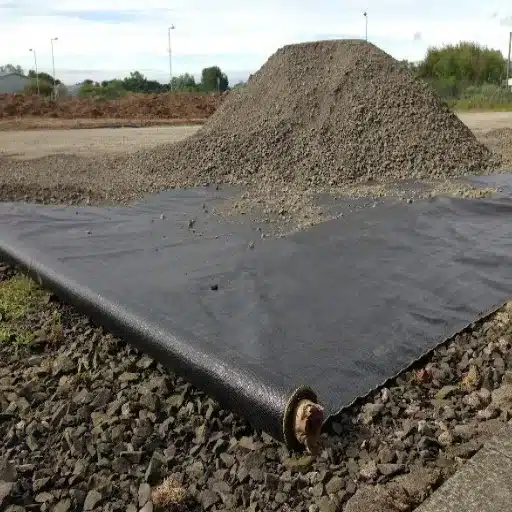
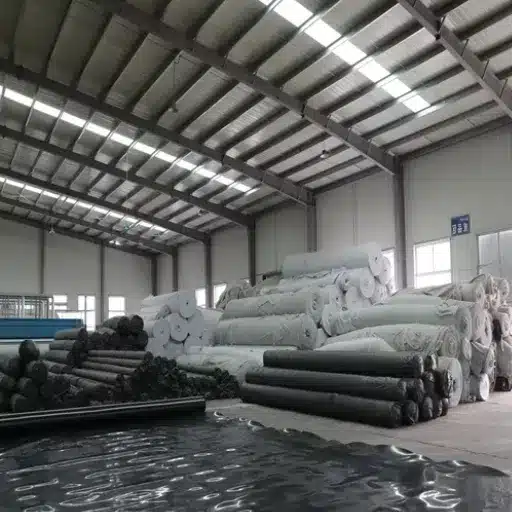
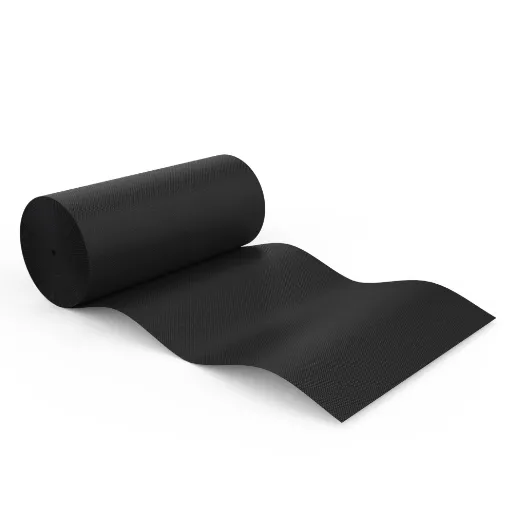
Geotextile fabric is a type that is made of a synthetic material which is connected to soil to enhance overall construction engineering behavior. Manufactured with the use of man-made polymers, it is mainly polypropylene and polyester (PP and PET), and they are framed for the purpose of providing five functions: separation, filtration, drainage, reinforcement, and protection.
Geotextile fabrics may resemble weed blockers found in garden centers while offering performance characteristics similar to mulch fabric, but from a design, performance-critical, and material-testing standpoint, they are two very different beasts. They can be expected to meet those qualifications to be used for the most onerous or larger civil engineering projects, from heavy traffic loads to large truckloads to leachate from landfills to acid soil corrosion.
The evolution from geotextiles is now regarded as having been launched in the 1950s when Dutch engineers had begun experimenting with artificial materials for the shore defenses. Then by the 1970s, it had developed a great deal and so the global market for geotextiles is worth $8.2billion,projectedtoreach$12.5billion by 2030 as per recent industry analyses.
Marcus Chen, a project netizen from Shanghai, had his first introduction to geotextiles last year on an interstate highway rehabilitation project. He definitely had the eyebrow up. “We’d always used traditional methods-gravel, sand, more gravel. Such a cover replacing tons of aggregates, I anticipated to be doubtful.” Certainly, by last year’s closure, the highway had nulled maintenance, and two other separable segments of geotextiles had already required two major repairs. “I am a believer now,” Chen admits. “The data doesn’t lie.”
The 5 Core Functions of Geotextile Fabric
Understanding how geotextile fabric works requires examining its five primary engineering functions. Each function addresses specific challenges in civil engineering and environmental protection.
Separation
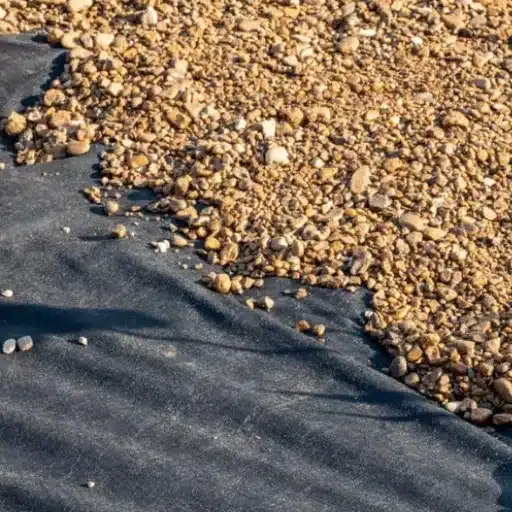
The base office layouts envisioned by design open a clear distinction between geotextile fabrics and other products on the market. In structure elements, these materials block other layers underneath, for instance, light, uncompacted fill rather than uniformly deposited gravel, from coming through the granular base course.
Unstable structures, with time and also subject to the constant traffic of heavy vehicles and strong vibrations, may cause several adjacent soil types to mix. The final aggregate range sinks below the base, and the finer soil particles filter up, contaminating the structural layer and reducing load capacity. Although this material can only control the mixture, by its different thickness, it is possible to increase binding capacity in load transfer where interlocks are made through their smallpores.
Filtration
The function is to have water seep into the fabric and have all the soil particles retained through it. This is very fundamental for many applications, like pertaining to drainage, wherein one would want the soil not to erode while making sure water flows out. It is dictated by having the right pore size for the fabric with respect to the gradation of the soil, in that it would be too tiny and would clog, too large and all the soil and fines would wash through it.
Therefore, the Zhejiang project in 2021 reported that the cause of failure in their drainage project was that a silty clay soil-type site was used with a woven geotextile of insufficient permeability. Due to a backed-up water upstream of the retaining wall, the pressure behind the wall had reached hydrostatic head, which in turn led to the catastrophic failure of the wall. A well-specified, appropriate alternative, i.e., a nonwoven geotextile correctly chosen, has lasted through monsoons throughout the seasons, without incident, for three years now.
Drainage
Filtration, by managing the soil-water interface, takes care of the water passing through the ground. The drainage concept focuses on the movement of water effectively through the plane of the fabric. Nonwoven geotextiles are very good at providing this functionality as they can produce continuous pathways that lead the water away from the structure. Essentially, the water carries off the hydrostatic pressure that builds up behind retaining walls, below roadway pavements, and in some cases, even within landfill systems.
Reinforcement
The use of geotextile materials with high strength is done to increase the load-bearing capacity of the weak soil. Reinforcement provides two to three times more load-bearing capacity over soft soils through the distribution of load over a wide area and tensile reinforcement of the soil matrix. The principal function is effective for embankments over soft terrain, stabilization of steep slopes, and geomembrane retaining-wall construction treatment.
Protection
The role of protection works by stopping the geomembrane or the barrier material from piercing as it happens. Geotextiles are used to keep sharp graded aggregate and other construction debris from penetrating and getting through to an HDPE liner below it in land. In addition, the figure includes contamination with heavy financial consequences for the removal thereof as a single piercing in a landfill liner means huge environmental costs to remediate.
Want to see how these functions apply to your specific project? Our engineering team can analyze your site conditions and recommend the optimal geotextile specification. Contact us for a free technical consultation →
Types of Geotextile Fabric: Woven vs Nonwoven
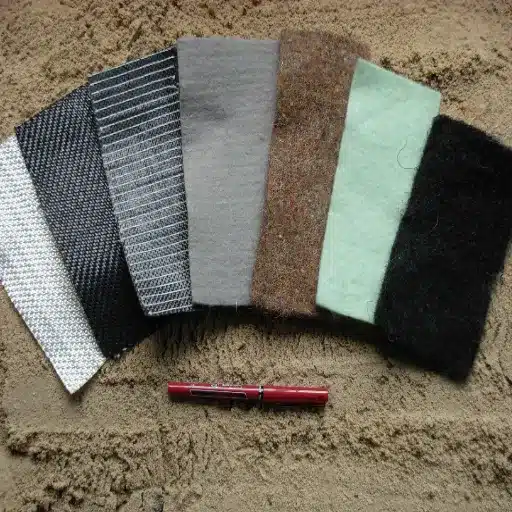
The correct choice of geotextile is determined by one’s understanding of the first two main categories: the woven and the non-woven. These two are manufactured using essentially different processes. This manifests in particular performance characteristics that result in suitability for particular uses.
Woven Geotextiles
Woven fabrics with geotextiles appear to mimic the cultural behavior of textile weaving involving awkwardly woven yarns crossing each other. This manufacturing procedure creates solid structures in the form of meshed-oriented and fairly fine-sized pores, which are not very permeable.
Manufacturing Process:
Rolls of terylene or polypropylene tapes, or even monofilaments, are woven on an industrial loom up until a decent, stable fabric structure is created. The weaving pattern, whether plain, twill, or basket weave, determines the final power and catchment characteristics.
Key Characteristics:
- High grab tensile strength: Woven geotextiles have a large bearing capacity because grab tensile strengths range between 200 to 2000 or more pounds.
- Low elongation: These fabrics attain less than 15% elongation under loading, translating into dimensional stability.
- Low permeability: The construction is so tight that they do not allow water to flow, making it unsuitable for filtering purposes.
- High modulus: Deforms under load over a longer period of time.
Best Applications:
- Road construction and subgrade stabilization
- Railway ballast reinforcement
- Retaining wall reinforcement
- Embankment construction on soft soils
- Steep slope stabilization
Subtypes:
- Slit-film woven: Produced from flat tapes; is the highest strength while being the least permeable.
- Monofilament woven: Relating to round fibers; still provides better permeability in its strength.
- Multifilament woven: A combination of several fine fibers, it provides the best possible balance of strength and filtration.
Nonwoven Geotextiles
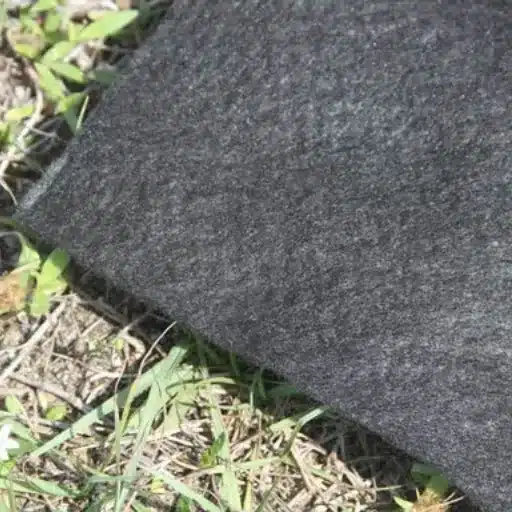
Non-woven geotextile is a fabric that is made by mechanically, thermally, or chemically binding fibers without any weaving process. A non-woven geotextile when subjected to random fiber orientation, leads to the generation of a structure in a manner similar to felt that has good permeable and filterable properties.
Manufacturing Process:
Almost all textile fabrics consist of fibres that are first orientated into a web. These can then be fixed through any of the following bonding methods:
- Needle-punching: Barbed needles interlace fibres mechanically (it is the most common process).
- Heat-bonding: Here, the calender is used to heat-bond and melt the intersections of the fibres.
- Spunbond: Continuous filaments are laid down and then connected in a single operation.
Key Characteristics:
- High Rate of Absorption: Permeates the flow of water rather well, suited to site-draining structures
- High Rate of Stretch: It can stretch up to 50 percent without any tear of irregular surfaces
- Reduction in tensile strength: Usually about 80 to 300 pounds of grab tensile strength
- High Filtration rates: Typically, it retains soil particles through a randomly built fibrous structure
Best Applications:
- French Drains and Subsurface Drainage Systems
- Cover layer of sanitary landfill liners
- Slope protection against erosion
- Filtration around perforate pipes
- Protection and cushioning applications
Weight Classifications:
Nonwoven geotextiles are often categorized by weight (grams per square meter or ounces per square yard):
- Lightweight (4-6 oz/yd² / 135-200 GSM): Landscaping, light drainage
- Medium weight (6-8 oz/yd² / 200-270 GSM): Standard drainage, erosion control
- Heavyweight (8-16 oz/yd² / 270-540 GSM): High-traffic areas, landfill protection
- Extra heavyweight (16+ oz/yd² / 540+ GSM): Extreme load protection
Woven vs Nonwoven Comparison
| Feature | Woven Geotextile | Nonwoven Geotextile |
|---|---|---|
| Tensile Strength | High (200-2,000+ lbs) | Moderate (80-300 lbs) |
| Elongation | Low (<15%) | High (50-100%) |
| Permeability | Low | High |
| Filtration | Limited | Excellent |
| Best For | Reinforcement, separation | Drainage, filtration, protection |
| Typical Cost | $0.15-0.40/ft² | $0.10-0.30/ft² |
| UV Resistance | Good with stabilization | Requires coverage within 30 days |
It was difficult for Li Wei to decide which type of geotextile, either woven or nonwoven, for the highway projects when it seemed to be a choice of continuity of geographies, materials, and technologies. “In the beginning, we used woven for all the materials because we thought it was stronger,” reflects the procurement director of this major construction firm in Guangdong. “Actually, it is woven materials that appear to collect water and generate hydrostatic pressures analogous to those in woven furniture. When we matched the geotextile with its work, everything turned out just fine.”
Need help determining which type is right for your project? Our woven geotextile specifications and nonwoven product range cover every application from light landscaping to heavy industrial use. Explore our complete geotextile catalog →
Geotextile Fabric Applications by Industry
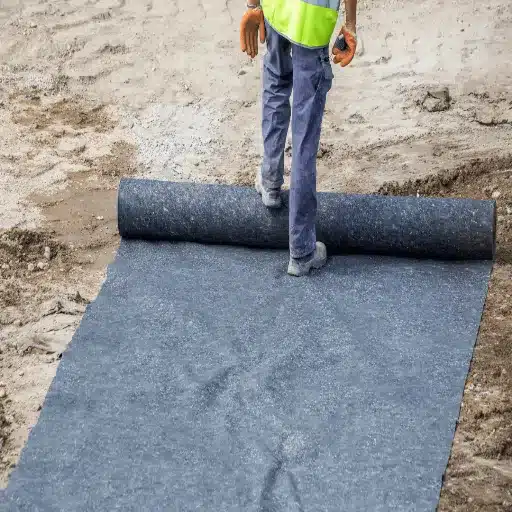
Geotextile materials for many industries have a critical importance, so if engineers understand how the material is utilized in different industries, they are better able to specify which material meets their challenges.
Road Construction & Highways
Geotextiles mostly perform functions of separation and reinforcement in their application in road construction. This is in places where an aggregate base course has to be built over a soft or saturated subgrade. At the same time, geotextile fabric prevents it from getting mixed with underlying soils and helps in better distribution of the load through traffic.
The report made by the University of Texas Center for Transportation Research in 2023 says that a geotextile separation layer can decrease maintenance costs by about 30-50% in highways over a course of 20 years, compared to traditional construction processes. The geotextile can allow engineers to achieve a performance of 30% less aggregate, which is being used in the process.
Typical pavement uses:
- Stabilization of Subgrade below Aggregate Bases
- Separation between subgrade and subbase in Flexi Pavements
- Asphalt overlay crack control on reflective
- Provision of a passage on temporary haul roads over weak ground.
Drainage Systems
One of the most significant applications with respect to the geotextiles is drainage, whereby porous fabrics are often applied around perforated pipes and kept where they line the drainage trench to prevent loss of granular soil material but to allow movement of water such that it can serve as a capacity.
French drains, subsurface drainage systems, and retaining wall drainage rely on geotextile filtration. The fabric must find a balance between two competing requirements: small enough pores to prevent soil particles from escaping and open enough to avoid clogging and consequently to preserve long-term flow rates.
Needle-punched non-woven geotextiles are highly recommended by the Federal Highway Administration (FHWA) for applying to most drainage structures because of their precise pore structures and adequate permeability values.
Erosion Control
Textiles constitute stabilization of soil and substantiation to establish a plantation over a slope, riverbank, or coast. Thus, it secures the parcel of soil and allows root penetration, which results in permanent stabilization.
Amongst the applications of erosion control, the 2022 event on the coastal protection project in Fujian Province used heavyweight nonwoven geotextiles below riprap (rock armor) in order to prevent the wave action. Three years later, after numerous typhoons, the affected areas stayed, while the untouched surrounding area eroded significantly.
Applications of erosion control:
- Slope stabilization on highway embankments
- Protection of river banks and coast
- Collection of stormwater in basins
- Control of sediments in construction sites
Environmental Protection
In environmental projects, one requires the high-end performance specification, the landfill operation, mining operation, and the decontamination/remediation of the umpteenth occurring sites, all find common possession of thousands of materials -geotextiles to secure as containment systems and hazardous material management or management.
Allgeotextiles restore geomembranes while saving the geomembranes from puncture damage, while providing the drainage for leachate collection in the landfill. The case of failure here is quite tremendous because a single-line breach can have serious consequences in groundwater that might cost millions of regulatory penalties.
Comparison of relatively modern landfill liners with leachate control predominantly as clay liners compared to exclusive implementation of past clay containment systems, however, amounted to 90% less leakage of the deteriorated environment by the use of geotextiles in the IGS industry.
Railway & Airport Infrastructure
In a nutshell, the problems of dynamic loading and the utmost care of settlement control make railroad tracks and airports very different challenges, and these challenges need to be reflected under loads. Geotextile fabrics are distributed to prevent contamination with ballast, ensuring a neat runway with ideal rail alignment. A real way cross-section would be,” Gyorgy Buranyi, technical manager of TenCate Geosynthetics EMEA, said.
The subgrade under airport runways is afforded reinforcement by this geotextile, which prevents unsatisfactory settlement of any kind of differential settlement that compromises the safety of the runway. The materials must hold all static loads of the aircraft and, in addition, deal with dynamic stresses of impact during landing and then even temperature cycling.
Engineering Specifications & Standards
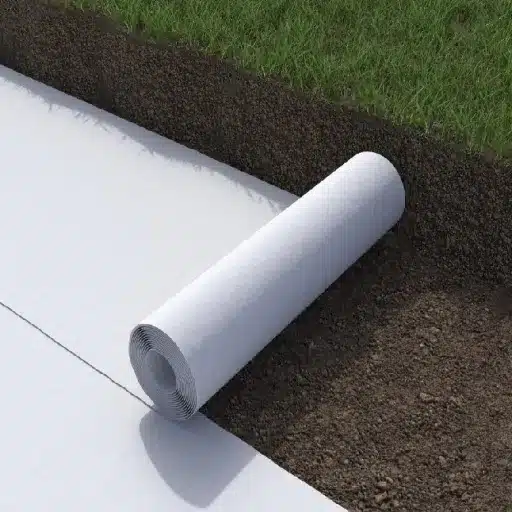
Professional geotextile stock selection requires an understanding of engineering specifications that govern material performance. These specifications make sure that all products adhere to minimum requirements for strength, durability, and hydraulic behavior.
Critical Properties & ASTM Standards
Grab Tensile Strength: The tensile strength measured by the ASTM D4632 technique, interestingly, is how much force is required to rip the fabric apart once loaded out at one point. This test aims to assess the stress experienced with the geotextile setup.
Wide-Width Tensile Strength: Given as ASTM D4595, this method is totally different from a grab strength test since this pretends to calculate the strength across the whole fabric width, which represents the reality of performing weight across the width. Acquires meaning; it is most critical in reinforcement applications.
CBR Puncture Resistance: CBR puncture resistance comes from the ASTM D6241. The large-diameter prodder is used to simulate the resistance of geotextiles under the disturbance acts of crushed aggregates. The material is usually used for protection purposes, where geotextile is used to line a geomembrane and where fabric is used as a cushioning material against sharp objects. Usually, 500 N for light fabrics to more than 4,000 N for heavy fabrics in the area of structural protection geotextiles.
Apparent Opening Size (ASTM D4751): Maximum Single Soil Particle Passing Through the fabric, in Millimeters(90%). Critical to Filter Design’
- Fine-grained soils: AOS ≤ 0.30 mm
- Sandy soils: AOS 0.30-0.60 mm
- Granular soils: AOS 0.60-0.90 mm
Permittivity (ASTM D4491): Flow Rate of Water Passing Through the Fabric perpendicularly, Measured in sec-1. The Higher Value of the test gives more importance with respect of the gravestones of the problem. Perm number for drainage should be greater than 0.5 sec-1. The number assigned for throughput will be 2.0 and above, in case of high-throughput applications.
Material Selection: Polypropylene vs Polyester
Polypropylene (PP):
- The chemical is highly resistant to acids and bases
- Slower creep under sustained load
- Lighter weight
- High overload (float stir)
- Lower cost
- Best for: Separation, filtration, drainage, landfill applications
Polyester (PET):
- More fatigue with UV rays
- Lower extension (better for dimensionally stable applications)
- Higher melting point
- Degrades in environments with strong alkaline conditions
- The best option for: Reinforcement, retaining walls, and high modulus applications
Polypropylene is the most commonly used material in civil engineering applications; its chemical inertness and low price are the major reasons accounting for this preference, whereas polyester is more predominant when there is significant exposure to UV rays, and very little elongation is needed for numerous other applications.
International Standards
AASHTO M288: Here is a standard specification for geotextile, made particularly for highway applications on the earth’s surface and related properties, and those which justify classification.
ASTM D4355: It is to provide a norm named as the standard testing procedure for geotextile damage by light, moisture, and heat exposure in a xenon light-type setup. Under this regime, geotextiles must retain a minimum strength of not less than 70% after exposure to 500 hours of weather affecting aging.
ISO 10319: This specification has an international provision for wide-width tensile testing. This provision should be consistent in all developed/developing countries around the globe.
European Standards (EN): This specification starts with EN 13249 and goes up to EN 13252. It gives geotextile requirements for various civil engineering applications like roads, railtracks, and drainage.
Pro Tip: Ensure to validate each product having geotextiles of highways certification from the National Transportation Product Evaluation Program (NTPEP). This one allows for independent, third-party certification that verifies products’ meeting the [initially or previously] published specifications.
How to Select the Right Geotextile Fabric
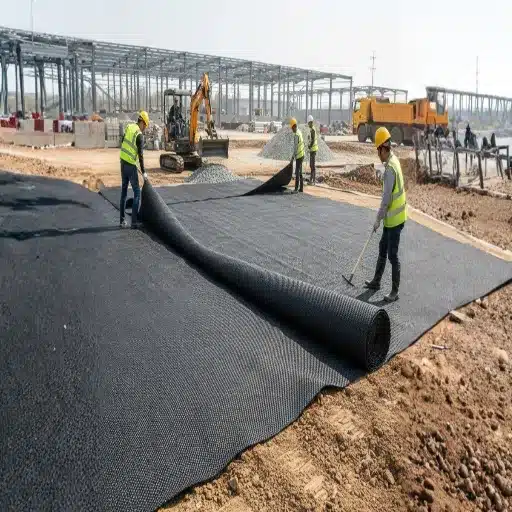
With hundreds of geotextile products available, selection can seem daunting. However, a systematic approach based on engineering principles ensures you specify the right material for your application.
The Five-Step Selection Framework
Step 1: Specifying the Principal Purpose
Start by determining whether your application requires separation, filtration, drainage, reinforcement, or protection. This decision immediately narrows the field:
- Separation: Either woven or non-woven, typically medium-weight non-woven
- Filtration/Drainage: Non-woven
- Reinforcement: High-strength woven or geogrid
- Protection: Heavyweight non-woven
Step 2: Soil Condition Survey
Soil characteristics dictate the hydraulic property requirements:
- Determine grain size distribution (sieve analysis)
- Calculate AOS requirements as per soil gradation
- Find out what permittivity is required owing to the flow rates
- Check soil pH to show compatibility of the material (pp vs. pet)
Step 3: Load Requirements
Property levels required by the mechanical so that it can handle the loading requirements in installation and service:
- Light equipment/foot traffic: Standard strength (grab tensile at least 200 lb)
- Heavy construction: High strength (grab tensile at least 315 lb)
- Said reinforcement applications: mention wide-width tensile modulus, not merely the grab strength:
Step 4: Test for Chemical Compatibility
- In landfills or contaminated areas: Confirm the strength of chemical resistance in the prospective leachate
- In high pH environments (> 9): Do not use polyester
- Exposure to high-intensity ultraviolet radiation: Preferably, specify UV-resistant halogenated plastics, or ensure prompt coverage
Step 5: Confirm Survivability Requirements
The geotextile should be able to pass through installation for long-term usability:
- Rocky Subgrade: high CBR puncture resistance required
- Height of aggregate free-fall: Higher drop heights would require greater protection
- Harsh conditions at installation: use geotextile cushions and a lighter starter lift
Weight/gsm Selection Guide
While weight alone doesn’t determine performance, it provides a useful starting point for specification:
| Application | Weight Range | GSM | Typical Uses |
|---|---|---|---|
| Lightweight | 4-6 oz/yd² | 135-200 | Landscaping, weed barrier, light drainage |
| Medium Weight | 6-8 oz/yd² | 200-270 | Standard drainage, erosion control, residential driveways |
| Heavyweight | 8-16 oz/yd² | 270-540 | Road construction, high-traffic areas, landfill protection |
| Extra Heavyweight | 16+ oz/yd² | 540+ | Extreme loads, critical protection applications |
Remember: GSM is not a specification for performance, but rather an index attribute; a 200 GSM woven fabric and a 200 GSM nonwoven fabric behave totally differently. Performance properties and not just weight should always be specified.
Common Selection Mistakes to Avoid
Against GSM Over-specification: Among a simple driveway separation, it is impractical to utilize a 250 GSM fabric since the same function as a 20 GSM fabric will be obtained.
Drainage with Woven: Woven geotextiles have poor filtration behavior and are likely to cause a blockade. In almost all drainage applications, nonwoven is the ideal choice.
Without Elongation: Nonwoven stretches more or less to more than 50% for the uneven surface, and woven fibers stretch less than 15% and may break on uneven surfaces. Nonwoven flexibility will become an added advantage against those uneven subgrades.
Ultraviolet Light Ignoring: Exposed fabric will eventually start degrading quickly under the sun. For longer than two-week installations, it must be a UV-backed product or must be made with the intention of being immediately covered.
Only focused on the Grab Tensile: Wide-width modulus is what counts in tension application, rather than the grab tensile. A fabric with high grab strength but low modulus won’t provide effective reinforcement.
Zhang Min was the first site supervisor for a wind farm project in Inner Mongolia to have to make a decision related to geotextiles for temporary access roads on her site-it wouldn’t have ever crossed her mind. “We opted for the cheapest option that met basic strength requirements,” she explains. “Within two months, the fabric had already degraded because of UV exposure-we’re at high elevation and under very intense sun. We had to repeat it all over again, but on UV-stabilized material. In the end, the so-called savings cost us three times the price of the rework.”
Get expert help with your geotextile specification. Our engineering team has supported over 500 projects worldwide and can recommend the optimal material for your specific conditions. Request a free technical specification →
Installation Best Practices
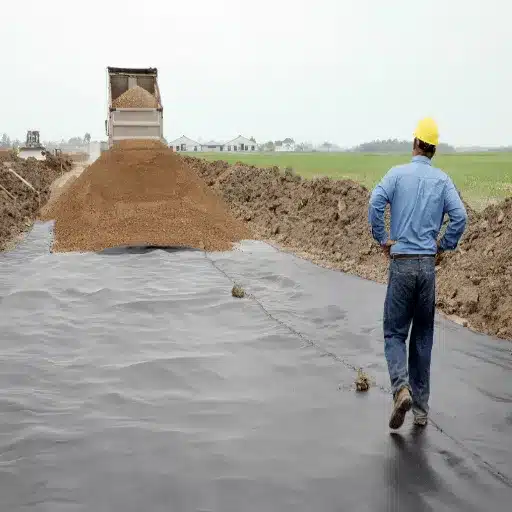
Even the best geotextile specification will fail if improperly installed. Following these best practices ensures your geotextile performs as designed throughout its service life.
Site Preparation
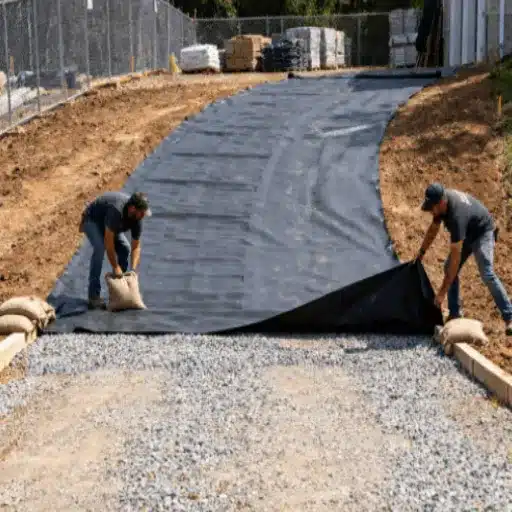
Before placing the geotextile, suitable substrates must be made, and all vegetation must be removed, along with debris and sharp objects that may puncture the fabric. Also, grade the surface for positive drainage and compact soft areas that could cause differential settlement.
Subgrade separation will be closely identified with an application firm enough to ensure that the respective construction equipment may be placed on it without rutting. Rutting in the subgrade would actually have indicated the need for a heavier geotextile or an additional and necessary subgrade repair.
Placement and Overlap
Swing out the geotextile smoothly and unfold it without creases or folds. keep the minimum seams, as required by the Engineer, more than one usually:
- 12-18 inches (300-450mm) for most applications
- 24+ inches (600mm+) for critical applications or steep slopes
- Double seams may be required for high-strength applications.
Geotextile must be placed with the machine direction (roll length) along the axis parallel to the direction of traffic or primary stress. This orientation has the strongest of the woven geotextile fibers aligned with the primary loads.
Securing Methods
Fasten the geotextile edges securely to stop blowing away due to wind when capping the cover materials:
- Staples/U-pins – For temporary erosion control in slopes, and are easy to dispose of
- Sandbags – Effective in the stage of construction for edge restraint
- Buried anchor trenches – Required for steep slopes and crucial installations
- Adhesive bonding: In this case, some applications will allow adhesive bonding at seams.
Cover Material Placement
Place cover material carefully to avoid damaging the geotextile:
- Drop height: Limit drop height to 3 feet (1m) or less for aggregate
- First lift thickness: Use a minimum 8-12 inch (200-300mm) initial lift to protect the fabric
- Compaction: Follow proper compaction procedures without over-stressing the geotextile
- Sharp objects: Remove large, sharp rocks that could puncture the fabric
Common Installation Errors
- Insufficient overlap: Creates weak points where soil can migrate through
- Wrinkles and folds: Trap water and create stress concentrations
- UV exposure: Leaving the geotextile exposed for weeks causes degradation
- Wrong orientation: Placing woven geotextile with the weak axis perpendicular to the loads
- Inadequate first lift: Thin initial lifts allow aggregate to puncture fabric
Sustainability & Environmental Benefits
Modern infrastructure must balance performance with environmental responsibility. Geotextile fabrics offer significant sustainability advantages compared to traditional construction methods.
Extended Infrastructure Life
With geotextiles, the life span of roads, railways, and other types of infrastructure can be stretched by keeping away any contamination from the soil or improving the flow of water. A road that survives 30 years instead of 15 requires half as much reconstruction over time. In turn, aggregate consumption, transportation emissions, and construction disturbance are also reduced.
Reduced Material Requirements
Geotextile separation allows engineering design with thinner sections of aggregates while maintaining performance equivalent to a typical roadway project using approximately 30% less aggregate in the end result and, therefore, considerable material savings with a large-scale reduction in quarrying consequences.
Carbon Footprint Reduction
Lower aggregation results in lower extraction, processing, and transportation-all eminently carbon-intensive activities. Furthermore, a longer service life of geotextile-stabilized infrastructure reduces the frequency with which reconstructions are made, along with the associated emissions.
Protection of the Environment
Geotextiles find uses in landfills and containment for protecting geomembrane liners that prevent contamination of the soil and groundwater. The environmental costs from just one instance of liner failure could be far beyond the material costs involved with proper geotextile protection.
To confine erosion, geotextiles are likewise used. They keep sediment from making its way into waterways and also use aquatics, thereby decreasing the need for dredging up better vegetation.
Recyclability Considerations
Polypropylene and polyester geotextiles are reportedly recyclable from a technical standpoint, though the recovery of such products from infrastructure remains difficult in many cases. Meanwhile, some manufacturers are making their large project take-back programs available, and work on geotextiles made with recycled content continues.
For short-term usage in a construction site, like the control of erosion or temporary access roads, the use of the geotextile can be such that it is recovered and reused in another location, thereby prolonging useful life and lowering the amount of wastage.
Conclusion
Geotextile fabric has been beneficial and flexible in civil engineering. It is recognized as one of the most cost-effective innovations that can give answer to the problems of many past generations regarding construction. Perhaps this is one of the greatest assets in modern-day construction. The choice of geotextile specification should see to it, even as it assists in highway construction by separating soil layers, that the right infrastructure will go on for at least a few more decades.
To be successful, one must really understand the five key functions afforded by the selection of the right material for your specific manager. In reinforced applications, the need for load bearing are fullfilled by woven geotextiles, while in all water-carrying and preventing needs, nonwovens excel. These are all compliant with all engineering standards, such as ASTM D4632 and AASHTO M288, thus warranted for acceptance by modern materials to meet the rigid requirements of modern-day projects.
Picking the correct geotextile fabric imperative at work is impossible, as it has far-reaching similar situations. The selection framework we have outlined is done by function, soil analysis, allowable load qualification examination, chemical compatibility checking, and the verification of its survivability- an important step towards thorough, low-risk specification and performance optimization.
With over 21 years of history in the manufacturing of geosynthetics from 100% virgin raw materials, Shanxi Shengxing Building Materials has supported infrastructure projects across six continents. Our geotextile products are mainly used in critical applications in which an engineer or contractor has, over others, major reliability demands due to meeting or exceeding all ASTM, ISO, and EN standards.
Ready to specify geotextile fabric for your next project? Our engineering team is available to review your site conditions, recommend optimal specifications, and provide competitive quotations. Whether you need standard separation geotextiles or custom-engineered solutions for challenging applications, we have the expertise and production capacity to support your success.
Request a Free Technical Consultation & Quote →
Have questions about geotextile fabric specifications or applications? Contact our technical support team at [contact information] for expert guidance tailored to your project requirements.