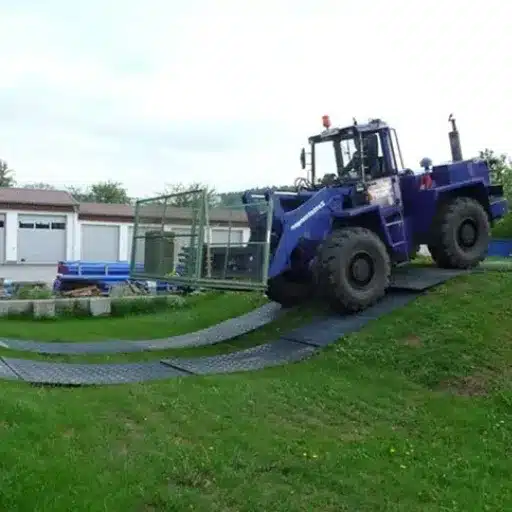
HDPE road mats have indeed been a reliable and sometimes even a necessary solution in protecting delicate ground surfaces and preventing their damage during heavy-duty operations. These heavy-duty mats have been deployed in a variety of places and situations, ranging from construction zones, outdoor activities, and even the most fragile areas of nature, where they not only protect the latter from damage but also give safe and fast access for vehicles and personnel. This blog is going to look into the main role of HDPE road mats in ground protection, their main benefits, and the reasons for their being the preferred choice in terms of durability, convenience, and environmental consideration. Just keep reading to find out how HDPE road mats can give a boost to your projects.
Understanding HDPE Road Mats
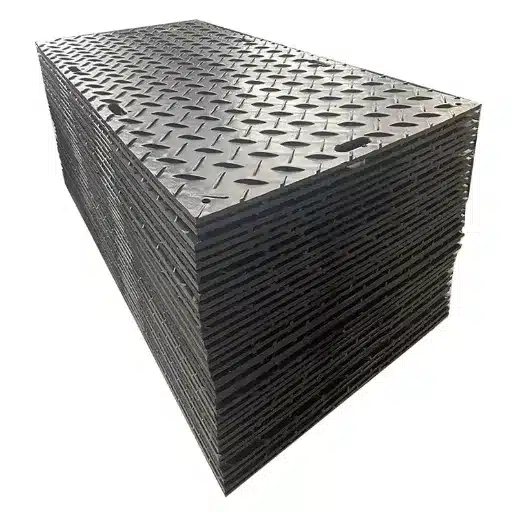
What are HDPE Road Mats?
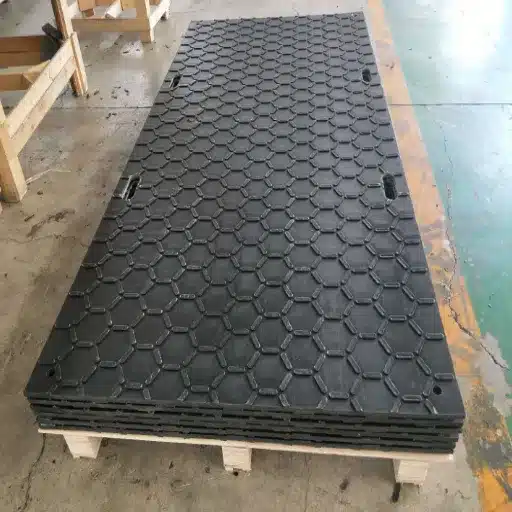
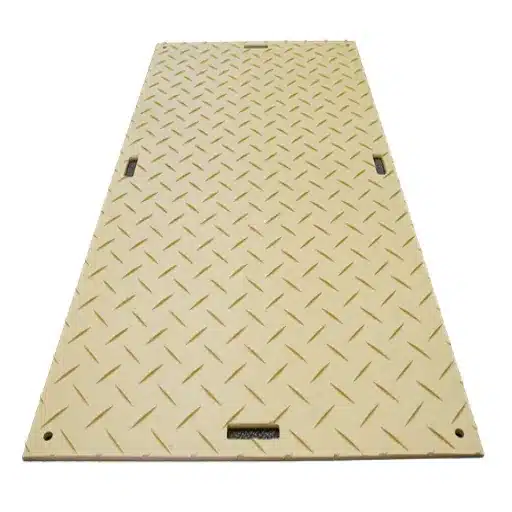
HDPE road mats, or in other words, High-Density Polyethylene road mats, are very strong and at the same time very light mats. Their function is to protect the earth temporarily and to allow access over soft or sensitive grounds. It is the HDPE, a thermoplastic polymer, that gives the conference of the strength-to-density ratio, chemical resistance, and the versatile industry of mats made from HDPE that are widely used. The area of application for HDPE road mats can be a variety of industries, like construction, oil and gas, and utilities, in which the workmen are trying to create stable surfaces for their cars and equipment.
One of the major properties of HDPE road mats is the maximum weight capacity. It is a recent advancement that HDPE road mats can handle loads up to 120 tons, depending on the size and thickness of the mats, which is a clear sign that large machinery and vehicles such as cranes, trucks, and diggers are being supported by them. Besides, their strong but flexible character comes in handy as they adjust to the ground shape without breaking or losing their efficiency.
Such mats have surfaces that are either textured or anti-slip to secure the traction of the vehicles while eliminating the chance of slipping, even when the ground is wet and muddy. This feature is particularly effective on construction sites where safety and productivity are the main concerns. Furthermore, HDPE road mats are nature-proof, meaning they can perform well even in extreme weather conditions and not suffer damage or become brittle.
The environmental issue is yet another factor that makes the use of HDPE road mats significant. To begin with, the wooden mats made from the old-fashioned material are completely contradictory in this regard, as they are not only reusable but also recyclable. What is more, the entire lightweight issue is also advantageous because it decreases the cost of transportation and makes installation and dismantling easier.
So, it could be stated without a doubt that the roads have been opened for HDPE road mats as they will be able to not only gain the ground of the hard industries but also the mind of the environmentalists by being a good, reliable, and money-worth ground that gives them the drawback of those outstanding features and benefits.
Importance of Ground Protection Mats in Construction
In the construction industry, ground protection mats play a very important role as they offer a safe and stable surface where vehicles, machines, and personnel can move. The mats help to prevent soil compaction under them and reduce the disturbance of the soil layer to an extent that the construction site can remain active even in soft and uneven areas. Industry data indicates that the use of high-quality ground protection mats may result in a 30% decrease in soil remediation costs, which is quite significant, especially in large-scale projects.
Besides, these mats are also utilized as a damage control measure in ecologically sensitive areas such as wetlands and grasslands. This is mainly because of their ability to distribute weight and thus almost eliminate the chances of ruts, hollows, and erosion. Also, it has been noted and recorded that the usage of heavy machinery without protection mats results in a 15% greater environmental impact from soil damage and subsequent repair.
Furthermore, the ground protection mats being non-disposable is yet another pro for modern construction to be eco-friendly. Mats made from premium materials such as HDPE or composite blends can be recycled for many projects, thus saving the environment. For instance, there are claims that ground protection mats, which are properly taken care of, can last for more than 10 years, which means long-term cost-saving for construction firms.
Moreover, the implementation of ground protection mats has a favorable impact on site safety. The firm street or platform can reduce the risks of accidents caused by slipping, tripping, or improper use of machines to an extremely low level. According to the construction sector, the number of injured personnel in areas covered with mats has been reported to have decreased by as much as 20%.
The synergy of these features with the never-ending advancements in materials and designs makes ground protection mats an unavoidable requirement for the achievement of construction practices that are efficient, safe, and environmentally friendly.
Key Features of HDPE Ground Protection Mats
The mats made from HDPE (High-Density Polyethylene) are the ground protection mats that are able to provide a variety of advantages owing to their longevity, design that is light in weight, and multi-purpose nature. The following are some major features along with supporting details, which are listed according to the latest insights in the industry:
- High Load-Bearing Capacity
HDPE ground protection mats are made in such a way that they can take a lot of weights which makes them suitable for most of the harshest construction and industrial uses. Many mats can bear weights of as much as 120 tons, which means that even the heaviest machines like cranes, excavators, and trucks can work without deforming or damaging the mats. - Exceptional Durability
One of the most notable characteristics of HDPE is its everlasting resilience against wear and tear. The mats will also be able to age gracefully and remain functional, not cracking, changing color, or decomposing. They are also able to serve in conditions where extreme temperatures (-22°F to 176°F or -30°C to 80°C) are experienced, and water and chemicals are present. - Anti-Slip Surface Design
The majority of the HDPE ground mats have an anti-slip tread pattern that is innovative and is able to provide good traction for both vehicles and pedestrians. This has the effect of minimizing risks of accidents occurring and also boosting safety during operations in muddy, wet, or uneven terrains. - Environmental Benefits
HDPE mats derived from recyclable materials are necessarily an ecological solution when compared to the traditional wood or metal alternatives. They help in conserving nature by keeping the soil compaction down and hence protecting vegetation, thus making them suitable for worksites that are environmentally sensitive. - Cost Efficiency
Lightweight design is one of the reasons why HDPE mats are easy to transport and install, cutting down on labor costs and reducing downtime on-site. Next, their reusability is also another reason for being long-term cost-saving, as they can be used repeatedly on multiple projects before needing to be replaced. - Applications Across Industries
HDPE ground protection mats have shown their usefulness in different industries such as construction, oil and gas, utilities, landscaping, and event management. For instance, during a recent project, HDPE mats helped to reduce site preparation time for heavy equipment operations by 30%, which is a fact confirmed by reports from leading companies in the industry.
These characteristics make HDPE ground protection mats an integral part of the modern construction and industrial planning process that ensures the site area is reliable, sustainable, and flexible even under difficult conditions.
Benefits of Using HDPE Road Mats
Enhanced Durability and Longevity
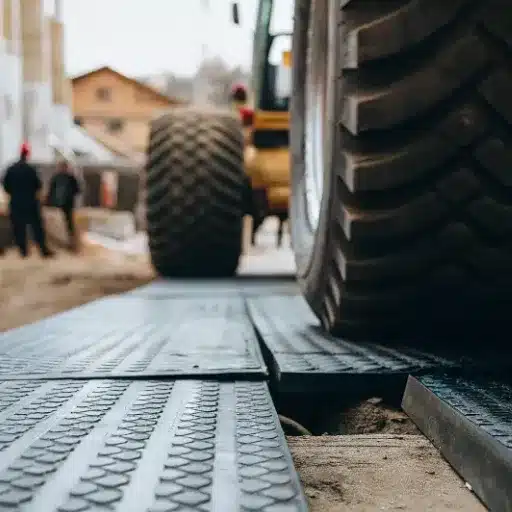
The use of HDPE road mats is a talk of the town due to their wonderful characteristics of durability and longevity, which make them the best choice for the toughest of environments. Brought to you by the use of high-density polyethylene, these mats give no room to cracking, splintering, or warping when subjected to either intense pressure or extreme temperatures. The use of HDPE instead of traditional materials like wood and steel gives it more resistance to environmental factors like moisture, chemicals, and UV light, which can otherwise cause slow but sure degradation of other materials.
As per the latest statistics, HDPE mats can withstand over 10 years of constant use in a variety of industrial applications before the first signs of wear appear. The Design of these mats is such that they allow for a load capacity of up to 120 tons, as stated in the reports from the industry; thus, these mats would still perform well even when heavy machinery is placed on them. Their flexibility property, together with that of avoiding breakage, enhances them when they are laid on uneven ground, thus increasing their lifespan.
Cleaning HDPE mats is relatively easy, and they do not absorb contaminants like oil and grease; their maintenance is minimal compared to that for other materials. Reduced maintenance cost in the long run and assured reliable performance are the major advantages coming with these mats. In fact, these features are the main reasons for the growing popularity of HDPE mats in the construction, oil & gas, and event management sectors, among others, where both durability and cost-effectiveness are crucial.
Eco-Friendly and Recyclable Options
HDPE mats are not only extremely strong and adaptable but also the best option for the environment. The most recent data say that the recycling of HDPE has a global rate of approximately 30-35%, which puts it among the most eco-friendly plastics and at the same time, a great candidate for recycling. The recyclability of HDPE has a large effect on the environmental footprint of its products. When it comes to the disposal of HDPE mats, they can be melted down and turned into new products, which is a step forward for the circular economy plus waste reduction.
The energy used in producing HDPE by recycling is about 88% less than that of virgin HDPE production. This, in turn, not only results in less greenhouse gas emissions but also helps the effort by the industries to limit the use of non-renewable resources like crude oil. In case of industries such as construction and event management, the use of eco-friendly HDPE mats not only helps companies align their operations with the sustainability goals but also provides them with the required durability and performance.
The above data points clearly point out that HDPE mats are both a sensible and an eco-friendly option. Hence, they suit the needs of those companies that want to substantially reduce their ecological footprint.
Cost-Effectiveness for Temporary Roads
It is not just the environmental sustainability component that makes temporary roads made of HDPE mats so popular – it is also econo-centrism. Hdpe road mat installation data indicates that the lifespan, especially under extreme conditions, can extend to a time frame of more than 10 years. Its longevity, therefore, negates frequent replacements and reduces associated costs over a period thereafter. Besides, it is crucial to note that HDPE mats are lighter and more economical to transport compared to metal or timber.
There are a variety of factors that are noted in the many reports highlighting the need for HDPE mats, as they are in no way labor-intensive, and they can be easily removed from the site. Research has also demonstrated that the installation of HDPE mats will take 40 percent less time in comparison to other materials. In addition, they are also able to be reused and recycled, which is why companies do not spend much on dealing with waste. Therefore, the three functions of an HDPE mat, consumable, recyclable, and durable, are combined in one, thus such roads can be constructed for oil, gas, and construction industries, and even in the events availing post-industrial environment.
Applications of HDPE Ground Protection in Various Industries
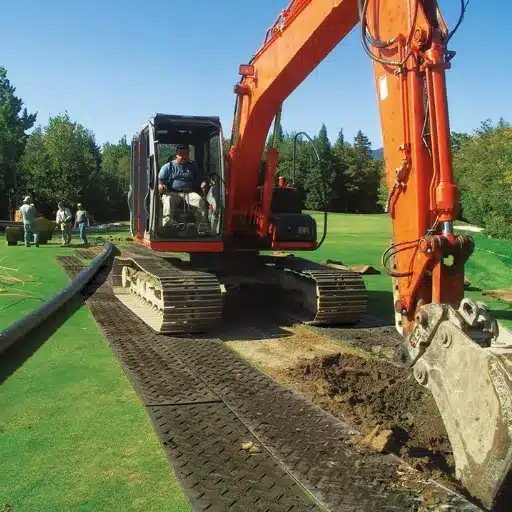
Reliability of Ground Maneuvering
HDPE surfaces are highly significant in ground stabilization of labor-intensive construction sites where there is active traffic of heavy vehicular units and equipment. Designed for heavy weight they also deal with weights up to 120 tons plus or minus one huge slab according to the manufacturer’s design. Possessions of these shearing aspects assist in the reduction of risk attributed to people’s accidents that are related to other terrains that are rough or too soft, causing mud. In most cases, it is possible to increase efficiency in ground stabilization by up to 35 percent, and it is also reported that the inevitable downtimes associated with harsh working conditions are effectively reduced by the use of an HDPE road mat.
Furthermore, heavy-duty polyethylene sheets limit the effect of mechanical compaction on the soil, which is usually affected during construction. This is because the disturbance caused by construction will be negligible, thus facilitating environmental restoration. Other latest HDPE Mat designs have latches that make assembly and disassembly faster, thus eliminating several man-hours of work from the projects. These advantages highlight the effectiveness and versatility of HDPE pulper sheets when it comes to heavy construction.
Venue and Festival routes
These types of roads are very essential for different purposes, but most of all for events and festivals. This is especially true in areas where there is no flat or dry terrain, and hence the equipment cannot be automatically transported to the desired location. Many people consider the use of high-density polyethylene mats for temporary ground access due to their resistance to damage, multiple uses, and the reduction of the adverse impacts of the structure on the use of these materials.
According to the latest research, the global events business will achieve a market volume of 2194.4 billion dollars by the year 2028, with a growth at a CAGR of 13.7% in the span from 2021 to 2028. Such expansion exemplarily demonstrates the demand for the effective building of adequate, permanent road help for the growing activities, for instance, festivals and events. One of the options commonly used in such cases is HDPE mats that are strong enough to resist soft ground, endure equipment, and increase the comfort and safety in crowded areas.
Besides, allowing anti-slip and interlocking capabilities makes the usefulness of HDPE mats for event organizers. This is beneficial not only in terms of time but also for the safety of vehicles and people. For instance, in comparison to conventional means, interlocking mats ease the deployment by 50 %, and thus, the setup is faster, which is useful in events where time is a constraint. HDPE mats are the way to go when it comes to improving the infrastructure of most facilities, in this case, in Canada.
Use in Landscaping and Environmental Projects
With the durability, flexibility, and environmentally friendly characteristics, these interlocking HDPE mats have impacted landscaping and any other environmental project as they have no equal. These mats provide stable yet temporary surfaces, assisting to cut soil compaction and impact on fragile environments from happening as constructions progress. As an example, they are used quite often in constructing parks, protecting wetland areas, and stabilizing slopes.
HDPE mats are frequently used by many construction companies for temporary roads and areas in general where a lot of vehicles pass through. This is due to the unique properties of the HDPE mats. Utility companies are known to use HDPE road mat when constructing piped systems such as water and gas pipes frequently.
One of the most effective ways to maximize the use of HDPE mats is by preventing the destruction of the vegetation and roots. There have been studies that show that up to 50% of the plants may grow less if the soil is compacted, but hops prevent this, so the environment is healthy. Moreover, HDPE mats are meant to withstand even the most arduous conditions and involve machines that are of heavy weight and yet do not crush the ground. This is an added advantage when it comes to areas that are either far-flung or eco-sensitive that need to have the natural scenery intact as much as possible.
From an ecological perspective, products such as HDPE mats support the concept of sustainability because they can be recycled and are made to be reused again and again. This minimizes the amount of waste generated and optimizes costs in large-scale applications. Moreover, interlocking mats can lower the amount the restoration will cost by up to 30% when employed, making them an affordable as well as green option for project planners. The organization can choose to apply these solutions in landscape and environmental management endeavors in order to extend its attained objectives with a strong emphasis on green issues.
Comparison with Alternative Materials
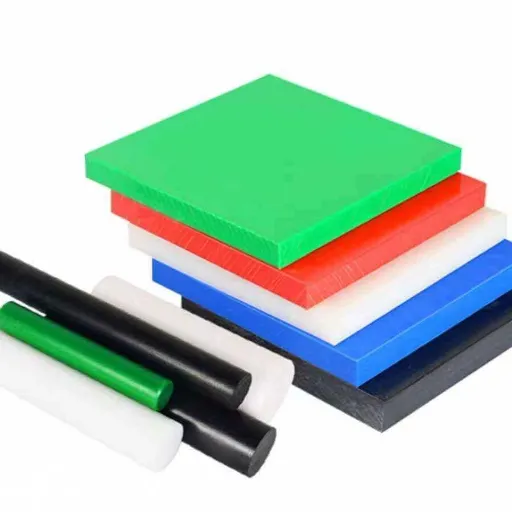
Differentiating HDPE Mats from UHMWPE Mats
Matting made of High Density Polyethylene (HDPE) and matting made of Ultra-High Molecular Weight Polyethylene (UHMWPE) are widely used in the construction sector as ground elevations, and each of these types of mats has important pros and cons peculiar to them. HDPE road mat is mainly known for its durability, light weight, and affordability. Being recyclable and being able to stand against weather conditions and a range of temperatures, specifically from -40°F to 176°F, these mats come in handy in almost any situation, for example, construction, landscaping, or temporary roadsavors.
In contrast, the UHMWPE mat is built to withstand harsh environments. Consequently, UHMWPE takes the HDPE road mat to another level, making it even more applicable to harsh environments. A key difference is that UHMWPE has a different molecular structure, which has a higher impact strength, a lower coefficient of friction, and better durability for repeated bending. The robust properties are important in extreme conditions, specifically in the heavy industrial markets, such as in the oil and gas industries, where there are various massive loads as well as harsh working environments. For example, a UHMWPE mat can be used to calculate up to around 600 tons of strength along the dynamic queues of heavy equipment tearing on sites.
From a financial standpoint, using HDPE mats in low specification or one contract condition projects has a reasonable advantage as they cost the least. On the contrary, UHMWPE mats, though costly, will end up being a better value for money in project stages over time. This is because the maintenance is relatively less. A recent study shows that the use of UHMWPE in some projects helps avoid frequent replacement of overlay mats every time, i.e., more than 50 per cent of the overlay mats are reusable, unlike in HDPE, making the life cycle of the project’s overlay mats minimal.
Thus, both materials can be said to be green in that they are merely used materials for one’s present project or process to be reused or recycled to meet the set standards, and also because the issue of sustainability is increasingly becoming an asset and not an inconsequential practice. The choice regarding the use of either HDPE or UHMWPE will arise from the très the purpose of the project, budgetary issues, and the environmental conditions expected in their respective boards to which the project planners’ needs may be so addressed.
Appraisal of Composition of Ground Mats
Composite ground mat solutions have proved to be very significant when establishing quick access pathways and ground protection for different sectors, such as construction, oil and gas, and renewable energy, among others. These kinds of mats are designed to handle heavy loads and harsh conditions with minimal impact on the ground. Acoustic slabs, cushions, glass, geosynthetics, lavas, balustrades, plastics, and many more materials can be used for the construction of these composite ground mats, but one of their biggest benefits is the load-to-weight ratio. The capacity of advanced materials such as snow and icicles, and even other less advanced materials like HDPE or UHMWPE, is more than 250 tons, which allows the use of such equipment even on very soft surfaces.
According to research conducted on present-day fabricated ground mats, it was discovered that their life expectancy exceeds that of the conventional timber ones by a large margin. In most cases, both the wood-based elements rot and warp as well as absorb moisture, therefore making them weak with time, while the composite materials are resistant even when immersed in water for a long period or exposed to extreme pressure. Moreover, almost every composite hdpe road mat made by companies is meant to interlock with the next one for the prevention of movement, especially when there is weight placed on them.
From this consideration, it can be acknowledged that plastic composite mats have lesser implications for the environment since they can serve the purpose for up to 10 – 15 years, whereas hardwood mats serve a maximum of 3 years. The practice is also encouraged by many credible engines when they state that their products are completely recyclable. It was also learnt from market research that more people are inclined to their use, with the sector expected to grow by about 7.1% per annum until 2030, thanks to increased infrastructural works and environmental protection policies.
Finally, it could be said that composite ground mats provide a sustainable, long-lasting, and feasible solution to many projects. One of the key measures of success in such endeavors would be intricately analyzing the project needs, as well as available mat types, and achieving operational effectiveness and sustainability.
In addition, it is also highly likely that the usage of these mats would cover all the aspects of HDPE road mat plates.
Plastic Swamp Mats vs. HDPE Road Mats
When we consider plastic swamp mats vs HDPE road mats, a fair number of features come into play, including the types of materials used to manufacture the mats, their robustness, environmental friendliness, and suitability for their intended purpose.
- Types of Material Used in the Process
Generally, plastic mats for swamps are manufactured either from virgin or recycled plastic raw material. The material is less heavy and firm, thus it suits temporary ground bearing. Whereas HDPE road mats are mainly manufactured with high-density polyethylene plastic. HDPE plastic is a material that is known to be tough and rigid and has good chemical resistance properties. The molecular configuration of HDPE allows the material to withstand severe conditions and thus makes it a preferable option for applications involving very heavy work. - Strength and Load-Bearing Ability
An HDPE road mat can resist far more load than a normal plastic road mat, which is for swamps. For instance, HDPE mats can easily bear the weight of over 120 tons. In this way, these mats can be used for areas that will have heavy equipment or applications that experience a lot of traffic. However, plastic swamp mats are primarily used for milder purposes, which could include the construction of less intensive footpaths or landscaping, as they are not very strong. - The environmental effect
Both plastic and HDPE mats are reusable and recyclable, and therefore do not harm the environment. To compare and contrast these eco-mats, HDPE does not need to be replaced as often because they last longer. In addition, some companies manufacture or offer for sale even recycled HDPE mats in response to the current propensity towards eco-efficient building materials solutions. - Economic Viability
Plastic swamp mats are broadly cheap to get and use, hence become ideal for small in scope and/or short-duration projects. The upfront cost of HDPE road mats is usually relatively high, but they tend to be more cost-efficient in the long run as they are more hard-wearing, can be reused, and are replaced less frequently. - Market Data
It is estimated in several conducted market studies that the need for all composite mats, which include HDPE road mats, will rise by a CAGR of about 6.2 percent per year until the year 2030. Such growth is ascribed to increased infrastructural developments across the world, most especially in the oil and gas sector, construction, and renewable energies. A large part of this market is occupied by HDPE mats as they are used across a number of sectors and deliver results under all these conditions. - Specific Applications
- Plastic Swamp Mats: These are typically used in areas that are swampy or very muddy. They are used mainly for light duty works and act as pedestrian safety enhancement and temporal stabiliser.
- HDPE Road Mats: They are mostly used for some form of construction, very heavy-duty work, like the construction of pipelines, working on rig sites, and working paths, intending to create access on a temporary basis under heavy-duty conditions.
To sum up, the issue is whether plastic swamp mats or hdpe road mat is suitable for consumption, it all depends on the requirements of the project in question, considering budgeting constraints and the length of time they are needed for. Both offer feasible solutions, but considering these aspects helps to guarantee completeness and durability.
Maintenance and Durability Tips for HDPE Road Mats
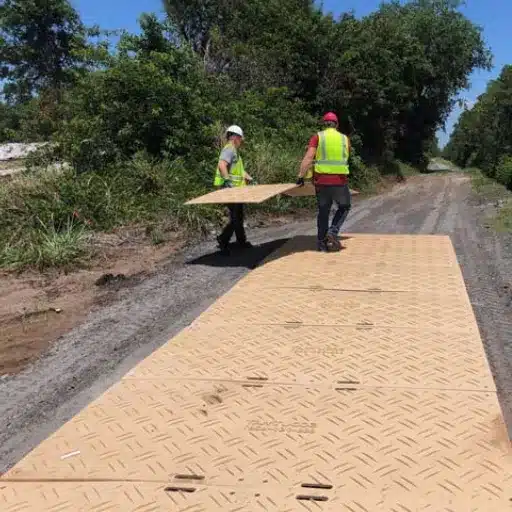
Guidelines for Cleaning and Storage
Careful attention to cleaning and storage of HDPE road mats plays a huge role in ensuring their longevity and operational effectiveness. Remove all mud, dust, and other particles from the mat every time it is used. High-pressure washing helps to get rid of the unwanted dirt that may not come out by simple washing and rinsing, while at the same time avoiding damage to the surfaces being cleaned. Also, take care of any chemical stains and ensure to wash them before the surface deteriorates over time. Mild detergent may also be used if need be for all-over cleaning.
Once the cleaning is done, the mats should be kept in the right way. Keep them in an orderly manner in a cool place and out of the direct sun to avoid warping or discoloring the mats. Most polyethylene mats used in road construction are generally more resistant to the UV effects than the rest of the plastics, but still, over time, harsh elements breach the molecular integrity. For added protection, these can be fitted with specially designed protective covers during storage. To avoid crashing mats while conveying them from one rack to another or when there is no need to use the mats, a few racks could be put in the store.
Research conducted by manufacturers shows that plastic that has a high density and is used as a road mat can extend its life from 10 to 15 years if it is maintained properly. These measures will help keep the strength of the mats and will save money in the long run as well.
Restoration of Broken Mats
If a hdpe road mat gets damaged, most often it will require a quick reparation to make it useful again and extend its service life. Surface concedes or scratches, can mostly be fixed with the help of plastic welding because the crack is quite small. Plastic welding includes the application of heat to the affected area, into which a similar material to HDPE is applied to seal the crack. This repair technique not only stabilizes the mat in its fixed position but also saves it from damage that either forces or the environment causes.
On the other hand, damage that involves deep scratches and fractures may require removing the affected mat portions and replacing them with new ones. Connecting roads using mats with removable segments comes in very handy because the damaged portion can simply be scraped out and replaced with another section without having to change the whole mat. Based on the latest specialists’ opinions, repairs that are performed smartly can stretch the useful life of HDPE mats up to 30% more.
Moreover, existing contemporary research findings indicate that investment in proper repair and maintenance over a 10-year cycle can save about 20%-30% of replacement costs. Furthermore, these savings can be significant to property mat companies that have a lot of hdpe road mat. These clients improve their operations and finances.
Extending the Lifespan of Ground Protection Mats
Recent enhancements and industry information elaborate on several practical servicing techniques to increase the life of ground protection mats composed of HDPE. Eliminating foreign matter consisting of dirt, chemicals, and other types of debris from these mats constantly averts any degradation of the mat surface. Research indicates that those mats that are frequently cleaned after use, after deployment, exhibit a surface wear of up to 25% less than others, which are neglected.
Furthermore, the practice of storing mats in dry and shaded areas is very useful in increasing the durability of the mats. This is because UV light is regarded as one of the leading problems in causing materials to breakdown with untreated materials experiencing damage within five years. It is estimated that applying UV-resistant coatings or covers will approximately keep the materials intact by 40%-50% and within normalized industry standards.
However, when mats are not treated with an additive that protects against ultraviolet light, the story changes, and one may see UV damage appearing on the mat as early as five years. More so, in such cases, uv resistant coatings or covers may help to reduce the loss between 40%-50% as per the normal industry practice. All HDPE mats have a prefabricated reinforced rib on each side for a proper load capacity of 20-ton swl. These ribs are also of different sizes in order to reduce the chances of slippage during use. These types of ribs do not change their position during use. A type of hdpe road mat does exist without a coil, and a coil is usually made in every one of these. A carrying concentration is kept inside the mat; a heat coil, attached to the tarpaulin cover, is placed upon the pole.
It is also important to address minute defects without delay. Recent field experiments show that if surface cracks, gouge marks, or even damage to the outer boundaries is addressed early on, there is less chance of excessive wear that would otherwise arise, and the unit’s lifecycle use increases by almost by 35%. There are repair kits specifically developed for HDPE material, which help in the process of repairing the product without compromises.
Moreover, adherence to these post-operating procedures together with periodic maintenance and correct exploitation will help organizations increase the returns on hdpe road mat investment by cutting down on unnecessary replacements. They also embrace contemporary social responsibility, as both ecological and economic disadvantages are mitigated by such practices.
Reference Sources
- Developing sustainable asphalt mixtures using high-density polyethylene plastic waste material
- Key Findings: The research focuses on sustainable road pavements using HDPE plastic waste, highlighting its role in addressing the plastic waste crisis.
- Methodology: The study utilized advanced mapping techniques to analyze HDPE particle distribution and size within asphalt mixtures.
- Follow the recyclable road: portable mats reduce environmental impact at oil and gas sites
- Key Findings: This study discusses the use of Dura-Based Composite Mats made of HDPE to reduce environmental impact at oil and gas sites. These mats eliminate the need for constructing new roads.
- Methodology: The research evaluated the environmental benefits of using 8×14-foot HDPE mats in industrial applications.
Frequently Asked Questions (FAQs)
What is meant by the term HDPE road mat, and how is it useful?
HDPE road mats refer to tough, and hire grade portable protective flooring made out of a kind of polyethylene that has very high density called HDPE. These mats help the user in having firm floors for operating heavy equipment and other vehicles, especially in areas that may be most difficult, such as construction fields or even in oil or gasoline fields. Through effective distribution of loads, this provision of HDPE mats also shields the soil from compression, the damage of erosion, and thus also aids in deterring ecological harm.
What are the reasons that make use of HDPE mats eco-friendly?
HDPE mats offer a green solution for temporary roads in that they do away with land-clearing or infrastructure-building requirements. Their reusability and the fact that the materials they are crafted from are capable of being recycled lead to a considerable minimization of waste. Furthermore, by preventing direct interference with fragile surfaces, the HDPE road mat reduces the disruption caused by many economic activities.
What is the lifespan of HDPE mats at industrial sites?
The performance of high-density polyethylene mats is exceptional, and they have been built to last even in the most adverse circumstances. The mats are not affected by corrosive substances, erosion, or chemicals, which makes them suitable for sites such as oil and gas, construction, and many other industries. They are made of advanced material, which allows them to retain their performance over extended periods, no matter the operating conditions.
Do HDPE road mats eliminate the need for road building in villages?
Yes, HDPE road mats (high-density polyethylene road mats) can minimize the need for the construction of short-term or long-term roads in the most remote areas. These mats offer a flexible solution to those locations or zones, even allowing vehicles and other equipment to pass in places that alter the surface very little, if any. This can especially be useful in fragile environments where green field road building is not feasible because it is likely to cause permanent damage to the environment.
Wherein is HDPE Mat’s Cost-Effectiveness so enormous?
The fact about these mats is that they are cost-effective, because they can be used again and again and again. An instance is a road mat. Obviously, more than once, unlike traditional mats, which are thrown, used, and reused in a single job, a road mat can be shifted and reused for various purposes, cutting down costs in the long run. Moreover, there is little maintenance required for these hdpe road mats, hence the running costs are less.
What is the purpose of HDPE access mats in drilling?
During the oilfield missions, HDPE Panels are among the most significant pieces of equipment during operation procedures since they are used for stabilizing the foundation of various equipment and vehicles in undulating areas. Such devices allow performing works without causing damage to the surrounding landscape due to their adaptability and ground protection capabilities. They happen to be light; this brings about a seamless installation, easy access, and improves the situation.