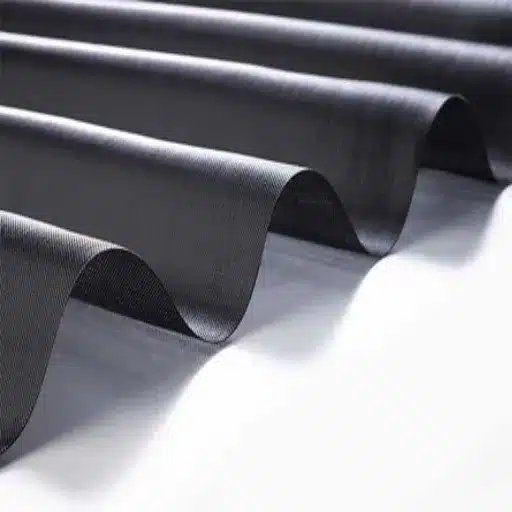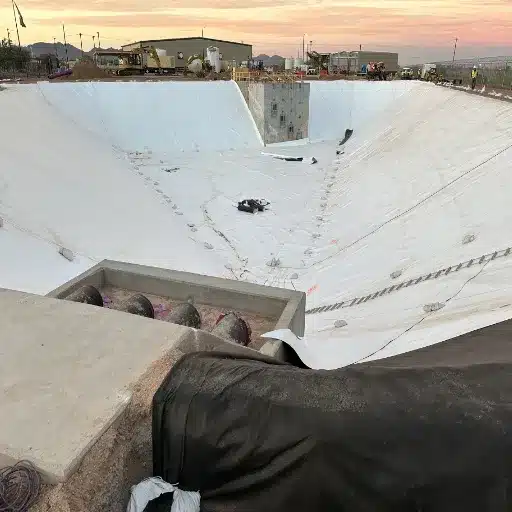
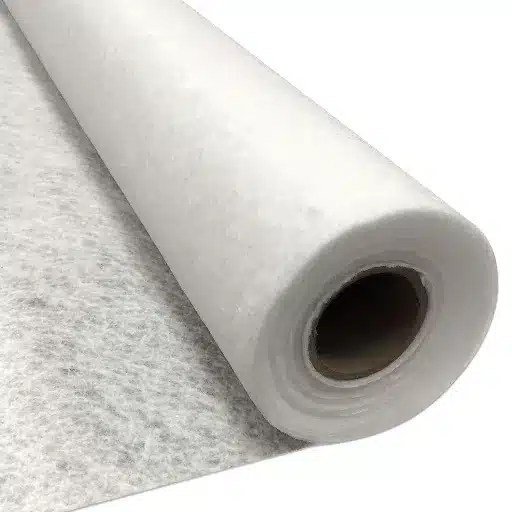
In general, choices of materials for construction, landscaping, and environmental engineering made nowadays could be a total turn-around. The non-woven geotextile fabric has the most immense benefits in stabilization, drainage, and filtration hence it has turned to be a multipurpose and essential option. These fabrics are not only helpful for larger projects but also for smaller, Do-It-Yourself applications. The present discussion will hocus on the peculiar features of non-woven geotextile fabric, its operation, and the innumerable ways it can be applied to yield robust and more sustainable results. So, keep reading to learn why this strong and creative material is among the current engineering solutions.
Introduction to Geotextiles
What Are Geotextiles?
Geotextiles, which are breathable fabrics, are typically made from synthetic materials such as polypropylene or polyester, and play a role in the stabilization, strengthening, and enhancement of soil and infrastructure performance. Due to their versatility, durability, and capability of handling difficult soil-water interactions they are among the materials widely used in a variety of engineering and construction projects. Geotextiles can be classified into two main groups—woven and non-woven—and their applications cover separation, filtration, drainage, reinforcement, and erosion control.
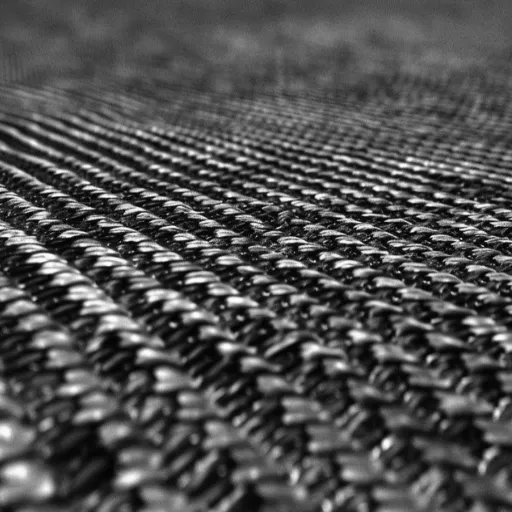
Geotextiles woven are made by crossing synthetic threads and this gives them a high tensile strength which makes them suitable for soil reinforcement in road construction and supporting walls. Non-woven geotextiles are on the other hand made by mixing the fibers through mechanical, chemical, or thermal techniques. The high porosity of the fabric makes it very suitable for applications like filtration, drainage, and prevention of soil particles blocking the drainage systems.
The impact of Geotextiles in today’s building
The present-day building market is heavily reliant on geotextiles due to the multi-functionality and efficiency of these materials in solving the various engineering problems. They are key in reinforcing the earth, improving the drainage, and controlling the erosion, thus, they are absolutely needed for the large-scale infrastructure works such as roads, railroads, and airports, etc. The most recent market analysis estimates that the Asia-Pacific area will still be the leading one in geotextiles demand through the soaring urban growth and infrastructure development in China and India.
📊 Key Statistic: Employing geotextiles in road layouts can lead to a raising of the road’s life span by 50% and more.
One of the many functions of geotextiles, their role in road construction is one of the most important where they act as separations that prevent mixing of different soil layers and aggregate. This additional advantage of durability for the road comes along with reduced maintenance costs. It has been observed that employing geotextiles in road layouts can lead to a raising of the road’s life span by 50% and more.
In addition to that, geotextiles have been playing a vital role in the sustainability issue in the construction industry. They make the use of natural resources more efficient by holding the soil and thus reducing the use of non-renewable building materials like concrete and asphalt. The practice of environmentally friendly construction has, in turn, given rise to the adoption of biodegradable geotextiles that not only conform to environmental criteria but also support the necessary performance levels.
Key Benefits of Non-Woven Geotextiles
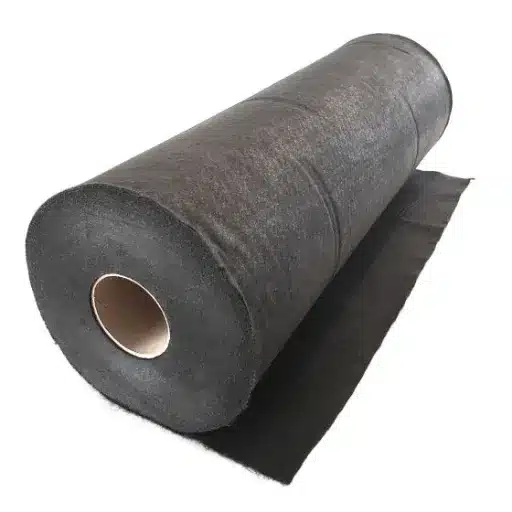
Advantages of Non-Woven Geotextile Fabrics
🌊 Superior Filtration and Drainage
Non-woven geotextiles are very much water-friendly and thus allow still retention of the fine soil particles so drainage is their primary use. They are employed in such drainage applications extensively which prevent waterlogging in the construction areas and help in stabilizing the soil. It has been found that non-woven geotextiles can drain off nearly 30% more water than the conventional methods.
🔗 Effective Separation
These fabrics perform the task of separation between the different layers of soil or aggregates, and thereby they keep the mixing of layers under control and the structure’s integrity protected. This is a major advantage when it comes to roads, railways, and foundations, as the layer’s integrity is a matter of the success or failure of the structure in the long run.
🔄 High Flexibility and Conformity
Non-woven geotextile’s flexibility does allow them to take the form of the uneven ground which makes them suitable for drainage pipe covering or retention pond lining with odd shapes. Their adaptability assures that the maximum area is covered and the functionality is retained even in the most challenging lands.
💪 Enhanced Durability in Harsh Environments
Non-woven geotextiles are made to handle the pressures of the outside world and can thus survive the conditions of chemical, UV, and extreme temperature exposure. The coolness factor of being able to sustain these harsh conditions not only prolongs the life of the infrastructures but also reduces their maintenance costs.
💰 Cost-Effectiveness
The project cost of non-woven geotextiles is greatly reduced, no doubt, by the methods that they possess of soil strengthening, drainage system improvement, and the minimization of structural failure risk. They change the whole situation by requiring less material and stopping the need for costly repairs or replacements, thus creating a situation in which the contractors and developers can reap significant savings.
Comparison with Woven Geotextiles
The disparity between non-woven and woven geotextiles is definitely a great one, and this might be an excellent criterion to evaluate their applications and performances. The structure of woven geotextiles consists of synthetic fibers that are overlapping and interwoven resulting in a tough machine suitable for reinforcement and load bearing applications. Their tensile strength comes first, for instance, in stabilizing the road base or in case of retaining walls.
On the contrary, non-woven geotextiles are produced from synthetic fibers that are bonded through various methods such as heat, chemical or needle punching. The process gives the product an outstanding permeability and thus the possibility of using them for drainage, filtration, and erosion control applications. There are instances in different industries where non-woven geotextiles have been recognized as efficient filters that can filter soil up to 30% more than the woven ones, hence being the best option for managing water flow during construction and in landscaping.
Innovative Uses of Non-Woven Geotextiles

Applications in Erosion Control
Non-woven geotextiles have been identified and recognized as one of the best options for erosion control and the preferred choice in high rainfall areas, places with fast water flow, and even in places where soil movement is a regular thing. These fabrics rely on the basic approach of growing stronger soil therefore water flow is controlled but soil particles are not allowed to move away at the same time. This attribute of geotextiles is one of the main reasons of their high demand in riverbanks, along the roads, on slopes and areas near the sea.
🌍 Environmental Impact
The current report of the research and statistics recommends the used of non-woven geotextiles for erosion control as an infrastructure medium since they will not only increase the lifespan of the infrastructure by more than 30%, but in the same timeframe, operational costs will also be reduced significantly.
For instance, in case of non-woven geotextiles used for slope stabilization, a strong base is created, and they, at the same time, support plant growth by holding soil and moisture, and also prevent washouts during heavy rains.
Use as Landscape Fabric
Non-woven geotextiles are primarily used for landscape fabric due to their superior durability and flexibility. The major role of these fabrics is to function as the barrier against the weeds, while at the same time, letting the water and air reach the soil, which eventually will be a factor for the healthy life of the plants. The most recent research work of the industry shows that the non-woven geotextile landscape fabric technology has been increasingly accepted, specifically by 30% over the last five years, mainly owing to the increasing popularity of eco-friendly gardening practices and methods of controlling erosion.
Reduction in weed growth compared to traditional methods
Decrease in irrigation requirements through moisture retention
Non-woven geotextiles are usually the preferred option of landscape designers owing to their non-decaying nature and their capacity to maintain the soil’s stability. One such instance is a research result revealing that gardens using non-woven landscape fabric experience a weed growth of up to 40% less when compared to those employing traditional methods, which automatically means less herbicide application. Moreover, while addressing the soil dryness issue, non-woven geotextiles can be so effective in moisture retention that the irrigation requirement can be reduced by as much as 20%, thus, it can be considered as the most environmentally-friendly option.
Recent Advancements in Geotextile Technology
New Developments in Non-Woven Geotextiles
The newest techniques in non-woven geotextile technology have completely transformed their performances and areas of applications. The implementation of highly advanced manufacturing methods such as the incorporation of nanotechnologies has resulted in the impartation of properties such as long life and low power to geotextiles. Non-woven geotextiles are increasingly producing and utilizing nanofibers which assist them in acquiring the maximum strength-to-weight ratio, providing the necessary tensile strength while not increasing the bulk twice. The direction of biopolymer-based geotextiles is also emerging as a competent and eco-friendly alternative since it completely eliminates the use of petroleum-based material and at the same time, it remains to high performance through-out.
🔬 Breakthrough Technologies
- Nanofiber incorporation for enhanced strength-to-weight ratio
- Biopolymer-based alternatives eliminating petroleum dependency
- Recycled polymers retaining 90% of original strength
- Smart geotextiles with embedded sensors for real-time monitoring
Apart from this one major development is the recycling of materials in the production process. Therefore, the studies conducted indicate that the non-woven geotextiles made from recycled polymers retain 90% of their initial strength while they cause significant reduction in the environmental impact. In addition, the situation has reached a point where the smart geotextiles with embedded sensors have become a part of the monitoring of the infrastructure at risk areas, such as roads and retaining walls, in real-time, and so they can quickly alert the occurrence of a fault.
Needle Punched Geotextiles Trends
The needle-punched geotextiles market has been one of the most significant segments and has been greatly influenced by new material development and the quick normalization of the demand for sustainable construction. The geotextiles have been primarily intended to provide suitable filtration, separation, and reinforcement in civil engineering works. Industry reports suggest that the global market for geotextiles will exceed $11.2 billion in 2027 and will grow at an annual rate (CAGR) of 10.2% from 2022 to 2027, with the contribution coming mainly from the needle-punched varieties.
📈 Market Projection: The global market for geotextiles will exceed $11.2 billion in 2027, growing at a CAGR of 10.2% from 2022 to 2027.
The growing incorporation of recycled and biodegradable fibers in the production line stands out as the most significant trend in the needle-punched geotextiles market. It aligns with the world’s barely trying to adopt circular economy concepts. These green products not only have long life spans but also significantly reduce the carbon footprint of the respective large-scale projects. Moreover, the utilization of advanced polymer technology has enhanced the tensile strength and elongation properties which in turn have opened up the markets for the materials in even more rigorous applications like drainage systems or coastal erosion control.
Future Developments in Non-Woven Geotextiles
Potential Innovations in Fabric Composition
The non-woven geotextiles sector is about to leap forward with drastic alterations, particularly regarding the fabrics being produced. The scientists are uniting the synthetic advanced and biodegradable material that would not only assist the geotextiles in performing excellently but also make the entire process environmentally friendly. The blending of nanofibers with the traditional fiber production has become the foremost among the different steps mentioned. The so-called nanofiber-infused geotextile materials can undergo extremities in nature and will emerge either unscathed, or with improved properties like filtration or strength, etc.
One of the pivotal areas where investigation is being carried out is the utilization of plastics obtained from recycling in the making of the fabrics, which will eventually result in the reduction of environmental impact, without compromising quality, at the same time. According to a recent investigation, the geotextiles produced by laying down only 50% of the recycled material can be as good as the conventional ones, as far as durability and effectiveness are concerned. Moreover, the researchers have been on a constant quest to create ‘smart’ geotextiles with built-in sensors that will monitor the structure’s integrity and environmental changes.
Foreseen Changes and Trends in Industry
The geotextile industry is poised for a substantial transformation as the twin forces of technological innovations and the demand for eco-friendliness are driving the change. One of the major innovations is the slow but steady transition to biodegradable geotextiles which is the industry’s way of reducing the ecological footprint over the long term. The Grand View Research report predicts that the global geotextile market, which was valued at USD 8.4 billion in 2022, will expand at an annual growth rate (CAGR) of 11.9% from 2023 to 2030. This shift signals the increased presence of geotextiles in construction, especially in the rapidly urbanizing areas of third world countries.
🚀 Future Vision: Smart Geotextiles
Another prediction is the coming together of new materials and sensors to give rise to the ‘smart’ geotextiles that would not only track but also be aware of the conditions of their environment in real-time. For example, these textiles could be embedded in pavements, levees, or buildings, and be tasked with detecting how much weight, what temperature, or how much moisture is present, thus facilitating prompt intervention and ensuring safety.
Reference Sources
-
An Overview of Geotextiles: Industrial Application in Technical Textiles
- Published by: Semantic Scholar
- Key Findings: This paper provides an overview of geotextiles, highlighting the advantages of non-woven geotextiles for water filtration and drainage applications. It emphasizes their suitability in specific industrial contexts.
- Methodology: Review of industrial applications and material properties of geotextiles.
- Read more
-
UNIT-4 Reinforced Earth
- Published by: Semantic Scholar
- Key Findings: This study discusses the manufacturing processes of non-woven geotextiles, including thermal bonding, and their applications in reinforced earth structures.
- Methodology: Technical analysis of geotextile manufacturing and structural applications.
- Read more
-
Geosynthetics – A Sustainable Construction Material
- Published by: Semantic Scholar
- Key Findings: This paper explores the use of non-woven geotextiles made from recycled materials, such as plastic bottles, emphasizing their role in sustainable construction.
- Methodology: Case studies of geotextile production using recycled materials in Australia and South Africa.
- Read more
Frequently Asked Questions (FAQs)
What does non-woven geotextile refer to and what is its function in the areas of filtration and separation?
Non woven geotextile is a permeable synthetic fabric that consists mainly of polypropylene staple fibers or filaments and acts as a soil barrier to filter and separate soil layers. allowing water to pass through but retaining the smallest particles hence it is used in drainage fabrics, french drain systems, underlayment for pavers, and subsurface drainage where high water flow and flow rate are significant. It has high separation strength in working with soils of a nonwoven nature as compared to untreated soils.
What benefits and drawbacks come with nonwoven geotextile when compared to woven geotextile regarding soil stabilization?
Although the applications of nonwoven geotextiles and woven geotextiles differ significantly, nonwovens are mainly for filtration, drainage, and separation and not only do they provide high porosity and puncture resistance but also they are the qualities required for drainage and separation and underlay uses; woven geotextiles mostly have higher tensile strength and are therefore preferred for reinforcement and soil stabilization behind a retaining wall or heavy-duty subgrade stabilization.
Will nonwoven geotextile fabrics be suitable for french drain and subsurface drainage applications?
Absolutely! Nonwoven geotextile fabrics are not only suitable but also well known for being used in french drain and subsurface drainage systems where the geotextile filter prevents soil from getting into the drainage area while water can still flow into the drainage pipes or trenches. The geotextile filter’s effectiveness, when placed around the perforated pipe or drainage rock, not only prevents blockage but also assures constant high water flow which, in turn, enhances the lifespan of the system.
How do puncture resistance and drainage underlayment suitability stack up for polypropylene nonwoven geotextile products?
Polypropylene nonwoven geotextiles (either staple or filament ones) are usually characterized by being very good puncture and tear resistant which in turn makes them suitable for applying as a drainage underlayment. Heavier weights (6oz, 6 oz, or 8 oz thicknesses) or heavy-duty geotextile can be recommended for sensitive installations or rocky sites to enhance the puncture resistance and durability. The type of fiber used and the method of manufacturing affects durability, thus, it is recommended to check the product specifications for puncture resistance and the recommended applications.