Selecting the proper liner is among the most crucial choices you will have to face when planning to construct or renovate a pond. A polyethylene pond liner, recognized for its resilience, adaptability, and economical nature, is often chosen—but what is the way to tell the right thickness for your particular requirements? The thickness, which is usually expressed in mils, can affect everything from the liner’s life span to its resistance against the environmental forces. We will look at the various mil thickness options open for polyethylene pond liners in this article, bringing attention to the different advantages and their ideal uses. So whether you are creating a small paradise in your backyard or adding an extravagant water feature on your property, this guide will let you decide which thickness fits best to your pond’s particular needs.
Introduction to Polyethylene Liners

Definition of Polyethylene Pond Liners
The polyethylene pond liners are very long-lasting, impermeable sheets applied to ponds, fountains, and similar types of water-controlled areas which not only lose very little water but also provide a safe habitat for the ecosystem inside them. They are produced from polyethylene, a multifunctional plastic polymer that has many properties such as being strong, soft, and resistant to chemicals. In the case of polyethylene liners, they come in the forms of high-density (HDPE) and low-density (LDPE), which means that they can be used for different purposes and in various environmental conditions.
Usually, HDPE type film is resistant to UV rays, piercing, and high-low temperate extremes making them the best choice for heavy commercial and industrial pond projects. As against, LDPE types are more adaptable and can be shaped easily, thus they can be used for small or medium-sized backyard ponds. Reports show that HDPE liners are generally available in thicknesses from 30 mil (0.03 inches) to 100 mil (0.1 inches), while LDPE liners are often offered in thinner thickness of starting from 20 mil (0.02 inches).
Different Sectors’ Primary Use of Polyethylene Liners
1. Aquaculture and Fisheries
The liners made of polyethylene are a major component of aquaculture systems where fish farming and shrimp ponds are dependent on them as a means to support the industry and the environment at the same time. The water that normally leaks out is stopped by the liners creating an environment that is very important for the survival of the aquatic life. A very recent study says that the use of polyethylene in aquaculture facilities can cut down on water loss as much as 95%, therefore it is an excellent way to save water and money.
2. Water Waste Management
Municipal and industrial waste management use polyethylene in large quantities to ensure that the groundwater does not get contaminated. They have a very low permeability, which is as low as 1×10⁻¹⁴ cm/s, and thus they are perfect for making landfills and waste treatment ponds fly-proof. The Environmental Protection Agency of the U. S. assigns significant credit to polyethylene liners for helping achieve environmental safety by complying with regulations.
3. Agriculture
Farmers apply polyethylene linings to irrigation reservoirs, canals, and silage pits to cut down on water loss and preserve their crops. These liners perform best in dry regions where the efficient use of water is the key. For example, agriculture scenarios utilizing polyethylene-reservoirs report a 40% decrease in water evaporation compared to unlined storage alternatives.
4. Mining
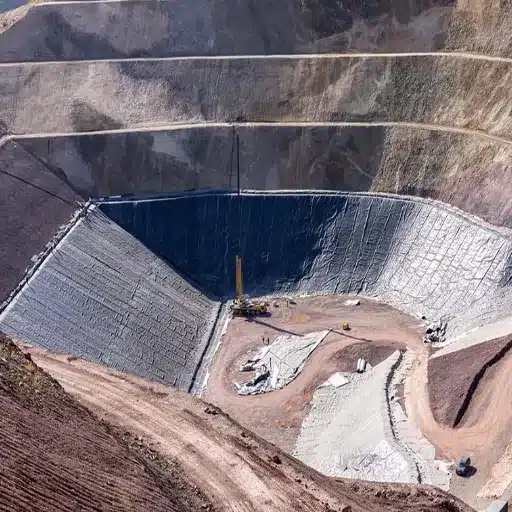
The mining sector often takes advantage of polyethylene liners for heap leaching pads, tailings ponds, and waste containment. These liners play an important role in stopping toxic chemicals from percolating into the ground. In a 2023 report, it was mentioned that around 80% of the modern tailing sites now have polyethylene liners because they can handle the tough chemical and high-temperature conditions.
Benefits of Using Polyethylene Pond Liners

Durability and Longevity
Polyethylene pond liners not only have outstanding durability and longevity but they are also the most reliable option for residential and industrial applications. Besides, they are made of high-density polyethylene (HDPE) or low-density polyethylene (LDPE) and the latter are made to resist even the most extreme environmental conditions, such as UV exposure, temperature changes, and chemical erosion. HDPE liners, for example, can last for 20 to 50 years, depending on the installation and maintenance practices, and that is why their high tensile strength and resistance to punctures are considered.
Key Insight: Studies done recently strengthen the case that HDPE liners stay at least 97% strong in terms of tensile strength after 25 years in sunlight, which the advanced UV inhibitors used in their making being the main reason for their strength. In addition, it also depends on the thickness, but the polyethylene liners can resist high pressure ranging from 200 psi and in the case of the 40 mil liners and thicker, they can stand even more due to this being one of the factors that add to their strength in holding water or containing the materials that are hazardous.
Cost-Effectiveness of Polyethylene Liners
Polyethylene pond liners are very cost-effective and thus are the most commonly used option in various projects. Their initial cumulative costs are often lower than those of the alternatives like concrete or fiberglass and this can be primarily attributed to the ease of installation and less labor requirement. An industry analysis conducted recently indicates that the annual cost of good quality polyethylene liners starts from about $0.50 to $0.90 per square foot depending on factors like the thickness and the grade and thus they are positioned for many different project sizes.
Apart from the initial costs, polyethylene liners invariably lead to significant economic savings in the course of their lifetime. The remarkable durability of the liners translates into less frequent replacements which would, otherwise, render expensive over time. It has been reported that well-maintained polyethylene liners could last beyond 20 years thus delaying the need for constant investments. Moreover, their capability to endure the sun’s UV rays’ degrading effect and chemicals help the companies to save on repairs since the liners are resistant to the damages caused by the harshest of environmental conditions.
Innovations in Polyethylene Liner Technology

Recent Advancements in Reinforced Polyethylene
Reinforced polyethylene (RPE) liners have undergone remarkable progress in recent years, mainly due to the technology and the need for eco-friendly materials in different sectors. One of the most important developments is the advent of multi-layer co-extrusion techniques. These modern manufacturing processes enable the creation of very strong but light liners with incredible tensile strength and elongation. New RPE mixes, for example, today have tensile strengths higher than 6500 psi, making them resistant to considerable pressure and unfavorable weather.
The latest figures also demonstrate that ultra violet (UV) resistance has been improved, with RPE materials now losing practically nothing after 20 years of the sun beating down on them. The main reason for this is that stabilizers such as carbon black and advanced polymer additives, which are already in the mix, are doing a great job of keeping the rays and the oxygen away from the material.
Development of Heavy-Duty and UV-Resistant Options
To fulfill the requirements of more and more difficult settings, producers have come up with heavy-duty reinforced polyethylene (RPE) liners that have increased UV resistance. These cutting-edge liners are designed to take sunlight and bad weather for a long time, thus providing great performance throughout their lifetime. Research has shown that UV-stabilized RPE liners can still have 90% of their strength left after 10 years of continuous UV exposure, which is much better than that of many traditional materials.
Performance Highlight: In addition, tough RPE liners have very high tensile strength, with some brands having a strength of over 5,000 psi. This makes them suitable for heavy-duty industrial applications like mining, agriculture, and water containment systems, where the need for strong materials is very high. For instance, a study of industrial ponds in arid regions showed that the use of heavy, UV-resistant RPE liners cut maintenance costs for the company by 40% over a five-year period when compared with non-reinforced liners.
Case Studies and Real-World Applications

Successful Installations in Agriculture
Reinforced polyethylene (RPE) liners have been widely adopted in the farming sector and proved to be an efficient and economic means of having water conserved. installations have proved these liners’ versatility and durability many times over. One such application is the use of RPE liners in irrigation ponds that are very important for water conservation in areas that suffer from droughts intermittently. A study from California on the agriculture project reported that a reduction of 40% in water loss, which was previously due to evaporation and seepage, was achieved with the installation of the UV-resistant and heavy-duty RPE liners.
A further example of the RPE liners’ successful implementation is in livestock operations, where they are serving as an integral component in the waste management systems of the animals. In a dairy farm located in Wisconsin, the use of RPE liners for wastewater lagoons facilitated the prevention of pollution of the groundwater besides being in line with state environmental laws. The liners were designed to be chemically resistant and are very robust thus they have been able to take long-term waste of storage conditions without the risk of leak causing the waste getting into groundwater thus possible contamination.
Usage in Garden and Outdoor Landscaping
RPE (Reinforced Polyethylene) liners are not only revolutionizing large-scale agriculture but also becoming a preferred choice for garden and outdoor landscaping projects. Their strength, durability, and versatility make them ideal for a variety of applications, ranging from backyard ponds to decorative water features and drainage systems.
One prominent use of RPE liners in landscaping is for creating water gardens and koi ponds. Due to their UV resistance and impermeability, they prevent leaks and maintain water quality over time. According to recent studies, RPE liners can have a lifespan of up to 20 years with proper maintenance, outperforming traditional PVC and EPDM liners frequently used in landscaping. Additionally, their lightweight construction makes installation quicker and more cost-effective, allowing homeowners and landscapers to save on labor costs.
Future Trends in the Polyethylene Liner Market

Emerging Technologies and Materials
The market for polyethylene liners has not remained static; it has been subjected to the continuous influence of technological advancements and the introduction of new materials. One of the most notable developments is the use of nanotechnology in liner manufacturing. The new nanoparticle-infused polyethylene liners are expected to be more durable, and have both increased tensile strength and better chemical resistance. These kinds of liners are excellent for industrial purposes where there is a constant risk of harsh chemicals or rough environmental conditions.
Innovation Focus: Moreover, the introduction of bio-based polyethylene liners has been marketed as a replacement for petroleum-based liners. The new liner production process that utilizes renewable materials like sugarcane or corn starch not only minimizes the dependence on fossil fuels but also appeals to the sustainability movement worldwide. The application of biodegradable and bio-based plastics is projected to witness a compound annual growth rate of 9.7% during the period of 2023 to 2030, according to recent market research, as a result of environmental regulations and the growing awareness of consumers.
Market Demand Insights and the Effect of Environmental Regulations
The global market for polyethylene liners is still expanding, owing to their diverse applications in different industries including agriculture, construction, packaging, and waste management. The main driving forces behind this increasing demand are urbanization and industrialization. A recent market report claims that the global polyethylene liner market will grow at a CAGR of about 5.5% and will be valued at $8.75 billion by the year 2030. This trend is mainly attributed to the requirement for easy to handle, effective and low-cost solutions across different sectors.
At the same time, environmental regulations are causing changes in the market landscape, both negatively and positively. Governments in many countries are putting tougher rules in place that aim at reducing the amount of plastic waste and encouraging compliance with environmentally friendly practices. Regulations, such as the EU’s ban on single-use plastics and the prohibition of non-biodegradable plastic bags in China, are pushing manufacturers to develop alternatives to polyethylene that are biodegradable or recyclable. Simultaneously, the companies are compelled to change the mode of production, devoting more resources to research and development, and, in turn, will be helped by the consumers’ preference for green products.
Reference Sources
-
Overview of Polyethylene-Based Multi-layered Materials
- Published in the Last 5 Years: Yes
- Key Findings: This study highlights the use of polyethylene-based materials in civil engineering, water resources, and mining engineering. It emphasizes their role in erosion control and environmental protection.
- Methodology: The research reviews multi-layered polyethylene materials and their performance in various geotechnical applications.
Link to study
-
Durability of HDPE Geomembranes: An Overview
- Published in the Last 5 Years: Yes
- Key Findings: This paper examines the durability of HDPE geomembranes in exposed applications, focusing on UV radiation and photo-oxidation effects.
- Methodology: The study uses experimental data to analyze the degradation mechanisms of HDPE geomembranes under environmental stressors.
Link to study
-
Environmental Protection with HDPE Geomembranes in Hazardous Waste Landfills
- Published in the Last 5 Years: Yes
- Key Findings: This research highlights the use of HDPE geomembranes as liners in hazardous waste landfills and mining applications, showcasing their effectiveness in environmental protection.
- Methodology: The study evaluates the performance of HDPE geomembranes in real-world landfill and mining scenarios.
Link to study
Frequently Asked Questions (FAQs)
Can a polyethylene pond liner serve as a containment liner for hazardous materials?
Indeed, a polyethylene pond liner can be a containment liner provided it is made from the correct poly or HDPE formulation and is approved for specific chemical resistance standards. With hazardous materials, it is advisable to use heavy-duty, thicker liners, and verified specification sheets should be prepared. Moreover, it is crucial to consider seam tape or welded seams for a leak-proof installation. Moreover, always third-party assess compatibility with the specific chemicals and local environmental regulations before use.
What are the best installation practices to install and seam tape plastic liners?
To install plastic liners effectively, the first step is to prepare and grade the substrate to remove sharp objects and create a smooth surface. Unroll the fabric, allow it to relax and acclimatize; for large liners, 24 ft or more, enlist multiple people and mechanical aids for transporting and positioning. Overlap edges in accordance with manufacturer guidelines and use recommended seam tape or heat-welding techniques to establish secure, waterproof seams. Secure edges with protective covers or ballast and be careful not to stretch them in order to lessen stress on seams.
How do UV resistance and heavy duty weave affect liner life?
UV-resistant polyethylene compositions and stronger weaves are the factors that finish the life of liners presented to the sun. In case of using heavy-duty weaving or thicker HDPE construction, the degradation rate from UV is slowed down, and the tear resistance is improved along with the maintenance of flexibility over the years. In the case of outdoor ponds or covers, liners with UV stabilizers should be selected and following the recommendations for storage or protection when not in use will certainly enhance the lifespan.
Are food-grade plastic liners available and when should you opt for them?
Food-grade plastic liners are made from virgin polyethylene that meets the standards and certifications of food safety for their use. Choose food-grade liners when the liner will contact potable water, aquaculture for fish intended for consumption, or for packaging and transport of food products. Ensure the supplier provides documentation of food-grade certification and specification sheets for your peace of mind.