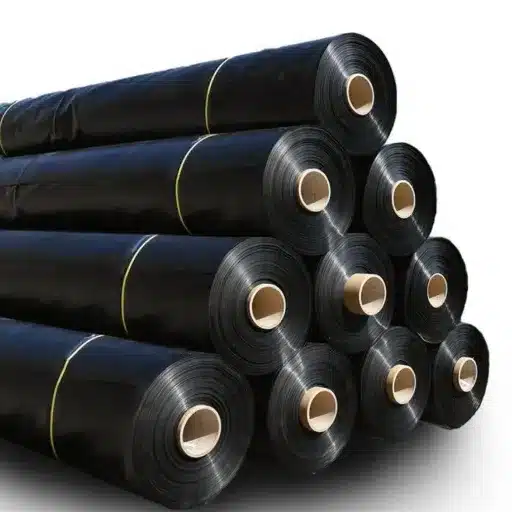
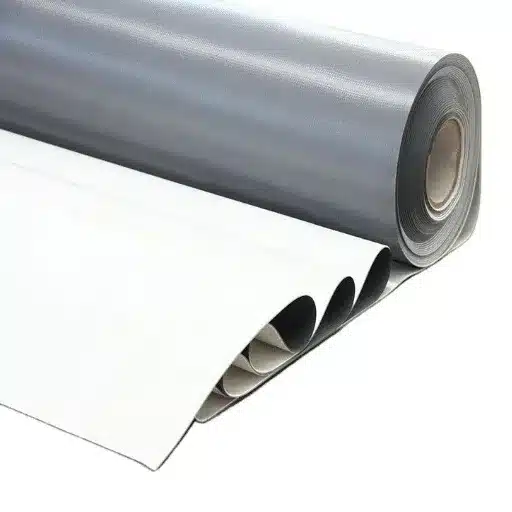
There are far more serious costs than the actual replacement of damaged material when containment systems give way. In 2019, a municipal wastewater facility faced the reality: They were employing HDPE for their containment system when the installation in cold-snap caused their HDPE liner to crack, and 2 million liters of effluent overflowed, untainted, onto the surrounding soil. This easily set them back another $800,000 for the repair. The remedy in this case? A flexible PVC geomembrane, designed for zoning irregularities, was maintained through three subsequent winters.
If you have been recently researching liner materials for containment efforts, then you must have come across some claims about HDPE’s much vaunted performance versus PVC. Opting for the wrong one actually implies a total violation of environmental compliance, and projects may also face a sword of Damocles as far as timelines, budgets, and operational continuity are concerned.
The guide serves as the foundation of the technical selection of a PVC geomembrane for anyone who needs it. It provides information on material requirements, suitability for end use, and installation requirements, and PVC in comparison to other available materials, given the specifics of the individual project scenario.
What Is PVC Geomembrane?
Definition and Material Composition
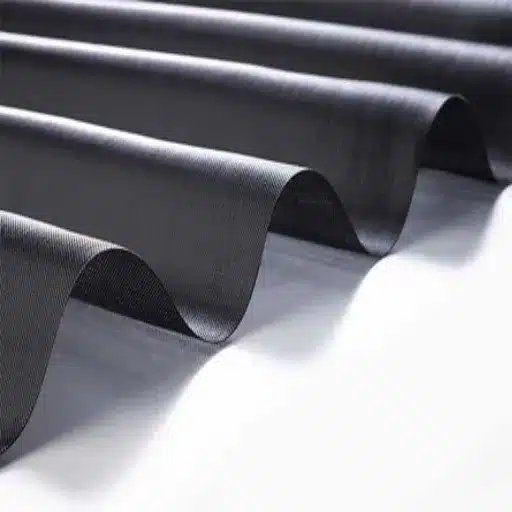
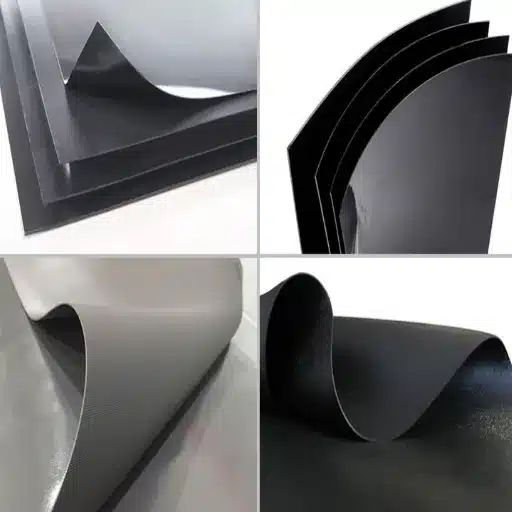
PVC geomembrane is said to be a type of synthetic liner manufactured using polyvinyl chloride resin, plasticizers, stabilizers, energetic particles, and reinforcement materials. As a flexible alternative to more rigid containment systems, PVC geomembranes do resist several harsh chemicals even after their flexibility breaks.
Normally, the material composition would include the following:
- Polyvinyl chloride resin: The key polymer in structural integrity
- Plasticizers: Used so that flexibility and elongation are enhanced properties.
- UV stabilizers: Protect against ultraviolet degradation
- Reinforcement Scrims: Woven polyester or fiberglass for dimensional stability
Manufacturers offer reinforced and unreinforced versions of PVC geomembranes. The reinforced type contains a scrim of woven polyester between two layers of PVC for a tear-resistant and dimensionally very stable use in aggressive applications.
Key Physical Properties
PVC geomembrane exhibits distinct performance characteristics that differentiate it from polyethylene alternatives:
| Property | Typical Value | Test Method |
|---|---|---|
| Tensile Strength | 15-25 MPa | ASTM D882 |
| Elongation at Break | 200-300% | ASTM D882 |
| Puncture Resistance | 200-400 N | ASTM D4833 |
| Tear Resistance | 50-100 N | ASTM D1004 |
| Density | 1.15-1.35 g/cm³ | ASTM D792 |
| Shore Hardness | 75-95 A | ASTM D2240 |
PVC geomembranes are distinctive and flexible. In addition to being tough and resistant to chemical attack, HDPE and PVC allow movement of substrate, thermal expansion, and irregular geometries. This allows the best flexibility for situations where subgrade settlement or structural movement occurs.
How PVC Geomembrane Differs from Other Liner Materials
Understanding material distinctions enables proper specification. PVC geomembrane occupies a unique position among synthetic liners:
- Versus HDPE: PVC offers superior flexibility and cold-weather performance but reduced chemical resistance to certain hydrocarbons
- Versus LLDPE: PVC provides better seam strength and welding consistency while maintaining comparable flexibility
- Versus EPDM: PVC delivers easier field fabrication and repair with competitive UV resistance
- Versus GCL: PVC provides immediate impermeability without hydration requirements
PVC Geomembrane Specifications and Standards
Thickness Options and Selection Criteria
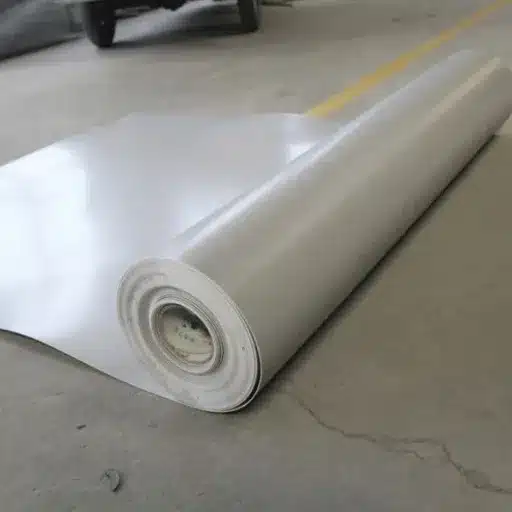
PVC geomembrane availability spans thicknesses from 0.5mm to 2.0mm (20-80 mils), with standard specifications at 0.75mm, 1.0mm, and 1.5mm. Thickness selection depends on application requirements, anticipated loads, and service life expectations.
Standard Thickness Recommendations:
| Application | Recommended Thickness | Rationale |
|---|---|---|
| Decorative ponds | 0.5-0.75mm | Light duty, accessible for maintenance |
| Wastewater lagoons | 1.0-1.5mm | Chemical exposure, mechanical stress |
| Potable water reservoirs | 1.0-1.5mm | NSF certification requirements |
| Industrial containment | 1.5-2.0mm | Heavy loads, aggressive chemicals |
| Canal lining | 0.75-1.0mm | Flow velocity, abrasion resistance |
Thicker membranes provide enhanced puncture resistance and durability but reduce flexibility and increase material costs. Engineering evaluation should balance protection requirements against installation practicality.
Industry Standards and Certifications
An assured quality PVC anti-track geomembrane will comply with the prescribed standards that state its performance attributes:
ASTM D7176: Standard Specification for PVC Geomembrane
- Defines the minimum physical properties required for the geomembrane
- Prescribes the test methods for tensile strength, tear resistance, and seam strength
- Specifies quality control procedures for the manufacturing process
NSF/ANSI 61: Drinking Water System Components
- Certifies suitability for potable water contact
- Requires extraction testing for contaminant migration
- Essential for municipal water storage applications
FM Approvals: Fire Resistance Certification
- Evaluates flame spread and smoke development
- Required for certain industrial and commercial installations
- Indicates enhanced safety performance
On PVC geomembrane, Shanxi Shengxing undertakes rigorous quality surveillance, with accountability maintained through a complete sample preservation of 5 years, guaranteeing traceability and uniformity of performance from batch to batch in production.
Reinforced vs. Unreinforced PVC
Given that reinforcement in the design decision optimization is just a consequence of understanding the benefits and constraints of them, we can take some of these aspects:
Reinforced PVC Geomembrane:
- Incorporate a polyester scrim of woven material and (generally) 500-1000 denier
- Makes it stable and linear dimensional in thermal cycling
- Increases the tear strength in applications exposed to wind and stress
- Need for better tensile strength for a certain thickness
Unreinforced PVC Geomembrane:
- Maximum flexibility for complex geometries
- Ease of field fabrication and detailing
- Even stretches in all directions
- Ideally suited for prefabricated tank liners and irregular shapes
The difference between reinforced and unreinforced versions is determined by the specific requirements of the application. The reinforced type performs very well if it is used for exposed areas characterized by wind loads or mechanical loads, while the unreinforced type is good for tank lining, in applications which are very ‘detailed work, or in applications that call for shape conformability.
PVC Geomembrane vs HDPE: Comprehensive Comparison
Flexibility and Conformance
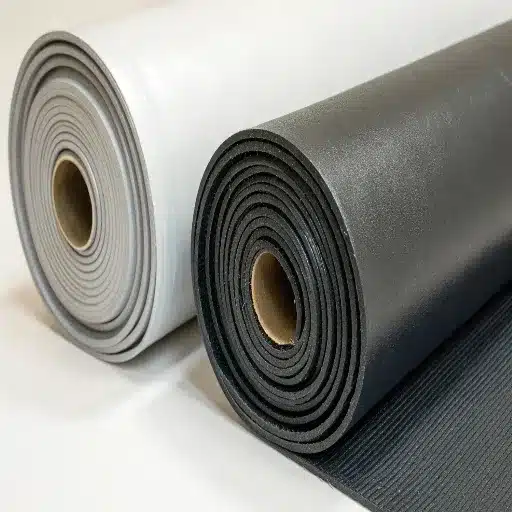
The most critical operational distinction between PVC and HDPE geomembranes is in terms of flexibility. The most significant operational difference between PVC and HDPE geomembrane lies in flexibility. The PVC geomembrane provides elongation strength as high as 200-300% when compared with 50-100% of the HDPE one. This synthesis of flexibility results in compelling advantages during its installation and service.
In 2022, when Javier Rodriguez’s team put in a containment liner at a Mexican mining site, they had the subgrade of rigid bedrock sticking all over the place beyond what had been expected. By using pre-treatment, the PVC geomembrane was ready to form to the geometry without the necessity of some kind of pre-treatment and saved three days in site preparation compared to the HDPE required. The time frame remained in place, and the liner had performed two monsoon seasons without failing in stress-related situations.
PVC flexibility enables:
- Install on subgrades reasonably irregular without much smoothing
- Accommodate structural settlement without seam stress
- Be used in cold weather without becoming brittle
- Simplified detailing around penetrations and structures
Installation Characteristics
Installation methodology differs substantially between materials:
| Aspect | PVC Geomembrane | HDPE Geomembrane |
|---|---|---|
| Welding method | Hot air or solvent | Wedge (fusion) welding |
| Equipment requirements | Portable heat gun, adhesive | Automated wedge welder |
| Temperature range | -10°C to 40°C | 5°C to 35°C |
| Seam inspection | Visual + peel test | Visual + vacuum box |
| Field repair | Patch kits, adhesive | Extrusion welding |
| Foldability | Excellent | Limited |
Thermal welding, where PVC is heated at a very high temperature to enable fusion by application of chemicals or solvents, is one method. The solvents break the polymer chain at the boundaries of the two different plastics and provide for more complete bonding.
There are advantages associated with these methods for use at remote sites or confined spaces, which might otherwise mean transporting very heavy HDPE welder machinery to a site would prove an impossibility. With lighter and easier-to-transport ware, field crews can achieve a fair quality seam.
Performance Trade-offs
Material selection requires evaluating performance priorities:
PVC Advantages:
- Superior flexibility and elongation
- Broader temperature installation window
- Easier field fabrication and repair
- Stronger seam strength relative to the parent material
- Better conformability to the substrate
HDPE Advantages:
- Higher chemical resistance to hydrocarbons
- Superior UV resistance without additives
- Longer projected service life (30+ vs 20+ years)
- Lower coefficient of thermal expansion
- Better puncture resistance at equivalent thickness
Selection Decision Framework:
Choose PVC geomembrane when:
- Installation occurs in cold climates or winter conditions
- Subgrade irregularities cannot be fully eliminated
- Complex geometries require field fabrication
- Potable water certification (NSF/ANSI 61) is required
- Maintenance access for repair is limited
Choose HDPE geomembrane when:
- Aggressive chemical exposure (oils, fuels) is anticipated
- Maximum service life is the primary criterion
- Large, simple geometries allow factory fabrication
- UV exposure exceeds PVC additive protection limits
Applications of PVC Geomembrane
Wastewater and Water Treatment
A PVC geomembrane in water and wastewater is commonly used. Its immunity to common wastewater elements and certification for potable water both make it excellent across all uses of a water system.
Wastewater Treatment Applications:
- Anaerobic lagoon liners: Impermeable containment for biological treatment processes
- Clarifier covers: Odor control and containment of emissions
- Aeration basin liners: Chemical-resistant barrier for activated sludge systems
- Sludge storage: leachate containment from dewatered solids
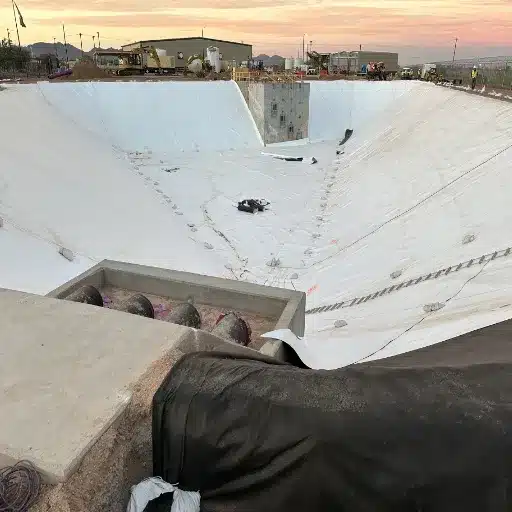
A 1.5 mm reinforced PVC geomembrane was specified for a lagoon expansion in their new facility in 2023. This profile covers the appropriate flexibility for such a sloping site without overdoing the land, and also has the assurance of the discharge permit requirements through NSF certification.
Potable Water Applications:
With an NSF/ANSI 61 certification, this material may safely hold drinking water. Its applications are as follows:
- Liners for reservoirs and floating covers
- Linings for potable water tanks
- Clear wells and contact chambers Container
- Systematic storage as well as distribution
Thus, certification verifies that the material is incapable of leaking toxic substances into the water stored with it, compromising health conditions by compounding restrictions on the supply systems of municipalities.
Pond and Canal Lining
Agricultural, aquaculture, and landscape applications benefit from PVC geomembrane’s conformability and ease of installation.
Decorative and Recreational Ponds:
PVC geomembrane provides waterproofing for:
- Residential ponds with koi, and nature ponds
- Golf Course Water Hazards
- Lakes in Municipal Parks
- Commercial Landscape Installations
The flexibility of the material exists so that, changing the edges of rocks, plant shelves, and water features, which a rigid liner in no way could accommodate, will be possible. Color options (usually black, white, or tan) would let you integrate aesthetics into your landscape design.
Aquaculture Applications:
Fish farming operations utilize PVC geomembrane for:
- Pond liners for intensive aquaculture
- Raceway and tank linings
- Hatchery containment systems
- Water recirculation facility waterproofing
NSF/ANSI 61 certification that guarantees PVC formulations can support life in the water without exposure to any harmful substances. The smooth surface resists algae attachment, probably more of low busting from rougher materials compared to these, simplifying maintenance.
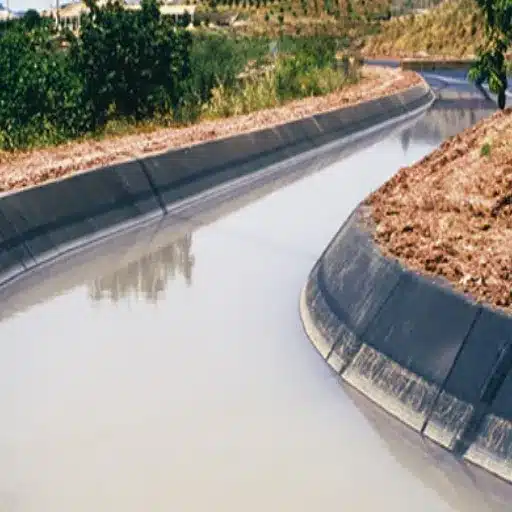
Irrigation Canals:
PVC geomembrane addresses water conservation in agricultural distribution systems:
- Prevents seepage losses (can exceed 30% in unlined canals)
- Resists abrasion from sediment-laden flows
- Accommodates thermal expansion in exposed installations
- Enables rapid installation without extended downtime
Industrial and Commercial Containment
Industrial applications leverage PVC geomembrane’s chemical resistance and fabrication flexibility.
Chemical Containment:
PVC geomembrane demonstrates compatibility with:
- Acids and bases (pH 2-12 typical range)
- Saline solutions and brines
- Agricultural chemicals and fertilizers
- Certain organic chemicals (verify specific compatibility)
Application in tank farm, chemical containment application at chemical manufacturing, and spill containment are among the applications within this product line. Use chemical compatibility charts for specific substance exposures.
Mining Applications:
The mining industry employs PVC geomembrane for:
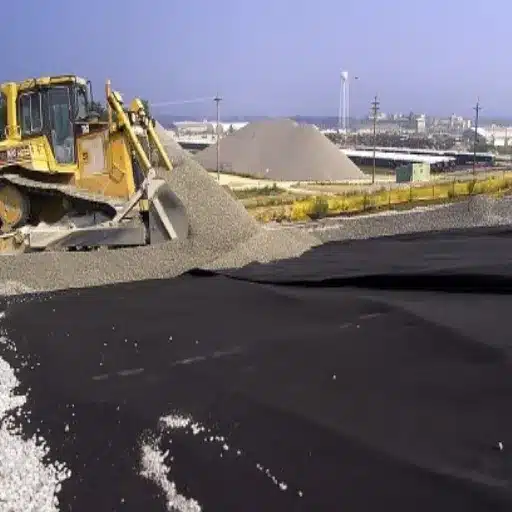
- Heap leach pad solution containment
- Tailings storage facility liners
- Process water ponds
- Solution channel and piping containment
PVC’s flexibility accommodates settlement in tailings impoundments where subgrade consolidation occurs over time. The material’s seam strength maintains integrity under solution loading conditions.
Commercial Roofing and Waterproofing:
Beyond traditional geomembrane applications, the PVC membrane serves in:
- Plaza deck waterproofing
- Green roof systems
- Tunnel and below-grade waterproofing
- Building foundation protection
PVC Geomembrane Installation Best Practices
Site Preparation Requirements
Proper subgrade preparation is the most important key to successful PVC geomembrane installation, as these kinds of large irregularities can withstand moderately flexible and flexible materials because the extreme irregularities are compromised with long-term behavior.
Steps in the preparation of subgrade:
- Clear and grub: the removal of vegetation, organics, and debris
- Grade and shape: establishment of the design contours with proper drainage slopes
- Compact: obtain the specified density (90-95% proctor)
- Smooth: remove protrusions, rocks, and sharp objects
- Verify: inspect for voids, soft spots, or depressions
A cushion geotextile below the PVC geomembrane provides additional protection against puncture. A 200-300 gsm non-woven geotextile is the typical use for properly prepared subgrades, but harsher conditions might require sand bedding or thicker protection layers.
Pre-Installation Inspection:
Before geomembrane deployment:
- Verify subgrade acceptance with the engineer
- Check the weather forecast (avoid installation during precipitation)
- Confirm material delivery and panel layout
- Test welding equipment calibration
- Review seam detail drawings
Deployment and Positioning
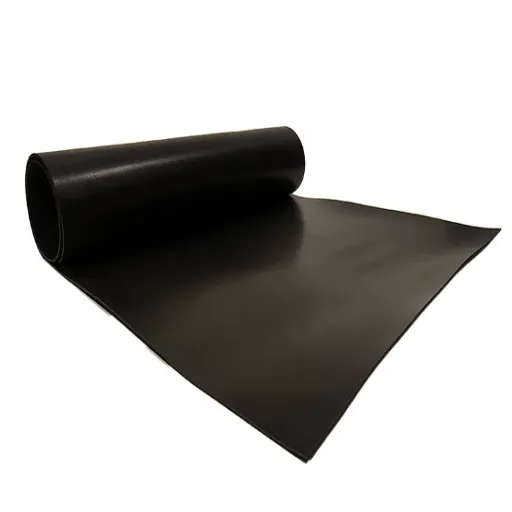
PVC Geomembrane panels are supplied in rolls or prefabricated panels, depending on the size of the project, and are laid out in accordance with the layout plan. The deployment sequence can be systematically attempted to prevent any damage to the material and to ensure accurate alignment.
Deployment Order:
- Panel layout: Position the rolls in the layout plan of the panel
- Unfolding: Draw out panels without dragging them over rough ground.
- Positioning: Align the panels such that the overlaps are guided, usually about 100-150mm
- Securing: Anchor the panels temporarily to prevent them from being blown away by the wind.
- Adjustment: Final alignment before welding is essential.
At transients, structures, and grade break-offs, there should be enough slack; slack allows greater changes in the stress levels at which the materials are held during cold and warm weather, leading to expenditure through understanding. In the resulting expansion and contraction, PVC geomembrane changes the volume of the geomembrane in response to the changes in temperature.
Cold Weather Considerations:
PVC geomembrane is more supple at HDPE’s brittling temperature, but for installation below zero degrees Centigrade:
- Further care with handling to prevent tearing
- Increase in weld heating times.
- Making sure that frost or ice is removed from the panel
- Possible use for welding operation in a warming tent
Welding Methods and Quality Control
The integrity of containment systems is determined by the quality of the seam. PVC geomembranes have two primary welding methods:
Hot Air Welding:
- Equipment: Hot air gun with nozzle, pressure roller
- Temperature: 400-500°C (750-930°F), depending on the thickness of the material
- Method: Heat both surfaces at the same time, apply pressure, while they are molten
- Speed: 1-3meters/minute is the usual rate.
Hot air welding results from a fusion between PVC panels through molecular bonding, and a proper technique shall give you seams that exceed 80% of the parent material tensile load.
Solvent Welding:
- Materials: PVC solvent cement, the applicator
- Application: Brush solvent on both surfaces
- Assembly: Press surfaces immediately
- Cure: 24 to 48 hours for full strength development
The point in time when the curing effect is reached. Solvent welding is useful for minor detailed work, repair, and inaccessible areas that a hot air instrument is unable to reach. This method requires that both surfaces are clean and dry and selects the right solvent to fit the particular formulation of PVC.
Quality Control Testing:
Seam integrity verification includes:
- Visual testing: Ensuring that all the joints are uniform and no voids or bubbles are present in them.
- Peel testing: Verify the actual strength of the seam through pulling of samples.
- Vacuum testing: As applied to solvent-welded seams, if accessible.
- Spark testing: Holiday detection for pinholes or gaps
The use of excessive frequency ought to be backed up by spark testing on the seam to find holidays and porosity.
Maintenance, Repair, and Service Life
Expected Performance Lifespan
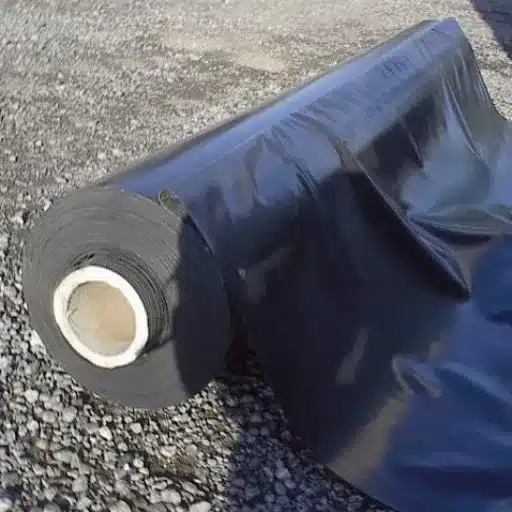
The accomplished PVC geomembrane application normally delivers a service life of 20+ years. Its true longevity is mostly dependent upon the installation quality, environmental exposure, and maintenance practices.
Factors That Influence Service Life:
- UV exposure: Exposure to sunlight will break down PVC over time, while additives to the PVC will enhance its resistance.
- Chemical exposure: Moderate to minimal degradation by compatible chemicals; accelerates the aging process if incompatible substances are involved.
- Mechanical stress: Compromise in punctures, abrasions, or overloading due to machinery.
- Thermal cycling: Stressing of seams and attachment points due to expansion and contraction
- Maintenance quality: Minor destruction is repaired quickly to prevent huge failures
PVC geomembranes are typically guaranteed by the manufacturer through warranties of 10-20 years, depending on formulation, applicative conditions, and thickness.
Inspection and Monitoring
An inspection helps in notifying of developing issues before they degenerate into dire results. The recommended frequencies of inspection:
- First year: Quarterly (monitor settlement and initial performance)
- Years 2-5: Semi-annually
- After year 5: Annually
Inspection Checklist:
- Visual inspection for tears, punctures, or abrasions
- Inspect seams for degradation or separation
- Fire erosion or pullout of the anchorage trench
- The mouth of the cover soil or ballast is still in position
- Verify punctures and appurtenances for integrity
- Any sediment accumulation and growth of vegetation should be noted.
- Record your observations with photographs.
Repair Procedures
Damage to PVC geomembrane is repairable using patch kits and welding techniques.
Small Puncture Repair:
- Clean area thoroughly (minimum 150mm radius around damage)
- Cut patch material (circular or oval shape, minimum 100mm larger than the damage)
- Apply solvent adhesive to the patch and liner surfaces
- Position the patch and roll firmly to eliminate air bubbles
- Allow cure time before returning to service
Seam Repair:
Failed seams require cutting out the defective section and re-welding:
- Mark and cut out the defective seam section (minimum 300mm extension beyond visible damage)
- Prepare a replacement panel section with proper overlap
- Weld a new seam using the hot air method
- Test repaired seam with peel test
- Document repair location and test results
Large Damage Repair:
Extensive damage may require panel replacement or supplementary liner installation. Engineering evaluation should determine appropriate remediation based on damage extent and application criticality.
Sourcing and Procurement Considerations
Supplier Evaluation Criteria
Choosing a supplier for PVC geomembrane is beyond price comparison and requires a proper evaluation of it. The support of technical practices, good quality assurances, and the timely supply of such bargain materials appreciably impacts the project’s success.
Technical Capabilities:
- Engineering consultation is available.
- Custom fabrication services are provided for your specifications.
- Training for installation guidance is offered.
- Tests for chemical compatibility will be performed.
- Development of specification support
Quality Assurance:
- Certification in Manufacturing ISO 9001
- Testing documentation from a third party
- Traceability of materials
- Conditions and terms of warranty
Shanxi Shengxing also maintains the ISO9001 standard for quality management and works with a sample storage system for the continuation of the last five years to ensure repeatable properties over material and complete traceability from raw material to finished product.
Cost Factors and Value Analysis
PVC geomembrane costs include material, installation, and life-cycle considerations.
Material Cost Drivers:
- Thickness (thicker = higher cost)
- Reinforcement (scrim adds cost)
- Certification requirements (NSF/ANSI 61 adds testing cost)
- Order quantity (volume discounts apply)
- Custom fabrication (prefabrication vs. field seaming)
Installation Cost Considerations:
- Site accessibility and preparation requirements
- Welding method and equipment needs
- Labor skill requirements
- Weather protection during installation
- Quality control testing scope
Value Analysis Framework:
When you are comparing PVC geomembrane against other alternatives, it would be good to consider:
- Installation efficiency: Quick deployment will minimize an increase in labor costs
- Repairability: Applying a cure is possible in the field for a service life.
- Flexibility benefits: Reduced site preparation works
- Certification value: The supposed applicability for potable water use will be upon NSF/ANSI 61 certification
- Risk mitigation: Installing in the cold helps reduce weather delays.
Global Supply and Logistics
International projects require consideration of shipping, documentation, and the delivery run schedule.
Export Documentation:
- Commercial invoice and packing list
- Certificate of origin
- Material test reports and certifications
- Bill of lading or airway bill
- Import permits and customs declarations
Shipping Considerations:
Bulk orders for PVC geomembrane rolls are shipped via ocean cargo containers, or air freight can be used for urgent needs. The dimensions and weight of the roll is supposed to fit the handling equipment at the destination.
Lead Time Planning:
Standard production lead times range from 2 to 4 weeks, depending on against-order specifications and current manufacturing schedule. Individual designs, special certifications, or peak season demand can stretch a timeline.
Shanxi Shengxing offers global door-to-door shipment of geosynthetics, export prepared with responsive technical consultancy and flexible order sizes to meet specific project requirements.
Conclusion
The advantage of PVC Geomembrane is apparent in containment purposes where flexibility, cold climate performance, or drinking water approval is required. It is important to grasp the material properties, possible usage, and laying requirements that allow for a balance between function, economy, and danger when specifying materials.
Key Takeaways:
- Flexibility advantage: PVC accommodates subgrade irregularities and settlement that stress rigid materials
- Installation efficiency: Hot air and solvent welding methods deploy with lighter equipment than HDPE alternatives
- Certification pathway: NSF/ANSI 61 certification enables potable water and sensitive environmental applications
- Performance balance: 20+ year service life with repairable seams and established maintenance protocols
- Selection criteria: Choose PVC when flexibility, cold-weather installation, or complex geometries matter most
Next Steps for Your Project:
Begin your PVC Geomembrane specification task by establishing a comprehension of application requirements, assessing subgrade conditions, and also looking at the data of material tests for the circumstance, particular to you. Technical advice from knowledgeable geosynthetic vendors would confirm the selection of the material whilst enhancing the thickness and structure according to the project scope.
Request Technical Support
Evaluating PVC geomembrane for your containment project? Our engineering team provides specification guidance, chemical compatibility verification, and custom fabrication services for projects worldwide.
[Contact us for a technical consultation →]
Whether you need an NSF-certified potable water liner, reinforced membrane for exposed applications, or guidance on PVC versus HDPE selection, we provide engineering support backed by ISO9001 quality management and global export capability.
Frequently Asked Questions
What differentiates PVC geomembranes from HDPE geomembranes?
PVC geomembrane is more flexible (able to elongate by 200-300% against 50-100% in HDPE) and handy during lower temperatures, whereas HDPE shows better chemical resistance to hydrocarbons and great expected durability. PVC is joined mostly by hot air or solvent welding, while HDPE needs wedge fusion or welders.
How long is the lifespan of a PVC geomembrane?
20 years or longer is the typical service life span of a properly laid PVC geomembrane. Actual performance will depend greatly on UV light, chemicals, quality of installation, and maintenance. The warranties offered by manufacturers differ from 10 to 20 years, depending on the type of product and use.
Can water be disposed of in a PVC geomembrane?
PVC geomembrane that meets NSF/ ANSI 61 requirements is indeed usable in contact with drinking water. The certification, however, entails extractive tests to ensure no release of any harmful substances. Do not use any Non-NSF certified materials for any drinking water uses.
How thick should the PVC Geomembrane be?
In some cases, such decorative ponds could suffice with a 0.5-0.75mm thickness, wastewater lagoons could require 1.0-1.5mm, and heavy industrial containment could require 1.5-2.0mm thickness, and that is why. It includes the loads that will be applied, the chemical exposure, the ease of repair, and the worth of the design, among other factors that are considered.
Is it possible to repair the PVC Geomembrane after it is damaged?
There is a possibility of field-repairing a damaged PVC Geomembrane by patch kits, solvent adhesives, or hot air welding. In the case of small punctures, patch overlays are carried out, but in the case of damaged seams, the latter have to be cut off and welded again. Close up any minor damage observed during routine inspection to reduce the risk of serious problems in the future, since doing so is imperative.