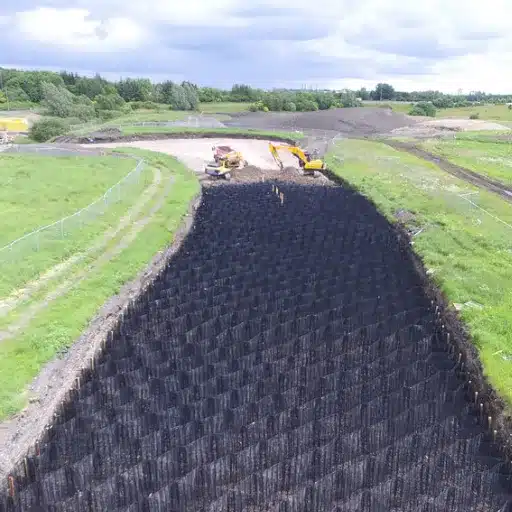
The progress in the use of geosynthetic construction materials has altered considerably the requirements for construction and has transformed levels of effectiveness in overcoming even the most daunting construction and infrastructural problems and environments. Whether to strengthen loose soils, develop drainage installations, or counter soil erosion, construction of such handy forms is now within the bounds of applied sustainable development and resilient construction. This manual is an exploration into the work of geosynthetics and considers the different geosynthetic products in the industry, their benefits, and how they apply to the modern construction industry. It doesn’t matter if you are an expert, a consumer, or just a beginner in the construction field; the contents of this paper will facilitate your understanding of Geotextile Fabric in construction and its evolution.
Introduction to Geotextile Fabric
Definition of Geotextile Fabric
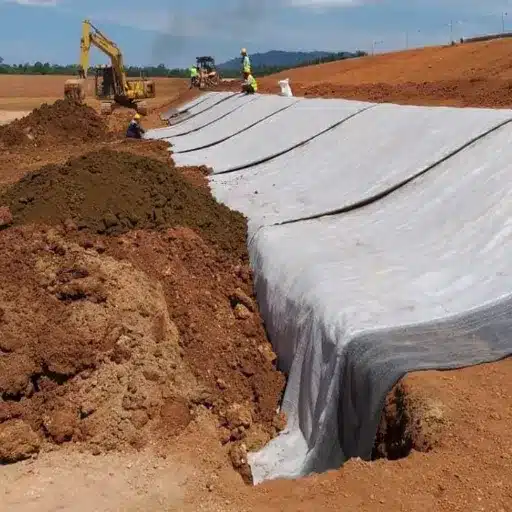
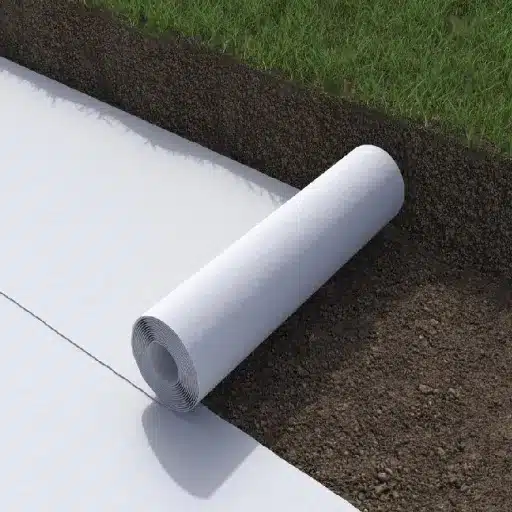
Geotextile Fabric is a category of textiles that is permeable and able to provide stability to the soil as well as actively act as a filter and drainage in the construction of structures, but is still most fundamentally designed for advanced geotechnical and environmental purposes. The other data of such a fabric state that it is mostly made of polypropylene and rarely of polyester as a matter of fact. Varieties of geotextiles arise from the way these materials are processed. There are woven as well as non-woven and even knitted ones.
The construction sector makes heavy use of geotextiles in controls over the erosion of the soil, separating low and high plasticity soils, and removing dirty water while protecting the movement of fines. As an example, drainage structures often incorporate nonwoven geotextiles, which possess the most appropriate qualities of filtration with high strength and low porosity. Research advanced that the size of the geotextile market was around $10.3 billion in 2022 and would reach about $17.5 billion by 2032, leading to a compound annual growth rate (CAGR) of almost 5.8%. This also demonstrates the possibility of these goals being met, as well as the need for the development of network systems, roads, the use of geotextile fabric for the treatment of landfills, and civil engineering projects along coastlines.
The use of Geotextile Fabric in construction is cost-effective and the preservation of the construction is increased due to its very high durability and utilization purposes. In tandem with the development of construction materials technology, efficiency of construction and environmental sustainability issues are the focus in the innovation of geotextile fabric.
Importance in Civil Engineering
One of the best advantages of Geotextile Fabric is its extensive usage in every single construction civil engineering project, plus the appropriate use of that particular structure. In addition to this, the most important creative goal of geotextile integration involves the reinforcement of soil, which can hold a building with excessive loads without forming any cracks. On the whole, industry experts believe that the geotextile market will grow at a compound annual rate of 6.5% from 2021 to 2028, driven by the need for stronger materials in construction applications.
They are the new trend in highway construction for they alleviate rutting of pavements and at the same time provide bases or exfiltration layers for pavements. For instance, they contribute to safe erosion control of soils by permitting moisture ingress while preventing coarse soil particles. Findings show that the use of a Geotextile Fabric as road foundation has reduced the cost of construction up to 30%, owing to reduced materials and faster work rate.
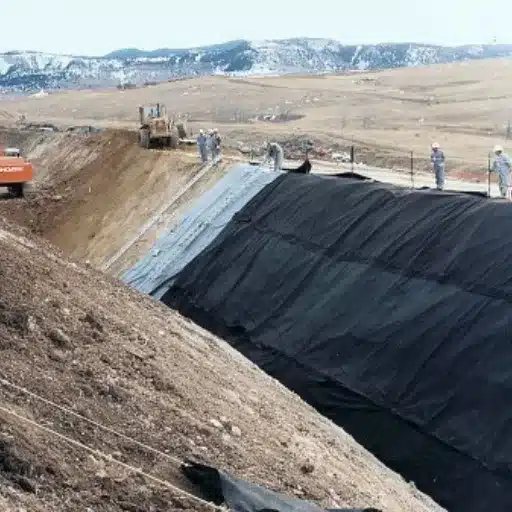
Geotextile Fabric has many other uses in environmental engineering that will most commonly find their application in waste management design and landfill construction. These geofabrics are used both for filtering purposes to avoid soil pollution by leachates and also for servicing drainage inside the landfills. Geotextiles of such a configuration are also deployed in the construction of structures along the coastline and protection works. Geotextiles are engineered textile materials, which serve different purposes inside coastal structures such as sea walls and beach revetment, and shall also contribute in mitigation of certain shore protection issues such as wave action or current invasion and shore erosion against the underlying materials.
As such, today’s geotextiles address the key questions of protection of the environment as well as green construction within the scope of the available development of materials technology, which in most cases incorporates more associated mechanical properties, UV stability and biological degradation.
Types of Geotextiles
1
Woven Geotextiles
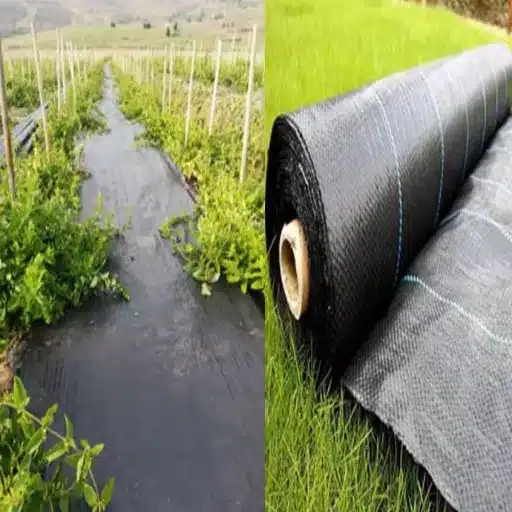
Woven geotextiles are made by interlacing threads, creating a very stiff and strong cloth. Usually, these cloth applications are applicable in regions of high strength, where a great load is projected, and the elongation is low. They help in many civil engineering activities, including the construction of roads, providing erosion control, and load-bearing or reinforcement, among others, because they are absorbent.
Woven geotextiles have a tensile performance depending on the design, which ranges from 50 to 200 kN/m and construction was usually done. The materials, although less cumbersome, do not escape the fact that these geotextiles are constructed from synthetic polymers such as polypropylene and polyester, and this ensures that they will not succumb to deactivating factors of the natural environment, such as erosion, ultraviolet, and biodegradation into carbon matter. But Geotextile Fabric might also have its economic and social implications, which involve certain costs.
Geotextile fabrics can also be woven, meaning they can be integrated into roads, into the subgrade for the constraining of aggregate, soils and easy transfer of the laid loads of the roads on the soil. The improvement in the methodology of the fabric building has addressed the drainage aspect of the fabrics and made sure that one of the woven geotextiles has up to 0.1 cm/s permeability performance.
Aside from that, global studies also forecast the growth of the Geotextile Fabric market, which is expected to soar as the regions undergo a notable rise in development projects. This is because such materials can be produced in such a cost-effective manner that even in such harsh conditions, it becomes possible to use them in almost every area of construction. The production of woven geotextiles will meet the requirements thanks to new construction materials and new methods of production.
2
Non-Woven Geotextiles
Non-Woven Geotextiles play a major role in many civil projects and construction engineering and demonstrate flexibility within many industries. They are made up of synthetic fibers, and the process for their bonding is either mechanical or chemical. These most specifically find their applications when it comes to separation, stabilization in the surface, drainage, and filtration. It is a sequence of events when perforated and encourages the flow of the fine particles but holds these particles within the geofabric that allows a functional drainage system only where it is needed.
According to the most recent industry reports, there is an expectation of significant growth of the non-woven geotextile industry globally. This is because of the infrastructural development that several nations put at the center stage, with developing countries having to play catch-up. In the case of Asia-Pacific and the Middle East, for example, the growth of their markets has been spectacular due to the massive investment that these countries have made in infrastructure. On an annual basis, it is anticipated that the Non-Woven Geotextiles sub-market will grow at a rate of about 5.2% on average over the period 2023-2030, with the market placed at a forecasted value of about USD 9.5 billion by then.
With the help of non-woven geotextiles, it is impossible to construct a road without stabilizing the subsoil or protecting the pavement from destruction. They are also helpful for preventing, to a certain degree, erosion of riverbanks and coasts under the influence of water. Innovative materials can be developed as production processes available to date undergo improvement, using environmentally friendly methods to match the constituent principles of sustainable construction. These in my opinion, are the reasons behind non-woven geotextiles, in the current situation, which I find very encouraging.
3
Biodegradable Geotextiles
A greener alternative to synthetic materials are the biologically degradable geotextiles, which are also known as jute or coir fabrics. Such geotextiles are fabricated with the intention of protecting soil from erosion and of allowing the growth of plants, and are rendered useless after some time. Recent trends in biogeotechnics show that there is an increasing trend, at 8.2% each year, for biodegradable geotextiles as a means for environmental construction designs.
More Uses of Geotextile Fabric
Due to innovation within the industry, it can be observed that the days of geotextiles being plain materials are long gone. Smart technologies have been incorporated into these materials, affecting change to their usage. This is why some of the geotextile fabrics infused with nanoparticles tend to be more water and weather-resistant and hence, while geotextile fabric, pattern, and decoration complement each other well, variations exist because of the need to elicit or reinforce some particular forms or emotions. Furthermore, weather-resistant geotextiles are already on the market to help in cases of serious precipitation or higher temperatures, which makes them preferable for constructions that are expected to last a long time, such as infrastructure facilities.
Comparison of Woven vs Non-Woven Geotextiles
Woven Geotextiles and Non-Woven Geotextiles are different materials; both have played important roles and have characteristics of superior regions in the field of civil engineering and construction. It is important to analyze these two types of materials analytically in order to decide which one to employ in any given project.
| Criteria | Woven Geotextiles | Non-Woven Geotextiles |
|---|---|---|
| Composition | Interlaced synthetic fibres (polypropylene or polyester) woven into strong, compact fabric | Synthetic fibres bonded via chemical, mechanical or thermal processes; produces porous material |
| Tensile Strength | 200 lb – 1,000 lb; can exceed 200 kN/m | Lower tensile strength; better resistance to punctures and cuts |
| Permeability | Lower permeability (up to 0.1 cm/s); filtration is secondary | Very high water permeability; small pore sizes prevent silt entry; takes upwards of 500 l/s/m² |
| Durability | Greater resistance to applied stress; resistant to UV and biodegradation | Better performance under compression; good for protective layers |
| Cost | 15%–25% more expensive than non-woven solutions (2023 market survey) | Generally cheaper due to simpler production and less costly raw materials |
| Primary Applications | Retaining wall stability, highway reinforcement, hard-duty parking spots, road construction | Landscape road design, drainage systems, erosion/siltation prevention, liner designs, pond underlays |
⚠ Latest Updates and Trends
There has been a remarkable change in the making of materials as engineers have discovered how to integrate several stuffed articles done as warps and wefts with those which are made without interlacing any wefts or warp to create very stable and yet open, multi-structured geotextiles. Biodegradable Geotextile Fabrics alternatives, on the other hand, are environmentally friendly and are now being pushed against other products.
Every construction work, whether design or completion and master plan, requires a careful consideration of various entrenched aspects which include but are not limited to external loads, available cash and planned drainage structures in whether the woven or the non-woven geotextile shall be used. Field activities should be done to determine the type of turbine and give more useful outcomes.
Functions and Uses of Geotextile Fabrics
📌 Separation and Stabilization
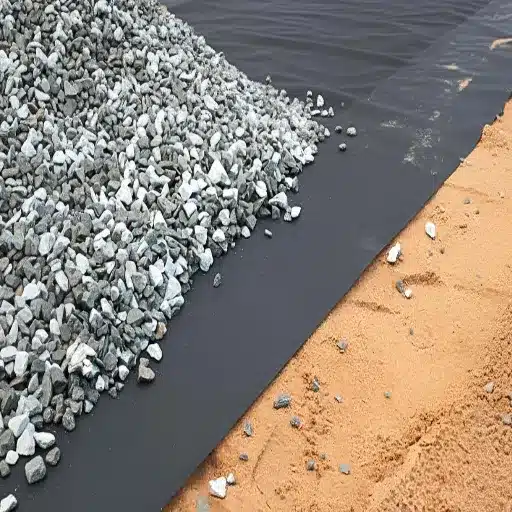
Geotextile Fabric has found broad applicability in construction and civil engineering applications, particularly as barriers between certain materials that must be stabilized. For example, when geotextiles are used to separate two layers of earth and a layer of aggregate, it is difficult to achieve different materials in one layer without mixing with outer layers, as it heavily influences the overall stability of the structure. Such instances can be witnessed at the construction of roads, wherein geotextiles can be used to limit the penetration of subgrade soil into the base aggregates, thus enhancing the roads’ durability and their bearing capacity.
Scholars carried out a study which showed that geotextile fabrics are capable of enhancing the durability of a pavement structure by approximately 50% and eventually reducing the maintenance expenses as well. The non-woven geotextiles’ contact zone is a very high-filtration area and can therefore be used to restrict the flow of water in drainage works or slope stabilization projects. Statistics about the industry show that roads that are constructed with geotextile fabric have a less pronounced occurrence of rutting or deformation of the subgrade, two factors that depict the performance of the road over a period of time.
Reinforcement synthetics that were manufactured for working under load on geotextiles are already in existence today. Modern materials can withstand high tensile stresses, as well as ultraviolet radiation and biological degradation, which is very important in cold continents or regions where the climate changes rapidly. There are many more reasons why using Geotextile Fabric is important because it enhances the endurance and life span of the structure constructed.
📌 Filtration and Drainage Applications
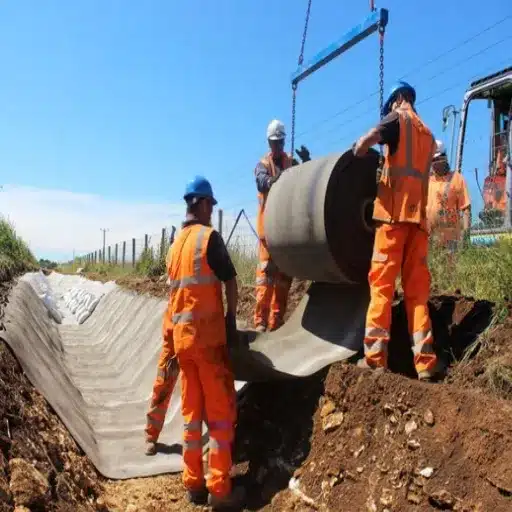
Geotextile Fabric serves as a separator that has been inserted in most of the drainage and/or infiltration systems to cover the soil or geotextile friction in order to minimize penetration of particles. In this perspective, these materials are invaluable in retaining wall constructions and embankments, pavements, drainage trenches, etc., as they allow water to effectively drain even the one surrounding area. Their various applications have found an increased demand with the upsurge in development of infrastructure, thus predicted to uplift the market between 2023 and 2030 at the rate of CAGR 10.3%.
Geotextile products these days are meticulously designed because their pore size reduction and filtering enhancement is also well understood. For instance, woven textile geosynthetics have particularly high tensile properties and therefore can be successfully applied in areas where there is a demand for this property, without a necessity for them, these high woven graded fabrics of non-woven geotextiles within will be poor filters no contraindication to that. Nowadays, technology allows to produce such pore sizes and thicknesses of fabrics, which in relation to the specified product, are advantageous, bearing in mind the use of each fabric.
Moreover, the utilization of Geotextile Fabric within drainage systems minimizes the clogging and pollution of the soil and also maintains low costs of maintenance, as suggested by influencing factors. These points point out the indispensable role geotextiles play in civil engineering functions associated with the reduction of costs, conservation of the environment and extending the life span of loading structures by preventing silting of the drainage canals.
📌 Reinforcement in Construction Projects
Geotextile Fabric is indispensable in the construction industry as it helps in bearing loads together with the soil and prevents structural displacements. The technique is gaining prominence since innovative geotextile materials are composed of high-strength fibers such as polyester and polypropylene for deployment in rather significant stresses and weather conditions. A 2023 article in Geosynthetics Magazine depicts that the use of geotextiles in roads has proven how relevant the materials are in that the longevity of roads being constructed with respect to the limits is increased by 50% which eventually gets rid of such costs. In this regard, more check dams and benches may also prove slope control increase, which naturally happens when geotextiles are used, and the figures published in the science show that slope control may increase by 30 percent when such material is present.
There are a few more ways in which a Geotextile Fabric may directly support sustainable development. It does so by reducing one’s reliance on other reinforcements and constructions that require intensive cut and fill earthworks and/or casting concrete; as a result, cause a reduction of carbon footprint. For instance, according to the International Geosynthetics Society (IGS), the use of geotextile allowed for a 40% reduction of materials typically integrated into green infrastructure. The benefits mentioned are seen as among the factors that are making geotextiles an important part in the design and renovation sectors these days.
Benefits of Geotextile Fabrics
✓ Enhanced Erosion Control
A geotextile is of vital importance in the management of soil erosion, especially in aerobic conditions like heavy rain, fast-moving water, or wind erosion. This structure of thin layer supports the topmost soil of the underlying base to keep the soil in flotation and to permit fine particles of such water. As such, it protects the surface from being worn away to certain limits. Recent scientific researches indicate the effectiveness of geotextiles in minimizing soil erosion to up to 75 percent and hence preserving landforms with desired beings. Furthermore, geotextiles also find their extensive use in the construction sites of shorelines, where they help to retain the shore, including curtains.
Consider, for a moment, this example: A certain amount of erosion is reduced by creating a history of ferries instead. For example, the erosion of the soil around the shed, where equipment is cleaned, was reduced by 90 percent using geotextile fabric. This is very much how geotextiles are used in construction sites, because they contribute to at least 60% reduction in erosion when used on engineering fill compared to erosion control measures. Another notable application of this fabric is in the highway industry as the creation of slopes, which shapes erosion processes, especially, and thus, some are traditionally quarters internal, allowing for the use of those materials. Geotextile Fabric is proven to be one of the most advanced methods of curbing soil erosion, which is used in almost all fields of human endeavors, such as construction due to the fact that it is robust, permissible and even economical.
✓ Improved Drainage Solutions
Modern drainage systems make extensive use of Geotextile Fabric owing to the advantages it offers in controlling water issues. This is because they enhance the drainage structure by allowing water drainage and at the same time, stopping soil and other particulates that could potentially be problematic. Systems with geotextiles are reported in the latest literature as being capable of extending the average lifetime of systems by more than 30 percent and reducing the frequency of repair and maintenance.
This category involves road structures wherein the sub-grade is drained by geotextiles so as to prevent water from entering and destroying the road. In the farming sector, draining is done to improve the aeration of soil or to prevent excessive wetting of those structures. Studies reveal that the usage of geotextiles maximizes drainage capabilities by up to 50%, particularly in clay areas, where the material can be used to overcome easy compaction. Additionally, such structures also include the building of retaining walls to enhance holding and control erosion, in addition to using geotextiles for stabilizing the soil while serving the drainage function.
Including Geotextile Fabric in drainage system designs has resulted in efficient and cost-effective benefits. This reflects what society expects – to have integrated solutions for dealing with the menace of water which is sweeping across every corner of the globe.
✓ Cost-Effectiveness in Construction
The constructiveness has increasingly moved towards looking out for innovative means and materials that would reduce the cost and enhance construction efficiency. Some specialists assert that the use of Geotextile Fabric widens structures’ life expectancy by 2 to 3 times, saving on the cost of repairs and maintenance. While implementing the use of geotextiles in road construction, it has been claimed that geotextile usage cemented road respectively opting out nearly a third of the materials, thus lowering reliance on gravel and sand. With the use of geotextile materials, these projects can be completed within the specific deadlines, because the geotextiles are very functional and simple to engage, thus minimizing the amount of labor required in extension of works.
The utilization of geosynthetics has gained immense popularity over the past few decades, such that 2027 will see the global geotextile market valued at $13.9 billion, which will represent a compound annual growth rate of 10.3% during the specified period. Geotextile Fabric could be termed as the most common in the civil engineering and construction industry, which translates to nearly a hundred percent increase in consumption within two years of its introduction into construction work. Based on the material’s popularity over the years and its extensive usage, the industry found better ways to cut on costs while still building the required facilities using the materials.
Frequently Asked Questions (FAQs)
Reference Sources
- 1
“An Introduction to Geosynthetic Engineering”
The readers are offered an exhaustive account of the most general terminology, the geographic potential of geosynthetics, and the implementation of the latest materials in the constructive environment within the framework of this article, based on civil engineering. The article will be useful to students and teachers in the field of geotechnics as well as fully practiced persons.
- 2
“Use of Geosynthetics within Civil Engineering”
This book helps to grasp the benefits of refined geosynthetic applications in civil engineering fields and is aimed toward practicing professionals as well as academic experts. It is highly recommended for studying the application of the material in the present-day works of civil engineering.