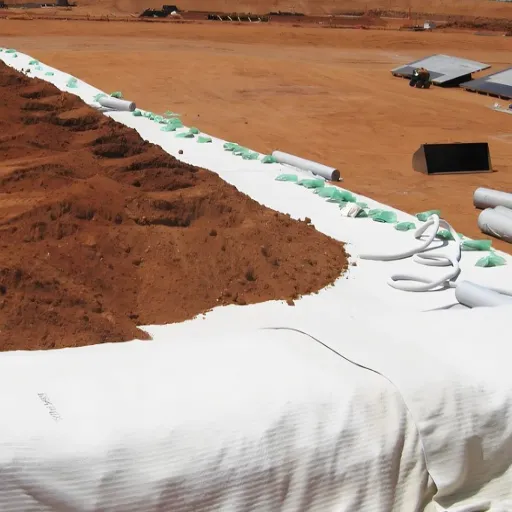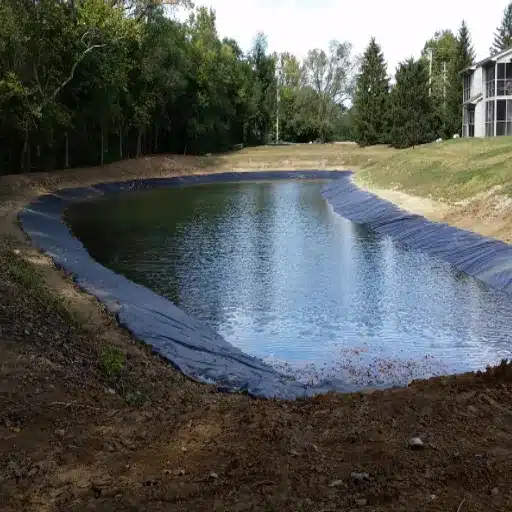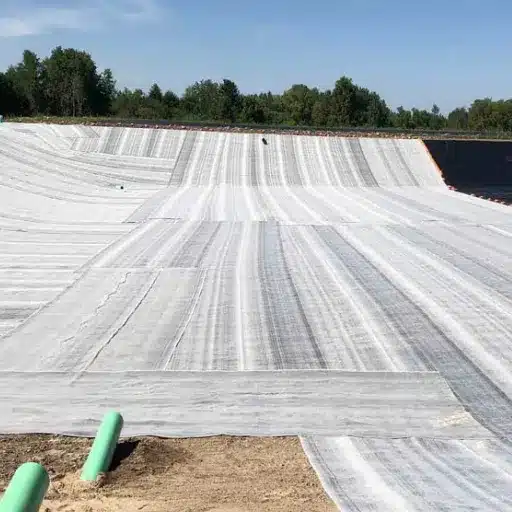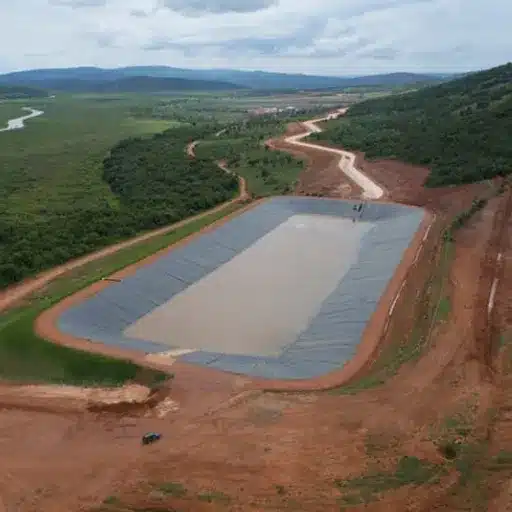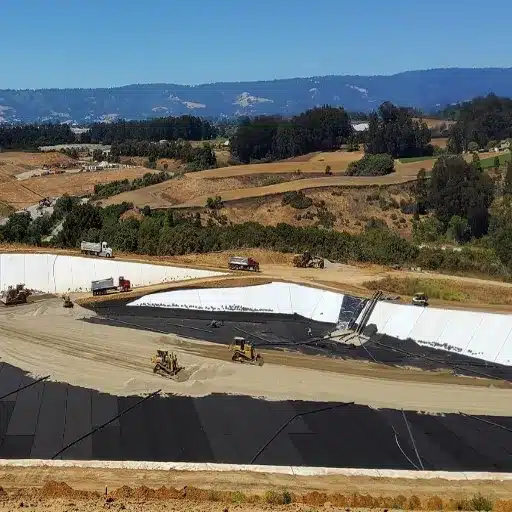
One of the railway embankments located in Chengdu showed differential settlement in 2023; the project engineers knew they had a huge problem on their hands. But doing nothing was not an option, because the soil neither had the strength to carry the ballast nor could it be reinforced using rigid means. So what did they do? They installed a warp-knitted geotextile that effectively covered the lumpy ground, along with providing enough tensile strength to distribute the force above the unstable soil. And, eighteen months down the line, the railway line position is checked, and it has stability, with no maintenance requirement whatsoever.
This is an example of how important Knitted Geotextiles and their applicable technologies can be to civil engineers as well as project managers. Even though it is common to find a focus on woven geotextiles in the market, knitted ones offer specific applications and benefits that are often missed in many specifications.
Those who would like to decide if Knitted Geotextiles are suitable for some particular applications presented in this guide. It explains the manufacturing process of these materials, the point at which the knitted fabric options are considered better than the woven options, and how to specify the same fabrics as per the standard specification.
What Are Knitted Geotextiles?
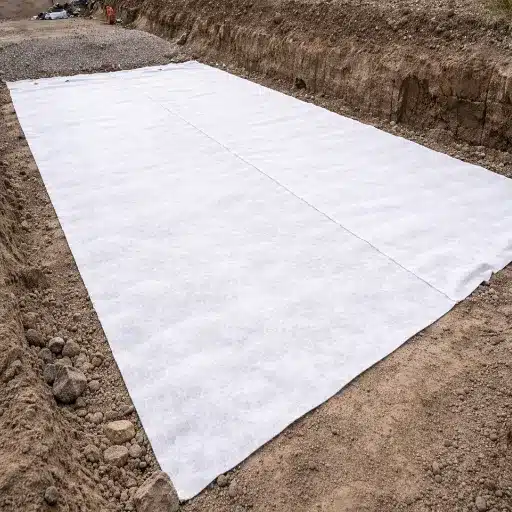
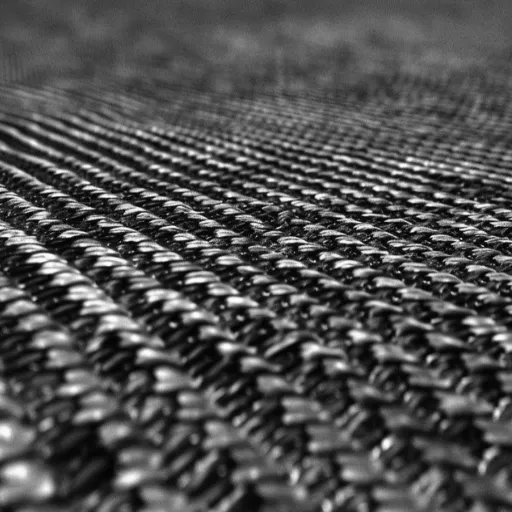
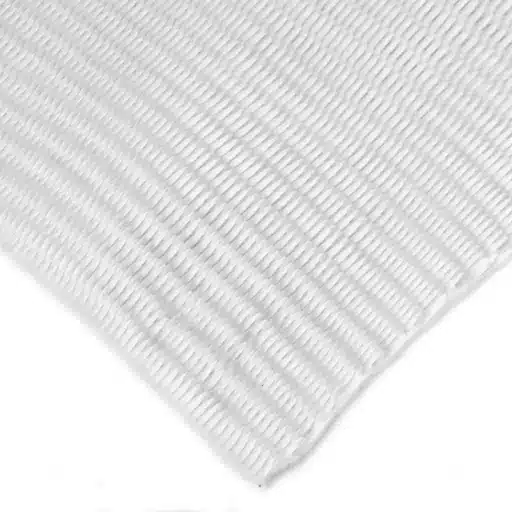
Knitted Geotextiles are those textiles that are produced by means of knitting instead of weaving or bonding. It can be distinguished from woven geotextiles, where warp and weft yarns are at a 90-degree intersection due to the presence of interlocking yarns in the form of loops for knitted geotextiles, which changes the mechanics of their internal structures.
Manufacturing Process
The principal manufacturing method used for the production of geotextiles is the Raschel knitting technique, mostly warp knitting. This is the principal method of manufacture for geosynthetics, whereas the construction method arises as follows:
- Warp yarns are being pulled or run lengthwise through the machine
- Put weft insertion in predominantly cross-directional yarns at various angles (0°, 90°, +45°, 45°)
- Constituent threads intertwine with the yarn layers to form the fabric structure
- Application of a coat of modified asphalt or polymeric materials for UV resistance and dimensional stability
This method of construction occurs when engineers refer to an ‘engin knit loop’ structure, which, similarly to sweater configuration, has been designed for load-bearing applications. The knit-loop structure offers a stretching and adapting function while retaining structural integrity.
Material Composition
Geotextiles knitted are the material manufactured normally from:
- High-tenacity polyester (PET) filament: High strength used in applications demanding dimensional stability
- Fiberglass (E-glass): Used in asphalt overlay reinforcement and requires low elongation
- Polypropylene (PP): Used in applications resistant to chemicals and filtration applications
This is the base material that would directly influence strength, elongation attributes, and resistance to chemicals.
Knitted vs. Woven Geotextiles: Technical Comparison
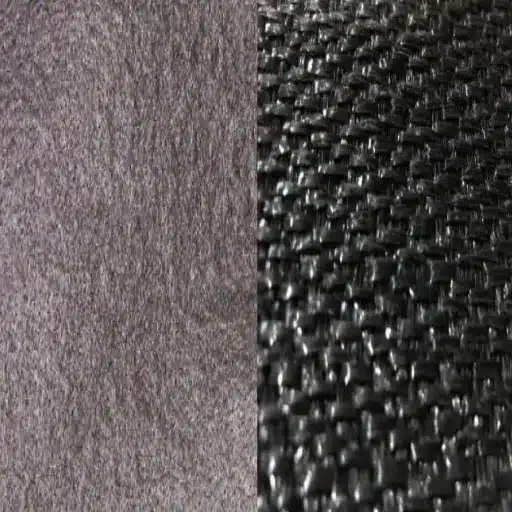
Understanding when to specify knitted over woven geotextiles requires examining their comparative performance across key engineering parameters.
Mechanical Properties
| Property | Knitted Geotextile | Woven Geotextile |
|---|---|---|
| Tensile Strength | 20-300 kN/m (customizable) | Higher tensile per unit weight |
| Elongation at Break | >50% (high flexibility) | <20% (low flexibility) |
| Tear Resistance | Exceptional | Moderate |
| Conformability | Excellent to irregular surfaces | Rigid, plastic-like |
| Weight | Lighter for equivalent strength | Heavier |
The most significant distinction lies in elongation characteristics. Knitted geotextiles accommodate substantial deformation without failure, making them ideal for applications where ground movement or irregular surfaces are expected.
Hydraulic Performance
Permeability: Generally, knitted geotextiles provide varying permeability based on the construction density. Such an open-loop structure could be designed for excellent drainage performance, although it may have less open structure compared with nonwoven alternatives.
Filtration: Their mesh-like structure makes knitted geotextiles particularly suitable for filtration applications, most notably when used for pipe-wrap systems to prevent soil intrusion while allowing the passage of water.
When to Choose Knitted Over Woven
Specify knitted geotextiles when your project requires:
- Surface conformability on irregular or curved terrain
- High elongation to accommodate soil movement
- Exceptional tear resistance for stress concentration points
- Lightweight handling for difficult-access installations
- Balanced biaxial strength for multi-directional loading
Conversely, woven geotextiles remain the better choice for applications demanding maximum tensile strength with minimal elongation, such as heavy-load road stabilization.
Key Engineering Applications
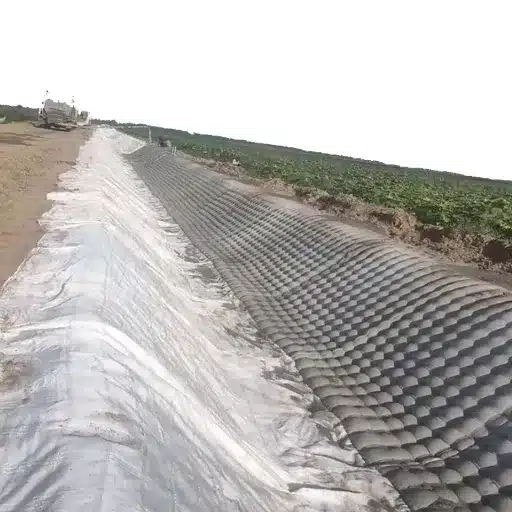
Soil Stabilization and Reinforcement
Knitted geotextiles are perfect in soil reinforcement applications, whereby flexibility and conformability are most important:
Steep Slope Stabilization: Up to 50 degrees of slope can be molded into steep cliffs using knitted geotextile as the reinforced component. The tensile longitudinal reinforcement happens here, with the fabric’s high elongation weight being elastomer, thereby enabling the geotextile to adjust to serious settlement problems without tension loss.
Railway Embankments: The knitted geotextile helps in the reinforcement of railway ballast over weak subgrades. It acts to break the dynamic loads and accommodate the settlement, often from the consolidation period.
Temporary Construction Roads: Lightweight knitted geotextiles can save additional transportation costs in remote or difficult access regions where temporary stabilization for construction vehicles is required. In this case, project data points to efficiency grading up to 30% in the construction of temporary roads.
Drainage and Filtration Systems
The primary historical application for knitted geotextiles has been pipe wrap filtration. In this role:
- The geotextile wraps perforated drainage pipes
- Soil particles are retained while water flows into the pipe
- The knitted structure prevents clogging better than some non-woven alternatives in certain soil conditions
Additional drainage applications include:
- Retaining wall drainage: Preventing hydrostatic pressure buildup behind walls
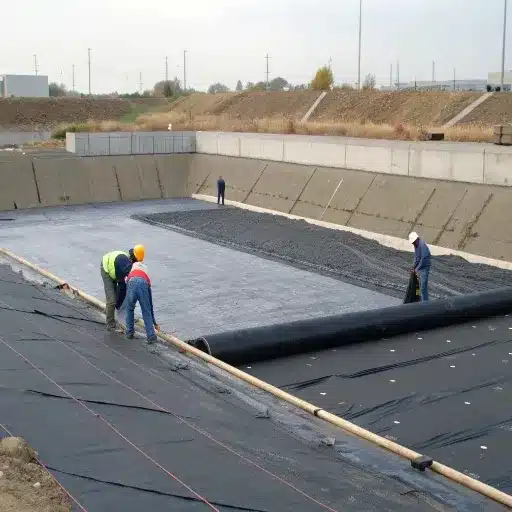
- Landfill leachate collection: Managing fluid flow in containment systems
- Roadway underdrains: Maintaining subgrade drainage efficiency
Erosion Control
This is because stitch-knitted geotextiles are capable of effective erosion control, especially when used in:
- Turf Reinforcement: Thus, allowing plants to establish, it also serves to stabilize the ground from washout at the time of establishment.
- Coastal and Riverbank Protection: It is also not affected by waves and fluctuating water levels, allowing soil to be prevented from being washed away.
- Environmental Restoration: This is especially true for biodegradable ones, wherein jute or coir is stitch-knitted into the structure, and when the vegetation is established, the fibre breaks down, leaving the required stabilization for the temporary period.
Composite Systems
Modern science is now using more composite geotextiles across a broader range of activities, with these combining:
- Knitted fabrics with high strength to serve as reinforcement
- Filtration and drainage provided by non-woven geotextiles
- Waterproofing through the use of hermetic geomembranes
Such materials thereby offer a relatively accomplished separation, filtration, and drainage-migration-burdening support effectively in a single installation, coupled with a significantly reduced operation cost and increased safety factor.
Technical Specifications and Standards
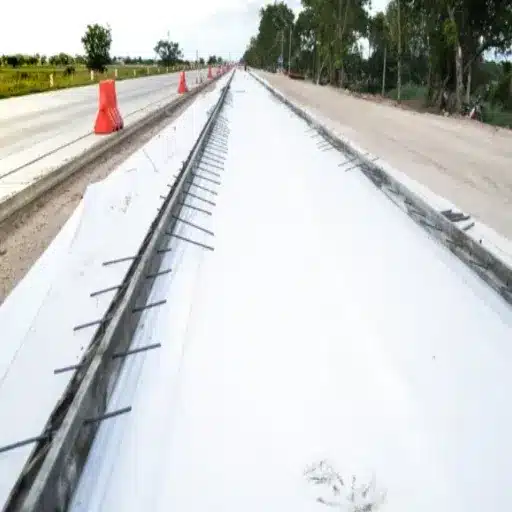
ASTM Standards for Knitted Geotextiles
An adequate specification needs to understand the tests that are suitable for knitted fabrics:
ASTM D4595 — Wide-Width Strip Tensile Test
This is the most favored test method for knitted geotextiles. The wide-width method differs from the grab test (ASTM D4632) test, which is NOT recommended for knit fabrics because:
- Uses 200 mm (8-inch) wide specimens
- Eliminates the neck-down effect, which is specific to knitted structures
- Accurately measures tensile, elongation, and initial modulus
- Correlates better with the actual field performance
ASTM D6707 — Knitted Geotextile Classification
This Standard Orient provides classification specifications exclusively for knitted geotextiles used in drainage applications. Under this, type A meets the minimum performance bit for those types of civil engineering projects, used knit and widen geotextiles.
Additional Relevant Standards:
- ASTM D4533: Trapezoidal tear strength
- ASTM D4751: Apparent opening size (AOS)
- ASTM D4491: Permittivity and flow rate
- ASTM D4355: UV degradation resistance
Typical Property Ranges
| Property | Test Method | Typical Range |
|---|---|---|
| Tensile Strength | ASTM D4595 | 20-300 kN/m |
| Elongation at Break | ASTM D4595 | >50% |
| Grab Tensile | ASTM D4632* | 400N minimum |
| Puncture Resistance | ASTM D6241 | 800N minimum |
| Apparent Opening Size | ASTM D4751 | 480 μm (varies) |
| Permittivity | ASTM D4491 | 1.0 s⁻¹ minimum |
*Note: Grab tensile values are commonly specified in municipal standards, though D4595 provides more accurate characterization for knitted structures.
Dimensional Specifications
Standard Widths: 1-6 meters (4-6 meters most common)
Roll Lengths: Minimum 50 meters; longer rolls reduce field seams
Thickness: Varies significantly based on yarn denier and knitting density
Grid Aperture (for open structures): 12.7×12.7 mm to 25.4×25.4 mm for reinforcement applications
Market Overview and Growth Trends
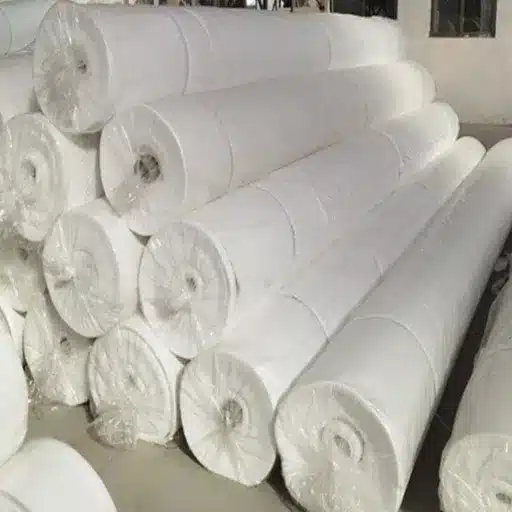
The global knitted geotextile market was valued at approximately USD 2.1 billion in 2024. Industry analysts project compound annual growth rates of 6.5-7.2% through 2033, with potential market size reaching USD 16.09 billion.
Market Position
Naturally, it is possible to trade a knitted geotextile among the smallest of all the products within the sector that are being seen as geotextiles.
- Non-woven geotextiles: 57-67 % market share
- Woven geotextiles: 28-45 % market share
- Knitted geotextiles: 5-15 % market share
However, compared to other types of geotextiles, knitted geotextiles have found niche applications that require their unique combination of flexibility and strength, even premium positioning notwithstanding.
Growth Drivers
Several drivers have paved the way for the market expansion:
Infrastructure Investment: Federal and state spending on roads, railways, and coastal defense projects brings sustained long-term demand for high-performance geosupports.
Multi-Layer System Specifications: The current trend in engineering is toward composite systems that perform multiple functions under a single structure. Consequently, geotextiles knitted, as well as reinforcement layers, will increasingly be discretely specified into these integrated systems.
Sustainability Requirements: The capability to include biodegradable knitted options (natural fiber-based) with environmental restoration project requirements is rather important.
Regional Growth: At the present time, the Asia-Pacific region dominates the marketplace, accounting for 35-40% of all orders based on the immediate need to produce urbanization in China and India. At the moment, the North American and European zones have focused on the projects with high specifications and compliance with regulations.
Selection Guidelines for Engineers
Decision Framework
When evaluating whether knitted geotextiles fit your project, consider these factors in sequence:
1. Subgrade Conditions
- Irregular or uneven surfaces favor knitted geotextiles
- Highly deformable soils requiring elongation capacity indicate knitted construction
- Smooth, stable subgrades may allow woven alternatives
2. Loading Requirements
- Heavy static loads (paved roads) may require woven geotextiles
- Dynamic loads with settlement potential (railways) often benefit from knitted flexibility
- Moderate loads on difficult terrain favor knitted solutions
3. Hydraulic Performance Needs
- Primary drainage applications may favor non-woven or specifically engineered knitted constructions
- Filtration with moderate reinforcement needs aligns well with knitted properties
- Pipe wrap applications historically specify knitted geotextiles
4. Installation Constraints
- Remote sites with difficult access benefit from lightweight knitted fabrics
- Complex geometries (curved surfaces, steep slopes) require knitted conformability
- Large-scale flat areas may be optimized with woven alternatives
Specification Checklist
Before finalizing your knitted geotextile specification, verify:
- Tensile strength meets or exceeds design loads (reference ASTM D4595)
- Elongation at break matches project deformation expectations
- Permittivity satisfies drainage requirements for soil conditions
- UV resistance adequate for expected exposure duration
- Width and roll lengths optimize installation efficiency
- Seaming methods compatible with field conditions
Need assistance specifying the right geotextile for your project? Request a technical consultation with our engineering team to review your subgrade conditions and loading requirements.
Installation Best Practices
Site Preparation
Proper site preparation ensures knitted geotextile performance:
- Clear the installation area of debris, vegetation, and sharp objects
- Grade surfaces to design elevations, leaving minor irregularities that knitted fabrics accommodate better than woven alternatives
- Compact loose soils to provide uniform support
- Inspect for protrusions that could damage the fabric during installation or service
Handling and Placement
Knitted geotextiles offer handling advantages due to their lighter weight:
- Use appropriate equipment to unroll fabric smoothly
- Minimize wrinkles while allowing some accommodation of surface irregularities
- Overlap seams according to manufacturer specifications (typically 30-45 cm for sewn seams)
- Anchor trenches at slope crests to prevent fabric migration
Seaming Methods
Common seaming approaches for knitted geotextiles include:
- Sewn seams: Provide the highest strength for critical applications
- Heat bonding: Suitable for compatible synthetic materials
- Overlapping: Adequate for non-critical separation applications
Quality Control
Inspection checkpoints during installation:
- Verify fabric type and roll identification against specifications
- Check for shipping or handling damage before placement
- Document seam locations and methods
- Photograph critical areas before covering
- Test seam strength if required by project specifications
Conclusion
Knitted geotextiles are a niche aspect of geosynthetic applications, but a very important niche. The main reason being that they have high elongation, excellent tear strength, and the ability to conform to surfaces. These characteristics make them ideal for certain engineering applications where woven textiles are not an option.
Key takeaways for your practice:
- Specify knitted geotextiles when projects require flexibility, high elongation, or conformability to irregular surfaces
- Reference ASTM D4595 (not D4632) for accurate tensile testing of knitted fabrics
- Consider knitted fabrics for pipe wrap, steep slope stabilization, and railway applications
- Evaluate composite systems that combine knitted reinforcement with non-woven filtration layers
- Factor handling efficiency and installation speed into the total project cost analysis
The Chengdu railway project mentioned at the start of this guide exemplifies how proper material selection based on technical understanding delivers long-term performance. When your projects demand geosynthetic solutions, understanding these distinctions enables specifications that match material properties to engineering requirements.
Ready to specify knitted geotextiles for your next project? Contact our engineering team to discuss your technical requirements, request product datasheets, or obtain a customized quotation for your specification.
Related Resources
Shanxi Shengxing Building Materials Sales Co., Ltd. supplies high-quality knitted, woven, and non-woven geotextiles for civil engineering and environmental applications worldwide. Our technical team provides specification support to ensure optimal material selection for your project requirements.