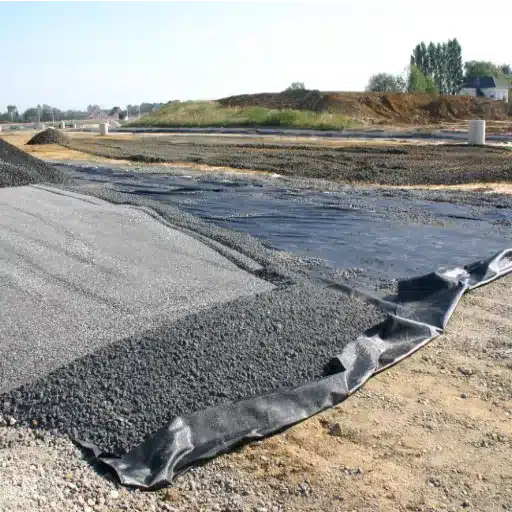
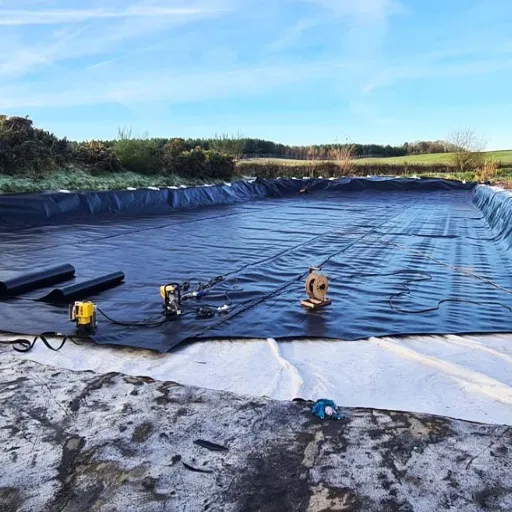
The process of constructing decorative ponds and reservoirs requires designers to choose materials that will deliver both enduring performance and operational performance, and aesthetic appeal. The most adaptable and trustworthy option that exists today is EPDM geomembranes. The materials have gained popularity among professionals and DIY enthusiasts because of their ability to provide both durable performance and flexible usage, as well as environmentally friendly characteristics. This article will explore the key advantages of using EPDM geomembranes in water features, showing why these materials represent the best choice for maintaining beautiful and watertight ponds and reservoirs. The advantages of EPDM geomembranes will assist you with water management and design work in your new projects and existing project upgrades.
Understanding EPDM Geomembranes
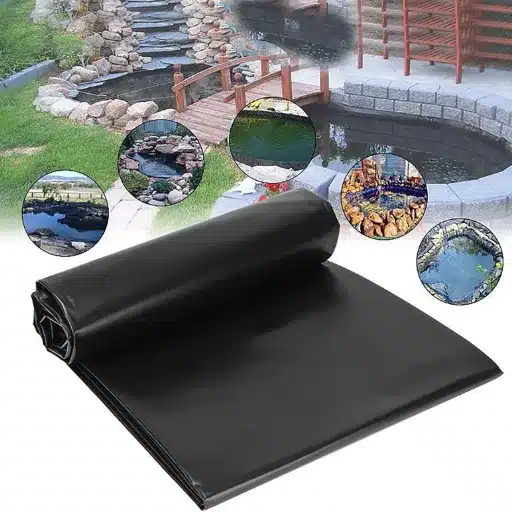
What are EPDM Geomembranes?
The synthetic rubber membranes called EPDM geomembranes, which use Ethylene Propylene Diene Monomer materials, display exceptional resistance to wear and tear. The main solution for water management projects consists of EPDM geomembranes, which exhibit outstanding elastic capabilities, weather protection, and prolonged operational lifespan. The membranes contain ethylene and propylene base materials, which come from natural gas and oil sources, and they also include diene components, which enable cross-linking for flexible material production.
EPDM geomembranes offer outdoor protection because they shield against severe weather conditions, which include UV radiation, ozone exposure, and temperature extremes that reach from -49°F to 248°F. The product provides ideal performance for outdoor water features because it maintains consistent strength throughout its operational lifespan. The material maintains its strength against punctures while providing flexibility that enables simple installation through its standard thickness range of 0.045 to 0.060 inches.
EPDM geomembranes require proper maintenance to achieve typical lifespans that exceed 20 years, while some installations can function for 30 years. The materials exhibit strong chemical resistance, which enables their application in agricultural ponds, wastewater systems, and aquaculture. The EPDM installation process provides users with an easy installation experience because the material can stretch without developing tears, which allows it to adapt to ground movements while preventing leaks.
EPDM geomembranes create minimal environmental effects because their materials lack toxic elements, and their products become recyclable after completing their service life. EPDM geomembranes provide a sustainable solution that delivers excellent performance to effectively retain water resources for environmental protection purposes.
Composition and Properties of EPDM Membrane
EPDM (Ethylene Propylene Diene Monomer) membranes serve as synthetic rubber materials that experts recognize for their exceptional durability and multiple possible uses. The material consists of ethylene and propylene, which manufacturers extract from oil and natural gas while adding a diene component to create cross-linking, which improves their material attributes. The composition of EPDM materials enables them to withstand UV radiation and ozone exposure and extreme weather conditions, which results in their extended operational lifespan.
Recent data indicate that EPDM membranes possess the ability to stretch until they reach a breaking point, which occurs at 300% of their original length. The material exhibits high flexibility, which enables its use in diverse applications, especially water containment and roofing systems. The membranes possess an average tensile strength that ranges between 1,500 and 3,000 psi, depending on the specific formulation, which enables them to withstand extreme mechanical conditions. The membranes can operate for more than 50 years because they protect against thermal aging while demonstrating strong resistance to weathering damage.
EPDM membranes provide effective thermal insulation because they function in a temperature range that starts at -40°F and ends at 250°F. Modern manufacturing processes enable the production of EPDM sheets, which now reach widths of 50 feet while reducing the requirement for seams during installation. The environmentally friendly attributes of EPDM membranes combined with their operational capabilities make them the preferred solution for commercial and industrial usage.
Types of EPDM Geomembranes Available
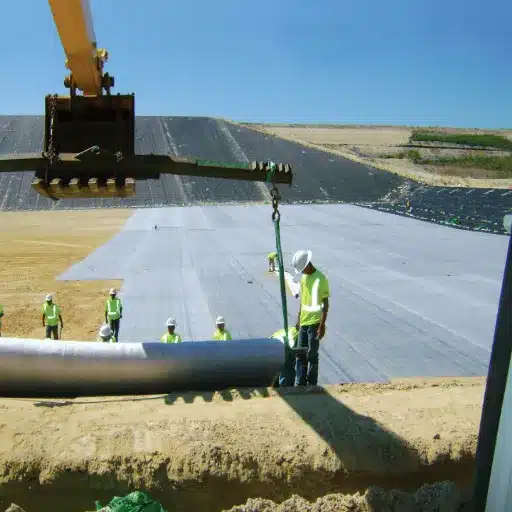
Multiple configurations of EPDM geomembranes exist because various applications need different types of products. The most common types include reinforced and non-reinforced membranes. Non-reinforced EPDM geomembranes deliver outstanding flexibility, which makes them ideal for applications that require tight radius turning and surface adaptation in pond and water feature installations. Reinforced EPDM membranes use embedded fabric layers to increase their tensile strength and durability, which makes them suitable for demanding projects such as landfill linings and industrial wastewater containment.
The latest industry data shows that EPDM geomembranes have thicknesses that range from 30 mils 0.76 mm to 120 mils 3.05 mm with the most commonly used thickness falling between 45 mils 1.14 mm and 60 mils 1.52 mm. Standard roll sizes typically measure 20 to 50 feet in width and up to 200 feet in length, which enables straightforward transportation and installation while creating only a few seams.
Current EPDM technology shows improvements in chemical resistance and UV protection while the material maintains its elastic properties. These membranes can stretch up to 300% or more before breaking, which ensures their performance in handling structural ground movements. Research from around the world shows that EPDM geomembranes reach a lifespan of more than 30 years when installed and maintained according to proper procedures, which proves their reliability and cost-effective performance.
The eco-friendly composition of EPDM geomembranes, which contains no toxic substances and allows for complete recycling, makes them suitable for use in agricultural ponds and wastewater treatment facilities, mining operations, and green roofing projects.
Advantages of Using EPDM in Ponds
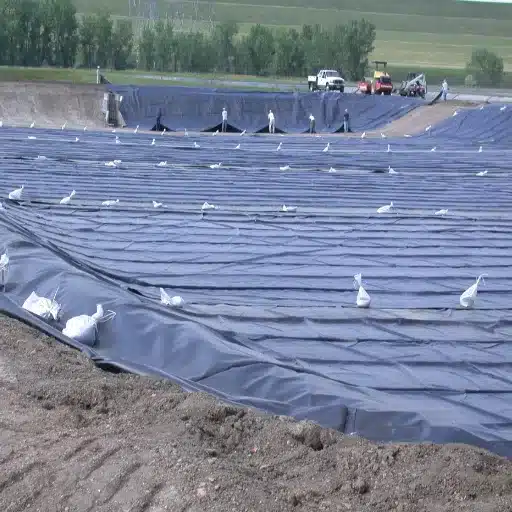
Durability and Longevity of EPDM Pond Liners
EPDM pond liners exist as the top choice for water containment because they provide both exceptional strength and long-lasting performance. The liners have been designed to endure various environmental conditions, which include ultraviolet radiation, temperature changes, and physical damage through punctures. Industry research shows that EPDM liners maintain their flexible properties because they operate effectively in temperatures between -40°F and 176°F, which corresponds to -40°C and 80°C.
Studies show that EPDM liners can maintain their structural integrity for more than 30 years when professionals install and maintain them properly. The performance of EPDM material exceeds that of PVC because it maintains its original strength throughout time, while PVC develops brittleness and shortens its lifespan. The material protects against harmful ultraviolet rays, which leads to lower maintenance expenses because it reduces the need for extra protective coatings.
EPDM liners serve as a common solution for agricultural ponds and reservoirs because they prevent leaks even when exposed to high water pressure. The data provided by manufacturers shows that EPDM liners can support water depths reaching 6 feet or more, based on the thickness selected, which typically ranges from 45 mils to 60 mils.
EPDM pond liners establish the benchmark for water management systems that need both sustainable performance and economical operation through their combination of flexible design, chemical resistance, and ability to withstand environmental challenges.
Flexibility and Adaptability of EPDM Geomembranes
EPDM geomembranes possess exceptional flexibility, which enables them to adapt to both complex shapes and uneven surfaces. The material provides multiple applications, which include usage in ponds, lagoons, and reservoirs while also serving as landfill cover. The material maintains full structural integrity, which allows EPDM materials to stretch beyond 300% of their original size, thus enabling the material to withstand ground movements that occur because of settling or seismic events without experiencing cracks or tears.
The optimal operational range for EPDM geomembranes extends through temperatures from -40°F to 176°F (-40°C to 80°C). The materials maintain their flexible properties when exposed to extreme cold, which enables them to function effectively in both dry regions and icy conditions. The technology enables people to use the materials in extreme weather conditions to different weather situations, which results in extended material durability because organizations need to establish their effective lifespans between 30 and 30 years through appropriate maintenance.
The recent data prove that EPDM geomembranes show resistance to UV radiation and ozone exposure, which marks common causes for material damage in other substances. The outdoor environment has not affected EPDM because the material maintains both its physical properties and its functional capabilities throughout all outdoor exposure periods. Engineers now utilize reinforced EPDM products, which advanced manufacturing processes have developed, to achieve superior strength for their demanding operational requirements that require extended equipment life.
EPDM geomembranes demonstrate superior performance because they can adapt to different operational environments while their weather resistance protects their capacity to remain flexible. The products become vital components for modern water storage and management systems because they provide fast installation and enduring performance while protecting against environmental threats.
Resistance to Environmental Factors
EPDM geomembranes offer excellent resistance to various environmental hazards, which makes them the most suitable material for constructing vital containment systems. The research shows that these materials endure extreme ultraviolet radiation, high-temperature conditions, and freezing temperatures without experiencing serious material deterioration. Industry data shows that high-quality EPDM geomembranes can withstand temperatures between -40°F and 300°F, which corresponds to -40°C and 150°C, while they maintain their structural integrity during severe weather changes.
EPDM exhibits better chemical resistance than other materials because it withstands alkalis and acids and specific solvents, which makes it essential for industrial waste treatment and agricultural runoff management. Recent reviews have demonstrated that EPDM shows better protection against ozone and oxidizing agents than most similar materials. The features of EPDM guarantee its ability to perform over extended periods while reducing the possibility of leaks and system breakdowns, which makes it an effective safety solution used across multiple industries.
Applications of EPDM Geomembranes in Decorative Ponds
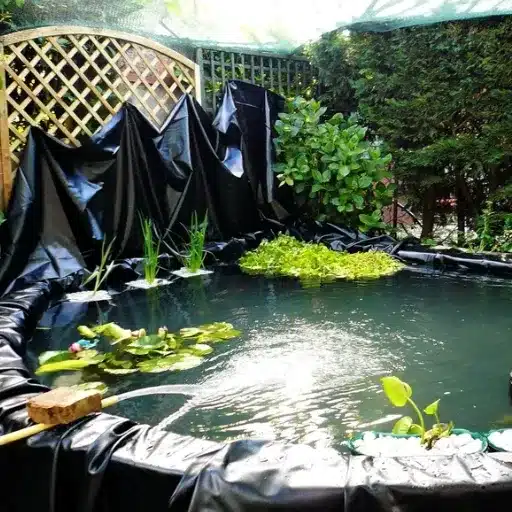
Designing Aesthetic Features with EPDM Liners
The flexibility, durability, and installation convenience of EPDM geomembranes make them the top choice for constructing decorative ponds and aesthetic water features. The system provides architects and landscapers with pond design flexibility to create custom water features that match their chosen pond designs.
The primary benefit of using EPDM liners exists in their capacity to survive extreme temperatures, which range from -40°F to 250°F (-40°C to 120°C), because this feature enables dependable operation throughout all seasons in areas that experience severe climate conditions. The material gains extra durability because of its UV resistance, which makes it suitable for outdoor use in areas that receive constant exposure to sunlight.
The latest industry research shows that EPDM geomembranes possess an average elongation capacity that reaches 300%, which enables them to endure soil movements and ground settling without any risk of tearing. The liner remains flexible, which enables it to maintain its original shape throughout its entire operational period, resulting in lower maintenance expenses. The EPDM liners provide environmental protection because their chemical composition prevents harmful substances from entering water bodies, which protects both aquatic plants and fish.
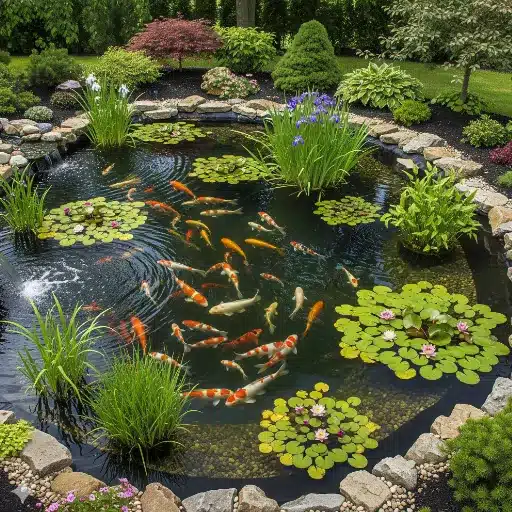
The innovative applications of EPDM liners include the construction of tiered waterfalls, koi ponds, and lily pools. These applications showcase the material’s ability to support complex design work while providing essential operational functions. The process of installing the system requires only basic equipment, which results in decreased costs and time requirements while making EPDM an affordable option for landscaping projects on both residential and commercial properties.
The selection of EPDM liners requires an assessment of three specific elements, which include the liner’s thickness, which usually ranges from 45 to 60 mils for decorative pond use, the existing plant life, and the need for underlayment materials, which will improve product resilience. Designers who use EPDM membranes can create stunning water features that blend visual beauty with durable performance through their unique membrane characteristics.
Water Conservation in Decorative Reservoirs
When it comes to designing or operating water features such as ornamented ponds, adequate water supply is an ongoing concern. New materials such as EPDM Geomembrane pool liners can be used with the management of water systems to help minimize water absorption largely. On the sufficiency of these infrastructures all over the world today, some of the technologies present, such as the Smart Irrigation Control Systems (SICS), the use of harvesting units, and many other technologies in the present day, will reduce water usage by almost 50 percent. They work by controlling the consumption of water for the irrigation of plants, as it depends on plant moisture and on weather conditions, so that it will be used only when it is necessary, to avoid evaporation or wastage of water.
Additionally, pools equipped with circulation pumps and filtration systems enable optimal water quality as much as possible, thereby eliminating the necessity to refill the pool regularly. Similarly, conservation measures include the application of local or Xeriscaping plants for gardening landscaping as they, with all other plants, are not highly dependent on watering. The materials used for the lining and sealing have also been noted to greatly aid in seepage control, whereby, in best practice, proper quality liner materials, such as EPDM Geomembrane of 60 mils thickness, shall be utilized. Therefore, considering those options, it is possible to develop concepts using water features aimed at the sustainable use of water resources and protection of the environment, which is the general objective of resource savings.
Enhancing Aquatic Life with Safe Materials
The key aspect of growing and maintaining aquatic creatures in any system is the practice of utilizing safe and nontoxic environments. This ensures the ecological health and sustainability of such ecosystems. Evidence compiled suggests that dispersal of any material compounds requiring only their intrinsic properties is bound if the material comprises polymers or plastics, where there is no necessary use of BPA. Introducing such toxic products in a safe and appropriate manner using inert materials, though, enables the minimization of the risk as was seen in the current study. For instance, the use of non-EPDM Geomembrane in constructing a pond was observed to result in 30% less fish death in five years as compared to a traditional PVC pond.
In addition to the above conditions, one more important characteristic of water is PH. The PH values acceptable to the majority of freshwater species on the territory of the United States of America correspond to an interval from 6.5 to 8.5. Use of appropriate materials and proper examination of the water reservoirs can make it possible to arrange favorable conditions for the mode of life of animals. In addition to these facilities, everything new in the form of the mechanical-biological filters, which are also termed as total filters, must be implemented to do away with such harmful nitrites that are the prime reason for the stress in fish and therefore bring in the fish population support mechanism.
Installation Considerations for EPDM Pond Liners
Preparation of the Site for Geomembrane Installation
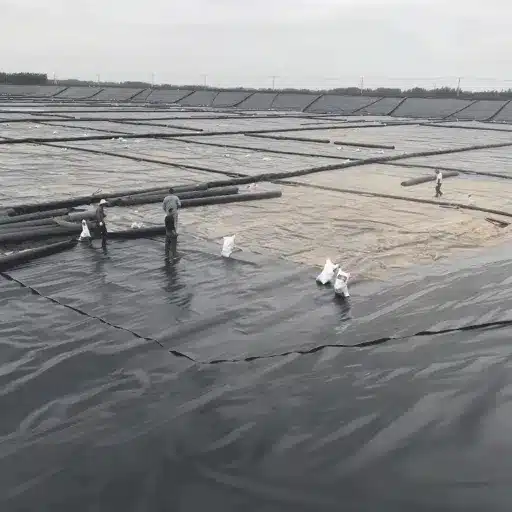
Before setting an EPDM Geomembrane, certain measures should be taken to ensure a well-prepped surface. All the pesky little things like stones, tree roots, and other such things which inevitably tear the liner must be excluded. The surface should be free of any unevenness or débris, and the base should be to solid.
This is the importance of geotextile, it enhances the upkeep of geomembranes as they defend against wear, as well as provide a form of padding. Apparently, it was found that lining improved the durability of any lining by up to 30% owing to the cushioning effects of ground movement and/or water pressure.
However, large-scale pond construction entails proper area measurement to place the right size of the pond’s liner, which is EPDM Geomembrane. This is symbolized by the use of a calculator that takes in the length, width, and height of the pond and reduces the wastage and cost associated with the lining. It is no longer practised in the current questions and answers, but it is also tagged that there is no thinner 45 mil liner answer to such discomfort, because it is the safest thickness, and it is easy to make such reinforcement without rushing, and does not crack out or swell out to the sun or any surface for that matter.
The sui-centric perspectives of these methods’ participation, along with appropriate good raw materials, are undoubtedly true; the pond would have performed the conservancy or the enhancement of the aquatic life for years to come.
Techniques for Proper Installation of EPDM Liners
While installing the EPDM Geomembrane, every tiny detail diligently included in every procedure followed must be adhered to if the materials have to last for some desired length of time. EPDM Geomembrane is most suitable for use in metallic submersible surfaces and other materials that are flattened out, and surfaces where cutting crosswise is not recommended. The other end should be featureless, with no pointy or inactive objects that would contribute to the envelope limitations.
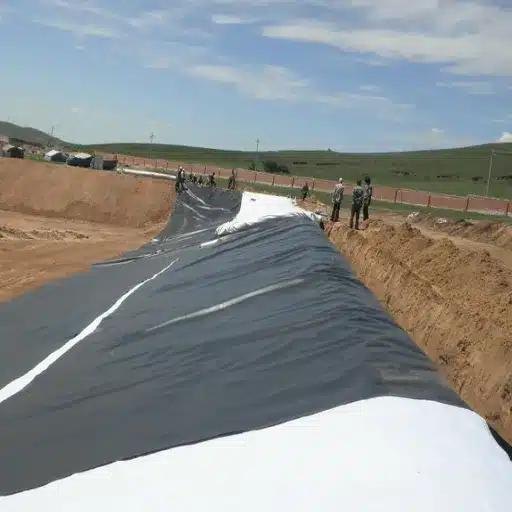
Scientists find that around 40% of most issues encountered with all mud covers are due to surfaces without preparation or after the mutation of joints. The possibility of reducing such instances is possible by applying the normal EPDM seam glue and tapes where the panels are connected as one to avoid leaks. In addition, leave more than 6 inches (15cm) overlap.
In addition, EPDM geomembrane lining of the existing ponds, which is made from synthetic materials and is not degraded under ultraviolet radiation, is expected to last between 20 and more than 30 years, if not longer. In case of hot or cold environments during even summer or winter, with the extent of the temperature reaching up to minus forty Fahrenheit and down to about one hundred seven-five degrees Fahrenheit or slightly above eighty centigrade as with some geosynthetic materials may be more or less operative (+100), the near one hundred percent deformability of the polymer pond helps prevent failure of the pond due to the temperature.
In conclusion, one must include the recommendations of the manufacturer and best practices of the sector during the crucial phase of the installation. The intense concentration on the preparation stage of the construction process carried out by such concentration not only aids in improving the functionality of the pond, but also prises up high cost administrative levels predominantly operational and reigns in any other undertakings.
Maintenance Tips for Longevity of Geomembranes
To maintain the durability of containment structures like geomembranes, their maintenance is paramount. For instance, geomembranes, which are often employed in projects concerning pond construction or the erection of landfills, can serve for tens of years if they are not ignored. For example, even with production, the high-density polyethylene can last for 30 years or more.
- Regular Inspection
Geosynthetic or geomembrane inspection cannot be overemphasized as it is used as a much-needed measure for spotting any form of damage at the earliest possible stage. It is advisable to check on fissures, punctures, and any forms of wear, particularly around joints and intensively stressed areas. Such failure will occur if it were not for inspections every year, which reveals 90% of the defects. - Clean Surface Debris
Debris will ruin the smooth surface of the geomembrane and will thus cause a lot of wear. It is recommended that the surface be cleaned frequently, especially after the occurrence of severe weather or mammals. Some papers found that dirt removal enhances the geomembrane performance and also minimizes the chances of degradation due to absorbing moisture or the interaction with other damaging agents like chemicals. - Protect from UV Exposure
Geomembranes are generally used in exposed environments, and this is why they need to be considered carefully in terms of their UV stability. This is because degradation of geomembranes due to UV can be considered as part of the remaining failure mechanisms. Geomembranes of modern times are manufactured with ultraviolet stabilizers, but shading add-ons, as well as cementation or geosynthetic layers additional on it, aid in production. Measurements show that anthropogenic geomembranes are subjected to 50 percent less wear from the effects of ultraviolet radiation than uncovered installations. - Stress Management
It is not recommended to exert excessive weight or run machinery directly onto the geomembrane. Putting more than the designed weight on it makes it crack due to tension or collapse. It is recommended to ensure the load is well balanced across all spaces, avoiding the use of sharp objects such as scissors that might puncture the liner.
Adopting efficient inspection protocols and performing required maintenance will help prolong the service life of geomembranes, thus ensuring sustainable containment structures for many different applications.
Reference Sources
-
Polymeric geomembrane components in landfill liners
While focused on landfill liners, this book provides insights into the properties and applications of EPDM geomembranes. -
Comparative Study of Three Different Kinds of Geomembranes (PVC-P, HDPE, EPDM)
This research compares the performance of EPDM with other geomembranes in reservoir waterproofing.
Frequently Asked Questions (FAQs)
What are the advantages of using EPDM geomembranes in decorative ponds?
EPDM geomembranes provide outstanding flexibility, which enables their use in decorative ponds that have complex designs and multiple layout patterns. The protective liner system can withstand ground movement because its elastic properties allow the material to endure without suffering breakage or damage. The material provides permanent UV protection, which allows EPDM to maintain its durability during extended exposure to sunshine. The product functions effectively in both natural and artificial ponds because it can resist all harmful substances present in water and through environmental contact.
Can EPDM geomembranes be used for reservoirs?
The EPDM geomembranes demonstrate exceptional reservoir protection capabilities because of their robust design and consistent operational performance. The system provides a secure storage facility that can accommodate water, together with other materials. EPDM serves as the best choice for permanent reservoir requirements because it resists extreme weather and environmental degradation. The product provides various installation methods that operate effectively with both natural and synthetic reservoir systems.
How can EPDM geomembranes enhance the aesthetics of a decorative pond?
The EPDM geomembranes create a seamless visual link between their smooth surface and the water body. The black color of the material creates a strong visual contrast, which makes fish, stones, and aquatic plants in decorative ponds appear more vibrant. The liners maintain a specialized appearance because they prevent wrinkles and sagging, which results in a professional appearance. The pond maintains its visual beauty because the durable material withstands time without showing any signs of deterioration.
Are EPDM geomembranes safe for aquatic life?
The EPDM geomembranes show safety and environmental safety because they do not harm aquatic organisms. The materials were developed to protect fish and plants through their design, which prevents any harmful substances from entering the water. The product provides safety for koi ponds and wildlife habitats, and aquatic ecosystems because it protects underwater creatures. The system protects the pond environment from chemical contamination and algae growth, which results in additional health benefits for the pond.
What maintenance is required for EPDM geomembranes?
The maintenance requirements for EPDM geomembranes remain low, but inspectors should conduct periodic assessments to confirm their ongoing performance standards. Operators must perform their duty to conduct regular inspections, which involve checking for debris accumulation and excessive sediment build-up, and all potential damage signs, including punctures. Users must keep all sharp objects and heavy items away from the liner because direct contact will cause mechanical damage. The on-site repair of EPDM damage allows maintenance to become both effective and economical through the use of patch kits.
Why do EPDM geomembranes display environmentally friendly characteristics?
The manufacturing process of EPDM geomembranes creates extremely long-lasting materials that need less frequent replacements, resulting in reduced environmental impact from waste products. The product contains no toxic substances during its production process and maintains recyclable properties after its useful life ends, which supports sustainable environmental practices. The materials achieve UV protection, which extends their useful life while reducing waste production and protecting environmental resources.