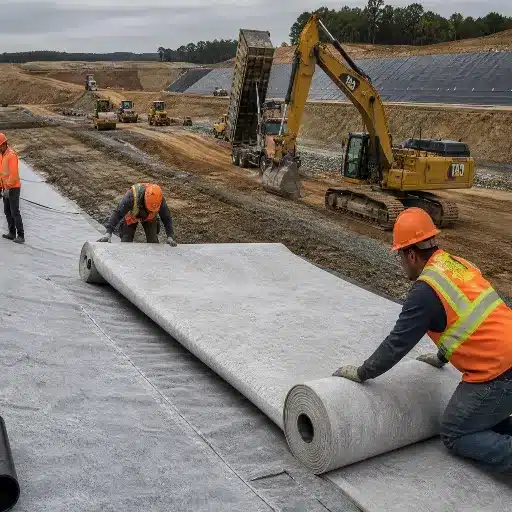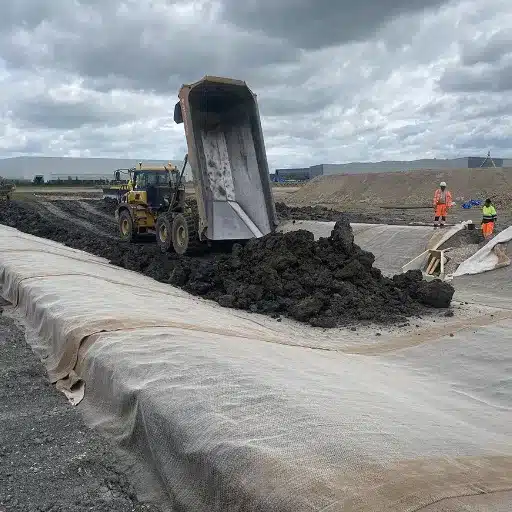
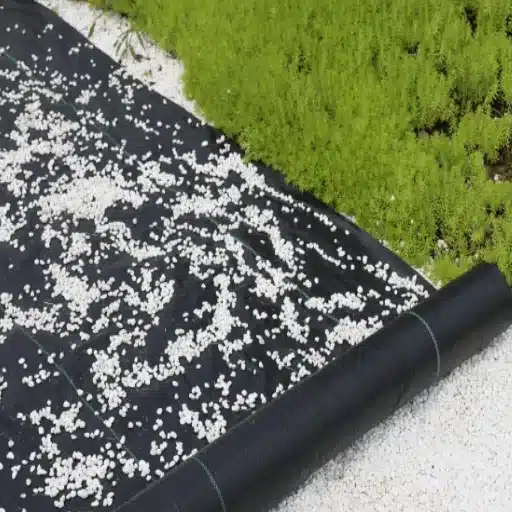
Geotextile fabric serves as a synthetic material that allows water to pass through it while being used to create a protective layer that secures soil. Engineers select either woven geotextiles, which provide soil reinforcement, or nonwoven geotextiles, which enable filtration and drainage according to specific project needs.
Last year in Southeast Asia, a geotextile fabric that lacked proper specifications cost one infrastructure contractor approximately $180,000 in rework expenses. The project team had selected a lightweight woven geotextile for a subsurface drainage system. The fabric became blocked after a six-month period. The water started to accumulate. The base of the road collapsed. The root cause was not a manufacturing defect. It was a specification mismatch.
The civil engineer, project manager, and procurement buyer all face identical decision-making situations. The geotextile fabric market will achieve a value of $15.8 billion by 2033, but material selection depends on knowledge about technical aspects, which include fiber type, fabric construction, ASTM compliance, and installation protocol.
The guide eliminates all unnecessary elements. The guide explains how geotextile fabric operates while teaching you when to use woven materials and nonwoven materials, and how to interpret ASTM and AASHTO standards, and which installation errors lead to field outages. You will acquire a practical system for selecting geotextile fabric, which will enable you to make confident fabric choices.
Key Takeaways
- Geotextile fabric, meaning textile for threads-woven by the gravure process, is a synthetic material through which water can pass perfectly while separating articles on the most opposite and least permeable surfaces.
- Woven geotextile delivered a very high tensile strength (20-400 kN/m) for soil reinforcement, while nonwovens offered superior permittivities (0.5+ sec-1) for filtration and draining applications.
- Five primary functions are present in any geotextile material: separation, filtration, drainage, reinforcement, and erosion control, each requiring a different fabric specification.
- Preferably, using ASTM D4439 and AASHTO M288 guidelines, the specification should signify more than weight or cost per square meter.
- Most of the field failures were discovered during installation mistakes, which were limited overlay in soft soil, prolonged exposure to UV radiation, vibratory compacting on weak sub-grades, and contaminated aggregates.
What Is Geotextile Fabric?
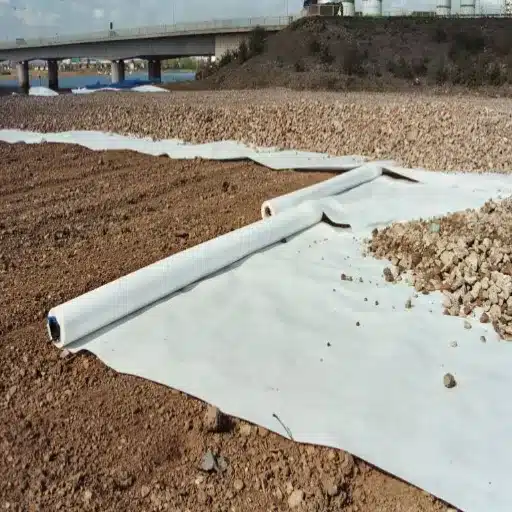
Geotextile fabric is defined as a permeable synthetic material placed between two layers of soil to serve as a filter and drain in the stabilization of the soil and the combating of erosion and the channelling of water.
In contrast to plastic sheeting, which completely blocks the flow of rainwater, geotextile fabric permits the controlled flow of water while retaining soil particles. Most geotextile fabric thereby ensures the formation of an integral part of the works of civil engineering, environmental containment, road construction, and drainage infrastructure.
Most geotextile fabrics are made of:
- Polypropylene (PP): Accounted for approximately 62% of worldwide production. Founder: high tensile strength, excellent resistance against chemicals; high stability under UV rays.
- Polyester (PET): Naturally longer breathable air than polypropylene and works well in highly alkaline soils.
The manufacture of only two primary classes of geotextiles now results from these materials:
- Wooven Geotextile: This Geotextile is made from warp threads that interlace between one another through a weft thread in a zigzag arrangement. These warp threads are present in a grid-like pattern of weave. This way, it imparts high tensile strength and low elongation, which are most suited for reinforcement and soil stabilization.
- Nonwoven Geotextile: Geotextile produced by either the needle-punching process or the heat-bonding of synthetic fibers into a felt-like sheet. They have the highest transmissivity and filtration, which makes them very suitable for drainage and erosion control.
The major global geotextile fabric market is predicted to be valued at just over $9.5m by the year 2026. Asian markets alone accounted for 35.4% of the entire global demand. This increase is associated with infrastructure expansion, erosion control regulations, and more recycling of polypropylene in its manufacturing. The market is expected to grow at a rate of 7.4% CAGR through 2033, which is estimated by Coherent Market Insights.
Want to see how the right fabric construction impacts real project outcomes? Explore our woven geotextile and nonwoven geotextile specifications.
Woven vs. Nonwoven Geotextile Fabric: How to Choose
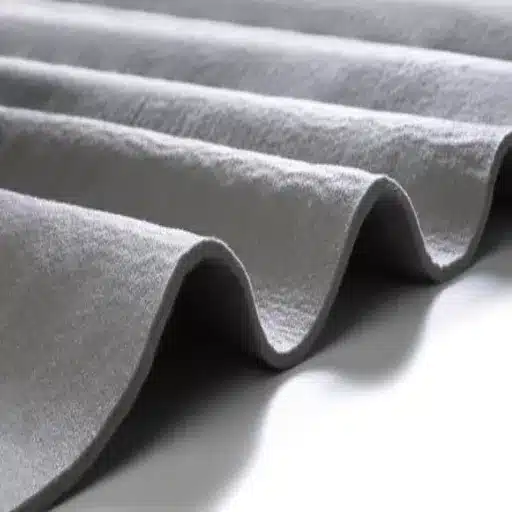
Selecting the wrong construction type is the most common specification error in the field. Woven and nonwoven geotextiles are not interchangeable. They solve fundamentally different engineering problems.
Construction and Fiber Structure
Woven geotextiles are manufactured on looms that interlace monofilament, multifilament, or slit-film yarns at right angles. The result is a rigid, grid-like fabric with high tensile strength but relatively low permeability.
Nonwoven geotextiles are made by bonding loose fibers through needle-punching, thermal fusion, or chemical bonding. The resulting structure is random, flexible, and highly porous.
Performance Comparison
| Feature | Woven Geotextile | Nonwoven Geotextile |
|---|---|---|
| Tensile strength | High (20-400 kN/m) | Moderate (8-120 kN/m) |
| Elongation | Low (<15%) | High (>50%) |
| Permittivity | Low (0.02-0.1 sec-1) | High (0.5+ sec-1) |
| Filtration efficiency | Moderate | Excellent |
| UV resistance | Higher | Lower (requires faster cover) |
| Flexibility | Rigid, less comfortable | Soft, molds to uneven surfaces |
| Typical cost | Higher for heavy-duty grades | Generally more economical |
When to Specify Woven Geotextile
Woven geotextile fabrics should be preferred in case what you need most is the structural support and distributing heavy loads:
- Road and railway construction over weak subgrades
- Embankments and retaining walls
- Parking lots and heavy-load areas
- Long-term soil stabilization
When to Specify Nonwoven Geotextile
Choose nonwoven geotextile fabric when the project priority is water management, filtration, or protection:
- French drain and subsurface drain galleries
- Protective layers of landfill liners
- Control of sediment and installation of silt fences
- Erosion shields on severe slopes
Can They Be Used Together?
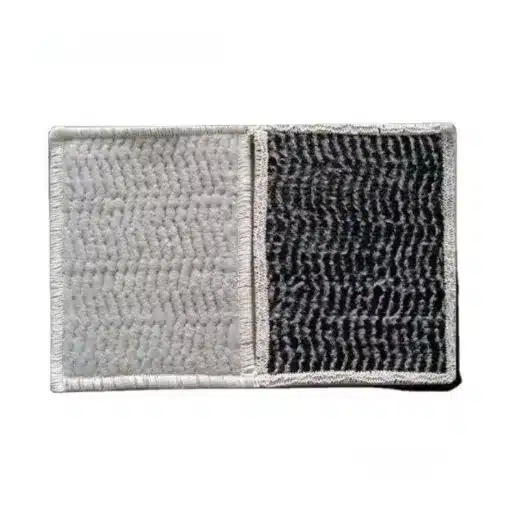
That is how geotextiles are intended to be a composite system in some scenarios, which should better explain the dual systems in complex infrastructures such as landfills or major highway projects, based on the practice of an engineer. More like a geotextile consisting of both a woven layer for strength and load distribution and a nonwoven layer specifically designed to fulfil functions of drainage and filtration.
Maria Torres, a geotechnical consultant in Manila, designed a landfill leachate collection pad with direct specification to place a 400-gsm nonwoven geotextile over the geomembrane liner. Over and above, a woven geotextile was thrown in for constructing a dual-phase system to take the load out of any equipment during the works. That combination of two types of geotextiles prevented punctures, yet maintained the most suitable drainage efficiency. Until today, the monitoring wells show zero leakage.
Need help matching the right geotextile construction to your soil conditions and load requirements? Contact our engineering support team for a tailored recommendation.
The Five Core Functions of Geotextile Fabric
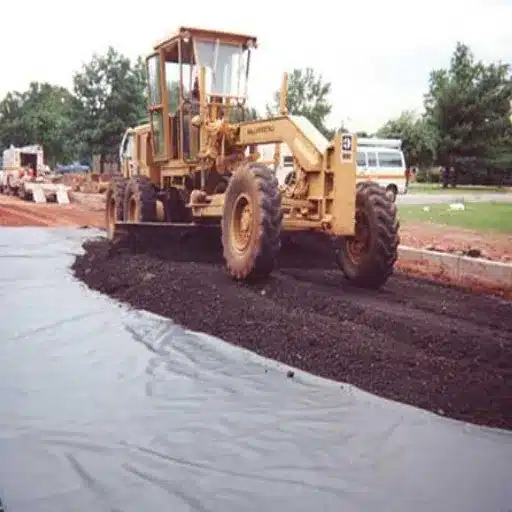
Usage of any geotextile fabric always links to at least one of five central functions. One of the most important things an engineer can learn is how to understand the correct functions needed for a project.
1. Separation
Geotextile fabric prevents mingling of unlike soil layers; an example of this could be a woven geotextile placed between the base aggregate and the subgrade soil of a platform buildup. Fine soil migrates upward when compacted into the gravel, thus destroying the base course structure itself. Consequently, they will become rutted. Normally, in multi-layer systems, the use of separation is associated with filtering.
2. Filtration
Filtration permits the passage of water while holding back soil particles. Geotextiles have not been surpassed in this respect with the non-woven geotextiles model to date, owing to the randomness of their fiber structure. The tortuous path creates traps and retains the fines without any clogging. This function is essential in the French drains, riprap underlays, and shoreline protection constructions.
3. Drainage
However, filtration uses the soil for filtering and drainage. Geotextile drainage works on facilitating the movement of water through or along the fabric plane. By passive drainage path, high-permeability nonwoven geotextiles can relieve hydrostatic pressure behind retaining walls and beneath roadways.
4. Reinforcement
Reinforcement takes all the loads that apply to the soil by placing some high tensile material into it to make the soil bear load properly. Woven geotextiles of 100kN/m tensile strength or more are used to stabilize soft ground, reinforce earth embankments, and reduce differential settlement.
5. Erosion Control
Geotextile fabric acts as a shield against erosion by water and wind for exposed soils. In this particular application, nonwoven geotextiles are often placed under riprapped or gabion structures in coastal applications and along banks to protect the soil against scouring while allowing free drainage of groundwater.
There are a lot of fabric characteristics mentioned in a given application. The ability to undergo a filtering process will allow the fabric to pass any cloth selection procedure. For some drainage and retention aspects, the fiber will separate further to form a membrane. This is all based on which AASHTO or ASTM standards will be followed.
Geotextile Fabric Specifications and Standards
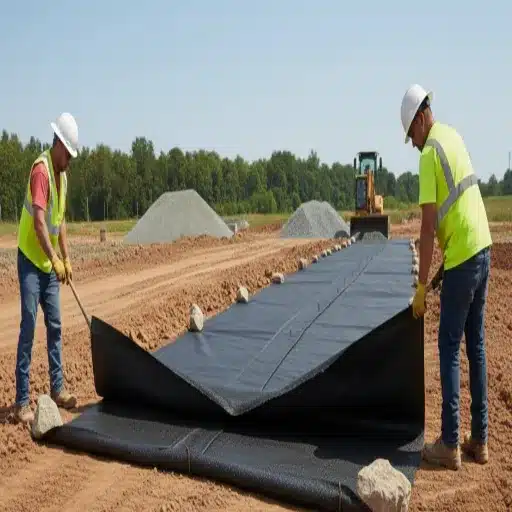
Engineering buyers should never specify geotextile fabric by weight alone. True performance is defined by standardized test methods that measure tensile strength, permittivity, apparent opening size, puncture resistance, and UV stability.
Key ASTM Standards
The ASTM International Standards specifically relevant to the specification of geotextile include:
- ASTM D4439: Language for Geosynthetics Terminology (Specification for Terms by Which the User Should Understand Its Properties).
- ASTM D4595: The Tensile Strength of Wide-Width Strip.
- ASTM D4632: The Grab Tensile Strength.
- ASTM D4491: This is a test in which the permeability of the water (permittivity) is involved.
- ASTM D4751: Apparent Opening Size (AOS/O95).
- ASTM D4833: Index Puncture Resistance.
- ASTM D4355: UV resistance degradation.
AASHTO M288 Classification
AASHTO M288 is the standard specification for geosynthetics in highway applications. It divides geotextiles into classes based on application and performance requirements:
| Application | Class | Min. Permittivity | Max. AOS | Min. UV Stability |
|---|---|---|---|---|
| Subsurface drainage | 1, 2 | 0.5 sec-1 | 0.22 mm | 50% |
| Separation | 1 | 0.02 sec-1 | 0.60 mm | 50% |
| Stabilization | 1 | 0.05 sec-1 | 0.43 mm | 50% |
| Permanent erosion control | 1, 2 (woven); 1 (nonwoven) | 0.1 sec-1 | 0.22 mm | 50% |
Class 1 fabrics are designed for harsh, unprotected conditions with minimal stone drop height. Class 2 fabrics require a protective gravel layer and are suitable for less severe environments.
Typical Performance Specifications
| Parameter | Woven Range | Nonwoven Range |
|---|---|---|
| Tensile strength | 20-400 kN/m | 8-120 kN/m |
| Permittivity | 0.02-0.1 sec-1 | 0.5-2.0 sec-1 |
| Puncture resistance | 500-1,500 N | 200-1,200 N |
| Weight (GSM) | 100-800 g/m2 | 80-800 g/m2 |
| UV resistance | 70-90% retention | 50-80% retention |
For procurement, always request certified test data from your supplier. A reputable manufacturer should provide third-party test reports for grab tensile strength, permittivity, and UV resistance upon request.
Applications by Industry
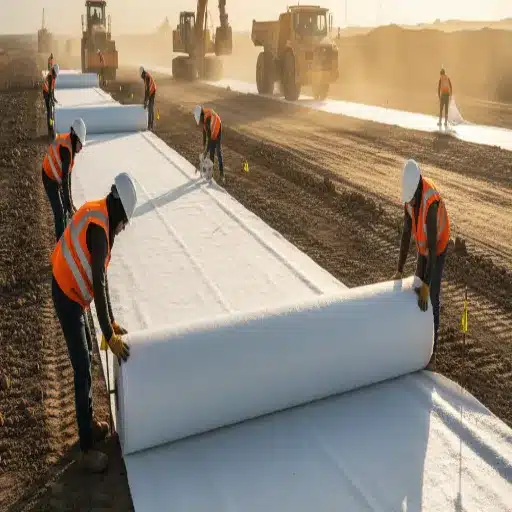
Geotextile fabric appears in nearly every sector of civil and environmental engineering. Here is how different industries apply it in practice.
Road Construction and Geotextile Soil Stabilization
Roads and highways consume almost 42% of global geotextile use. Woven geotextiles are typically laid on weak or wet subgrades for a fantastic bearing platform in the application of geotextile soil stabilization. The membrane also divides the traffic load, thereby preventing ruts and saving the base from going deep into a soft-columned fill.
For areas with a California Bearing Ratio (CBR) below 1, commonly, a Class 1 woven geotextile having a minimum grab tensile strength of not less than 1,100N with a minimum 36-inch overlap.
Retaining Walls and Embankments
Go behind the retaining walls, the nonwoven geotextile functions both as a filter and drainage. What it does is to prevent soil fines from penetrating the weep holes without interrupting the flow of hydrostatic pressures. In case of very steep embankments, woven geotextiles are used to improve the stability of the soil structure as well as mitigate the danger of potential slope failure.
Drainage Systems and French Drains
It is conventional to use non-woven geotextile materials for underground drainage, specifically for the underground piping or channel. The pipe is cladded in such a manner, and the entire cavity is filled with clean gravel to prevent soil intrusion and clogging of the tubing. A heavier non-woven fabric (270+gsm) is therefore recommended for fine-grained soils with more than 40% clay content, and a smaller apparent opening size.
Landfill and Environmental Containment
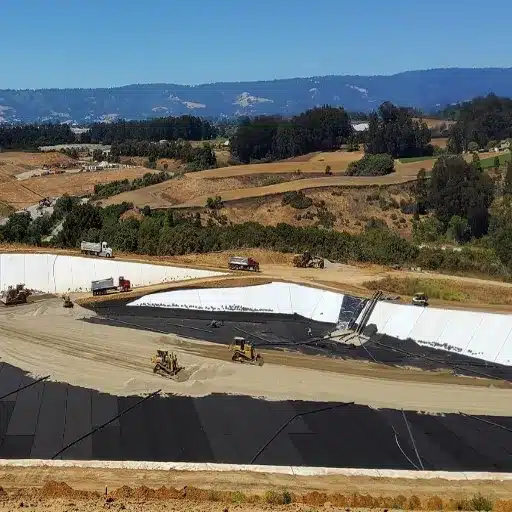
Non-aligned geotextiles are used as a cushion to provide protection for the geomembrane barrier in the landfill lining system against damage resulting from pressure from the aggregate placed above or leachate collection through drainage.
Coastal and Slope Erosion Control
Usually, for erosion control either in the coastal or bank areas, manufacturers include non-wovens under riprap in particular geotextiles, gabions, and articulated concrete blocks. A layer of non-woven geotextile lies under the above, stabilizing the subsoil and so minimizing chances of scouring. Groundwater can then escape without building up a hydraulic barrier.
Geotextile Fabric Installation: Best Practices
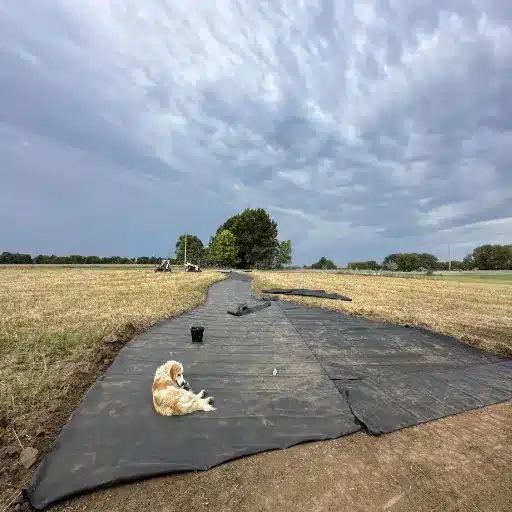
Even the best-specified geotextile fabric will fail if it is installed incorrectly. Field performance depends on subgrade preparation, proper overlap, secure anchoring, and timely covering.
Subgrade Preparation
Completely remove sharp rocks, roots, organic matter, and projecting irregularities for the penetration of fabric. Surface should be leveled to a maximum variation from true flat of not exceeding 5 cm. On the road and heavy-load applications, compact the subgrade to at least 95% Modified Proctor dry density. For very soft soils (CBR < 1), a thin cushion of sand must be applied before being spread by fabric.
Laying and Overlapping
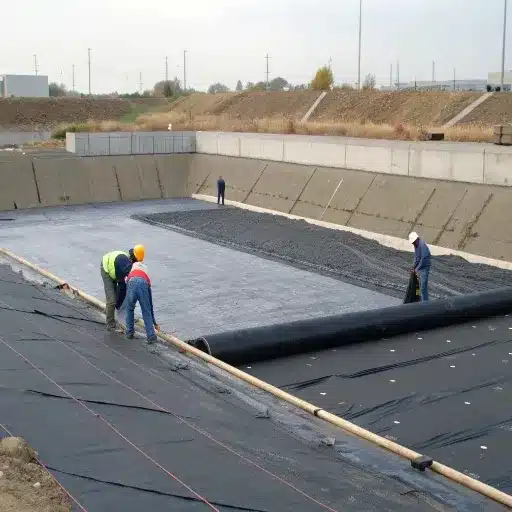
Spread commercial rolls with a mechanical spooling gadget. Manually dragging heavy rolls would be detrimental to the needled non-woven fabric structure and reduce permittivity. Tension, about 10-15 pounds per linear ft., is necessary to keep the fabric taut without stretching. Allow a maximum of 1 inch of slack for every 10 feet.
Follow these overlap guidelines based on soil conditions:
| Soil Condition (CBR) | Minimum Overlap | Joint Treatment |
|---|---|---|
| Solid subgrade (>3) | 12-18 inches | Overlap only |
| Medium soil (1-3) | 24-36 inches | Overlap only |
| Ultra-soft soil (<1) | 36 inches minimum | Sewn joints required |
When sewing is required, use a Federal Standard Type 401 double-thread chain stitch with high-strength polypropylene thread. Stitch density should be 3-7 stitches per inch, positioned 2-4 inches from the fabric edge.
Anchoring and UV Exposure
Hammer carefully galvanized U-staples flush with the surface to keep the fabric secure, 16-24 oz rubber mallet. On steep slopes steeper than about 2:1, put anchors at about 1.5-foot centers. Flatter surfaces: it might take about four staples for each 10-foot joint section.
Polypropylene degrades quickly when exposed to UV. Covered with aggregate or soil within 24-48 hours of placement. Do not see a sudden high burst of exposure.
- 3-4 oz fabric: 14 days.
- 6-8 oz fabric: 21 days.
- 10-12 oz carbon-black stabilized: 30 days.
Aggregate Placement
Cover fabric with a clean aggregate layer at least 6 inches thick. Compaction is done by 10-ton static rollers only in soft soils till the first lift. One must not vibrate the compaction during the second lift up to 6 inches. Vibration at this early stage can pump fine silt through the fabric pores, causing immediate lockup.
Common Installation Mistakes and How to Avoid Them
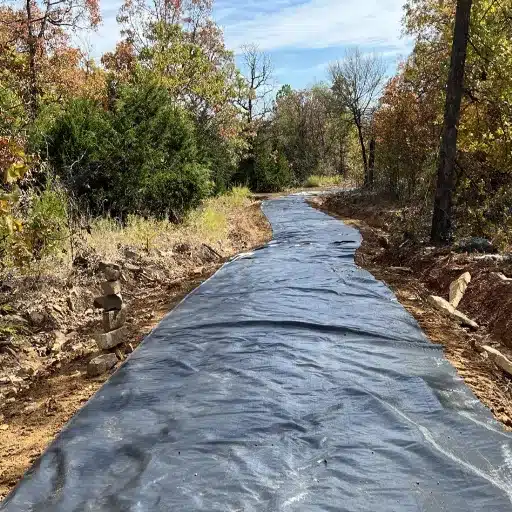
Most field failures would have been prevented. The ones we usually observe are seen in the following:
Using the Wrong Fabric Type
Woven geotextiles tear when used for drainage applications. When the primary loading is a super-heavy haul road, the nonwoven geotextile will tear. Match most of the fabric construction with the engineering function in mind.
Inadequate Overlap on Soft Soils
On soils with CBR < 1, only a 12-inch overlap is never going to work. As soil creeps over the top, it will become infiltrated with material, particularly with the aggregate, and will create a weak area. In case of soft ground, 36-inch overlaps and sewn joints should be adopted.
Prolonged UV Exposure
In an Eastern African job site, the project team left a lightweight non-woven geotextile exposed for three weeks while waiting for the aggregates to be delivered to the site. The tensile testing indicated 35% strength loss, grab tensile testing, and the fabric had to be removed and replaced. Whenever backfill can be accomplished, bury it within 48 hours.
Vibratory Compaction on Weak Subgrades
Vibrating the top lift down through the initial aggregate brings the fines up in the geotextile. This causes the blockage of pores and, consequently, the removal of the subsequent necessary drainage. Use static rollers for the first lift with CBR < 1 soils.
Using Contaminated Aggregate
Sand, soil, or debris mixed with aggregate will also clog geotextile and diminish hydraulic flow. It is necessary to select clean, washed gravel and check the load before placement.
Geotextile Fabric Cost Factors
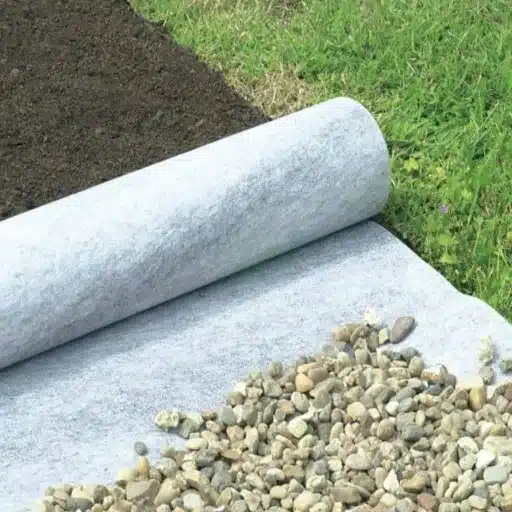
Pricing for geotextile fabric varies based on material type, weight, roll dimensions, certifications, and order volume.
Typical Cost Ranges
- Light-weight non-woven (80-140) GSM: $0.25-0.50 per ㎡
- Standard non-woven (200-270 gsm): $0.50-1.00 per ㎡
- Heavy-duty woven: (400-800) Gsm: $1.00-2.50 per ㎡
- Specifically cached/high power woven: $2.50-5.00+ per ㎡
Key Cost Drivers
- GSM/weight: Heavier fabric demands more raw material, making it more expensive.
- Type of Material: Woven monofilaments and high-tensile grades have premium prices.
- Dimensions of rolls: Broader and longer rolls reduce the cost per meter of labor for the installation.
- Qualification: If your geomembrane is AASHTO M288 or NTPEP certified, it has probably already gained substantial extra value, although the cost will be affected.
- Order volume: Varies on the magnitude or size of the transaction; bulk purchases will normally realize more substantial discounts, amounting to 15-30%.
Lifecycle Value
The upfront cost of a properly specified geotextile fabric is usually a small fraction of the total project value. However, the cost of failure, including rework, aggregate replacement, schedule delays, and potential liability, can be 50 to 100 times the original material cost. Specification accuracy pays for itself many times over.
Frequently Asked Questions
What is geotextile fabric used for?
The geotextile cloth is used too often in other construction projects connected with soil separation (barrier), filtration, for instance, to quicken drainage, in soil reinforcement, and erosion control. Applications include roadways, retaining walls, French drains, landfills, and coastal protections.
How do I decide between woven and nonwoven geotextile?
If there is a need for high tensile strength and load distribution, use woven. These applications may include road construction on soft subgrades. Use nonwoven if there is a need for filtration, drainage, and erosion control applications where high water permeability is the first consideration.
What are the ASTM standards that apply to geotextile fabric?
Relevant ASTM international standards for geotextile fabric are ASTM standards D4439 (Wörterbuch) and D4632 (Griffzugfestigkeit). In ASTM, these are D4491 (permittivity), D4751 (apparent opening size), and D4355 (UV resistance). Further, AASHTO M288 gives the technical requirements for geotextile classes most suitable for highway projects.
How long will the geotextile fabric be directly exposed to sunlight?
Even if it is not recommended, one should cover the geotextile in 24 to 48 hours after spreading it, and within two weeks in the case of light geotextiles, while it can take up to 30 to 35 days for the ultraviolet radiation to take effect on carbon-black stabilized high-geotextiles.
How much is the estimated price of geotextile fabric?
Standard non-woven geotextile will cost anywhere between fifty cents and seventy-five cents per square meter. Heavy-duty woven geotextile shall cost between one and two dollars and fifty cents per square meter. There may be a few high-strength specialized grades that could go up to even five dollars per square metre. Discounts in the range of about 15 to 30% are common for high-volume purchases.
Conclusion
Rather than a single item, Geotextile fabric supplies a decision-making matrix based on the fabric’s construction, specification, and the method of installation that will best meet a specific project’s needs.
The following are salient points:
- Relate their functioning according to fabric type: For reinforcement and stabilization, woven fabric, and nonwoven fabric for filtration and drainage.
- Follow standards contrary to heaviness: According to ASTM D4439, ASTM D4632, and AASHTO M288, they must meet the qualified performance requirements.
- Protect against exposure to UV light: Backfill the site within 24 to 48 hours after laying fabric to stop decay before it’s time.
- Prepare the bed properly: Begin work with the right sub-grade; clear, level, and compact the base.
- Avoid common field mistakes: Use correct overlaps, static compaction on soft soils, and clean aggregate.
Appropriately incorporated and installed, geotextile fabrics can improve soil condition, prolong the life of infrastructure, and prevent costly failures.
Ready to specify geotextile fabric for your next project?
Request a technical quote, and our engineering team will help you select the optimal material, weight, and certification package for your application.