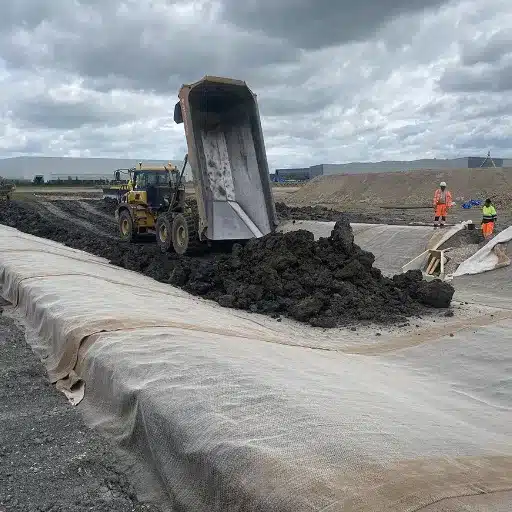
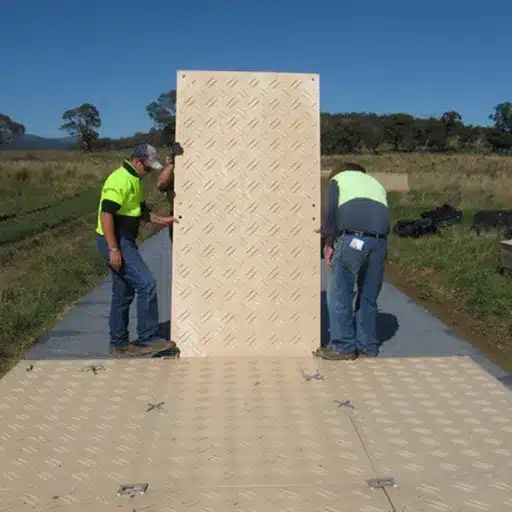
A ground or ground mat might move a half an inch, which 40 tons of an excavator will not notice. Even the project manager of which does watching sit history that solidly does. Now, the minute aperture in between those panels has converted into that barrier to the crew, as that half-inch pause has become one of the dangers to bring a machine to the next level and to fail to access.
If you have ever installed temporary ground protection materials onto a construction site, an environmental project, or some infrastructure work, then you know the problem well enough. You have chosen the right material, the right thickness, and the correct load rating, yet still the ground mats just separate under foot traffic, ride up on elevation, or create uneven joints that can slow down things and endanger the workers of a job site. The problem is not usually from the mat itself but rather the connection system.
The report gives a holistic understanding of interlocking access matting systems, the different connection systems in the market currently, and a perspective to suggest different joint patterns that may fit into real project needs best. It does not matter whether you are constructing an expeditious temporary road over clay softness, protecting sensitive turf while executing another layer of landfill liner materials, or building a semi-permanent work surface for heavy equipment: the engineering behind mat-to-mat connections matters more than the material of the panel.
What Are Interlocking Access Mats?
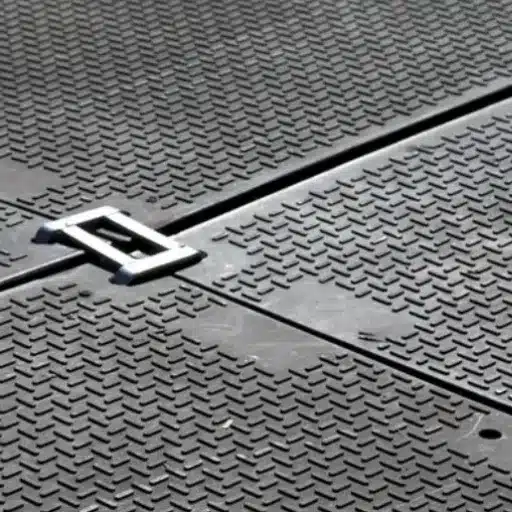
Interlocking Access Mat uses an à la carte form of panels known as ground protection panels. Each of these panels comes equipped with construction features that allow them to be connected to each other, forming an even and sturdy surface. In contrast to plain matting systems, where the products simply meet at their ends, interlocking products make use of mechanical components such as dowels, engagement profiles or overhanging flange layers to avoid de-bonding and also allow loads to be shared between panels.
The lightweight loading mats are usually fabricated from thermoplastics, such as a blend of HDPE boards or fortified plastics. A connecting feature is lined along most or all panels. Once the mats are put together, they form a load-resisting surface that distributes the weight of the equipment on the base mats instead of around the periphery of the individual mats.
The difference is important in reality. A non-interlocking mat can work well on hard and flat surfaces under slow-moving light traffic. This will change, however, when a slope is added, or the substrate is soft, or when there is dynamic loading caused by tracked equipment and constantly repeated vehicle traffic – the panels will start to separate, buckle or ride over each other. Interlocking Access Mat and connecting mats address these issues with integrated joint integrity.
Looking for a broader overview of mat types and selection criteria? See our complete ground protection mats buyer’s guide.
How Interlocking Systems Work: Load Transfer Engineering
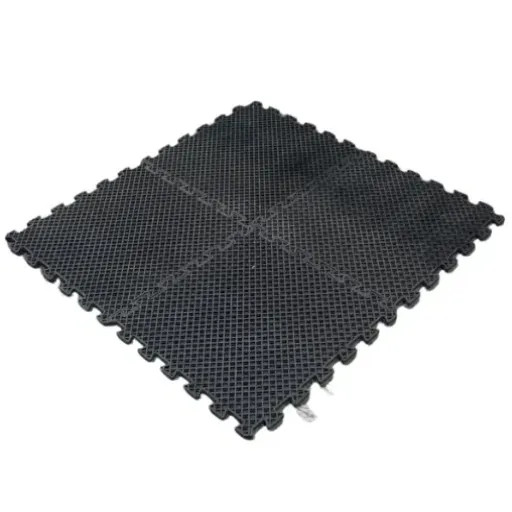
The Mechanics of Joint Load Distribution
When a 30-ton dump truck transports material, its tires distribute point loads on the surface of the matrix in the cross-sectional areas of each tire. In the case of a single panel, that load is suspended and transferred through the material to below ground. When, however, the equalizing zone extends to the junction of two panels, the load must be borne by the junction and the tied-ups. Not more confined, the leading edge of the loaded panel drapes down while the adjacent panel is packed up with virtually no weight. Consequently, such conditions are accounted for as joint degradation, including edge lift and removal.
Interlocking Access Mat technology facilitates the elimination of this problem by using the following three principles. Firstly, physical engagement between the panels such that there is a load path extending beyond the interface. Secondly, the stiffness of the connection helps to reduce relative vertical displacement between adjacent panels. Finally, frictional and mechanical engagement assist in resisting the horizontal separation forces resulting from the effect of braking, acceleration, and the slope.
Connection Types Explained
Pin-based systems comprise steel or synthetic pins inserted through aligned holes in molded connecting flanges. This is the most widely seen HDPE access mat application: elementary, field-adjustable, and universally fitting of matching panel designs. The pins may be dislodged for prompt teardown and can be used again for another project over and over. On the other hand, loss or forgetting of loose pins could occur, and the holes might get elongated after multiple trials of assembling them together.
Tongue-and-groove systems incorporate molded edge male and female sides provided on the very edge of the panels in such a way that when the two panels are brought together, the said edges will interlock. The ideal type of application it meets is rapid deployability and recovery. It does not have to be designed with any unthreaded hardware. Damage to the tongue or groove shape can disable the whole panel, as well as the fact that such a design offers virtually no flexibility for non-standard layouts.
Overlap flange systems expand the sheet boundary, actually linking a physical interlock between the adjacent set of panels, and thereby seem a bit non-impenetrable. A percentage of this kind of system makes it exploit various minor production variables, while its neighboring different-forming panels also include self-alignment and mechanical attachment. The load is carried inherently through one panel into another without the requirement for pins or even molded profiles to be assembled, while overlapping flanges build their weight, making panels more sensitive to their orientation of installation.
Hybrid systems involve the use of two or more methods. For example, a rotationally molded HDPE mat with tongue-and-groove edges and supplementary pinholes is an example of hybrid systems, as it provides self-alignment and mechanical fastening in high-end applications.
Types of Interlocking Access Mats: Technical Comparison
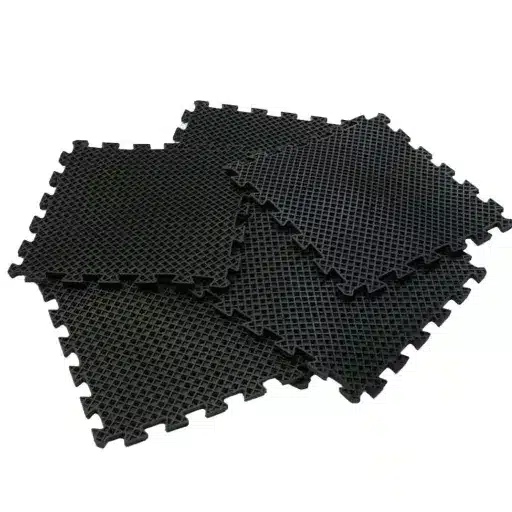
HDPE Interlocking Access Mats
HDPE interlocking access mats are the most widely used type in civil engineering and construction. A standard 4 by 8 foot panel weighs between 30 and 60 kilograms, light enough for manual handling while heavy enough to resist displacement under traffic. HDPE offers excellent resistance to UV degradation, site chemicals, and moisture. The material is also recyclable at end of life, which matters for environmentally sensitive projects.
Connection features in HDPE mats are typically molded integrally during manufacture. This ensures consistent flange geometry, accurate pin hole alignment, and uniform tongue-and-groove profiles across production batches. For international buyers, molded connections also eliminate variability that can arise from field-fabricated or secondary attachment methods.
These mats suit construction site access roads, utility work zones, event site protection, and any application requiring frequent reconfiguration. Their moderate weight and durable connection features make them the default choice for general infrastructure use.
Composite Interlocking Mats
Composite interlocking mats use fiberglass-reinforced polymers or engineered blends to achieve very high stiffness and load capacity. Individual panels weigh 80 to 150 kilograms or more. The integrated locking edges on composite mats are designed for maximum joint stiffness, often exceeding the performance of pin-based HDPE systems.
The primary applications are semi-permanent work platforms, oil and gas drilling pads, and heavy industrial sites where crawler cranes or extreme point loads operate. The trade-offs are weight, which typically requires mechanical handling, and a higher cost per panel. For projects where panel movement is unacceptable, and loads exceed standard HDPE ratings, composite interlocking mats provide the necessary joint integrity.
Timber Mat Connection Systems
The conventional wood access mats are fixed by means of bolts, cables, and nailings; there is no actual molded interlocking system involved. The hardwood crane mats cope neatly in marsh and rough terrains, but their connection systems are primitive compared to the optimal performance and reusability of polymer-engineered mats. Timber connections are highly likely to deteriorate when exposed to water, thus weakening and breaking apart over time, when dismantled.
Experts might have success using timber for serious heavy-lift jobs because it is flexible and available nearby, depending upon the criteria of how important that flexibility might be compared to an advantageous synthetic interlocking system. In most circumstances, however, the temporary access mat in today’s environment has been replaced by standardized engineered interlocking access mat systems in good measure.
| Feature | HDPE Interlocking Mats | Composite Interlocking Mats | Timber Mats |
|---|---|---|---|
| Panel weight | 30-60 kg | 80-150+ kg | 100-300+ kg |
| Connection type | Pins, tongue-and-groove, overlap | Integrated locking edges | Bolts, cables, nails |
| Load capacity | 60-120 tons | 600+ psi | High (variable) |
| UV/chemical resistance | Excellent | Excellent | Poor (requires treatment) |
| Best application | General construction, events, utilities | Heavy industrial, semi-permanent platforms | Marshy terrain, crane pads |
| Reusability | 10+ years | 10+ years | 2-5 years |
| Handling | Manual or forklift | Forklift required | Crane or forklift |
How to Choose the Right Connection System: 5 Engineering Criteria
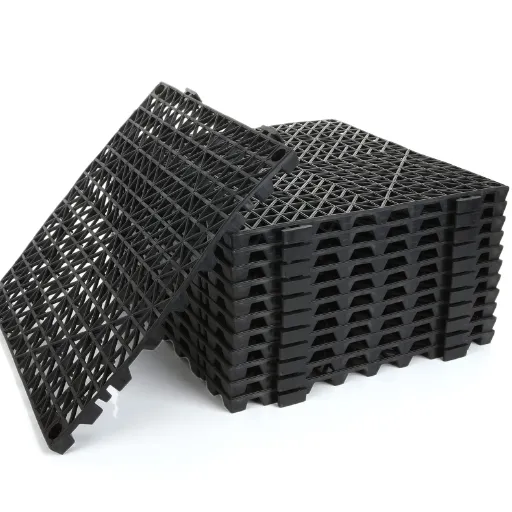
1. Equipment Type and Dynamic Loading
The connection system must match the equipment that will cross it. Rubber-tired vehicles such as trucks and excavators apply distributed loads that standard pin or tongue-and-groove systems handle well. Tracked equipment is more demanding. The continuous rolling motion of steel tracks generates horizontal shear forces at joints that can push unconnected panels apart. Interlocking access mats for tracked machinery need tighter connection tolerances and often benefit from supplementary pinning.
Crane outriggers and concentrated point loads represent the most severe case. A crawler crane pad or outrigger mat assembly requires maximum connection integrity across the entire platform. Composite mats with integrated locking edges or heavily pinned HDPE systems are typically specified.
2. Ground Conditions and Substrate Stability
On firm, level ground, most interlocking systems perform adequately. The real test comes on soft soil, clay, or uneven terrain. When the substrate compresses under load, panels tend to sink differentially. A well-designed connection system limits this differential movement by transferring load to adjacent panels before significant edge deflection occurs.
For soft ground applications, wider flange overlaps and multiple pin points per joint improve performance. On slopes greater than 5 percent, pinned systems with supplementary earth anchors or stakes through designated mat holes become essential. Without anchoring, gravity and equipment momentum will drive panels downhill regardless of connection type.
3. Duration and Repositioning Frequency
Short-term deployments house such as events or emergency utility repairs, tend to favor quick-connect systems with minimal hardware. Tongue-and-groove HDPE mats can be laid and locked by hand without tools, and quickly recovered. Building projects of medium term lasting for weeks up to months are well supported by pin connections made from HDPE that offer a perfect blend of durability and handling speed.
An installation that serves in the semi-permanent to permanent phase must have either a jointed locked composite mat or a very pinned HDPE assembly. The extra time taken to join during installation positively contributes to reduced maintenance and lower risk of joint collapse over the life of the project.
4. Environmental Exposure
The reason for breaking down non-stabilized polymers from UV is simple; however, the additives present in the base resin and flange connecting material of good-quality interlocking access mats, in the case of HDPE, are UV stabilizers. The weakest point is the connections because they are thinner than the major sections of the panel and undergo mechanical stress at assembly and disassembly.
Hydrocarbons, site discharge, or industrial process fluids are further sources for environmental exposure to chemically induced deteriorations. HDPE is mostly resistant to most chemicals that are found on construction and environmental remediation sites. Chemical proof through specific exposures has to be verified; then, consider using polymer matrix composite mats for holding up in very aggressive chemical environments.
Temperature extremes may indeed jeopardize the performance of connections due to the thermal expansion and contraction resulting from the heat. Among the connections are the molded HDPE with tolerance to allow for an average temperature change. For extreme climates, in order to fit long linear runs, allow for very slight expansion gaps and try not to over-tighten the pins, as this could distort flanges when temperatures rise.
5. Layout Geometry and Site Constraints
Straight access roads are the simplest application. Linear layout with consistent panel orientation and standard overlap produces reliable results. Curves and turning areas require more planning. Flexible connection systems that allow slight angular adjustment between panels accommodate curved alignments better than rigid tongue-and-groove profiles.
Passing bays, laydown yards, and work platforms require modular expansion in two directions. Choose connection systems that are compatible in both longitudinal and transverse orientations. Some HDPE mat designs allow four-way connection at panel corners, which simplifies complex layout geometry.
Installation Best Practices for Interlocking Systems
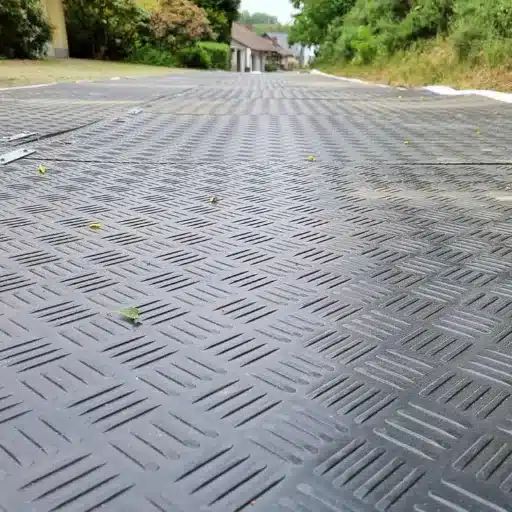
Pre-Installation Site Preparation
Remove rocks, debris, and vegetation that could prevent mats from seating flush against the substrate. Grade the surface where possible to eliminate sharp transitions. On soft ground, a thin layer of crushed stone or geotextile separation fabric can improve load distribution and prevent mats from sinking unevenly. For guidance on soil stabilization and ground preparation, see our article on soil stabilization techniques.
Step-by-Step Connection Process
Lay the first row of mats with consistent orientation, aligning connection features in the direction of subsequent rows. For pin-based systems, align flange holes precisely before inserting pins. A rubber mallet helps seat tongue-and-groove connections fully. Maintain the manufacturer’s specified edge overlap for flange-type systems.
Stagger joints between rows in a brick pattern whenever possible. This distributes load more evenly and prevents the formation of continuous weakness lines across the mat surface. After laying each panel, verify that connections are engaged before moving to the next. A partially seated joint will fail under the first significant load.
Slope and Anchoring Techniques
Install mats perpendicular to the slope direction when site geometry allows. This minimizes the component of gravity acting along the joint axis. Use stakes, earth anchors, or pins driven through designated holes into the substrate to secure mats on grades. Recheck joint integrity after the first few equipment passes and tighten or supplement anchors as needed.
Common Installation Errors to Avoid
Most joints fail due to a lack of sufficient overlap. Adhere to those stipulations by the manufacturer. Mixing fastener types in the same layout causes incompatibility, hence weakening points. Unprepared attention to the substrates during use posts an uneven load that overstresses the connections beyond the limits of their design. Over-tightened pins will distort the flanges and elongate holes over time, reducing efficacy for connections.
Connection Quality and Manufacturing Standards
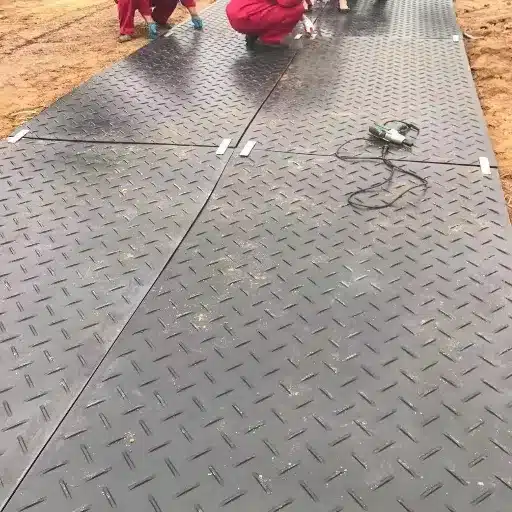
Not all interlocking access mats are of the same quality; a molded flange and pin hole dimensions tolerance is of great significance in creating uniform panels. Bindings will become loose or complicated in assembly and will not be properly engaged due to considerable variation in dimensions.
Materials play an important role. The virgin HDPE with a well-defined melting point has a controlled melt flow index that allows the achievement of the same feature in connectionality and any predictable mechanical properties. Reworking or using recycled materials in the panel body is fine as long as the connective flanges are made from a consistent molding material for maintaining their strength and dimensional stability.
Certifying good quality is what is required for manufacturing so that it aligns with ISO9001, which has process control, recorded inspection, and batch testing. Constant connections require the same connectivity of models for export orders in every batch produced. As it is not easy for foreign buyers to return mismatched panels, it is best if they are pre-inspected for their connection.
The Shanxi Shengxing is famous for manufacturing interlocking access mats, tested to have molded connection features and dimensions compliant with the exact tolerances of the standards, with sample retention to verify traceability quality, which ensures that panels delivered to international projects meet the specifications.
Troubleshooting: Preventing Mat Separation and Joint Failure
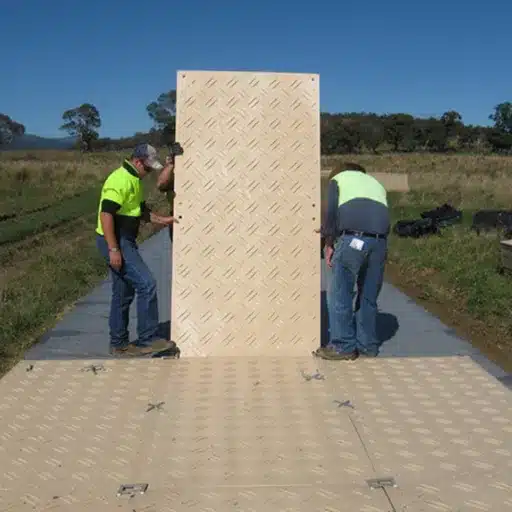
When interlocking access mats separate in service, the cause usually falls into one of four categories. Understanding the failure mode points directly to the solution.
Insufficient connection strength for the applied load manifests as gradual joint opening under traffic, particularly at turns or braking points. The fix is to upgrade the connection system. Add pins to a tongue-and-groove layout, switch to composite mats with integrated locks, or reduce panel size to increase the number of joints sharing the load.
Substrate settlement creates differential support that forces joints to act as hinges. The mat surface becomes uneven and the connections fatigue. Improving substrate preparation, adding a granular working platform, or switching to thicker panels that bridge soft spots addresses this root cause.
Dynamic loading beyond design parameters occurs when equipment heavier or faster than specified crosses the mat. The impulse load at joints can overcome the connection capacity. Restrict traffic to design limits or upgrade to a higher-capacity mat system.
Thermal expansion in long runs causes panels to press against fixed boundaries or one another, leading to buckling or joint distortion. Leave small expansion gaps at intervals in long linear installations, particularly in climates with wide temperature swings.
Periodic inspection during multi-month deployments catches developing problems before they become safety hazards. Check for elongated pin holes, cracked flanges, and UV-degraded edges. Replace damaged panels promptly to prevent adjacent joints from overloading.
Conclusion
Interlocking access mats are more than panels laid side by side. The connection system determines whether a temporary access road remains stable under a 40-ton truck, whether a crane platform stays level through weeks of operation, and whether your crew can work safely without tripping over separated edges.
The five criteria for selecting the right system are straightforward. Match the connection type to your equipment loads. Account for ground conditions and slope. Consider how long the mats will stay in place and how often they will be moved. Verify environmental compatibility. And plan the layout geometry to use the connection system’s strengths.
HDPE interlocking access mats with pin or tongue-and-groove connections serve most construction and infrastructure applications with an excellent balance of performance, portability, and cost. Composite interlocking mats with integrated locking edges answer the demands of heavy industrial and semi-permanent platforms where joint stiffness is paramount.
Getting the specification right matters. A mat that is thick enough and strong enough but poorly connected, will still fail. Invest in understanding the connection engineering, and you will get the performance your project requires.
Request a technical consultation for your specific project. Our engineering team can recommend the right interlocking access mat system based on your equipment, ground conditions, and deployment timeline. Contact us today for a customized specification and quote.