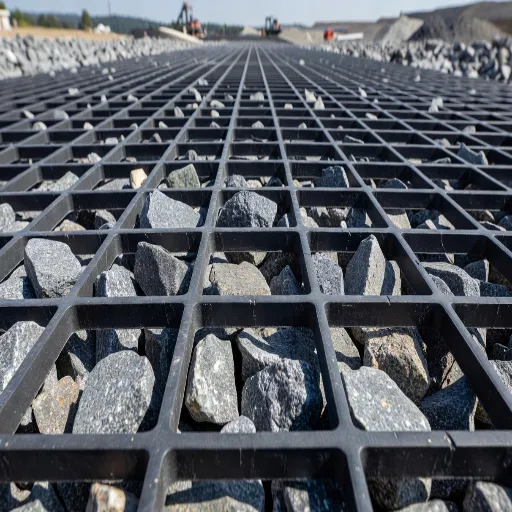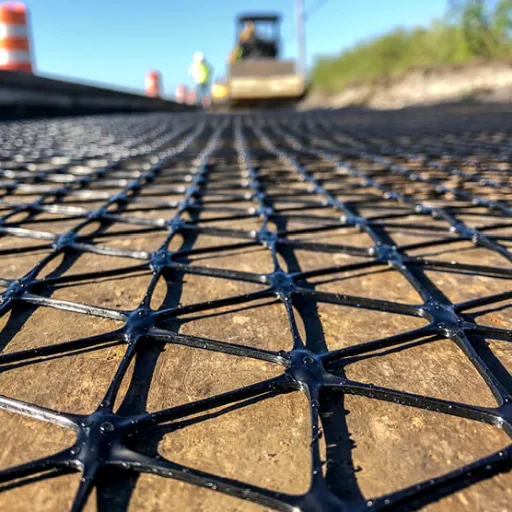
What would happen if just a single pinhole in your liner cost you more than the entire containment system?
It is more common than one would think in engineering alone. A thin spot in a landfill liner. Undersized sheet in a mining tailings impoundment watersurface exposed, allowing contact with organic material penetrating the fabric, and nonwoven liner seams joining HDPE geomembranes. When HDPE geomembrane fails, the consequences extend beyond the idea that the material has to be replaced, from fines for violating new, ever-stricter soil protection standards and project delays to even higher remediation costs that can extend into the millions.
What you should know is that the wrong geomembranes can be a big loss. All that is left are the details: matching other specifications of the HDPE geomembranes against thicknesses and qualities. Dangerously lose out on that, and result in leakage, regulatory violations, and premature replacements. Get it right, and 20-plus-year reliable containment barrier of effortlessly keeping water in and completely safe against the groundwater.
In this piece, how you assess an HDPE geomembrane from the angle of an architect is discussed. These factors include an outline of the property, selecting the thickness of the main applications, and quality standards of the material. Apart from this, it will walk you through the issues concerning how to select HDPE geomembranes from the international market for any infrastructure or environmental project you may want.
Need a quick specification check? Explore our HDPE geomembrane liners to see thickness ranges, tensile ratings, and export-ready options for your next project.
What Is HDPE Geomembrane?
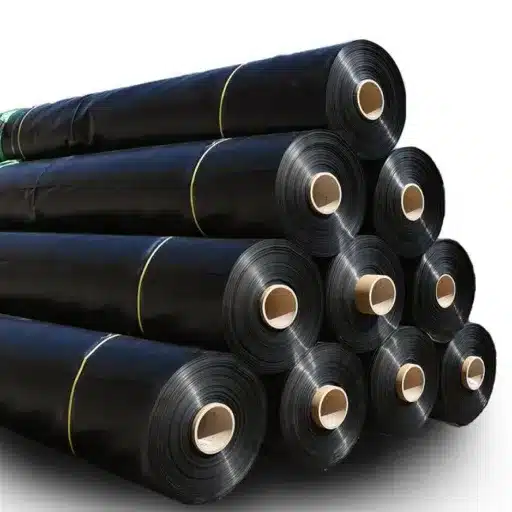
A geomembrane that is made up of synthetic material is typically used as a barrier to prevent fluids, gases, and contaminating agents in civil engineering and environmental engineering structures. It is made of 97–99% HDPE resin with a density of 0.940–0.965 g/cm³, filled with 2–3% carbon black for UV resistance, plus antioxidants and thermal stabilizers.
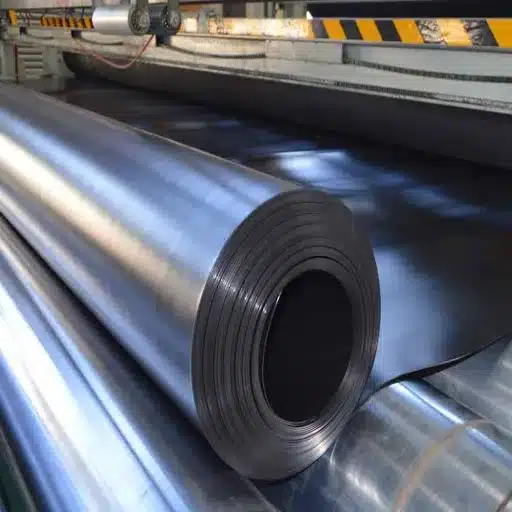
The process of manufacturing generally consists of extrusion, whereby molten HDPE is processed into continuous sheets which are again peeled for widths between 4 and 10 meters and whose thicknesses range from 0,2 to 3,0 mm.
Three main types of HDPE geomembrane are used in the field:
- Smooth HDPE: The most common type, used in approximately 70% of applications where maximum impermeability and ease of welding are priorities.
- Textured HDPE: The product has a roughened surface, which increases the friction coefficient, making it necessary for use on steep slopes that have a risk of liner slippage.
- Conductive HDPE: The material has a built-in conductive layer, which permits spark testing to help crews find pinholes and other installation defects.
The permeability coefficient of HDPE geomembrane measures below 1×10⁻¹³ cm/s, which results in its permeability being 100 to 1,000 times lower than that of compacted clay. The material serves as the preferred option for situations that require absolute containment.
Key Properties and Performance Standards
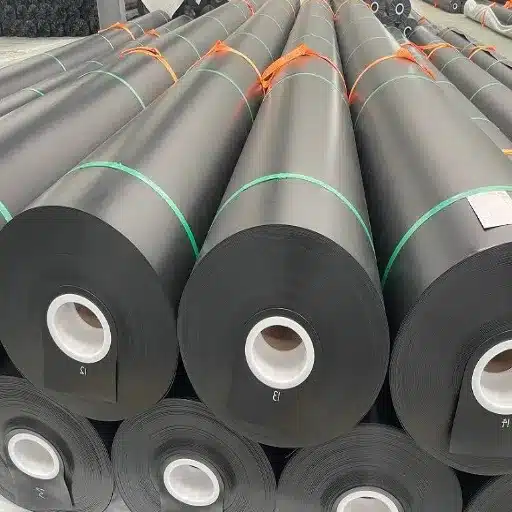
Not all HDPE geomembrane performs the same way. Mechanical strength, chemical resistance, and seam integrity determine whether a liner will survive decades of service or fail within years.
Mechanical Properties
The tensile strength of a material serves as the primary measure that determines the maximum stress that a geomembrane can endure until it fails. The quality HDPE geomembrane reaches a tensile strength of ≥27 MPa, which typically ranges between 15 MPa and 35 MPa across regular product lines, while its force resistance varies from approximately 25 kN/m in thin sheets to more than 100 kN/m in thick liners. Geosynsource
Elongation at break measures stress-based flexibility. The smooth HDPE material achieves an ≥700% elongation threshold before breaking, whereas the textured HDPE material reaches an uneven 250% elongation limit because of its surface treatment.
Thicker materials provide better protection against puncture attacks. A 1.0 mm panel typically resists ≥320 N of puncture force. The 1.5 mm panel resists ≥500 N of puncture force. Tear resistance ranges from 25 N to 374 N, depending on sheet thickness and resin grade.
Chemical and Environmental Resistance
The physical properties of HDPE geomembrane remain unchanged through its full range from 0.5 to 14 pH. The material displays chemical resistance against acids, alkalis, and hydrocarbons, which makes it appropriate for handling both aggressive leachate and mining process solutions. The testing results demonstrate this ASTM D5322 resistance.
Carbon black content in the material provides UV stability. The properly formulated HDPE geomembrane maintains about 90 percent of its initial tensile strength after testing for 1,600 hours of accelerated UV radiation exposure. The exposed liners have a service life between 5 to 20 years, while the buried installations last 50 to 70 years.
Oxidative Induction Time (OIT) testing determines thermal stability assessment. The quality HDPE geomembrane achieves an OIT value of 100 minutes or higher at 200°C according to ASTM D5885 testing, which shows strong protection against thermal oxidation.
Environmental Stress Crack Resistance (ESCR) testing establishes essential requirements for durable performance during permanent load conditions. The HDPE geomembrane requires testing to reach 500 hours or more in ESCR evaluation according to ASTM D5397 standards.
Seaming and Longevity
Field seams are the most vulnerable part of any geomembrane installation. Properly executed hot wedge welds achieve approximately 95% of the base material’s tensile strength, verified under ASTM D6392.
When an environmental contractor in Chile installed a 1.5 mm smooth HDPE geomembrane liner for a leachate pond in 2019, they required certified welders and 100% destructive peel testing at seam intersections. Five years later, the pond has recorded zero leaks. The upfront investment in welding quality and third-party testing eliminated the risk of costly remediation.
How to Select HDPE Geomembrane Thickness
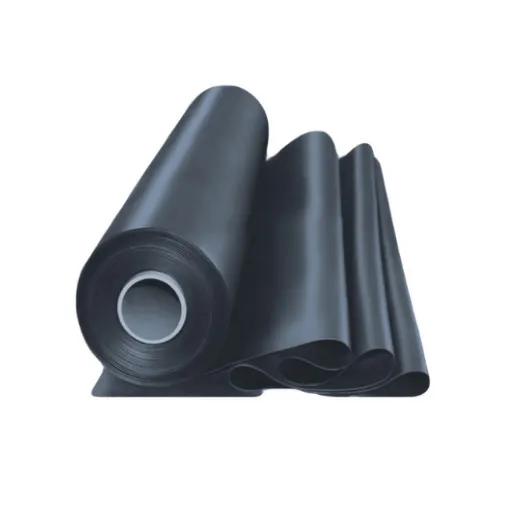
Thickness is not arbitrary. It directly affects puncture resistance, tensile strength, chemical diffusion resistance, and cost. Choosing the right thickness requires balancing project demands, subgrade conditions, regulatory requirements, and budget.
Factors That Determine Thickness
Rocky or gravel soil conditions with sharp protuberances require thicker liners or a protective geotextile cushion layer. Soft and well-prepared clay subgrades can accept thinner specifications.
Applied loads: High mechanical stresses will occur when heavy and deep-reservoir loads and wastes are added with the traffic loads passing over liners in the system. Inclusion of thicker panels to deliver these expanding loads would be more efficient in many cases.
Chemical attack: More aggressive environments, such as mining heap leach pads or hazardous waste landfills, benefit from thicker liners. This is because a longer diffusion path is obtained with the composite liners.
UV exposure and service life: Exposed liners not completely covered by soil or water require greater thickness and higher carbon black content to prevent weathering.
Regulatory minimums: Many jurisdictions have defined minimum thicknesses for these materials. There are minimum thickness requirements, for example, in the United States. EPA specifies 60 mil (1.5 mm) HDPE geomembrane for municipal solid waste landfill liners.
Thickness by Application
| Application | Recommended Thickness | Key Considerations |
|---|---|---|
| Aquaculture/fish and shrimp ponds | 0.5 – 0.75 mm | Cost-effective, low mechanical stress, easy to handle |
| Agricultural irrigation/canals | 0.75 – 1.0 mm | Balance of durability and flexibility for moderate conditions |
| Water storage/wastewater ponds | 1.0 – 1.5 mm | Standard range for general containment |
| Municipal solid waste landfills | ≥ 1.5 mm | Regulatory minimum; high puncture resistance needed |
| Mining heap leach/tailings | 1.5 – 2.0 mm | Heavy loads and aggressive chemicals require robust protection |
| Exposed covers/landfill caps | 2.0 – 2.5 mm | Maximum UV resistance and weathering protection |
| Hazardous waste / critical chemical containment | 2.0 – 3.0 mm | Extreme-duty; highest safety margin |
Thin vs. Thick Trade-offs
Thinner liners are cheap, and for transportation, they are malleable enough to form majestic shapes, yet they exhibit the weak points – lower tensile strength and puncture resistance. Thicker liners protect against both mechanical and chemical aggressions, but at the expense of higher weight, stiffness, and costliness in the installation process.
It is always advisable to check that the liner is fabricated from 100% virgin HDPE resin, irrespective of the thickness. A thick recycled or blended resin liner may be mechanically inferior to a thin virgin product, although it is costlier in initial set-up as well.
Major Applications of HDPE Geomembrane
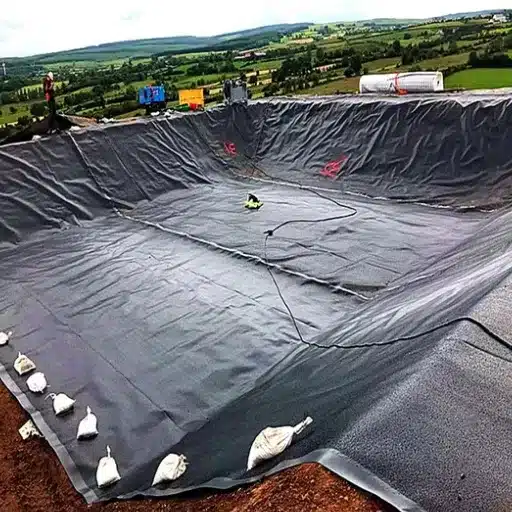
HDPE geomembrane is used across industries where containment, waterproofing, and environmental protection are essential. Here are the primary sectors and their typical use cases.
Environmental Engineering and Landfills
Landfill containment is the largest revenue-generating application for HDPE geomembrane. It is used for:
- Base liners: Preventing leachate from contaminating soil and groundwater
- Landfill caps: Controlling gas migration and limiting rainwater infiltration
- Leachate collection ponds: Storing contaminated liquids for treatment
The U.S. EPA’s 60 mil minimum reflects the critical nature of these applications. Failure here can trigger environmental violations and remediation costs far exceeding the liner investment.
Mining
Mining has the largest application in geomembrane HDPE according to volume. It is used for the following:
- Heap leach pads: with chemical solutions used for the extraction of metal ores
- Tailings dams: fine waste materials storage and process water
- Evaporation ponds: for brine and process solution management
HDPE is referred to as standard in this harsh environment because it needs to endure acids, salts, and heavy metals for a long period; chemical resistance issues are best handled by HDPE.
Water Management
It holds that HDPE geomembranes contribute in large measure to water conservation-maintenance plans:
- Reservoirs and potable water storage: preventing leaks of water and upholding the quality of groundwater
- Canals and irrigation systems: Minimizing the amount of water lost on agricultural distribution networks
- Floating covers: Preventing evaporation and odor from the contamination of wastewater ponds
Because of the poor permeability, long life, and cost advantages as compared with alternative materials, HDPE is still the single most important product for use in major municipal and industrial projects.
Agriculture and Aquaculture
Provided below are possible uses of an HDPE geomembrane in agriculture and aquaculture :
- Manure Lagoons: These are containment structures for treating and managing animal waste.
- Silage Covers: To preserve the quality of feeds as well as combat spoilage
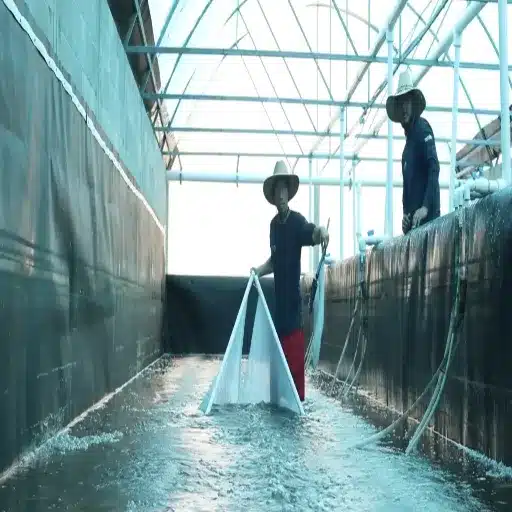
- Fish and Prawn Ponds: Designed in such a way that they provide controlled aquatic environments with limited water exchange.
Within Vietnamese shrimp plants, the practice of utilizing 0.75 mm thickness HDPE geomembrane linings is nominal in cases where there is a pond constructed out of concrete. There has been a considerable reduction in pool construction time, and water retention has distinctly increased in this area in earlier times. Hence, with a similar process, their expansion has become faster than traditional methods.
Civil Engineering and Petrochemical
HDPE geomembrane have use on the following:
- Tunnel waterproofing: It protects the under-surface structures that are being infiltrated by the groundwater.
- Tank secondary containment: The storage and handling of fuels and chemicals in place receives protection only by providing some spill coverage.
- Green roofs and building foundations: It is implemented in the management of moisture, structural systems, and drainage.
HDPE vs. Alternative Geomembrane Materials
HDPE is the dominant geomembrane material, but it is not always the right choice. Understanding how it compares to LLDPE, PVC, and EPDM helps you select the optimal liner for your project.
LLDPE Geomembrane
Linear Low-Density Polyethylene has always come before the HDPE. It has good flexibility that can stretch well beyond 800%. This quality makes it able to be cast in control joints and is good to use for:
- Projects characterized by dynamic differential settlements or ground movements
- Steep embankments where conformability would reduce the stress concentration
- Tailings ponds storage, as well as applications, are said to demonstrate deformation tolerance
Despite the fact that LLDPE has chemical resistance qualities, it normally costs some 30-40% more than HDPE of the same thickness; for many projects, however, a higher value can be attributed to LLDPE. Ease of fabrication will always remain supreme before chemical resistance in many cases.
PVC Geomembrane
Polyvinyl Chloride (PVC) geomembrane with outstanding flexibility and three-dimensional complex patterning is also very flexible and easily installed on site. PVC geomembrane is usually used to complete the following:
- Short-term containment projects
- Decorative ponds with irregular geometry
- Applications that prioritize ease of seamability or high conformability
However, PVC does not work as well against UV and chemicals in comparison with HDPE. It is not generally suitable for long-term outdoor exposure or aggressive chemical conditions.
EPDM Geomembrane
EPDM or Ethylene Propylene Diene Monomer is a kind of rubber geomembrane that is most praised for its exceptional flexibility and resistance to weathering. It is best used for:
- Decorative water features and landscaping ponds
- Exposed roofing and building waterproofing
- Applications where aesthetics and extreme flexibility matter
EPDM is the most costly but does not match the chemical attack and imperviousness of HDPE in a package essential for industrial containment.
Material Comparison Summary
| Property | HDPE | LLDPE | PVC | EPDM |
|---|---|---|---|---|
| Chemical resistance | Excellent | Good | Moderate | Good |
| Flexibility/elongation | Moderate (≥700%) | High (≥800%) | Very High | Very High |
| UV resistance | Excellent | Good | Moderate | Good |
| Typical cost | Low-Medium | Medium | Medium | High |
| Best applications | Landfills, mining, water containment | Tailings, slopes, dynamic settlement | Short-term, decorative ponds | Decorative, exposed roofing |
Need help deciding between HDPE and LLDPE for your project? Contact our engineering team for a customized recommendation based on your site conditions and containment requirements.
Installation, Welding, and Quality Assurance
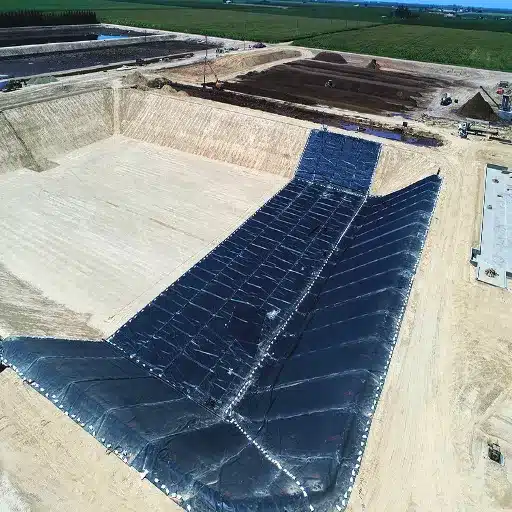
The best quality HDPE geomembrane can also be the lowest in performance if not correctly installed or welded as per standards. Proper subgrade preparation, seam execution, and quality control should be a driving scheme.
Subgrade Preparation
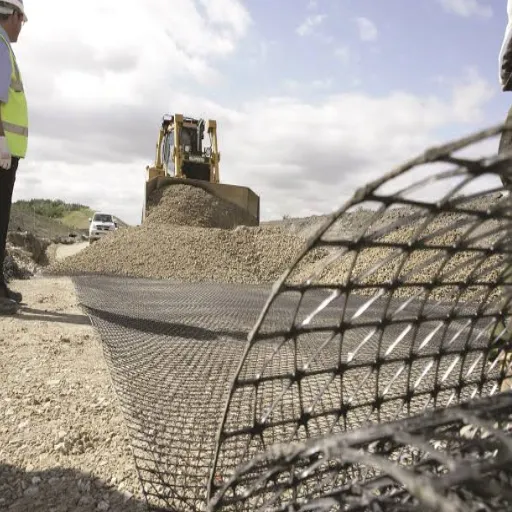
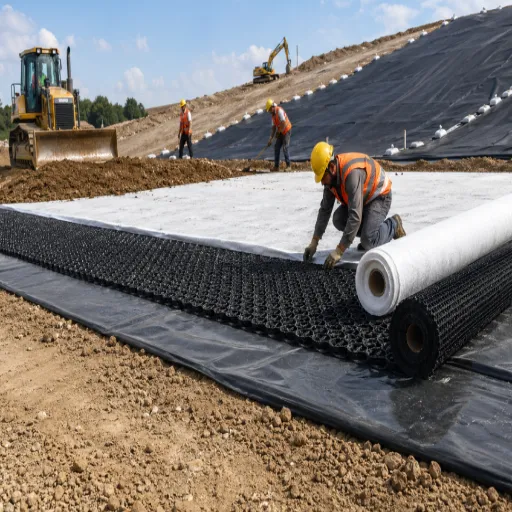
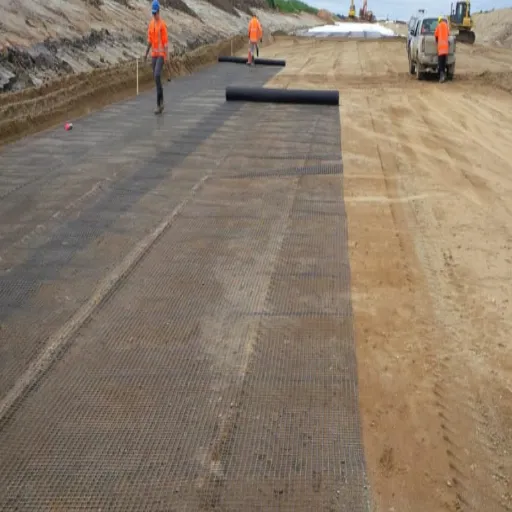
Before being deployed, the soil below should be entirely free from harsh rocks, debris, tree roots, and protrusions. It must be fairly smooth and properly compacted. In rocky or undulating land, a protective layer of nonwoven geotextile should be laid down on the soil cover before the geomembrane.
Welding Methods
Two welding methods can be used with HDPE geomembranes:
- Hot wedge welding: This is a common practice for long field seams. One edge of the overlapping panels is heated with a wedge, and the two panels are pushed together. Melting of the heated overlapping edges causes a fusion bond.
- Extrusion welding: This is normally used with patching, detailing, repairs, and areas where hot wedge access is limited. A specific HDPE welding rod is extruded into a prepared groove between panels.
Both methods require the training of certified welders to achieve the desired seam strength target of ~95%.
Testing and Construction Quality Assurance
Quality control should include:
- Non-destructive testing: Air and Vacuum tests are sophisticated techniques checking for leaks in the field seams.
- Destructive peel testing: Extract some pieces around the production seams and subsequently test them in the laboratory to calculate Peel and Shear strengths.
- Third-party test reports: Independent estimates of the resin grade, tensile, and punch resistance, as well as OIT for use before and during installation.
Each part of the project is documented during the installation process, from the subgrade inspection until it is Z-finned. Construction Quality Assurance (CQA) and Construction Quality Control (CQC) programs bear the submission burden.
What to Demand from an International Supplier
There should be no bids based on the price of supplying HDPE geomembrane to overseas projects, while four criteria should be examined for any supplier:
- Quality management systems: ISO-9001 should be present as an indicator of how well the supplier maintains systematic control of material uniformity and dimensional accuracy.
- Product testing and sample retention: A good supplier will save production samples and test records for each batch to maintain traceability.
- Export logistics capability: Container loading, export documentation, transit tracking, and increased costs on landings are all improved.
- Technical consultation: Suggestions on proper selection in terms of thickness, welding standards, and installation support on a project-by-project basis.
Shanxi Shengxing fabricates HDPE geomembrane in its production plant to cater to rigorous quality requirements that meet the ISO9001 norms. It holds its test samples for five years to ensure batch consistency and provides technical advice and custom recommendations for globally responsible infrastructure management and environmental projects.
Total Cost of Ownership and Sourcing Considerations
The per square meter price of high-density polyethylene (HDPE) geomembrane is just one part of the total cost of a project. Wise buyers consider holistic economics.
Material Cost vs. Lifecycle Value
Normally, virgin HDPE geomembranes cost less per square meter than LLDPE and significantly less than EPDM. Nevertheless, the lowest quote may not always represent the best value. Low-bidder suppliers, for instance, may use recycled resins, bypass testing their quality, or produce irregular thicknesses. The real cost of liner failures, which includes remediation, project delays, and regulatory fines, almost always exceeds the savings from such a cheap purchase at the outset.
Hidden Costs to Calculate
- Freight and logistics: Roll dimensions, weight, and container efficiency affect shipping cost
- Installation labor and equipment: Thicker, heavier rolls require more crew and machinery
- Welding supervision and CQA/CQC: Independent quality assurance adds upfront cost but reduces failure risk
- Site restoration and remediation: The cost of fixing a leak far exceeds the cost of preventing it
An Australian mining contractor initially selected a budget HDPE geomembrane supplier for a 40,000 m² tailings pond to reduce capital expense. Within 18 months, pinhole leaks were detected along poorly welded seams. The remediation required draining the pond, cutting out failed seams, and rewelding under full CQA supervision. The total repair cost was three times the original liner purchase price. The contractor subsequently standardized on thicker HDPE geomembrane with mandatory third-party testing and certified welders.
Conclusion
HDPE Geomembrane is not just one of the commodities. This is a material of construction that the application phase will define its security, compliance, and viability in any containment project development that one is running.
Here are the key takeaways:
- Understand the material: The HDPE Geomembrane is made up of virgin HDPE resin with carbon black, imbued with UV resistance; rated to allow permeability not more than 1×10⁻¹³ cm/s
- Match thickness to application: Aquaculture may require specifications from 0.5 mm, while landfills and mining require 1.5 mm or thicker
- Verify mechanical and chemical properties: Tensile strength ≥27 MPa, Good Chemical Resistance on a pH range of 0.5 to 14, ESCR ≥500 hours
- Demand proper welding and testing: All welding personnel should be accredited, hot wedge or extrusion welding, and destructive testing for the partition
- Evaluate total cost of ownership: More significant than the front price, the other concerns include product reliability, quality installations, and help from the supplier.
- Source with global logistics in mind: ISO9001 certification, sample retention, export packaging, and technical consultation separate reliable suppliers from product-only vendors
The correct HDPE geomembrane can therefore protect the project, the site, and the reputation for decades.
Ready to select HDPE geomembrane for your next containment project? Request a technical quote and get customized recommendations on thickness, texture, and specifications based on your project requirements.
Frequently Asked Questions
What is HDPE geomembrane?
HDPE geomembrane is an artificial liner created from high-density polyethylene resin. This kind of material is designed for civil and environmental engineering use to stop the flow of liquid, gas, or contaminants across it. It represents one of the highest impermeable containment materials achievable because it possesses the value of permeability below 1×10⁻¹³cm/s.
What thickness of geomembrane do I use?
This will depend on the application. Aquaculture ponds normally choose between 0.5 mm and 0.75 mm. Irrigation canals and wastewater ponds choose between 0.75 mm and 1.5 mm. MSW Landfills always require a minimum thickness of 1.5 mm. Heap leach pads provide a thickness range of 1.5-3.0mm in mining operations, and hazardous waste containment provides 1.5 to 3.0 mm.
How long does HDPE geomembrane last?
A buried HDPE geomembrane can have an expected service life of 50 to 70 years. While an exposed liner, which is exposed to UV rays and weathering, could have an expected service life ranging from 5 to 20 years, depending on carbon black content, thickness, and maintenance.
What makes HDPE and LLDPE geomembrane different?
HDPE has lower permeability, higher cost-effectiveness, and higher chemical resistance, as such material is commonly used in landfills and mining. LLDPE is higher by 30–40% at costs-it is flexible enough and provides better performance in moving or steeper slopes against HDPE.
Can HDPE geomembrane be shipped internationally?
Yes, it can. Companies import HDPE geomembranes-coiled rolls can be containerized for overseas shipping. Look for reputed suppliers shipping internationally with ISO9001 certification, export experience, and properly documented logistics support.