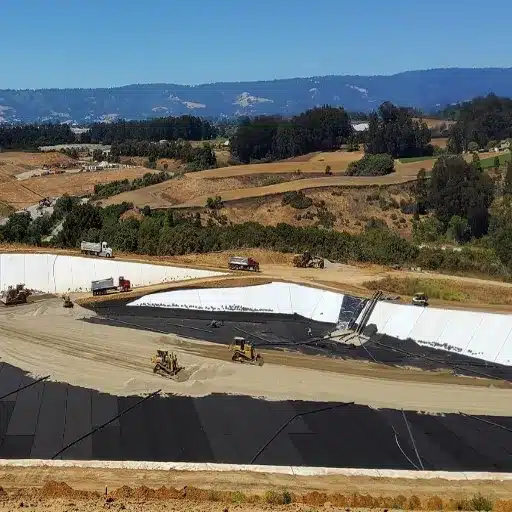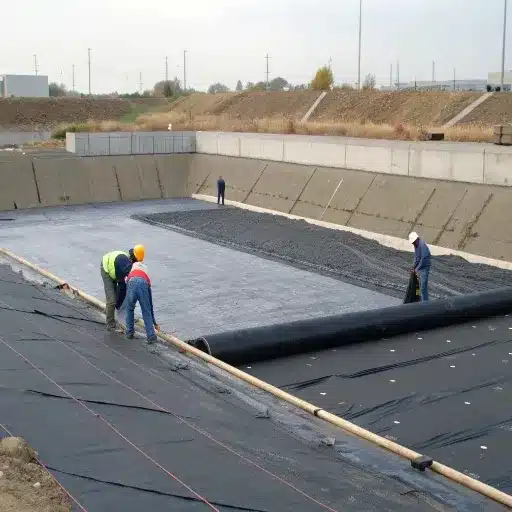
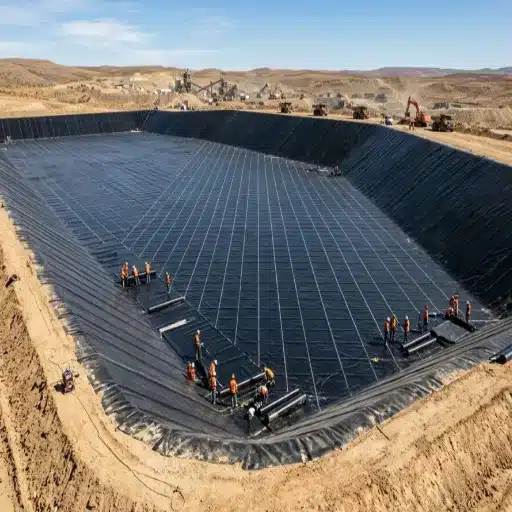
ASTM D6693 is a well-known standard evaluation method for non-reinforced HDPE geomembrane tensile properties, including yield strength, break strength, and elongation. It provides a procedure for measuring the mode used by engineers to verify whether the geomembrane material can withstand the stress of installation and loading in areas of containment.
What if the liner that you just approved failed not because of poor installation but because of an incomplete specification?
This happens in projects the world over. Procurement will be furnished with a test report that states that the HDPE geomembrane was “tested per ASTM D6693.” The numbers will seem fair. The company will appear credible. But unfortunately, nobody questioned whether the numbers are good enough for the application-specific minimum performance. Six months of backfilling later, the seams seemed to be cracked. The sheet got torn by the settlement. The containment system leaks.
The ASTM D6693 test method does not necessarily cause the root problem. The source of trouble is such confusion regarding what ASTM D6693 is and what it is not.
By way of this guide, you will learn what ASTM D6693 is really measuring, how it comes from GRI-GM13, and how to interpret a tensile test report with confidence. You will also receive the specification tables, according to thickness, write-up language suitable for copying and pasting in tenders, as well as a list of red flags indicating poor-quality content.
Key Takeaways
- ASTM D6693 is a test method that measures tensile yield strength, break strength, and elongation of HDPE geomembranes using Type IV dumbbell specimens.
- ASTM D6693 alone does not define pass or fail limits; GRI-GM13 sets the minimum performance thresholds and references ASTM D6693 as the test procedure.
- A 1.5-mm thick HDPE geomembrane shall have a minimum yield strength of 22 kN/m and a break strength of 40kN/m as prescribed in GRI-GM13 Standard, tested using ASTM D6693.
- Quality HDPE geomembranes must have a break elongation that is equal to or greater than 700% to allow the liner to elongate during settlement without rupture.
- Ensure that there are CNAS or ISO 17025 accredited test reports from a third party, as only a within-factory report is not adequate for critical containment applications.
What Is ASTM D6693?
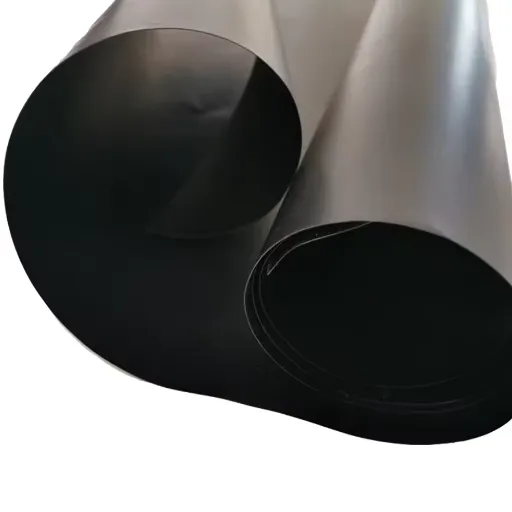
Under the provisions of ASTM D6693, we have the standard procedures on how tensile characteristic properties are determined in polyethylene and polypropylene geomembranes that are not reinforced. This standard is developed by ASTM International and can be used for materials having a thickness between 0.25 and 6.3 millimetres, and falling among the types of HDPE, LLDPE, and flexible polypropylene geomembranes.
This standard defines how a laboratory staff prepares samples, installs them on a universal tensile testing equipment, and measures the load versus displacement until rupture. However, it does not specify whether a result is correct depending on the project. That is a decision left to the materials specifications like the GRI-GM13 or any given project performance requirements.
Consider ASTM D6693 like a scale. It provides instructions on how to measure. It does not provide information on whether the measured distance is adequate.
Type IV Dumbbell Specimen
ASTM D6693 requires the use of a Type IV dumbbell-shaped specimen. This geometry minimizes stress concentrations at the grip boundaries and provides a uniform gage section where the material is most likely to fail. The specimen is die-cut from the geomembrane sheet in both the machine direction (MD) and the transverse direction (TD).
Testing in both directions matters because geomembrane manufacturing can create anisotropic properties. A sheet may be stronger in the direction it was extruded than across its width. Reporting only one direction can mask a weakness that becomes critical under field loading.
Test Procedure
The standard procedure involves mounting the specimen in calibrated grips and applying tensile load at a constant crosshead speed of 50 mm/min. The machine records the complete load-elongation curve. From this curve, technicians extract four key properties:
- Tensile strength at yield
- Tensile strength at break
- Elongation at yield
- Elongation at break
Crosshead displacement serves as the strain index rather than an extensometer measurement. This prioritizes practical repeatability in routine quality control over theoretical precision. For most engineering procurement purposes, the crosshead method provides consistent and comparable results across laboratories.
ASTM D6693M: The Metric Version
ASTM D6693 can be distinguished from ASTM D6693M, where both standards actually cover the same test method. However, in contrast to ASTM D6693, D6693M uses only SI units. For international procurement and works abroad, ASTM D6693M should be referenced if tests need to be carried out in millimeters, kilonewtons per meter, and thickness directly in the metric system. This will avoid conversion errors and simplify cross-border procurement.
What ASTM D6693 Measures: The Four Key Properties
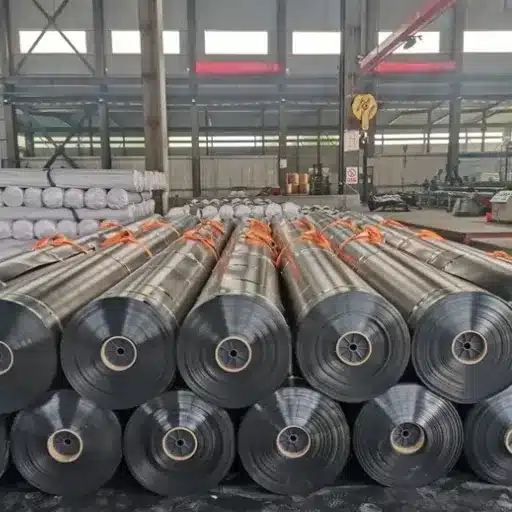
Understanding the four tensile properties measured by ASTM D6693 helps engineers evaluate whether a geomembrane will survive installation and decades of service.
Tensile Strength at Yield
Yield strength refers to the stress at which the HDPE geomembrane develops permanent plastic deformation. This limit is termed the yield strength, when, up to this limit, the material returns to its original appearance; after this limit, materials are stretched permanently.
Installation with yield strength is quite important because geomembrane sheets are pulled, folded, and tensioned. If the aforementioned stress exceeds the yield stress limit, as stress is applied far beyond a certain point, the liner deforms per se. The localized formation of a thin layer can also create weak sites where the resistance to perforation or tear is lessened.
Under the requirements of the GRI-GM13 document, a 1.5 mm thick smooth HDPE geomembrane should have a minimum yield strength value of 22 kN/m when measured in congruence with ASTM D6693.
Tensile Strength at Break
Break strength is the highest load that a material can withstand before it breaks. This describes the ultimate tensile strength of the geomembrane.
As soon as any liner is subjected to unexpected loading, it is break strength that is critically important. Subsidence, thermal expansion, wind uplifting during installation, or placement pressure could create tensile stresses. Adequate break strength in a liner can do away with these loads before any catastrophic failure.
In this respect, GRI-GM13 finds that a 1.5 mm HDPE geomembrane with 40 kN/m break strength would fit the bill.
Elongation at Yield
This yield elongation has the tendency to provide a hint regarding the amount of stretch the material might undergo before the material would go into permanent deformation. Typically, HDPE geomembranes depict yield elongation falling between 12%. This is not very high. HDPE is stiff compared to very flexible materials like LLDPE or PVC.
The stiffness of HDPE has a definite advantage in containment applications. It can resist deformation under load while retaining its shape even over various temperature cycles. However, while that’s good, it could spell great care and attention in handling during installation since it is very near to yield strain.
Elongation at Break
This elastomeric property can be assessed via its elongation at break measurement. It should be noted that needle-punched composite for geosynthetic applications is superior in strength to common high-density polyethylene fabrics. This superior ductile integrity is why the high-density polyethylene is catching the wider geomembrane market.
High elongation at break is indicative of the film being able to accommodate the settlements of the subgrade without being able to suffer fragment or ripping. It is known that lands where landfills or reservoirs are constructed settle differently due to the age of the soil. That means that the geomembrane must be able to stretch and spread the stresses much further. A liner having a 700% elongation can withstand very large deformations, which would break the material that is more brittle than it is.
Seven years after the provisioned installation of a 2.0 mm thick HDPE geomembrane in a mining tailings pond in Peru by the engineering team in 2017, the main reason for the thickness choice has been the potential settlement through loading of saturated tailings. At present, differential settlement of over 300 mm has occurred in some zones. The geomembrane, however, remains intact. The 700% minimum elongation specified under GRI-GM13 and verified by ASTM D6693 provided the deformation capacity needed to bridge the settlement without seam failure.
ASTM D6693 vs. GRI-GM13: The Critical Difference
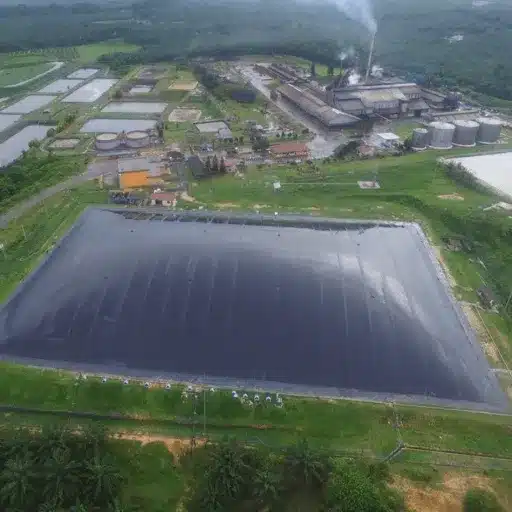
The most common and costly mistake in geomembrane procurement is treating ASTM D6693 as a quality benchmark. It is not. ASTM D6693 is a test method. GRI-GM13 is the specification that defines whether the tested material is good enough.
| Aspect | ASTM D6693 | GRI-GM13 |
|---|---|---|
| What it is | Standard test method | Material specification |
| What does it tell you | How to measure tensile properties | What the measured values must be |
| Scope | Tensile properties only | Complete HDPE quality system |
| Sets pass/fail limits? | No | Yes |
| Analogy | The ruler | The passing grade |
GRI-GM13 outlines the minimum average roll value (MARV) values only applicable in the geotechnical hybrid, too, for physical, mechanical, and durability properties. As per the standard ASTM D6693, the tensile properties mentioned are determined. The standard also refers to ASTM D5199 on thickness, ASTM D4218 for ascribing the carbon black content, ASTM D4833 for puncture resistance, ASTM D5397 for stress crack resistance, D3895 for oxidative induction time.
From a vendor claiming that his product meets ASTM D6693, you have not been told that this means that they know how to do the test. He has not declared whether the substance achieves industry-approved quality standards.
When writing criteria for a project, it will be compulsory to incorporate it within the specification: “HDPE geomembrane shall conform to the requirements of GRI-GM13, with the tensile property being determined by ASTM D6693.” Equating the test method purposely with the performance benchmark will not leave any ambiguity over what constitutes acceptable material.
HDPE Geomembrane Tensile Specifications by Thickness
HDPE geomembrane yield strength and break strength requirements scale with thickness. Thicker geomembranes contain more material per unit width, so they resist higher loads. For a detailed comparison of thickness options, see our HDPE geomembrane thickness guide. The table below shows typical GRI-GM13 minimum values tested via ASTM D6693 for smooth HDPE geomembrane.
| Thickness | Mil Equivalent | Yield Strength (kN/m) | Break Strength (kN/m) | Elongation at Break (%) |
|---|---|---|---|---|
| 1.0 mm | 40 mil | >= 15 | >= 27 | >= 700 |
| 1.5 mm | 60 mil | >= 22 | >= 40 | >= 700 |
| 2.0 mm | 80 mil | >= 29 | >= 53 | >= 700 |
| 2.5 mm | 100 mil | >= 36 | >= 66 | >= 700 |
| 3.0 mm | 120 mil | >= 44 | >= 80 | >= 700 |
These values represent MARVs, not individual specimen minima. A MARV is the minimum average value expected across an entire roll of material. Individual test specimens may fall slightly below the MARV, but the roll average must meet or exceed it.
Engineering selection typically follows these guidelines:
- 1.0 mm (40 mil): Canals, irrigation ditches, aquaculture ponds, secondary containment
- 1.5 mm (60 mil): Landfill base liners, wastewater ponds, reservoirs, standard containment
- 2.0 mm (80 mil): Mining heap leach pads, hazardous waste, aggressive subgrades
- 2.5-3.0 mm (100-120 mil): Heavy industrial containment, primary hazardous waste barriers, tailings dams
Mining applications such as heap leach pads and tailings dams impose particularly aggressive loading conditions. For a dedicated look at mining containment, see our guide to HDPE geomembrane in mining applications. For a deeper look at how thickness selection affects project outcomes, see our guide to HDPE geomembrane landfill liner specifications.
How to Read an ASTM D6693 Test Report
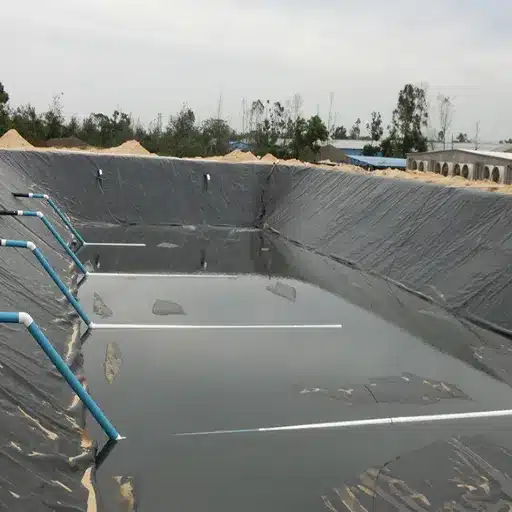
A well-structured test report gives you everything you need to verify material quality. A poor report hides critical information or omits it entirely. Here is what to look for.
Essential Report Elements
Then, all test reports following the ASTM D6693 standard must include the following:
- Specimen type: The Type IV dumbbell-type specimen should be indicated.
- Test speed: This should indicate that the ASTM D 6693 describes the speed with which tests should take place (50 mm/min for HDPE geomembrane).
- Number of specimens: Include at least five specimens per direction (MD and TD)
- Directional data: Results should be different between the machine and transverse directions
- Test standard: Should cite ASTM D6693 or ASTM D6693M as definitive
- Laboratory accreditation: Accredited according to CNAS, ISO 17025, or equivalent
Comparing Results to GRI-GM13
Once you have the report values, compare them directly to the GRI-GM13 minima for the specified thickness. Even here, using the example of a 1.5-mm geomembrane having a tensile yield strength of 24 kN/m and ultimate tensile strength (UTS) of 43 kN/m, both figures exceeded the minimal figures set in GRI-GM13, that is, they reached 22 kN/m and 40 kN/m, respectively. The material is approved.
If the material is mentioned to have a yield strength of 19 kN/m for 1.5 mm thickness, clearly indicated below is a sure fail from GRI-GM13, even though the material is “tested per ASTM D6693.” That’s the difference that keeps your project away from substandard material.
Red Flags in Test Reports
Be cautious if any of the following is addressed in a supplier report:
- Any missing directions (only one direction tested)
- Five or fewer specimens in any direction
- No laboratory accreditation was stated
- Reference to ASTM D6693 without GRI-GM13 comparison values
- Supplier’s own in-house lab without third-party verification
Factory-internal test reports are highly beneficial in terms of manufacturing quality control, but don’t go very far in cases where critical containment projects are concerned. However, always seek a separate third-party (in addition to an accredited lab) that will be charged with testing.
When a 1.5mm HDPE geomembrane liner for a landfill is quoted to a Southeast Asian procurement manager, the supplier supplied data to show the internal testing results of the tensile properties (yield: 23 kN/m and break: 41 kN/m). These measured strengths exceed the GRI-GM13 standard. However, the report demonstrates no information on its stress crack resistance and carbon black dispersion, labeled as “acceptable” without a category rating. In the subsequent CNAS examination as an independent auditor, the third-party CNAS test revealed that the material tested only 180 hours for PE stress cracking, which is far below even the GRI-GM13 minimum of 300 hours. The buyer rejected the batch and sourced GRI-GM13-compliant material elsewhere, avoiding a potential liner failure that could have triggered environmental penalties.
Related ASTM Standards for HDPE Geomembrane Quality
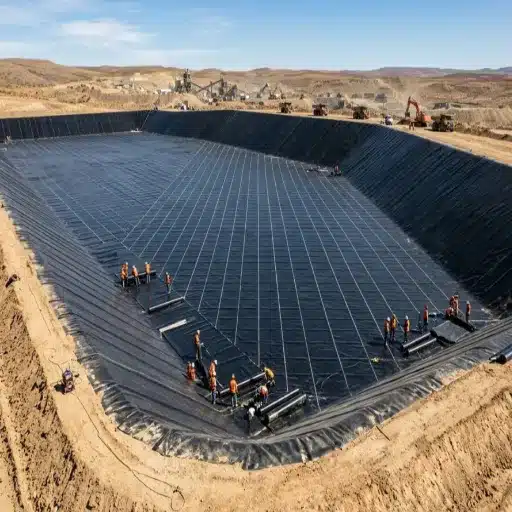
ASTM D6693 covers tensile properties, but a complete quality assessment requires additional tests. GRI-GM13 references the following ASTM methods to build a full picture of material performance.
Physical Properties
ASTM D5199 measures thickness at multiple points across the roll. Thickness directly affects puncture resistance, chemical diffusion resistance, and welding heat requirements.
ASTM D1505 or ASTM D792 measures density. True HDPE must have a density of at least 0.940 g/cm3. Lower density indicates diluted or blended resin that may compromise chemical resistance and mechanical strength.
ASTM D4218 measures carbon black content. GRI-GM13 requires 2.0% to 3.0% carbon black for UV stability. Without adequate carbon black, exposed liners degrade rapidly under sunlight.
Mechanical Properties
ASTM D4833 measures puncture resistance. This test simulates the impact of sharp subgrade objects during installation and service.
ASTM D1004 measures tear resistance. A high tear strength prevents small nicks or cuts from propagating across the liner during handling and placement.
ASTM D5397 measures stress crack resistance using the Notched Constant Tensile Load (NCTL) test. This is one of the most important durability indicators. GRI-GM13 requires a minimum of 300 hours for standard HDPE and 500 hours for premium grades. Low stress crack resistance predicts brittle failure at welds and anchor trenches over time.
Durability Properties
ASTM D3895 measures standard oxidative induction time (OIT) at 200 C. GRI-GM13 requires a minimum of 100 minutes. This indicates how well the antioxidant package protects the resin from thermal oxidation during processing and early service life.
ASTM D5885 measures high-pressure OIT (HP-OIT). GRI-GM13 requires a minimum of 400 minutes. HP-OIT provides a better predictor of long-term oxidative stability in buried applications where oxygen exposure is limited but sustained.
Tensile strength tells you how the material performs on test day. Stress crack resistance and OIT tell you how it will perform in year twenty. Both matter.
Specifying ASTM D6693 in Your Project Documents
The language you use in tenders and specifications determines what you actually receive. Vague phrasing invites substitutions and non-compliant material. Precise phrasing protects project quality.
Recommended Specification Language
Use the following clause in project documents:
HDPE geomembrane is to be manufactured from high-density polyethylene resin, which is virgin. It shall meet the validity of GRI-GM13. Tensile properties shall be subject to determination by ASTM D6693 (or ASTM D6693M for metric projects). It shall be ensured that the minimum average roll values meet or exceed the GRI-GM13 requirements for the given thickness. Testing shall also be conducted by a third-party laboratory accredited to ISO 17025 or CNAS.
Language to Avoid
- “Tested to ASTM D6693” (insufficient; does not establish pass/fail criteria)
- “Meets applicable ASTM standards” (vague; does not specify which standards or minimum values)
- “Manufacturer’s test report acceptable” (removes independent verification)
Testing Frequency
Standard GRI-GM13 gives frequency requirements for MQC programs regarding the minimum testing of geomembranes. Generally, tensile tests per ASTM D6693 will follow a statistical sampling protocol that utilizes a sample from each production lot. For crucial projects, it should also be considered if tests are conducted on a roll-by-roll basis or, for that matter, every fifth roll to avoid having to rely on lot sampling only.
Conducting seam strength and failure testing destructively per ASTM D6392, CQA testing shall include as-built thickness verification tests at the site. These tests are applied to verify both the supplied material with the certificate test report and field welding longitudinally against design specifications. To find out the preferred field implementation, please see our geomembrane installation best practices.
Common Mistakes and Red Flags in Supplier Claims
Some suppliers can refer to ASTM D6693 while not really offering quality materials: here are the most typical signifiers of a product that might not be able to meet project requirements.
Red Flag 1: “Tested to ASTM D6693” Without GRI-GM13 Values
Misconception traditionally permeates a well-noted sector: testers without a GRI-GM13 minimum are generally confused with respect to this ASTM D6693 test method, and believe ASTM D6693 to be that: a test method, not a quality standard. These can give their supplier the satisfaction that his/her material provided under that ASTM test number is deemed to fully comply with the industry-accepted thresholds for performance.
Red Flag 2: Missing Stress Crack Resistance or OIT Data
Tensile strength does represent a short-term mechanical property, and it does not speak to how the material might respond after years of chemical and load exposure; these usually should be proper ASTM methods for stress crack resistance and OIT, such as ASTM D5397 and ASTM D3895.
Red Flag 3: Carbon Black Dispersion Not Rated Category 1 or 2
Carbon black must scatter uniformly throughout the resin so that it can offer even and sufficient UV protection. According to ASTM D5596, this is on the detection scale, wherein any Category 1 or 2 is enough, but any Category 3 or above is not enough. It means that the mixing and homogenization job done there is incomplete, and you still have weak spots.
Red Flag 4: Post-Consumer Recycled Resin Claims
For virgin HDPE resin and all clean rework material produced in the same manufacturing process, GRI-GM13 is the most stringent. Unknown contaminants, inconsistent molecular weight, and random stress crack behavior are introduced by post-consumer recycled materials. The use of virgin resin only applies to applications like landfills, mining, and water containment.
Red Flag 5: No Third-Party Laboratory Accreditation
Although factory laboratories can provide decent, acceptable results, business partners and worldwide regulators require an acceptable impartiality. No more than an accreditation to ISO 17025, CNAS, or its equivalent on the national level is granted.
The material meant for use brought about both tensile quality and longevity, especially as it was the geared selection of proper resin kind with the application requirements.
Conclusion
ASTM D6693 assures that tensile strength can be measured. GRI-GM13 passes those measurements. You do need to know the difference and save the project from defective materials, regulatory breaches, and expensive restorative works.
For all types of containment using HDPE geomembrane, it is advisable to request GRI-GM13 compliance when filling out the paperwork for tensile tests per ASTM D6693. Cross-check the test report if all such material direction orientation data is reported, third-party laboratory extension accreditation, and that all the durability testing, including predicting the long-term testing, is covered. Include stress cracking resistance, oxidation induction temperature, and carbon black concentration measurements within the report, aside from the tensile properties.
The global geomembrane industry is expected to reach a total of USD 3.59 billion by 2034, up from just USD 2.23 billion in 2025. HDPE geomembrane ASTM D6693 includes everything as it stands everywhere as the primary weapon. However, this effectiveness will not respond to any misapplication by mistakes, lack of testing, or implementation with loose standards. Each material was given the acting agent’s tool for its perfection guidelines, and today a lining specialist is expected only to create muy querido actions.
Ready to source GRI-GM13 compliant HDPE geomembrane for your next project? Request a technical quote to receive tailored thickness recommendations, full test documentation, and export-ready delivery options.
For a broader overview of geomembrane selection and application, see our complete guide to geomembrane products.
Frequently Asked Questions
What is the difference between ASTM D6693 and GRI-GM13?
ASTM D6693 is a method proposed by ASTM for understanding the manner in which a person must count on the tensile properties of geomembranes. On the other hand, GRI-GM13 is a general specification of material that provides for minimally acceptable values for most of the properties. ASTM D6693 says how to count, and GRI-GM13 gives the criteria for passing.
What does the ASTM D6693 test?
ASTM D6693 tests four tensile properties: tensile strength at yield, tensile strength at break, elongation at yield, and elongation at break. They are determined using Type IV dumbbell specimens pulled at speeds provided by the manufacturer up to 50 mm/min.
How thick should the HDPE geomembrane be for a landfill liner?
The U. S. Environmental Protection Agency mandates, under Subtitle D, that at least 1.5 mm or 60 mil thick HDPE geomembrane is essential for suspecting that it’s all for municipal solid waste landfill liners. In mining and hazardous waste applications, 2.0 mm or thicker HDPE geomembrane will be necessary.
Can I trust the supplier’s internal test reports?
While factory-intended test reports prove to be useful for manufacturing quality control, they cannot be the sole ground for accepting a material on critical projects. It is always advisable to get third-party testing from ISO 17025 or CNAS-accredited laboratories.
What other tests do I need besides ASTM D6693?
For thorough quality auditing, it also requires ASTM D5397 for drafting this, to analyze stress crack resistance, ASTM D3895 for the usual OIT, ASTM D5885 for high-pressure oil, ASTM D4833 for promising puncture resistance, ASTM D4218 for the amount of carbon black fillers, and ASTM D5199 standard for thickness verification.