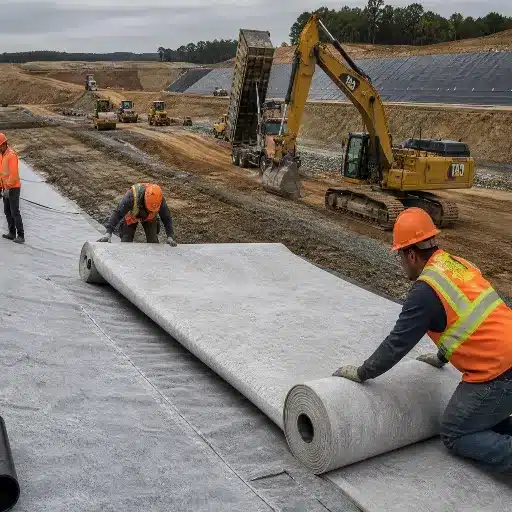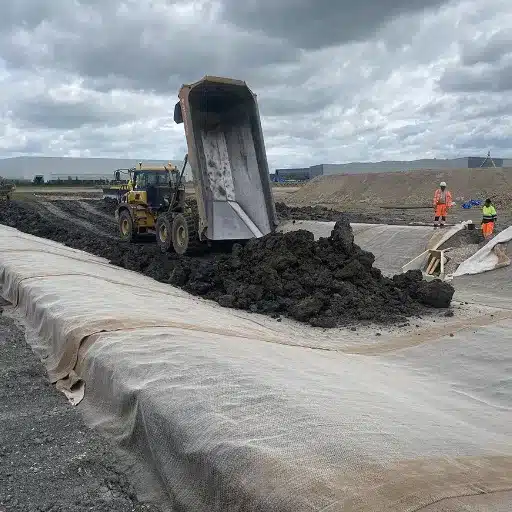
In 2026, HDPE geomembrane will cost approximately $0.50–$5.50 per square meter, only for the material alone; costs of installation and completion of the project as a whole normally vary between $1.50–$15.00 per square meter, subject to thickness, use, and place.
The simplest quote may often be the most difficult realization for the sourcing team.
They might sell recycled material at $0.65 per square meter; however, when the liner fails and requires complete replacement in year 8, it would be cost thriftier in three times. It is true that engineering purchasing agents who come to only consider the price make it a practice to skip the cost of freedom premiums’ certification costs, freight, and installation expenses, together with the biggest contributor: the cost of owning a project across its useful life.
There is this understanding among many that HDPE geomembrane provides the impervious barrier, up to and including a permeability of 1×10⁻¹³ cm/s. However, the further demand is the conditional transparency of the cost management, which means price efficiency criteria formulated in terms of resonance with the efficacy of implementation. Below is provided detail of material costs based on their thickness and volume up to 2026. The method for determining landed costs accounting for procurement from foreign countries is given, and the 25-year costing is the ‘dawn’s early light’ that turns an otherwise independent investment into a paying period mistake.
Key Takeaways
- In 2026, you should expect the material-only HDPE geomembrane to cost around $0.50/m² (0.5 mm) at the lowest and $5.50+/m² (3.0 mm premium) at the highest.
- For orders above 50,000m², 18%–25% factory discounts are granted through collective purchasing.
- This price includes transportation costs, insurance, and even taxes as needed. Add $0.20 – $0.85/m² to ex-factory cost.
- Installation with auxiliary materials usually costs an additional $0.90 – $3.50/m².
- Nevertheless, over 25 years, the TCO of virgin-certified HDPE is cheaper than that of cheaper recycled alternatives despite the initial cost being higher.
How Much Does HDPE Geomembrane Cost in 2026?
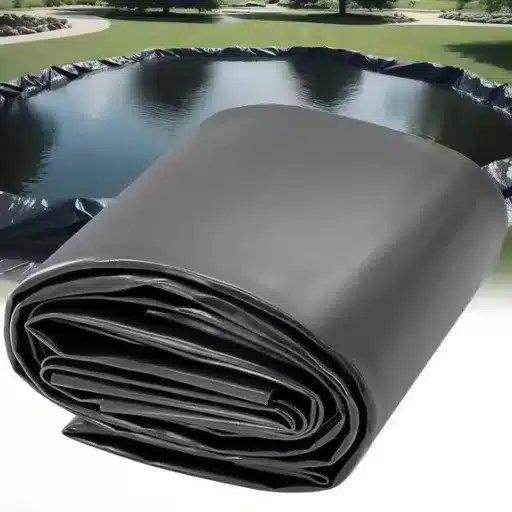
Material-Only Price by Thickness
Thickness is the primary cost driver for HDPE geomembrane. Each 0.5 mm increment adds approximately $0.20–$0.50 per square meter due to higher resin volume. The following table summarizes typical ex-factory price ranges for virgin HDPE geomembrane material:
| Thickness | Price Range (USD/m²) | Typical Application |
|---|---|---|
| 0.5 mm | 0.50–1.20 | Aquaculture, decorative ponds |
| 0.75 mm | 0.80–1.60 | Irrigation canals, reservoirs |
| 1.0 mm | 1.10–2.00 | Water storage, landfill capping |
| 1.5 mm | 1.50–2.80 | Landfill liners, industrial containment |
| 2.0 mm | 2.30–3.80 | Mining tailings, heap leach pads |
| 2.5–3.0 mm | 3.00–5.50+ | Hazardous waste, high-pressure |
For most civil and environmental projects, the 1.0–1.5 mm range covers standard containment needs. Premium specifications for critical applications such as hazardous waste or mining process water push costs toward the upper end of the scale.
Premium Brand vs Manufacturer-Direct Pricing
Usually, premium brands like GSE Environmental, Solmax, and AGRU America demand 10% – 25% higher than factory-direct prices for the equivalent certified material as per the GRI-GM13 rating. This branded overhead charge results in higher delivery costs, not in an impulse to manufacture it differently. At the end of the day, you are paying for the brand, as well as the regional distribution markup, not for material quality.
When a procurement team in Nairobi sourced 45,000 m² of 1.5 mm GRI-GM13 HDPE geomembrane for a municipal landfill in early 2026, they evaluated quotes from three global brands and two ISO9001-certified Chinese manufacturers. The manufacturer-direct quote came in at $1.85/m², 22% below the lowest global brand quote, with identical mill test reports and third-party verification. By prioritizing certification over brand name, they saved approximately $18,400 on material alone.
10 Factors That Drive HDPE Geomembrane Price
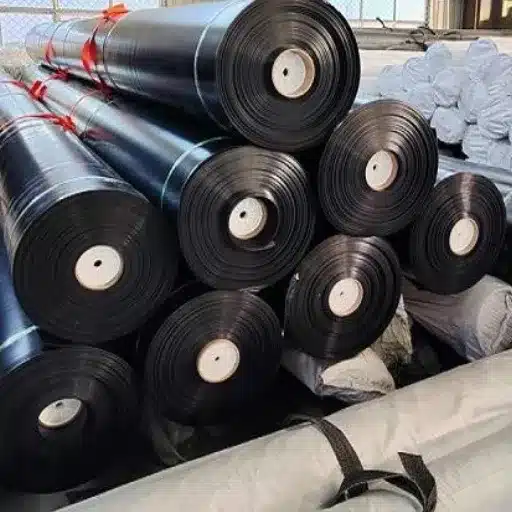
Understanding what moves the price per square meter helps procurement teams negotiate from a position of knowledge. Here are the ten primary cost drivers:
- Thickness. Each 0.5 mm increment adds $0.20–$0.50/m². A 2.0 mm liner uses four times the resin of a 0.5 mm sheet.
- Raw material quality. Virgin HDPE resin costs 20–30% more than recycled or blended alternatives. Virgin material delivers a 40–100 year lifespan versus 10–20 years for recycled.
- Surface type. Textured HDPE carries a 10–20% premium over smooth due to specialized manufacturing. Conductive layers for leak detection add $0.50–$1.00/m².
- Order volume. Small orders under 5,000 m² pay fabrication premiums. Orders above 50,000 m² unlock 15–25% bulk discounts.
- Roll dimensions. Standard 5.8 m and 7 m widths are most cost-efficient. Custom widths increase costs by approximately 10%.
- Certifications. GRI-GM13 and ASTM D7931 compliant products cost 10–20% more. The premium reflects rigorous testing and traceability.
- Additives and custom features. Non-standard colors, enhanced UV packages, or composite bonding add $0.05–$0.50/m².
- Regional market conditions. Labor, regulatory, and logistics costs create 40–60% price spreads between Asia-Pacific and North American markets.
- Raw material volatility. HDPE resin tracks crude oil. In 2026, resin prices rose approximately 4%, pushing geomembrane prices up 5–7% year-over-year.
- Currency and trade terms. FOB pricing leaves freight risk with the buyer. CIF terms add $0.15–$0.35/m² but consolidate logistics control under the supplier.
Each factor interacts with the others. A large-volume order of textured 2.0 mm liner in CIF terms carries four separate premiums that stack on top of the base material cost.
Bulk Pricing Tiers and Negotiation for Engineering Buyers
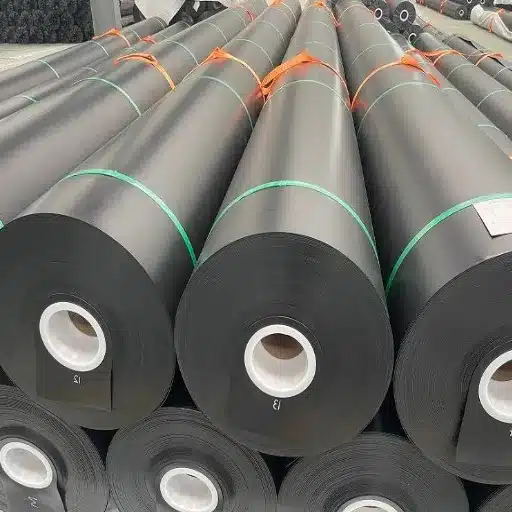
Volume Tier Structure
Manufacturers structure pricing around production efficiency and raw material procurement economies. The following tiers represent typical discount frameworks for 1.5 mm smooth HDPE geomembrane:
| Order Size | Typical Discount vs Base | Unit Price Range (1.5 mm) |
|---|---|---|
| < 5,000 m² | Base price | $1.80 – $2.80 |
| 5,000 – 20,000 m² | 5–10% | $1.60 – $2.50 |
| 20,000 – 50,000 m² | 10–18% | $1.45 – $2.30 |
| 50,000 – 100,000 m² | 18–25% | $1.35 – $2.10 |
| > 100,000 m² | 25%+ (negotiated) | Custom quote |
Negotiation Levers
Consolidating project phases into a single order is the fastest way to move up the tier ladder. A contractor planning two 25,000 m² landfill cells saves more by ordering 50,000 m² at once than by ordering separately.
Additional levers include:
- Accepting standard 5.8 m roll widths to avoid customization surcharges
- Committing to multi-year supply agreements for ongoing projects
- Requesting bundled pricing that includes geotextile underlay and welding accessories
- Locking in pricing with 90-day validity periods during oil-price stability windows
- Offering flexible delivery scheduling that aligns with the manufacturer’s production queue
The strongest negotiating position comes from a detailed specification sheet. When a buyer defines thickness, surface type, standard, and roll dimensions precisely, suppliers compete on price rather than on vague scope.
Freight, Logistics, and Landed Cost Calculation
Container Loading Efficiency
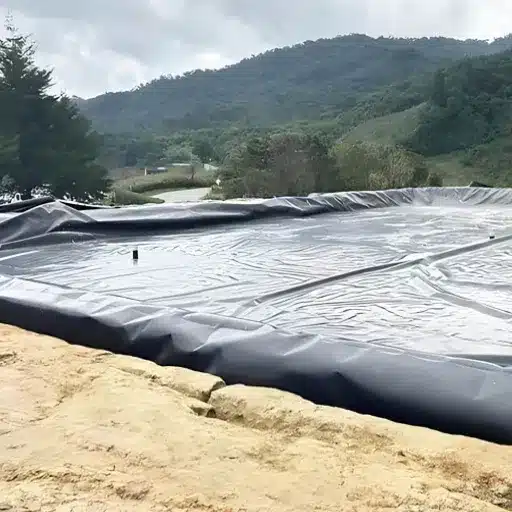
Roll width directly affects how much liner fits into a standard 20-foot shipping container. A 5.8 m wide roll fits neatly with minimal wasted cube space. Wider 7–8 m rolls may require flat-rack containers or specialized handling, increasing freight cost per square meter by 15–30%.
Typical container loading for 1.5 mm smooth HDPE geomembrane ranges from 15,000 to 20,000 m² per 20-foot container. Thinner material packs more densely. Thicker material reduces capacity per container but does not increase freight cost proportionally.
Cost Components Beyond Material
| Component | Typical Cost (USD/m²) |
|---|---|
| HDPE material | $0.50 – $3.50 |
| Sea freight (FOB to CIF) | $0.10–$0.40 |
| Insurance and customs | $0.05–$0.15 |
| Inland delivery | $0.05–$0.30 |
| Landed material cost | $0.70–$4.35 |
The landed cost gap between FOB and CIF typically runs $0.15–$0.35/m². For a 50,000 m² order, that difference totals $7,500–$17,500. Buyers with established freight forwarders often prefer FOB terms. Buyers without logistics infrastructure benefit from CIF pricing that consolidates risk under the supplier.
Installation and Ancillary Costs to Budget
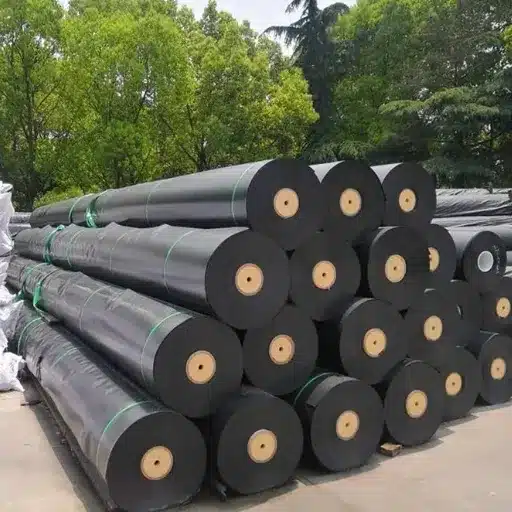
Material cost is only 50–70% of the total project budget. Installation and ancillary items add a substantial expense that varies by site conditions and application complexity.
Installation Cost Breakdown
| Component | Cost (USD/m²) |
|---|---|
| Site preparation | $0.20 – $0.60 |
| Geotextile underlay | $0.30–$1.00 |
| Welding and labor | $0.30–$1.50 |
| Quality testing / CQA | $0.10–$0.40 |
| Total installation | $0.90–$3.50 |
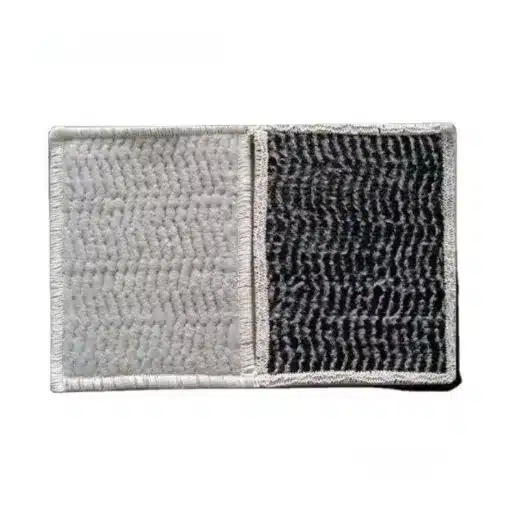
Geotextile underlay is not optional on rocky or aggressive subgrades. A 200–400 g/m² nonwoven geotextile cushion prevents puncture and extends liner life. Specify a high-tensile underlay alongside the liner to protect the installation’s long-term value.
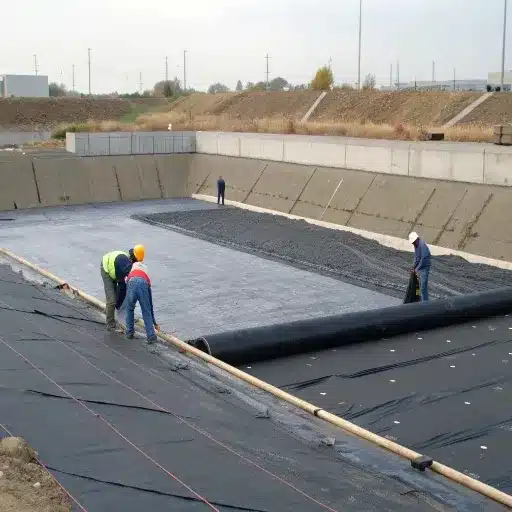
Rocky terrain, steep slopes, or remote access increase installation labor by 15–20%. Projects requiring independent CQA testing add $0.10–$0.40/m² but reduce seam failure risk by ensuring certified welders and verified destructive peel testing.
Installed Project Benchmarks
| Project Type | Material + Install (USD/m²) |
|---|---|
| Aquaculture pond (0.5–1.0 mm) | $1.50 – $3.50 |
| Irrigation reservoir (0.75–1.0 mm) | $2.00–$4.50 |
| Landfill liner (1.5–2.0 mm) | $3.50–$7.00 |
| Mining containment (1.5–3.0 mm) | $5.00–$15.00+ |
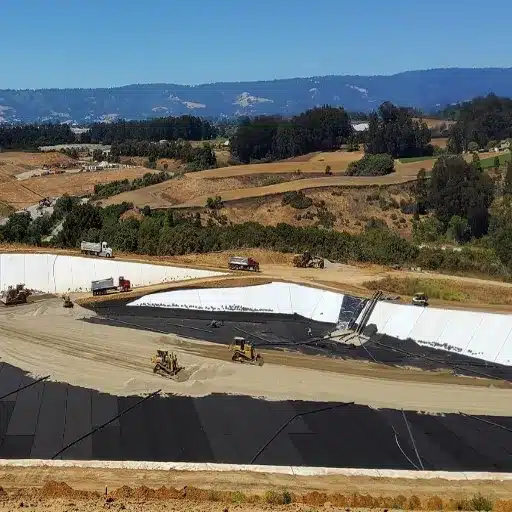
These benchmarks include material, freight, geotextile underlay, welding labor, and basic quality testing. Complex mining projects with steep slopes, textured liners, and independent CQA push toward the upper range.
Total Cost of Ownership: Why the Cheapest Quote Can Be the Most Expensive
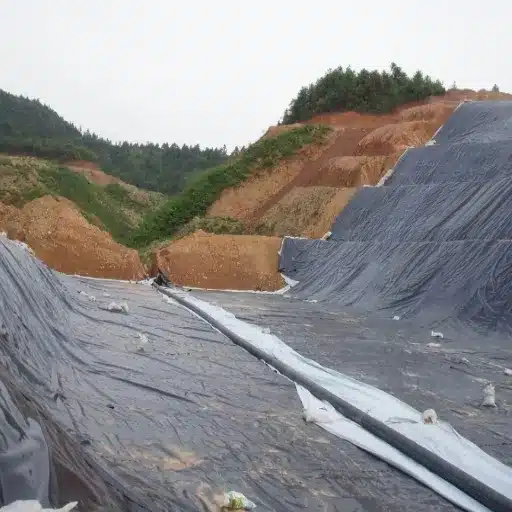
TCO Comparison: Virgin Certified vs Recycled HDPE
The upfront material price tells only part of the story. Over a 25-year project lifespan, the relationship between initial cost and total cost inverts.
| Cost Element | Virgin Certified (25 years) | Recycled/Uncertified (25 years) |
|---|---|---|
| Initial material | $2.50/m² | $1.80/m² |
| Installation | $1.50/m² | $1.50/m² |
| Replacement at year 12 | $0 | $2.50/m² + $1.50/m² install |
| Remediation risk (5% probability) | Minimal | $5.00–$25.00/m² |
| 25-year TCO | ~$4.00/m² | ~$7.30–$30.80/m² |
Virgin certified HDPE with GRI-GM13 compliance and 2–3% carbon black content achieves 40–100 year service life. Recycled or uncertified material may degrade within 10–20 years, triggering replacement costs that exceed the original savings. When remediation from a containment failure is included, even at modest probability, the TCO gap widens dramatically.
When a shrimp farm operator in Vietnam initially budgeted for 0.5 mm recycled HDPE at $0.65/m² for eight 4,000 m² ponds, the total material quote looked attractive at $20,800. After reviewing a TCO model showing replacement costs at year eight and elevated mortality risk from liner degradation, the operator switched to 0.75 mm virgin certified HDPE at $1.10/m². The upfront material cost rose to $35,200, but the 25-year TCO dropped by 35% because the liner eliminated mid-cycle replacement and improved harvest survival rates.
Quality Verification as Price Protection
Buyers can protect themselves from overpaying for substandard material by demanding three documents with every quote:
- Mill test report showing batch-specific tensile yield, elongation, puncture resistance, and carbon black content
- GRI-GM13 or ASTM D7931 compliance certificate verifying that the manufacturing process meets industry standards
- Sample retention policy confirmation. Reputable manufacturers retain production samples for five years, enabling traceability if issues arise
These verification steps transform price from a guessing game into an engineering decision backed by data.
Regional Price Variation and Global Sourcing
HDPE geomembrane pricing varies sharply by region due to labor costs, regulatory requirements, and logistics infrastructure.
| Region | Material Price Range (USD/m², 1.5 mm) | Key Drivers |
|---|---|---|
| Asia-Pacific (China/India) | 1.20–1.90 | Manufacturing scale, lower labor, raw material proximity |
| North America | 2.00–3.20 | EPA compliance costs, higher labor, and domestic transport |
| Europe | 2.20–3.00 | CE marking, stringent environmental standards |
| Africa / Latin America | 1.50–2.50 | Import-dependent, logistics premiums, and currency exposure |
Sourcing from ISO9001-certified manufacturers in China offers competitive pricing with GRI-GM13 equivalence. The critical factor is not geography but verification. A Chinese supplier with third-party testing, sample retention, and export documentation delivers the same performance as a North American brand at a lower unit cost.
International buyers should evaluate the total landed cost, not just the ex-factory price. Container consolidation and standard 5.8 m roll widths are the two largest levers for reducing freight cost per square meter on overseas orders.
How to Request and Compare HDPE Geomembrane Quotes
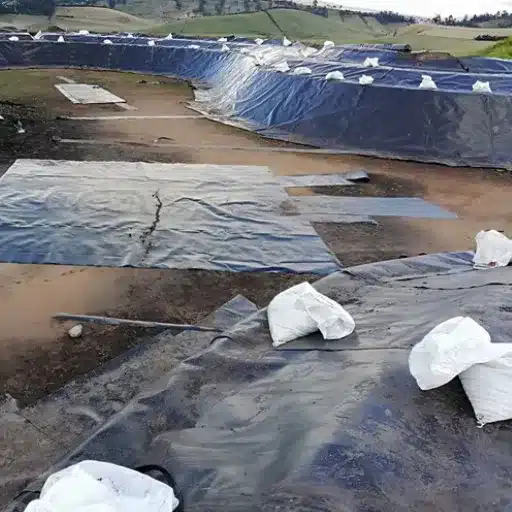
A well-structured request for quotation eliminates ambiguity and ensures comparable bids. Engineering buyers should include these seven elements in every RFQ:
- Specify thickness, surface, and standard. Example: “1.5 mm smooth, GRI-GM13, ASTM D6693.”
- Define roll dimensions. Request 5.8 m width for container efficiency unless site conditions demand otherwise.
- State volume and delivery terms. Clarify FOB port versus CIF destination.
- Demand documentation. Mill test report, batch certificate, and third-party test data.
- Ask about sample retention. Five-year retention is the industry benchmark for traceability.
- Request an installed cost estimate. Material plus freight plus installation supervision.
- Evaluate the total cost of ownership. Model 25-year lifecycle cost, not just upfront price.
Suppliers who cannot provide documentation or who resist sample retention questions should raise red flags. Price becomes meaningful only when it connects to verified performance.
For a deeper understanding of thickness selection and its cost implications, see our HDPE geomembrane thickness selection guide. If you are comparing material options, our HDPE vs LLDPE geomembrane comparison explains where each material delivers the best value.
Conclusion
HDPE geomembrane price in 2026 spans a wide range because cost depends on thickness, volume, surface type, certification, and geography. Material-only prices run from $0.50/m² for thin aquaculture liners to $5.50+/m² for heavy-duty mining specifications. But the number on the quote sheet is only the starting point.
Smart procurement teams evaluate five dimensions beyond sticker price:
- Match thickness to application requirements: 0.5 mm for ponds, 1.5–2.0 mm for landfills, 2.0–3.0 mm for mining
- Consolidate volume to unlock 18–25% bulk discounts at 50,000+ m²
- Calculate landed cost including freight, insurance, and customs: typically $0.20–$0.85/m² above ex-factory
- Budget installation and ancillaries at $0.90–$3.50/m² above material
- Model 25-year TCO to verify that virgin certified HDPE outperforms cheap recycled alternatives
The right HDPE geomembrane protects your project, your site, and your reputation for decades. Price matters, but performance value matters more.
Frequently Asked Questions
How much does HDPE geomembrane cost per square meter?
Material HDPE geomembranes by themselves cost between $0.50/m² for the 0.5 mm sheet, and $5.50+ for up to 3.0 mm premium liners by 2026, but the majority of the civil and environmental projects are between $1.10 and $2.80/m² for the 1.0 mm and 1.5 mm thicknesses of the same.
What is the cheapest thickness of HDPE geomembrane?
The lowest is less than 0.5mm, in fact, usually less than 50 cents to $1.20/m², and will work well in applications such as aquaculture, decorative ponds, and low-stress, but it does not really stand up to the standard required for containment in landfills, mining, and industrial applications, where puncture resistance and enough service life are critical.
Why do HDPE geomembrane prices vary between suppliers?
The costs are variable due to differences in both raw material quality (virgin vs recycled) and certification status (GRI-GM13 vs uncertified), as well as scaling of production, regional labor costs, and brand markup. The film thickness of the two diff suppliers may differ by 30–50% because of these factors.
Is it cheaper to buy HDPE geomembrane in bulk?
Yes. Above 50,000 m², the discount will be at least 18–25%. The consolidation of all project phases in one procurement event is already one pertinent way of reducing the unit cost.
What is the difference between FOB and CIF pricing for geomembrane?
It really boils down to where ownership and risk of shipment lie. FOB (Free On Board) means the buyer will pay freight charges, while CIF (Cost, Insurance, Freight) pricing requires the supplier to handle shipping and insurance costs. CIF, however, includes an additional $0.15–$0.35/m² but simplifies logistics for buyers who do not have established freight forwarders.
How do I verify that an HDPE geomembrane quote is fair?
Please provide a mill test report specific to the batch, GRI-GM13 or ASTM compliant, as well as document proof of a 5-year documentation on sample retention. Also, verify the thickness tolerances of carbon black contents and tensile yield against the specification standard.
Does textured HDPE geomembrane cost more than smooth?
Yes. Textured HDPE carries a 10–20% premium over smooth due to specialized manufacturing processes that create the roughened surface for slope stability.
How much does HDPE geomembrane installation cost?
Installation typically adds $0.90–$3.50/m², including site preparation, geotextile underlay, welding labor, and quality testing: Rocky terrain, steep slopes, or independent CQA push costs toward the upper end.