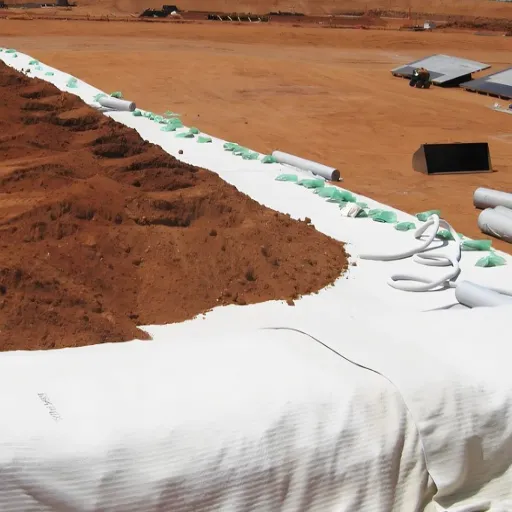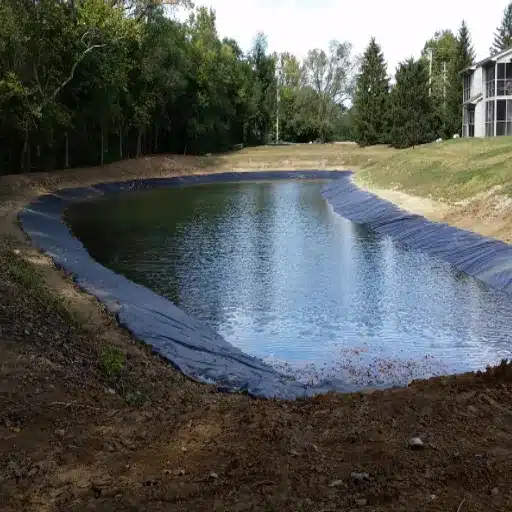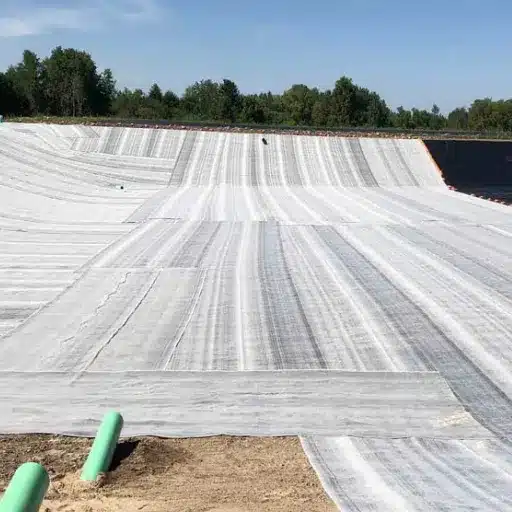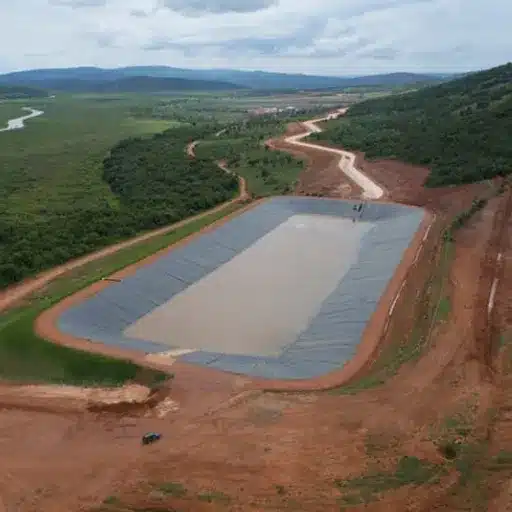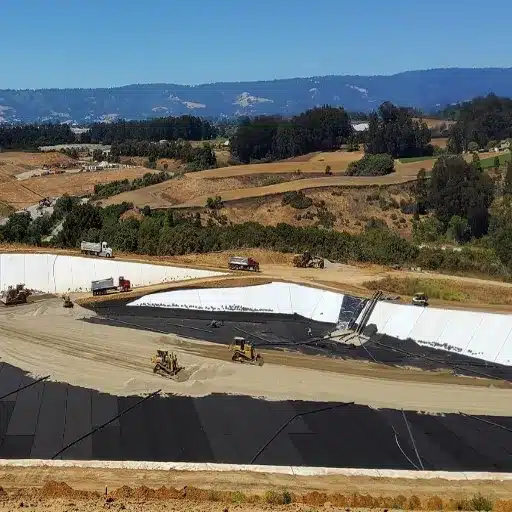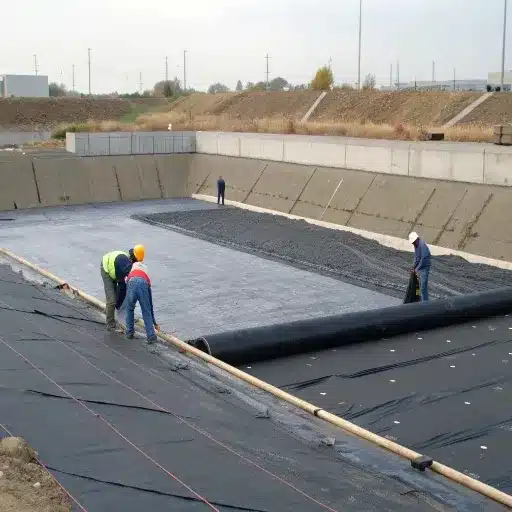
Conductive HDPE geomembrane is a high-density polyethylene liner manufactured with an integrated electrically conductive skin layer, typically on the bottom surface, that enables post-installation spark testing across 100% of the installed area to detect pinholes, punctures, and seam breaches as small as 1 mm.
That single sentence is the difference between hoping your liner is intact and knowing it. Standard HDPE geomembrane is an excellent barrier. It is also an electrical insulator. Once it is welded and placed, you cannot electrically survey the field area for defects. You can test the seams with air pressure or vacuum boxes, but the sheet itself remains invisible to quality assurance. For a general overview of HDPE geomembrane types and specifications, see our complete HDPE geomembrane technical guide.
In 2019, a quality assurance inspector named David Chen was conducting final acceptance on a double-lined hazardous waste cell in Jiangsu Province. The project had specified standard 2.0 mm HDPE for the primary liner. Visual inspection found nothing. Air-pressure tests on the seams passed. Two weeks after waste placement began, monitoring wells detected elevated leachate indicators. A subsequent excavation revealed a puncture the size of a pushpin in the field area — exactly where no test could have found it. The remediation cost exceeded the original liner contract value by a factor of twelve.
Conductive HDPE geomembrane exists to prevent exactly this scenario. In this guide, you will learn how the conductive layer works, which ASTM standard applies to your project, how installation differs from standard HDPE, and when the material premium is justified by the risk reduction it delivers.
Key Takeaways
- Conductive HDPE geomembrane integrates a co-extruded conductive carbon-black skin layer that enables ASTM D7240 spark testing across 100% of the installed liner area.
- Spark testing detects defects as small as 1 mm without water, making it viable in dry or freezing conditions where water-based methods fail.
- The conductive layer adds approximately 40–60% to material cost but can prevent remediation expenses that routinely exceed 100 times the initial premium.
- Three ASTM standards govern electrical leak detection: D7240 for spark testing on conductive-backed liners, D7953 for arc testing on exposed non-conductive liners, and D7007 for covered liners using the dipole method.
- Installation requires seam isolation to prevent short-circuiting during testing; welding parameters differ from standard HDPE.
What Is Conductive HDPE Geomembrane?
Structure and Manufacturing
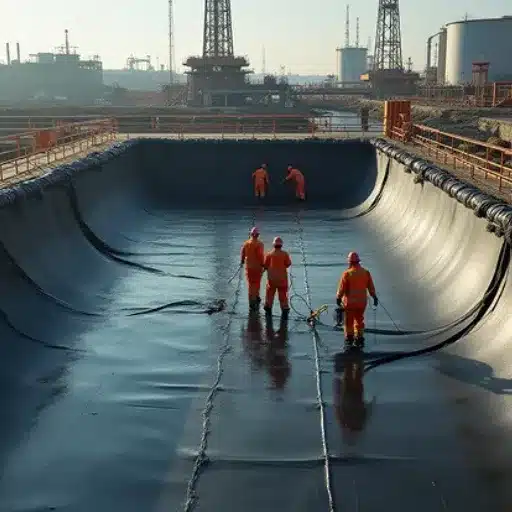
Conductive HDPE geomembrane is manufactured through a co-extrusion process. The core layer is standard virgin HDPE resin with carbon black for UV stability, antioxidants, and the same molecular weight distribution as any GRI-GM13 compliant sheet. The critical difference is a secondary extruder that applies a thin conductive skin layer — typically 100–200 micrometres thick — to one surface of the sheet.
This skin is formulated with a high concentration of conductive carbon black or carbon-loaded polymer compound. The result is a surface resistivity below 10⁴ ohms, low enough to complete an electrical circuit during leak detection surveys. The top surface remains standard non-conductive HDPE, preserving the chemical resistance, tensile properties, and impermeability that make HDPE the dominant geomembrane material globally.
Conductive liners are available in smooth and textured variants. For projects requiring both slope stability and leak detection capability, textured conductive HDPE combines friction benefits with integrated conductivity for spark testing.
How It Differs from Standard HDPE
Standard HDPE geomembrane has a surface resistivity in the range of 10⁻¹⁴ to 10⁻¹⁶ S/m. It is functionally an electrical insulator. This property makes HDPE an outstanding fluid barrier but eliminates the possibility of electrical leak location in the field area unless a separate conductive geotextile or subgrade is present beneath the liner.
Conductive HDPE geomembrane does not sacrifice barrier performance. The conductive layer is on the underside, facing the subgrade. The top surface remains standard HDPE. Leachate, groundwater, or process solutions cannot pass through the sheet any more easily than through a non-conductive equivalent. The only functional difference is that the bottom surface can carry an electrical charge, which makes the entire installed area testable.
Think of it this way: standard HDPE is a seal you cannot inspect after installation. Conductive HDPE geomembrane is a seal with a built-in inspection port.
For technical consultation on selecting between conductive and standard HDPE for your containment project, contact our engineering team for a tailored recommendation.
Leak Detection Methods and ASTM Standards
The value of conductive HDPE geomembrane depends entirely on the leak detection method it enables. Engineers need to understand which ASTM standard applies to their project conditions.
ASTM D7240 — Spark Testing for Conductive-Backed Geomembranes
ASTM D7240 is the primary standard for conductive HDPE geomembrane quality assurance. The method treats the installed liner as an electrical capacitor. The conductive bottom layer serves as one plate. A high-voltage power supply — typically operating at 15,000 to 35,000 volts — charges the liner surface through a grounding pad in contact with the conductive skin.
A technician sweeps a metal brush or wand across the top surface in a systematic grid pattern. When the brush passes over a defect — a pinhole, puncture, tear, or incomplete seam fusion — the stored charge arcs through the breach to the wand. The equipment detects this discharge and produces a visible spark and an audible alarm. The technician marks the defect immediately for repair.
The method requires no water on the liner surface. This makes it practical in arid climates, on steep slopes where water cannot pool, and in freezing conditions that would make water-based testing impossible. Detection sensitivity is approximately 1 mm in diameter, meaning breaches smaller than a grain of rice are locatable.
ASTM D7953 — Arc Testing for Exposed Non-Conductive Liners
ASTM D7953 performs a similar function for non-conductive geomembranes, but it requires the liner to be installed on a conductive subgrade or conductive geotextile. The principle is the same: high voltage, test wand, arc through defects. However, if the subgrade is dry, non-conductive, or separated from the liner by an air gap or wrinkle, the electrical circuit breaks and the method fails.
This is why conductive HDPE geomembrane is often specified even when a conductive subgrade exists. The integral conductive layer guarantees electrical continuity regardless of subgrade moisture or contact quality.
ASTM D7007 — Dipole Method for Covered Geomembranes
ASTM D7007 addresses a different phase of the project lifecycle. After the cover soil or water is placed over the liner, spark testing is no longer possible. The dipole method uses two closely spaced electrodes on the surface above the liner to detect anomalous electrical potentials caused by leaks. Current is injected into the material above the geomembrane, and the dipole sensor picks up voltage spikes where fluid is passing through a breach.
This method requires either a conductive layer beneath the geomembrane or a conductive subgrade. Conductive HDPE satisfies this requirement inherently. The standard can detect leaks through up to 1.5 metres of soil cover, making it suitable for post-construction quality assurance on landfills and tailings facilities.
Which Standard Should You Specify?
The choice depends on timing and linear condition:
| Project Phase | Liner Condition | Recommended Standard | Requires Conductive Layer |
|---|---|---|---|
| Post-installation, pre-cover | Exposed | ASTM D7240 | Yes (integral) |
| Post-installation, pre-cover | Exposed on conductive subgrade | ASTM D7953 | No |
| Post-cover | Covered with soil or water | ASTM D7007 | Yes or conductive subgrade |
For critical containment projects, the prudent approach is to specify conductive HDPE geomembrane and perform ASTM D7240 testing before cover placement. If long-term monitoring is required, ASTM D7007 can then be performed after cover placement using the same conductive layer.
Installation and Welding Considerations for Conductive Liners
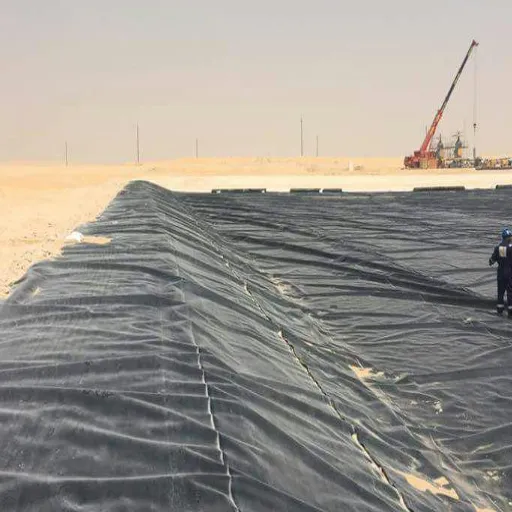
The conductive layer changes installation procedures in three specific ways.
First, orientation matters. The conductive skin must face downward, toward the subgrade or survey medium. If the liner is flipped and the conductive layer faces upward, spark testing becomes impossible. Installation crews must verify orientation during deployment, particularly on textured conductive sheets where the texture direction might be mistaken for the conductive side.
Second, seams require electrical isolation. The conductive layer on adjacent panels must not create a continuous conductive path across the seam. If it does, the spark tester cannot distinguish between a proper seam and a breach. Specialized welding equipment — often called an Iso-Wedge — isolates the conductive flap within the overlap zone. Welders must be trained on these parameters, which typically require slightly higher pressures and slower travel speeds than standard HDPE. For detailed welding guidance, see our HDPE geomembrane installation best practices.
In 2022, a CQA team in Chile performed spark testing on a conductive HDPE geomembrane landfill cap and found that every seam triggered a false alarm. The welder had used standard wedge equipment that left the conductive layer continuous across panel joints. The entire seam network was electrically shorted. The contractor cut out 180 metres of welds and re-welded with Iso-Wedge equipment that isolated the conductive flaps. The two-day delay triggered liquidated damages. The problem was not the material. It was the welding procedure.
Third, trial testing is mandatory. Before surveying the full liner area, the technician must create a known 1 mm puncture in a scrap piece of geomembrane and confirm that the equipment detects it. This establishes the correct wand speed and voltage setting for the specific material thickness and site conditions.
Mechanical Properties and Long-Term Durability
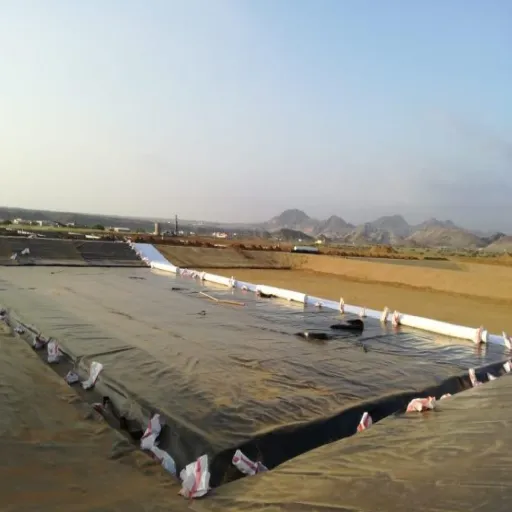
The core mechanical properties of conductive HDPE geomembrane — tensile strength, elongation, puncture resistance, and chemical resistance — are identical to standard HDPE of the same base thickness. The conductive skin layer is too thin to meaningfully alter the structural behaviour of the sheet under load.
However, the conductive formulation can affect oxidative stability. A 2023 study published in ScienceDirect monitored conductive-backed multilayered HDPE geomembranes under synthetic leachate exposure at temperatures between 40°C and 85°C over 50 months. The researchers found that conductive and non-conductive liners manufactured from the same nominal resin performed similarly in terms of structural integrity. But the additive package in the conductive outer skin influenced the initial High-Pressure Oxidative Induction Time (HP-OIT). In one tested product, the conductive textured variant showed an HP-OIT of approximately 960 minutes, compared to approximately 1,430 minutes for its smooth non-conductive equivalent.
This does not mean conductive HDPE geomembrane is inferior. It means the conductive formulation changes the antioxidant profile. Specifiers should set a minimum HP-OIT requirement in procurement documents — typically 400–500 minutes for standard applications and 800+ minutes for aggressive environments — and verify compliance through third-party testing regardless of whether the sheet is conductive or standard.
Cost Analysis: When the Premium Pays Off

Conductive HDPE geomembrane costs approximately 40-60% more than standard HDPE of equivalent thickness. A 2.0 mm conductive sheet might run $4.50-$6.00 per square metre, where a standard sheet costs $2.80–$4.00. The premium reflects additional extrusion equipment, conductive masterbatch material, and quality control for surface resistivity.
Installation labour is also slightly higher. Seam isolation adds preparation time. Welders work at adjusted parameters. Spark testing itself adds $0.50–$2.00 per square metre, depending on site size, accessibility, and the number of repairs required.
But the economic calculation changes when you weigh it against the failure cost. A single undetected breach in a hazardous waste landfill’s primary liner can trigger remediation, excavation, liner replacement, and environmental liability that routinely exceeds the initial material premium by a factor of 100 or more. In mining applications, a leak from a heap leach pad or tailings facility can contaminate groundwater, trigger regulatory enforcement, and halt operations.
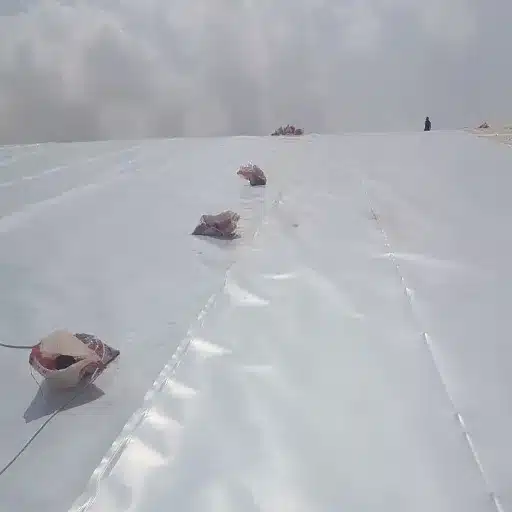
In 2021, a copper mining operation in West Africa specified white conductive HDPE geomembrane for a new tailings storage facility. The white top surface reflected solar radiation to minimise thermal expansion and wrinkles, while the conductive bottom layer enabled full-area spark testing. The survey located four pinholes missed by visual inspection. Repairing those defects before tailings placement costs approximately $8,000. Had they gone undetected, the environmental remediation estimate from the project’s geotechnical consultant exceeded $2 million.
The correct economic analysis is not whether conductive HDPE geomembrane costs more. It is whether the project can afford not to know where the breaches are.
Application Guide: When to Specify Conductive HDPE
Required Applications
- EPA-regulated hazardous waste landfills under RCRA Subtitle C
- Double-lined systems with leak detection collection zones (LDCRS)
- Nuclear power generation water containment facilities
- Any project where a regulatory mandate explicitly requires 100% post-installation integrity verification
Strongly Recommended
- Mining heap leach pads with cyanide-bearing or acidic process solutions
- Tailings storage facilities where the consequence of liner failure includes groundwater contamination
- Industrial chemical containment with aggressive leachates
- Projects on non-conductive subgrades where ASTM D7953 arc testing is impractical
Optional / Budget-Dependent
- Municipal solid waste landfills with single-liner systems
- Wastewater treatment ponds where visual inspection and seam testing are deemed adequate
- Agricultural and irrigation ponds with a low consequence of failure
Decision Matrix
| Project Condition | Conductive HDPE | Reason |
|---|---|---|
| Hazardous waste / RCRA landfill | Required | Regulatory mandate for leak detection |
| Double-lined system with LDCRS | Required | Leak detection zone design depends on testability |
| Mining heap leach pad (cyanide/acid) | Strongly recommended | High-consequence, non-conductive subgrade is common |
| Municipal landfill (single liner) | Optional | Cost vs risk trade-off |
| Wastewater / agricultural pond | Optional | Lower consequence of failure |
Specifying Conductive HDPE in Project Documents
Vague specification language invites substitutions and disputes. Precise language protects project quality.
Recommended Specification Language
For critical containment applications:
HDPE geomembrane shall be conductive-backed, manufactured from virgin high-density polyethylene resin with a co-extruded conductive carbon-black skin layer on the bottom surface. The geomembrane shall comply with GRI-GM13 for [smooth/textured] HDPE geomembrane. Surface resistivity of the conductive layer shall not exceed 10⁴ ohms when tested per manufacturer CTM. Post-installation spark testing shall be performed per ASTM D7240 across 100% of the installed liner area. All seams shall be welded with equipment that electrically isolates the conductive layer to prevent short-circuiting during testing.
Language to Avoid
- “Leak testing where required” — vague; no objective criterion
- “Conductive or standard, contractor’s option” — removes engineering control
- “Manufacturer’s standard conductive formulation” — does not define resistivity or test method
Conclusion
Conductive HDPE geomembrane is not a different material. It is standard HDPE with an integrated quality assurance layer. The conductive skin enables ASTM D7240 spark testing across 100% of the installed area, transforming liner acceptance from a seam-focused spot-check into a full-area integrity verification.
The decision to specify conductive HDPE geomembrane is driven by regulatory requirements, consequences of failure, and subgrade conditions — not by brand preference or marketing claims. Where the cost of an undetected leak exceeds the material premium by orders of magnitude, conductive HDPE is not an optional upgrade. It is engineering due diligence.
When you write your next specification, ask three questions. Is the containment critical? Is the subgrade non-conductive? Is the regulatory or financial consequence of a leak unacceptable? If the answer to any of those is yes, specify conductive HDPE geomembrane and require ASTM D7240 spark testing on every square metre.
Frequently Asked Questions
What is conductive HDPE geomembrane?
Conductive HDPE geomembrane is a high-density polyethylene liner manufactured with a co-extruded electrically conductive skin layer, typically on the bottom surface. This conductive layer enables post-installation electrical leak detection methods, such as ASTM D7240 spark testing, across the entire installed liner area.
How does spark testing work on conductive geomembrane?
Spark testing per ASTM D7240 uses a high-voltage power supply (15–35 kV) to charge the conductive layer beneath the liner. A technician sweeps a metal brush across the top surface. When the brush passes over a defect, an electrical arc discharges through the breach, producing a visible spark and audible alarm that marks the exact leak location.
What is the difference between conductive and standard HDPE geomembrane?
Standard HDPE geomembrane is an electrical insulator and cannot be electrically tested in the field. Conductive HDPE geomembrane has the same barrier properties but includes a conductive bottom layer that completes an electrical circuit for leak detection. The core material, tensile strength, and chemical resistance are identical.
Does conductive HDPE geomembrane cost more than standard HDPE?
Yes. Conductive HDPE geomembrane costs approximately 40 – 60% more than standard HDPE of equivalent thickness. However, for critical containment applications, the cost of an undetected leak — including remediation, excavation, and environmental liability — routinely exceeds the material premium by 100 times or more.
What ASTM standards apply to conductive geomembrane leak detection?
ASTM D7240 is the primary standard for spark testing on conductive-backed geomembranes. ASTM D7953 covers arc testing for non-conductive liners on conductive subgrades. ASTM D7007 addresses the dipole method for covered liners. ASTM D6747 guides on selecting the appropriate method.
Can conductive HDPE geomembrane be textured?
Yes. Conductive HDPE geomembrane is available in both smooth and textured variants. Textured conductive HDPE combines slope stability friction with integrated leak detection capability, making it suitable for steep landfill side slopes and mining heap leach pads.
What thickness of conductive HDPE geomembrane should I specify?
Thickness selection follows the same engineering logic as standard HDPE. Hazardous waste landfills typically specify 1.5–2.0 mm. Mining applications often use 2.0–2.5 mm for primary liners. The conductive skin layer adds negligible thickness (100–200 µm) and does not affect structural design calculations.
Is spark testing required for all conductive geomembrane installations?
For projects where conductive HDPE geomembrane is specified, ASTM D7240 spark testing should be performed across 100% of the installed area before cover placement. Regulatory mandates for hazardous waste landfills typically require this testing as a condition of liner acceptance.
Can spark testing be performed in cold or dry conditions?
Yes. Unlike water-based methods such as ASTM D7002, ASTM D7240 spark testing requires no water on the liner surface. This makes it practical in arid climates, on steep slopes where water cannot pool, and in freezing conditions.
Does the conductive layer affect welding?
Yes. The conductive layer must be electrically isolated at seams to prevent short-circuiting during spark testing. Welders typically use Iso-Wedge equipment or equivalent, with slightly higher pressures and slower speeds than standard HDPE welding.