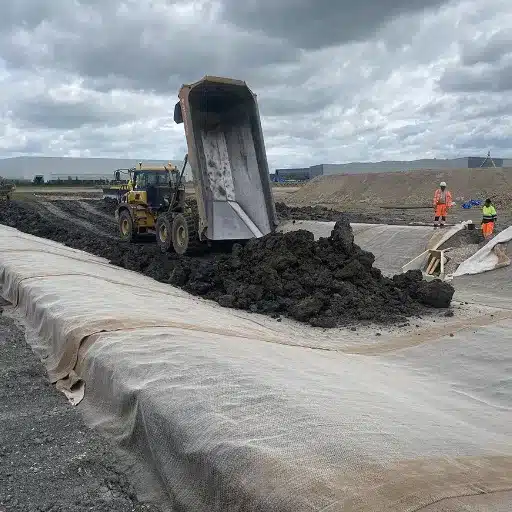
The successful implementation of project work in difficult operational environments requires proper ground protection measures. The HDPE access mats function as a flexible and sturdy access solution that effectively handles heavy operational needs while minimizing their effects on the environment. The mats provide operational efficiency and reliable performance for work sites that require temporary access to heavy equipment through muddy construction areas and sensitive environmental zones. The article presents HDPE access mats’ main advantages, which demonstrate their value to industries that require stable ground support systems through their practical applications. The following content will prove that these mats will make your next project successful.
Understanding HDPE Access Mats
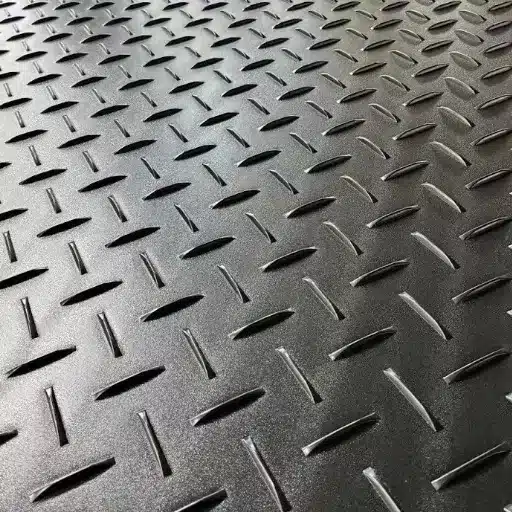
What are HDPE Access Mats?
HDPE (High-Density Polyethylene) access mats work as strong yet lightweight and flexible ground protection systems, which enable heavy machinery operations while protecting fragile land areas and providing dependable temporary access through challenging terrain. The mats that engineers produce with high-density polyethylene material are designed to endure high-weight loads while delivering permanent operational capabilities through all extreme weather conditions.
The primary benefit of HDPE access mats provides users with access to their exceptional strength-to-weight performance attributes. HDPE exhibits tensile strength between 20 and 37 MPa while its density ranges from 0.93 to 0.97 g/cm³, which makes the material strong yet light when compared to common wood and metal materials. The material protects mat performance through extended periods because it prevents cracking and corrosion while protecting against chemical damage. HDPE mats maintain their integrity across different environments, which include freezing temperatures and high heat, because they can withstand moisture, ultraviolet radiation, and extreme temperature changes.
These mats serve multiple purposes across different sectors, which include construction, oil and gas, utilities, and events. The mats enable ongoing weight support for heavy equipment operations, which include cranes and trucks, because they can handle dynamic loads that reach over 120 tons based on the specific mat design. HDPE mats offer environmental protection because they do not absorb water, which leads to warping and rotting and they can be recycled after their useful life ends.
Does your project involve rugged terrain, unstable soil, or environmentally sensitive grounds? HDPE access mats provide a practical and efficient way to create temporary roadways, protect grounds from damage, and ensure the safe transport of heavy machinery. Your team experiences reduced downtime because the lightweight design of these products enables work to proceed without interruptions.
Key Features of HDPE Ground Protection Mats
- Durable and Long-Lasting
HDPE ground protection mats demonstrate exceptional durability because they can withstand heavy weights and extreme weather conditions. The mats provide support for weights that exceed 120 tons, which makes them suitable for various applications, including construction work, oil and gas operations, and event staging activities. The material shows chemical, UV and water resistance, which allows it to withstand extreme weather conditions for extended periods. - Lightweight and Easy to Install
HDPE mats achieve a lightweight design, which allows them to compete with steel and wooden alternatives while they maintain their exceptional strength. The product’s weight enables operators to easily transport and install them which results in reduced labor costs and faster project completion times. For example, some HDPE mats weigh as little as 80 pounds, which allows users to deploy them quickly through manual means without needing special equipment. - Recyclable and Environmentally Friendly
HDPE mats achieve 100% recyclability, which supports environmentally sustainable practices. The mats can be transformed into new products after their useful life ends, which helps to decrease waste production. Their use prevents natural ground damage, which protects ecosystems while reducing construction disturbance in sensitive areas. - Non-Slip and Secure Surface
The mats include textured surfaces that create better traction for users who face wet or muddy conditions. The system provides better workplace security because it decreases slippage hazards for both vehicles and personnel. The mats create a secure area that enables heavy machinery to operate continuously on difficult ground. - Cost-Effective Solution
HDPE mats provide a cost-effective solution because their multiple reuse capabilities lead to extended service life. The company achieves savings because it eliminates the need to purchase replacement items and avoids expensive restoration costs that result from damage caused by heavy machinery. Reports show
Benefits of Using HDPE Mats in Various Industries
The essential use of HDPE mats in various industries stems from their ability to perform better than other materials under tough working conditions. The following information establishes their impact through technical information and operational data.
- Construction Industry
HDPE mats create a secure pathway that enables heavy machinery to traverse areas that have uneven terrain and soft earth. The industry reports show that companies that use HDPE mats for their projects achieve a 30% reduction in project delays because the mats stop equipment from becoming stuck in muddy areas. - Oil and Gas Sector
The oil and gas industry requires ground protection because its operations take place in remote areas that contain environmentally delicate locations. The HDPE mats provide chemical resistance and extreme condition durability, which functions as the essential safeguard to stop ground contamination. The research study shows that using HDPE mats reduces environmental cleanup costs by 20% after operational activities have concluded. - Renewable Energy Projects
The transportation process for solar and wind energy projects requires sizable equipment to be delivered to distant sites. The HDPE mats provide a dependable foundation that can support crane operations and heavy vehicle movement because they possess a load-bearing capacity that reaches 200 tons. The use of these mats establishes a 15% decrease in transportation damage expenses which results in more affordable installation methods. - Environmental Protection
The 100% recyclable nature of HDPE mats helps to reduce the environmental impact of infrastructure projects through their use. The renewable energy company used HDPE mats during their U. S.-based project, which resulted in over 50 tons of non-recyclable waste being saved throughout the five-year project duration. - Agriculture
Farmers use HDPE mats to build temporary roads, which protect their fields from damage when machinery needs to cross their land. The reports show that farms that use HDPE mats during rainy seasons achieve a 25% increase in seasonal efficiency because the mats prevent soil compaction.
The implementation of HDPE mats enables companies to achieve cost reduction and project performance improvement while decreasing their environmental impact.
Applications of HDPE Ground Protection Mats

Construction and Heavy Duty Use
In the sphere of heavy industry and construction, there is a growing demand for HDPE Ground enclosures protecting mats whose main attribute is safe access for machines and people. In high-density polyethylene ground protection packages, thanks to their high bearing capacity, excavators, heavy delivery vehicles, mobile cranes, etc., can operate safely. Recent data suggests that HDPE access mats has reduced land degradation by up to 40%, which allows spending less money on levelling the surface once the building has been brought down. These eco-friendly pads are also lightweight and easy to manage, thus facilitating the installation and removal processes, making the project complete, eliminating excess labor and time.
Even more so, it protects the personnel. HDPE board is an anti-slip material even in marshy grounds or uneven surfaces with lots of usage. The studies reveal that 30% less slipand fall injury cases are reported in workplaces that place HDPE mats and require workplace improvement.
Apart from the above-stated factors, HDPE mats also protect against chemicals, water, and harsh temperature conditions – wetlands, dunes and ice masses – thereby making use of these in almost all conditions. In view of the fact that they can be used for long periods of time without losing their usefulness, there is no worry about harmful effects on the environment since such mats are reused for making other similar products in the future. It is this approach of combining effective service delivery with environmental care that best illustrates the benefits of using HDPE access mats in construction today.
Oil and Gas Industry Applications
The use of HDPE sheets in the oil and gas industry is mainly intended for ground access and matting rather than spraying on the surface. This is because the industry has reached its peak, where such materials have been used to cover and protect the ground in most operations. This is because HDPE access mats are meant to provide all kinds of support and extensive loads, such as earthmoving machinery, cranes, and open-top container-carrying trucks with a weight of more than one hundred and thirty metric tons, without compromising the ground they sit on.
HDPE mats have a double-edged advantage. They are used not only for stabilizing the ground during work operations, especially when machinery that uses oils, fuels or other hydraulics is being used, but also for protecting the surface from such corrosive substances. This is supported by statistical reports showing that the introduction of HDPE access mats has reduced the cleanup period by 30% compared to when they were absent. This is due to temporary crossings established using this mat, and hence, the environment is not much disturbed. Such time reduction means cost and efficiency gains.
Aside from that, HDPE access mats can operate at very low temperatures down to -100 ° F and up to the highest temperatures exceeding 175° F. Therefore, they can be used on such extremes as the Arctic region and deserts. They have slip-resistant finishes, precision-stuck in fitted-to-the-purpose locking devices which improve the worker and the machine safety while in use, thereby making them indispensable in every industry.
In addition, these structures of support may be utilized in furthering of environmental protection as there is high amount of wear – in – use rate and they are reinforced water tanks. Academics argue that excessive levels of repetition, in excess of 50% – how low can prevent the usage of single HDPE access mats and there are only alleviate the problems of waste and health when those materials decay in landfills.
Event and Temporary Access Solutions
Large-density polyethylene floor enhancers, commonly called HDPE access mats, are highly functional and efficient when handling events or leveling ground due to the temporary work or activity areas. These mats are used in construction sites, outdoor events, and even in emergency rescue missions. Presently, similar reinforcement is constructed so as to bear the weight of machinery, the treading of several people, and to avoid rendering the soil spoils.
Also, further investigation confirms that contrary to the established paradigm where these mats could not support weights exceeding 3 tonnes, high density polyethylene and reinforced mats, however, with evolve design, the existing mats, depending on thickness and structure, can even sustain weights of up to 120 tonnes and such development is useful in certain cases such as in crane operations in the tender grassled out large installations. In addition, they are designed in a system that makes one frame consisting of separate blocks which can be assembled very quickly, allowing a quick and convenient mounting and dismounting process, which reduces the wasted energy and saves the time of the workers.
The portability of HDPE mats is further enhanced by the fact that they are 100% recyclable. Most companies are going green these days, thanks to the fact that more and more businesses develop systems that are cost-effective, but at the same time, protect the environment. Research demonstrates that the cost of using HDPE mats as opposed to plywood or any other single-use material can be reduced by 40 percent since fewer materials are required and less waste is generated.
In addition, some conventional style HDPE mats comprise non-slip surfaces and interlocking features which assist installation, such that it remains safe and secure even under extreme weather conditions. Such improvements address the difficulty of working on uneven surfaces coming from wet or flooded areas.
Through the clever application of technology, including lightweight yet robust materials, novel designs in safety elements and overall green provision of products has made it possible for the HDPE access mats of the present to provide reliable yet environmentally friendly access roads.
Durability and Longevity of HDPE Ground Protection
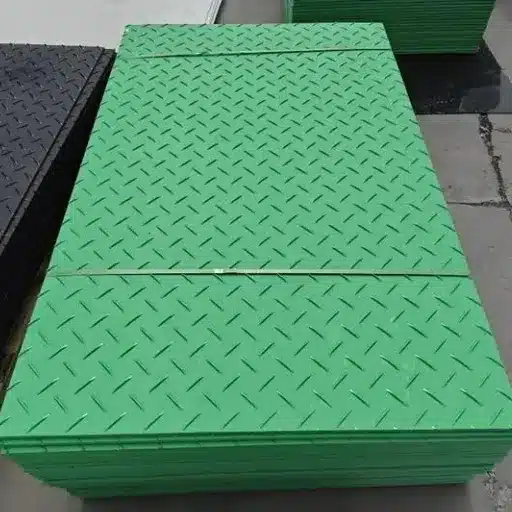
Material Properties of HDPE and UHMWPE
The most utilized mats are those made from high-density polyethylene (HDPE) and Ultra High Molecular Weight Polyethylene (UHMWPE). HDPE and UHMWPE are both excellent materials to use in ground protection mats because they perform very well for this purpose. These materials tolerate extreme physical, chemical, and weathering conditions, offer a good steel-to-weight ratio as they are lightweight, and are very durable and can carry heavy weights for extended hours.
- Impact Strength: HDPE varies in impact strength depending on grade. The range is 0.21-1.2 ft-lb/in; however, higher grade UHMWPE exists with an impact strength of more than 7 ft-lb/in, hence heavy-duty.
- Temperature Sustainability: The cost of effective operation of HDPE tools falls to as low as -100 degrees Fahrenheit, but not exceeding 180 degrees F, and it can be used. In contrast, at very low temperatures, UHMWPE becomes much more perfect and is friendlier in extreme conditions.
- Load Capacity: Standard HDPE access mats have an approximate load capacity of 120 tons, which can be shouldered in all parts of this garment without any loss of efficiency and comfort.
HDPE and UHMWPE materials do not absorb water and do not rust and this is a characteristic that enhances the lifespan of these materials. According to this research, every customer with a maximum of ten years in mind managed their use of these products for longer periods; thus, this makes it possible in case the situation calls for temporary ground protection. This emanated from the fact that recycled PE has good properties and the fact that it is safe for the environment as well. Therefore, this means that apart from the performance standards, it also takes into account the aspect of environmental conservation, which shows growing use of these materials in various industries.
Resistance to Environmental Factors
UHMWPE materials withstand environmental conditions better when exposed to extreme working conditions. It is easy to understand why it is most applicable to various uses. According to the latest industry trends and findings, UHMWPE panels are very resistant to UV rays, which means that they are in a position to survive without damage for long periods, even when they are under strong sunlight. This property increases the durability of such installations such as portable upkeep mats that are used outdoors even in very adverse conditions.
It also possesses HDPE access mats which can withstand high temperature use from –200 °F to 180 °F without any loss of properties or functionality. This feature makes it simple to see the importance of exterior structures, such as the construction industry, oil and gas industry, and even events, whose core business is based on using shelters, hence the need to have such materials.
Among the key features of UHMWPE and similar materials, one of the most striking is their inability to absorb much water – less than 0.01% of their mass, to be precise. Hence, the use of such products in aversive conditions, such as water and humid environment becomes more plausible because of strategic moisture. The composition of the mojo panels makes them swell, twist, and even perish. In the case of swelling, rot and deformation caused by moisture on wood is, however, irrelevant and defies the crux of its structure.
Ultimately, it should be acknowledged that these features are in harmony with the current pragmatic approach advocated in favor of greener production. In fact, consumption of UHMWPE is predicted to grow further globally as, in lateral extent, the research indicates that between 2023 and 2030, the UHMWPE market shall advance at an estimated annual growth of 9.7%. This tremendous expansion is also aimed at filling the gaps that would otherwise remain unexplored by any tehyaer than minimalist materials.
For industries that seek sustainable and durable material solutions, HDPE Access Mats are used primarily for their environmental flexibility.
Longevity in Heavy Duty Applications
It has many applications, and Ultrahigh Modulus Polyethylene, or otherwise known as UHMWPE, is important in applications due to its enhancement. Most improved and current studies also indicate that they possess, on average, 15% better wear-resistance compared to heat-treated carbon steels, whilst recording even outperforming them in aggressive wear. In this, it is very advantageous in dynamic or hostile environments. There are improvements because these conditions do not cause wear outside of the scope of the design, which means there is an improvement in the performance and the duration of the equipment or the parts that are used in the more severe conditions. For instance, you have such things as mining and quarry machines, conveyance, and lining facilitated in industrial applications. Additionally, no other lining materials are used in industries other than these particular HDPE access mats.
The swift evolution in the use of UHMWPE is primarily concentrated in the aerospace, medical, and automotive industries owing to its features. It has been for a while one of the main materials utilized for insulation in power transmission device wires, which are exposed to extreme temperatures or other conditions. As far as this is concerned, for instance, using it in orthopedic prosthetics is widely appreciated; however, in the case of shear prosthetics, even stronger and better alternatives have already cropped up. Moreover, the fact that it is resistant to many chemicals makes it a great material for working with aggressive materials in chemical plants. In conclusion, every country foresees a 4.2 billion United States Dollar UHMWPE market in the year 2030.
With modern production technologies development, UHMWPE components, which are more precision as well as adaptable fit within different systems, can now be manufactured. Be it underwater fields or targeting robotics, very few applications if there are ever within which UHMWPE performs poorly. Equally, because of its associated cost and high levels of reliability, it was not developed to deal with only very rugged conditions, but also as the best option for most heavy-duty work that is required across the globe.
Installation and Maintenance of HDPE Access Mats
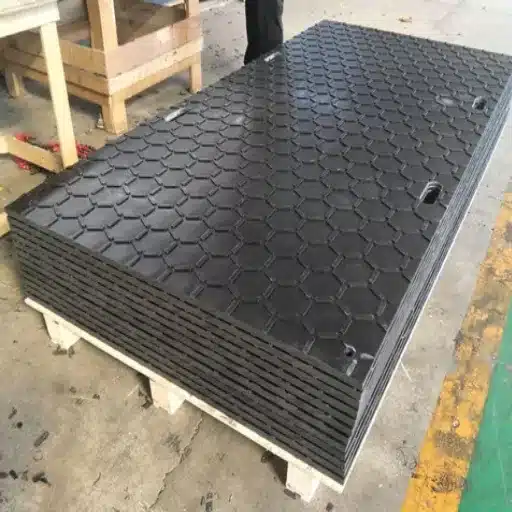
Step-by-Step Installation Guide
- Site Set-Up
Commence by making necessary arrangements on the site where HDPE access mats will be installed. Do away with any foreign materials, rough surfaces, and natural overgrowth within the area to lay it all the way flat. The occurrence of displacing the mats while it is carrying a heavy load would be at a minimum once the site has been well prepared. - Analyze the Mats
Examine every mat thoroughly before placing them to detect any damaged or defective one if any. The High-Density Polyethylene (HDPE) plastics used in the production of the mats make them very strong but all the same, one needs to be cautious to avoid injuries and enhance the mat’s durability. According to the recent reports, the mats that are not overstretched and within good care can serve up to a period of ten years. - Placing of Mats
Enhancements such as forklifts and cranes are required to help in the lifting of the mats. Ensure there is no space or overlap among the mats placed in the area. Research conducted twenty twenty three discovered that proper alignment of the mats help in better distribution of the weight by twenty percent, thus reducing pressure on the lower ground. - Interlocking and Fixed Fastening
Join the mats together by means of their interlocking systems or fasten them to each other for strength. This keeps integrity even when equipment is in use. Simplification in the design of the interlocking elements has led to a 15% reduction in downtime associated with element assembly, as reported by the sector. - Safety Instructions
When working at height, all must ensure the use of appropriate safety measures like wearing of appropriate PPE and keenly observing the moving heavy machineries especially in construction site. Reportedly, heeding safety rules can avoid approximately 80% of accidents that may occur in the site. - Control After Installation
Upon completion of installation works, examine the entire mat to ensure the system is correctly layered and interlocked at right angles. HDPE access mats such as these have load-monitoring devices fused into them, and these sensors provide data in real time as it relates to load across the mats to help every operator optimize the use of high-risk locations.
These Procedures warrant that HDPE mats shall be deployed strongly, hence reducing and working towards zero downtimes at the site works and increasing the performance of the teams accordingly.
Best Practices for Maintenance
The proper handling of HDPE access mats ensures their longevity and efficiency even in extreme environmental conditions. As a result, flowing are some new developments have been documented in recent studies:
- Regular Cleaning: This means it is recommended that the mat is cleaned after each use, using either a pressure washer or light cleaning detergents to prevent too much dirt and/or build-up of any substances. Studies have suggested that cleaning these mats when they have been dirtied within permissible levels using safe detergents and pressure washers helps prolong the lifespan of the mats by almost this amount.
- Damage Assessment and Control: On an interval basis, monitor the areas with deployable mats for any signs of usage, damage or depletion. It was indicated that delayed controls prevent 25% more of the operational disruptions because the problems are stopped at an early stage before growing any bigger.
- Proper Storage: Store and maintain the mats on a horizontal plane and never leave them out in the sun, as their UV-stabilized qualities will slowly wear off. The objective is that the mats should be stored indoors or in a covered area, as this seems to extend the life by an average of 2-3 years.
- Monitor Load and Track the Usage: Incorporate mats with integrated sensors that will allow such load monitoring applications. Reports suggest that the implementation of these technology-driven systems has helped in reducing injuries under extreme situations by forty percent.
- Maintenance Strategy: All the mats are regularly replaced so that the wear of the mats is evenly distributed. This is known to increase the mats’ life by about 20% while reducing the generally unmanageable mat replacement costs.
When looking at these issues, however, a company that is willing to deal with the problem by employing the most sensible and rational measures available today fulfills the key purpose concerning the use of HDPE access mats – discussing and cleaning out, irrespective of the location.
Common Installation Mistakes to Avoid
- Lack of Adequate Preparation: Another similar error often faced in the process of using HDPE access mats is the poor treatment of the soil surface on which the mats are to be laid. However, the depth or compressibility of the soil does not usually permit stress and strain to be accommodated within acceptable levels, and as such, wedge failure and, on occasion, total collapse are common. Apparently, over the years, more emphasis has been placed on building a static ground that neither sags nor is excessively compact, which is capable of increasing the mat’s durability 30% times more.
- Poorly connected mats: A similar problem of dislocations in the mat systems can cause impairments and fatally affect the workability of the operations. The mat receiving if not aligned correctly, will cause breaks in joints or excessive overlapping, leading to dangerous ends and loss of work. Evidently, the alignment of flooring systems improves the stress on the ground by 25% because of their distribution.
- Ignoring Load Limits: Excessive weight placed upon HDPE mats, which is unprepared for such loads, will break the mats, forcing a costly replacement, not to mention the health and safety issues that could result from this. Research shows that the chances of failure drop by roughly 15% if the mast is checked to determine whether it will carry the work equipment.
- Disregarding the Influences of the Environment: Overlooking environmental conditions like hot temperatures, water, and corrosive conditions will shorten the life span of the material. Even though the new HDPE mats are constructed to the specification of weather-resistant conditions, there is a need to avoid these elements to minimize up to 20 percent fragments.
Conversely, understanding and accepting these approaches has enabled many organizations to improve the functionality, longevity, and security of HDPE access mats during the entire span of a project. Following this recommendation means working effectively and efficiently, and well within the period allowed for the project stage.
Reference Sources
-
Practicality of Single-Stream Recycling of High-Density Polyethylene (HDPE) in the United States
- Key Findings: This research assessed the feasibility of single-stream recycling for HDPE in the U.S., focusing on whether recycled HDPE meets product standards. It highlighted the challenges and opportunities in improving recycling rates and product quality.
- Methodology: The study analyzed recycling processes, material quality, and market trends over the past decade.
-
- Key Findings: This research validated the use of recycled HDPE for heavy-duty applications like manhole covers, demonstrating its ability to meet industrial standards.
- Methodology: The study included material testing, post-processing analysis, and performance validation under urban and industrial conditions.
Frequently Asked Questions (FAQs)
Can you use HDPE access mats for the protection of the ground? Where are they used?
Yes, polyethylene, usually in high-density mode, is an excellent component for making heavy-duty access mats. Some things usually prevent penetration into the ground, such as those that are effective during construction, events, and other similar activities where heavy machinery is used in waterlogged or soaked ground. Being hardwearing and light in weight, it means that they do not corrode and are not affected by low or high temperatures, hence an appropriate alternative for timber or metal mats and shields.
What is the importance of HDPE mats in construction and temporary tasks?
In any construction work or during temporary installations, there are HDPE access mats whichare highly engineered implements that take care of the Performance on the toughest Terrain ever needed. The primary cost of such mats is to ensure the floor or road one is using provides adequate stiffness to ensure the wheels of the sack trolley, workers, or heavy machinery do not cause longitudinal ruts while crossing embankments. However, the polywalk platforms we deal with are specifically designed for this particular scale of operations, that is, coming up with an effective and workable solution within the shortest walking distance or time, and with minimal hassle in construction.
Can HDPE mats handle heavy-duty loads and extreme conditions?
Yes, the primary purpose of the HDPE access mats is to enhance the durability of the space in heavy traffic conditions. It is nearly impossible to break or bend the plastic under the weight of machines or heavy vehicles due to the rubber mats’ functions. Moreover, as these products are resistant to both high and low temperatures as well as solar radiation, moisture, and many substances, they do not wear out over time. Thanks to such features, they are perfect engineering solutions for any heavy transport of building components.
Are HDPE access mats eco-friendly and recyclable?
The eco-friendliness of HDPE access mats can be illustrated by the fact that they are recyclable and can be used more than once. Being products of high density poly ethylene, they are reusable several times and are still decommissioned only at the end of their useful life after they have been recycled. On the contrary, in comparison with other platform types, these mats and their application cause less jeopardy to yard soil, as well as to drilling sites.
What maintenance do HDPE mats require to extend their lifespan?
To extend the life of the HDPE access mats, they should be cleaned carefully at reasonable intervals after every use to not leave any dirt, mud or chemicals attached. Suitable storage methods with low exposure to sunshine and other elements also reduce the wear and tear. It is assumed that by inspecting the pads periodically and repairing them right away any damages can prevent the pads from becoming less useful and last a little longer.
How do companies determine which HDPE mats to use for different purposes?
When it comes to the issue of selecting HDPE access mats, companies shall bear in mind the weight of equipment, the type of terrain, and the environment of the area. Thick mats or rebar mats might be more suitable in areas of heavy application. In some cases, however, thin sizes would be adequate for light and very short usage. Of course, seeking assistance from the supplier would also be wise, as every mat will prove to be fitting for a specific solution.