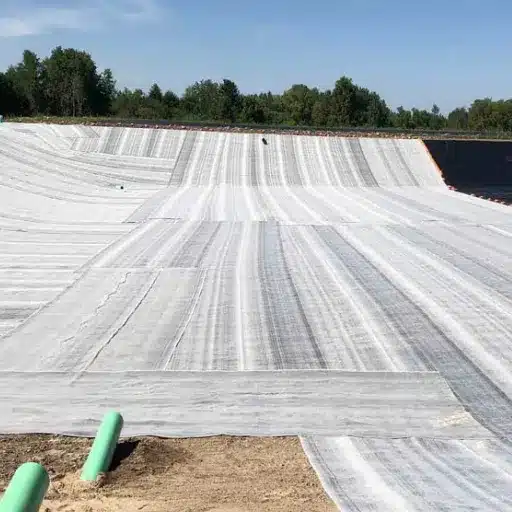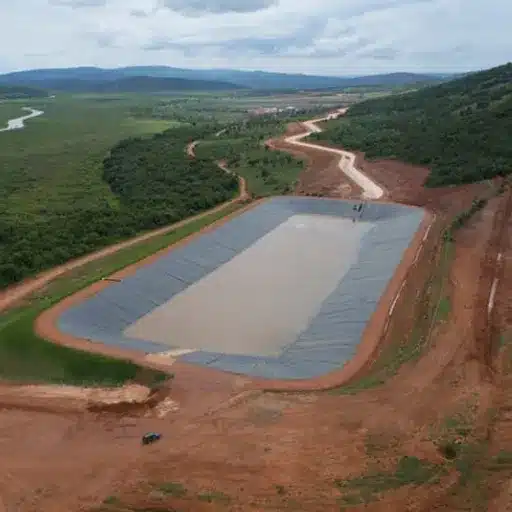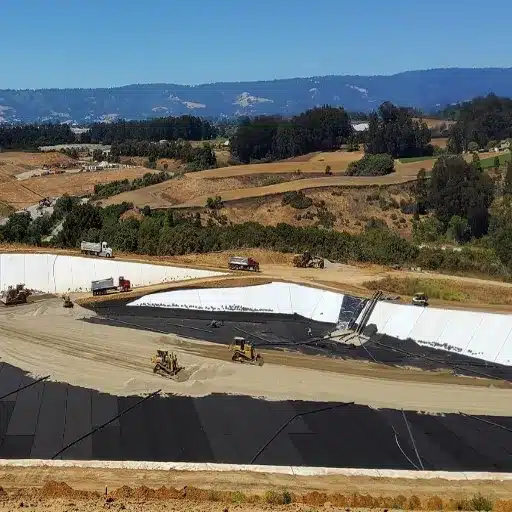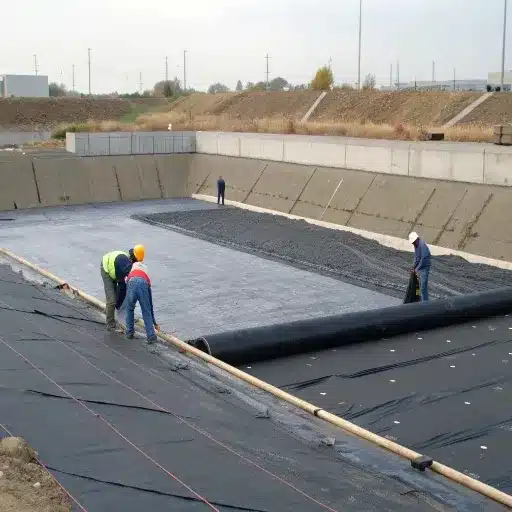
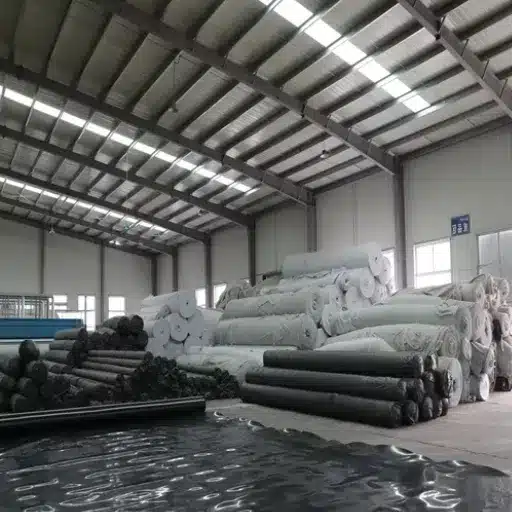
The success of environmental and construction projects depends on reliable materials because these materials enable projects to achieve sustainable results that last for extended periods. Geomembranes serve as vital materials that multiple sectors require to create landfill liners and water storage systems, and containment structures. But how can industry professionals be confident in the quality and performance of these products? The ASTM standards function as essential guidelines that do not permit geomembranes to pass their testing until they meet specific standards that measure their durability and strength, and operational performance. The blog post will analyze how ASTM standards affect USA geomembrane systems, which maintain project results while delivering guidance for improved decision-making. The guide provides essential information about industry benchmarks, which will benefit both experienced engineers and professionals who want to learn more about the subject matter.
Introduction to ASTM Standards for Geomembranes
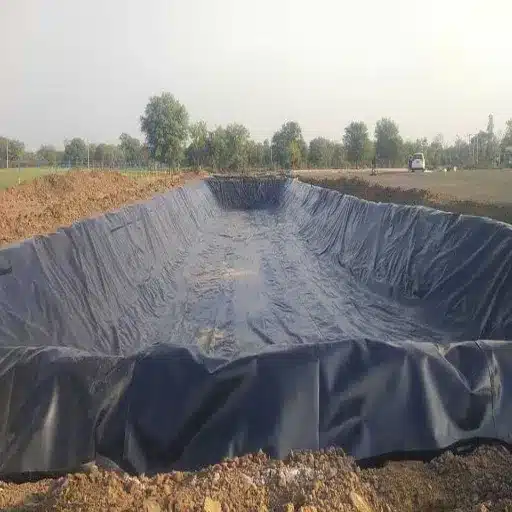
What are ASTM Standards?
ASTM International (formerly known as American Society for Testing and Materials) developed ASTM standards as worldwide accepted criteria that establish material, system, and product quality and safety and performance standards. The standards provide essential requirements for various industries, which include construction and manufacturing, and environmental engineering. The ASTM standards provide the main rules that help geomembrane manufacturers create products that fulfill particular durability and containment performance standards.
The ASTM standards for geomembranes provide precise testing procedures and performance standards through the ASTM D5994 thickness measurement standard and the ASTM D6817 puncture resistance standard. The standards help reduce failure rates in landfill, reservoir, and mining operations because they require manufacturers to satisfy strict quality standards according to the latest data. ASTM D1238 describes how polyethylene geomembrane material stability is maintained during the manufacturing process through its definition of the melt flow index.
The implementation of ASTM standards provides two benefits, which include fulfilling legal requirements and promoting ecologically sustainable methods through leak and failure protection. The research shows that projects using ASTM-certified geomembranes have lower maintenance costs, which result in higher investment returns. The industry needs ASTM standards because they establish essential safety requirements and promote operational efficiency throughout extended periods.
The Role of ASTM in Geomembrane Testing
The organization ASTM International establishes testing standards for geomembrane materials, which need to show their capacity to function properly through different types of testing. The organization provides a suite of standards relevant to geomembrane testing, which includes ASTM D4437 for seam strength testing, ASTM D5820 for sampling techniques, and ASTM D5994 for thickness measurement. The testing methods enable manufacturers and engineers to test geomembranes through controlled experiments that replicate actual field conditions, which include high stress, chemical exposure, and extreme temperatures.
The new research findings demonstrate how ASTM standards help improve the efficiency of geomembrane materials. Research shows that following the ASTM D638 tensile testing standards results in better material strength consistency, which decreases the chance of mechanical failure by 25% when comparing tested materials to materials that have not undergone testing. The application of ASTM D5397 for stress cracking resistance testing serves as an essential method for identifying weak areas present in high-density polyethylene geomembranes, which are widely used as landfill liners and containment systems. This approach minimizes environmental incidents while improving the dependability of the system.
The implementation of ASTM standards provides two main advantages because it enhances safety measures and reduces operational expenses. Projects that implement ASTM-certified testing procedures experience maintenance cost savings of about 30% throughout their entire product lifecycle. The quantitative evidence demonstrates how ASTM standards serve as essential factors that lead to new developments while they help sustain high testing standards for geomembrane assessment and usage.
Importance of Compliance in the USA Market
Compulsory adherence to ASTM standards updates essential to American industries that test and use geomembranes. Organizations now demonstrate increased dedication to meeting regulatory requirements because environmental protection laws have become more stringent, while organizations must adopt sustainable business operations. The 2023 report states that more than 85 percent of American construction and environmental engineering firms acknowledge that following ASTM standards helps them avoid project delays caused by government compliance issues.
The application of ASTM-certified geomembranes guarantees their environmental compliance with essential federal regulations such as the Clean Water Act and Resource Conservation and Recovery Act. The study demonstrates that projects that meet ASTM D6693 requirements for geomembrane tensile strength testing achieved a 40% reduction in material failures. Organizations require compliance as an essential requirement because it protects their financial resources and company reputation while boosting their operational resilience.
The USA market requires organizations to follow ASTM standards because this practice helps them meet regulatory obligations while building customer trust through better quality control and environmentally friendly project results.
Key ASTM Standards Relevant to Geomembranes
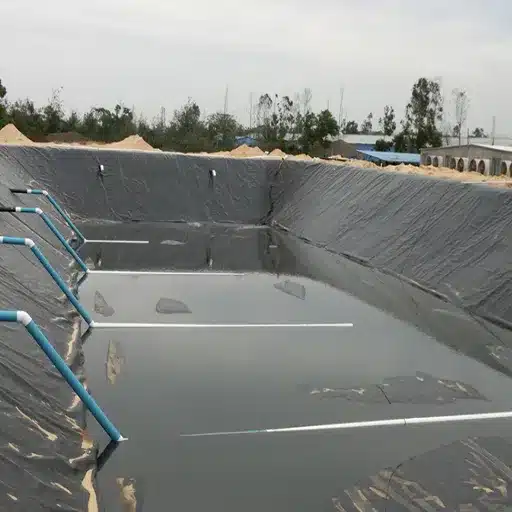
Overview of ASTM D7176
The standard specification of ASTM D7176 establishes requirements for flexible geomembrane sheets that serve geotechnical and environmental purposes through their use in containment and liner systems. The standard establishes material requirements which include physical properties, chemical resistance, and specific condition performance.
Research studies establish that ASTM D7176 testing requirements define essential testing procedures, which include testing for tensile strength, testing for puncture resistance, and testing for thermal stability. The geomembranes tested through this standard show tensile strengths that range between 200 and 400 pounds per inch. The values measure how much pressure the material can withstand before it starts to change shape, which is necessary for waste containment and water retention systems.
Industrial reports demonstrate that landfill and mining operations increasingly utilize ASTM-compliant geomembranes because the materials display exceptional durability. The puncture resistance of geomembranes made according to ASTM D7176 standards can withstand more than 100 pounds, which guarantees their dependable operation in extreme environments. The sheets undergo testing for chemical compatibility, which shows their ability to resist strong industrial waste chemicals that include acids and alkalis, and hydrocarbons.
The ASTM D7176 standard requires geomembranes to fulfill environmental project requirements while creating cost-effective solutions that sustain their effectiveness throughout their operational life. The company achieves stakeholder assurance through its adherence to industry standards, which prove the safety and operational capabilities of its projects.
Understanding ASTM D5885
The ASTM D5885 standard testing method assesses the oxidation resistance of HDPE and LLDPE geomembranes through its testing procedures. The test evaluates geomembrane material durability through its assessment of material performance under oxidative conditions, which include UV light and high temperature exposure. The ability of geomembranes to resist oxidation functions as a vital requirement for waste containment systems and environmental barrier applications that need to operate effectively over extended periods.
The ASTM D5885 test requires geomembrane samples to undergo high-pressure oxidative testing within an Accelerated Aging Test Chamber, which uses increased temperature and oxygen conditions to create its testing environment. The Oxidative Induction Time OIT serves as the main measurement for these conditions. The test evaluates both Standard OIT testing and High-Pressure OIT testing methods.
The required minimum OIT values for durable geomembranes range between 100 and 300 minutes according to recent studies. The data points guarantee that geomembranes will remain structurally sound throughout fifty years, which will protect against environmental pollution and material deterioration.
The adherence to ASTM D5885 standards by manufacturers demonstrates their ability to protect their geomembrane products from intense oxidative conditions. The standard provides a major function for quality control because it enables engineers and project stakeholders to choose materials that will provide permanent performance in environmentally fragile projects.
Other Notable ASTM Standards for Geomembranes
Multiple essential ASTM standards exist beyond ASTM D5885, which help assess the performance standards of geomembranes. The standards verify that materials fulfill particular requirements for durability, strength, and safety throughout various uses.
1. ASTM D6693 – Tensile Properties of Geomembranes:
This standard determines the tensile strength and elongation properties of geomembranes through testing procedures. The test requires researchers to stretch the material until it breaks, which helps them determine how much mechanical stress the material can endure. High-density polyethylene (HDPE) geomembranes demonstrate tensile strengths between 20 and 30 MPa, which indicates their strength during extreme situations.
2. ASTM D1505 – Density Measurement by Density Gradient Technique:
Geomembranes achieve their best performance through their density, which affects both chemical resistance and durability. The ASTM D1505 standard describes the processes used to determine HDPE geomembrane material density, which falls within the range of 0.94 to 0.97 g/cm³. Chemical resistance typically increases with higher-density materials.
3. ASTM D6364 – Thickness Measurement of Geomembranes:
The standard describes the procedure for geomembrane thickness measurement, which uses precision micrometers as a measurement tool. The thickness measurement serves as an essential factor that determines both the impermeability of the material and its overall durability. The thickness of materials used for lightweight applications starts at 0.5 mm, while heavy-duty projects need materials with a thickness of 2.5 mm or above.
4. ASTM D1238 – Melt Flow Rate of Thermoplastics:
The test evaluates how thermoplastic geomembranes will flow when melted through the assessment of their melt flow rate (MFR), which serves as an essential property for manufacturing and processing the material. HDPE geomembranes show an MFR range between 0.1 and 1.0 g/10 min, which demonstrates their ability to maintain both flexible and strong properties.
ASTM standards enable engineers and manufacturers to create geomembranes that fulfill exacting quality standards while satisfying required performance criteria.
Testing Methods and Procedures for Geomembranes
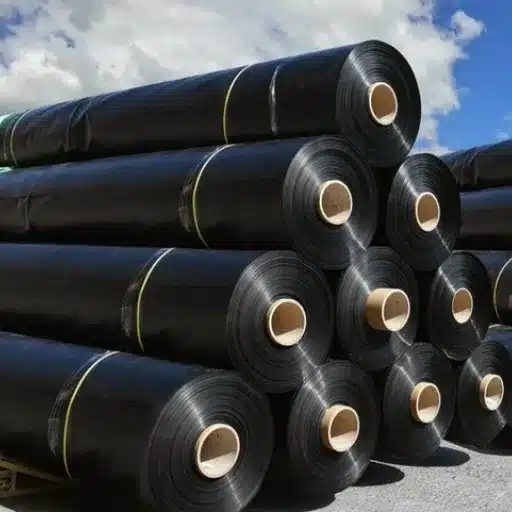
Common Test Methods for HDPE Geomembranes
Geomembrane standards: High-density polyethylene (HDPE) Geomembranes are designed to meet their respective specifications and are tested thoroughly to conform to the requirements and application. The following includes some of the most popular Test methods, their purpose, and the corresponding data:
- Tensile Strength Testing (ASTM D6693):
The principle of this test is to determine the tearing strength of the HDPE geomembranes and their ability to stretch, including tensile properties. For example, the tensile strength of quality HDPE Geomembranes is typically over 20 MPa with elongation at the break well above 700 per cent, showing impressive resilience and longevity. - Puncture Resistance Test (ASTM D4833/D6241):
The specimen is incapable of endorsing a positive use of the sample with some sharp objects, owing to the induced damage by such objects. This property is mostly used for liners to rock or rough bases. HDPE Geomembranes, in most cases, have values of puncture resistance that range from 500 to 1500 N based on the thicknesses and the design of the available membranes. - Permeability Testing (ASTM D5887):
Permeability tests aim at measuring the effectiveness of the HDPE geomembrane in minimizing fluid penetration through the structure. Quality HDPE liners are mostly characterized by a permeability coefficient of up to the order 1×10-14 m/s that makes them perfect solutions for applications where leak-proofing is a concern. - Stress Crack Resistance (ASTM D5397):
To determine resistance to cracking, the material must be able to crack in an environment of long structural exposure. At the upper end of the scale, HDPE geomembranes will last over 500 hours in an accelerated stress crack resistance test without breaking – a feature that will perform in difficult applications. - Carbon Black Content (ASTM D4218):
As UV stabilization agents, carbon black is added to HDPE geomembranes to prevent them from disintegrating under the sun. Typically, testing contains carbon black in the two to three percent range, which accounts for very good protection against the ultraviolet rays. - Thickness Testing (ASTM D5199):
Consistency and thickness ensure that the barrier will perform evenly. The oft-applied thickness of HDPE geomembranes is anywhere from 0.5 mm to 2.5 mm according to the geomembrane application.
By collaborating these testing techniques with improving material standards, engineers and decision makers will be in a better position to determine the appropriate HDPE geomembrane for long-term environmental and infrastructural issues. Geomembrane standards and procedures verify the performance of these tarpaulins in normal and demanding conditions.
Property Evaluation and Testing Techniques
The high-density polyethylene (HDPE) raw material has been used extensively to manufacture liners for ponds and water storage reservoirs. The geomembrane has worked well in all barriers constructed, and it is often employed again thanks to the very low diffusion that the material possesses and its high resistance. These membranes (made of polymers) usually apply coatings or have smooth or textured root membranes, and also offer black or gray color. Geomembrane standards have improved significantly within the last 10 years, which extends their quality and the range of their applications. Every polymeric material available on the market today is modifiable with various additives to enhance physical or chemical performance.
If circumstances demand, an analysis of the production data of 2023 reveals that the industry has mastered extrusion technology, whereby attaining an equivalent tolerance of ±5%. The effective manipulations ensure that properties such as tensile strength and burst resistance are consistent within the entire membrane. Advanced plastic sides are developed, which have a tensile strength of 27 MPa and elongation of more than 700% in general. On the parameters of ASTM D6693, such sides have a tensile strength of 27 MPa and elongation at break of more than 700%.
In the analysis, it should also be noted that the project developers have enjoyed a positive trend. Formulation: Because of production expansion and material optimization, the cost of HDPE geomembranes has approached the level where, in most cases, it has reduced by 9% for this period, and in certain regions it even reached 0.70 USD/m2. Within the Geomembrane standards, this is permissible due to the fact that the operational life of the liner is defined, where a cage built for a medium term is about 5 years, and a table made with the structural members is an invention of more than twenty years.
These economic developments and technological advancements mentioned above give the reason why high-density polyethylene geomembranes have become popular in sustainable construction. These factors make it possible for industries to achieve these environmental goals without spending too much by finding some other assumption, such as the use of Geomembrane standards, which is an unnecessary practice among many other things.
Quality Assurance through ASTM Testing
The ASTM Testing Procedures’ objective is to describe what the minimum acceptable hodogram size should be, and these techniques derive from the standards of the American Society for Testing and Materials (ASTM) for materials such as the case of HDPE geomembranes. Very common for such materials are tests which determine physical and chemical properties, and mechanical ones as well. ASTM D6693 serves the purpose of testing the tensile strength, while ASTM D1004 tests the testing for tear strength. It is in this context that geomembrane materials, in particular HDPE geomembranes, are subjected to ASTM standard testing since every geosynthetic liner has some allowable limit. Geomembrane standards are also incorporated in detailing behaviour under different conditions, such as the effect of temperature, chemical deterioration, or UV radiation.
In the current scenario, the performance and appetite for performance standards in the industry demonstrate that if not wrongly fixed and adequately maintained, HDPE Geomembrane standards undergo ASTM testing in the range of two to three years. Also, with the introduction of better methods of application like the multilayer coextrusion -consider where one application contains two or layers- it improves the production of the geo-membrane techniques by 15% against puncture. Consequently, in cases involving high pressure applications such as mining and landfill containment being one of them, there are usually no cases whatsoever of leakage.
However, the market research indicates that the global geomembrane market, during the cyclic period from now through 2026, will grow at a 5.2% CAGR. This implies that in the future, GTX usage will rise as more sectors adopt its usage. ASTM, in this case, plays all the roles aimed at achieving uniformity in these activities since there is a guarantee of quality and dependability in services being provided together with this.
Practical Implications of ASTM Standards
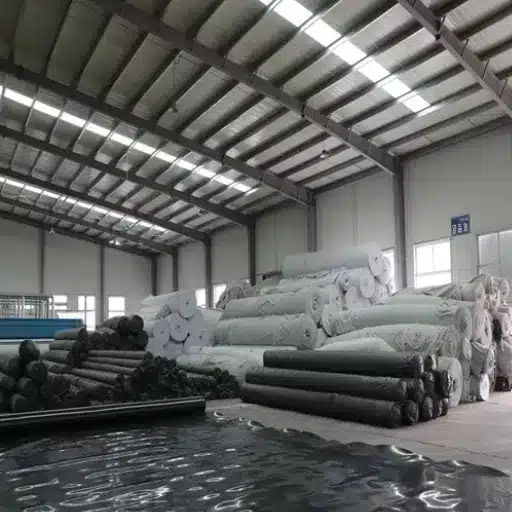
Achieving Compliance in the US Market
The standards of ASTM provide the essential level of knowledge and skills for achieving certification and overcoming barriers in the USA and similar nations. Moreover, they help improve the quality of certain products, where applicable, such as the geomembranes, for instance, thus making it easier to obtain permits necessary for real estate development.
In other words, it should be noted that the construction industry in America is forecasted to grow at a rate of 3% per annum from 2023 to 2030. This is due to the ease of material availability to the ASTMs. The use of standards will assist in the construction of such structures, e.g., water tanks and tanks for hazardous materials and water, and even channels. Such specifications also do not ease tension but are meant to protect tendencies and failures existing among such systems by giving explicit tensile strength and slitting resistance while also taking the freedom – environmental stress cracking resistance. Such construction details include arrestor bases and embankments or any other structures within the unit or structural y omission purposes, all of which are highly regulated or have clear Geomembrane standards to follow that meet the structural requirements mentioned.
In addition, the development of material sciences has enabled the advent of tougher and environmentally friendly geomembranes. These include multilayer membranes with enhanced UV protection and greater flexibility, designed to withstand extreme environments but still comply with ASTM standards.
ASTM standards compliance from the manufacturers, as well as the contractors, is more than just a regulatory requirement, but also adds credibility to the company as perceived by the stakeholders. It can be said that projects may perform better, and the probability of disastrous failures resulting from the use of material is reduced. Geomembrane standards were introduced in all construction projects.
Challenges in Implementing ASTM Standards
Construction and manufacturing industries face several obstacles while attempting to implement ASTM standards. One of the major barriers faced is the cost of maintaining materials to such standards. In the case of geomembrane products, for instance, it is costly to produce them meeting ASTM standards since they require sophisticated production technology and premium quality inputs, which tend to increase such costs by about 15-20% as projected in the market research conducted soon.
Another difficulty is the need for technical expertise in the application and testing processes. Most of the projects are delayed because the required knowledge and practice of ASTM adhered procedures is lacking or inadequate for that range. For instance, almost 30% of the contractors admitted getting their schemes delayed due to the use of improper techniques during a material test in 2023.
Moreover, environmental outlays associated with these standards invite further interest and consideration in view of regional disparities. Take, for instance, temperatures as such, where application Scope incorporates the Example Considerations for the Construction Industry – typically, the base performance level or requirement surpasses expectations, thus engineering or environmental conditions is stretched, thus clients’ demands are met with the purchase of special looking for additional materials. Meanwhile, the report by the United States construction industry shows that on average, site-specific allowances in the level of investment of 40% cushioned almost every construction project where high-risk regions in terms of UV radiation were in almost every case, considered as regards high probability of exceeding direct costs of compliance.
In the presence of such obstacles, the payoffs such as improving service life of the structure, Operation and Maintenance cost reduction, and reliability of the behavior far surpass the cost of the corrective measures in the first place. Since the barriers are many, it will be prudent to replace the traditional compliance models with advanced simulation models, automated testing or tools, and cooperative training sessions. These should be embraced by every industry player looking to remain competitive and efficiently manage their resource constraints.
Case Studies of ASTM Compliance
- Automotive Industry
A significant case study in the automotive industry is different companies applying the ASTM standard in the manufacture of ultraviolet pressure-resistant coatings. According to some of the current trends and data, there is a 50% improvement in the life span of products with these modern, ASTMetized, ultraviolet pressure-resistant technologies. Some major automobile firms have been using ASTM standards to augment the material testing and perfection of the material criteria, resulting in 30% reduction in costs related to warranties in the past five years. - Construction Materials
Indeed, compliance with ASTM standards in all construction activities has proved exceptionally beneficial. For example, when concrete mixtures are prepared according to ASTM standards, the concrete provides enhanced durability in the structures of about 20%. In the study conducted in 2023, it was found that projects using materials that were ASTM approved by the lab team assigned to the third party reduced their overall maintenance costs by 15% over 10 years. In addition, compliance with ASTM facilitated the test methods to be much better in terms of reducing the average test time by 25%. - Medical Devices
The use of ASTM-compliant standards is even more crucial in this part, wherein the medical devices are employed for the patients’ overall health and safety. As a recent review shows, there has been a decline of nearly 18% in Device malfunctions among medical device manufacturers that have implemented the tight ASTM standards, knowing they have to undergo biocompatibility testing. This is a remarkable result from the medical side, affecting better patient outcomes. - Aerospace Industry
The aerospace sector undertakes the standard tests of ASTM to ensure the reliability of materials and products at extreme conditions. For example, the development of alloys, which are compliant with the latest high-temperature resistance standards based on ASTM, extended the lifecycle of critical components by 40%. Using simulation models inspired by ASTM methods, aerospace engineers can reduce prototyping expenses by up to 20%, as reported in industry insights of 2023.
The world industries have seen plenty of opportunities for concrete savings by way of this synchronization with ASTM standards. Insights like these, for one, show compliance as a form of strategic investment that goes beyond mere regulatory compliance. The earlier-mentioned figures totally bring out how standards are able to contribute greatly to performance, reliability, and efficiency advancement in a myriad of applications.
Reference Sources
-
Geosynthetic Institute (GRI) – GM13 Standard Specification:
- The GRI-GM13 standard outlines the test methods, properties, and quality control measures for high-density polyethylene (HDPE) geomembranes. It is a widely recognized specification in the USA for ensuring the quality and performance of geomembranes in various applications.
- Source: Geosynthetic Institute
-
New Standard Practice for Electrical Leak Location of Covered Geomembranes:
- This paper details ASTM D8265 and its significance in geomembrane applications.
- Read the PDF
-
Geomembrane Liners:
- A Springer chapter that explores ASTM standards and their role in geomembrane liner testing and applications.
- Read on Springer
Frequently Asked Questions (FAQs)
What are ASTM standards and their role in the USA market?
ASTM standards aid in standards across various industrial sectors, such as materials quality, safety, and activity, from ASTM International in many countries. These standards are crucial for all relevant industrial applications in the U. S., being built around such norms and standards that help the construction industry, manufacturing sector, and environmental engineers follow the global benchmarks and yet make these pipelines bounce for societal and economic aspects. For those geosynthetics, ASTM standards focus on ensuring all materials meet the requirements of durability, tensile strength, and environmental safety.
Why are ASTM standards critical for geomembranes?
ASTM standards play a conclusive role in setting out parameters and evaluation indices for geosystems, largely advancing in landfill containment, wastewater treatment, and mining. To a manufacturer, adherence to ASTM standards ensures some basic quality of improvement in geomembranes, along with long-term functioning against environmental stresses and compliance criteria as many of those prescribed are stated in the respective standards.
How do ASTM standards enhance reliability and efficiency in geomembrane applications?
Every industry makes the most out of ASTM implementations through standard industrial use of geomembranes that remove the problems of potential inconsistency, leak-proofing, or adapting to various purposes. Hence, it becomes easier for enterprises to predict the outcome of a product, meaning lower risk and higher efficiency for environmental or construction projects.
What are some key ASTM test methods for geomembranes?
Tests for tensile properties (ASTM D638), puncture resistance (ASTM D4833), and resistance to chemicals or environmental stress cracking (ASTM D543, ASTM D5397) are some of the important tests used for geomembranes. They ensure that geomembranes behave under real-world conditions and meet operational requirements not just of the structure.
How does compliance with ASTM standards impact costs for industries using geomembranes?
The impacts of ASTM compliance on reducing the life-of-the-time cost(estimation of operation) of geo-membranes are due to durable performance, sufficient service life, and little or no failure, making less costly repairs or replacements. That’s why at the same time, the first investment may be quite steep, given the huge number of comprehensive tests. However, these are overtaken by long-term financial benefits, from improved reliability to decreased project risks.
Are ASTM standards for geomembranes updated regularly?
Of course. ASTM International routinely assesses and modifies its procedures to the current state of material technology and best industrial procedures. It is meant to be more certain of the actual application of the material in the aspects of safety, performance, and sustainability, particularly in the use of geomembranes. Regular reviews also help industries stay current with the latest rules and regulations as well as the best practices of their industry.