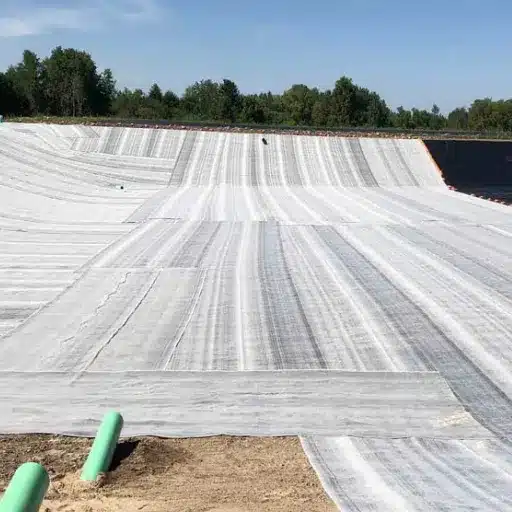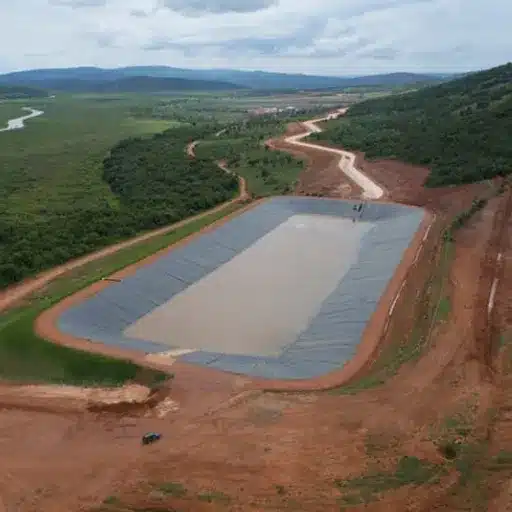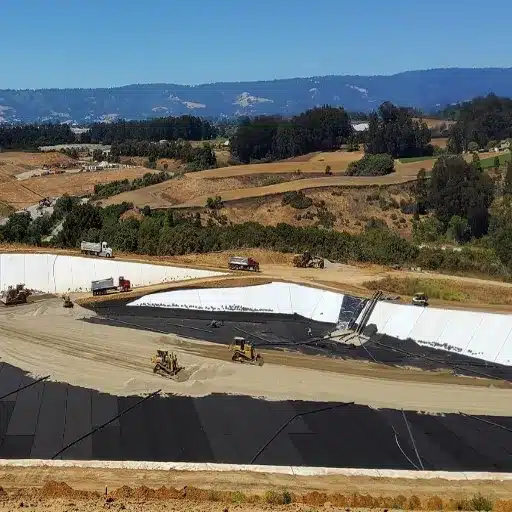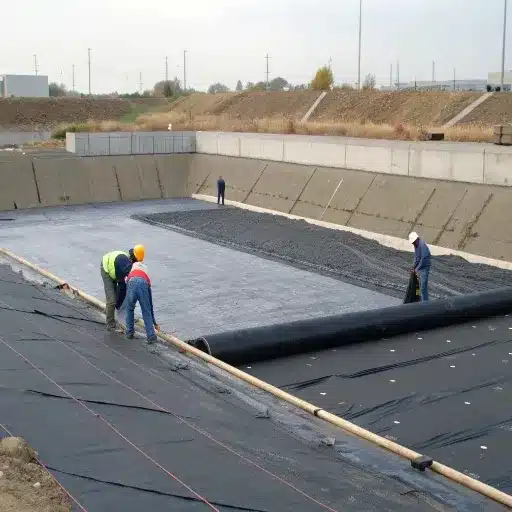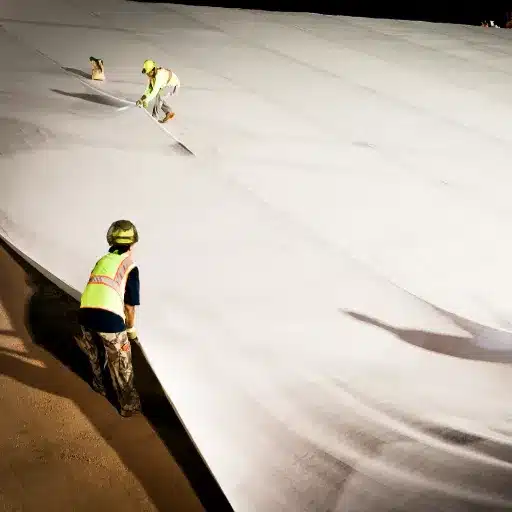
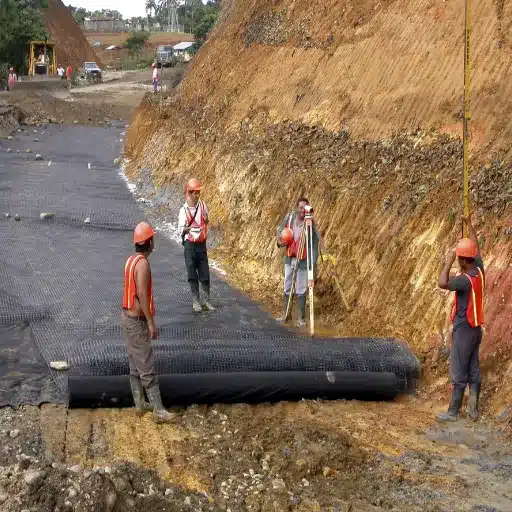
The water treatment facility in Jiangsu Province suffered a major liner failure, which occurred in 2019, and the investigators discovered that the actual cause of the incident lay beyond both installation errors and design defects. The facility selected a 30-mil PVC liner when their needs required them to use a 60-mil HDPE liner for their high-chemical operational environment. The $2.3 million remediation process demonstrated to engineers that they needed to select the appropriate containment membrane through more than just its financial effects. The selection process requires people to comprehend how material science interacts with environmental factors and long-term performance specifications.
The selection of landfill containment systems, mining operations, and water resource projects requires you to understand how liner selection determines project success. The guide provides you with a complete system that helps users to comprehend synthetic membrane types and their suitable applications, and the specification process. The guide provides practical solutions to civil engineers who design their first pond liner and procurement managers who assess suppliers for major infrastructure projects and it is based on 21 years of geosynthetics manufacturing experience.
The presentation will show essential linear performance attributes with direct measurements of HDPE, LLDPE, PVC, and EPDM materials, and it will present methods to select specific applications and installation techniques, and quality standards that differentiate between dependable containment systems and expensive containment system failures.
What Is a Geomembrane?
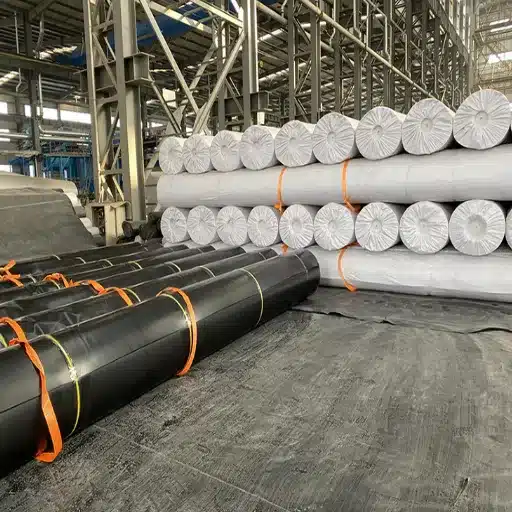
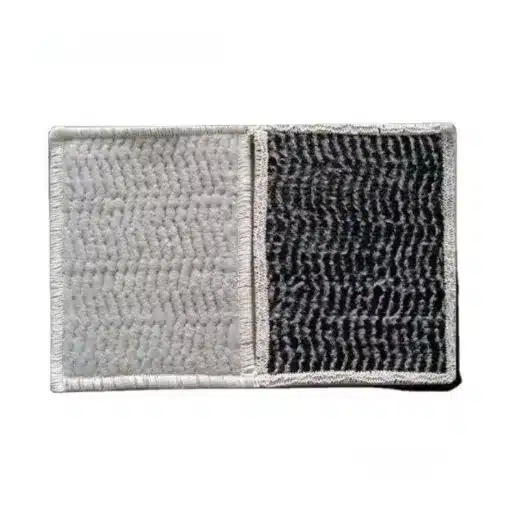
A geomembrane functions as a synthetic barrier that prevents fluid and gas movement in engineering applications through its impermeable membrane design. The liners, which contain hazardous materials for environmental protection and civil engineering and water management systems, are made from polymer materials that include high-density polyethylene, linear low-density polyethylene and polyvinyl chloride, and ethylene propylene diene monomer.
How These Synthetic Liners Work
The impermeable barriers create a complete blockage of fluid movement through their outer structure. Geomembranes create an absolute barrier to water movement, whereas geotextile fabrics permit water to pass through them. Their continuous polymer structure provides impermeable protection because it removes all void spaces and fluid pathways, which normally enable liquid flow. The geomembrane system functions as an entire containment structure that stops soil and groundwater contamination while protecting essential water resources when it is installed and its seams are sealed correctly.
A synthetic liner requires multiple material properties to function effectively as a whole system.
- Chemical resistance: The ability to withstand exposure to acids, bases, salts, and hydrocarbons without degradation
- Tensile strength: Resistance to stretching and tearing under mechanical stress
- Puncture resistance: Ability to withstand damage from subgrade materials and construction activities
- UV stability: Resistance to degradation from sunlight exposure, critical for above-ground applications
- Thermal stability: Performance across temperature extremes, from freezing conditions to high-heat environments.
The Evolution of Containment Technology
The geomembrane industry has evolved from its beginnings in 1950, when the first polymer liners were introduced. The first uses of PVC sheets for pond lining used basic PVC sheets. Today’s engineered liners represent advanced polymer technology, which has been developed to meet three specific needs: chemical environment requirements, installation requirements, and service life requirements.
Modern manufacturing processes create geomembranes through flat-die extrusion and blown-film production methods, which produce materials with even thickness, consistent characteristics, and reliable operational results. The organization conducts quality control tests through tensile testing and puncture resistance testing, and chemical compatibility testing to verify that each roll fulfills international standards, which include ASTM D specifications.
Types of Geomembranes: A Comprehensive Comparison
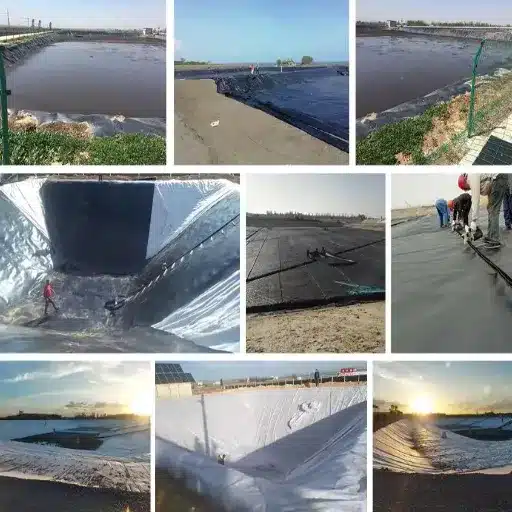
The correct specification process requires knowledge of the specific properties that exist in different geomembrane types. The properties of each material create specific advantages while they also create constraints that determine suitable use cases.
HDPE Geomembrane (High-Density Polyethylene)
HDPE geomembranes serve as the primary solution for containment operations because they make up about 60 percent of all worldwide installations. People prefer this material because it provides an exceptional combination of chemical protection and long-lasting performance at a reasonable price.
Key Properties:
- The material builds its strength through a combination of its 0.94-0.96 g/cm³ density and its design as a rigid, robust material.
- The material exhibits tensile strength at 30-50 MPa, which enables it to withstand stretching forces.
- The material shows outstanding chemical resistance, which protects it from damage by acids, bases, and most organic chemicals.
- The product operates effectively between temperatures of -70°C and 80°C.
- The material shows excellent UV resistance because its additives provide more than 20 years of service life in outdoor environments.
Thickness Options:
HDPE liners come in standard thicknesses which range from 30 mil 0.75mm to 120 mil 3.0mm. Common specifications include:
- 30-40 mil: Decorative ponds, aquaculture, short-term applications
- 60 mil: Landfill caps, standard containment, industrial ponds
- 80-100 mil: Critical containment, mining applications, primary landfill liners
- 120 mil: Maximum security applications, hazardous waste containment
Best Applications:
HDPE proves ideal for applications that demand both extended chemical protection and long-term material strength. The primary use of Landfill liners and caps shows how HDPE maintains its structural integrity while protecting against chemical damage for more than 20 years. HDPE provides strong performance for mining heap leach pads, wastewater treatment ponds, and industrial containment systems.
Installation Considerations:
HDPE maintains structural support through its rigid design, but this creates difficulties when installers work on surfaces that contain uneven areas or complex shapes. The process of thermal fusion welding using wedge welders or extrusion welders produces strong seams that endure for a long time while requiring both expert technicians and specific equipment. The process of prefabricating components into large panels enables construction teams to install projects more quickly because it decreases the need for field seaming and makes installation faster.
LLDPE Geomembrane (Linear Low-Density Polyethylene)
LLDPE geomembranes create a balance between the rigid properties of HDPE and the flexible nature of PVC. Their molecular structure provides superior puncture protection while enabling them to adapt to different shapes, along with maintaining their ability to resist chemicals.
Key Properties:
- Density: 0.92-0.94 g/cm³, more flexible than HDPE
- Elongation at break: 400-800%, significantly higher than HDPE’s 100-300%
- Puncture resistance: Superior to HDPE because of its ability to flex and its strong protective features
- Flexibility: The material maintains its flexible properties at low temperatures, which causes HDPE to become rigid
- Seaming: The system supports thermal fusion methods that work like HDPE
Advantages Over HDPE:
The engineer Chen Wei selected liner material for the Guangxi Mining Company tailings pond because he needed to handle unstable subgrade conditions, which included rocks that had sharp edges. The team chose LLDPE 60 mil thickness because it provides better puncture protection than HDPE material. The installation has maintained its leak-free status for 18 months because the subgrade conditions would have damaged a less solid material.
The superior puncture protection of LLDPE makes it suitable for use in sites that have rough or unprepared ground conditions, which include mining sites and emergency containment areas. The material’s flexible properties enable easy installation on curved surfaces, which include tank bottoms and irregular pond shapes.
Best Applications:
- Mining areas that need to contain materials from rough ground.
- Ponds and canals that have non-standard shapes.
- Situations that need materials with high stretching capability.
- Installations that occur during cold weather.
- Systems that need secondary containment in non-standard shapes.
PVC Geomembrane (Polyvinyl Chloride)
The specific applications of PVC geomembranes enable developers to achieve better results through their superior flexibility and their simple installation process and their chemical compatibility with hydrocarbons.
Key Properties:
- Flexibility: The material maintains strong, flexible properties throughout its entire thickness range.
- Chemical resistance: The material shows excellent protection against oils and greases and hydrocarbons.
- Seaming: The process of chemical welding or adhesive bonding becomes easier to perform than thermal fusion.
- Temperature range: The system operates between -30°C and 60°C, which restricts its temperature range compared to polyethylene.
- Reinforcement: The material typically comes with internal fabric reinforcement, which maintains its dimensional stability.
Best Applications:
PVC serves as the primary material for oil and gas operations, which need materials that can withstand hydrocarbon exposure. PVC has an established track record for petroleum product performance, which makes it the standard material for secondary containment systems and fuel tank systems, frac pit liners, and oilfield operations. The material’s flexible nature enables its use in tank liner production and applications that require complex folding and fitting.
Installation Advantages:
The main benefit of PVC installation comes from its seaming system. Chemical welding with solvents or adhesive bonding needs less complex tools than thermal fusion, which makes field repairs easier to accomplish. Smaller projects and remote sites that lack welding equipment will experience installation cost and time savings through this method.
EPDM Geomembrane (Ethylene Propylene Diene Monomer)
EPDM geomembranes represent the premium segment of the market, offering unmatched flexibility and weathering resistance for specialized applications.
Key Properties:
- Rubber-like properties: Highly elastic with 300%+ elongation
- UV resistance: Exceptional, with 30+ years of exposed service life
- Temperature range: -45°C to 120°C, the widest operational range
- Weathering: Outstanding resistance to ozone and oxidation
- Thickness: Typically manufactured in 45-mil and 60-mil thicknesses
Best Applications:
The premium price of EPDM makes it suitable for uses where its special characteristics deliver distinct advantages. EPDM provides decorative ponds and water features with flexible design options and long-lasting aesthetic appeal. Roof gardens and green infrastructure applications make use of its ability to withstand weathering. Industrial applications that need protection against chemicals and extreme temperatures specify EPDM despite its higher price.
Geomembrane Type Comparison Matrix
| Property | HDPE | LLDPE | PVC | EPDM |
|---|---|---|---|---|
| Flexibility | Low | High | Very High | Very High |
| Chemical Resistance | Excellent | Very Good | Good (hydrocarbons) | Good |
| Puncture Resistance | Good | Excellent | Good | Excellent |
| UV Resistance | Excellent | Excellent | Good | Outstanding |
| Temperature Range | -70°C to 80°C | -70°C to 80°C | -30°C to 60°C | -45°C to 120°C |
| Typical Cost | $ | $$ | $$ | $$$$ |
| Best For | Landfills, large ponds | Rough subgrades, complex shapes | Oil containment, tank liners | Exposed applications, long life |
Applications and Uses: Where Geomembranes Deliver Value
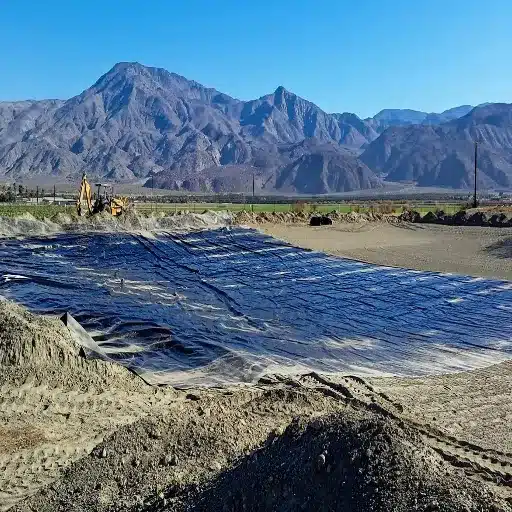
Various industries use geomembranes to achieve vital operational functions that range from protecting the environment to enabling resource extraction. The process of material selection and design decisions needs specific application requirements to be understood.
Environmental Protection Applications
Landfill Liners and Caps:
Modern municipal and hazardous waste landfills depend on composite liner systems, which use geomembranes as their main containment barrier. A typical landfill liner system includes:
- Compacted clay or GCL (geosynthetic clay liner) as a secondary barrier
- HDPE geomembrane (typically 60-80 mil) as the primary containment layer
- A geotextile protection layer to prevent puncture
- Leachate collection system above the liner
Landfill caps use similar geomembrane systems to prevent water infiltration into closed waste cells, which helps decrease leachate production while managing gas movement. A properly designed and installed liner system can reduce leachate generation by over 99% compared to unlined facilities.
Wastewater Treatment:
Wastewater treatment ponds, lagoons, and constructed wetlands utilize synthetic liners to prevent contamination of the underlying groundwater while maintaining water levels for biological treatment processes. The application primarily uses HDPE and LLDPE because these materials provide chemical resistance against the wide range of compounds present in municipal and industrial wastewater.
Hazardous Waste Containment:
Hazardous waste facilities demand the highest level of containment assurance. The application of double-liner systems, which include leak detection between their layers, creates redundancy for critical processes. HDPE serves as the preferred material because it demonstrates chemical resistance and extended durability when exposed to harsh conditions.
Mining Industry Applications
Heap Leach Pads:
The process of extracting copper and gold together with other precious metals through heap leaching needs geomembrane-lined pads which provide chemical solution containment and enable ore processing operations. The applications create specific challenges, which include handling:
- Chemical solutions that contain cyanide, sulfuric acid, and other lixiviants
- Heavy loading from ore stacks that exceed 100 meters in height
- Extreme subgrade conditions, which include sharp rock and potential puncture risks
Heap leach pad liners typically use textured HDPE geomembranes (80-100 mil) to enhance slope stability because they provide chemical resistance and durability needed for multiple years of operational use.
Tailings Storage Facilities:
Mining tailings, which represent the waste material that remains after mineral extraction, need secure containment to stop their environmental release. Tailings storage facilities (TSFs) often represent the largest civil engineering structures at mining operations, with geomembrane-lined impoundments covering hundreds of hectares.
The 2019 Brumadinho dam failure in Brazil, which released 12 million cubic meters of tailings and caused 270 fatalities, underscored the critical importance of robust containment systems. Modern TSF design increasingly incorporates geomembrane liners as primary or secondary containment, with rigorous quality assurance and monitoring systems.
Water Resource Management
Agricultural Ponds and Reservoirs:
Arid and semi-arid regions experience rising demand for geomembrane-lined ponds because water shortages require sustainable solutions to store irrigation water. The applications require 30-40 mil HDPE or LLDPE liners, which the users chose to achieve their cost and performance goals. Lined ponds provide major water conservation benefits because they decrease water losses through seepage by more than 90% when compared to unlined earthen ponds.
California’s Central Valley agricultural sector uses lined irrigation ponds as standard practice because water costs have risen 300% during the last ten years. The University of California conducted a 2022 study, which found that lined ponds produced payback periods between 3 and 5 years because they reduced water purchasing and pumping expenses.
Aquaculture:
Fish and shrimp farming operations use geomembrane-lined ponds to establish controlled environments that protect groundwater from feed and waste contamination while they preserve water quality. Food-grade geomembrane formulations ensure no adverse impacts on aquatic organisms or human consumers.
Oil and Gas Applications
Secondary Containment:
Environmental regulations require secondary containment systems for all petroleum storage tanks and transfer areas. The containment basins, which use geomembrane liners, have the necessary capacity to capture spills while stopping soil and groundwater contamination. The application requires both PVC and HDPE materials because their performance depends on specific chemical compatibility needs.
Frac Pits and Production Pads:
Hydraulic fracturing operations need facilities that can store large quantities of water and contain flowback water. The geomembrane-lined pits serve as temporary or permanent storage facilities that hold millions of gallons of water needed for fracturing operations while they capture returned fluids which require treatment or disposal. The rapid deployment process, together with the cost-effective nature of geomembranes, makes them suitable for these frequently used temporary applications.
How to Choose the Right Geomembrane: A Selection Framework
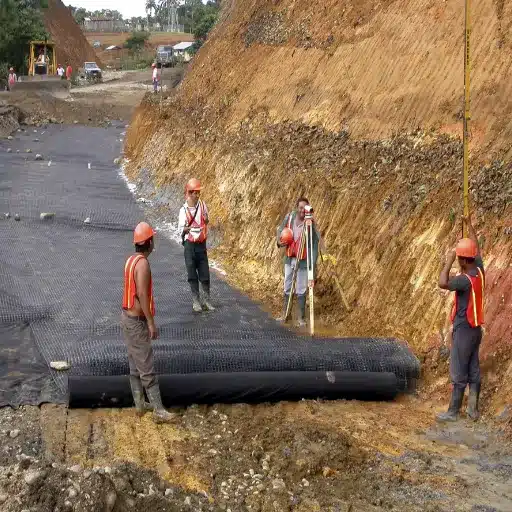
Selecting the appropriate geomembrane requires a systematic evaluation of project-specific requirements across multiple criteria. The framework enables engineers and specifiers to follow a systematic process for choosing materials.
Step 1: Define Chemical Compatibility Requirements
The primary factor that determines whether a geomembrane material is suitable for use is its reaction to chemical substances. A material that performs excellently in neutral pH water may fail rapidly in acidic or hydrocarbon environments.
Key questions to address:
- What chemicals will the liner contact during normal operation?
- What concentrations and temperatures will these chemicals present?
- Are there potential upset conditions or accidental exposures?
- What is the required service life in this chemical environment?
Chemical resistance testing according to ASTM D5322 and EPA 9090 provides definitive data on geomembrane performance in specific chemical environments. For critical applications, actual site fluid immersion testing delivers the highest level of confidence.
General chemical compatibility guidelines:
- Aqueous solutions (pH 2-12): HDPE and LLDPE excel
- Hydrocarbons and oils: PVC and certain HDPE formulations preferred
- Strong acids or bases: HDPE is generally superior
- Oxidizing agents: HDPE with antioxidant packages recommended
Step 2: Evaluate Mechanical Requirements
Geomembranes must withstand mechanical loads that arise from internal stresses during installation and operation and from external forces created by overlying materials or equipment.
Tensile strength requirements:
Materials designed for applications that experience major subgrade settlement need to possess elevated stretching capabilities. LLDPE and EPDM enhance their performance through 400-800% stretching capacity before reaching their failure point, while HDPE limits itself to 100-300% stretching. The ability to bend freely prevents stress points from forming, which would cause tears during differential settlement.
Puncture resistance:
The subgrade preparation quality directly influences puncture requirements. Well-prepared smooth subgrades with sand bedding layers enable standard geomembrane thicknesses to be used. Mining operations typically use rough or rocky subgrades, which need:
- Thicker geomembrane sections
- Higher puncture resistance materials (LLDPE or EPDM)
- Geotextile cushioning layers
- Specialized composite geomembranes with reinforced cores
Step 3: Consider Environmental Conditions
Temperature extremes:
The selection of materials and the timing of installation work depend on the operational temperature range. HDPE and LLDPE maintain properties across -70°C to 80°C, suitable for most applications. Extreme cold or heat may require EPDM’s extended temperature range (-45°C to 120°C).
The installation process requires correct installation temperature conditions. The thermal fusion welding process used for polyethylene geomembranes becomes unworkable when temperatures fall below 5°C, which can force operators to implement heated enclosures or push back their installation schedules.
UV exposure:
Applications that operate above ground or in visible areas require UV-stabilized formulations. All major geomembrane types include UV stabilizers, but performance varies:
- HDPE: 20-30-year exposed service life with proper stabilization
- LLDPE: Similar to HDPE when properly formulated
- PVC: 10-15 years exposed, may require protective soil cover for extended life
- EPDM: 30+ years, best-in-class UV resistance
EPDM justifies its cost premium for exposed applications that need the longest possible service life. For covered applications (landfill caps with soil cover, buried liners), lower-cost materials provide equivalent performance.
Step 4: Determine Thickness Requirements
Geomembrane thickness selection balances cost against performance margin. Thicker materials provide:
- Greater puncture resistance
- Longer service life
- Higher safety factors
- More forgiving installation
Typical thickness selection by application:
| Application | Minimum Thickness | Recommended Thickness |
|---|---|---|
| Decorative ponds | 20 mil | 30-40 mil |
| Agricultural ponds | 30 mil | 40-60 mil |
| Wastewater lagoons | 40 mil | 60 mil |
| Landfill caps | 40 mil | 60 mil |
| Landfill primary liners | 60 mil | 80 mil |
| Mining heap leach | 80 mil | 100-120 mil |
| Hazardous waste | 60 mil | 80-100 mil |
Regulatory requirements may mandate minimum thicknesses for certain applications. In the United States, EPA Subtitle D regulations specify a 30-mil minimum for municipal landfill caps and a 60-mil minimum for primary liners.
Installation Best Practices: Ensuring Long-Term Performance
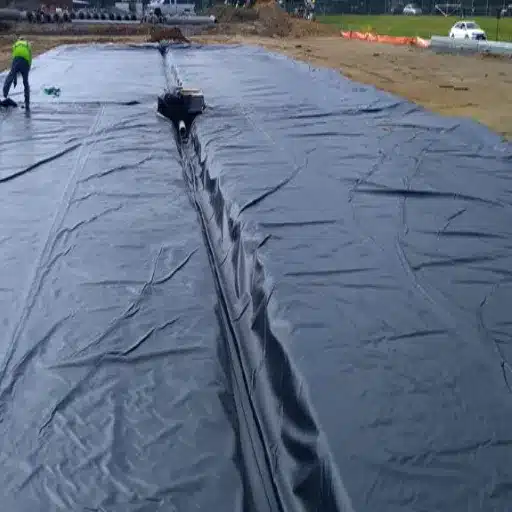
Even the highest-quality geomembrane will fail if improperly installed. Following industry best practices ensures that material performance translates into system performance.
Site Preparation: The Foundation of Success
Subgrade preparation:
The subgrade needs to deliver continuous support without allowing any pointing materials that include sharp items, empty spaces, and sudden height variations, which might generate pressure that could damage the liner. Standard preparation includes:
- The process requires clearing and grubbing to remove all vegetation and organic material from the site
- The process of grading creates design contours that include smooth transitions to all points
- The process requires compaction to reach 95% of the standard Proctor density or the project’s specified density
- The subgrade acceptance process requires quality control testing to determine its validity
Bedding layer:
Many specifications demand a bedding layer that consists of sand or fine soil to be placed between the prepared subgrade and the geomembrane. This layer:
- Provides extra protection against punctures
- The system helps to maintain drainage between the geomembrane and subgrade area by solving the minor street defects
- The system uses a drainage system to manage water flow from the geomembrane to the subgrade area
- The system keeps the geomembrane safe from damage caused by construction vehicles
Typical bedding layers range from 150mm to 300mm in thickness, which depends on the subgrade quality and project specifications.
Deployment and Handling
Weather considerations:
Geomembrane deployment requires suitable weather conditions:
- Wind speeds below 25 mph (40 km/h) to prevent panel lift and control issues
- No precipitation that could create slippery or hazardous conditions
- Temperatures above 5°C for polyethylene geomembranes (lower limits for PVC)
Panel layout:
Pre-planning panel placement minimizes field seaming and optimizes material usage. Consider:
- Roll dimensions and panel configuration
- Seam locations and orientations
- Access for welding equipment
- Sequence of deployment to minimize construction traffic on the installed geomembrane
Seaming Methods and Quality Control
Thermal fusion welding:
The welding process for HDPE and LLDPE geomembranes uses thermal fusion, which heats polymer junctions to their melting point while applying pressure to develop molecular connections. The following methods are used to accomplish this task:
- Wedge welding: The process uses two heated wedges, which combine to melt the surface areas in the middle, while rollers create the necessary pressure. The process generates consistent, strong seams that manufacturers can use for extended periods of operation.
- Extrusion welding: The process involves pushing molten geomembrane resin through a machine to connect two overlapping sheets. The application serves to repair items, create multiple details, and handle areas where wedge welding becomes unsuitable.
Seam quality control:
Every welded seam requires non-destructive testing:
- Visual inspection: The process requires inspection of the welded seam to confirm that it maintains proper structure and complete connection without any visible flaws.
- Air channel testing: The testing requires double-track wedge welds to have their air channel pressurized to check the joints’ structural integrity.
- Vacuum box testing: The testing procedure requires vacuum application through soapy water on extrusion welds and repairs to identify potential leaks.
The testing procedure requires destructive testing on sample coupons to confirm that seam strength complies with or surpasses the parent material standards.
Common Installation Mistakes to Avoid
Inadequate subgrade preparation:
The need to finish site preparation work for schedule requirements leads to performance problems that last throughout the project. The team should spend adequate time to complete subgrade preparation work while they resolve quality problems and receive CQA approval before starting geomembrane installation.
Poor seam practices:
The combination of improper weld temperature settings, missing pressure requirements and dirty welding surfaces results in weak seams which can break under tension. The organization must train its welders and perform regular equipment calibration and maintenance to ensure proper operation.
Construction damage:
Heavy equipment traffic, dropped tools, or careless material handling can damage geomembranes during or after installation. Protect installed geomembranes with temporary covers and restrict access to essential personnel only. Consider using ground protection mats to distribute equipment loads and prevent damage.
Quality Standards and Testing: Ensuring Reliable Performance
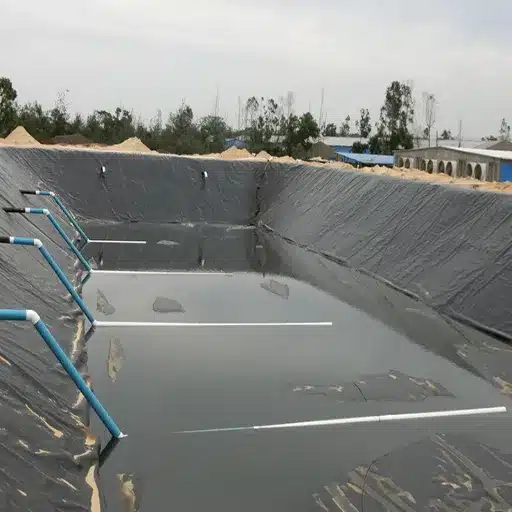
Geomembrane quality assurance involves three components, which include material testing, manufacturing quality control, and construction quality assurance. The specifiers need to understand the applicable standards, which will assist them in determining suitable requirements for their work.
International Standards and Specifications
ASTM International Standards:
ASTM standards form the basis for most geomembrane specifications in North America and many international projects:
- ASTM D1239: Test method for resistance of plastic films to extraction by chemicals
- ASTM D1603: Test method for carbon black content in olefin plastics
- ASTM D4437: Practice for non-destructive testing of geomembrane seams
- ASTM D4833: Test method for index puncture resistance of geomembranes
- ASTM D5199: Test method for measuring nominal thickness of geosynthetics
- ASTM D5322: Practice for immersion procedures for evaluating chemical resistance
- ASTM D6693: Test method for tensile properties of non-reinforced geomembranes
GRI Standards:
The Geosynthetic Institute (GRI) develops test methods and specifications widely referenced in the industry:
- GRI GM13: Standard specification for HDPE geomembranes
- GRI GM17: Standard specification for LLDPE geomembranes
- GRI GM19: Standard specification for EPDM geomembranes
Key Performance Tests Explained
Tensile strength and elongation (ASTM D6693):
The standard testing procedure uses two measurements to determine the breaking strength and maximum stretch of a geomembrane sample. The results provide design safety factors while delivering quality control information. HDPE geomembranes typically show 30-50 MPa tensile strength with 100-300% elongation at break.
Puncture resistance (ASTM D4833):
The test assesses the material’s ability to withstand damage from sharp objects. The test becomes essential for situations when subgrades have rough surfaces or materials that contain sharp-edged components. The results help determine which materials to use and how to establish bedding requirements.
Carbon black content and dispersion (ASTM D1603):
Carbon black provides UV protection in polyethylene geomembranes. Testing verifies proper long-term stabilization through adequate concentration (which usually ranges between 2-3%) and complete uniform dispersion.
Certification and Compliance
ISO 9001 Quality Management:
ISO 9001-certified Geomembrane manufacturers show their ability to manage quality through their operational activities. Through this certification, manufacturers show their ability to maintain product quality while making ongoing process enhancements.
Environmental compliance:
- RoHS: The Restriction of Hazardous Substances standard prevents the use of certain heavy metals and chemicals in materials
- REACH: Registration, Evaluation, Authorization and Restriction of Chemicals serves as the compliance standard for European markets
Shanxi Shengxing provides products that meet ISO 9001 and RoHS standards, so you can expect consistent high-quality materials for your most challenging projects.
Geomembrane Lifespan and Cost Considerations
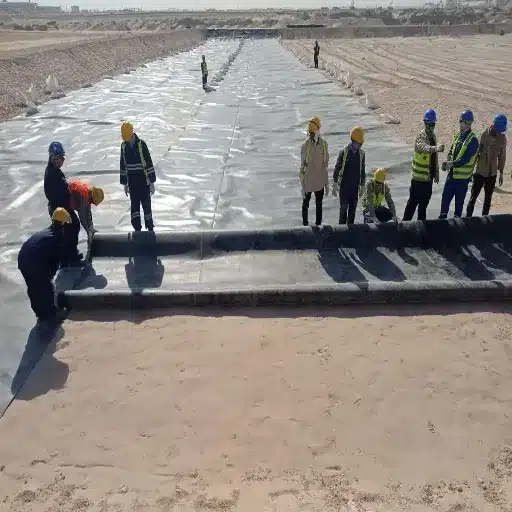
Understanding geomembrane service life and total cost helps establish realistic expectations and inform project decisions.
Expected Service Life by Material
HDPE geomembranes:
HDPE geomembranes, which undergo proper manufacturing and installation procedures, achieve outstanding durability. Research conducted by the Geosynthetic Institute, together with case studies from installations lasting over 30 years, has proven that HDPE geomembranes maintain their operational performance through multiple decades under two conditions:
- Protected from UV exposure (buried or covered applications): 50+ year potential
- Exposed to UV with proper stabilization: 20-30 years
- Not subjected to aggressive chemical attack beyond material capabilities
The U. S. Environmental Protection Agency has approved HDPE geomembranes as permanent solutions for underground use when they receive correct installation and shielding.
LLDPE geomembranes:
LLDPE geomembranes demonstrate comparable durability to HDPE, which enables them to last between 20 and 25 years in open environments and more than 40 years when installed underground or in protected areas. The material’s flexibility provides benefits to systems operating under both dynamic loading and ground movement conditions.
PVC geomembranes:
The service life of PVC depends heavily on both its chemical makeup and the surrounding environmental conditions. Standard formulations in exposed applications: 10-15 years. Premium formulations with enhanced stabilization: 15-20 years. Buried applications or those with protective covers can extend service life significantly.
EPDM geomembranes:
EPDM maintains its complete protection against oxidation and weathering through its saturated polymer backbone structure. The exposed service life reaches 30 years with established documentation, while certain systems have operated continuously for almost 40 years. This exceptional durability justifies EPDM’s premium pricing for applications requiring maximum longevity.
Cost Analysis and ROI
Material cost factors (approximate ranges):
| Material | Thickness | Cost Range ($/m²) |
|---|---|---|
| HDPE | 40 mil (1.0mm) | $3-5 |
| HDPE | 60 mil (1.5mm) | $4-7 |
| HDPE | 80 mil (2.0mm) | $6-10 |
| LLDPE | 40 mil (1.0mm) | $4-6 |
| LLDPE | 60 mil (1.5mm) | $6-9 |
| PVC | 30 mil (0.75mm) | $4-7 |
| PVC | 40 mil (1.0mm) | $5-9 |
| EPDM | 45 mil (1.1mm) | $10-15 |
| EPDM | 60 mil (1.5mm) | $13-20 |
Note: Costs vary by region, order volume, and market conditions. Contact us for current quotations.
Lifecycle cost considerations:
The total project cost consists of multiple elements that include the initial material cost, which serves as one of its components. The cost of installation work constitutes a percentage range between 30 and 50, which applies to the overall project expenses. When evaluating options, consider:
- Material cost: Price per square meter for specified thickness
- Installation cost: Labor, equipment, and time requirements
- Performance risk: Potential costs of failure or premature replacement
- Service life: Expected functional lifespan in the application environment
- Maintenance: Inspection, repair, and monitoring costs
Water conservation value:
Lined ponds and reservoirs achieve 90% or higher reduction of seepage losses when compared to unlined alternatives. The value of conserved water in water-scarce regions enables geomembrane investments to achieve payback within 2-5 years.
Environmental protection value:
The prevention of contamination events results in lower remediation costs, which also protects organizations from regulatory penalties and damage to their reputation. The cost of a single significant leak event often exceeds the entire geomembrane system cost many times over.
Conclusion: Selecting Geomembranes with Confidence
The process of selecting geomembranes requires thorough evaluation of chemical compatibility, mechanical properties, environmental conditions, and the costs throughout their entire lifecycle. The provided guide enables informed decision-making, yet project-specific requirements dictate the best way to create project specifications.
Key takeaways:
- HDPE dominates landfill and large containment applications due to chemical resistance, durability, and cost-effectiveness
- LLDPE excels where puncture resistance and flexibility matter, particularly in mining and rough subgrade applications
- PVC serves hydrocarbon containment and applications requiring simple seaming methods
- EPDM justifies its premium for exposed applications requiring maximum service life
- Thickness selection balances cost against performance margin and risk tolerance
- Long-term performance depends equally on installation quality and material quality
- Lifecycle cost analysis demonstrates that premium materials provide better value throughout their entire lifespan
The global geomembrane market, valued at $2.5 billion and growing at 7% annually, reflects the critical role these materials play in environmental protection and resource management. As regulations tighten and environmental stewardship becomes increasingly important, geomembranes will continue expanding into new applications and geographies.
Your Next Step:
The project requires you to start the geomembrane specification process. You should reach out to Shanxi Shengxing Building Materials Sales Co., Ltd. to receive expert support and technical details, and pricing options. Our company provides project needs through our two decades of experience in geosynthetic production, which includes ISO 9001 certification and our policy of using only fresh materials. You can request your complimentary technical consultation and project estimate by visiting our website.