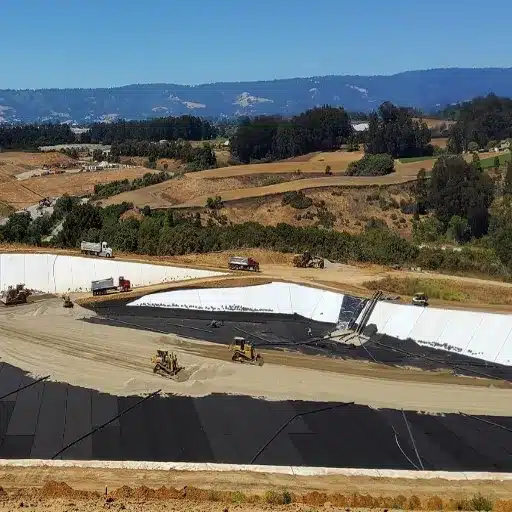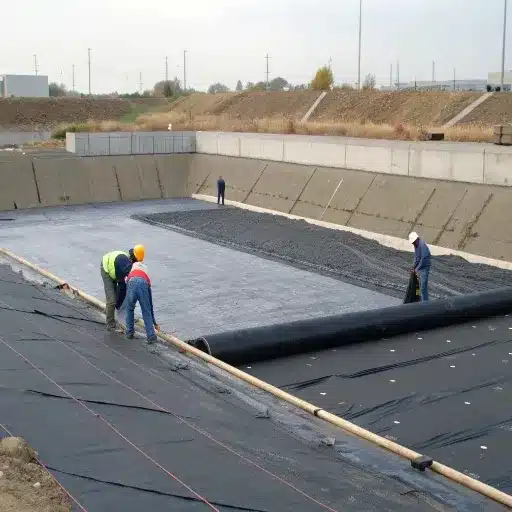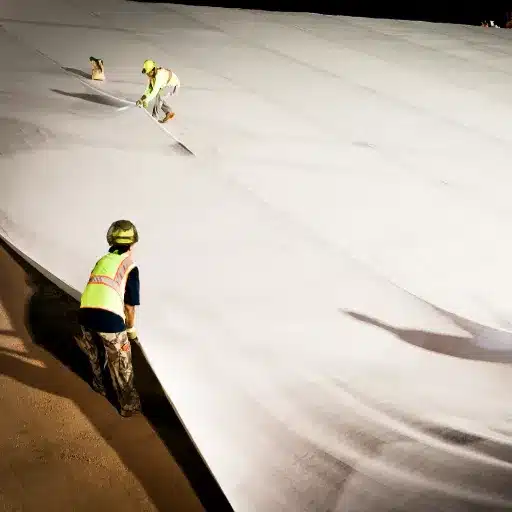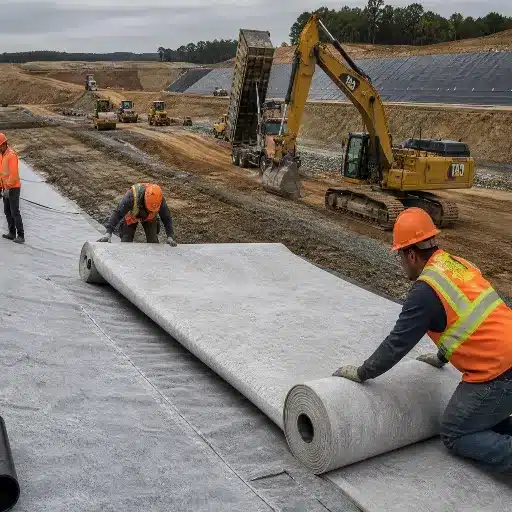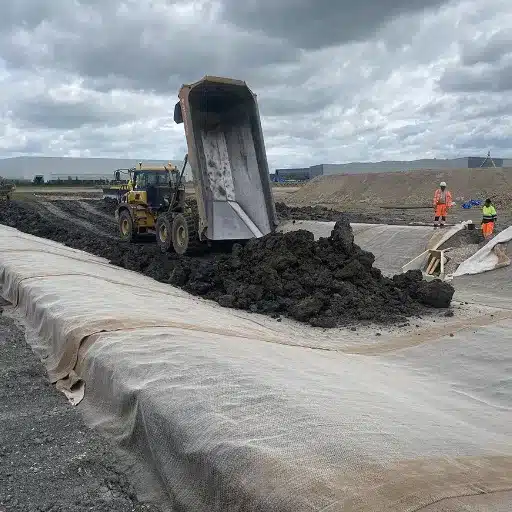
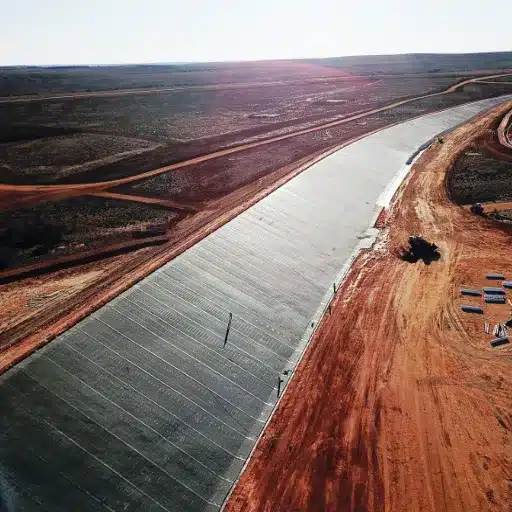
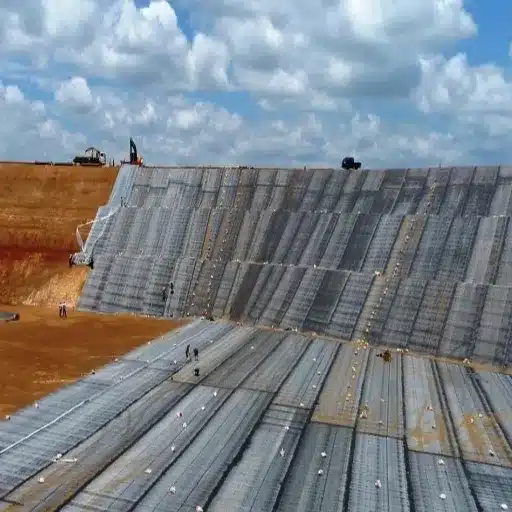
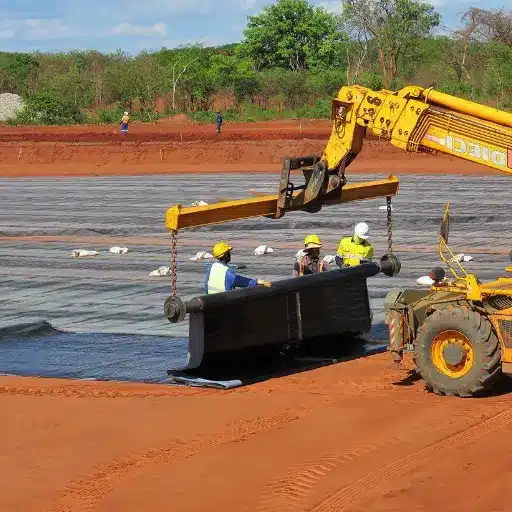
A 43-meter-punished peak dam in Tasmania needed seismic upgrading in 2015, challenging engineers to a new level. They could not drain the reservoirs, while the existing asphalt concrete facing required a seismic strengthening to overcome probable earthquake loading, of which the solution was the innovative installation of bituminous geomembrane panels underwater, and all the immersion works were carried out while the dam remained operational. After all those eight odd years, the system continues to hold as watertight.
This bituminous geomembrane technology is critical for professional engineers, especially when constructing demanding lining facilities, as in the incident just mentioned. HDPE is the primary layer on the field as far as most market debates, but BGM holds some other capabilities, which are unattainable with the use of any other polymeric liners.
This guide gives the necessary technical background to familiarize oneself with bitumen geomembranes. You can learn how these composite liners are produced, what circumstances they outperform in contrast to synthetic alternatives, and how they should be prescribed under the parameters set by the industry.
What Is a Bituminous Geomembrane?
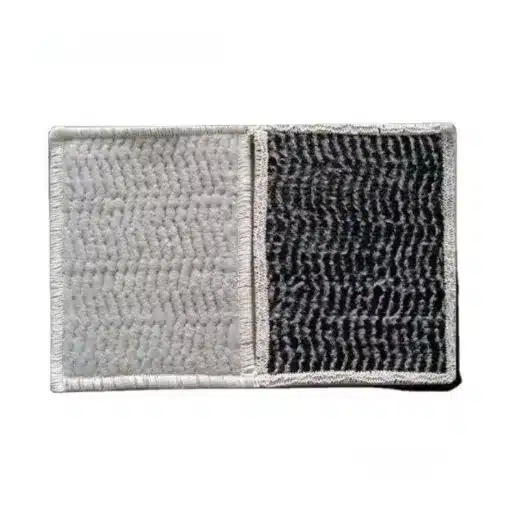
Bituminous geomembranes (BGM), also known as asphalt geomembranes or designated GBR-B per EN ISO 10318, are thick composite liners manufactured by impregnating geotextile reinforcements with bituminous binders. Unlike homogeneous polymeric geomembranes, BGMs are multi-layered engineered systems combining the waterproofing properties of bitumen with the structural strength of synthetic geotextiles.
Composition and Layer Structure
A typical BGM consists of five distinct layers:
| Layer | Component | Function |
|---|---|---|
| Top Surface | Fine sand coating | UV protection, friction enhancement (~34° angle), worker safety |
| Binder Layer | Elastomeric or oxidized bitumen | Primary waterproofing barrier |
| Stabilization Layer | Glass fleece/veil (~50 g/m²) | Dimensional stability during manufacturing |
| Reinforcement | Polyester geotextile (200-400 g/m²) | Tensile strength, tear and puncture resistance |
| Bottom Surface | Polyethylene/Teflon film | Anti-root penetration, puncture resistance, roll separation |
This composite structure, first developed by Shell and Colas in 1974, creates a liner with fundamentally different performance characteristics than polymeric alternatives.
Manufacturing Process
BGM production occurs through a controlled factory process certified to ISO 9001 and ISO 14001 standards:
Step 1: Impregnation
The nonwoven polyester geotextile is impregnated with hot, liquid bituminous binder at 180°C, thereby filling the voids within the fiber matrix, removing residual moisture, and ensuring the complete encapsulation of the reinforcement.
Step 2: Coating
Additional bituminous mass is applied to achieve the required thickness (typically 3.5-5.6 mm). This ensures adequate bond strength at field overlaps.
Step 3: Surface Finishing
Fine sand is applied to the top surface while the bitumen remains hot. A polyethylene film bonds to the bottom surface to create an anti-root barrier and prevent roll adhesion.
Material Variants
Two primary types of bitumen are manufactured for different types of usage:
Oxidized Bitumen (NTP Grade)
Blown Bitumen with some mineral fillers, harder and stiffer. It is consumed in dams, reservoirs, and general containment subtanks, wherein high temperature resistance is not very critical.
Elastomeric Bitumen (ES Grade)
Modified by SBS (Styrene-Butadiene-Styrene) polymers, a visco-elastic characteristic and high flexibility. Ideal for use in mining installations, heap leach pads, and the most severe climate in terms of fluctuation (± 40°C).
Bituminous Geomembrane vs HDPE: Engineering Comparison
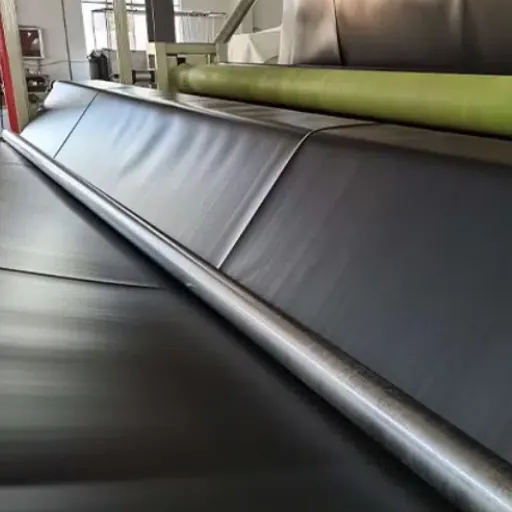
Understanding when to specify BGM over HDPE requires examining their comparative performance across critical engineering parameters.
Mechanical Properties
| Property | Bituminous Geomembrane | HDPE Geomembrane |
|---|---|---|
| Static Puncture Resistance | 1,355 lb (ASTM D4833) | 108 lb |
| Thickness | 3.5-5.6 mm | 1.5-2.0 mm |
| Surface Mass | 4.2-6.4 kg/m² | ~0.9 kg/m² |
| Flexibility at -30°C | Remains pliable (~20 MPa modulus) | Becomes brittle (~220 MPa modulus) |
| Thermal Expansion | 0.22×10⁻² mm/m/°C | 2.0×10⁻² mm/m/°C |
The most significant mechanical advantage is puncture resistance. BGM withstands over 12 times the static puncture load of HDPE due to the geotextile reinforcement, allowing direct placement over coarse subgrades without protective cushion layers.
Seam Performance: The Critical Difference
HDPE Seams
Fusion welding creates a continuous material with mechanical integrity matching the parent sheet. Seams maintain strength at elevated temperatures (solid to ~130°C). Long-term failure mode is slow stress cracking (predictable, taking years).
BGM Seams
Bitumen bonding represents the weak link. While the geotextile provides structural strength, the bitumen adhesive is temperature-sensitive:
- 50% strength reduction at 40°C
- 92% strength reduction at 80°C
- Creep rupture under sustained stress: failure in hours to days at high temperatures, or weeks at moderate loads (20 kPa load → failure in ~24 days)
This temperature sensitivity makes BGM unsuitable for exposed applications in hot climates where surface temperatures exceed 50°C. Canadian building codes prohibit bituminous membranes on slopes steeper than 4:1 (horizontal: vertical) for this reason.
Chemical Resistance
BGM Advantages
- Excellent resistance to petroleum hydrocarbons and fuels
- Hydrophobic properties resist acids and salts
- Compatible with hot asphalt concrete placement (up to 140°C) without damage
HDPE Advantages
- Superior broad chemical resistance, especially to solvents
- Better performance in high pH/alkaline solutions at elevated temperatures
- BGM degrades more than HDPE in strong alkaline environments (pH > 9) above 40°C
When to Choose BGM Over HDPE
Specify bituminous geomembrane when your project requires:
- Cold climate installation (arctic conditions to -40°C)
- Rough subgrades with coarse aggregate (eliminates cushion geotextile cost)
- Hydrocarbon exposure (petroleum products, mining applications)
- Immediate traffic/cover placement without waiting for protective layers
- Bonding to concrete or asphalt surfaces
- Underwater installation capabilities
Conversely, specify HDPE for high-temperature exposed applications, steep slopes in hot climates, or when 100+ year service life is required.
Key Engineering Applications
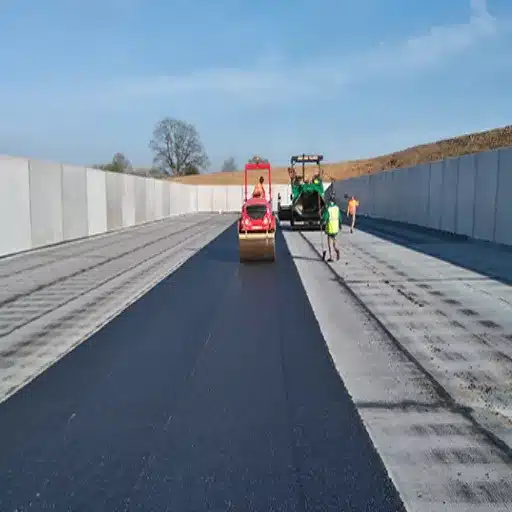
Mining and Industrial Containment
Heap Leach Pads
BGMs excel in gold, copper, uranium, and silver extraction operations. The puncture resistance allows heavy equipment traffic directly on the liner surface. The elastomeric grade accommodates the large temperature fluctuations common in mining environments.
Tailings Dams and Ponds
The composite structure withstands chemical exposure from processing solutions, while the high friction angle (34°) provides stability for cover materials on slopes.
Stockpile Covers and Waste Capping
BGM prevents water infiltration into contaminated materials while the sand-coated surface accepts vegetation or ballast layers without additional protection.
Water Management and Hydraulics
Potable Water Reservoirs
NSF ANSI 61 certified BGMs (including Coletanche ES and XP grades) are approved for drinking water storage exceeding 283.9 m³ (75,000 gallons). At Estanques Pirque in Chile, 440,000 m² of BGM lines reservoirs storing 1.5 million m³ of raw water supplying Santiago’s metropolitan area.
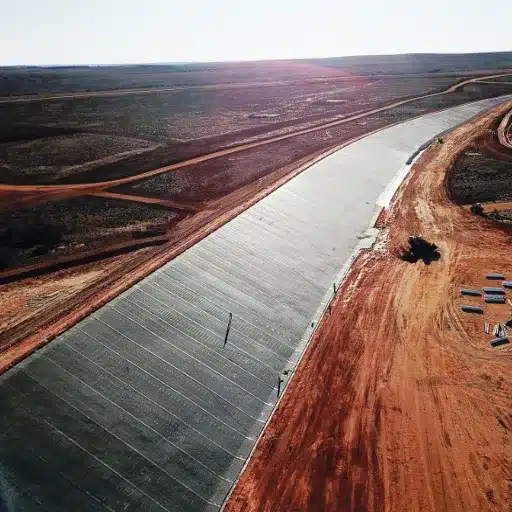
Irrigation and Navigation Canals
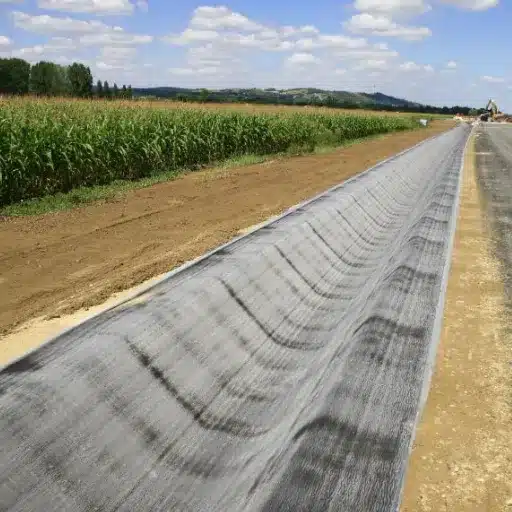
The dimensional stability prevents the wrinkling that plagues HDPE in exposed canal applications. The sand surface provides traction for maintenance equipment.
Dam Waterproofing
BGMs serve as upstream-facing systems for rockfill and earthfill dams, replacing traditional reinforced concrete slabs. At La Galaube Dam in France, 23,000 m² of 4.8mm bituminous geomembrane installed in 2000 continues performing after 15+ years, maintaining a 35+ million m³ capacity reservoir.
Aquaculture Ponds
The chemical inertness and puncture resistance suit fish farming operations where mechanical cleaning is required.
Civil Engineering and Infrastructure
Tunnel Waterproofing
BGM bonds directly to concrete tunnel linings, providing secondary waterproofing in subterranean structures.
Airport Runways
Installed as impermeable barriers over water-sensitive soils, preventing frost heave and subgrade degradation.
Railroad Stabilization
Prevents fines migration from ballast into subgrade while maintaining drainage.
Specialized Applications
Dam Seismic Upgrades
The Scotts Peak Dam project demonstrated BGM’s unique capability for underwater installation without reservoir drawdown. The flexible system accommodates deformations better than rigid asphalt concrete facings during seismic events.
Cold Climate Installations
BGM remains workable at temperatures where HDPE becomes too brittle to handle. Arctic projects in Canada and Russia utilize BGMs specifically for this temperature resilience.
Ready to evaluate bituminous geomembrane for your containment project? Contact our engineering team for specification assistance tailored to your soil conditions and chemical exposure requirements.
Technical Specifications and Standards
Physical Properties
| Property | Typical Value | Test Method |
|---|---|---|
| Thickness | 3.5-5.6 mm | Direct measurement |
| Surface Mass | 4.2-6.4 kg/m² | ASTM D5261 |
| Permeability | 6×10⁻¹⁴ m/sec | ASTM E96 |
| Static Puncture Resistance | 450-650 N | ASTM D4833 |
| Thermal Expansion Coefficient | 0.22×10⁻² mm/m/°C | ASTM D696 |
| Tensile Strength | 29-33 kN/m | ASTM D7003 |
| Friction Angle | ~34° | Direct shear test |
ASTM Standards
ASTM D2643/D2643M
Standard Specification for Prefabricated Bituminous Geomembrane Used as Canal and Ditch Liner (Exposed Type). Defines material requirements, dimensional tolerances, and performance criteria for exposed BGM installations.
ASTM D4833
Standard Test Method for Index Puncture Resistance of Geomembranes. Measures static puncture resistance—the key BGM advantage over polymeric liners.
ASTM D5261
Standard Test Method for Measuring Mass per Unit Area of Geotextiles. BGM surface mass ranges from 4.2 to 6.4 kg/m², providing wind uplift resistance and ballast stability.
ASTM D696
Standard Test Method for Coefficient of Linear Thermal Expansion of Plastics. BGM’s coefficient is approximately 100 times lower than HDPE, explaining its dimensional stability.
ASTM E96
Standard Test Methods for Water Vapor Transmission of Materials. Confirms the extremely low permeability (6×10⁻¹⁴ m/sec) that makes BGM suitable for containment applications.
International Standards and Certifications
EN ISO 10318
Geosynthetics classification designates BGM as GBR-B (Geosynthetic Barrier, Bituminous).
NSF ANSI 61
Certification for potable water system components. Requires third-party verification by ANSI-accredited organizations with:
- Full disclosure of all chemical ingredients
- Laboratory testing for 2,000+ potential contaminants
- Unannounced annual facility inspections
- Publicly verifiable product listings
Important: As of 2019, 49 U.S. states require ANSI-accredited certification (not just compliance) for drinking water system components.
CE Marking
European conformity marking indicating compliance with EU Construction Products Regulation.
Product Lines (Coletanche Reference)
Coletanche ES (Elastomeric Grade)
SBS-modified bitumen with superior flexibility. Temperature range: -40°C to +50°C. Applications: Mining, extreme climates, areas with ground movement.
Coletanche XP (Enhanced Performance)
Higher puncture resistance and tensile strength for heavy-duty applications.
Coletanche NTP (Oxidized Grade)
Standard grade for water containment, dams, and canals where temperature extremes are moderate.
Installation Guidelines and Best Practices
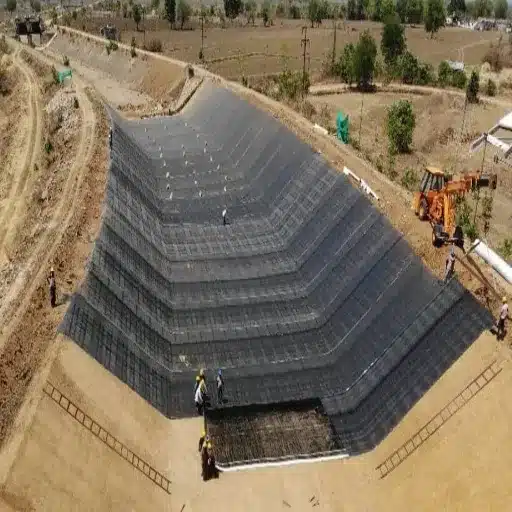
Site Preparation
BGM requires less subgrade preparation than HDPE due to superior puncture resistance. Key requirements:
- Remove sharp protrusions >25mm
- Compact loose soils to provide uniform support
- Fill depressions >50mm deep
- Maintain subgrade moisture to prevent dust (dust inhibits bitumen bonding)
Installation Methods
Heat Welding
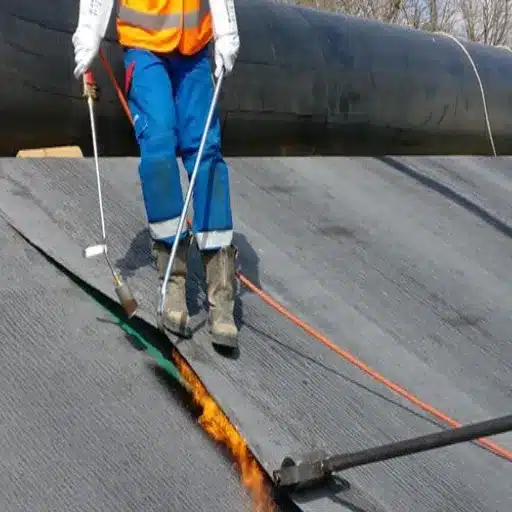
Field seams are created using propane torches to heat the overlap area (typically 10-15 cm). A weighted roller compresses the heated bitumen to form the bond. This simple equipment requirement contrasts with HDPE’s specialized fusion welding machinery.
Rolling and Compaction
Heavy rollers (minimum 500 kg) compact the installed BGM to ensure intimate contact with subgrade and activate the self-healing properties of the bitumen layer.
Anchorage Systems
Three primary anchorage methods suit different applications:
- Perimeter Trench: 30-50 cm deep trench at crest with BGM folded and backfilled
- Concrete Plinth: Embedding in cast-in-place concrete for dams and canals
- Deep Grouted Anchors: Used for dam facing installations requiring resistance to hydrostatic uplift
Weather Considerations
Advantages Over HDPE
- Wind resistance: Installation possible in winds up to 70-120 km/h without ballasting
- Cold weather: Workable to -40°C (HDPE becomes brittle below -10°C)
- Light rain: Installation can continue during light precipitation
Temperature Constraints
- Minimum: -40°C (stiff handling, but possible)
- Optimal: 5°C to 35°C
- Maximum exposed temperature: 50°C sustained (to prevent seam creep)
Quality Control
Seam Testing
Visual inspection of all overlaps for complete bitumen flow and absence of voids. Test wedges at regular intervals to verify bond strength.
Thickness Verification
Random measurement of installed BGM thickness to confirm compliance with specifications.
Post-Installation Protection
While BGM can accept direct traffic, sharp construction debris should be removed before heavy equipment operations.
Market Overview and Growth Trends
The global bituminous geomembrane market was valued at approximately 1.2-1.4 billion in 2025. Industry analysts project compound annual growth rates of 4.4-8.9, 1.2-1.4 billion in 2025. Industry analysts project compound annual growth rates of 4.4-8.9, 2.4-2.7 billion.
Regional Distribution
| Region | Market Share (2025) | Growth Rate |
|---|---|---|
| Asia Pacific | 36.7% | ~8.1% CAGR |
| North America | 24.7% | ~7.0% CAGR |
| Europe | 21.6% | ~7.3% CAGR |
| Emerging Markets | 17.0% | Accelerating |
Asia Pacific dominates due to rapid infrastructure development in China, India, and Southeast Asia. Mining operations in Chile, Peru, and Australia drive significant BGM demand.
Key Market Players
- Coletanche (Axter/CDM): Market leader with 30+ million m² installed since 1974
- Siplast (Teranap): SBS-modified bitumen specialists
- Lydall, Maccaferri: Industrial and civil engineering applications
- GSE Environmental, Solmax International: Multi-product geosynthetic suppliers
Growth Drivers
Infrastructure Development: The continual money of the Federal and Country on Motorways, Drainage, and Coastal Defence builds the Demand.
Environmental Regulations: It is vital now, by strict rules of waste and keeping priorities clean, that we have very good resources of containment systems.
Mining Sector Expansion: The technology of irrigation in the big heap leach mining copper, gold, and rare earth elements requires chemical-resistant lining.
Water Security Investments: Global goings-on in the entire enhancement of reservoir creation projects and canals have been on the increase globally due to the daily continuous running short of water everywhere.
Selection Guidelines for Engineers
Decision Framework
Evaluate these factors sequentially when considering BGM:
1. Climate Conditions
- Cold climates (winter installation, arctic operation): BGM preferred
- Hot climates (>40°C ambient): HDPE preferred (BGM seam limitations)
2. Subgrade Characteristics
- Rough/rocky subgrade with coarse aggregate: BGM preferred (superior puncture resistance)
- Smooth, prepared subgrade: Either material is suitable
3. Chemical Exposure
- Petroleum hydrocarbons, fuels: BGM preferred
- Strong alkalines (pH > 9), high temperature: HDPE preferred
4. Seam Performance Requirements
- Steep slopes (>4:1) in warm climates: HDPE required
- Gentle slopes, any climate: BGM suitable
- Sustained tension loads: HDPE preferred (creep resistance)
5. Installation Constraints
- Underwater installation required: BGM preferred
- Cold weather installation: BGM preferred
- Limited equipment access: BGM preferred (simple torch welding vs. fusion equipment)
When to Specify BGM
Choose bituminous geomembrane for:
- Cold climate installations requiring winter workability
- Rough subgrades where cushion geotextile costs must be minimized
- Hydrocarbon or petroleum product exposure
- Projects requiring immediate traffic or cover placement
- Concrete or asphalt bonding requirements
- Underwater installation scenarios
- Dam waterproofing with seismic considerations
When to Avoid BGM
Do not specify bituminous geomembrane for:
- High-temperature exposed applications (>50°C sustained)
- Steep slopes (>4:1) in hot climates (Canadian code prohibition)
- High pH/alkaline solutions (>pH 9) at elevated temperatures
- Applications requiring 100+ year service life (HDPE offers better longevity data)
- Projects where seam creep under load is a concern
Specification Checklist
Before finalizing your BGM specification, verify:
- Thickness selection matches application (3.5-5.6 mm typical)
- Grade selection appropriate (oxidized for water, elastomeric for mining/extreme climates)
- NSF 61 certification current and verified (potable water applications)
- Seam testing requirements defined in specifications
- Anchorage system designed for hydrostatic and wind loads
- Temperature performance verified against local climate data
- Slope limitations addressed (max 4:1 in hot climates)
Need assistance selecting between BGM and HDPE for your project? Request a technical consultation with our engineering team to review your specific conditions and requirements.
Limitations and Engineering Considerations
Seam Vulnerability
The most significant BGM limitation is seam performance under sustained load and elevated temperature. The bitumen bond exhibits viscous flow characteristics:
- At 20 kPa sustained load and 20°C: Creep rupture in approximately 24 days
- At 40°C: 50% strength reduction
- At 80°C: 92% strength reduction
This behavior requires careful design of anchorage systems and slope geometry. Canadian standards prohibit BGM on slopes steeper than 4:1 (horizontal:vertical) specifically to limit sustained tensile stress on seams.
Chemical Limitations
While BGM offers excellent resistance to petroleum products, it degrades faster than HDPE in:
- Strong alkaline solutions (pH > 9), especially above 40°C
- Oxidizing environments over extended exposure
- Certain organic solvents
Bitumen can also oxidize or exude oils when exposed to air and heat over decades, though field experience shows 30-40 year service life in most applications.
Installation Constraints
Weight: BGM rolls weigh approximately 2 tonnes each (standard 5.15m × 65m roll), requiring larger handling equipment than HDPE.
Temperature-Dependent Handling: Cold temperatures stiffen the material; hot temperatures make it soft and difficult to position accurately.
Welding Requirements: While simpler than HDPE fusion, proper torch welding still requires trained technicians to ensure consistent seam quality.
Service Life Expectations
Published UV durability data for BGM is limited compared to HDPE’s extensive long-term testing. Field observations indicate:
- 20-30+ year service life in exposed conditions
- 300+ years of resistance to biodegradation
- Alligator cracking was observed after 30-40 years in some installations
For projects requiring 100+ year containment assurance, HDPE’s proven longevity record may be preferable despite BGM’s other advantages.
Conclusion
Bituminous geomembranes are such a focused niche within the geosynthetics industry, yet they are one of the foundations of geosynthetics. The mixture of puncture-resistance, heat-resistance, and integrity during installation makes them the most favorable option of polymeric liners where they cannot be used.
Key takeaways for your practice:
- Specify BGM when projects require cold-weather workability, superior puncture resistance, or hydrocarbon compatibility
- Understand and design for seam limitations, particularly temperature sensitivity and creep behavior
- Verify NSF 61 certification for potable water applications (not just compliance)
- Consider the complete lifecycle cost including the elimination of cushion geotextiles and simplified installation
- Recognize that BGM and HDPE are complementary materials, not direct substitutes—each excels in different conditions
The Scotts Peak Dam upgrade and La Galaube Dam installations demonstrate how proper material selection based on technical understanding delivers long-term performance. When your projects demand geosynthetic solutions, understanding these distinctions enables specifications that match material properties to engineering requirements.
Ready to specify bituminous geomembrane for your next project? Contact our engineering team to discuss your technical requirements, request product datasheets, or obtain a customized quotation for your specification.
Related Resources
Shanxi Shengxing Building Materials Sales Co., Ltd. supplies high-quality bituminous geomembranes, HDPE liners, and geosynthetic solutions for civil engineering, mining, and environmental applications worldwide. Our technical team provides specification support to ensure optimal material selection for your project requirements.