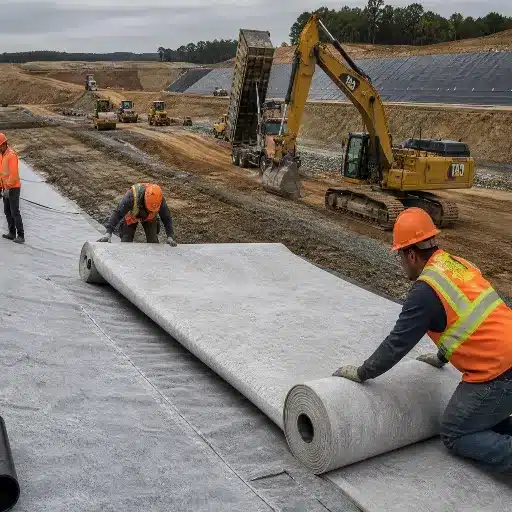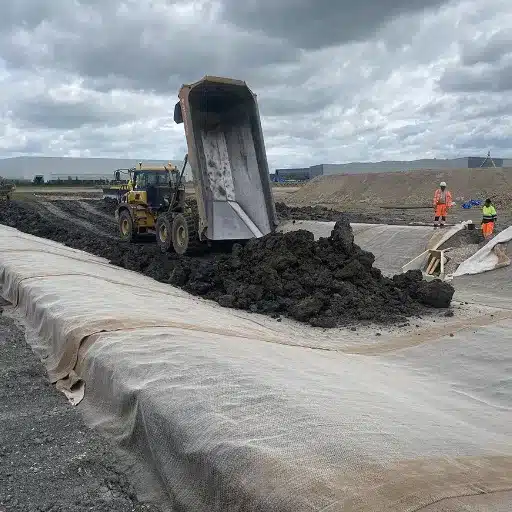
Geogrid is a structural reinforcement layer that locks aggregate in place, while geotextile is a fabric layer that separates, filters, and drains. If you need to carry tensile load across a weak subgrade or hold back a retaining wall, geogrid is the right choice in the geogrid vs geotextile decision. If you need to stop fine soils from mixing with aggregate or allow water to escape without washing soil away, geotextile is the right choice. On many soft-subgrade projects, the best answer is both materials installed as a layered system.
Engineers often face this decision on the same site. In 2023, a road contractor in Southeast Asia installed a woven geotextile over marshy ground, expecting it to stiffen the road base. Six months later, ruts appeared under truck traffic. The fabric had done its job separating subgrade from aggregate, but it could not provide the tensile stiffness the weak soil needed. Adding a biaxial geogrid above the geotextile solved the problem and extended pavement life. The lesson: the two products are complementary, not interchangeable.
In this guide, you will learn how geogrid and geotextile work, how they compare on strength and cost, and a simple geogrid vs geotextile decision framework for choosing one, the other, or both.
Key Takeaways
- The core geogrid vs geotextile difference is function: geogrid provides structural reinforcement through mechanical interlock with aggregate; geotextile provides separation, filtration, and drainage.
- Use geogrid for road bases over weak subgrades, retaining walls, steep slopes, and heavy-load yards.
- Use geotextile for separation between subgrade and aggregate, drainage trenches, erosion control, and protection layers.
- Combined geotextile-plus-geogrid systems are common on subgrades with CBR below 3.
- Material-only costs are roughly $0.50–$3.00/m² for geogrid and $0.20–$3.00/m² for geotextile, but lifecycle value matters more than unit price.
The Short Answer: Geogrid vs Geotextile
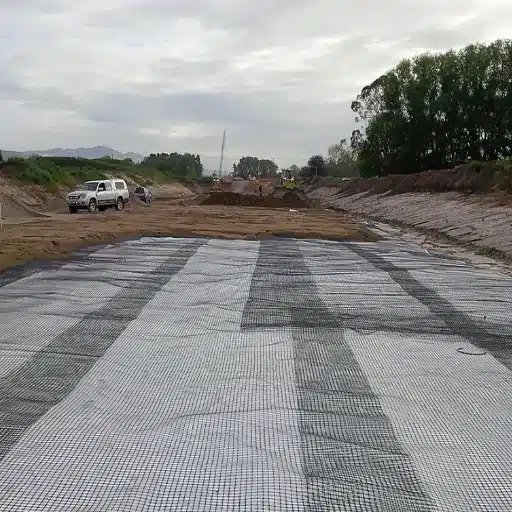
The fastest way to choose is to match the material to the primary engineering problem in the geogrid vs geotextile comparison. The geogrid geotextile difference is fundamentally about function, not just material.
| Feature | Geogrid | Geotextile |
|---|---|---|
| Primary function | Soil reinforcement and load distribution | Separation, filtration, drainage, and minor reinforcement |
| Structure | Open grid with rectangular or triangular apertures | Woven or nonwoven fabric sheet |
| Main materials | Polypropylene (PP), polyethylene (HDPE), polyester (PET) | Polypropylene (PP), polyester (PET) |
| Tensile strength | 20–400+ kN/m depending on type | 5–100 kN/m depending on type and GSM |
| Key mechanism | Mechanical interlock with aggregate | Separation layer, pore size filtration |
| Best for | Roads, retaining walls, steep slopes, heavy yards | Drainage, erosion control, and subgrade separation |
| Typical material cost | 0.50–3.00/m² | 0.20–3.00/m² |
If the project has only one problem — soft soil that needs stiffening, or clean aggregate that must be protected from fines — choose the single product that solves it. If the project has both problems, the answer to when to use geogrid vs geotextile is a layered system. This table is optimized for featured snippets and quick reference.
What Is a Geogrid in the Geogrid vs Geotextile Comparison?
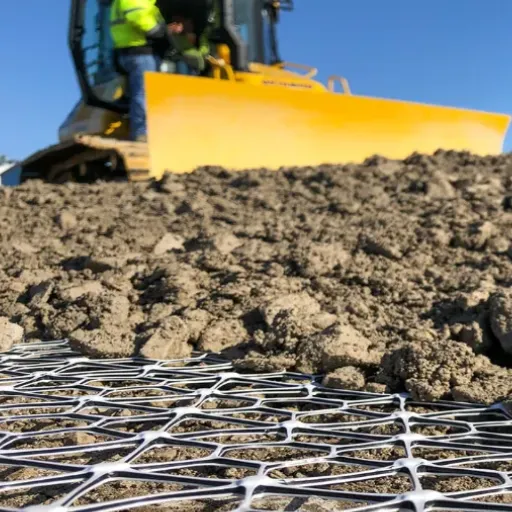
In any geogrid vs geotextile comparison, the geogrid is the structural member. It is a geosynthetic formed into an open grid with regularly spaced apertures. The ribs and junctions create openings large enough for aggregate to push through and lock against the grid. This mechanical interlock is what makes geogrid a structural reinforcement element. For a detailed technical explanation of grid mechanics, see Tensar International’s geogrid overview.
Materials and Structure
Geogrids are manufactured from polymers chosen for strength, creep resistance, and durability:
- Polypropylene (PP): common in biaxial and triaxial geogrids; good chemical resistance.
- High-density polyethylene (HDPE): common in extruded and welded geogrids; high stiffness.
- Polyester (PET): common in woven and high-strength uniaxial geogrids; excellent creep resistance.
The grid geometry matters. Aperture size is typically 1.5 to 3 times the maximum aggregate size for good interlock. If the openings are too small, the aggregate cannot penetrate. If they are too large, the grid rides above the aggregate instead of locking into it.
Types of Geogrid
Geogrids are classified by the direction of their strength:
- Uniaxial geogrid: Strength is oriented in one direction. Ultimate tensile strength ranges from roughly 40 kN/m to more than 400 kN/m. Used in retaining walls, MSE walls, and steep slope reinforcement where load runs in one primary direction.
- Biaxial geogrid: Strength is similar in two perpendicular directions. Typical tensile strength ranges from 20 kN/m to 50 kN/m. Used in road bases, parking lots, and work platforms where load spreads in multiple directions.
- Triaxial geogrid: Strength is distributed in three directions, forming a triangular aperture pattern. Manufacturers report roughly 20–30% better load distribution than biaxial products in some applications.
How It Works
When aggregate is compacted over a geogrid, particles migrate into the apertures and become trapped. Traffic or surcharge loads then transfer tensile stress into the grid ribs. The geogrid distributes the load over a wider area, reduces vertical deformation, and can allow a thinner base course. Research on geosynthetic stabilization mechanisms commonly cites base-course thickness reductions of 30–50% when geogrid is properly specified.
For long-term design, engineers reduce the ultimate tensile strength to a long-term design strength (LTDS) of roughly 33–50% of the ultimate value. This reduction accounts for creep, installation damage, environmental aging, and joints.
For more details on when and where geogrid reinforcement systems fit into your project, see our geogrid reinforcement systems guide.
What Is a Geotextile vs Geogrid?
On the other side of the geogrid vs geotextile comparison, the geotextile is the fabric workhorse. It is a permeable fabric used in contact with soil. Unlike geogrid, it is a continuous sheet that performs four main functions: separation, filtration, drainage, and limited reinforcement.
Structure and Materials
Woven geotextiles are made by interlacing monofilament or multifilament yarns on a loom. They have high tensile strength and low elongation. Nonwoven geotextiles are produced by needle-punching or heat-bonding fibers into a mat. They are thicker, more flexible, and better at filtration and drainage.
Common polymers include polypropylene and polyester. The choice depends on pH, UV exposure, and required strength.
How It Works
- Separation: The fabric layer prevents two different materials from mixing. For example, it keeps a clay subgrade from pumping up into a clean aggregate base.
- Filtration: Water passes through the fabric while soil particles are retained. The fabric must match the soil gradation; pore size and permittivity are critical design parameters.
- Drainage: Thick nonwoven geotextiles can act as a conduit for water flow within the plane.
- Reinforcement: Some woven geotextiles provide minor tensile reinforcement, but their stiffness is far lower than that of a geogrid.
Typical geotextile tensile strength ranges from 5 kN/m for lightweight landscaping fabric to 100 kN/m or more for heavy woven reinforcement. This strength gap is the clearest geogrid geotextile difference for structural design. For routine separation and drainage, GSM ranges from 100 to 400 are common. For heavy stabilization, 400–800 GSM or higher may be specified.
If you want a deeper technical foundation, our geotextile fabric guide covers specifications, test methods, and selection criteria.
Side-by-Side Comparison
The table below summarizes how the two materials differ across engineering criteria in the geogrid vs geotextile comparison.
| Criterion | Geogrid | Geotextile |
|---|---|---|
| Function | Structural reinforcement | Separation, filtration, drainage, and minor reinforcement |
| Structure | Open grid | Continuous woven or nonwoven fabric |
| Strength range | 20–400+ kN/m | 5–100 kN/m |
| Stiffness | High tensile stiffness | Low to moderate stiffness |
| Water management | No filtration function; water flows around it | Designed for filtration and drainage |
| Aggregate interaction | Mechanical interlock | Separation and confinement |
| Typical road application | Reduce base thickness, bridge soft spots | Separate subgrade from base, prevent pumping |
| Cost range | 0.50–3.00/m² material-only | 0.20–3.00/m² material-only |
Strength and Stiffness
Geogrid is the clear choice when tensile stiffness governs design in the geogrid vs geotextile comparison. A biaxial geogrid at 30 kN/m has far higher structural stiffness in two directions than a standard geotextile. Uniaxial geogrids for walls can exceed 200 kN/m.
Geotextile strength is usually expressed as grab tensile or wide-width tensile. A 200 GSM woven geotextile may have a grab tensile of 800–1,200 N, while a 400 GSM nonwoven may reach 1,400–2,000 N. These values are sufficient for separation and filtration but not for structural reinforcement.
Water Management
Geotextiles are engineered for water management, which is where the geogrid vs geotextile comparison shifts toward geotextile. Permittivity, apparent opening size (AOS), and transmissivity are standard specifications. Geogrids do not filter water. If water migration is a design issue, a geotextile must be included.
Cost
Geogrid generally costs more per square meter than light geotextile, but less than heavy woven reinforcement. In the geogrid vs geotextile cost comparison, the real number should include the installed cost and lifecycle value. A thicker base course without geogrid may cost more over time than a thinner base with geogrid.
When to Use Geogrid
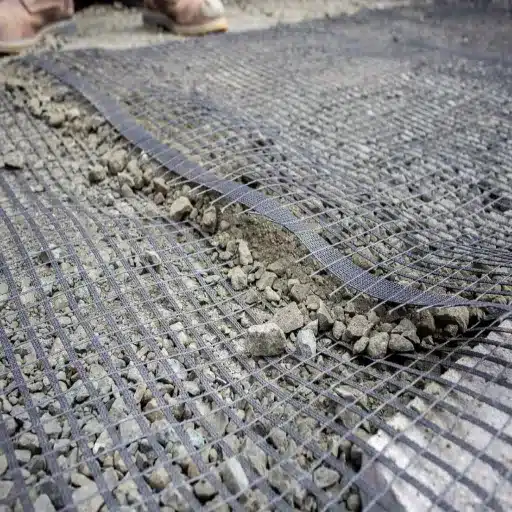
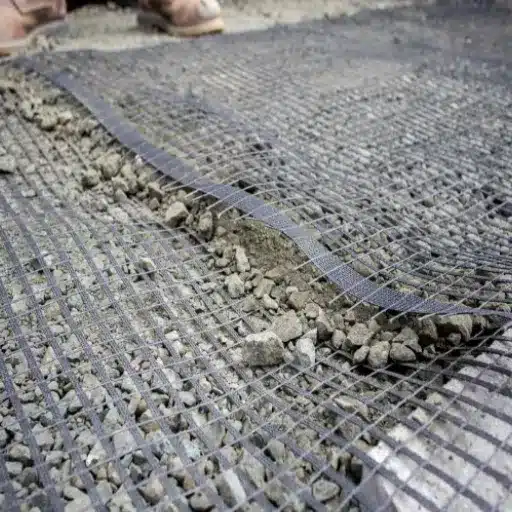
The geogrid reinforcement applications below show when the material is the right choice. Specify a geogrid when the design problem is structural.
Road Bases Over Weak Subgrades
If the subgrade California Bearing Ratio (CBR) is below 3, or if rutting is a concern under repeated truck loading, geogrid can stiffen the pavement structure. The grid locks the base aggregate and distributes wheel loads laterally. This is one of the most common geogrid reinforcement applications and a frequent reason to choose geogrid vs geotextile for soil stabilization.
Retaining Walls and MSE Walls
Uniaxial geogrids are placed in layers behind retaining wall facing panels. The grid resists the lateral earth pressure that would otherwise push the wall over. Design follows manufacturer-specific connection strengths and pullout resistance.
Steep Slopes and Embankments
Geogrid layers allow slopes to be built steeper than the soil alone would support. Each layer reinforces a horizontal slice of soil, increasing overall stability.
Heavy-Load Industrial Yards
Container terminals, laydown yards, and mine haul roads use biaxial or triaxial geogrids to reduce aggregate consumption and control settlement.
Mini-story: The retaining wall that forgot the water
A contractor in Eastern Europe built a 4-meter segmental retaining wall for a commercial development. The design called for geogrid reinforcement and a nonwoven geotextile drainage layer behind the wall. To save time, the crew skipped the geotextile. Within two winters, hydrostatic pressure built up behind the facing. The wall began to tilt, and cracks appeared in the cap units. Rebuilding required dismantling 40 meters of facing, installing the drainage geotextile, and replacing the retained soil. The omitted fabric cost a few hundred dollars; the repair cost tens of thousands.
When to Use Geotextile
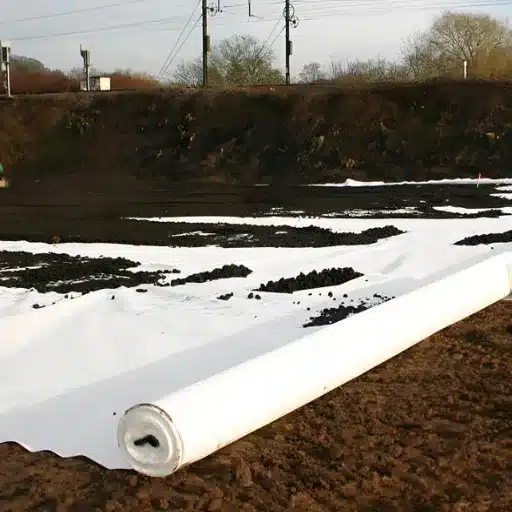
Geotextile separation drainage functions make it the right choice when the design problem involves soil interaction with water or adjacent materials.
Separation Between Subgrade and Aggregate
The most common geotextile use is a separation layer. Without it, fine subgrade particles pump upward into the base during wet-dry cycles and traffic loading. Over time, the base becomes contaminated and loses strength. This geotextile separation drainage function is one reason geotextile often wins the geogrid vs geotextile choice on drainage-heavy sites.
Drainage and Filtration
Geotextiles wrap perforated drainage pipes, line trenches, and protect gabions. They allow water to exit while retaining soil. For a deeper look at when to use geogrid vs geotextile on weak ground, our geotextile soil stabilization guide walks through CBR-based selection and survivability classes.
Erosion Control
Nonwoven geotextiles protect slopes and channels from surface erosion. They hold soil in place until vegetation establishes or is permanently in high-flow areas.
Protection Layer Behind Walls and Under Liners
Geotextiles cushion geomembranes from puncture and provide a drainage path behind retaining structures. Heavy nonwoven fabrics are common in landfill and containment projects.
For project examples and specification guidance, our woven geotextile applications guide covers load-bearing uses in detail.
When to Use Geogrid and Geotextile Together
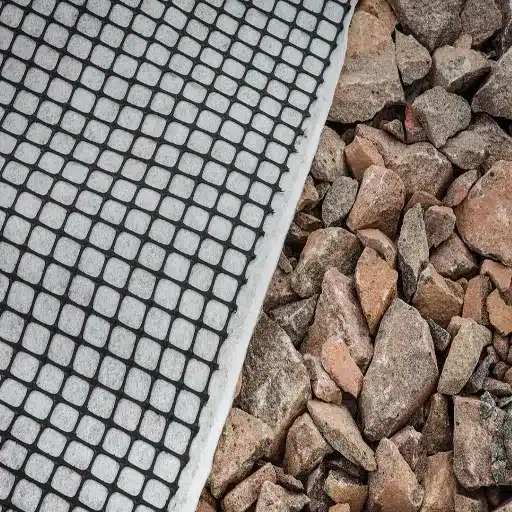
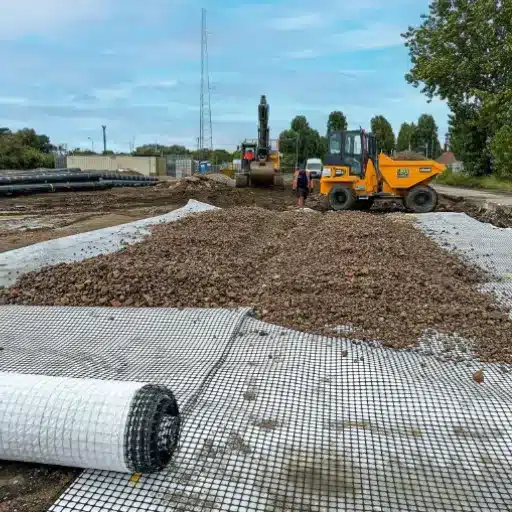
Some sites need both functions, which is a common scenario when deciding between geogrid vs geotextile for soil stabilization. The classic case is a soft, wet subgrade under heavy traffic. The geotextile separates fines from the base and provides filtration. The geogrid stiffens the aggregate layer and distributes load.
Typical Layered System
From bottom to top, a combined system often looks like this:
- Subgrade — prepared and proof-rolled.
- Geotextile — a separation layer directly on the subgrade.
- First lift of aggregate — placed loosely over the fabric.
- Geogrid — rolled out on the aggregate or at mid-depth in the base.
- Remaining aggregate — compacted to final grade.
Placing the geotextile directly on the subgrade prevents pumping. Placing the geogrid within the base maximizes mechanical interlock with the aggregate.
Soft Subgrade with Structural Load
Combined systems are common where CBR is below 3, and traffic is heavy. The geotextile provides immediate separation during construction, while the geogrid provides long-term structural stiffness.
Mini-story: Road over expansive clay
An engineer in West Africa designed an access road over expansive clay with a CBR near 2. The first phase used only a 200 GSM nonwoven geotextile for separation. Within three months, heavy trucks created ruts 80 millimeters deep. The geotextile had separated the clay from the aggregate, but the aggregate itself was deforming. In the second phase, the engineer kept the geotextile and added a biaxial geogrid at mid-depth in the 300 mm base. Rutting dropped to acceptable levels, and the contractor reduced the final base thickness by 100 mm without sacrificing performance.
If your project needs both separation and structural stiffness, our woven geotextile fabric can be paired with geogrid in an integrated design.
Geogrid vs Geotextile Cost Comparison
Cost should never be the only factor in the geogrid vs geotextile decision, but it always enters the discussion.
Material-Only Cost
- Geogrid: $0.50–$3.00/m² for standard biaxial and uniaxial products. High-strength uniaxial grades for walls can exceed this range.
- Geotextile: $0.20–$3.00/m² depending on type and GSM. Light nonwoven fabric is at the low end; heavy woven reinforcement is at the high end.
Installed Cost Considerations
Installation adds 20–50% to material cost on simple projects and more on complex sites. In the geogrid vs geotextile cost comparison, geogrid often requires more aggregate handling but may reduce total base volume. Factors include:
- Subgrade preparation and rolling
- Overlap and anchoring
- Aggregate placement and compaction
- Labor rates in the project region
Lifecycle Value
The lowest unit price does not always produce the lowest project cost. Using a cheap geotextile where a geogrid is needed can cause premature failure, rework, and traffic disruption. Using a geogrid where only separation is needed adds unnecessary expense.
Mini-story: The false economy of the wrong material
A quarry haul road in South America was built with a light nonwoven geotextile selected mainly for its low price. The design team treated it as a reinforcement layer. Within a year, 300-ton haul trucks had torn and displaced the fabric, and the road needed complete rebuilding. Switching to a biaxial geogrid with a heavy woven geotextile separation layer increased initial material cost by roughly 25%, but the road lasted more than five years without major maintenance.
Frequently Asked Questions
Below are answers to common questions about geogrid vs geotextile, including when to use each material and when to combine them.
What is the difference between geogrid and geotextile?
Geogrid is an open-grid structural reinforcement layer that locks aggregate in place. Geotextile is a fabric layer that separates, filters, drains, and provides minor reinforcement. This is the core geogrid vs geotextile difference.
Is geogrid stronger than geotextile?
Yes. Typical geogrid tensile strength ranges from 20 kN/m to more than 400 kN/m, while geotextile tensile strength typically ranges from 5 kN/m to 100 kN/m. Strength is a key factor in the geogrid vs geotextile decision.
Can I use geogrid and geotextile together?
Yes. Combined systems are common on soft subgrades, especially when CBR is below 3. This layered approach is often the best answer in the geogrid vs geotextile comparison. The geotextile separates and filters; the geogrid reinforces structurally.
Which is better for driveways?
For light residential driveways over reasonable soils, a woven or nonwoven geotextile is usually sufficient. For driveways over very soft soil or subject to heavy vehicles, add a biaxial geogrid.
Which is better for retaining walls?
Retaining walls need geogrid for structural reinforcement in the geogrid vs geotextile comparison. A nonwoven geotextile behind the wall is also needed for drainage and to prevent hydrostatic pressure buildup. For design specifics, see our geotextile retaining wall guide.
What is biaxial vs uniaxial vs triaxial geogrid?
Uniaxial geogrid has strength in one direction and is used for walls and slopes. A biaxial geogrid has strength in two directions and is used for roads and pads. Triaxial geogrid has a triangular aperture pattern with multi-directional stiffness.
Geogrid vs geotextile retaining wall: which is better?
Retaining walls need geogrid for structural reinforcement. The geotextile behind the wall provides drainage. Use both for a stable, drained wall system.
Geogrid vs geotextile driveway: which do I need?
For light residential driveways over stable soils, geotextile is usually enough. For soft or saturated soils, add a biaxial geogrid.
Conclusion
Choosing between geogrid vs geotextile for soil reinforcement comes down to the engineering problem you are solving. Geogrid is for structural reinforcement. It carries tensile load, locks aggregate, and reduces deformation under traffic or earth pressure. Geotextile is for separation, filtration, and drainage. It protects the base from contamination and manages water movement.
If the site has both a soft, wet subgrade and a heavy structural load, the best answer is usually a layered system with geotextile on the subgrade and geogrid within the base.
Before you specify, confirm the subgrade strength, traffic loads, water conditions, and design life. The right geosynthetic choice in the geogrid vs geotextile comparison can reduce base thickness, prevent failure, and lower lifecycle cost. The wrong choice can lead to rutting, wall failure, or expensive rework.
If you are deciding between geogrid and geotextile for an upcoming road, wall, or stabilization project, send us your subgrade data and load requirements. Our engineering team can recommend the right material — or the right combination — and provide a tailored quote.