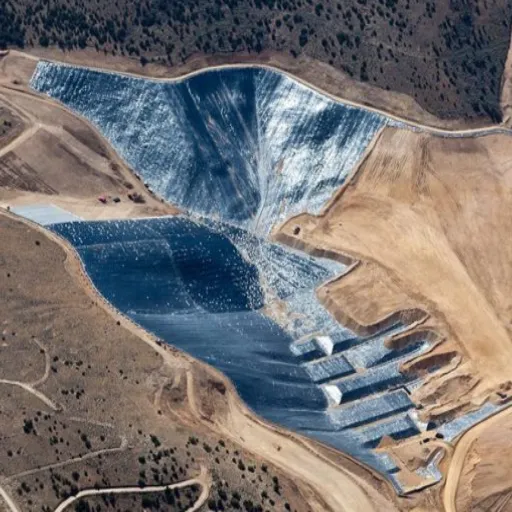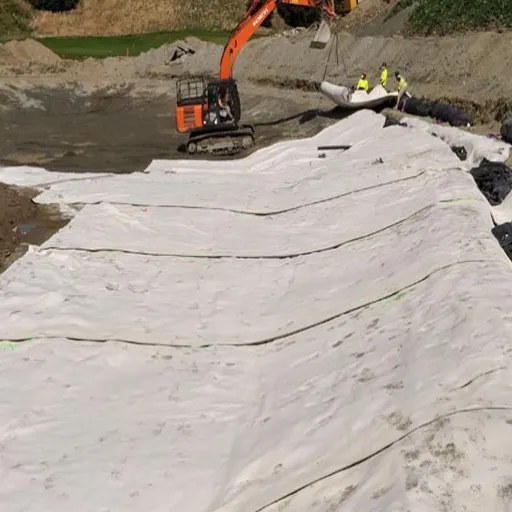
Interlocking temporary roadway mats connect individual panels into a continuous road surface. They use pins, tongue-and-groove edges, overlap flanges, or cam-lock hardware to transfer loads across joints and stop panels from shifting under traffic. This guide covers the five main temporary roadway mat connection systems, explains how each interlocking access mat handles load, and shows how to select the right system for your haul road.
For the full overview of temporary roadway systems, see our complete temporary roadway mats guide.
Key Takeaways
- Interlocking temporary roadway mats create continuity so loads distribute across panel joints.
- The main connection types are pins, tongue-and-groove, overlap flanges, cam-lock hardware, and loop/strap systems.
- Connection choice depends on traffic type, load magnitude, ground condition, slope, and install/removal speed.
- Staggered joints, edge restraint, and slope anchoring prevent the failures that cause rutting and uplift.
- Daily inspection of connection hardware is essential on high-traffic or high-slope roads.
Interlocking temporary roadway mats use a mechanical connection to turn individual panels into a continuous load-sharing surface.
What Are Interlocking Temporary Roadway Mats?
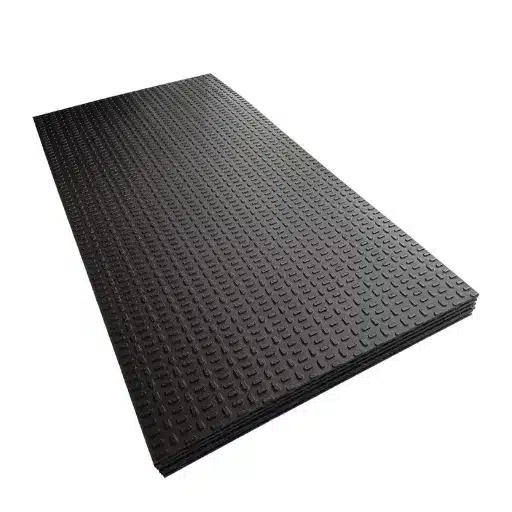
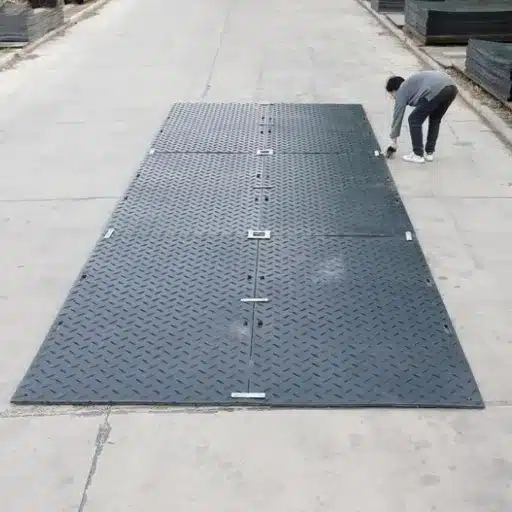
Interlocking temporary roadway mats are panels that connect at the edges to form a continuous roadway. The connection can be a simple pin through aligned holes, a molded tongue-and-groove edge, an overlapping flange, or a mechanical cam-lock. The goal is the same: keep the panels aligned so the road behaves like a single platform.
Loose-laid mats work only for light, slow traffic on firm ground. As soon as loads increase, wheels turn, or slopes appear, the panels migrate. Interlocking systems stop that migration and transfer shear forces from one panel to the next. For the full install sequence, see our temporary roadway mat installation guide.
Types of Temporary Roadway Mat Connection Systems
| Connection Type | How It Works | Best For | Common Issues |
|---|---|---|---|
| Pin/peg | Metal or composite pin through holes in adjacent panel edges | General haul roads, quick install/removal | Hole elongation, corrosion, lost pins |
| Tongue-and-groove | Molded male edge fits into female recess on the next panel | HDPE panels, fast hand-install | Tolerance sensitivity, edge chipping under impact |
| Overlap flange | Panel edge overlaps the next and is pinned/bolted | Composite systems, heavy loads | Creates a step, needs uniform thickness |
| Cam-lock / bolted | Mechanical lock or bolt at corners/edges | Slopes, high-vibration, high-traffic sites | Slower install, higher hardware cost |
| Loop/strap | Cable or strap threaded through loops in panel edges | Specialized heavy-haul | Field labor, inspection critical |
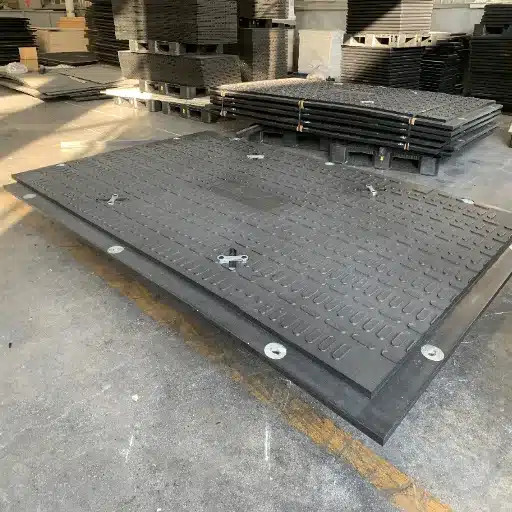
Pin connections are the most common for HDPE temporary roadway mats because they are simple, fast, and field-repairable. Mat connection pins are usually metal or fiberglass and slide through pre-drilled holes in adjacent panel edges. Tongue-and-groove edges speed up installation by eliminating separate hardware but require tighter manufacturing tolerances. A tongue-and-groove mat connection resists vertical movement well because the molded male edge locks into the female recess. Composite systems often use overlap flanges or cam-locks to handle heavier loads and steeper grades. A cam lock mat connection uses a mechanical lever or bolt at the panel corner to resist lateral, vertical, and uplift forces at the same time. This makes interlocking access mats a better choice than loose-laid panels whenever braking, turning, or slope forces are present.
How Load Transfers Across Interlocking Mats
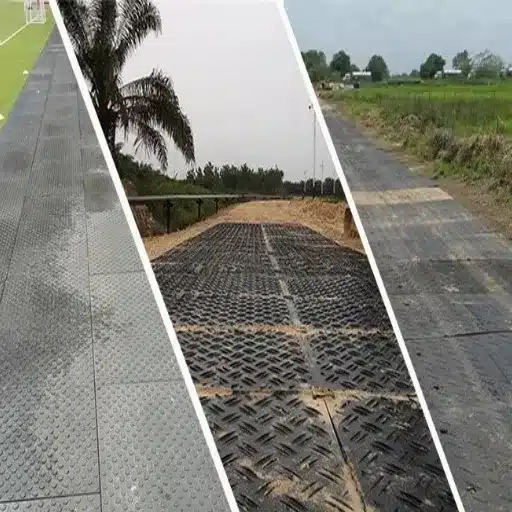
A wheel load does not stay on one panel. It spreads through the panel, reaches the joint, and must continue into the next panel. If the joint cannot transfer shear, the loaded panel deflects more than its neighbor, the edge ruts, and the subgrade beneath the joint softens.
Three forces act at the joint:
- Vertical shear, the downward load trying to push one panel past the next
- Lateral shear, braking, acceleration, and turning forces trying to slide panels sideways
- Uplift, dynamic forces trying to lift the panel edge, especially under hard braking
A good interlock resists all three. Pins resist lateral shear but allow some vertical movement if holes elongate. Tongue-and-groove resists vertical movement well but can chip if impact loads exceed the edge strength. Cam-lock and bolted systems resist all three directions but cost more and take longer to install. (United Rentals)
Choosing the Right Interlocking Temporary Roadway Mats Connection
Use these criteria to select a connection system:
- Wheeled traffic on firm ground, pinned or tongue-and-groove HDPE mats are usually sufficient.
- Tracked equipment or high point loads, overlap-flange composite or heavy cam-lock systems distribute loads better.
- Soft ground, pinned mats need perimeter anchoring; consider cam-lock on perimeter rows to resist lateral migration. See our temporary access mats for soft ground guide.
- Slopes above 5%, cam-lock, bolted, or loop/strap connections are recommended; add edge bars.
- High-traffic, high-speed haul roads, cam-lock or pinned with frequent inspection; staggered joints are mandatory.
- Frequent install/removal, pinned or tongue-and-groove systems are faster than bolted or cam-lock.
For the material choice behind the connection, see our composite vs HDPE temporary roadway mats comparison. For HDPE specifications, see HDPE temporary roadway mats.
How to Prevent Mats from Shifting
Staggered Joints
Lay panels in a running-bond pattern so that transverse joints do not line up across the road. A continuous seam creates a weak line where rutting starts. Staggered joints distribute loads and prevent a single failure from propagating.
Edge Restraint and Edge Bars
Install edge bars or timber curbs along the roadway perimeter. They prevent lateral migration under turning traffic and contain the outer panels.
Slope Anchoring
On grades, anchor the upslope and downslope edges. Cam-lock connections, bolted plates, or driven pins through panel corners resist the downhill component of traffic loads.
Wash Boards at Transitions
Place timber or composite washboards where the mat road meets native ground. They reduce the step and prevent the end panels from being pushed off the road.
Regular Inspection
Inspect joints daily under heavy use. Look for gaps, uplift, elongated pin holes, broken tongues, and loose hardware. Fix problems before they propagate.
Installation Best Practices for Interlocking Mats
- Start from a baseline stringline. Establish the road centerline and edge lines before placing the first panel.
- Place and align the first panel. This panel sets the geometry for everything that follows.
- Connect as you go. Do not lay a large area and then connect later; misalignment accumulates.
- Maintain a staggered joint pattern. Offset end joints by at least half a panel width.
- Install edge ramps and transition plates. They protect panel edges and improve vehicle entry/exit.
- Tension or anchor on slopes. Connect and anchor before allowing equipment onto sloped sections.
- Load-test before full use. Run a loaded truck over the road and re-tighten or adjust connections before committing the full fleet.
Slope, Curve, and Edge Considerations
Gradient Limits
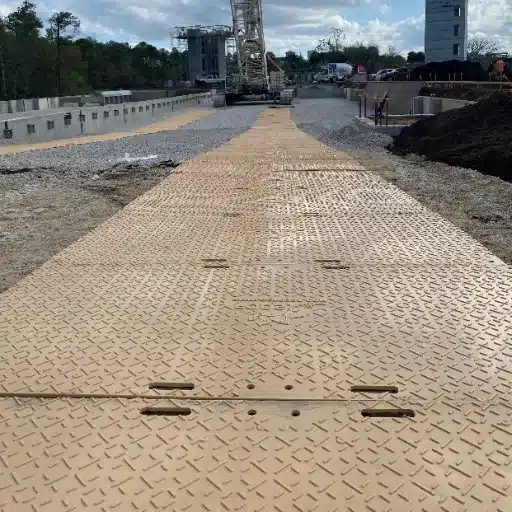
Pinned and tongue-and-groove systems are generally safe up to 5% on firm ground. Above 5%, use cam-lock or bolted systems and add edge restraint. Above 10%, consult the mat manufacturer and consider geogrid anchoring.
Curves and Turnouts
On curves, cut or overlap panels to maintain the running bond. Avoid small wedge-shaped offcuts that have no connection on one side. Use wider panels or custom shapes on tight turns.
Edge Protection
Exposed panel edges are the first to chip or uplift. Edge bars, ramp edges, or buried perimeter anchoring protect the boundary and keep the road aligned.
Transition Zones
Where the mat road joins aggregate or native ground, use transition plates and longer anchor pins. The stiffness change is a common failure point. For layout and geometry guidance, see our temporary roadway design guide.
Maintenance, Inspection, and Repair
Daily Checks
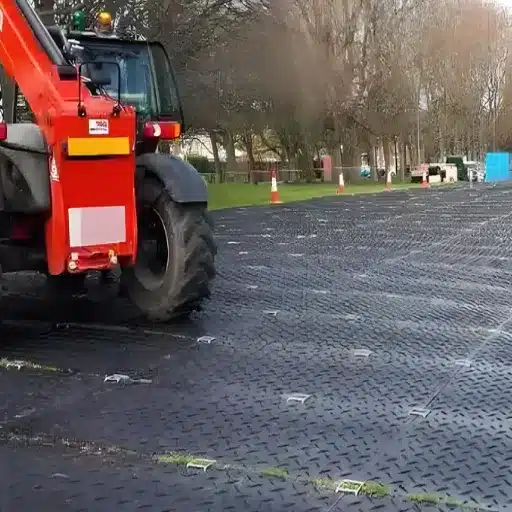
Walk the road each day under heavy use. Check for:
- Gaps wider than 10 mm between panels
- Uplifted edges or pumping panels
- Missing, bent, or corroded pins
- Elongated pin holes
- Cracked tongues or groove edges
- Loose cam-lock or bolted hardware
Pin Replacement
Carry spare mat connection pins on site. Replace missing pins immediately; one missing pin transfers extra load to neighbors and accelerates wear.
Cleaning Before Re-Stack
Remove mud and debris from connection holes and edges before stacking mats for reuse. Contamination prevents proper interlock on the next job.
Storage
Store mats flat, out of direct sunlight if possible, and with spacers to prevent warping. Warped panels do not interlock correctly.
Cost and Productivity Comparison
Connection hardware is usually 5–15% of the total mat-system cost, but it determines most field failures. Pinned systems are the fastest to install and the cheapest to maintain. Tongue-and-groove panels install quickly because there is no loose hardware, but damaged edges are harder to repair than replacing a pin. Cam-lock and bolted systems cost more and slow installation by 20–40%, yet they pay for themselves on slopes and high-traffic roads by preventing the downtime caused by panel migration.
Frequently Asked Questions
What are interlocking temporary roadway mats?
Interlocking temporary roadway mats are panels that connect at the edges with pins, tongue-and-groove edges, overlap flanges, cam-locks, or straps to form a continuous road surface.
How do temporary roadway mats connect?
They connect through holes, molded edges, overlapping flanges, or mechanical locks. The connection transfers load between panels and prevents the mats from shifting under traffic.
What is the best connection system for temporary roadway mats?
Pins or tongue-and-groove are best for general wheeled traffic on firm ground. Cam-lock, bolted, or loop/strap systems are better for slopes, heavy tracked loads, and high-vibration sites.
Do temporary roadway mats need pins?
Pins are the most common connection method, especially for HDPE mats. They are quick to install, easy to replace, and effective at resisting lateral movement.
How do you keep mats from shifting?
Use staggered joints, edge restraint, slope anchoring, washboards at transitions, and the right connection system for the load and grade. Inspect daily under heavy use.
Can interlocking mats be used on slopes?
Yes, but slopes above 5% usually need cam-lock, bolted, or loop/strap systems plus edge anchoring. Standard pinned systems may not resist the downhill forces on steeper grades.
What causes mat connection failure?
Overload, poor subgrade support, missing or corroded hardware, elongated pin holes, impact damage to tongues, and inadequate edge restraint are the most common causes.
How do you repair damaged connection holes?
Small elongation can be tolerated if adjacent pins are intact. Severely worn holes can sometimes be sleeved or the panel can be rotated to use an unused edge. Replace panels when connection integrity is compromised.
Conclusion
Interlocking temporary roadway mats turn individual panels into a working road. The right connection system depends on traffic type, load, slope, ground condition, and how often the mats move between sites. Pins and tongue-and-groove handle most standard haul roads. Overlap flanges, cam-locks, and loop/strap systems take over where loads, slopes, or vibration exceed the limits of simpler hardware.
Design the connection at the same time you design the road. A well-chosen interlock prevents joint rutting, panel uplift, and lateral migration, and it keeps the road in service through the project.
For project-specific recommendations, contact Shanxi Shengxing engineering support. We provide material selection, connection hardware options, container-loading plans, and volume quotes for global delivery.
Request a technical quote or browse our HDPE temporary roadway mats catalog to get started.