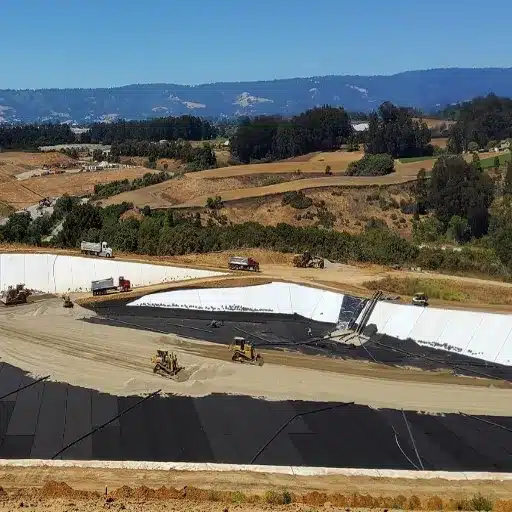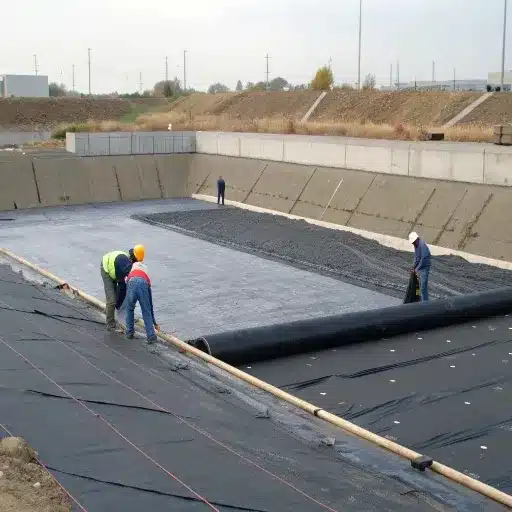
HDPE ground protection mats are high-density polyethylene panels engineered to distribute heavy equipment loads across soft or sensitive terrain. They support 60–120 tons depending on thickness, resist chemicals and UV exposure, and deliver the lowest total cost of ownership over a 10-year project lifecycle.
Yet most buyers still struggle to find accurate, engineering-grade specifications. Manufacturer product pages are packed with marketing claims but thin on test data. B2B marketplaces list hundreds of suppliers with conflicting numbers. This guide provides the complete technical picture: material properties, load capacity by thickness, application guidance, and a direct comparison against composite and timber alternatives.
Key Takeaways
- HDPE ground protection mats support 60–120 tons depending on thickness and ground firmness, with the 20 mm segment holding 36.8% of global market share.
- Standard 4×8 ft panels weigh 32–45 kg, allowing two workers to position them manually without lifting equipment.
- Operating temperature range is -40°C to +80°C, making HDPE mats suitable for arctic and tropical deployments.
- HDPE mats deliver 2–2.5× more surface area per truckload than timber, cutting transport costs by 30–50%.
- Over 10 years, HDPE mats typically cost 22% less than timber when replacement, disposal, and resale value are factored in.
What Are HDPE Ground Protection Mats?
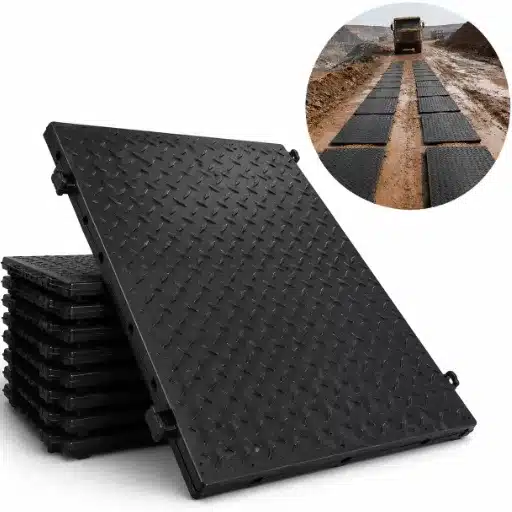
HDPE ground protection mats are rigid or semi-rigid panels manufactured from high-density polyethylene, a thermoplastic polymer with an exceptional strength-to-weight ratio, chemical resistance, and UV stability. These mats create temporary stable surfaces over soil, turf, or unstable ground, distributing concentrated equipment loads to prevent rutting, soil compaction, and subsurface damage.
High-density polyethylene is produced by polymerizing ethylene under low pressure, resulting in a linear molecular structure with minimal branching. This structure gives HDPE its characteristic properties: high tensile strength, low moisture absorption, and excellent impact resistance. For ground protection applications, manufacturers typically use virgin HDPE or recycled HDPE with UV stabilizers added to prevent degradation under prolonged sun exposure.
The global ground protection mats market is valued at approximately USD $700 million to $2.2 billion in 2026, with HDPE dominating by material type due to its portability and recyclability. The 20 mm thickness segment alone holds roughly 36.8% of the total market share, reflecting its versatility across construction, industrial, and infrastructure applications.
For a broader overview of all mat types and selection criteria, see our complete ground protection mats buyer’s guide.
HDPE Ground Protection Mat Specifications
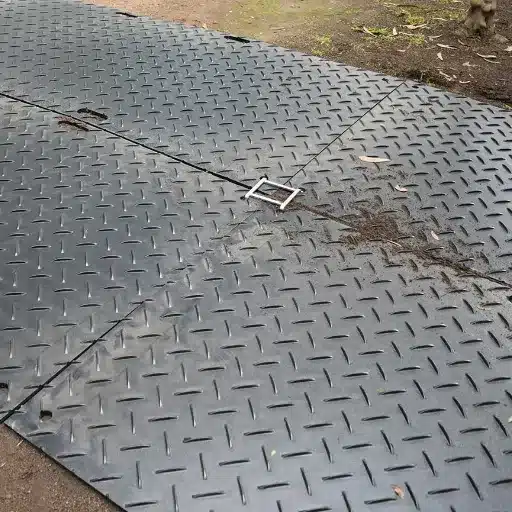
Understanding HDPE ground protection mat specifications is essential for matching the right panel to your equipment and ground conditions. The tables below detail material properties, standard dimensions, and surface options used by procurement teams worldwide.
Material Properties
| Property | Typical Value | Test Method |
|---|---|---|
| Material | 100% Virgin or Recycled HDPE | — |
| Density | 0.95 – 0.98 g/cm³ | ASTM D792 |
| Water Absorption | <0.01% | ASTM D570 |
| Tensile Strength | 3,500 – 5,900 psi | ASTM D638 |
| Compressive Strength | ≥27 MPa | — |
| Shore Hardness | 64 – 67 (Shore D) | ISO 868 |
| Melting Point | ~138°C | ASTM D3417 |
| Operating Temperature | -40°C to +80°C | — |
| UV Resistance | UV-stabilized | ASTM D2565 |
| Chemical Resistance | Resistant to oils, fuels, acids, and alkalis | — |
These specifications matter for procurement decisions. A mat with <0.01% water absorption will not gain weight or lose strength in wet conditions. UV stabilization prevents surface cracking and color fading after years of outdoor exposure, which is why UV-stabilized ground mats retain their appearance and structural integrity longer than untreated alternatives. Chemical resistance means the same mats can move from a construction site to an oil and gas project without degradation.
Standard Dimensions and Weights
| Size (Imperial) | Size (Metric) | Weight Range |
|---|---|---|
| 2′ × 8′ | 610 × 2440 mm | ~15–20 kg |
| 3′ × 8′ | 910 × 2440 mm | ~22–30 kg |
| 4′ × 8′ | 1220 × 2440 mm | 32–45 kg |
| 4′ × 10′ | 1220 × 3050 mm | ~40–55 kg |
The 4×8 ft panel is the industry standard. At 32–45 kg, two workers can carry and position it manually. This manual handling capability eliminates the need for forklifts or cranes during installation and removal, directly reducing labor costs and setup time. For comparison, a composite mat of the same dimensions typically weighs 100–150 kg and requires machinery for every move.
Surface Textures and Connection Systems
HDPE mats are available with several surface patterns. Diamond cleat textures provide aggressive traction for rubber-tired and tracked equipment. Dual-blade or twin-scar patterns offer grip in both directions, which matters when equipment must turn on the mat surface. Checkered or flat oblong textures work well for pedestrian walkways and event flooring where aggressive tread is unnecessary.
Many HDPE mats are reversible, with a vehicle-grade traction pattern on one side and a lower-profile pedestrian grip on the other. This dual-sided design maximizes utility across different project phases.
Connection systems vary by manufacturer. Interlocking edge designs use tongue-and-groove or overlapping flanges that prevent vertical displacement between adjacent panels. Interlocking ground mats with pin or bolt fasteners lock together at the corners, which is critical for turning areas and slopes. Some systems use 2-way connectors for straight runs; others use 4-way connectors for complex layouts with intersecting roadways.
HDPE Ground Mat Load Capacity: How Much Weight Can They Bear?
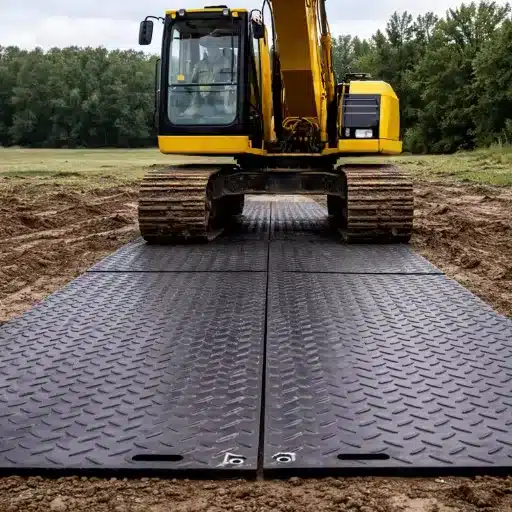
Load capacity depends on three variables: mat thickness, ground firmness, and load distribution type. The following table summarizes typical static load ratings by thickness.
| Thickness | Static Load Capacity | Typical Equipment | Ground Condition |
|---|---|---|---|
| 10 mm (3/8″) | 30 – 60 tons | Pedestrians, light vehicles, landscaping | Firm turf, paved surfaces |
| 12.7 mm (1/2″) | 40 – 80 tons | Light trucks, vans, and general access | Firm to moderately soft soil |
| 15 mm | 60 – 100 tons | Excavators, dump trucks, and concrete mixers | Moderately soft soil |
| 20 mm (3/4″) | 80 – 120 tons | Cranes, tracked equipment, heavy rigs | Soft clay, uneven terrain |
| 25–38 mm | 100 – 150+ tons | Extreme heavy equipment, military | Very soft or saturated ground |
Choosing the right thickness depends on more than load alone. See our ground protection mat thickness guide for a full decision framework covering ground firmness, equipment type, and project duration.
Ground firmness is the hidden variable. A 20 mm HDPE mat rated for 120 tons on firm soil may only support 60–80 tons on saturated clay. For extreme loads, heavy-duty HDPE ground protection mats in 25–38 mm thickness provide the extra margin needed on very soft or saturated ground. Industry best practice recommends selecting a mat with a capacity at least 25% greater than the heaviest equipment that will cross it. For crawler equipment such as excavators and dozers, provide full mat coverage under both tracks plus a minimum 2-foot perimeter beyond the track footprint to prevent settlement during swing operations.
Point load versus distributed load is another critical distinction. A 100-ton crane distributes its total weight across four outrigger pads. Each pad might exert 50+ tons through a small contact area. This extreme point load often requires 20 mm HDPE with additional sub-base preparation, or a switch to composite mats for semi-permanent installations. For a detailed equipment-specific analysis, see our ground protection mats for heavy equipment guide.
In late 2024, a site supervisor named Marcos was managing a pipeline corridor through a peat bog in northern Scandinavia. His 30-ton tracked welders kept sinking into the mire, and timber boards lasted less than a week before waterlogging. Marcos switched to 20 mm HDPE ground protection mats with diamond cleat textures and full pin connections. The crew laid 400 meters of temporary roadway in six hours. After eight weeks of continuous use in freezing rain, the HDPE panels showed zero moisture absorption and maintained the same grip as day one. The mats were pressure-washed, flat-stacked, and trucked to the next job site without a single panel lost to rot.
HDPE Ground Protection Mats by Application
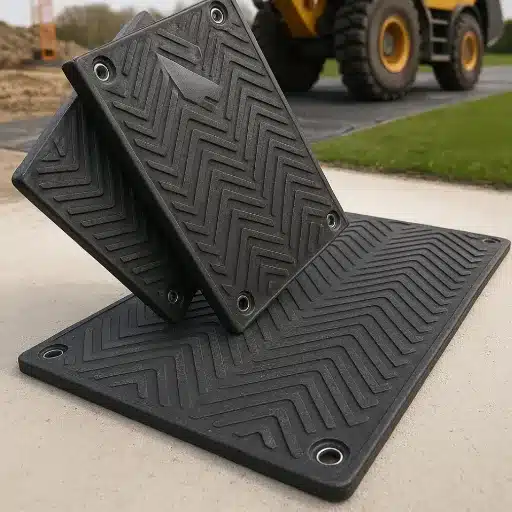
Construction Site Access Roads
Construction sites need durable haul roads that withstand repeated passes by loaded trucks and heavy machinery. HDPE access mats in 15–20 mm thickness are the standard choice for site access roads and track-out mats at construction exits. They resist puncture from debris, handle dynamic loads from braking and turning, and can be repositioned as the site evolves. For projects with rubber-tired vehicles only, 15 mm mats suffice. For sites with tracked excavators and dump trucks, 20 mm excavator mats are the safer specification.
Heavy Equipment Work Platforms
Cranes, drilling rigs, and pile drivers create extreme point loads through outrigger pads. A 20 mm HDPE mat distributes this load across a wider area, but the sub-base preparation is equally important. Soft or uneven ground beneath the mat will cause localized deformation regardless of mat thickness. For extremely concentrated loads, verify ground firmness and consider a geotextile separation layer beneath the rig mats.
Temporary Roadways on Soft Ground
Building a temporary haul road across marsh, wetland, or recently graded fill requires a layered approach. Geotextile separation fabric at the subgrade prevents soil pumping and mixing. Twenty-millimeter HDPE bog mats with full pin connection form the running surface. This combination maintains traction even under continuous heavy truck traffic. For soft-ground layouts, overlap mats by 100 mm and pin every joint to prevent pumping on saturated subgrades.
Environmental Remediation
Environmental contractors work on sensitive ground where soil contamination or compaction would violate permits. HDPE mats create a clean, stable working platform that prevents mixing of contaminated and clean soil. Because HDPE is non-porous, chemical-resistant access mats will not absorb hydrocarbons or chemicals from the site, eliminating cross-contamination risk when mats move to the next project. Learn more about the environmental benefits of HDPE ground protection mats.
Events and Pedestrian Walkways
Outdoor festivals, stadium events, and film productions need lightweight flooring that protects turf from thousands of attendees. Ten to twelve-millimeter HDPE mats work well for pedestrian traffic and light vehicles. Rapid installation and removal are essential, since venues often allow only 24–48 hours for setup and breakdown.
Utilities and Pipeline Work
Utility trenching operations require narrow access lanes that move daily as the trench progresses. Lightweight HDPE site access mats in 2×8 ft or 3×8 ft sizes create portable walkways and equipment paths. Two workers can reposition these smaller panels without machinery, keeping labor costs low and productivity high.
HDPE vs. Alternative Materials: An Engineering Comparison

HDPE vs. Composite Mats
When evaluating HDPE vs composite ground protection mats, the first difference is weight. Composite mats use fiberglass-reinforced plastics or layered engineered materials that trade portability for extreme load capacity, supporting 600+ psi surface pressure. A composite mat of the same 4×8 ft dimensions weighs 100–150 kg, requiring forklifts or cranes for every move. HDPE mats weigh one-third as much and handle 90% of general construction applications. Choose composite only for semi-permanent oil and gas platforms or extreme crane pad installations where load concentration is non-negotiable. For a detailed head-to-head comparison, read our HDPE vs composite ground protection mats analysis.
HDPE vs. Timber Mats
Traditional hardwood timber mats remain common in marshy terrain and crane operations. Timber offers very high load capacity on firm ground, but performance degrades on soft or saturated soils. Timber absorbs moisture, gaining weight over time and eventually rotting. The lifespan is typically 2–5 years versus 10+ years for HDPE.
Transport economics strongly favor HDPE. HDPE mats deliver 2–2.5× more surface area per truckload compared to timber because they are lighter and do not absorb water. This difference cuts freight costs by 30–50%, especially on large projects requiring hundreds of mats.
Environmental compliance also favors HDPE. Timber mats can spread seeds, spores, and soil contaminants between job sites. Many environmental permits now require non-porous matting for sensitive ecosystems. HDPE is non-porous, 100% recyclable, and eliminates biological cross-contamination risk.
HDPE vs. Plywood
Plywood is a false economy for heavy equipment protection. Standard plywood sheets absorb moisture, delaminate under load, and splinter within days on a construction site. According to industry load tests, HDPE mats support loads up to 80 tons while plywood fails under heavy equipment. HDPE costs more upfront but lasts 10+ years, resists chemicals, and retains resale value. For any project exceeding two weeks or involving machinery over 5 tons, HDPE is the more cost-effective choice.
Comparison Summary
| Property | HDPE | Composite | Timber | Plywood |
|---|---|---|---|---|
| Load capacity | 60–120 tons | 600+ psi | High (variable) | Low (fails under heavy load) |
| Weight per 4×8 panel | 32–45 kg | 100–150 kg | 80–120 kg (moisture gain) | 25–40 kg (degrades when wet) |
| Lifespan | 10+ years | 10+ years | 2–5 years | Days to weeks |
| Chemical resistance | Excellent | Good | Poor | Poor |
| Water absorption | <0.01% | Low | High | High |
| Recyclability | 100% | Partial | No | No |
| Manual handling | Yes | No | No | Yes (until wet) |
| Best use case | General construction | Heavy industrial | Marsh/crane pads | Never for heavy equipment |
Installation, Maintenance, and Storage Best Practices
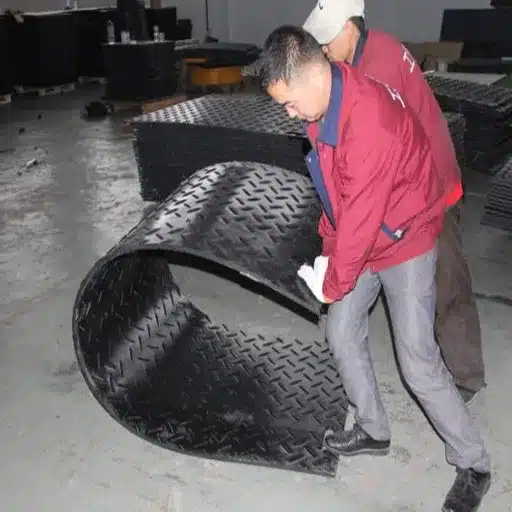
Even premium HDPE ground protection mats underperform if installed or stored incorrectly. Follow these practices to maximize service life.
Site preparation is the foundation. Walk the route and remove rocks, stumps, and debris that could puncture mats or create trip hazards. On soft or saturated ground, lay a geotextile separation fabric before placing mats. This fabric prevents soil pumping and maintains a stable subgrade.
Layout and connection follow a simple rule: lay mats in the direction of primary traffic flow. Overlap edges by 50–100 mm to prevent gaps. Install connection pins at every joint, especially on slopes and in turning areas. For curved paths, use narrower 2×8 ft panels or cut standard panels to follow the radius.
Slope anchoring is critical on grades exceeding 5%. Anchor the uphill edge of each mat with ground stakes or securing bars. Without anchoring, mats can slide under braking or downhill traffic, creating dangerous gaps.
Cleaning and storage determine how many reuse cycles a mat will deliver. Remove mud, debris, and chemical contamination before lifting mats. Pressure washing is the most effective method. Dry mats completely before flat stacking to prevent warping. Store stacks on level ground with dunnage to allow drainage.
A project foreman named Johan learned the hard way about connection systems on a wind farm project in the Scottish Highlands. He laid 12 mm HDPE ground protection mats across a peat access road but used only friction fits to speed installation. After the first Atlantic storm, wind gusts exceeding 80 km/h lifted individual panels and scattered them across the moor. The crew spent a full day recovering mats and re-laying them with steel locking pins and 100 mm overlaps. Johan’s revised specification called for full pin connection on every joint, and the road remained stable through three more months of winter storms.
Total Cost of Ownership: Why HDPE Mats Deliver the Best ROI
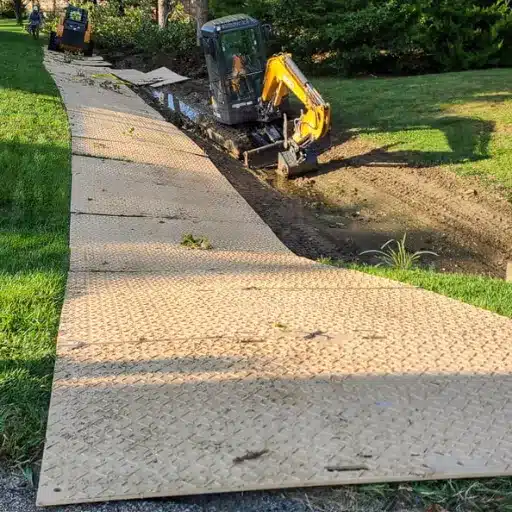
Purchase price is a poor metric for comparing HDPE ground protection mats against alternatives. A 10-year total cost of ownership analysis reveals the true economic picture.
A logistics coordinator named Amara was sourcing mats for a renewable energy contractor building solar farms across Spain and Portugal. She compared HDPE ground protection mats against timber for a 200-mat fleet that would move between sites every eight months. Timber cost 25% less per panel, but Amara tracked three hidden costs: timber absorbed 8–12% water weight between rainy seasons, freight quotes rose accordingly, and disposal fees at each site averaged €45 per rotted panel. HDPE mats showed an 18% lower total cost over five years, retained 85% resale value, and eliminated the landfill line item. The same fleet served six projects instead of two.
| Cost Factor | HDPE Mats | Composite Mats | Timber Mats |
|---|---|---|---|
| Initial cost (per mat) | Moderate | High | Low |
| Transport cost | Low (lightweight, no moisture gain) | High (heavy) | High (heavy, moisture gain) |
| Handling labor | Low (manual carry) | High (machine required) | High (machine required) |
| Cleaning cost | Low (pressure wash) | Low (pressure wash) | High (rot/mold removal) |
| Replacement cycle | 10+ years | 10+ years | 2–5 years |
| Resale value | 80–90% | 60–70% | Near zero |
| 10-year TCO (indexed) | 100 (baseline) | 140–180 | 150–220 |
Frequently Asked Questions
What are HDPE ground protection mats made of?
HDPE ground protection mats are manufactured from high-density polyethylene, a thermoplastic polymer with a density of 0.95–0.98 g/cm³. Virgin HDPE offers maximum consistency and strength. Recycled HDPE, common in black mat variants, provides equivalent performance for most applications while supporting sustainability goals. UV stabilizers are added during manufacturing to prevent degradation from sun exposure.
How much weight can HDPE ground protection mats hold?
Standard HDPE mats support 60–120 tons, depending on thickness and ground firmness. Ten-millimeter mats handle 30–60 tons; 20 mm mats handle 80–120 tons. Always derate capacity by 30–50% on soft or saturated soils. For extreme point loads such as crane outriggers, consult a load calculation specific to your equipment and ground conditions, or see our ground protection mat thickness guide for thickness selection by equipment type.
How long do HDPE ground protection mats last?
Quality HDPE mats last 10 or more years with proper maintenance. Unlike timber, HDPE does not rot, warp, or absorb moisture. UV-stabilized formulations resist surface cracking and color fading. The primary wear mechanism is surface abrasion from repeated heavy equipment traffic, which occurs gradually over thousands of load cycles.
Are HDPE ground protection mats recyclable?
Yes. HDPE is 100% recyclable and can be reprocessed into new ground protection mats or other plastic products. Many manufacturers now offer mats made from recycled HDPE content. At the end of life, HDPE mats can be returned to recycling facilities rather than sent to landfill, unlike timber mats that require disposal as contaminated waste. Learn more about the environmental benefits of HDPE ground protection mats.
Can HDPE ground protection mats be used in cold weather?
Yes. HDPE ground protection mats perform reliably in temperatures from -40°C to +80°C. The material remains flexible in freezing conditions and does not become brittle. Premium-grade HDPE formulations are rated from -70°C to +90°C. In snow and ice, textured surfaces provide traction for tracked and rubber-tired equipment.
What sizes do HDPE ground protection mats come in?
The industry standard is 4×8 ft (1,220 × 2,440 mm). Narrower 2×8 ft and 3×8 ft panels are available for pedestrian paths and tight access lanes. Larger 4×10 ft panels suit wide haul roads. Custom sizes up to 5,900 × 2,500 mm are available for specialized rig mat and heavy industrial applications.
How do HDPE mats compare to plywood?
Plywood is unsuitable for heavy equipment ground protection. It absorbs moisture, delaminates under load, and splinters within days. HDPE mats cost more upfront but last 10+ years, resist chemicals, and retain resale value. For any project involving machinery over 5 tons or lasting more than two weeks, HDPE is the more economical choice.
Conclusion
HDPE ground protection mats combine the best balance of load capacity, portability, and lifecycle value in the temporary surface market. Their non-porous structure, chemical resistance, and UV stability make them the default choice for construction, environmental, utility, and event applications worldwide.
Selecting the right HDPE mat requires matching three variables: equipment load, ground firmness, and project duration. Ten to fifteen-millimeter mats handle light and medium duty. Twenty-millimeter mats cover the majority of heavy construction and infrastructure scenarios. Twenty-five millimeter and thicker panels serve extreme applications with concentrated loads or very soft ground.
For international buyers, HDPE mats offer additional advantages: lighter transport weight reduces freight costs, standardized dimensions simplify container loading, and 100% recyclability meets increasingly strict environmental regulations.
Ready to specify HDPE ground protection mats for your project? Browse our HDPE ground protection mats for detailed specifications and dimensions, or request a technical quote from our engineering team. We provide load calculations, layout recommendations, and customized product specifications for construction and infrastructure projects worldwide.