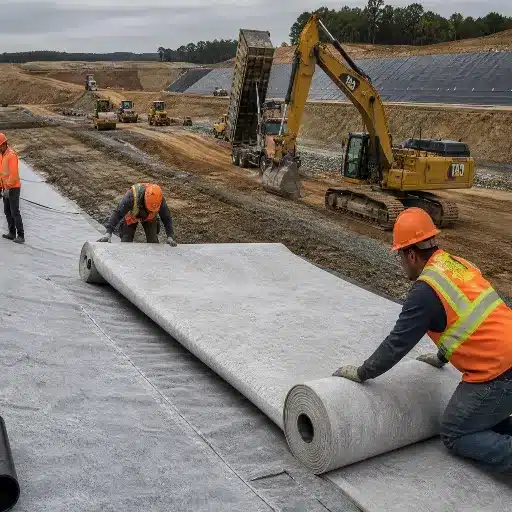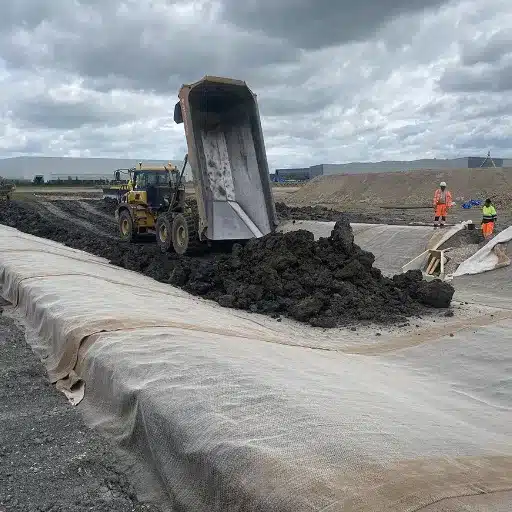
HDPE vs LLDPE geomembrane is a common decision point for engineers and procurement buyers. HDPE is stronger and more chemically resistant. LLDPE is more flexible and conforms better to uneven surfaces. Neither is universally better. The right choice depends on your application, subgrade conditions, and the chemicals you need to contain.
What if the liner you specify today cracks under settlement five years from now?
It happens more often than project teams expect. A rigid HDPE sheet installed over a poorly compacted subgrade. A smooth LLDPE liner placed on a steep slope without enough friction. A material chosen for price rather than performance. When the wrong geomembrane fails, the cost goes far beyond the liner itself. It includes cleanup, regulatory penalties, project delays, and lost credibility.
You already know that material selection matters. The challenge is deciding between two polyethylene liners that look similar but behave differently. This guide compares HDPE and LLDPE geomembrane across properties, standards, applications, cost, and sourcing. You will learn when to specify each material and how to avoid the most common specification mistakes.
Key Takeaways
- HDPE geomembrane offers higher tensile strength and better chemical resistance. It is the default choice for landfills, mining, and aggressive containment.
- LLDPE geomembrane offers higher elongation and better flexibility. It fits ponds, landfill caps, and uneven or settlement-prone sites.
- HDPE density is ≥0.940 g/cm³ under GRI-GM13. LLDPE density is ≤0.939 g/cm³ under GRI-GM17.
- Both materials are highly impermeable, but HDPE typically lasts longer in exposed or chemically aggressive environments.
- Global buyers should verify resin quality, factory certification, roll dimensions, and export documentation before ordering.
What Is HDPE Geomembrane?
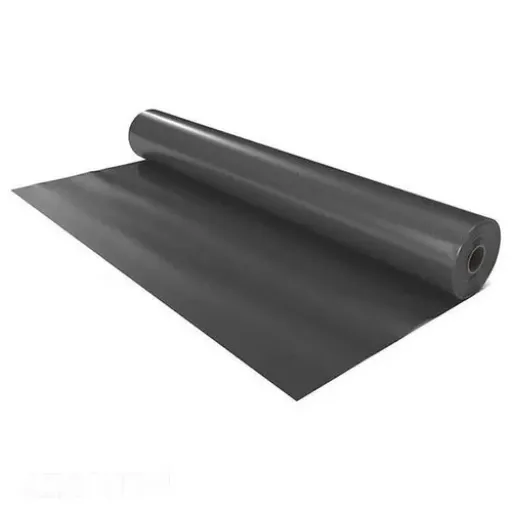
High-density polyethylene (HDPE) geomembrane is a synthetic liner made from petroleum-based polyethylene resin. Its polymer chains are tightly packed, which gives it high density, stiffness, and chemical resistance.
Molecular Structure and Density
HDPE has minimal branching in its polymer chains. This allows the chains to pack closely together, producing a density of ≥0.940 g/cm³. The tight structure makes HDPE harder, stronger, and less permeable than lower-density polyethylene materials.
Key Properties
| Property | Typical HDPE Value |
|---|---|
| Density | ≥0.940 g/cm³ |
| Tensile strength | 27–60 MPa |
| Elongation at break | ≥700% |
| Puncture resistance | 200–1,000 N |
| Chemical resistance | Excellent (pH 0.5–14) |
| UV resistance | Excellent with carbon black |
| Service life | 50–100 years when buried |
| Temperature resistance | ~110°C |
HDPE geomembrane achieves tensile strength of ≥27 MPa and retains approximately 90% of its tensile strength after 1,600 hours of accelerated UV exposure.
Common Applications
HDPE is the most widely specified geomembrane for high-risk containment. It is used in:
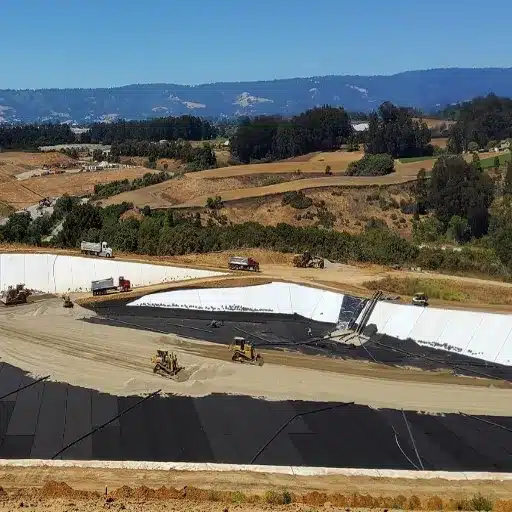
- Municipal and hazardous waste landfill liners and caps
- Mining heap leach pads and tailings storage facilities
- Industrial wastewater lagoons
- Chemical storage and secondary containment
- Large reservoirs where long service life is required
For a deeper technical review, see our HDPE geomembrane engineering guide.
What Is LLDPE Geomembrane?
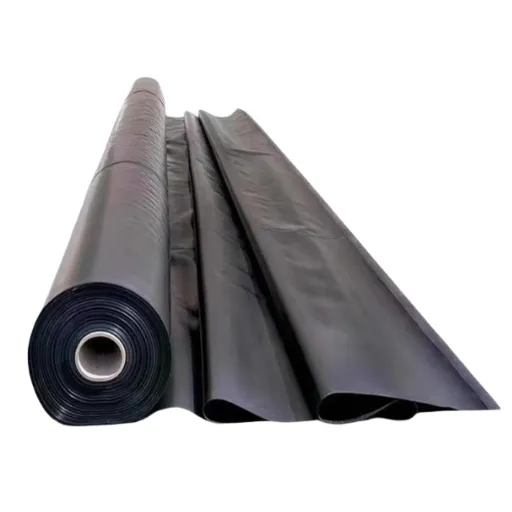
Linear low-density polyethylene (LLDPE) geomembrane is also a polyethylene liner, but its polymer structure includes short branches along the main chain. These branches prevent the chains from packing tightly, producing lower density and higher flexibility.
Molecular Structure and Density
LLDPE has more branching than HDPE. This reduces density to ≤0.939 g/cm³ and increases the material’s ability to stretch and conform.
Key Properties
| Property | Typical LLDPE Value |
|---|---|
| Density | ≤0.939 g/cm³ |
| Tensile strength | 13–30 MPa |
| Elongation at break | 800–900% |
| Puncture resistance | 150–800 N |
| Chemical resistance | Very good |
| UV resistance | Good to very good |
| Service life | 40–80 years when buried |
| Temperature resistance | ~100°C |
LLDPE’s higher elongation makes it more forgiving over uneven subgrades. It also performs better in cold temperatures and can be factory-fabricated into large panels for faster field installation.
Common Applications
LLDPE is preferred where flexibility and conformance matter:
- Aquaculture ponds and irrigation reservoirs
- Landfill caps and closure systems
- Tank liners and floating covers
- Decorative ponds and canals
- Sites with expected settlement or irregular geometry
HDPE vs LLDPE Geomembrane: Side-by-Side Comparison
The easiest way to compare these materials is through a side-by-side table.
| Property | HDPE Geomembrane | LLDPE Geomembrane |
|---|---|---|
| Density | ≥0.940 g/cm³ | ≤0.939 g/cm³ |
| Tensile strength | 27–60 MPa | 13–30 MPa |
| Elongation at break | ≥700% | 800–900% |
| Flexibility | Rigid, stiff | Highly flexible |
| Puncture resistance | Higher at same thickness | Lower at same thickness, better deformation tolerance |
| Chemical resistance | Excellent | Very good |
| UV resistance | Excellent | Good to very good |
| Temperature resistance | ~110°C | ~100°C |
| Seaming | Strong, parameter-sensitive | More forgiving, easier field welding |
| Prefabrication | Less common | Common in factory panels |
| Typical cost | $1.50–$2.50/m² | $1.00–$2.00/m² |
| Service life | 50–100 years buried | 40–80 years buried |
Both materials typically achieve permeability around 1×10⁻¹¹ cm/s, making them far more impermeable than compacted clay.
GRI-GM13 vs GRI-GM17
The Geosynthetic Institute publishes two key specifications:
- GRI-GM13: Specification for HDPE smooth and textured geomembranes. It defines density, tensile properties, puncture resistance, and other performance criteria for HDPE liners.
- GRI-GM17: Specification for LLDPE geomembranes. It sets lower density limits and different tensile/elongation targets appropriate to LLDPE’s flexible structure.
When you request a quote, ask whether the material meets the relevant GRI specification. This is especially important for projects with third-party engineering review or regulatory approval.
Installation and Seaming Differences
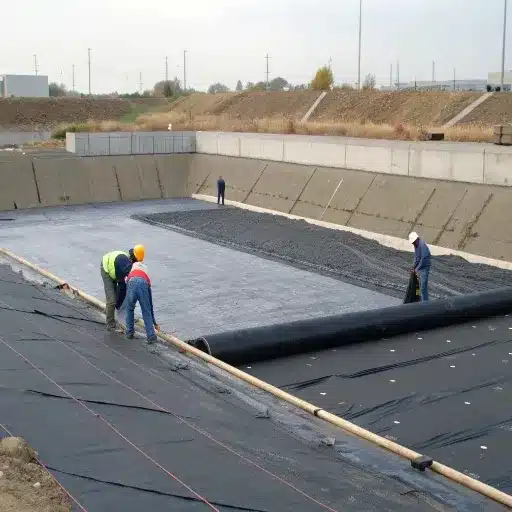
HDPE seams are strong but less forgiving. Hot wedge welding parameters, including temperature, speed, and pressure, must be controlled carefully. HDPE also expands and contracts more with temperature changes, which can stress seams during installation.
LLDPE is easier to weld and conforms better around corners, pipes, and irregular shapes. Factory-fabricated LLDPE panels can reduce the number of field seams by 50% or more on some projects.
When to Choose HDPE Geomembrane
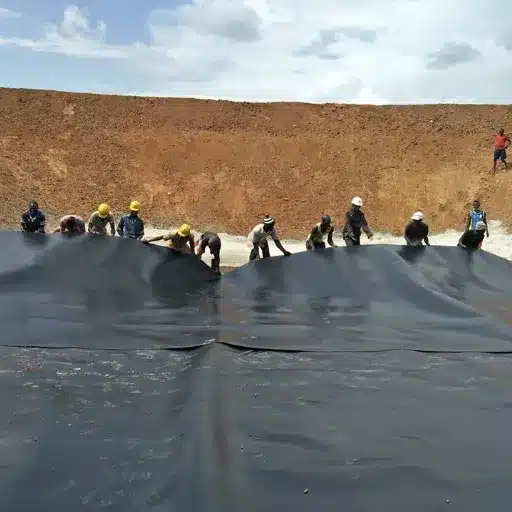
HDPE is the default material when the project demands strength, chemical resistance, and long-term durability.
Landfill Bottom Liners and Hazardous Waste
Landfill leachate contains acids, alkalis, salts, and organic compounds. HDPE resists this chemistry better than LLDPE and meets the strict requirements of GRI-GM13. The U.S. EPA mandates a minimum of 1.5 mm HDPE for municipal solid waste landfill liners.
Mining Heap Leach Pads and Tailings
Mining solutions are often acidic or alkaline and may contain heavy metals. HDPE’s chemical resistance and high tensile strength make it the standard choice. Textured HDPE is often specified on slopes to improve friction and prevent liner slippage.
Industrial Lagoons and Aggressive Chemicals
For industrial wastewater, chemical containment, and secondary containment, HDPE is usually the safer choice. Its resistance to hydrocarbons and aggressive pH conditions reduces the risk of premature degradation.
Exposed Liners Requiring Long UV Life
HDPE with 2–3% carbon black content retains strength longer under UV exposure. If the liner will remain uncovered for years, HDPE generally outperforms LLDPE.
When to Choose LLDPE Geomembrane
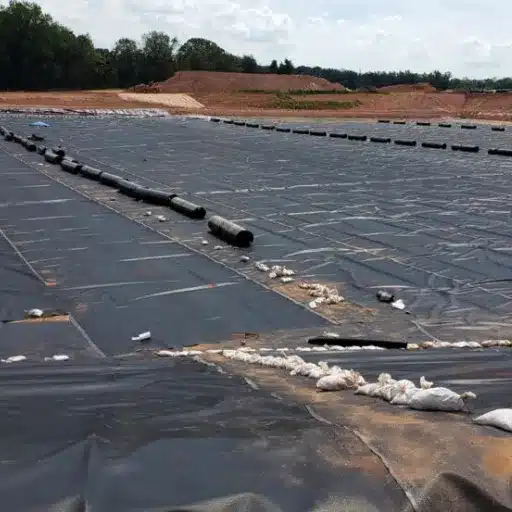
LLDPE is the better choice when flexibility, conformance, and ease of installation are priorities.
Ponds, Reservoirs, and Aquaculture
LLDPE conforms to natural pond bottoms and reduces the number of field seams. Its flexibility also makes it easier to install in cold weather. For pond-specific guidance, read our geomembrane pond liner guide.
Landfill Caps and Floating Covers
Landfill caps must settle with the waste below. LLDPE’s high elongation allows it to deform without cracking. Floating covers also benefit from LLDPE’s flexibility and lighter weight.
Uneven Subgrades and Settlement-Prone Sites
When the subgrade is irregular or expected to settle, LLDPE accommodates movement better than HDPE. This reduces the risk of stress cracks and seam failure over time.
Tank Liners and Prefabricated Panels
LLDPE is often factory-fabricated into panels that fit tanks, lagoons, and other structures. Prefabrication improves quality control and reduces installation time.
Cost Comparison and Total Cost of Ownership
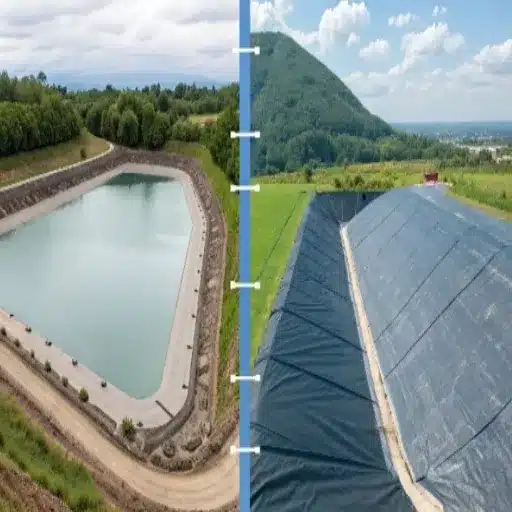
Material price is only part of the cost equation. Installation, seaming, supervision, and lifecycle performance all affect the final project cost.
Material Cost per m²
Indicative material costs range from:
- HDPE: $1.50–$2.50/m²
- LLDPE: $1.00–$2.00/m²
Actual prices depend on thickness, order volume, surface finish, and freight distance. These figures should be treated as reference ranges, not fixed quotes.
Installation and Seaming Cost Differences
LLDPE can reduce installation costs on complex sites because it is easier to handle and weld. Factory-fabricated panels cut field seam length and labor time. HDPE may require more welding time and stricter quality control, but it is faster to deploy on large, flat areas.
Lifecycle Cost Considerations
A cheaper liner that fails early is never a bargain. HDPE’s longer service life can reduce lifecycle cost in aggressive environments. LLDPE’s lower installation cost can reduce upfront spending on ponds, caps, and flexible structures.
For a more detailed cost breakdown, see our geomembrane price guide.
Project Selection Decision Tree
Use this framework to choose between HDPE and LLDPE geomembrane.
Step 1: Identify the Containment Chemistry
Will the liner contact acids, alkalis, hydrocarbons, or aggressive leachate? If yes, HDPE is usually the safer choice.
Step 2: Evaluate the Subgrade
Is the surface flat, well-compacted, and stable? HDPE works well. Is it uneven, rocky, or expected to settle? LLDPE is more suitable.
Step 3: Consider the Application Risk
High-risk applications like landfills, mining, and hazardous waste generally require HDPE. Lower-risk applications like ponds, canals, and caps may be suitable for LLDPE.
Step 4: Factor in Installation Conditions
Cold weather, complex geometry, and limited welding experience favor LLDPE. Large flat areas with experienced crews favor HDPE.
Step 5: Calculate Total Cost of Ownership
Include material, freight, installation, supervision, testing, and expected service life. The lowest material price does not always produce the lowest project cost.
Real-World Scenario: Landfill Bottom Liner in Southeast Asia
In 2021, an environmental contractor in Southeast Asia specified 1.5 mm HDPE for a municipal landfill bottom liner. The site had aggressive leachate chemistry and a 30-year design life. The contractor required GRI-GM13 certification, certified welders, and third-party destructive testing. Five years later, the liner has recorded zero leaks. The HDPE specification cost more upfront than LLDPE would have, but it eliminated the risk of premature chemical degradation.
Real-World Scenario: Aquaculture Pond in Uneven Terrain
In 2022, a fish farm in East Africa chose 1.0 mm LLDPE for a series of aquaculture ponds. The natural terrain was uneven and would have required extensive subgrade preparation for HDPE. The supplier provided factory-fabricated LLDPE panels that reduced field seams by roughly 60%. Installation finished two weeks ahead of schedule, and the ponds have held water without issue.
Sourcing HDPE and LLDPE Geomembrane Globally
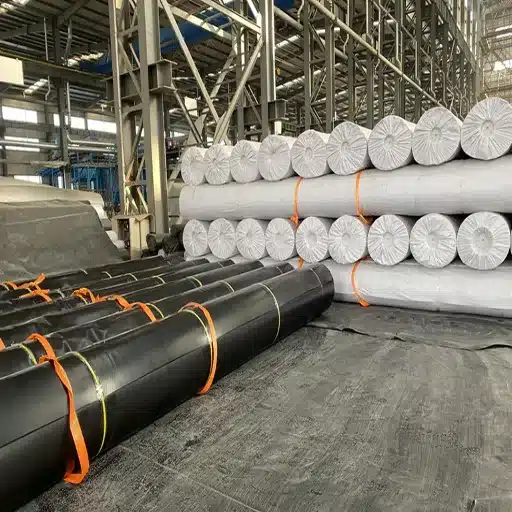
For international buyers, sourcing geomembrane involves more than comparing material prices.
Factory Certification and Resin Quality
Look for suppliers with ISO9001 quality management certification. Confirm that the geomembrane is produced from virgin resin, not recycled material, with 2–3% carbon black for UV stability.
Roll Dimensions and Shipping
HDPE and LLDPE geomembranes are typically supplied in rolls 4–10 meters wide and 50–200 meters long. Roll dimensions affect freight cost and handling equipment. Confirm roll weights and diameters before shipment.
Export Documentation
International shipments should include packing lists, certificates of origin, mill test reports, and quality assurance documentation. A supplier with export experience can coordinate freight forwarding and customs clearance.
When to Request Technical Consultation
If you are unsure whether HDPE or LLDPE fits your project, request technical consultation early. The right supplier can review your subgrade conditions, chemical exposure, and design life to recommend the appropriate material and thickness.
Ready to choose the right liner? Contact our engineering support team for a technical quote or product recommendation.
Frequently Asked Questions
What is the difference between HDPE and LLDPE geomembrane?
HDPE is a high-density polyethylene liner with higher tensile strength and chemical resistance. LLDPE is a linear low-density polyethylene liner with higher flexibility and elongation. The right choice depends on application, subgrade, and chemistry.
Which is better for pond liners, HDPE or LLDPE?
LLDPE is often better for pond liners because it conforms to uneven terrain and is easier to install. HDPE may be used for large, cost-sensitive reservoirs where the subgrade is well prepared.
Can LLDPE be used for landfill liners?
LLDPE is generally not recommended for landfill bottom liners exposed to aggressive leachate. It is sometimes used for landfill caps and closure systems where flexibility and settlement tolerance matter more than chemical resistance.
Is HDPE more chemically resistant than LLDPE?
Yes. HDPE offers excellent chemical resistance across a broad pH range and resists hydrocarbons better than LLDPE. LLDPE has very good chemical resistance but is less suitable for aggressive industrial chemicals.
Which geomembrane is easier to install?
LLDPE is easier to install on complex or uneven sites and can be factory-fabricated into panels. HDPE is easier to deploy on large, flat areas but requires more precise welding parameters.
How do GRI-GM13 and GRI-GM17 differ?
GRI-GM13 is the specification for HDPE geomembranes. It sets higher density and tensile strength requirements. GRI-GM17 is the specification for LLDPE geomembranes, with lower density and higher elongation targets.
Conclusion
HDPE vs LLDPE geomembrane is not a question of which material is better overall. It is a question of which material is better for your specific project.
HDPE is the stronger, more chemically resistant option. It belongs in landfills, mining containment, hazardous waste, and any application where long-term durability is critical. LLDPE is the more flexible, more conformable option. It fits ponds, landfill caps, tank liners, and sites with uneven or settling subgrades.
The best specification decision combines chemistry, subgrade conditions, application risk, installation constraints, and total cost of ownership. Shanxi Shengxing manufactures and supplies both HDPE and LLDPE geomembranes for global infrastructure and environmental projects, with options ranging from standard rolls to customized thickness and prefabricated panels.
Need help choosing between HDPE and LLDPE? Request a technical quote or explore our geomembrane selection guide to get started.