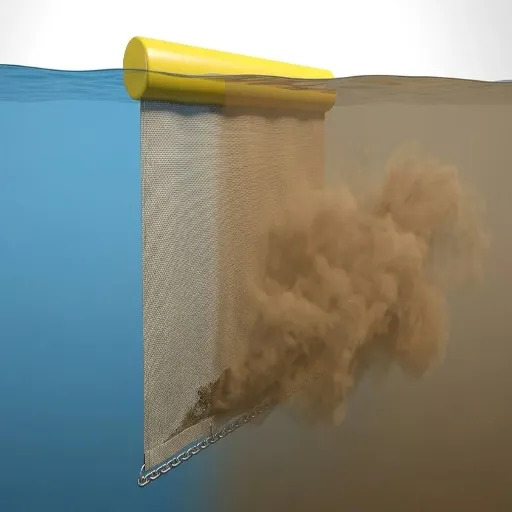
Turbidity curtain types I, II and III commonly distinguish protected water, moving water and more exposed conditions. The project specification must define those labels. Read it before you select equipment.
Two quotes can both say Type II yet describe different systems. Which assembly fits the site? That is the question to ask when you compare them. The number alone can’t tell you.
This guide explains the familiar three-type convention, shows why named specifications differ, and gives you a conditions worksheet for comparing proposals. You can spot gaps before you choose a system based on its label. Use the floating silt curtain planning overview to place this comparison within the wider project plan.
Key Takeaways
- Match the type definition to a named specification and revision, rather than assuming a worldwide classification.
- Record currents, waves, vessel wakes and water-level changes at the planned curtain line.
- Compare the float, skirt, load lines, ballast, connectors and mooring interfaces as one system.
- Treat permeability and sediment control in use as separate questions from the type number.
- Escalate unknown exposure or an unsuitable task before choosing a higher type.
What Turbidity Curtain Types Mean in a Project Specification
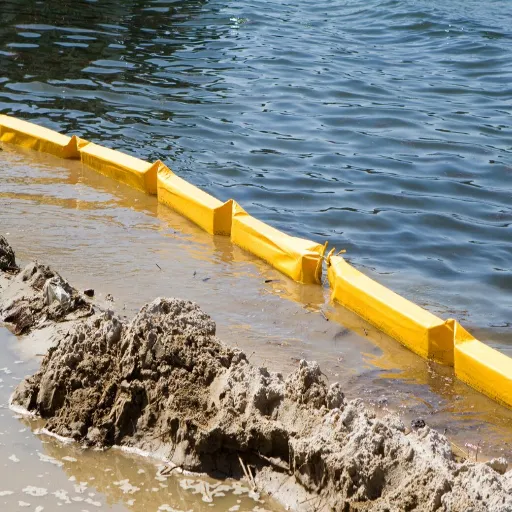
A floating turbidity curtain uses flotation to support a hanging skirt in the water. Its purpose is to limit sediment dispersion around work, not to stop a watercourse or create dry ground. Check the task first. Then compare the strength of the assemblies.
A type label groups systems by the site conditions in a named document. The proposed assembly consists of fabric, flotation, ballast, load-carrying members, section connections and anchoring interfaces. A label helps you find the right section of a specification; the parts list tells you what the supplier offers.
A label is a starting point
Ask what document the label refers to. Write down who issued it, its title, detail number and revision. Does the project use it as written?
Check for changes and any need for separate approval. Generic wording such as “DOT compliant” leaves those questions unanswered.
Illustrative scenario: A buyer receives two Type II proposals. One lists fabric and overall length; the other includes a component schedule and drawing reference. The second quote gives the buyer more to check.
Neither label proves that the system fits. The buyer still needs matching exposure inputs and the project specification before selecting either assembly.
Why a Type IV may appear
The common I/II/III convention is not the only classification. Connecticut DEEP’s erosion and sediment control guidelines, chapter 5, printed page 344, describe four types, including Type IV for exposed conditions involving current, wind and tides.
Don’t silently convert that Type IV into another document’s Type III. Similar descriptions do not prove that the parts or approval rules match. Keep the original classification beside the proposed product designation so a reviewer can see the difference. This keeps a familiar name from hiding a change in the design basis.
Compare Turbidity Curtain Types I, II and III by Site Exposure
Within a three-type system, increasing type numbers can indicate assemblies intended for greater exposure. Use that pattern to organize questions, not to rank products from good to best. Read the project document. Check the limits for the actual assembly too.
| Common label | Exposure cue | Components to confirm | Missing input that needs review |
|---|---|---|---|
| Type I / Type 1 | Protected conditions without meaningful current or wave action | Float support, skirt, ballast and section joints | Whether the location is truly protected during the work period |
| Type II / Type 2 | Moving-water conditions defined by the applicable scheme | Load lines, connectors and mooring interfaces, alongside the skirt and float | Current direction, variation and exposure to wakes |
| Type III / Type 3 | Greater exposure, including wind, waves or tides where the scheme permits | Complete load path, connections and site-specific arrangement | Combined exposure and written suitability of the full assembly |
This table is a comparison aid. It gives no universal current rating and does not authorize deployment.
Type I: protected conditions
Start here only if the site fits the named protected-water definition. A small pond may look calm during a visit, yet the selection record still needs to address wind exposure, incoming flows and work-related disturbance. A pond’s name doesn’t tell you its loads.
Check how the float supports the skirt and how adjoining sections connect. Ask what keeps the proposed skirt in its intended position. Don’t assume that a lightweight assembly is appropriate just because the work area is small or the installation will be temporary.
Type II: moving-water conditions
Type II is a useful comparison category when the named specification covers moving water. The missing detail is often the nature of that movement: one-direction flow, changing discharge, local acceleration or wake exposure. Put those facts in the selection record. Don’t leave them for a note after you order.
Check the parts that carry load and the joints between them. A fabric datasheet covers only one part. It doesn’t show how the section joint connects to the mooring system. Ask for that relationship on a drawing or component schedule.
Illustrative scenario: A contractor initially describes a pond as still water. A nearby vessel route introduces a question about wakes at the planned curtain line. Record the wake exposure first.
Then review the shortlist. Don’t guess a wave height or claim that one type will succeed.
Type III: more exposed conditions
In the familiar three-type convention, Type III can cover exposure beyond protected or one-direction moving-water conditions. That makes it a candidate for review, not a cure for every difficult location. A stronger assembly cannot establish that the work method, alignment or sediment-control purpose is suitable.
Request the operating conditions used for the proposed assembly. Ask the project reviewer to compare those limits with the site record. Include tides and vessel traffic where they affect the work. Keep any exclusions visible in the comparison.
Permeable and impermeable skirts are separate choices
The type label alone doesn’t tell you whether a skirt is permeable. Read the actual fabric description and its role in the proposed system. Permeable fabric allows water through its structure; an impermeable skirt follows a different containment approach.
Neither label proves how much sediment it will capture. Check that the fabric fits the sediment and the project rules.
Record the Site Conditions Before Shortlisting a Curtain
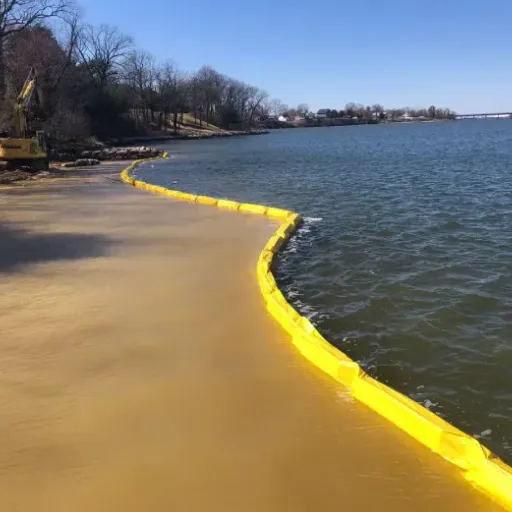
Lake, river and harbor describe locations. They don’t tell a supplier what the proposed curtain must withstand. Build a conditions sheet for the curtain line and the period of work, then identify who will resolve each unknown.
Use this sheet to compare quotes. It does not tell you how to measure field conditions.
Record conditions at the planned curtain line
Use one row per input. For each row, record evidence/source/date, the observed or assessed envelope, any unknown, and the responsible reviewer. An envelope is the range of conditions under review. One calm visit is not that range.
| Input | What to put in the conditions sheet |
|---|---|
| Current | Available speed and direction information, changes through the work period and the location to which it applies |
| Wind, waves and wakes | Exposure at the curtain line, nearby navigation and gaps in the available assessment |
| Water level | Expected variation, tidal influence where present and the reference used for depth information |
| Depth and bed profile | Survey or other accepted information along the curtain line; unresolved changes in bed level |
| Sediment and work method | What will disturb sediment, where it is generated and whether pumped discharge is a separate task |
| Duration and layout | Work period, proposed curtain footprint, access needs and restrictions on the available space |
| Review responsibility | Person or role accepting the inputs, applicable project requirements and open decisions |
For the pond illustration, “wake exposure unknown” is a useful entry. “No waves seen” without a date, location or account of vessel activity is a weaker basis for comparison. Attach the source record. Show the next reviewer what you saw and what you assumed.
Separate missing inputs from operating limits
An unknown current is not zero current. A supplier’s maximum rating is not a measurement of your site. Keep these two columns separate. Ask the reviewer to check the site range against the system’s stated limits.
Where the depth or water-level range is uncertain, flag the skirt-length and mooring decisions for further review. Do not use this article to assign bottom clearance, anchor spacing or a universal depth limit. Use the project detail and site facts to make those choices.
Also separate sediment generation from containment. If runoff from exposed land enters the work area, the project may need upstream source-control measures as well as in-water containment. The site’s erosion-control fabric comparison explains that adjacent material-selection task; it does not establish which curtain type fits the water conditions.
Complete the sheet before asking for a specific assembly. If a value is provisional, label it and name the person responsible for confirming it. That gives the supplier a clear question. It also shows who must approve the choice.
Check the Specification Against the Actual Product Assembly
Named documents show why a type number cannot carry its own universal rating. FHWA EFLHD detail E157-11 for FP-24 projects, approved for use in May 2024, includes a usage chart with current values and accompanying exposure conditions. Connecticut’s chapter uses a different classification.
A named-source example of differing limits
| Source context | Published classification example | What a buyer must retain |
|---|---|---|
| FHWA EFLHD E157-11, FP-24 | Type 1: 0.0 ft/s, no wave/wind/tidal action; Type 2: 3.5 ft/s, one-direction moving water; Type 3: 5.0 ft/s, tidal action or wind and waves | The chart’s exposure conditions, drawing notes and project approval requirements |
| Connecticut DEEP, chapter 5, p344 | Type II: up to 2 ft/s; Type III: up to 5 ft/s with one-direction current; a separate Type IV addresses current, wind and tides | The four-type framework and each category’s complete description |
These values illustrate differing definitions. They are not shared equipment ratings, and they do not certify a Constc Mart product. Do not lift a current value from either row without its source context.
Do the documents conflict? Ask the designer to resolve the issue. Don’t just pick the higher value.
Compare load path and interfaces, not just fabric
A load path is how force passes through joined parts. Ask how the proposed skirt, load lines, section joints and mooring interfaces form that route. A thicker fabric or larger float is only one part of the system.
Return to the two-quote illustration. Put both proposals beside the same conditions sheet. Check each quote against the same list:
- Named specification and revision
- Component schedule and section lengths
- Section joining details and mooring interfaces
- Stated limits, exclusions and departures from the project detail
Mark each missing document. Don’t treat a blank as a match.
Ask the proposed supplier for the exact assembly drawing and written confirmation of the conditions it was selected for. Then ask the project reviewer to resolve departures from the governing specification. Request those records next. A supplier’s reply does not replace the project’s approval process.
Keep the accepted inputs with the comparison. What if the supplier changes a part after review? Record the change.
Ask whether the earlier review still covers the new assembly. A matching product name does not answer that question. Keep a dated list of the reviewed parts with the quote.
Note who accepted any change and what still needs review. This creates a record you can check when the order arrives.
When a Higher Type Is Not the Answer
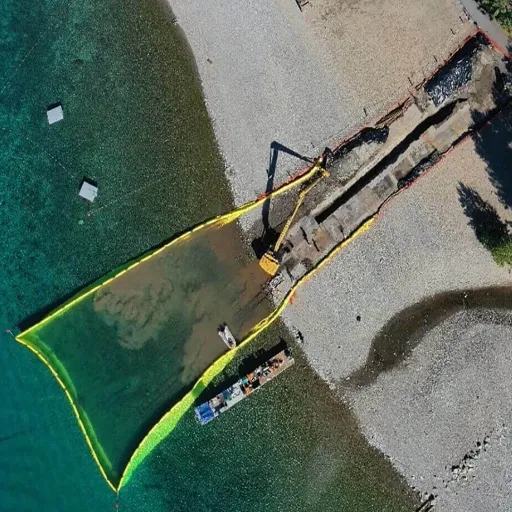
A curtain is not a dam or a dry-work enclosure. Fisheries and Oceans Canada’s in-water site isolation guidance, section 3.5, describes curtains in low- or no-current settings without high wind and waves. Keep that guidance in its own context. Don’t merge it with the US type charts above.
Unsuitable purpose or uncontrolled exposure
Illustrative scenario: A tidal work zone has no recorded exposure range for the planned curtain line. Choosing Type III does not fill that gap. The team must establish the site conditions. It must also confirm the approval basis before it orders an assembly.
If the task is treating pumped sediment-laden water, review the discharge-control design separately. The site’s guides to dewatering bags for pumped discharge and geotextile tube dewatering applications describe different tasks. Neither is an automatic substitute for a curtain, and this comparison does not select a treatment system.
Do not infer effectiveness from water color
A barrier may look intact. Water may look clearer. Neither proves that the work meets its sediment-control rules.
Keep the required monitoring and response arrangements separate from equipment selection. Does the task fit? Are loads or acceptance rules still unknown?
Take those gaps to the project reviewer. Buying a higher type cannot settle those unresolved decisions. Record who can pause the work, what information the reviewer needs and who will confirm that the open issue is closed before selection resumes.
Frequently Asked Questions
Is a Type III turbidity curtain always better than Type II?
No; start with the project specification, site exposure and proposed assembly. Type III can describe greater exposure in a three-type system, but that does not make it preferable for every protected site. Compare the complete assembly and its stated conditions before deciding whether either proposal fits.
Do all Type III curtains use permeable fabric?
No; the label alone gives no worldwide rule for skirt fabric. Read the specification and skirt description: permeable fabric allows water through its structure, while an impermeable skirt uses a different containment approach. Neither label proves that the skirt suits your sediment or that the complete system fits the site.
Are Type I, II and III defined the same way everywhere?
No; the FHWA and Connecticut examples use different category boundaries, and Connecticut includes Type IV. Record the exact document and revision behind each proposal. If labels come from different schemes, compare their full requirements rather than assuming equal numbers mean equal exposure limits or construction.
Which curtain type should I choose for tidal water?
Start with the project specification and a recorded tidal exposure assessment. The answer may involve Type III in one scheme and Type IV in another. Water-level changes, current direction, waves and the proposed assembly still require review; the word tidal alone is not enough to approve an assembly.
Does selecting the right type guarantee clear water or compliance?
No; a type name is a selection category, not a promise of field results. Suitability, deployment, maintenance and the project’s monitoring and response rules remain separate matters. Do not accept a removal percentage or compliance promise without evidence for the actual conditions and the rules that govern the work.
Use these answers to find the next open decision. A label can narrow the search. The conditions sheet, specification and assembly records must support the choice together. Keep questions about installation details or monitoring procedures in their own project reviews rather than trying to settle them through a type name.
Turn the Shortlist Into a Reviewable Selection
Compare turbidity curtain types to find a recorded match between the site and the assembly. Record the site inputs, identify the governing specification, compare the assembly and keep unresolved decisions visible. Do not let a familiar type label stand in for any of those records.
For the two Type II quotes, the next step is now specific: obtain the missing drawing, compare the component schedules and resolve the assumptions about current, waves and wakes. Neither quote wins until the buyer resolves those gaps. Store the review with the accepted assembly so later substitutions can be checked against the same basis.
Return to the floating silt curtain planning overview with the completed conditions sheet. Use it to connect this selection decision to the wider deployment and monitoring plan, while keeping each review role clear. Carry open questions forward; do not hide them in a type label.