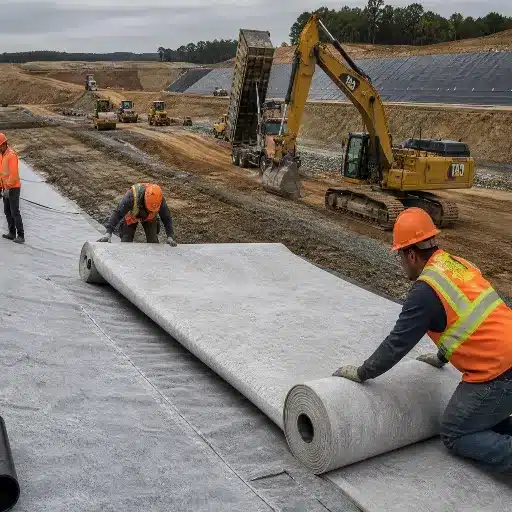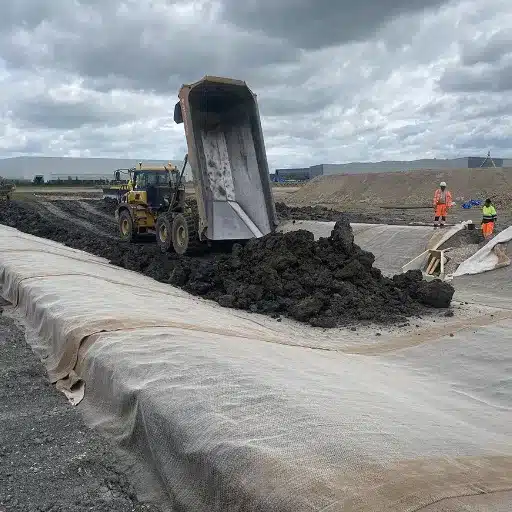
A single 4×8 HDPE ground protection mat can cost $50 FOB from a manufacturer or $200 from a domestic retailer. But the purchase price is only about 30% of the total cost of the story. Ground protection mat cost analysis must include lifespan, replacement frequency, logistics, handling, and the avoided costs of soil damage and project delays.
A procurement manager named David priced mats for a 12-month wind farm project. The rental quote was $48,000. The purchase quote was $14,000. He chose rental because the upfront cost felt safer. Three years later, his company had spent $96,000 on rentals for three consecutive projects and owned nothing. The mats they rented were the same HDPE panels they could have bought once and reused indefinitely.
This guide answers how much ground protection mats cost across every dimension: purchase price by source, rental rates from major providers, break-even math for rent vs buy decisions, and a transparent 10-year total cost of ownership model by material. For the complete overview of mat types, applications, and selection criteria, see our complete ground protection mats buyer’s guide. For the detailed selection framework before you price, see our guide on how to choose ground protection mats.
Key Takeaways
- Ground protection mats cost $50-$200+ per 4×8 panel to purchase, depending on source, thickness, and volume; rental rates run $25-$100 per week.
- HDPE mats last 15-25 years; timber lasts 3-5 years; plywood often fails after 1-2 uses in wet conditions.
- The break-even point for purchase vs rental typically occurs within 2-4 months for standard construction projects.
- A 10-year TCO comparison shows HDPE at roughly $0.50-$1.20 per use, timber at $8-$15 per use, and plywood at $12-$25 per use.
- Export buyers can load 400-500 HDPE mats per 40HQ container, reducing effective freight cost to $15-$30 per mat.
Ground Protection Mats Price: How Much Do They Cost to Buy?
HDPE Ground Protection Mats Price by Source
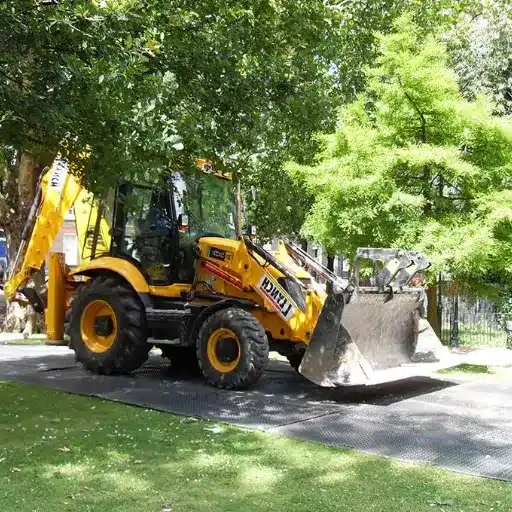
The ground protection mats cost landscape splits into three pricing tiers based on where and how you buy.
Domestic retail fabricators in North America and Europe typically charge 195−195−205 per standard 4×8-foot HDPE panel. Cope Plastics, a U.S. fabricator, lists 0.5-inch by 48-inch by 96-inch reprocessed HDPE mats at 195forblackand195forblackand205 for white or natural finishes. These prices reflect domestic labor, warehousing, and distribution markups.
Direct manufacturing imports from China drop the per-panel price significantly. FOB pricing for HDPE ground protection mats ranges from roughly $50 to $150 per 4×8 panel, depending on thickness, surface texture, load rating, and minimum order quantity. MOQs typically start at 100 pieces for standard specifications. At 500+ panel volumes, pricing moves toward the lower end of that range.
Premium composite systems with glass-fiber reinforcement, RFID tracking, or specialized non-skid textures command $300 to $600+ per panel. These mats target heavy crane work, oil rig platforms, and extreme load environments where standard HDPE would deform.
Cost Per Square Foot Normalization
Comparing mats by panel price is misleading because dimensions vary. The table below normalizes the ground protection mats’ cost to price per square foot.
| Material | Thickness | Price Per Mat | Price Per Sq Ft | Load Rating |
|---|---|---|---|---|
| HDPE (import, 100+ MOQ) | 15-20 mm | 50−80 | 1.56−2.50 | 80-120 tons |
| HDPE (domestic retail) | 15-20 mm | 195−205 | 6.09−6.41 | 80-120 tons |
| Premium composite | 25-38 mm | 300−600 | 9.38−18.75 | 150-300+ tons |
| Timber/hardwood | 6-12 in | 150−400 | 4.69−12.50 | 100-200 tons |
| Plywood (treated) | 3/4 in | 20−35 | 0.63−1.09 | 10-20 tons |
Prices assume standard 4×8-foot dimensions. Load ratings are manufacturer-published static capacities on firm ground.
Factors That Affect Purchase Price
Thickness is the primary cost driver within HDPE. A 10 mm light-duty mat costs roughly 30% less than a 20 mm standard-duty mat. A 40 mm heavy-duty panel can cost 2-3x the 20 mm price. Thickness specifications vary by load and terrain.
Surface texture adds manufacturing complexity. Smooth panels are the cheapest. Diamond-plate or treaded textures for anti-slip performance add 10-20% to base cost.
Connection systems vary. Mats with factory-molded interlocking flanges or pin-lock holes cost more than plain edge panels. The hardware itself, connecting pins, brackets, or bolts, adds $2-$5 per mat.
Volume tiers create significant step-downs. A 100-panel order might be priced at $75 per mat. A 500-panel order might drop to $55. A 1,000+ panel order for a major infrastructure project can reach $45-$50.
Ground Protection Mats Rental Costs: What to Expect
Typical Rental Rate Ranges
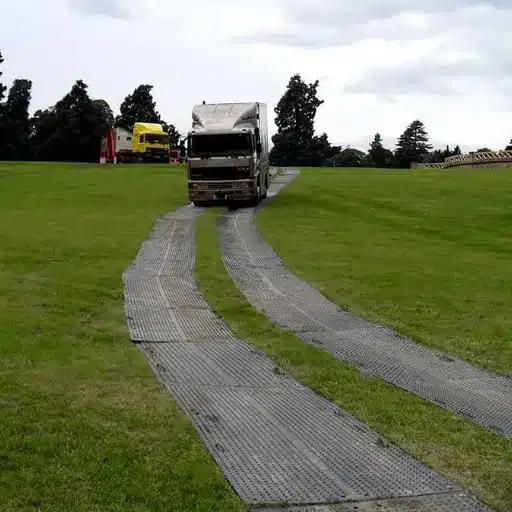
Ground protection mat rental cost and temporary road mat rental price vary by material class, geographic market, and rental house tier.
Standard HDPE 4×8 mats rent for approximately $25-$50 per week or $75-$150 per month per panel. A 50-mat inventory for a one-month project costs roughly $3,750-$7,500 in base rental fees.
Heavy-duty composite mats rent at $50-$100 per week. These are preferred for crane work and extreme loads where standard HDPE would not suffice.
Timber crane mats command the highest rental rates at $100-$200 per week, depending on hardwood thickness and dimensions. A 12-inch by 4-foot by 8-foot oak or maple mat is heavy, expensive to transport, and limited in rental fleet availability.
Major Rental Providers
National equipment rental chains, including United Rentals, Sunbelt Rentals, and Herc Rentals, maintain ground protection mat fleets in major markets. Regional specialists such as Northpoint Rentals and Advance Rental and Supply offer more localized service with potentially lower transport costs.
Rental availability is strongest in urban construction corridors and weakest in remote infrastructure zones. Transport fees to remote sites can add 10−10−25 per mat each way, significantly impacting the rental economics.
When Rental Makes Sense
Rental is the rational choice for short-term projects under three months, one-off or seasonal work, and contractors without capital budgets for fleet purchases. Rental also makes sense when testing a new mat specification before committing to a large purchase order.
However, for contractors running repeated jobs over multiple seasons, rental becomes expensive quickly. The same mat rented six times costs more than buying it outright. This is the trap David fell into.
Rental vs Purchase: The Break-Even Math
Break-Even Analysis
The break-even point for ground protection mat costs depends on project duration, mat count, and whether you factor in transport and storage.
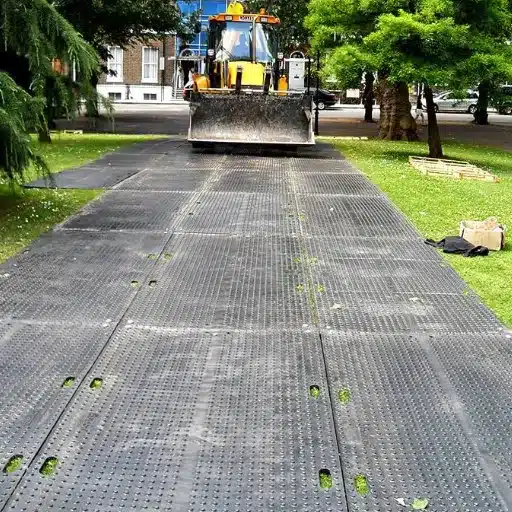
Consider a six-month construction project requiring 50 standard HDPE mats:
Rental path: 50 mats x $100 per month x 6 months = $30,000 base rental. Add delivery and pickup at $20 per mat each way = $2,000. Total: $32,000.
Purchase path: 50 mats x $80 FOB per mat = $4,000. Add international shipping at $1,500 per container = $1,500. Total: $5,500.
The purchase cost is recovered before the end of the rental. Every month after that, rental costs accumulate while the purchased mats remain in service at zero marginal cost.
For a domestic retail purchase at $200 per mat, the 50-mat purchase cost is $10,000. Break-even against rental occurs at roughly month four. After that, the purchased fleet generates a positive return.
Hidden Costs of Ownership
Owning mats is not free. Transport and handling between project sites costs 15−15−30 per mat per move, depending on distance and equipment. Cleaning and inspection between uses adds labor time. Storage requires yard or warehouse space, which carries an opportunity cost.
Replacement rates matter. HDPE mats under normal construction use experience 2-5% annual loss or damage. Timber mats see 10-20% annual replacement due to rot, splitting, or moisture absorption. Plywood is essentially disposable in wet conditions.
Hidden Costs of Rental
Rental contracts carry their own hidden charges. Delivery and pickup fees are standard, often 50−150 per load, regardless of mat count. Damage waiver charges add 10-15% to the base rental. Minimum rental periods, typically one week or one month, force payment even if the mat is only needed for a few days. Cleaning fees on return penalize mats that arrive with mud or debris.
10-Year Total Cost of Ownership by Material
TCO Comparison Table
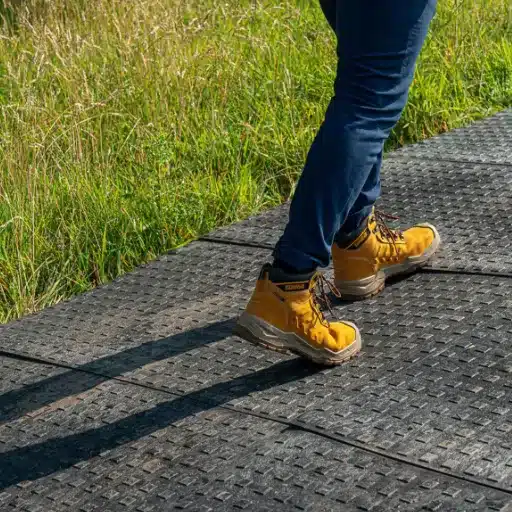
The table below shows the 10-year ground protection mats cost and ground protection mats vs plywood cost by material, assuming 100 uses per year and including replacement cycles.
| Material | Upfront Cost | Lifespan | Annual Replace | 10-Yr Total | Cost Per Use |
|---|---|---|---|---|---|
| HDPE (20 mm, import) | $70/mat | 15-25 yr | 2% | $84/mat | $0.84 |
| HDPE (20 mm, domestic) | $200/mat | 15-25 yr | 2% | $240/mat | $2.40 |
| Composite (25-38 mm) | $400/mat | 10-15 yr | 5% | $600/mat | $6.00 |
| Timber/Hardwood | $250/mat | 3-5 yr | 20% | $2,500/mat | $25.00 |
| Plywood (treated) | $28/mat | 1-2 yr | 50% | $2,800/mat | $28.00 |
10-year total includes upfront cost plus replacement panels at stated annual rates. Cost per use assumes 100 deployments per year. Does not include transport or storage.
The HDPE ground protection mats’ cost per use is dramatically lower than alternatives. Even at domestic retail pricing, HDPE costs $2.40 per use compared to timber at $25.00 and plywood at $28.00. For a contractor deploying 50 mats 100 times per year, HDPE saves over $110,000 per year compared to plywood.
Avoided Cost Offsets
The TCO table above only covers mat costs. The avoided costs of using proper ground protection are often higher than the mat investment itself.
Soil restoration after rutting or compaction damage costs $2-$5 per square foot. A 500-foot access road, 12 feet wide, is 6,000 square feet. Rutting remediation costs $12,000-$30,000. HDPE mats prevent this entirely.
Turf replacement on landscaped or grassed areas runs 1−1−3 per square foot. Event venues and residential construction sites face this cost repeatedly without mats.
Project delay costs from insufficient ground protection range from $500 to $5,000+ per day, depending on equipment idle time and crew standby rates. A single day of crane downtime from a sunken outrigger pad exceeds the cost of an entire mat fleet.
Environmental remediation in protected wetlands or regulated sites carries fines that can reach tens of thousands of dollars. Ground protection mats demonstrate due diligence and reduce regulatory exposure. For the full sustainability analysis, see our guide on the environmental benefits of HDPE ground protection mats.
A project engineer named Amara ran a pipeline job in Nigeria with 200 mats. She initially used plywood at $25 per sheet to save money. After three days of rain, the plywood disintegrated, and her excavator sank into saturated laterite soil. The three-day shutdown cost $12,000 in equipment standby. She switched to HDPE mats at $70 per panel. The HDPE survived the same conditions without failure. Over eight months, her plywood replacement costs would have hit $15,000. The HDPE purchase was $14,000 with zero replacements.
Ground Protection Mats Cost for Export Buyers: Container Loads & Volume Pricing
Container Loading Efficiency
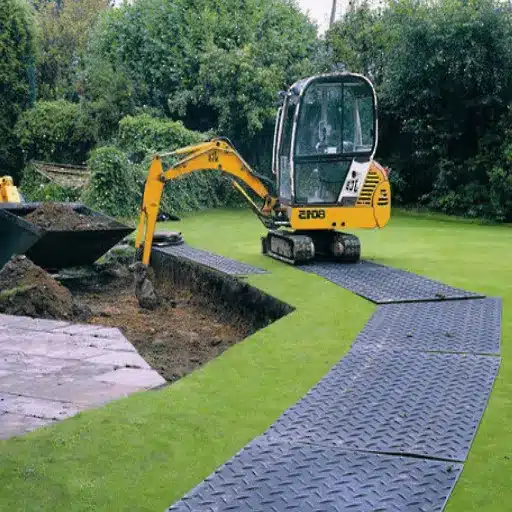
For international buyers, ground protection mats cost economics depend heavily on shipping efficiency. A standard 40-foot high-cube container loads approximately 400 to 500 HDPE mats at 15-20 mm thickness, depending on panel dimensions and stacking configuration. Thicker 30-40 mm panels reduce the count to roughly 250-350 per container.
Effective freight cost per mat from China to EU or North American ports ranges from $15 to $30, depending on destination and shipping rates. This means a $50 FOB mat lands at roughly $65-$80 per unit, still 60% below domestic retail pricing.
Volume Pricing Structures
Manufacturer-direct pricing follows clear volume tiers. A 100-panel order might be priced at $75 per mat. A 500-panel order typically drops to $55-$60. Orders of 1,000+ panels for major infrastructure projects can reach $45-$50 per mat for standard 20 mm HDPE.
Custom specifications, such as non-standard colors, embossed logos, or unique connection patterns, may carry modest tooling or setup fees at low volumes. At 500+ panels, these customizations are often absorbed into standard pricing.
Why Manufacturer Direct Lowers TCO
Buying direct from the manufacturer eliminates distributor markup of 20-40%. It also enables custom specifications at no premium, consistent batch quality and color matching across large orders, and direct technical consultation on load calculations and mat sizing.
For a contractor or distributor planning a multi-year project pipeline, the container-load approach reduces per-mat cost by 50-70% compared to domestic retail. Over a 10-year fleet lifecycle, this difference amounts to hundreds of thousands of dollars.
Frequently Asked Questions About Ground Protection Mats Cost
What is the cheapest ground protection mat?
Treated plywood is the cheapest upfront at $20-$35 per 4×8 sheet. However, plywood fails quickly in wet conditions and requires frequent replacement. Over any project longer than a few weeks, HDPE mats at $50-$80 FOB deliver a lower total cost due to reusability. For a detailed material comparison, see our HDPE vs composite ground protection mats analysis.
How much does it cost to rent ground protection mats for a month?
Standard HDPE 4×8 mats rent for $75-$150 per month per panel. Heavy-duty composite mats rent for $150-$300 per month. Timber crane mats rent for $400-$800 per month. Delivery and pickup fees, damage waivers, and cleaning charges add 20-30% to base rental rates.
Is it cheaper to buy or rent ground protection mats?
Purchase is cheaper for projects longer than 2-4 months or for contractors with recurring work. Rental is cheaper for short-term projects under three months or one-off events. The break-even point for a 50-mat fleet against $100-per-month rental is approximately month two for import purchase and month four for domestic retail purchase.
How long do HDPE ground protection mats last?
HDPE ground protection mats last 15-25 years under normal construction conditions. UV-stabilized HDPE resists chemical exposure, moisture, and temperature cycling. The primary failure modes are extreme point loads beyond rated capacity and connection hardware wear, not material degradation.
What is the cost per square foot for ground protection?
HDPE mats cost $1.56-$2.50 per square foot at import volume pricing, $6.00-$6.40 at domestic retail, and $9.00-$18.00 for premium composite systems. Timber mats cost $4.50-$12.50 per square foot. Plywood costs $0.60-$1.10 per square foot but requires frequent replacement.
Conclusion
Ground protection mat cost analysis must look beyond the per-panel price tag. The purchase price is just the down payment. The real cost story unfolds over years of use, replacement cycles, transport, and the avoided costs of soil damage and project delays.
HDPE mats dominate the economics. At $0.84-$2.40 per use over a decade, they cost one-tenth as much per deployment as timber or plywood. The break-even against rental occurs within months, not years. For international buyers, container-load purchasing cuts per-mat cost by 50-70%.
The five key numbers to remember: $50-$200 per panel purchase price. $25-$100 per week rental rates. Month two break-even for import purchase. $0.84 per use for HDPE over 10 years. And $15-$30 per mat in container shipping from the manufacturer to the port.
At Shanxi Shengxing, we manufacture HDPE ground protection mats under ISO9001 quality systems, with load testing to ASTM D4020 standards. We retain production samples for five years and provide container-optimized loading plans with every technical quote.
Need a TCO analysis for your project? Browse our HDPE ground protection mats for detailed specifications, or request a technical quote with your project duration, mat count, and delivery location. Our engineering team provides 10-year TCO projections, container loading calculations, and export-optimized pricing for construction and infrastructure projects worldwide.