A 200-meter temporary haul road can be built with HDPE mats for roughly $12,000 or rented for $8,000 per month. The right pricing model depends on project duration, reuse plans, freight, and hidden ownership costs that buyers often overlook.
This guide breaks down temporary roadway mats cost by material, thickness, acquisition model, and geography. You will see purchase prices, rental rates, break-even math, and a 10-year total cost of ownership comparison. You will also learn why a lower per-panel price does not always mean lower project cost.
Key Takeaways
- HDPE temporary roadway mats cost $35–$250+ per panel at volume, depending on thickness.
- Rental rates range from $75–$150 per month for standard HDPE and $150–$300 for composite.
- Purchase beats rental after roughly 4–6 months for a typical 100-mat project.
- Timber and plywood mats have lower upfront cost but higher replacement and labor cost over time.
- Export buyers can cut landed cost by sourcing container loads directly from manufacturers.
Temporary roadway mat costs vary by material, thickness, load capacity, and acquisition model.
How Much Do Temporary Roadway Mats Cost to Buy?
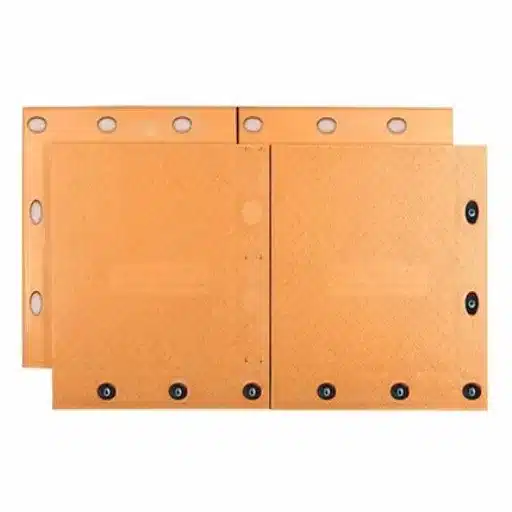
Purchase prices vary widely by material, thickness, panel size, and order volume. The numbers below reflect manufacturer-direct or volume FOB pricing. Retail distributor prices may be 40–100% higher.
For a complete overview of materials, sizes, and applications, see our complete guide to temporary roadway mats.
This article focuses specifically on the cost of temporary roadway mats and the total cost of ownership.
Cost Per Panel by Material and Thickness
| Material | Thickness | Typical Size | Price Per Panel | Price Per m2 |
|---|---|---|---|---|
| Plywood/OSB | 18 mm | 1.2 m x 2.4 m | $15–$40 | $5–$14 |
| HDPE | 10–12 mm | 1.2 m x 2.4 m | $35–$75 | $12–$26 |
| HDPE | 15–20 mm | 1.2 m x 2.4 m | $60–$150 | $21–$52 |
| HDPE | 25 mm+ | 1.2 m x 2.4 m | $120–$250+ | $42–$87+ |
| Timber bog | 100–200 mm | 3.0 m x 1.0 m | $80–$400+ | $27–$130+ |
| Composite | 25–100 mm | 2.1 m x 3.0 m+ | $300–$4,200+ | $48–$650+ |
HDPE 15–20 mm is the most common specification for truck and light-crane access roads. The 20 mm thickness segment holds approximately 36.8% of the global ground protection mat market share because it balances load capacity, weight, and cost.
Cost Per Square Meter Normalization
For project budgeting, price per square meter is more useful than price per panel because panel sizes differ.
| Material | Price Per m2 | Load Capacity Range |
|---|---|---|
| Plywood/OSB | $5–$14 | Pedestrian / light vehicles |
| HDPE 12 mm | $15–$25 | 40–80 tons |
| HDPE 20 mm | $25–$45 | 80–120 tons |
| Timber bog | $25–$80 | 50–300+ tons |
| Composite | $50–$250+ | 100–600+ tons |
A civil engineer in Alberta used this normalization to compare bids. One supplier quoted $90 per 4′ x 8′ HDPE panel. Another quoted $210 per larger composite panel. After converting to cost per square meter, the HDPE option was $31/㎡, and the composite option was $67/㎡.
The project only needed 80-ton access, so the HDPE cut material cost was reduced by more than half without reducing performance. Comparing ground protection mats’ cost per square meter also reveals whether a seemingly expensive large panel actually delivers lower coverage cost than smaller alternatives.
Factors That Affect Purchase Price
The main drivers of temporary roadway mats cost include:
- Thickness and load capacity. Thicker mats use more material and support heavier loads.
- Panel size and weight. Larger panels cover more area but increase freight and handling costs.
- Connection system. Interlocking edge systems add cost compared to plain overlap panels.
- Material grade. Virgin HDPE costs more than recycled blends but offers longer UV and impact resistance.
- Surface texture. Embossed or traction-patterned surfaces may carry a small premium.
- Volume and MOQ. A 1,000-panel order typically receives 30–50% lower per-unit pricing than a 100-panel order.
- Custom specifications. Color, logo embossing, or special dimensions are usually available at volume without a significant premium.
Temporary Roadway Mats Rental Cost: What to Expect
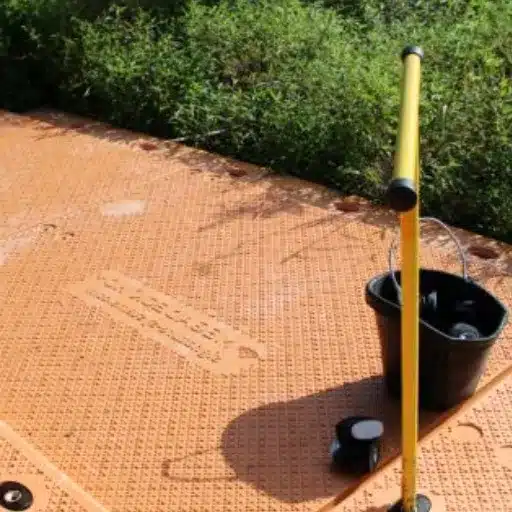
Rental is attractive for short-term or one-off projects. The table below shows typical monthly rental rates for temporary roadway mats in North American markets. These temporary roadway mats rental cost ranges help you budget before requesting quotes.
| Mat Type | Weekly Rate | Monthly Rate |
|---|---|---|
| Standard HDPE 4′ x 8′ | $25–$50 | $75–$150 |
| Heavy-duty HDPE 20 mm+ | $40–$75 | $120–$225 |
| Composite mats | $50–$100 | $150–$300 |
| Timber crane mats | $100–$200 | $300–$600 |
Rental rates vary by region, rental duration, transport distance, and damage waiver terms. Buyers evaluating temporary access mats cost should compare regional transport charges, because delivery distance often exceeds the monthly rental rate on small orders. National rental providers such as United Rentals, Sunbelt Rentals, and Herc Rentals dominate the U.S. market. Regional specialists may offer lower transport costs for local projects.
When Rental Makes Sense
Rental is usually the better temporary roadway mats cost model when:
- The project lasts less than 3–6 months.
- The mats are needed for a single, non-repeating job.
- Capital budget is constrained, or procurement cycles are short.
- The buyer wants to test different mat specifications before committing to purchase.
For projects with repeated seasonal work, purchase often wins even if each deployment is short, because the mats can be stored and reused.
Buy vs Rent Temporary Roadway Mats: The Break-Even Math
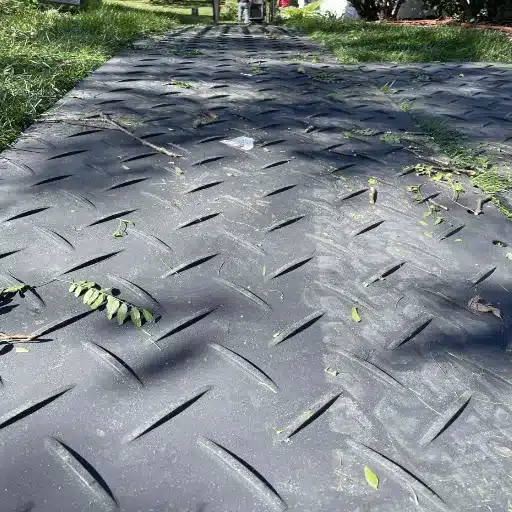
The simplest way to decide between buying and renting is to compare the cumulative rental cost against the purchase cost plus freight. This buy vs rent temporary roadway mats analysis shows why duration is usually the deciding factor.
Example: 100-Mat Project for 6 Months
| Cost Item | Purchase Path | Rental Path |
|---|---|---|
| Mat cost (100 panels x $80) | $8,000 | — |
| Freight to site | $2,500 | included or billed separately |
| Monthly rental (100 x $100) | — | $10,000 |
| Cleaning/return fees | — | $500 |
| 6-month total | $10,500 | $10,500+ |
In this simplified case, the break-even point lands near month 6. After that, every additional month of rental costs more than ownership. If the mats are reused on a second project, the purchase path becomes significantly cheaper.
Hidden Costs of Ownership
Owners should budget for these ongoing costs:
- Transport and handling. $15–$30 per mat per move, depending on distance.
- Cleaning and inspection. Pressure washing and damage checks between projects.
- Storage. Yard space or warehouse cost for idle mats.
- Replacement. HDPE replacement rates are typically 2–5% per year; timber can reach 10–20% in wet conditions.
- Disposal or recycling. HDPE is recyclable; timber disposal cost rises with moisture absorption and rot.
Hidden Costs of Rental
Renters should watch for:
- Delivery and pickup fees. These can add $500–$2,000 depending on distance.
- Damage waiver charges. Often 5–10% of rental value.
- Minimum rental periods. Some providers require 1-month minimums per panel.
- Cleaning fees on return. Returned mats may incur cleaning charges.
- Late return penalties. Daily rates can exceed weekly rates if mats are kept past term.
Decision Framework
| Scenario | Recommended Model |
|---|---|
| Single project under 3 months | Rent |
| Single project 4–6 months | Calculate break-even; often buy |
| Repeating projects or multi-year use | Buy |
| Need maintenance and storage handled | Lease or rent |
| Uncertain specifications | Rent first, then buy |
10-Year Temporary Roadway Mats Cost: Total Cost of Ownership by Material
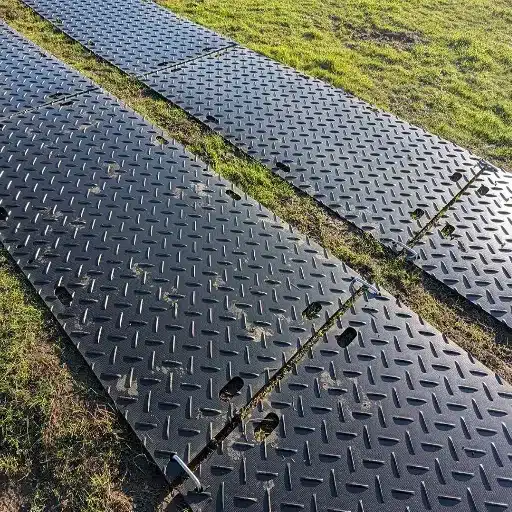
Total cost of ownership includes purchase price, freight, installation, maintenance, replacement, and disposal. It also includes avoided costs such as soil repair and project delays.
TCO Comparison (100 Mats, 100 Uses Per Year)
| Material | Upfront Cost | Lifespan | Annual Replace | 10-Yr Maintenance | 10-Yr Total | Cost Per Use |
|---|---|---|---|---|---|---|
| Plywood/OSB | $2,500 | 1–2 years | $1,250 | $500 | $15,000+ | $1.50+ |
| Timber bog | $15,000 | 3–5 years | $3,000 | $2,000 | $52,000 | $0.52 |
| HDPE 20 mm | $10,000 | 10–15 years | $400 | $1,000 | $15,400 | $0.15 |
| Composite | $35,000 | 10–15 years | $1,000 | $1,500 | $46,500 | $0.47 |
Costs are illustrative for a 100-mat fleet. Actual TCO depends on load, ground conditions, climate, and handling.
HDPE offers the lowest cost per use over a 10-year horizon because of its long lifespan and low replacement rate. Timber has a lower upfront cost but requires frequent replacement and absorbs moisture, which increases handling and disposal costs.
Composite has the highest upfront cost but is justified for heavy crawler cranes and long-term installations where HDPE would fail or require replacement.
Avoided Cost Offsets
Temporary roadway mats also create savings by preventing damage that would otherwise require remediation:
- Soil restoration. Rutting repair can cost $2–$5 per square foot on soft ground.
- Turf replacement. Restoring grass or landscaped areas costs $1–$3 per square foot.
- Project delays. Equipment downtime can cost $500–$5,000+ per day on remote sites.
- Aggregate road construction. Building and later removing a gravel haul road can cost $15–$40 per linear meter, plus re-graveling cycles.
- Environmental remediation. In protected areas, soil disturbance can trigger regulatory fines and remediation orders.
A pipeline project in Nigeria illustrates this. The contractor initially used plywood mats on wet clay at $25 per panel. Over 8 months, the plywood was replaced three times, costing $15,000. An HDPE option at $70 per panel cost $14,000 upfront and required no replacements.
The HDPE choice saved material cost and avoided downtime from mat failure. Cases like this show why the lowest temporary roadway mats price per panel rarely produces the lowest project cost.
Factors That Affect Temporary Roadway Mats Cost
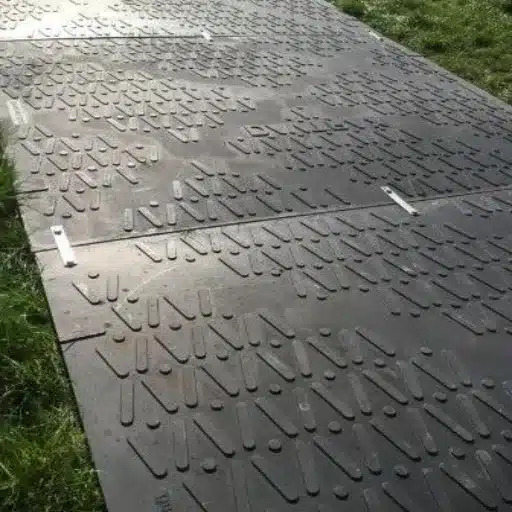
Understanding cost drivers helps buyers avoid over-specification or under-specification. These factors affect both the temporary roadway mats price and the total project budget.
Material Selection
HDPE is the most cost-effective material for rubber-tired vehicles and medium loads. Composite costs more but is necessary for heavy crawler cranes and long-term roads. Timber is competitive for steel-tracked equipment but requires more maintenance. Plywood is the cheapest upfront and the shortest lived. For a full material comparison, see our guide to composite vs HDPE temporary roadway mats or our timber bog mats vs temporary roadway mats comparison.
Thickness and Load Capacity
Over-specifying thickness wastes budget. Under-specifying risks may lead to failure, project delays, and subgrade damage. Match the mat thickness to the heaviest equipment load and ground condition.
Panel Size and Connection Systems
Larger panels reduce installation labor but require equipment to place. Interlocking systems add cost but prevent shifting under braking and turning.
Project Duration and Frequency of Use
Cost per use drops sharply with reuse. A mat used 100 times over 10 years costs a fraction per use compared to a mat used once and discarded.
Site Conditions
Soft clay, peat, or saturated soils may require a geotextile separation layer, adding roughly $1–$3 per square meter. Without it, mats sink or shift, increasing maintenance and replacement costs.
Volume and Sourcing
Manufacturer-direct pricing is typically 20–40% lower than distributor pricing for the same specification. Volume tiers, custom colors, and container loading plans further reduce landed cost.
Global Export Buyer Economics: Container Loads & Volume Pricing
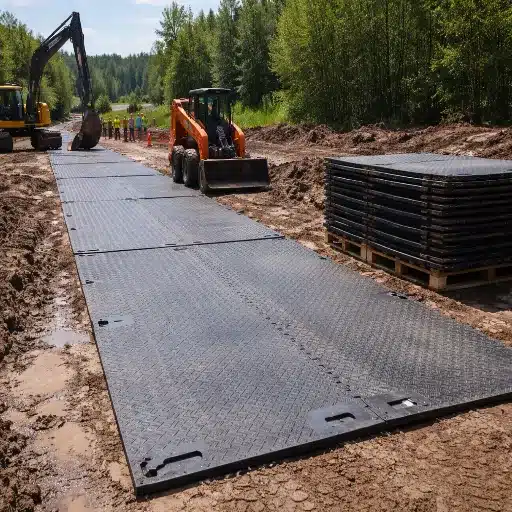
For international buyers, pricing for temporary roadway mats is heavily influenced by freight efficiency and volume tiers.
Container Loading Efficiency
A 40-foot high-cube container holds approximately:
| Thickness | Panels Per 40′ HC | m2 Per Container |
|---|---|---|
| HDPE 12 mm | 450–550 | 1,300–1,600 |
| HDPE 20 mm | 300–400 | 850–1,150 |
| HDPE 25 mm+ | 200–300 | 575–850 |
| Composite | 40–60 | 250–400 |
Road width, turning radius, and corridor length also affect how many panels a project needs. For design guidance that impacts total material cost, see our temporary roadway design guide.
Freight cost per mat from China to EU or U.S. ports typically ranges from $15–$30 depending on volume and destination.
Volume Pricing Tiers
| Order Volume | Typical Unit Cost Impact |
|---|---|
| 100 panels | Base price; higher per-unit cost |
| 500 panels | 15–25% reduction |
| 1,000+ panels | 30–50% reduction |
Why Manufacturer Direct Lowers TCO
Sourcing directly from the manufacturer offers several cost advantages:
- Eliminates distributor markup of 20–40%.
- Allows custom specifications at volume without premium.
- Provides consistent batch quality and color matching.
- Includes export packaging and container loading optimization.
- Enables direct technical consultation for specification selection.
At Shanxi Shengxing, we provide FOB quotes, container loading plans, and customized HDPE and composite temporary roadway mats for global infrastructure, energy, and utility projects. We also support buyers comparing composite vs HDPE temporary roadway mats for heavy-equipment roads.
Browse our HDPE temporary roadway mats catalog for available sizes and specifications.
Frequently Asked Questions About Temporary Roadway Mats Cost
How much do temporary roadway mats cost?
Temporary roadway mats cost $35–$250+ per panel for HDPE, $300–$4,200+ for composite, and $80–$400+ for timber at volume. Cost per square meter ranges from $12–$87 for HDPE, $48–$650+ for composite, and $27–$130+ for timber.
What is the cheapest temporary roadway mat?
The cheapest option depends on how long the mats will be used:
- Plywood/OSB: $5–$14/㎡ upfront, but shortest lifespan and highest replacement cost.
- HDPE 15–20 mm: $21–$52/㎡, best 10-year cost per use for most projects.
- Timber bog: $27–$130+/㎡, suited for steel-tracked equipment.
- Composite: $48–$650+/㎡, highest upfront but justified for heavy loads and long-term roads.
How much does it cost to rent temporary roadway mats for a month?
Standard HDPE mats rent for $75–$150 per month. Heavy-duty HDPE rents for $120–$225 per month. Composite mats rent for $150–$300 per month. Timber crane mats rent for $300–$600 per month.
Is it cheaper to buy or rent temporary roadway mats?
For projects shorter than 3 months, renting is usually cheaper. For projects longer than 4–6 months or for repeated use, buying is cheaper. A 100-mat project typically reaches break-even around month 6.
How long do temporary roadway mats last?
Quality HDPE mats last 10–15 years. Composite mats last 10–15+ years. Timber bog mats last 3–5 years in wet conditions. Plywood often lasts less than one year on active construction sites.
What is the cost per square meter for temporary roadway mats?
HDPE temporary roadway mats cost $12–$87 per square meter depending on thickness. Composite mats cost $48–$650+ per square meter. Timber bog mats cost $27–$130+ per square meter.
What factors affect temporary roadway mat price?
The main factors are material, thickness, load capacity, panel size, connection system, virgin vs recycled content, surface texture, order volume, freight distance, and custom specifications.
Conclusion
In summary, temporary roadway mat pricing depends on more than the price per panel. Material, thickness, load capacity, acquisition model, freight, and reuse all determine the true project cost. HDPE mats offer the best balance of upfront cost and long-term value for most rubber-tired and medium-load applications. Composite mats justify their higher price for heavy crawler cranes and long-term roads. Timber remains relevant for steel-tracked equipment, while plywood is rarely the cheapest option when replacement and downtime are counted.
For projects under 3 months, rental keeps capital free. For longer or repeating projects, purchase typically wins. Manufacturer-direct sourcing and container-load volumes can reduce landed cost by 20–40% compared to distributor channels.
If you need a project-specific temporary roadway mats cost estimate, contact Shanxi Shengxing engineering support. We provide material recommendations, load calculations, volume pricing, and container loading plans for global delivery.
Request a technical quote or browse our HDPE temporary roadway mats catalog to get started.