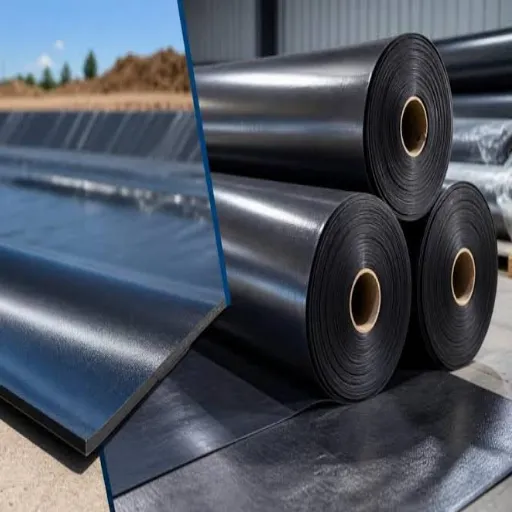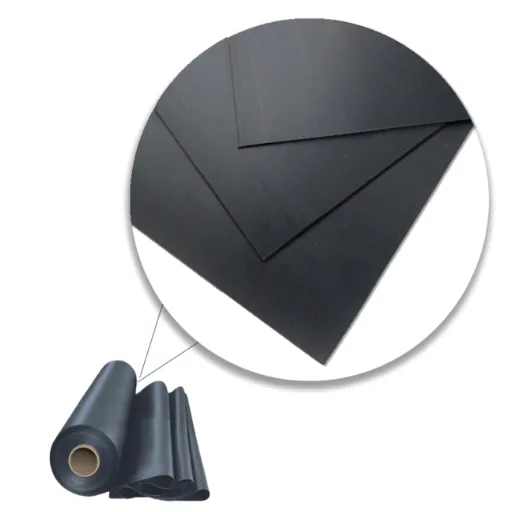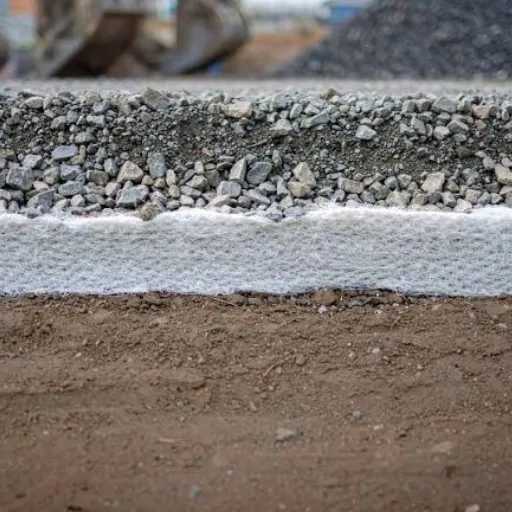
LLDPE geomembrane prices in November 2026 run about USD 0.80–1.40/m² at 0.75 mm, USD 1.10–1.80 at 1.0 mm, USD 1.60–2.60 at 1.5 mm, and USD 2.30–3.60 at 2.0 mm, ex-works and material only. A 1.5 mm liner installed typically lands between USD 2.10 and USD 5.60/m² before freight and duty.
The published range for 1.5 mm is a 63% spread for the same nominal thickness. The difference is rarely the resin. It is what each quote leaves out.
This guide gives you the number behind the range: the resin floor, the thickness normalization, the freight arithmetic, and the scope checklist. The LLDPE geomembrane guide covers selection.
Key Takeaways
- November 2026 ex-works prices for smooth black LLDPE run from USD 0.80–1.40/m² at 0.75 mm to USD 2.30–3.60/m² at 2.0 mm; the table below gives each gauge.
- Resin alone in a 1.5 mm sheet costs about USD 1.56–1.59/m² at import parity, so the bottom of that range leaves almost nothing for carbon black, conversion, testing, or margin.
- Normalize every quote to USD per m² per mm or USD per kg. The November benchmark is about USD 1.40–1.50 per m² per mm.
- Installation adds roughly USD 0.50–3.00/m², or 15–50% of material cost on simple sites.
- The cheapest quote is usually thinner, lower-spec, or narrower in scope, not a better price for the same product.
LLDPE Geomembrane Price: How Much Does It Cost?
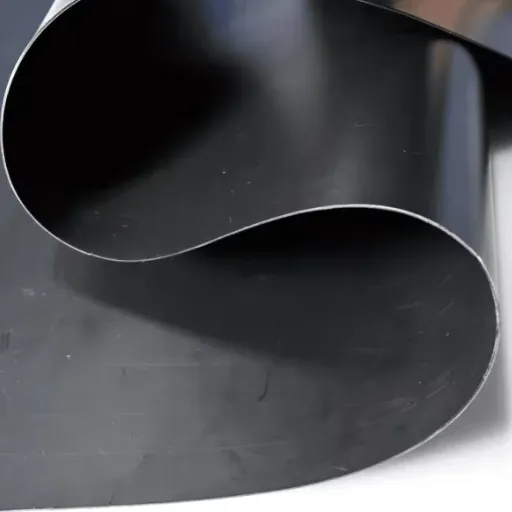
Start with a price table that states its basis. These figures come from an ex-works guide updated November 7, 2026. They describe standard black, smooth sheet made with virgin resin. They do not prove GM17 compliance, and they exclude everything after the factory gate.
Material Cost by Thickness
| Thickness | Typical material price, USD/m² | USD/sq ft |
|---|---|---|
| 0.75 mm | 0.80–1.40 | 0.07–0.13 |
| 1.0 mm | 1.10–1.80 | 0.10–0.17 |
| 1.5 mm | 1.60–2.60 | 0.15–0.24 |
| 2.0 mm | 2.30–3.60 | 0.21–0.33 |
Basis: indicative EXW, not a binding quotation. Excludes freight, insurance, duty, earthworks, installation, welding, protection geotextile, field testing, textured sheet, custom colours, and special roll configurations. Source: Planetliner price guide, updated November 7, 2026.
For 1.5 mm, the material range is USD 1.60–2.60/m². Add installation at USD 0.50–3.00/m² and the arithmetic installed range is USD 2.10–5.60/m². Across the four gauges, the installed range runs from USD 1.30–4.40/m² at 0.75 mm to USD 2.80–6.60/m² at 2.0 mm. That is the sum of two published ranges, not a quote.
Most budgets fail in the gap between material and installed cost. Buyers compare material prices, then discover that welding, testing, and site work are separate line items. The geomembrane price guide covers the material-agnostic version of this stack.
Need a like-for-like number? Send the panel layout and we will quote the liner and the seams together, so material and installation arrive in one scope. Request a technical quote.
What Sets the LLDPE Geomembrane Price
Four inputs explain most of the LLDPE geomembrane price spread: resin, thickness, specification, and order size. Freight and installation come later, and they can double the landed number.
The Resin Floor
LLDPE sheet is mostly resin. At a formulated density of 0.93 g/cm³, one square metre of 1.5 mm sheet contains about 1.40 kg of material. China import LLDPE was USD 1,120–1,140/t in the week to November 12, 2026, according to Mysteel and Longzhong. That puts the resin in one square metre at USD 1.56–1.59.
The domestic benchmark tells the same story. SunSirs recorded LLDPE at RMB 9,533/t on November 11, down 8.41% in a week. SCI99 put the national mainstream range at RMB 9,260–9,950/t on November 12.
| Thickness | Sheet mass, kg/m² | Resin cost at USD 1.12–1.14/kg | Published material range | Resin share at midpoint |
|---|---|---|---|---|
| 0.75 mm | 0.70 | 0.78–0.80 | 0.80–1.40 | about 72% |
| 1.0 mm | 0.93 | 1.04–1.06 | 1.10–1.80 | about 73% |
| 1.5 mm | 1.40 | 1.56–1.59 | 1.60–2.60 | about 75% |
| 2.0 mm | 1.86 | 2.08–2.12 | 2.30–3.60 | about 71% |
The low end of every published range sits within a few cents of the resin cost. At 1.5 mm, USD 1.60/m² leaves one to four cents for carbon black, additives, conversion, energy, labor, testing, packaging, and margin. Something has to give.
A producer can buy resin below import parity or use the 10% rework GM17 allows. Neither is automatically wrong. A quote below the floor is not proof of cheating; it is a different product or a different deal, and the quote should say which.
Thickness and Density
Material cost rises almost linearly with thickness because mass rises linearly. The midpoints show it: 1.0 mm at USD 1.45/m², 2.0 mm at USD 2.95/m², roughly double. The geomembrane thickness guide explains how to choose the gauge; the price consequence is simpler.
Doubling thickness doubles material, not installation. A 1.0 mm sheet at USD 1.45/m² plus USD 1.50/m² installation costs USD 2.95/m² installed; a 2.0 mm sheet at USD 2.95/m² plus the same installation costs USD 4.45/m². Material doubles; installed cost rises about 51%.
Density matters less. GM17 caps formulated density at 0.939 g/cm³, and a 0.92 g/cm³ sheet uses about 2% less mass than one at 0.94. That is a small price difference, not the 10–20% some comparisons attribute to LLDPE versus HDPE.
Specification and Testing
A generic polyethylene sheet and a GRI-GM17 sheet can look the same in a photograph. They do not cost the same. The GRI-GM17 specification requires oxidative induction time, oven aging, UV resistance, carbon black content and dispersion, puncture, tear, and seam strength. Each test has a frequency, and each frequency has a cost.
A supplier that publishes only thickness, density, and tensile strength is not offering the same product as one that publishes the full GM17 table. Ask for test reports for the production run, not a generic certificate; the price difference is often the testing difference.
Quantity, Roll Width, and Surface
Order size changes the unit price. A BPM supplier review puts the discount above 50,000 m² at 15–30%, and stock clearance in January to March can take another 10–25% off. Those are supplier claims, but the direction is real.
Roll width affects yield and seam count: a wider roll cuts field seams and labor but is harder to ship.
Textured sheet is a separate quote. GM17 sets textured elongation at 250% minimum against 800% for smooth, and requires a minimum asperity height. Texturing adds a process step and a premium.
From Factory Gate to Site: Freight, Duty, and Installation
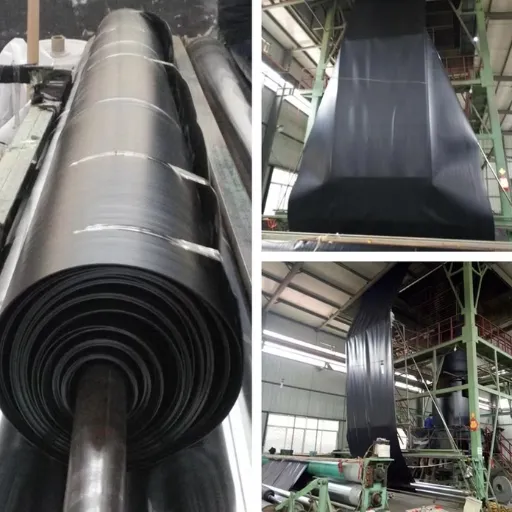
The factory price is the smallest number in the budget. The landed cost is the one that decides whether the project is funded.
What EXW, FOB, CIF, and DDP Include
- EXW: buyer collects at the factory. Excludes export clearance, freight, insurance, duty, and delivery.
- FOB: seller delivers to the port and clears export. Buyer pays ocean freight, insurance, import clearance, duty, and inland transport.
- CIF: seller pays freight and insurance to the destination port. Buyer still pays import clearance, duty, and inland transport.
- DDP: seller delivers to the named place with duty paid. Confirm the exact delivery point; unloading is often excluded.
Two quotes at the same number can be 20–30% apart once the Incoterm is normalized, so ask every supplier to quote the same term and delivery point.
Freight per Square Meter
If the container is weight-limited, use this formula:
Freight per m² = freight per shipment ÷ (total kg ÷ (thickness in mm × 0.93))
A shipment carrying 25,000 kg of 1.5 mm sheet contains about 17,900 m². At USD 3,000 freight, that is USD 0.17/m². The same weight of 1.0 mm sheet holds 26,900 m², so freight falls to USD 0.11/m².
If the container is volume-limited, roll diameter, width, and packaging decide the payload. Ask your forwarder which limit applies.
Duty is separate. The HS code and rate depend on product and destination; confirm them with a customs broker. A quote that excludes duty is not a landed cost.
Installation and CQA
Installation covers labor, welding, seam testing, equipment, site preparation, anchor trenches, and pipe penetrations. A 2026 supplier guide puts the range at USD 0.50–3.00/m²; another puts non-material costs at 15–50% of material.
A filed 2016 Florida DEP closure estimate shows the split in a real project: 40 mil textured LLDPE at USD 2.20/m² delivered and installation at USD 1.29/m². The numbers are dated; the ratio is not. Installation was about 59% of the material cost.
Construction quality assurance is a separate scope. Destructive seam tests, air channel tests, and electrical leak location add cost, and they are the cheapest part of the project when they catch a defect. Ask whether the installation quote includes them. The geomembrane welding and seam testing guide explains what the tests prove.
Why Two Quotes for the Same Liner Differ
Two quotes can both say “1.5 mm LLDPE” and describe different products. The label is a material family, not a specification.
Different Thickness, Different Standard, Different Scope
Thickness is usually nominal. GM17 allows individual readings to fall below nominal within a defined tolerance, and buyers rarely ask which tolerance the supplier is using. A sheet at the bottom of the tolerance contains less material than one at nominal.
The standard is the second difference. A GM17 sheet carries OIT, oven aging, UV, and carbon black requirements that a generic PE sheet may not. If one quote says “LLDPE geomembrane” and the other says “GRI-GM17 compliant”, they are not the same offer. The scope is the third: material only, welded panels, installation, and installation plus CQA are four different products.
The Normalization Test
Use two formulas before comparing headline prices:
- USD per m² per mm = quoted USD/m² ÷ nominal thickness in mm.
- USD per kg = quoted USD/m² ÷ (thickness in mm × 0.93).
The November benchmark is about USD 1.40–1.50 per m² per mm, or USD 1.50–1.60/kg, at the midpoint of the published range. A quote far below that is worth questioning; a quote far above it may carry a heavier specification, a smaller order, a different origin, or a broader scope.
Quote A is 1.5 mm at USD 1.55/m², EXW, and excludes freight at USD 0.20/m² and seam testing at USD 0.10/m². Its effective price is USD 1.85/m², or USD 1.23 per m² per mm. Quote B is 1.5 mm at USD 1.90/m², CIF, with testing included. Its effective price is USD 1.90/m², or USD 1.27 per m² per mm.
The headline gap is 23%. The normalized gap is 3%.
The scenarios here are composites built from common quote patterns, not client case studies. In one, Aisha, a procurement manager in Mombasa, compared three quotes for a 12,000 m² pond. The cheapest, USD 1.55/m² for 1.5 mm nominal sheet, arrived at an average measured thickness of 1.25 mm and excluded seam testing. Normalized to delivered thickness and scope, it was the most expensive of the three.
Is LLDPE Cheaper Than HDPE?
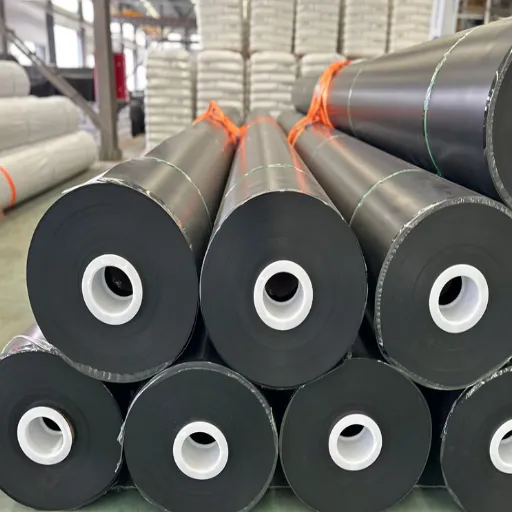
Published comparisons often say LLDPE costs 10–20% less than HDPE at equal thickness. The density math supports only part of that claim. HDPE is formulated at 0.940 g/cm³ or higher; LLDPE is capped at 0.939 and most sheet sits around 0.92–0.94. At equal thickness, the mass difference is roughly 2–4%. A 10–20% gap needs another explanation: resin grade, standard, order size, origin, or scope.
The Specification Argument
The bigger difference is what each standard requires. GM13 HDPE requires 500 hours of stress crack resistance. GM17 LLDPE does not require a stress crack test at all. HDPE also has higher tear and puncture values at the same thickness.
Those requirements cost money. A GM13 HDPE sheet is not a more expensive version of the same product; it is a different product with a different test regime. A GM13 quote compared with a generic LLDPE quote will show a large gap that says nothing about the materials. A GM13 quote compared with a GM17 quote will show a smaller gap, and the difference will be about the application. The HDPE vs LLDPE comparison works through the specification.
If the site involves sustained tensile stress or aggressive chemistry, HDPE’s premium may be the right purchase; if it involves settlement or irregular geometry, LLDPE’s conformability may save more than the price difference.
How to Compare LLDPE Geomembrane Price Quotes
A quote is a scope document, not a price tag. The supplier who gives you the most complete document is often the one who looks most expensive at first.
The 10-Item Quote Checklist
Send the same checklist to every supplier and compare the answers, not the totals.
- Thickness: nominal value, minimum average, and the tolerance basis.
- Standard: GRI-GM17, a project specification, or a generic PE sheet.
- Resin: virgin resin, rework percentage, and confirmation of no post-consumer resin.
- Density: measured formulated density, not a nominal grade.
- Surface: smooth or textured, with asperity height if textured.
- Dimensions: roll width, length, and weight.
- Quantity: square metres including slopes, overlaps, anchorage, and wastage.
- Scope: material only, welded panels, installation, seam testing, and CQA.
- Delivery: Incoterm, named port or place, and who pays duty and inland transport.
- Terms: quote validity, lead time, payment terms, and any resin-increase clause.
The last item matters more than most buyers expect. A US supplier’s budget quote filed with a Florida landfill held material prices for 30 days and allowed verifiable resin increases to pass through before shipment. That is fair, but it means the price is not fixed.
A Worked Budget Example
Take a 12,000 m² pond with a 1.5 mm LLDPE liner. The design allows 10% extra for slopes, overlaps, and anchorage, so the material quantity is 13,200 m².
- Material at USD 2.10/m²: USD 27,720.
- Installation at USD 1.50/m² on the installed area: USD 18,000.
- Freight at USD 0.20/m² on the shipped area: USD 2,640.
- Total before duty, accessories, and CQA: USD 48,360, or about USD 4.03/m² installed.
That is a planning number, not a quote; the point is to show every line so a supplier’s quote fits the same structure.
Ravi, a developer in India, learned the same lesson from the other direction: the design called for 1.5 mm, the specification was raised to 2.0 mm “to be safe”, and the material cost rose about 40%. The liner did not fail, but the extra thickness did not fix the soft spot that caused the settlement; the cushion and subgrade preparation did.
Frequently Asked Questions
How much does LLDPE geomembrane cost per square meter?
In November 2026, smooth black LLDPE costs about USD 0.80–1.40/m² at 0.75 mm, rising to USD 2.30–3.60/m² at 2.0 mm, ex-works and material only. A 1.5 mm liner installed runs about USD 2.10–5.60/m² before freight and duty.
What is the price of 1.5 mm LLDPE geomembrane?
The published material range is USD 1.60–2.60/m² ex-works. At the low end it sits within a few cents of the resin cost alone, so ask what the quote excludes and which thickness tolerance it uses.
Is LLDPE cheaper than HDPE?
At equal thickness, LLDPE uses about 2–4% less mass because its density is lower. Claims of 10–20% savings usually compare different specifications, order sizes, or scopes. GM17 LLDPE and GM13 HDPE are different products.
How much does installation add?
Installation adds roughly USD 0.50–3.00/m², or 15–50% of material cost on simple sites. Complex sites with anchor trenches, penetrations, destructive seam tests, and third-party inspection can exceed that.
What is the minimum order quantity?
MOQs vary by supplier, thickness, and roll configuration. Some quote a single roll; others require a full container or 10,000 m² or more. Ask for pricing at 1,000, 10,000, and 50,000 m² to see the break.
Conclusion
An LLDPE geomembrane price is a range with a basis, not a single number. The November 2026 material range runs from about USD 0.80/m² at 0.75 mm to USD 3.60/m² at 2.0 mm, ex-works, before installation, freight, and duty.
Three habits keep a budget honest: check the quote against the resin floor, normalize it to USD per m² per mm or USD per kg, and compare scope, not total. The LLDPE geomembrane range lists the thicknesses we supply; the LLDPE geomembrane guide explains how to choose one.
The cheapest liner is the one that meets the specification at the lowest installed cost. A quote that is 20% cheaper and 20% thinner is not a saving. It is a different project.
Ready to compare like for like? Send your thickness, standard, quantity, delivery point, and panel layout. We will return a quote with the scope and exclusions stated. Request a technical quote.