Define the Silt Curtain RFQ Basis
A silt curtain RFQ checklist should give each supplier the same alignment, site conditions, component requirements and supply boundaries. Its purpose is to obtain comparable offers, with assumptions and exclusions visible before an order is placed.
Two quotations can use the same curtain name yet describe different assemblies. One may include connecting hardware; another may leave it to the installer. A low price per metre tells you little until you reconcile those differences. This guide turns the inquiry into a packet that buyers can issue, suppliers can complete and project teams can review.
Key Takeaways
- Measure separate runs and depth transitions before converting length into panel quantities.
- Ask for effective connected length, component details and departures from requirements.
- Assign supply, mooring design, installation and monitoring responsibilities separately.
- Compare delivery and exclusions against the same drawing revision.
Project and Drawing Revision
Start with project name, location, intended function, drawing number and revision. Explain whether the curtain is intended to contain disturbed sediment around work or serve another function. Do not substitute a treatment baffle specification merely because both products hang in water.
Name the applicable project specification and jurisdiction. If a type label appears in the documents, attach its definition. Our turbidity curtain types guide explains why selecting a label is only the beginning of specifying an assembly.
Known Inputs and Open Questions
Record water levels, measured depths, current direction, wave exposure, vessel activity and planned working period. State the source and date of each input. Mark unknowns as open rather than describing an unmeasured location as calm.
Illustrative scenario: Two buyers request the same total length. One describes a sheltered work area; the other expects vessel wakes. Those are different inquiry bases even before anyone chooses components. Neither description alone proves that a particular curtain is suitable.
Prepare this site worksheet before sending an inquiry to Constc Mart. Identify the missing inputs you want clarified and whether you need an indicative offer or a quotation against an approved specification.
Build a Traceable Length Takeoff
Alignment and Segment IDs
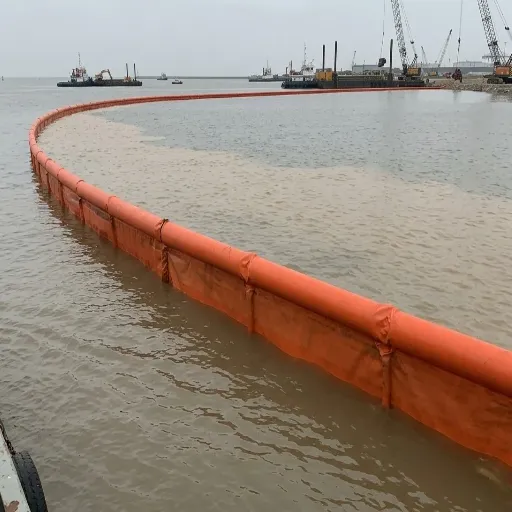
Measure the planned curtain alignment on a controlled drawing. Shoreline distance and water surface area do not describe that alignment. Give every separate run an ID and show its start, end, returns and access openings. Keep a drawing reference beside each quantity so another person can check the takeoff.
Use one unit system throughout the schedule. If the drawing and supplier offer use different units, show both and state which controls. Separate measured alignment length, nominal supplied length and effective connected length. Ask how joints, end fittings and special panels affect the usable assembly.
A practical takeoff sheet needs run ID, drawing reference, alignment length, skirt schedule, end treatment, offered section length and section count. Add columns for assumptions and reviewer initials. Record openings separately; do not silently count an opening as a supplied curtain span or subtract it twice.
Worked Panel Rounding Example
Illustrative scenario: A buyer has three independent runs: A is 42 m, B is 28 m and C is 35 m. Assume, solely for this example, that the supplier confirms 15 m of effective connected length per section. In this example, you can’t cut sections or share spare length between runs.
| Run | Required alignment | Calculation | Whole sections | Offered length |
|---|---|---|---|---|
| A | 42 m | Round 42 / 15 upward | 3 | 45 m |
| B | 28 m | Round 28 / 15 upward | 2 | 30 m |
| C | 35 m | Round 35 / 15 upward | 3 | 45 m |
| Total | 105 m | Sum independent counts | 8 | 120 m |
Dividing the pooled 105 m by 15 m gives seven sections. That hides the separate end conditions and leaves the assumed schedule short of a section. The example is arithmetic, not a recommended panel size, allowance or approved deployment layout. A supplier may offer custom sections, but that requires a revised arrangement and price.
Do not treat the difference between 105 m and 120 m as a universal waste factor. Ask where surplus length would go and whether the project designer accepts that arrangement. A custom end section may be preferable to an unplanned loop, but it must appear in the returned schedule.
Depth Transitions and Phased Work
Tie each skirt-depth zone to the same run IDs and survey reference. The silt curtain depth guide provides the separate selection discussion; the RFQ should capture its project-specific outcome rather than impose a generic clearance.
For phases, distinguish maximum concurrent use from total length across the project. Claim reuse only after accounting for recovery, inspection, relocation and compatible connections. Ask the supplier to reconcile your segment schedule with its offered effective lengths before you compare totals.
Turn Site Inputs Into a Specification Schedule
Skirt and Flotation Fields
Send a requirement-and-response table rather than a list of product names. ACME’s dimensional quotation form illustrates the need to state geometry and end details. Its choices describe that supplier’s offer; they are not specifications for every project.
The following is a buyer worksheet, not an engineered design. Populate the requirement column from approved project documents. Require the supplier to complete the offered-detail column even where it believes the product complies.
| Field | Project requirement to enter | Supplier return to request |
|---|---|---|
| Alignment and sections | Run IDs and required lengths | Effective lengths and panel schedule |
| Skirt | Depth zones and reference level | Finished depths and transition details |
| Flotation | Project design requirement | Float dimensions, buoyancy basis and arrangement |
| Fabric and seams | Specified properties and test basis | Datasheet and seam construction |
| Load components | Required load path and interfaces | Cable or webbing, terminations and connection detail |
| Ballast | Specified arrangement | Material, mass basis and attachment |
| Panel connections | Required mating interfaces | Connector drawing and compatibility statement |
| Documentation | Required submittals | Document list, revision and exceptions |
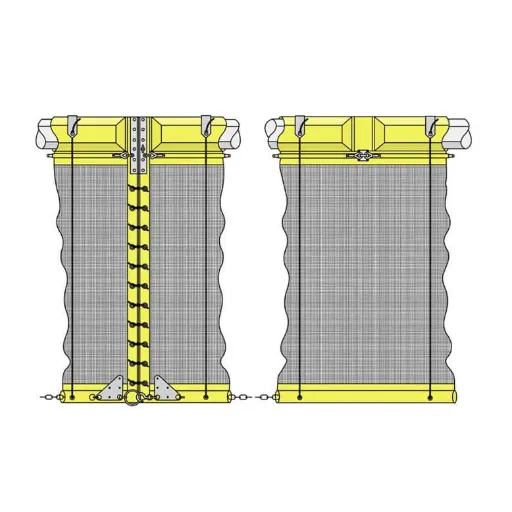
Define the skirt measurement. Is it the fabric drop or a dimension of the assembled curtain? Request a drawing showing the reference points. For flotation, ask what the reported buoyancy describes and which assembly components are included in the calculation.
Structural and Fabric Interfaces
A fabric test value is not a rating for the entire installed system. Keep fabric, seams, load lines, connectors and mooring interfaces identifiable in the offer. Request the test method, units and specimen basis for any reported property; a number without those details is difficult to compare.
Elastec’s SiltMax Type III page combines assembly specifications with site questions. Use that as a prompt to request both product data and exposure inputs. Do not transfer a named supplier’s dimensions, classifications or legacy standard references into another supplier’s compliance statement.
Documentation and Acceptance Basis
For example, a blank connector row can read: project interface drawing reference; offered connector drawing reference; departure from requirement; reviewer decision. This creates a traceable question without inventing a strength value.
Name the person responsible for accepting deviations and the evidence required before release. Separate bid-stage datasheets from later fabrication drawings and delivery inspections. An offer that says only “equivalent” should return to clarification with the exact property or interface needing comparison.
Separate Supply, Mooring and Field Responsibilities

Component Bill and Interfaces
A curtain package and an installed control system have different boundaries. Ask for a component bill tied to the segment schedule. Identify panels, end fittings, joining hardware, ballast, mooring interfaces, spares and any special opening arrangement. Then assign each item a supply status.
Use “included,” “excluded,” “by others” or “to be confirmed,” with a named owner beside each unresolved entry. Do not use a blank cell to mean excluded. A short matrix can prevent two parties from assuming the other will provide the same essential item.
| Work item | Supply status | Responsible party to name | Required clarification |
|---|---|---|---|
| Curtain panels and joining parts | Select status | Supplier or buyer | Match run schedule |
| Anchors, lines and shore interfaces | Select status | Named party | List actual components |
| Mooring design review | Select status | Project designer | Identify review basis |
| Boats, lifting and placement | Select status | Installer | Define access and equipment |
| Inspection and repair provision | Select status | Site team | Set records and spare scope |
| Monitoring and recovery | Select status | Named contractor | Define handover and disposal |
Design and Deployment Boundaries
Who supplies anchors is a different question from who checks the mooring design. Ballast along the curtain skirt does not establish that anchors and lines are supplied or designed. Link the RFQ to the project’s turbidity curtain anchoring decisions rather than inventing a universal anchor spacing.
The IVI installation guideline assigns design responsibility to the relevant engineer or governing agency. Treat it as manufacturer guidance, not a substitute for the project’s own requirements. State who submits the layout, who reviews it and what approval is needed before deployment.
Illustrative scenario: An offer includes panels and connecting parts, but excludes mooring design and deployment equipment. The buyer records those exclusions and asks the named designer and installer to complete their scope. Nothing in that offer establishes the final installed cost or readiness to deploy.
Monitoring and End-of-Use Scope
Specify who provides routine inspections, repair materials, monitoring records and recovery work. Name the monitoring provider and required records using the project plan; see the turbidity monitoring guide for that separate task. Use the site’s inspection and repair checklist to identify record needs, and the removal and reuse guide to define end-of-use tasks. Before issuing the RFQ, give every unresolved responsibility an owner and clarification date.
Normalize Quote Returns and Delivery Assumptions
Line-Item Comparison
Compare each quotation against the same drawing, run schedule and requirement revision. Reconcile quantities before comparing rates. An offer with a lower price per metre may include a different depth, connector arrangement or accessory bill. Record differences explicitly instead of treating them as equivalent supply.
Build a comparison sheet with one row per run and separate rows for special sections, accessories, spares, documentation and services. Show currency, pricing unit, quantity and extension. Mark excluded items as excluded rather than entering zero, which could imply they are supplied free.
Where an alternate product is proposed, retain the compliant-base offer separately if one is available. Ask the supplier to explain the alternate’s effect on interfaces, installation and documentation. A lower total for an alternate is not a like-for-like comparison until those differences are resolved.
Delivery and Handling
Request the delivery place, proposed delivery basis, packing dimensions, package mass and unloading assumptions. Ask whether freight, duties, taxes and handling are included. If using a named trade term, state its named place and applicable edition rather than leaving either implicit.
Distinguish manufacturing readiness, dispatch and arrival at site. Ask what starts the lead-time clock: confirmed drawings, order acceptance or another event? List approvals still outstanding. A requested arrival date is not a delivery commitment until the supplier confirms the basis.
Check delivery arrangements against the installation preparation sequence. Access restrictions and handling equipment belong in the discussion before packing and shipment, not after the curtain reaches the site.
Clarifications and Controlled Revisions
Continue the scope example above: carry the excluded deployment equipment into the comparison register. Ask the installer for its scope separately; do not insert a guessed allowance and describe the resulting total as a firm quotation.
Give each clarification a reference, responsible party, response and disposition. Issue revised quantities to every bidder using the same revision number. Keep superseded offers for traceability, but base the comparison on the latest agreed return. The decision record should explain which scope was compared and which open items still prevent order release.
Silt Curtain RFQ Checklist and Buyer Questions
A Copyable RFQ Packet
Use this packet index with a return schedule. It lets suppliers identify missing information and gives reviewers a consistent place to record departures.
- Project identity, location, intended function and required quotation return date.
- Controlled alignment drawing with run IDs, openings, returns and phase boundaries.
- Length takeoff, depth schedule, survey reference and concurrent-use assumptions.
- Site-condition data, source dates and a register of unknown inputs.
- Specification schedule, required evidence and an explicit deviation column.
- Supply and responsibility matrix, including mooring, deployment and recovery.
- Commercial return sheet covering quantities, delivery, packing and exclusions.
If a depth survey is missing, list its owner and expected issue date. Ask whether the supplier can provide an indicative offer with a stated depth assumption. List quantities and prices to recheck when the survey arrives. Don’t release fabrication from an unapproved depth assumption.
Can I Quote From Total Length Alone?
Total length can start an indicative inquiry, but it cannot define the final section schedule. Separate runs, openings, depth transitions and end connections affect the offer. Attach the alignment and ask the supplier to reconcile required length with effective connected lengths before treating the quantity as ready for ordering.
Does Type III Mean the Same Specification Everywhere?
Do not assume a type label creates an identical specification across suppliers or projects. Attach the definition used by your project and request the offered component details, test basis and deviations. Compare those returns against the actual requirement rather than accepting the label alone as evidence of suitability or approval.
Are Anchors Included With Ballast?
Ballast and anchoring should be separate entries in the inquiry. Ask the supplier to list exactly which anchors, lines, fittings and drawings are included, if any. Name the party responsible for the mooring review and installation. A ballast entry alone does not close those supply or design responsibilities.
Can I Specify One Skirt Depth for the Whole Run?
Only use a single depth when the project’s reviewed geometry and operating conditions support it. Provide the survey reference, water-level basis and any depth changes along the alignment. Ask how the offered assembly handles those transitions. Do not replace that review with a generic rule about touching or clearing the bed.
What Should I Attach to an RFQ?
Attach the controlled alignment, segment takeoff, depth schedule, site inputs, project specification and responsibility matrix. Include a return sheet for offered details, exclusions and delivery assumptions. Where information is missing, identify its owner and the limit it places on the quotation so all suppliers price the same provisional basis.
Use this silt curtain RFQ checklist to prepare your Constc Mart inquiry. Send the run schedule and open questions together, and ask for a return that identifies offered details and exclusions against each requirement.