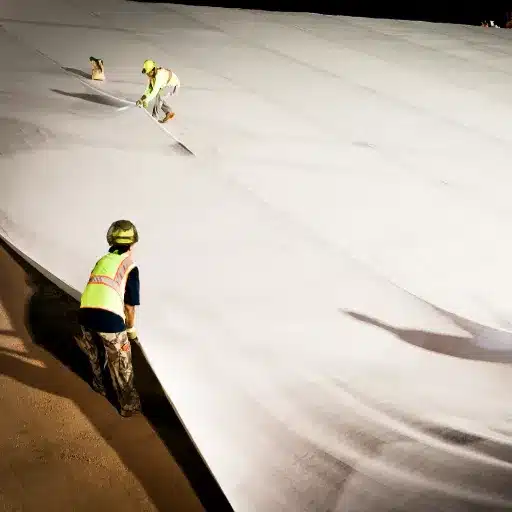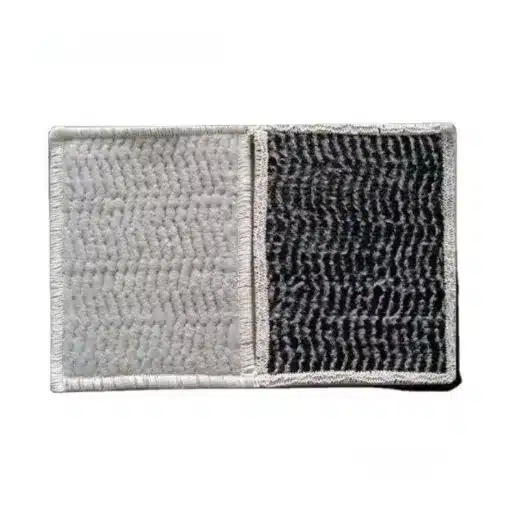
Polypropylene geotextile is the better choice for drainage, filtration, and chemically aggressive soils, while polyester geotextile is the better choice for high-load reinforcement, low-creep structures, and long-term exposed applications. The two polymers look similar on a roll, but their molecular structure creates very different performance limits.
Two rolls of geotextile can look identical on a jobsite. Same white color, similar weight, comparable feel. But if one is polypropylene (PP) and the other is polyester (PET), their long-term performance can diverge dramatically. The wrong polymer in the wrong soil can cut design life in half.
This guide explains how to choose between polypropylene vs polyester geotextile — also called PP vs PET geotextile — using a standards-based geotextile material selection framework. You will learn how density, tensile strength, pH resistance, creep behavior, and UV stability affect material selection. You will also get a decision matrix and procurement checklist you can use on your next project.
For a broader overview of geotextile types and functions, see our geotextile fabric guide.
Key Takeaways
- Polypropylene geotextile resists acids and alkalis across pH 2-13 and is ideal for drainage, filtration, and landfill leachate systems.
- Polyester geotextile offers higher tensile strength, lower creep, and better long-term dimensional stability under load.
- PET hydrolyzes in alkaline soils above pH 9-10, making PP the safer choice in high-pH or wet environments.
- ASTM D4595 wide-width tensile data should be used for reinforcement design, not grab tensile values.
- UV exposure, temperature, soil chemistry, and load duration matter more than initial unit price when selecting a polymer.
What Is Polypropylene Geotextile?
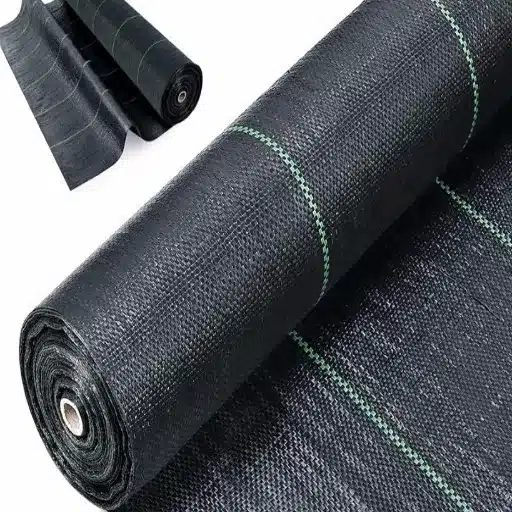
Polypropylene geotextile is a permeable synthetic fabric made from polypropylene polymer. Polypropylene is a thermoplastic with a low density of approximately 0.91 g/cm³, giving PP geotextiles the lightest weight per unit area of the common geotextile polymers.
Manufacturers produce polypropylene geotextiles in two main forms:
- Nonwoven needle-punched PP — random fibers bonded mechanically into a thick, porous felt. This form dominates filtration, drainage, and separation applications.
- Woven PP — polypropylene tapes or slit-film yarns woven into a stiff grid. This form is used for reinforcement, stabilization, and heavy-duty separation where high tensile strength is required. For project examples, see our woven geotextile applications guide.
Polypropylene is hydrophobic. Its water absorption is below 0.01%, so moisture has almost no effect on mechanical properties. The polymer also resists biological attack, rot, mold, and most acids and alkalis. These characteristics make polypropylene geotextile the default choice for subsurface drainage, landfill leachate collection, coastal protection, and road subgrade separation.
The melting point of polypropylene is approximately 160°C. This is adequate for most civil engineering environments, but lower than polyester. In high-temperature applications such as asphalt overlay reinforcement, PP may soften more quickly than PET.
What Is Polyester Geotextile?
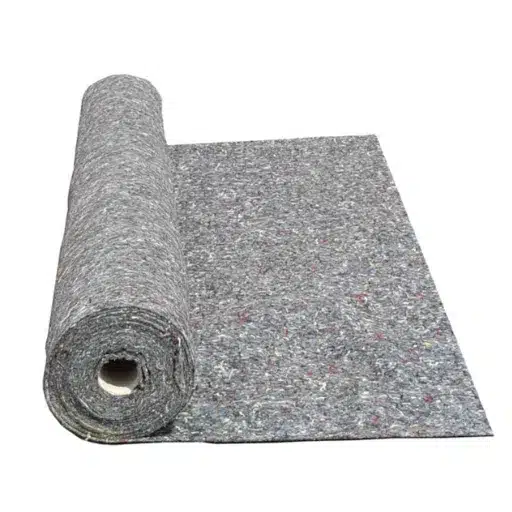
Polyester geotextile is a permeable synthetic fabric made from polyethylene terephthalate (PET) polymer. PET has a higher density than PP, approximately 1.38 g/cm³, so polyester geotextiles are heavier per unit area. They are also stiffer and hold their shape better during installation.
Polyester geotextiles are produced in three common forms:
- Staple fiber nonwoven PET — short fibers needle-punched into a felt. Used for filtration, drainage, and light separation.
- Continuous filament nonwoven PET — long continuous fibers bonded together. Offers higher tensile strength per unit weight than staple fiber.
- Woven high-tenacity PET — high-strength yarns woven into a grid or fabric. Used for basal reinforcement, MSE walls, steep slopes, and other high-load applications.
Polyester has higher tensile strength and modulus than polypropylene at the same mass per unit area. A 600 gsm PET fabric typically shows wide-width tensile strength around 2,500 N, while a comparable PP fabric may test near 2,200 N. More importantly, PET has much lower long-term creep under sustained load, which is critical for reinforced soil structures designed for 50-100 year service life.
PET also has better inherent UV resistance and thermal stability than unstabilized PP. Its melting point is approximately 260°C. However, polyester is susceptible to hydrolysis in alkaline environments, especially when moisture and elevated temperature are present.
Side-by-Side Property Comparison
The table below summarizes the key engineering properties that drive the choice between polypropylene vs polyester geotextile.
| Property | Polypropylene (PP) | Polyester (PET) |
|---|---|---|
| Density | ~0.91 g/cm³ | ~1.38 g/cm³ |
| Melting point | ~160°C | ~260°C |
| Water absorption | <0.01% | Slightly hydrophilic |
| Typical pH stability | pH 2-13 | pH 2-9 (hydrolysis above pH 9-10) |
| Tensile strength at 600 gsm | ~2,200 N | ~2,500 N |
| Tensile modulus | Moderate | High |
| Creep resistance | Moderate to low | High |
| UV resistance | Moderate; requires stabilizers | Better inherent resistance |
| Cost | Lower | Higher |
| Best for | Drainage, filtration, and chemical resistance | Reinforcement, low creep, high load |
Tensile Strength and Modulus
Tensile strength tells you how much load a geotextile can carry before failure. Modulus tells you how much it stretches under load. PET has both higher strength and higher modulus than PP. This means PET deforms less under the same load, which is why engineers prefer it for reinforced soil structures.
For structural design, use wide-width tensile data per ASTM D4595, not grab tensile per ASTM D4632. Wide-width testing uses a 200 mm specimen that reduces necking and gives values closer to field behavior. Grab tensile is useful for quality control, but can overstate reinforcement capacity.
pH and Chemical Resistance
This is where the two polymers diverge most sharply. Polypropylene is extremely chemically inert. It performs reliably across pH 2-13 and resists salts, acids, alkalis, and biological degradation. PET performs well in neutral to mildly acidic or mildly alkaline conditions but degrades by hydrolysis at pH above 9-10, especially in warm, wet soils.
The USBR Design Standards No. 13, Chapter 19 notes that polyester can be affected by high-pH water and should be kept away from fresh concrete or alkaline groundwater. Solmax technical literature reports that PP retained over 95% of its tensile strength after 120 days of immersion in a pH 13 alkaline solution.
Water Absorption and Hydrolysis
Hydrolysis is the chemical reaction between water and the ester bonds in PET. The reaction rate increases with pH and temperature. In a dry alkaline soil, PET may last decades. In a wet tropical environment with pH above 10, measurable strength loss can occur within years. This is why pH testing is essential before specifying PET for drainage or separation.
PP does not hydrolyze. Its long-term degradation mechanism is thermal oxidation, which is negligible once the fabric is buried and protected from UV.
UV Resistance and Thermal Stability
PET has better inherent UV resistance than unstabilized PP. However, most commercial PP geotextiles include carbon black and UV stabilizers to meet ASTM D4355 exposure requirements. Even stabilized PP should be covered promptly. Typical maximum exposed installation windows for stabilized PP are around 14 days.
PET’s higher melting point makes it more suitable for hot-climate exposed applications and installations near hot asphalt or geomembrane welding operations.
Creep and Long-Term Design Strength
Creep is the slow deformation of a polymer under sustained load. PET has significantly lower creep than PP. For reinforcement applications, long-term design strength must account for creep reduction factors. Some design references cite PET creep rupture limits greater than 65% of ultimate strength at 10⁶ hours, while PP may fall below 30% in comparable analyses.
This difference makes PET the clear choice for MSE walls, steep slope reinforcement, basal reinforcement over soft soils, and other permanent load-bearing structures.
When to Choose Polypropylene Geotextile
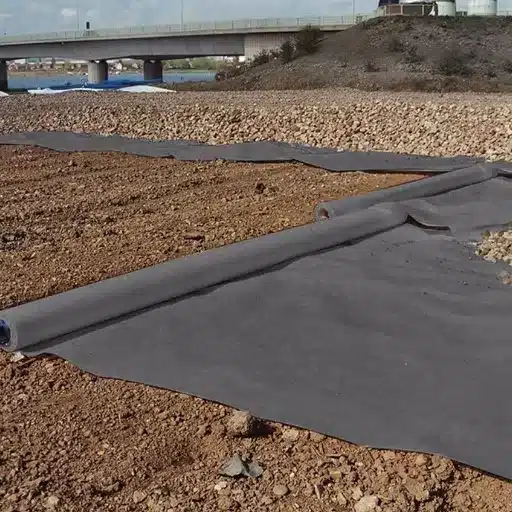
Polypropylene geotextile is the practical choice when drainage, filtration, chemical resistance, or cost efficiency is the primary driver.
Drainage and Filtration
Nonwoven PP geotextiles have high permittivity and porosity. They allow water to pass while retaining soil particles, making them ideal for trench drains, retaining wall drainage layers, French drains, and landfill leachate collection systems.
Chemically Aggressive Soils
PP remains stable in acidic mine drainage, alkaline industrial soils, coastal saline environments, and landfill leachates. If soil pH is uncertain or known to be outside the pH 4-9 range, PP is the safer polymer.
Cost-Sensitive Large-Area Projects
PP is generally less expensive than PET per square meter. For large-area separation and filtration projects where high tensile strength is not required, PP reduces material cost without sacrificing performance.
Landfills and Environmental Containment
PP is widely used in landfill liner protection, leachate drainage, and capping systems. EPA Method 9090 leachate compatibility testing has shown good mechanical property retention for nonwoven PP geotextiles in landfill leachates.
Coastal and Marine Works
The combination of chemical resistance, low water absorption, and biological resistance makes PP suitable for coastal revetments, breakwaters, and marine structures.
Mini-story: A contractor in Indonesia installed a PET nonwoven geotextile as a separation layer beneath a road built on coral-derived fill. The fill had a pH near 10.5 and the groundwater table was high. After eight years, core samples showed measurable tensile loss. The repair required excavating the road, replacing the PET with PP geotextile, and reconstructing the base. The original specification had prioritized tensile strength over pH compatibility, and the project paid for it twice.
When to Choose Polyester Geotextile
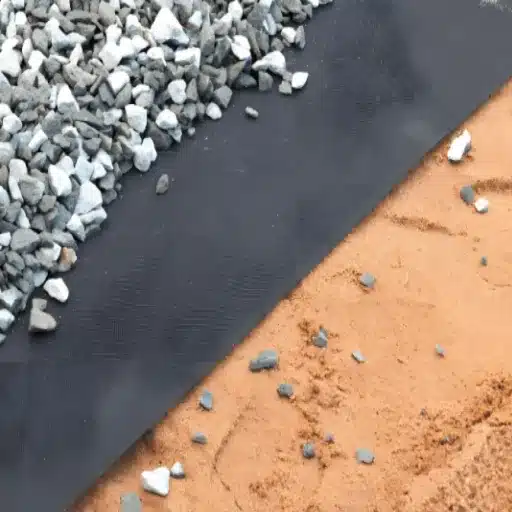
Polyester geotextile is the engineered choice when tensile strength, creep resistance, and long-term dimensional stability are critical.
Reinforced Soil Structures
MSE walls, steepened slopes, and embankment basal reinforcement require high tensile strength and low creep. Woven or high-tenacity PET geotextiles are designed for these loads.
Retaining Walls and Steep Slopes
For walls and slopes where the geotextile must carry tensile load for decades, PET’s creep resistance provides higher long-term design strength.
Railway and Road Basal Reinforcement
Heavy cyclic loads from trains or trucks demand a fabric that does not stretch or relax over time. PET’s high modulus and low creep make it suitable for track beds and heavy haul roads.
Long-Term Exposed Applications
When geotextiles cannot be covered quickly, PET’s better UV resistance provides longer exposed service life. However, all exposed geotextiles should be protected whenever possible.
High-Temperature Environments
PET handles higher service and installation temperatures than PP. It is preferred near hot asphalt paving, geomembrane welding zones, and high-solar-exposure climates.
Standards and Test Methods for PP and PET Geotextiles
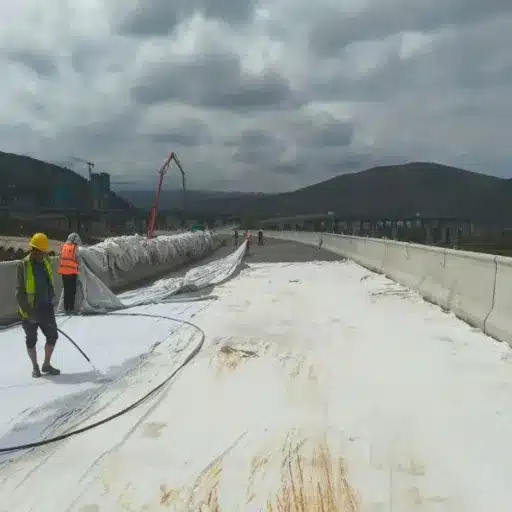
Engineering selection should be supported by standardized test data. The following tests are most relevant when comparing polypropylene vs polyester geotextile.
Mechanical Tests
- ASTM D4595 — Wide-width tensile properties. This is the key test for reinforcement design.
- ASTM D4632 — Grab tensile strength. Used for quality control and AASHTO M288 classification.
- ASTM D4533 — Trapezoidal tear strength.
- ASTM D6241 — CBR puncture strength.
Hydraulic Tests
- ASTM D4491 — Permittivity and water flow rate.
- ASTM D4751 — Apparent opening size (AOS) for filtration design.
Durability Tests
- ASTM D4355 — UV exposure degradation. Important for exposed or delayed-cover installations.
- ISO 13439 — Resistance to hydrolysis. Critical for PET in wet or alkaline environments.
- ISO 12960 — Resistance to liquids (acids and alkalis). Useful for chemical compatibility screening.
- EPA Method 9090 — Leachate immersion compatibility for landfill applications.
Specification Standards
- AASHTO M288 — Standard specification for geotextiles in highway applications. Defines survivability classes based on installation stress.
For a deeper overview of geotextile test methods, see our geotextile ASTM standards guide.
When procuring material, request MARV values (minimum average roll value) rather than average test results. MARV provides a statistical lower bound that supports a reliable design.
Selection Decision Matrix
Use the table below to match project conditions to the appropriate polymer for geotextile material selection.
| Project Condition | Recommended Polymer | Reason |
|---|---|---|
| pH 2-13 or aggressive leachate | PP | Superior chemical resistance |
| pH 4-9, neutral soil | PP or PET | Both perform well |
| High-load reinforcement | PET | Higher tensile strength and low creep |
| Long-term exposed installation | PET | Better UV and thermal stability |
| Drainage/filtration priority | PP | High permittivity and hydrophobic behavior |
| MSE wall or steep slope | PET | Creep resistance and modulus |
| Tight budget, large area | PP | Lower material cost |
| Hot installation environment | PET | Higher melting point |
The decision rarely comes down to a single factor. A retaining wall backfill drain requires filtration and flow, but the soil behind the wall may also need reinforcement. In those cases, engineers often use PP nonwoven for drainage and a separate PET geogrid or woven geotextile for reinforcement.
For help choosing between fabric structures, our woven vs nonwoven geotextile guide covers the manufacturing and performance differences.
Common Specification Mistakes
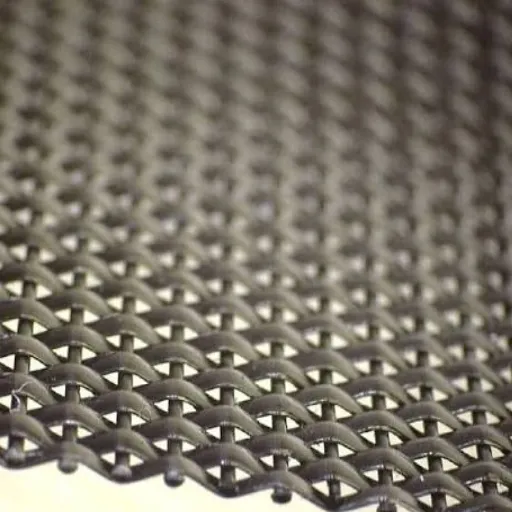
Even experienced engineers can make these errors when specifying polypropylene vs polyester geotextile.
Specifying PET in High-pH Soils
This is the most expensive mistake. PET hydrolyzes in alkaline conditions. Always test soil and groundwater pH before specifying PET in drainage, separation, or landfill applications.
Using Unstabilized PP in Exposed Conditions
Unstabilized PP degrades quickly under UV radiation. If the fabric will be exposed for more than a few days, specify UV-stabilized PP or switch to PET.
Ignoring Creep in Reinforcement Design
Short-term tensile strength does not predict long-term reinforcement performance. Always apply creep reduction factors and use wide-width tensile data for design.
Confusing Grab Tensile with Wide-Width Tensile
Grab tensile values are higher and do not represent field behavior. Reinforcement design should use ASTM D4595 wide-width tensile properties.
Selecting on Price Alone
PP may cost less per square meter, but specifying the wrong polymer can lead to premature failure and reconstruction. Lifecycle cost should include performance risk, not just initial material cost.
Polypropylene vs Polyester Geotextile Procurement Checklist
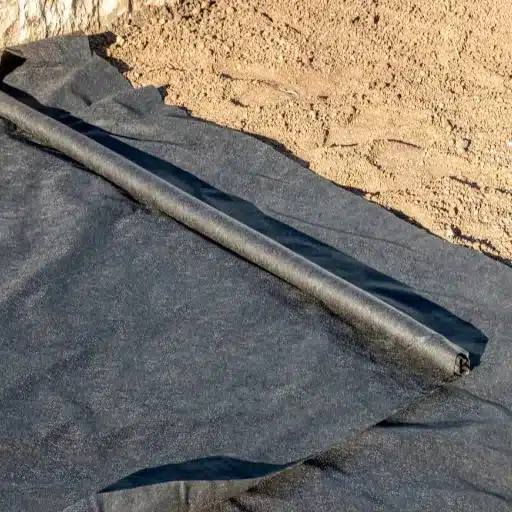
Use this checklist when ordering PP or PET geotextile:
- Define the primary function: separation, filtration, drainage, reinforcement, or protection.
- Test soil pH, groundwater chemistry, and temperature conditions.
- Determine the required tensile strength and whether creep resistance is critical.
- Select PP for drainage/filtration or aggressive chemistry; select PET for reinforcement or exposed/high-temperature service.
- Specify the correct test standard: ASTM D4595 for reinforcement, ASTM D4491/D4751 for drainage/filtration.
- Request MARV values for grab tensile, tear, CBR puncture, and permittivity.
- Confirm UV stabilization if the fabric will be exposed during installation.
- Plan overlap, seam, and cover schedules to limit UV exposure.
- Verify the AASHTO M288 survivability class for highway or heavy civil work.
- Request certified test reports and ISO 9001 quality documentation.
If you need help matching polymer type to your project conditions, Shanxi Shengxing supplies both nonwoven geotextile and woven geotextile grades with certified test reports and technical support.
Frequently Asked Questions
Which is stronger, PP or PET geotextile?
Polyester geotextile generally has higher tensile strength and modulus than polypropylene at the same weight. Woven high-tenacity PET can reach 1,000 kN/m or more in wide-width tensile strength. However, “stronger” only matters if the application needs that strength. For drainage and filtration, PP is the stronger choice.
Can PP geotextile be used for reinforcement?
Yes, but with caution. Woven PP geotextiles are used for reinforcement in some applications, but PP has higher creep than PET. For permanent high-load structures such as MSE walls and steep slopes, PET or PET geogrids are preferred.
Is polyester geotextile safe for landfill drainage?
PET can be used in landfill drainage if the leachate pH is neutral to mildly acidic/alkaline and the design accounts for hydrolysis risk. For high-pH leachates or uncertain chemistry, PP is the safer choice. EPA Method 9090 compatibility testing is recommended for critical landfill applications.
How do I test pH compatibility?
Test soil and groundwater pH according to ASTM D4972 or equivalent geotechnical methods. For PET, also consider ISO 13439 hydrolysis screening if the environment is wet and alkaline. If pH exceeds 9, PP is generally the lower-risk polymer.
Which polymer lasts longer underground?
Both polymers can last 50+ years when properly buried in compatible environments. PET may last longer in neutral, dry soils because of its higher strength and UV resistance. PP lasts longer in wet, acidic, or alkaline soils because it does not hydrolyze.
Does UV exposure matter if the fabric is covered quickly?
UV exposure always matters, but the risk is lower for short exposure periods. Stabilized PP is typically rated for up to 14 days of exposed installation. PET tolerates longer exposure. In either case, cover the fabric as soon as possible after placement.
Conclusion: Match the Polymer to the Project
The choice between polypropylene vs polyester geotextile comes down to geotextile material selection based on project conditions, not brand preference. Polypropylene geotextile excels in drainage, filtration, and chemically aggressive environments. Polyester geotextile excels in reinforcement, low-creep design, and high-temperature or UV-exposed applications.
Start by testing soil pH and defining the primary function. If the job needs flow and chemical resistance, specify PP. If the job needs tensile strength and dimensional stability under load, specify PET. Always request wide-width tensile data for reinforcement and MARV values for all critical properties.
Shanxi Shengxing manufactures and supplies both polypropylene and polyester geotextiles with certified MARV test reports, ISO 9001 quality management, and export packaging for global projects. Request a technical specification or quote today.