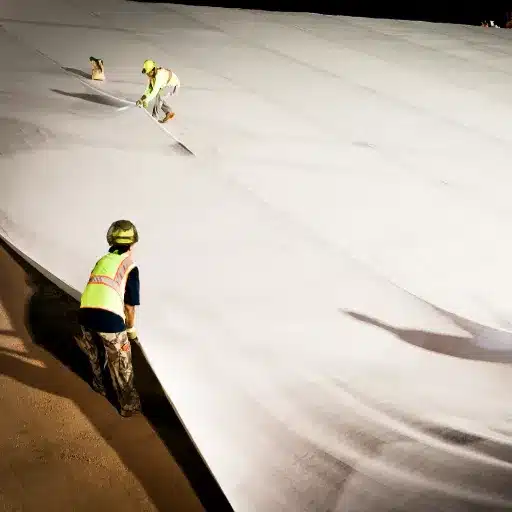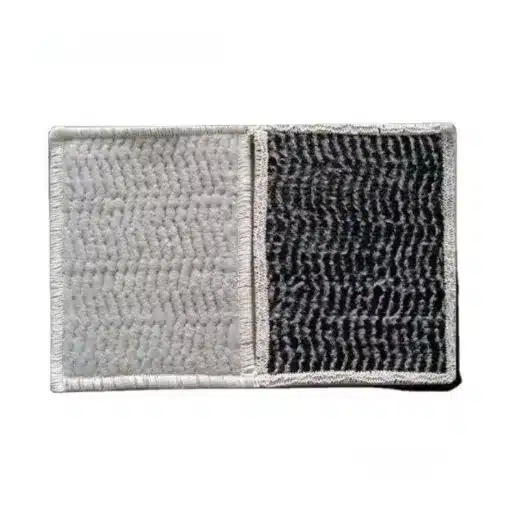
Geotextile GSM (grams per square meter) is the weight of one square meter of fabric, and choosing the right grade comes down to matching the weight to your function, subgrade conditions, and traffic load, not just picking the heaviest roll. Heavier is not automatically better, and a 200 gsm woven geotextile can outperform a 400 gsm nonwoven for load-bearing work. This guide explains what GSM means, how it connects to real engineering properties, and which weight to specify for common applications.
Most buyers treat the GSM number on the roll label as a quality score. They assume that heavier means tougher, so they pay for 400 gsm where 150 gsm would work. That instinct costs projects money and, in drainage work, can actually make performance worse. Here is how to get the weight right the first time.
Key Takeaways
- GSM measures fabric mass per square meter, not performance. AOS, permittivity, puncture resistance, and tensile strength are what actually govern how a geotextile behaves.
- 1 oz/yd² equals about 34 GSM, so a 4 oz fabric is roughly 135 gsm and an 8 oz fabric is roughly 270 gsm.
- For driveways and light road separation, 150-200 gsm nonwoven is the cost-effective standard. Step up to 200-300 gsm once vehicles or weak subgrade (CBR under 3%) are involved.
- French drains work best with 120-200 gsm needle-punched nonwoven. Heavier grades compress under load and can choke water flow.
- Geomembrane and landfill liner protection needs 400-800 gsm nonwoven with verified CBR puncture resistance, not just a high number on the label.
- Specify by weight alongside MARV values and ASTM test data, and verify with a technical data sheet before purchase.
What Does GSM Mean in Geotextiles?

GSM stands for grams per square meter (g/m²). It is the mass of a one meter by one meter sheet of fabric, weighed in grams. A 200 gsm geotextile means one square meter of that fabric weighs 200 grams. In the United States, the same value is often expressed in ounces per square yard (oz/yd²).
GSM is measured using ASTM D5261, the standard test method for mass per unit area of geosynthetics. The test cuts a known area of fabric, weighs it, and calculates the weight per square meter. Most suppliers list a weight tolerance on the spec sheet, typically minus 5-8%, which tells you the acceptable variation from roll to roll.
The critical point is this: GSM is a product-identification number and a quality-control parameter. It tells you how much material is in the sheet, but it does not tell you how that material performs. A 300 gsm woven geotextile is a flat grid of interlaced yarns with high tensile strength and low water flow. A 300 gsm nonwoven is a felted mat of randomly oriented fibers with lower tensile strength but much higher permeability. Same weight, completely different behavior.
GSM to oz/yd² Conversion Chart
If you are comparing specifications from different suppliers, you will see weight expressed in both GSM and ounces per square yard. The conversion is simple: 1 oz/yd² is roughly 34 gsm. The table below covers the common grades.
| oz/yd² | Approx. GSM | Typical Use |
|---|---|---|
| 2 oz | ~70 gsm | Light weed barrier, soil separation |
| 3 oz | ~100 gsm | Garden paths, patios, light landscaping |
| 4 oz | ~135 gsm | French drains, light separation, driveways |
| 5 oz | ~170 gsm | Residential driveways, trench drains |
| 6 oz | ~200 gsm | Road separation, heavy driveways, pipe wraps |
| 8 oz | ~270 gsm | Aggressive installation, commercial pavement |
| 10-12 oz | ~340-400 gsm | Industrial access roads, liner protection |
| 14-16 oz | ~470-540 gsm | High-puncture landfill liner protection |
Use this chart as a starting filter. It helps you talk across metric and imperial specifications, but it does not replace the engineering properties on the datasheet.
How GSM Relates to Real Engineering Properties
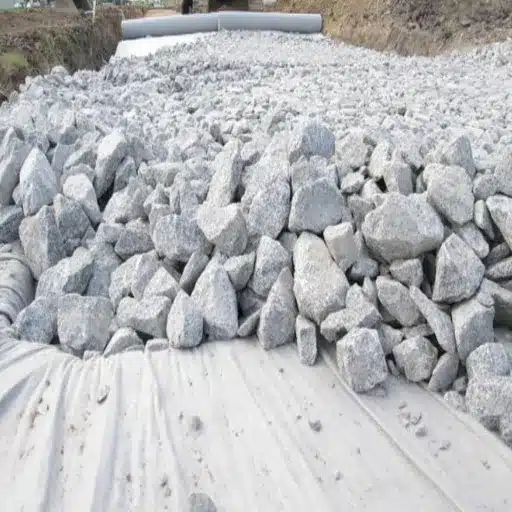
Weight correlates with some physical properties but not all. Knowing which properties scale with GSM and which do not is the difference between a correct specification and an expensive mistake.
Tensile strength generally increases with GSM. A heavier nonwoven has more fiber to resist pulling apart, so grab tensile strength and wide-width tensile strength climb as weight increases. Filament spunbond geotextiles deliver notably higher tensile values than short-fiber types at the same GSM.
Puncture and tear resistance also increase with weight. Heavier fabrics cushion against sharp aggregate and resist the puncturing forces that occur during compaction. Doubling the GSM roughly doubles the CBR puncture resistance in needle-punched nonwovens, which is why heavy grades protect geomembrane liners.
Thickness and cushioning rise with GSM. A 400 gsm nonwoven is roughly 3.0 mm thick compared to 0.9 mm at 100 gsm. That cushioning matters under rip-rap and above liner systems.
Permittivity decreases as nonwoven weight increases. This is the counterintuitive one. Water flow through the fabric drops as the felt gets denser and thicker. A 4 oz nonwoven may pass around 140 gallons per minute per square foot, while an 8 oz fabric passes closer to 90. For drainage-led projects, the lightest fabric that survives installation is often the best performer.
Apparent opening size (AOS) is governed by construction, not weight. Two fabrics at the same GSM can have very different pore sizes depending on fiber type, needle-punch density, and bonding method. For filtration, AOS is the property that controls whether soil particles are retained, so it must be checked against your soil gradation, not assumed from the weight.
MARV matters more than a single number. Specifications should list values as MARV (Minimum Average Roll Value), which is roughly two standard deviations below the mean. MARV tells you the value almost every roll should exceed. A supplier quoting only “typical” values is giving you the best case, not the reliable case. Always ask for MARV data.
Geotextile GSM Specification Table
Here is a practical reference for short-fiber needle-punched nonwoven geotextiles, the most common grade for separation, filtration, and drainage work. Values vary by manufacturer and standard, but this shows the pattern.
| Property | 100 gsm | 200 gsm | 300 gsm | 400 gsm |
|---|---|---|---|---|
| Tensile strength (kN/m) | 2.5 | 6.5 | 9.5 | 12.5 |
| Thickness (mm) | 0.9 | 1.7 | 2.4 | 3.0 |
| CBR burst strength (kN) | 0.3 | 0.9 | 1.5 | 2.1 |
| Tear strength (kN) | 0.08 | 0.16 | 0.24 | 0.33 |
| Elongation at break (%) | 25-100 | 25-100 | 25-100 | 25-100 |
| AOS (mm) | 0.07-0.2 | 0.07-0.2 | 0.07-0.2 | 0.07-0.2 |
Filament spunbond geotextiles deliver roughly 60-70% higher tensile strength at the same GSM. At 200 gsm, a filament spunbond fabric can reach about 10.5 kN/m compared to 6.5 kN/m for short fiber. When a project demands higher strength without a heavier roll, filament construction is the answer.
What GSM Geotextile Do I Need?
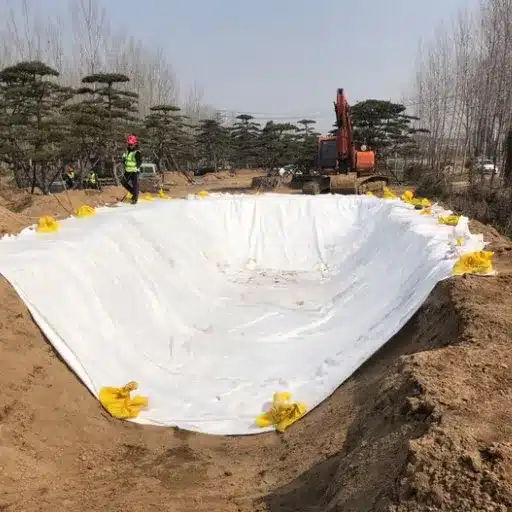
The right weight depends on what the geotextile must do, the condition of your subgrade, the traffic load, and the aggregate you are placing. Work through the application table below, then confirm the governing properties on the datasheet.
Landscaping, weed control, and light separation: 70-150 gsm. These fabrics only need to block light, stop roots, and keep topsoil from mixing. A light nonwoven is enough and costs the least.
Garden paths, patios, and light foot traffic: 100-150 gsm. Lightweight nonwoven prevents aggregate from sinking into soft soil. No vehicles are involved, so heavy grades waste money.
French drains and drain pipe wraps: 120-200 gsm. A needle-punched nonwoven in this range provides the filtration and flow needed to keep silt out of the gravel while letting water pass. Picking the right drain fabric is covered in our guide to the best geotextile for French drains.
Driveways and residential road separation: 150-250 gsm. For gravel driveways, 4-6 oz (135-200 gsm) nonwoven with puncture resistance above 70 pounds is the industry standard. The question of fabric type for your specific surface is addressed in our comparison of geotextile for gravel driveway woven or nonwoven.
Collector roads and moderate traffic: 200-300 gsm. Once you have regular vehicle loads or a subgrade CBR between 3% and 8%, step up the weight to handle compaction forces and prevent subgrade pumping.
Heavy-duty roads, poor subgrade, and truck traffic: 300-400 gsm nonwoven or 200-300 gsm woven monofilament. On subgrade with a CBR below 3%, lightweight fabric will not survive. For road construction, our woven vs nonwoven geotextile for road construction guide walks through the selection logic in detail.
Rip-rap and slope erosion control: 300-600 gsm. Heavy nonwoven cushions the soil and filters beneath large rock. The extra thickness prevents puncture during boulder placement.
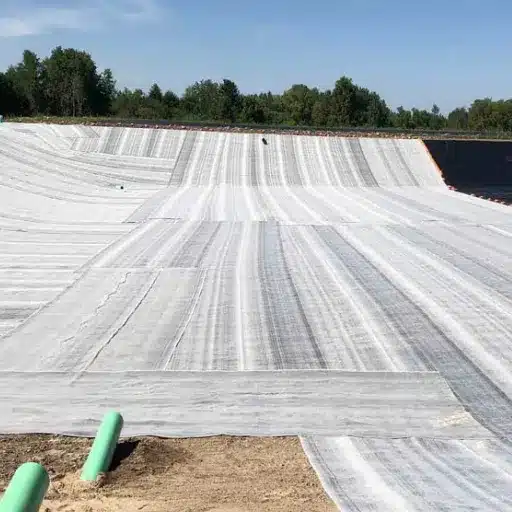
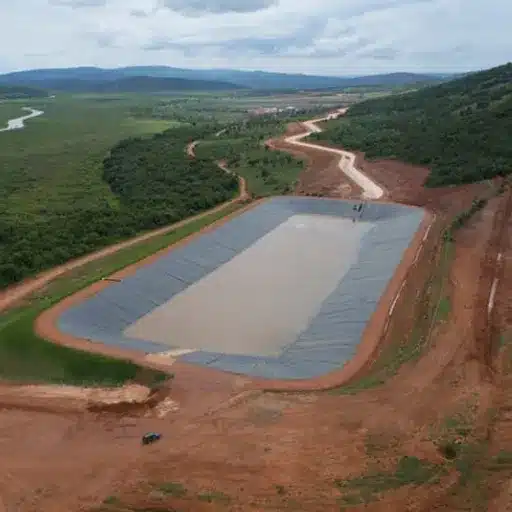
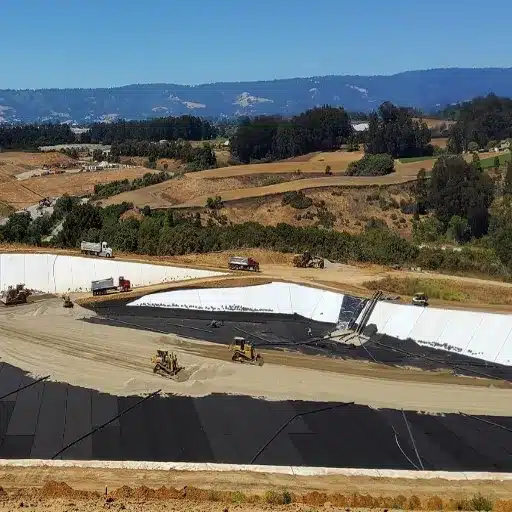
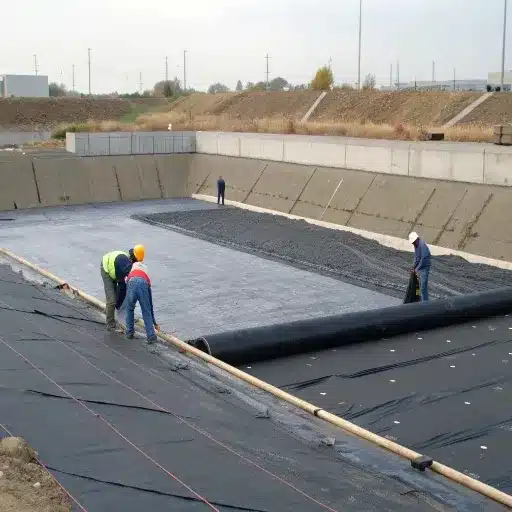
Geomembrane and landfill liner protection: 400-800 gsm. This is where the heaviest grades belong. The nonwoven sits between the soil and the geomembrane to absorb puncture forces. Verify the CBR puncture value, not just the weight.
Woven vs Nonwoven at the Same GSM

One of the most common specification errors is comparing fabrics by weight alone. A 200 gsm woven geotextile can be far stronger than a 400 gsm nonwoven because the two constructions carry load differently.
Woven geotextiles are made by interlacing yarns, which gives them high tensile strength and low elongation. They are specified by tensile strength in kN/m, not by weight. For load-bearing work like road reinforcement and retaining wall stabilization, the woven construction does the work. If you are building a wall, our guide to geotextile for retaining wall woven or nonwoven explains which fabric to specify.
Within the woven category, the yarn type matters as much as the weight. Slit-film yarns offer strength at low cost, while monofilament yarns hold their opening size under confining pressure, which makes them better for filtration plus strength. The difference between these yarn constructions is covered in our slit film vs monofilament woven geotextile comparison.
Nonwoven geotextiles, by contrast, are specified by weight and puncture resistance because that is what drives their cushioning and flow behavior. The decision between woven and nonwoven deserves its own analysis. Our woven vs nonwoven geotextile comparison lays out the full side-by-side with specification tables.
When a project needs both strength and filtration, composite systems use a woven layer for reinforcement and a nonwoven layer for filtration. Specifying both fabrics together is often the most economical solution for heavy loads over fine soils.
Common GSM Selection Mistakes
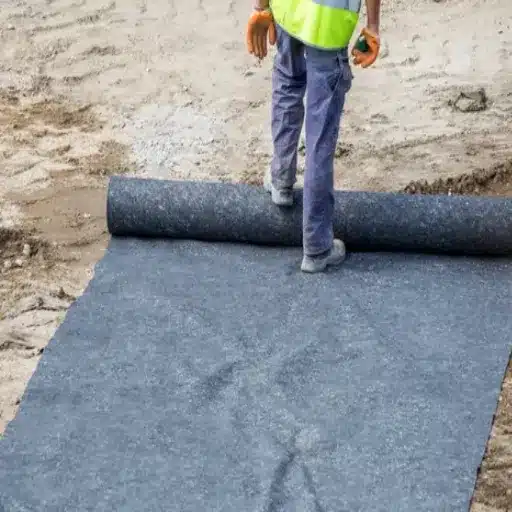
Mistake 1: Assuming heavier is always better. This is the most expensive habit in geotextile procurement. Over-specifying adds cost per square meter without adding performance, and in drainage applications, a heavy fabric compresses under load and chokes the flow it was meant to carry.
Mistake 2: Choosing 100 gsm for angular aggregate. Sharp crushed stone punctures lightweight fabric during compaction. When the aggregate is angular, step up to 200-250 gsm minimum, or 300-400 gsm for coarse sharp rock.
Mistake 3: Using lightweight fabric on weak subgrade. On a subgrade with CBR below 3%, a 150 gsm fabric will pump under truck traffic. The fabric separates nothing if it tears, and the road base then sinks into the soft soil.
Mistake 4: Selecting weight without checking AOS and permittivity. For filtration, weight alone cannot confirm the fabric will retain the right soil particles. Two fabrics at the same GSM can have different opening sizes, and the wrong AOS leads to clogging or soil loss.
Mistake 5: Accepting typical values instead of MARV. A spec sheet that quotes only typical values does not protect you from weak rolls. Insist on MARV, which represents the level nearly every roll should meet.
Consider what happened on a municipal drainage job. The contractor specified a 400 gsm nonwoven because it was the heaviest fabric on the supplier’s list. The drain ran fine for a season, then flow dropped sharply. The heavy felt had compressed under the gravel load, closing the void space that water needed. A 150 gsm needle-punched fabric would have filtered just as well and maintained higher flow. The project paid roughly triple the fabric cost to get a worse result.
GSM and Geotextile Cost
Weight drives price, but not linearly. Light nonwoven fabrics run about $0.40-0.70 per square meter at 100-120 gsm. Medium grades run $0.70-1.20 at 150-200 gsm. Heavy nonwoven for industrial access runs $1.50-2.50 at 300-400 gsm, and high-load woven geotextiles run $1.80-3.00.
The lifecycle view changes the math. The cheapest fabric that survives installation is the right economic choice, because a torn or clogged fabric costs far more in rework than the fabric savings. For a full cost breakdown by type and weight, our woven vs nonwoven geotextile cost guide compares pricing across grades.
UV Resistance and Geotextile Lifespan
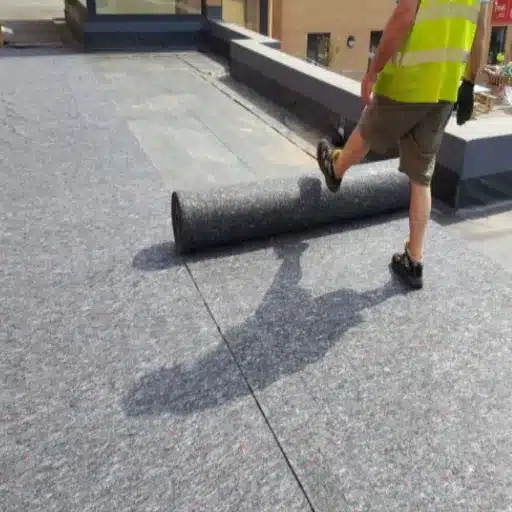
UV exposure degrades geotextiles over time, and the rate depends on the polymer and the manufacturing method, not the weight alone. Polypropylene and polyester both require UV stabilization, and most specifications require testing to ASTM D4355 with at least 50% strength retention after 500 hours of exposure.
In practice, installers cover geotextiles with aggregate quickly and limit direct sunlight exposure to about two weeks. A heavier fabric degrades more slowly than a light one at the same UV index, but neither survives years of bare exposure. For a deeper look at how long your grade will last and how to protect it, see our guide to geotextile UV resistance and lifespan.
Frequently Asked Questions
What does GSM mean on geotextile fabric?
GSM means grams per square meter. It is the weight of one square meter of fabric. It identifies how much material is in the sheet but does not by itself define filtration, drainage, or load performance.
Is higher GSM geotextile better?
Not always. Heavier fabric increases tensile, puncture, and tear strength, but it lowers water flow and raises cost. For drainage work, a lighter fabric often performs better. Choose the lightest grade that survives installation and meets the AOS and permittivity requirements.
What GSM geotextile do I need for a driveway?
For a residential gravel driveway, use a 4-6 oz nonwoven, which is roughly 135-200 gsm. If you have heavy vehicles, angular aggregate, or weak subgrade, step up to 200-300 gsm or switch to a woven fabric.
How many oz is 200 GSM geotextile?
200 gsm is approximately 6 oz/yd², since 1 oz/yd² equals roughly 34 gsm.
What weight nonwoven geotextile for a French drain?
Use 120-200 gsm needle-punched nonwoven. This range provides good filtration and flow without the compression problems that heavier grades cause under gravel.
Can I use a woven geotextile based on GSM alone?
No. Woven geotextiles are specified by tensile strength in kN/m, not by weight. A low-GSM woven can be much stronger than a high-GSM nonwoven, so always specify woven fabrics by their mechanical properties.
Conclusion
GSM is the starting filter, not the full specification. It helps you identify the right weight class for your application, but the properties that actually determine performance are AOS, permittivity, puncture resistance, and tensile strength. Match the weight to the function, the subgrade CBR, the traffic load, and the aggregate type. Then verify the datasheet values, insist on MARV, and confirm UV resistance and puncture data before you buy.
The right geotextile is not the heaviest one. It is the one whose construction and verified properties match the job. When you specify with that discipline, you save money, avoid rework, and get a fabric that performs for decades.
Ready to specify the right geotextile GSM for your project? Contact Shanxi Shengxing engineering support for a tailored recommendation and technical quote. We supply export-ready woven and nonwoven geotextiles with documented test data, ISO 9001 quality systems, and responsive consultation for civil, environmental, and infrastructure projects worldwide.