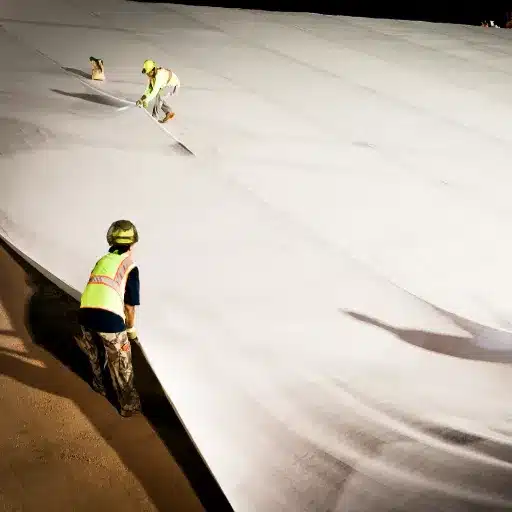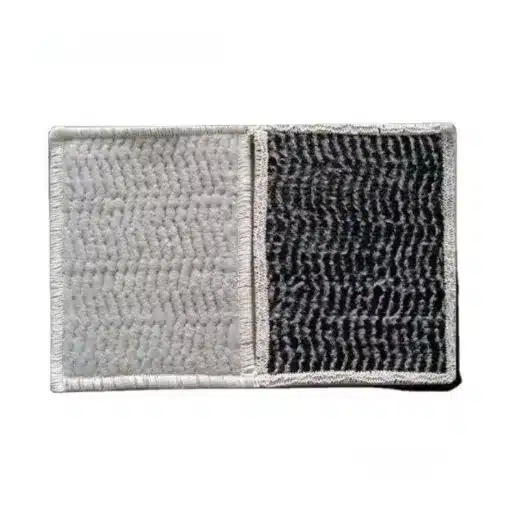
A slit film woven geotextile is the low-cost, high-strength choice for separation and reinforcement, while a monofilament woven geotextile is the woven type to specify when filtration and drainage matter. The two look similar, but they are made from completely different yarns, and that difference controls how much water passes through, how long the fabric lasts, and whether it clogs in service.
That distinction trips up specifiers more often than almost any other geotextile decision. In 2024, a drainage contractor in Texas wrapped a trench drain in a cheap slit-film fabric because it was half the price of the monofilament alternative. Within one season, fine silt had blinded the tight weave, water backed up behind the stone, and the crew had to excavate and redo the entire run. The “savings” on the fabric cost them thousands in labor and a month of schedule. Monofilament would have filtered the soil and kept flowing.
By the end of this guide, you’ll know exactly how each woven yarn type is made, how they compare on flow, strength, and cost, and which one to specify for your project. If you need the full picture of how wovens stack up against nonwovens first, start with our complete woven vs nonwoven geotextile comparison guide.
Key Takeaways
- Slit film (tape) wovens are the cheapest and strongest-for-the-dollar woven type, but they pass almost no water and clog easily, so they belong in separation and reinforcement only.
- Monofilament wovens are roughly 1.5 to 2 times the cost of slit film but are the only woven type that truly filters, with percent open area (POA) of 4 to 30% and flow rates up to 100 times higher.
- Percent open area is the spec that decides whether a woven fabric filters or blinds: target POA ≥ 4% for filtration and ≥ 10% for clean coarse soils.
- AASHTO M288 defaults woven monofilament to Class 2 for permanent erosion control and Class 2 for subsurface drainage, which is why agencies allow monofilament but restrict slit film in drain applications.
- For load-bearing separation and stabilization with no drainage requirement, slit film is often the right, budget-conscious call; pay for monofilament only when hydraulic performance matters.
What Are Woven Geotextiles?
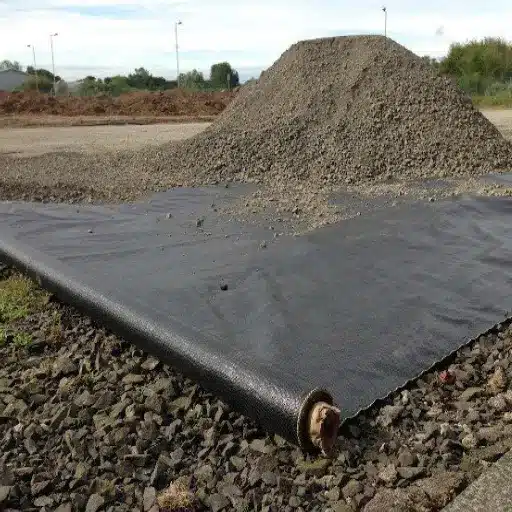
A woven geotextile is made by interlacing yarns at right angles on a loom, the same way fabric has been woven for centuries. The warp yarns run lengthwise, and the weft yarns run across, crossing over and under each other to form a stable grid.
Because the yarns are continuous and tightly interlaced, woven geotextiles deliver high tensile strength with low elongation, typically 5 to 25% at break. They resist stretching under load, which makes them the go-to family for reinforcement, stabilization, and separation in roads, embankments, and foundations.
What many buyers miss is that “woven” is not a single product. The yarns themselves come in different forms, and the yarn type sets the hydraulic performance. There are three main woven yarn constructions:
- Slit film (slit-tape): flat, ribbon-like tapes cut from a sheet of polypropylene film
- Monofilament: round, extruded strands that resemble fishing line
- Multifilament: bundles of many fine continuous filaments twisted or intermingled together
A fourth option, the combination or hybrid woven, weaves monofilament yarn in one direction and tape yarn in the other. The three types are built for different jobs, and choosing the wrong one is a classic source of project failure. This is the same yarn-type nuance our full geotextile fabric engineering guide explains across the whole woven and nonwoven family.
How Slit Film Woven Geotextiles Are Made
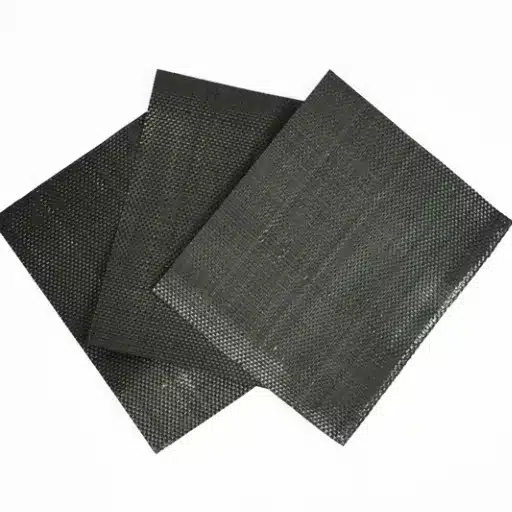
Slit film geotextiles start with a solid sheet of polypropylene. The sheet is extruded, then slit into narrow, flat tapes, and those tapes are woven together on a loom. The result is a tight, flat, tape-like fabric that feels almost like a smooth plastic sheet. You’ll also hear this type called “slit-tape” or “tape woven” geotextile.
Properties of Slit Film Wovens
The manufacturing shortcut that makes slit film cheap also makes it nearly impermeable. The flat tapes lie tight against each other, leaving very little open space for water to move through.
- Percent open area (POA): typically below 1%, and rarely above 4%
- Water flow: roughly 40 to 400 L/min/m², which can be up to 35 times lower than a comparable nonwoven
- Permittivity: around 0.05 s⁻¹, far below what drainage applications require
- Strength: high grab tensile and high modulus; slit-film wovens carry load well
- Cost: the cheapest woven type, generally $0.10 to $0.20 per square foot at material-only pricing
That low open area has a second consequence beyond slow flow. When the fabric sits against silty soil, fines pack into the weave, blind the surface, and can cut permeability further. Agencies such as Maine DOT are explicit about this: do not use slit-tape woven geotextiles in drainage or filtration applications.
Best Applications for Slit Film Wovens
Slit film geotextiles shine where the job is load, not water:
- Separation of aggregate base from soft subgrade under roads, driveways, and parking lots
- Stabilization and reinforcement over soft, poorly drained soils
- Haul roads, construction access tracks, and staging pads
- Silt fences and basic ground cover where flow capacity is not critical
The Geosynthetic Materials Association frames it cleanly: woven geotextiles provide reinforcement and separation, while nonwovens excel at filtration and drainage. Within the woven family, slit film is the reinforcement specialist.
How Monofilament Woven Geotextiles Are Made
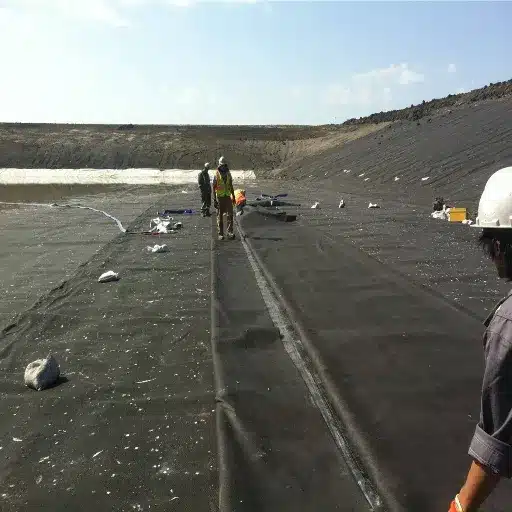
Monofilament geotextiles are woven from individual, round strands of polypropylene or polyester that are extruded and drawn, much like fishing line. When these strands are interlaced on the loom, they form an open mesh or screen instead of a solid sheet. The round, spaced yarns leave distinct openings between them, and those openings are what make monofilament the exception in the woven family.
Properties of Monofilament Wovens
Because the round strands can’t lie as tightly as flat tapes, monofilament wovens keep a high percentage of open area while staying strong:
- Percent open area (POA): 4 to 30%, depending on the weave density
- Water flow: roughly 2,000 to 4,000+ L/min/m², up to 100 times higher than slit film
- Permittivity: commonly 0.28 to 2.10 s⁻¹ across commercial product lines
- Strength: higher than slit film in many cases, because the yarn is pre-stressed during extrusion
- Clogging: the open area lets a filter cake form on the surface and then releases it, so monofilament wovens resist blinding over time
- Cost: roughly 1.5 to 2 times slit film, about $0.20 to $0.30 per square foot at material-only pricing
Those properties are why monofilament is the woven type engineers specify when they need both tensile strength and water flow.
Best Applications for Monofilament Wovens
Monofilament wovens earn their place in hydraulic applications:
- Filtration layers in subsurface drainage, trench drains, and drainage stone
- Permanent erosion control under riprap, on slopes, shorelines, and channels
- Silt fences in high-runoff areas where slit film would fail
- Landfill and aggregate filtration where high flow and soil retention are required
For erosion-control and drainage decisions, our woven vs nonwoven geotextile cost comparison can help you weigh the premium against the performance difference.
What About Multifilament and Combination Wovens?
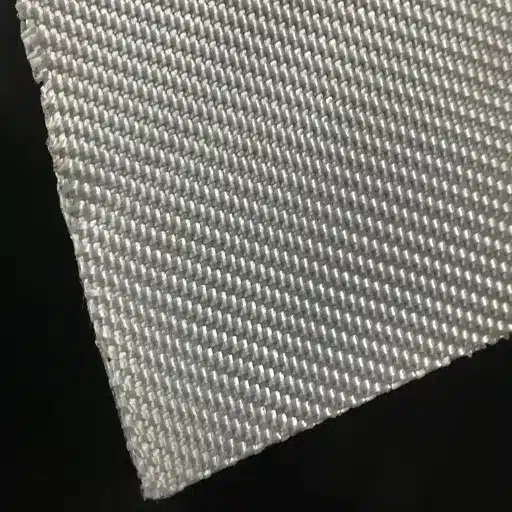
Two other woven constructions round out the family, and both fill the space between slit film and monofilament.
Multifilament Wovens
A multifilament yarn bundles many fine continuous filaments and twists or intermingles them into a single thread before weaving. The result is a fabric with a very high strength-to-weight ratio and hydraulic properties that sit between slit film and monofilament. Multifilament wovens are less common on routine projects, but they come into their own for high-flow filtration of coarse sands and gravels where you need strength and low blinding risk at the same time.
Combination (Hybrid) Wovens
A combination woven weaves monofilament yarn in one direction and flat tape yarn in the other, usually monofilament in the warp and tape in the weft. It trades some open area for cost savings. Typical combination products report a percent open area of about 4 to 12%, which can be enough for moderate filtration but is below what all-monofilament fabrics deliver. If you’re considering a hybrid for a filter application, verify the POA before you rely on it. For the weight and survivability context behind these choices, see our geotextile weight and GSM guide.
Slit Film vs Monofilament Woven Geotextile: Side-by-Side Spec Table
This is the comparison most specifiers actually need. All values are typical material ranges; your project spec should use the published mill values for the exact product.
| Property | Slit Film Woven | Monofilament Woven | Multifilament Woven |
|---|---|---|---|
| Yarn structure | Flat, slit PP tapes | Round, extruded strands | Twisted continuous filaments |
| Percent open area (POA) | <1 to 4% | 4 to 30% | Intermediate |
| Water flow (L/min/m²) | 40 to 400 | 2,000 to 4,000+ | Intermediate |
| Permittivity (s⁻¹) | ~0.05 | 0.28 to 2.10 | Intermediate |
| Grab tensile strength | High | Higher | Very high strength-to-weight |
| Elongation at break | Low (5 to 25%) | Low (5 to 25%) | Low |
| Clogging/blinding | High risk in silty soils | Low risk | Low to moderate |
| Best functions | Separation, stabilization, reinforcement | Filtration, drainage, erosion control | High-flow filtration of coarse soils |
| Typical material cost / sq ft | $0.10 to $0.20 | $0.20 to $0.30 | Varies |
The two rows that matter most are percent open area and flow. Everything else in the table follows from those. A high-POA monofilament filters and drains; a low-POA slit film blocks water. If you need the standards behind the numbers, our geotextile ASTM standards and AASHTO M288 guide walks through the test methods used to measure each property.
How to Choose: The Decision Framework
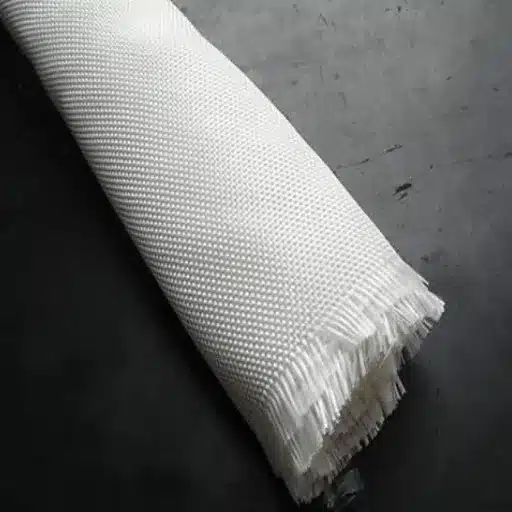
For a slit film vs monofilament woven geotextile choice, use the primary function to pick the yarn type, and you’ll rarely go wrong.
Choose Slit Film When
- Your primary function is separation, stabilization, or reinforcement under load
- The location is dry or free-draining, and filtration is not a requirement
- You’re on a tight budget and need maximum strength per dollar
- Typical call: haul road over a firm subgrade, driveway base separation, embankment reinforcement
Choose Monofilament When
- Your primary function is filtration, drainage, or erosion control
- The soil contains silts or fines that could blind a tape fabric
- You need both tensile strength and high water flow in one layer
- Typical call: riprap filter layer, trench drain wrap, shoreline revetment, high-flow silt fence
Choose Multifilament or Combination When
- You need high strength-to-weight with moderate filtration of coarse soils
- A hybrid’s cost savings outweigh its reduced open area for your soil
- You’re designing a specialized high-flow filter over sands or gravels
Mini-story: The riprap filter that kept flowing
In 2023, a coastal contractor protecting a canal bank in Southeast Asia specified a monofilament woven with 8% open area under the riprap. After the first monsoon, inspectors found clean discharge through the filter while the adjacent reach, lined with a tape fabric, had clogged and was weeping through the stone. The monofilament layer formed a thin filter cake, released it under flow, and never blinded. That one spec decision saved the client a redesign mid-project.
Percent Open Area: The Spec That Decides Clogging
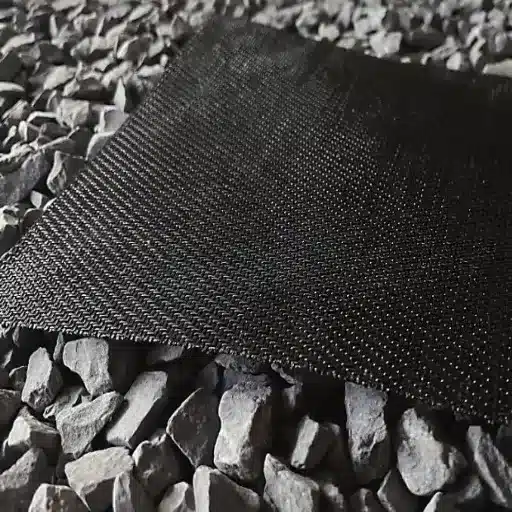
Percent open area (POA) is the amount of distinct, measurable open path through a woven geotextile, expressed as a percentage of the total fabric area. It is the key hydraulic specification for wovens, just as apparent opening size (AOS) is for nonwovens.
Low-POA fabrics such as slit film have almost no direct path for water, so migrating fines cannot escape. The fines accumulate, the fabric blinds, and the drainage layer becomes a bathtub. High-POA fabrics such as monofilament let the filter cake form on the surface and then release it, which is what keeps the layer flowing for years.
The Ontario Sustainable Technologies Evaluation Program recommends a woven POA of at least 4% for soils with more than 15% fines and at least 10% for soils with 5% fines or less. When you evaluate a woven product for a filter role, ask the supplier for the POA value, not just a generic “filter fabric” label.
AASHTO M288 and Filtration Design Criteria
AASHTO M288 is the standard classification system for geotextiles in transportation and civil applications. It assigns survivability classes based on installation stress, and it sets different default classes for different yarn types.
For woven monofilament, the defaults are notable:
- Permanent erosion control: Class 2 default for woven monofilament, Class 1 for all other geotextiles
- Subsurface drainage: Class 2 default
Class 1 is the most robust and carries the highest strength requirements; Class 3 is the lightest. The class separation also keys off elongation, which is why wovens and nonwovens fall into different strength tiers.
For filtration design, the required permittivity and opening size depend on the soil:
| Soil fines passing #200 | Minimum permittivity | Required opening |
|---|---|---|
| Less than 15% | ≥ 0.5 s⁻¹ (0.7 s⁻¹ dynamic) | AOS < 0.43 mm |
| 15 to 50% | ≥ 0.2 s⁻¹ | AOS < 0.25 mm |
| More than 50% | ≥ 0.1 s⁻¹ | AOS < 0.22 mm |
These numbers are the technical reason agencies restrict slit film in drainage. A slit-film permittivity near 0.05 s⁻¹ cannot meet even the most forgiving of these criteria, while monofilament wovens comfortably can. If your project is governed by a specification such as Ontario’s OpSS 1860, note that Class II geotextiles call for woven monofilament or needle-punched nonwoven, and they explicitly exclude slit-film wovens.
Cost: Slit Film vs Monofilament per Square Foot
Price is where slit film wins and where buyers get into trouble. At material-only pricing, slit film runs about $0.10 to $0.20 per square foot, while monofilament runs about $0.20 to $0.30. At retail, monofilament commonly lands between $0.35 and $0.60 per square foot depending on weight and strength. Bulk import pricing at larger order volumes drops both categories significantly, which is where export buyers get the best value.
The honest framing is this: monofilament costs roughly 1.5 to 2 times slit film per square foot, but it is the only woven type that filters. A cheap slit film that blinds in a drain isn’t a saving, it’s a future excavation. For a full breakdown by fabric type, weight, and order volume, including lifecycle value, see our woven vs nonwoven geotextile cost comparison and the companion geotextile fabric cost per square meter guide.
Mini-story: The false economy of the tape fabric
Marcus, a drainage contractor in Florida, bought slit-film geotextile for a subdivision stormwater system because it was the lowest bid by 40%. Ten months later, the outlet pipes had slited over and the basins were not draining. The engineer’s report traced the failure to the fabric’s near-zero open area. Replacing it with monofilament woven fabric across the project added $18,000 in material, but it eliminated a $60,000 redesign. The cheap tape was the expensive choice.
Common Mistakes and How to Avoid Them
Four mistakes account for most slit film vs monofilament errors on real projects:
- Using slit film in a drainage or filter application. The tight weave cannot pass water and will blind in silty soil. Use monofilament or a needle-punched nonwoven geotextile instead.
- Paying monofilament prices for pure separation. If there is no hydraulic requirement, a high-tensile slit film does the job at lower cost. Over-specifying wastes budget.
- Ignoring POA on a combination woven. A hybrid with tape in one direction may not have enough open area to filter. Verify the published POA before relying on it.
- Selecting on price alone. Cheapest fabric is not the cheapest project. Match the yarn type to the primary function and the AASHTO class your spec requires.
Installation matters just as much as selection. Whatever yarn type you choose, cover it quickly to limit UV exposure, overlap and seam it according to the soil conditions, and place aggregate by end-dumping so you never drive directly on the fabric. Our geotextile installation best practices guide covers the full sequence.
Frequently Asked Questions
What is the difference between slit film and monofilament woven geotextile?
Slit film is made from flat polypropylene tapes cut from a sheet, giving it high strength, low cost, and very low permeability. Monofilament is woven from round extruded strands, giving it a high open area and high water flow, so it can filter and drain.
Which is better, slit film or monofilament?
It depends on the function. Slit film is better for separation, stabilization, and reinforcement. Monofilament is better for filtration, drainage, and erosion control. Match the yarn type to the primary function.
Is slit film geotextile permeable?
Barely. Slit film wovens have very low percent open area and flow rates up to 35 times lower than comparable nonwovens, so they are effectively unsuitable for drainage or filtration.
Can monofilament woven geotextile be used for drainage?
Yes. Monofilament wovens offer high permittivity and flow, and they are the woven type of choice for subsurface drainage, trench drains, and filter layers.
What is percent open area in a woven geotextile?
Percent open area (POA) is the share of the fabric surface made up of distinct openings. It controls how much water passes and how well the fabric resists clogging. Aim for POA ≥ 4% for filtration.
What geotextile is best for a silt fence, slit film or monofilament?
Monofilament for high-runoff areas, where its open area filters sediment without clogging. Slit film works for basic, low-flow silt fences where cost matters most.
Conclusion
The slit film vs monofilament woven geotextile decision comes down to one question: does your woven geotextile need to pass water? Slit film woven geotextiles are strong, cheap, and near-impermeable, so they are the right call for separation, stabilization, and reinforcement. Monofilament woven geotextiles cost more but are the only woven type that truly filters, drains, and resists clogging. Multifilament and combination wovens fill the middle ground when strength and moderate flow are both needed.
Check the percent open area, match the AASHTO M288 class to your application, and let the primary function drive the yarn type. If you still need to compare the whole woven and nonwoven families before you decide, revisit the woven vs nonwoven geotextile comparison guide, and use the geotextile weight and GSM guide to confirm the right fabric weight for your load.
When you’re ready to specify, our engineering team can review your soil and project data and recommend a woven geotextile with published POA, permittivity, and tensile values. We supply woven geotextile products worldwide under ISO9001 quality systems, with retained test samples, mill test reports, and flexible order quantities. Request a technical quote →