A geomembrane pond liner is the best long-term waterproofing solution for aquaculture ponds, irrigation reservoirs, decorative lakes, and wastewater lagoons when you need a durable, impermeable barrier that lasts decades. Choosing the right one means matching the polymer type and thickness to your site conditions, not simply buying the cheapest roll.
If you have ever watched a newly filled pond drain into the soil within weeks, you already understand the cost of getting this decision wrong. The right liner prevents seepage. It protects water quality. It protects your investment.
This guide explains how to select, specify, and install a geomembrane pond liner that performs for the life of your project.
Key Takeaways
- HDPE geomembrane pond liners are the default for large aquaculture and reservoir projects because of their chemical resistance and 30+ year service life.
- LLDPE pond liners conform better to irregular shapes and are easier to install in small or complex ponds.
- Most fish and shrimp ponds use 0.75 mm–1.0 mm geomembrane; decorative ponds can use 0.5 mm; industrial containment often needs 1.5 mm or more.
- A protective nonwoven geotextile underlayment, proper anchor trenches, and tested seams are non-negotiable for long-term performance.
- International buyers should prioritize roll-width optimization, certified welding support, and documented QA/QC to avoid hidden costs.
What Is a Geomembrane Pond Liner?
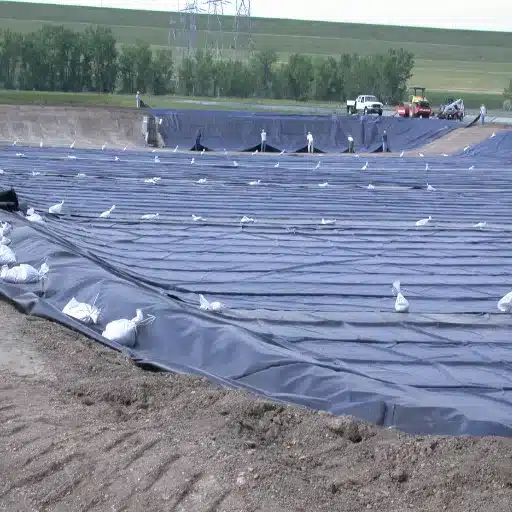
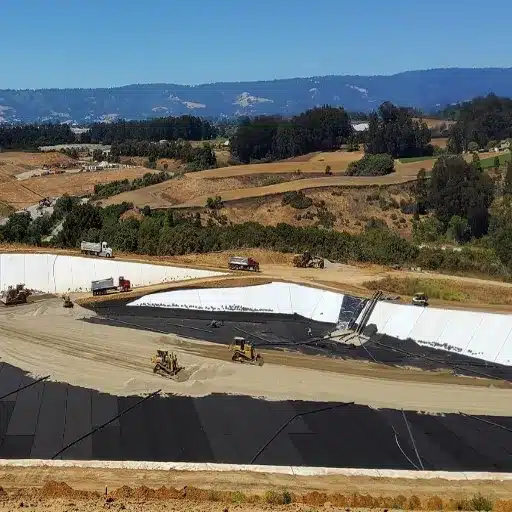
A geomembrane pond liner is a synthetic, impermeable sheet installed on the excavated subgrade of a pond or reservoir to prevent water loss into the surrounding soil. Unlike thin consumer-grade pond liners, geomembranes are engineered materials manufactured to precise thicknesses and performance standards for civil and environmental applications.
The most common polymers are high-density polyethylene (HDPE), linear low-density polyethylene (LLDPE), and polyvinyl chloride (PVC). Each polymer behaves differently in terms of flexibility, chemical resistance, UV stability, and weldability. Understanding these differences is the first step toward selecting the right material.
Geomembrane pond liners are used in:
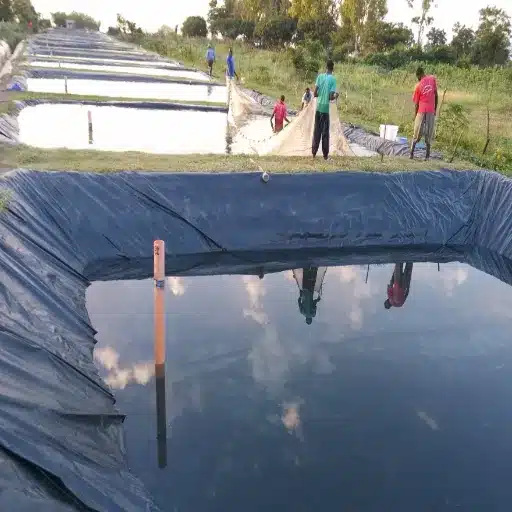
- Fish and shrimp aquaculture ponds
- Irrigation reservoirs and water storage basins
- Decorative lakes and golf course water features
- Wastewater treatment lagoons
- Mining and industrial containment ponds
Their primary job is simple: create a long-lasting impermeable barrier between water and soil. For a broader overview of how geomembranes fit into containment systems, see our geomembrane products guide.
Geomembrane Pond Liner Materials Compared
Not every pond liner material suits every project. The polymer you choose affects installation difficulty, seam strength, flexibility, chemical resistance, and total cost.
HDPE Geomembrane Pond Liners
HDPE is the most widely specified geomembrane for pond lining. It offers excellent chemical resistance, high tensile strength, and long UV stability when formulated with 2–3% carbon black. HDPE liners are rigid compared to other polymers, which makes them ideal for large, regularly shaped ponds where wide rolls reduce field seams.
Typical applications include aquaculture ponds, reservoirs, landfill caps, and mining heap leach pads. For buyers comparing the two most common polyethylene options, our HDPE vs LLDPE geomembrane guide breaks down the trade-offs in detail.
Strengths:
- Long service life, often 30–50+ years
- Strong chemical and UV resistance
- Cost-effective for large areas
- Wide availability in thicknesses from 0.3 mm to 3.0 mm
Limitations:
- Less flexible than LLDPE or PVC
- Requires skilled hot-wedge or extrusion welding
- Can stress-crack if poorly handled or overstretched
LLDPE Geomembrane Pond Liners
LLDPE is more flexible and puncture-resistant than HDPE. It conforms better to irregular pond shapes, uneven subgrades, and detailed areas such as pipe penetrations and corners. These properties make LLDPE a strong choice for small ponds, decorative water features, and retrofit projects where folding and fitting are more important than maximum chemical resistance.
Strengths:
- Higher elongation and conformability
- Easier to install on complex geometries
- Better low-temperature flexibility
- Good puncture resistance
Limitations:
- Lower chemical resistance than HDPE in aggressive environments
- Slightly shorter service life in exposed conditions
- Can be more expensive per square meter for large projects
PVC Geomembrane Pond Liners
PVC geomembranes are flexible, easy to seam with solvents or heat, and conform well to unusual shapes. They are often used for decorative ponds, canals, and potable water applications when manufactured with food-grade formulations.
Strengths:
- High flexibility and ease of installation
- Good conformability around structures
- Simple seam methods
Limitations:
- Lower chemical resistance than HDPE
- Plasticizer migration concerns in some environments
- Generally shorter service life than HDPE
EPDM and RPE Alternatives
EPDM rubber liners are common in small garden ponds and waterfall features because they are extremely flexible and easy to install without welding. Reinforced polyethylene (RPE) liners are lightweight and used for temporary or seasonal ponds. For engineered containment where performance and longevity matter, geomembranes are usually the better choice.
How to Choose the Right Pond Liner Thickness
Thickness is one of the most common questions buyers ask, and the answer depends on application, subgrade quality, water depth, and expected loads. Choosing the wrong thickness can lead to punctures, seam stress, or unnecessary cost.
| Application | Recommended Thickness | Notes |
|---|---|---|
| Small decorative ponds | 0.5 mm – 0.75 mm | Minimal loads; smooth subgrade assumed |
| Fish and shrimp ponds | 0.75 mm – 1.0 mm | Standard aquaculture specification |
| Irrigation reservoirs | 1.0 mm – 1.5 mm | Deeper water; larger area |
| Wastewater lagoons | 1.0 mm – 1.5 mm | Chemical exposure; regulatory scrutiny |
| Industrial containment | 1.5 mm – 2.0 mm+ | Heavy loads; hazardous materials |
For a deeper dive into matching thickness to project requirements, read our geomembrane thickness guide.
When Minh, a contractor in Vietnam, built a 2-hectare shrimp farm for a new client, he specified 0.5 mm HDPE to reduce material cost. Within eight months, harvesting equipment and rough subgrade debris caused multiple punctures. The repair work, re-flooding, and lost stocking cycle cost more than upgrading to 1.0 mm would have from the start. His takeaway: thickness is not the place to save money on commercial ponds.
Factors That Influence Thickness Selection
- Subgrade quality: Rocky or uneven soil needs thicker liner and a protective geotextile cushion.
- Water depth: Deeper water creates higher hydrostatic pressure and greater puncture risk.
- Surface loads: Vehicle traffic, harvesting equipment, or cover soil require heavier material.
- UV exposure: Exposed liners degrade faster; thicker HDPE with carbon black lasts longer.
- Regulatory requirements: Some industrial or landfill-adjacent projects specify minimum thicknesses. The U.S. EPA, for example, requires a minimum 60 mil (1.5 mm) HDPE geomembrane in municipal solid waste landfill composite liner systems under 40 CFR 258.40.
- Project lifespan: Long-term infrastructure projects justify thicker, higher-grade materials.
Site Preparation and Design Essentials
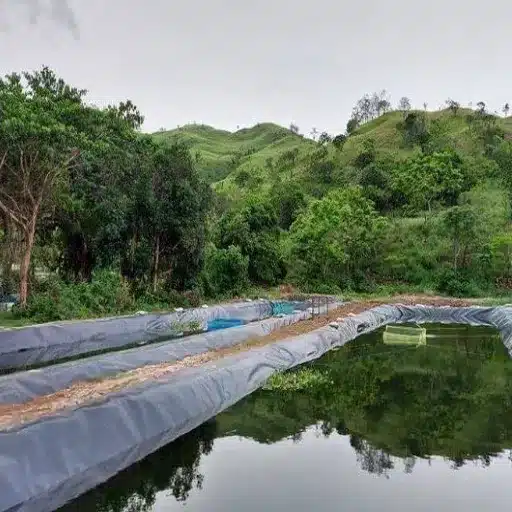
A geomembrane pond liner is only as good as the surface beneath it. Poor site preparation is the leading cause of premature liner failure.
Subgrade Preparation
Remove all vegetation, topsoil, rocks, roots, debris, and sharp objects from the pond footprint. The subgrade should be smooth, uniform, and compacted to at least 90% of standard Proctor density. Avoid sudden changes in slope or abrupt corners that create stress points in the liner.
For large ponds, grade tolerances typically fall within ±12 mm to prevent voids beneath the liner. Voids can cause localized stretching, a phenomenon sometimes called the “trampolining effect,” which leads to tears or seam failure.
Geotextile Underlayment
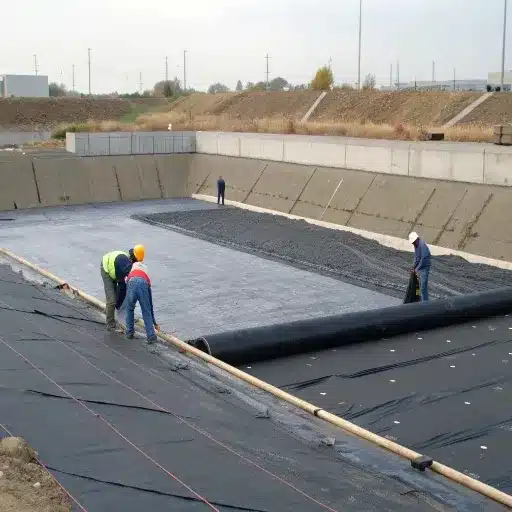
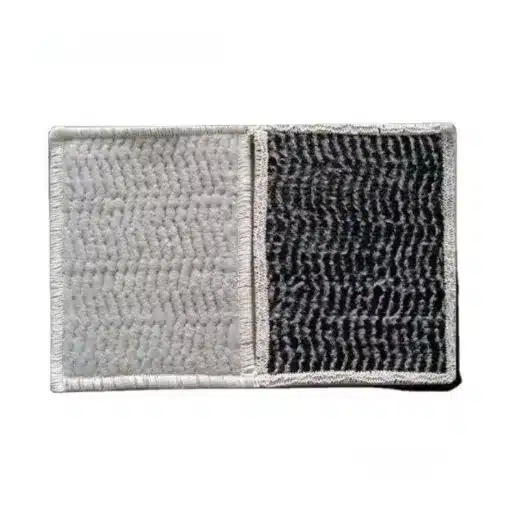
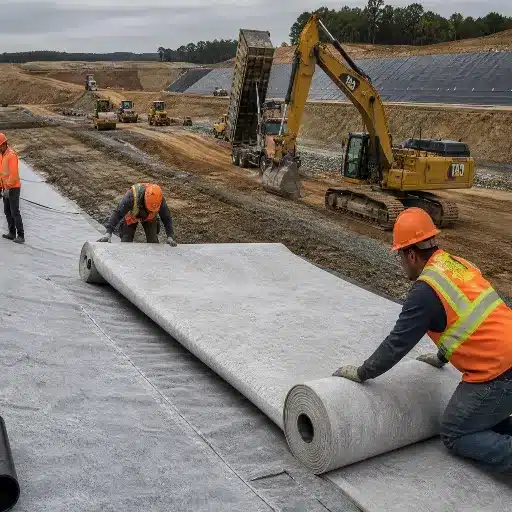
A protective nonwoven geotextile cushion, typically 200–300 g/m², should be placed beneath the geomembrane. This layer absorbs subgrade irregularities, reduces puncture risk, and provides a smooth surface for liner deployment. Skipping the underlayment to save cost is one of the most common and expensive mistakes in pond liner installation.
Slope and Anchor Trench Design
Side slopes of 2:1 to 3:1 are typical for stable pond construction. Steeper slopes increase stress on the liner and make installation more difficult. Anchor trenches around the perimeter secure the liner against wind uplift and water pressure. Trenches should be sized according to liner thickness and expected loads, then backfilled and compacted in layers.
Drainage and Uplift Control
Groundwater or trapped gas beneath the liner can create uplift forces. In high-water-table areas, design a subgrade drainage layer or gas venting system. Ignoring uplift pressure is a leading cause of liner whales and blowouts.
Installation Best Practices
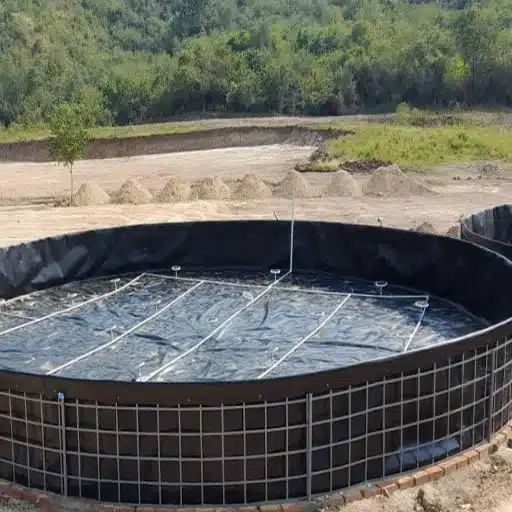
Proper installation determines whether your geomembrane pond liner lasts 30 years or needs repairs in the first season. The process can be broken into clear steps.
- Inspect and accept the subgrade. Verify compaction, smoothness, and cleanliness before liner delivery.
- Install the geotextile cushion. Overlap panels by 30–50 cm and secure against wind.
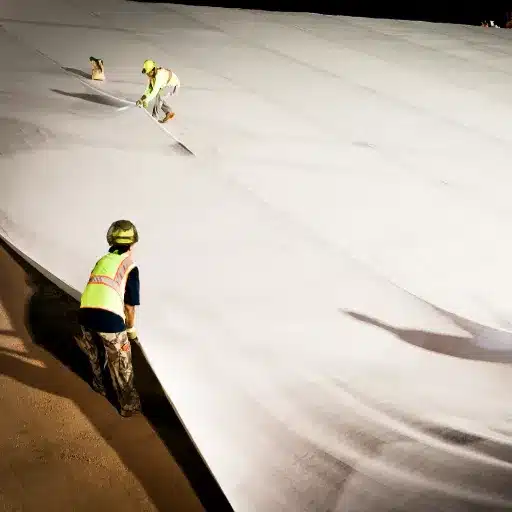
- Deploy liner panels. Use the widest rolls available to minimize field seams. Allow the liner to relax before seaming.
- Overlap seams correctly. Standard overlap is 100–150 mm for hot-wedge welding.
- Weld straight seams with a hot-wedge welder. Maintain correct temperature, speed, and pressure for the material thickness.
- Use extrusion welding for details. Pipe penetrations, repairs, and corners require extrusion welding with compatible rod.
- Perform trial welds. Test sample seams at the start of each shift and when conditions change.
- Test all field seams. Use air-channel tests, vacuum-box tests, or spark testing depending on seam type and project specifications.
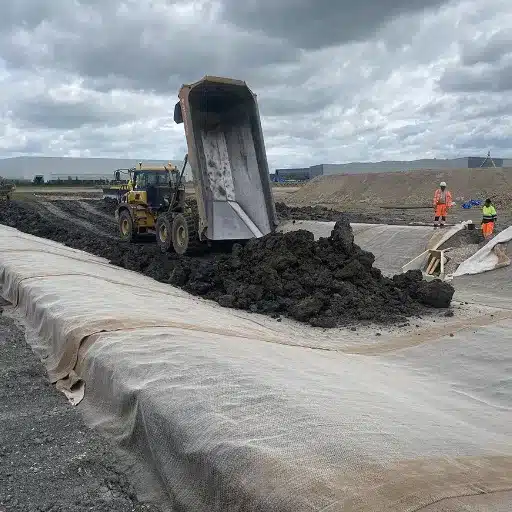
- Anchor edges in trenches. Backfill and compact in lifts.
- Fill gradually. Allow the liner to settle into the subgrade before reaching full water level.
For a complete walkthrough of each step, see our geomembrane installation guide.
Need help specifying your pond liner? Our engineering team can recommend the right material, thickness, and installation approach for your site. Contact us for a technical consultation →
Common Geomembrane Pond Liner Failures and How to Prevent Them
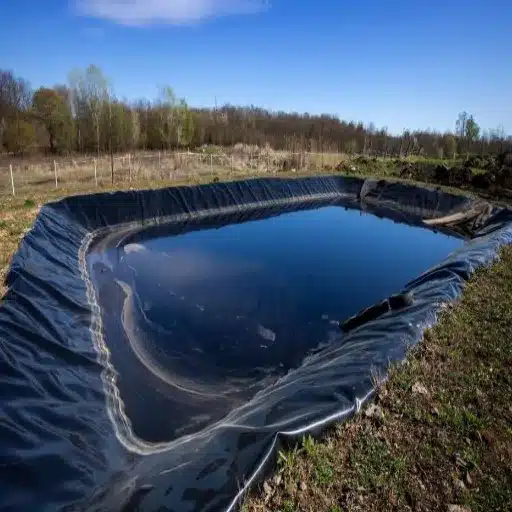
Even high-quality liners fail when design or installation shortcuts are taken. Understanding the common failure modes helps you specify and supervise the work more effectively.
Subgrade Puncture
Sharp rocks, roots, or debris left under the liner create stress concentrations. Over time, water pressure and thermal cycling drive these objects through the material. Prevention starts with thorough subgrade cleaning and a protective geotextile underlayment.
Seam Leaks
Field seams are the weakest point in most liner systems. Cold welds, contaminated surfaces, insufficient overlap, or incorrect welding parameters all reduce seam strength. Trial welds and non-destructive testing catch most problems before filling.
Trampolining or Uplift
When groundwater, gas, or air becomes trapped beneath the liner, the membrane lifts and forms large bubbles. These bubbles stretch the material and concentrate stress at seams. Proper subgrade drainage and gas venting prevent this issue.
Edge Pullout
Shallow or poorly compacted anchor trenches allow the liner to pull free under hydrostatic pressure. Trenches must be deep enough and backfilled with compacted soil to develop adequate holding capacity.
UV and Abrasion Damage
Exposed liner edges or uncovered sections can degrade from sunlight and mechanical wear. Cover exposed edges with soil, rock, or protective ballast. HDPE liners with 2–3% carbon black resist UV far better than unprotected polymers.
In Nigeria, an aquaculture cooperative installed a 1.0 mm HDPE liner for a catfish farm. They skipped air-channel testing to meet a tight stocking deadline. Two months later, a slow seam leak drained one pond overnight during a hot spell. Most of the stock died. A week of re-welding and testing would have prevented the loss.
Cost Factors for Geomembrane Pond Liners
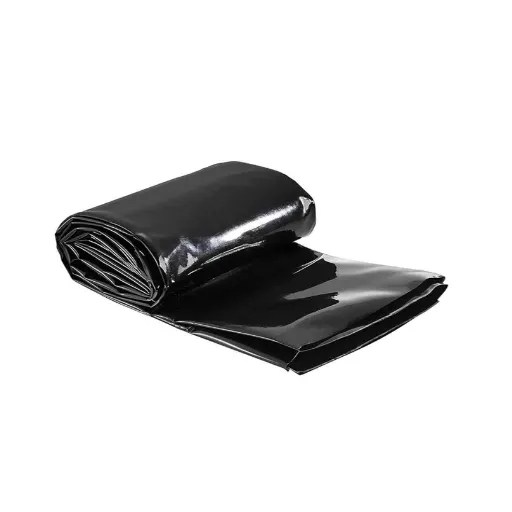
Pricing depends on more than the price per square meter of liner. A complete budget should include:
- Material cost: HDPE is generally the most cost-effective for large ponds; LLDPE and PVC can cost more per square meter.
- Thickness: Thicker liner costs more but reduces failure risk and repair costs.
- Roll width and freight: Wider rolls reduce seams but may increase shipping costs. Optimize roll dimensions for container loading.
- Geotextile underlayment: Budget 200–300 g/m² nonwoven geotextile for the entire footprint.
- Welding and labor: Certified welders and technicians are essential for large projects.
- Testing and QA/QC: Air-channel tests, vacuum-box tests, and destructive samples add cost but protect quality.
- Accessories: Anchor trenches, pipe boots, penetration seals, and ballast cover.
Aisha, a project manager in Kenya, reduced her total installed cost by 12% on a 1.5-hectare reservoir by selecting 7-meter-wide HDPE rolls instead of standard 5.8-meter rolls. The wider rolls cut field seams by nearly 30%, saving welding labor and testing time despite a slightly higher material unit price.
When to Source a Geomembrane Pond Liner Internationally
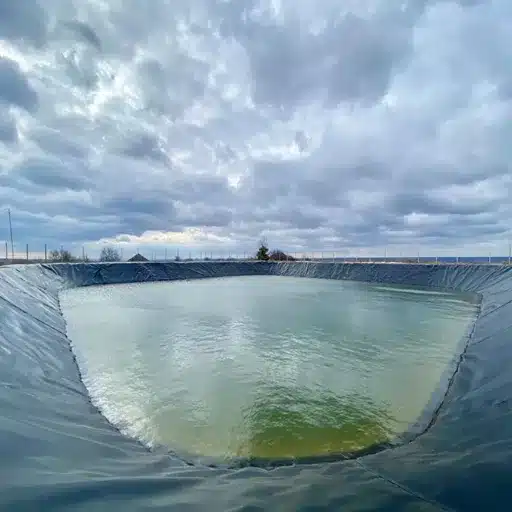
International buyers often source geomembrane pond liners from specialized manufacturers to access better pricing, custom thicknesses, and wider roll formats. To make international procurement successful:
- Request technical datasheets and confirm compliance with GRI-GM13 or equivalent standards. Typical HDPE geomembranes meeting GRI-GM13 have density ≥0.940 g/cm³, tensile break strength ≥40 kN/m, elongation at break ≥700%, and carbon black content of 2–3%.
- Verify sample retention and QC documentation. Reputable suppliers retain production samples for traceability.
- Plan logistics carefully. Roll dimensions affect container utilization; folded or palletized loading may be needed.
- Confirm welding support. Some suppliers offer installation guidance or can recommend certified welding teams in your region.
- Ask about export packaging. UV-resistant covers and proper blocking prevent damage during ocean freight.
Conclusion
A geomembrane pond liner is a long-term investment in water security and project reliability. The best results come from matching the polymer to your site, selecting thickness based on real loads and subgrade conditions, and installing with proper underlayment, welding, and testing.
For aquaculture and reservoir projects, HDPE remains the workhorse material. For irregular or smaller ponds, LLDPE offers easier handling and better conformability. In every case, skipping site preparation or seam testing is a shortcut that almost always costs more later.
Ready to specify your geomembrane pond liner? Contact our engineering team for a tailored recommendation, material datasheet, or project quote. We support global export delivery and can guide you from specification through installation.
FAQ
What is the best material for a geomembrane pond liner?
HDPE is the best choice for most large aquaculture, reservoir, and wastewater applications due to its chemical resistance, UV stability, and long service life. LLDPE is better for irregular or small ponds where flexibility matters.
How thick should a pond liner be?
Most fish and shrimp ponds use 0.75 mm–1.0 mm. Decorative ponds can use 0.5 mm. Industrial containment or heavily loaded ponds typically require 1.5 mm or thicker.
How long does a geomembrane pond liner last?
A properly installed HDPE geomembrane pond liner can last 30–50+ years. Service life depends on material quality, UV exposure, installation quality, and maintenance.
Can I install a geomembrane pond liner myself?
Small decorative ponds with flexible materials can be DIY projects. Commercial ponds require trained welders, seam testing equipment, and proper subgrade preparation.
Do I need a geotextile underlayment under my pond liner?
Yes. A 200–300 g/m² nonwoven geotextile cushion protects the liner from puncture and subgrade irregularities. It is one of the lowest-cost insurance policies in the entire system.