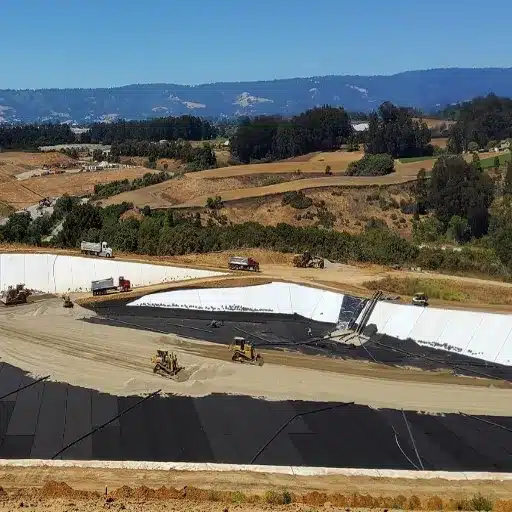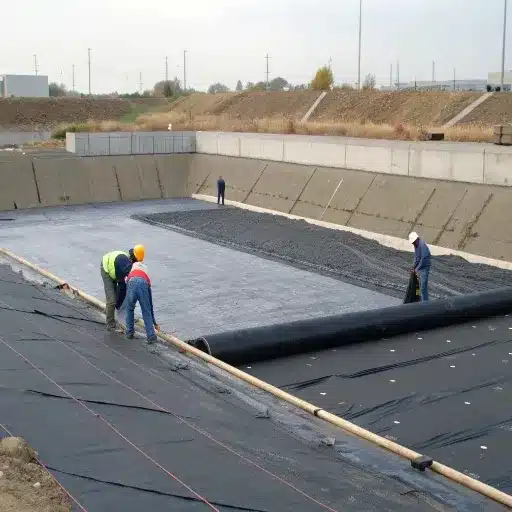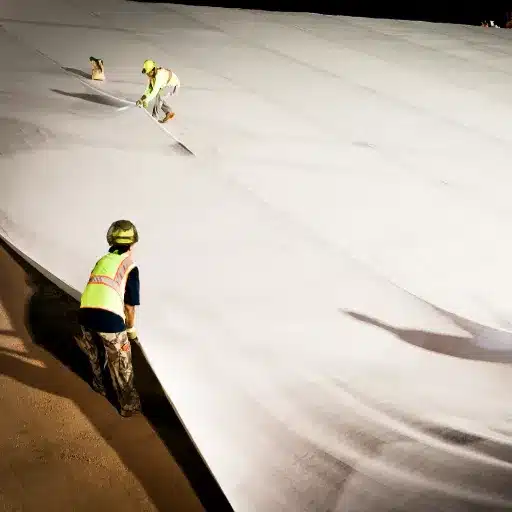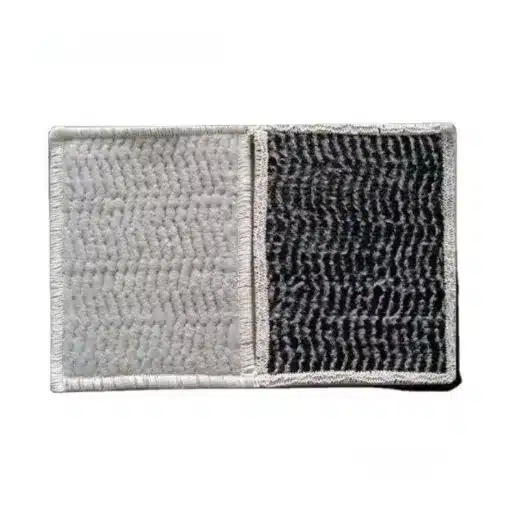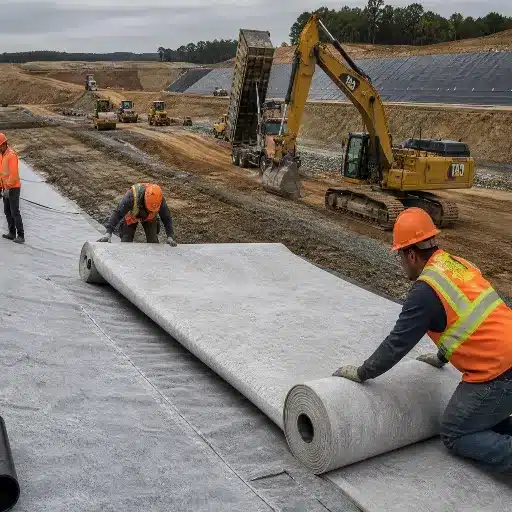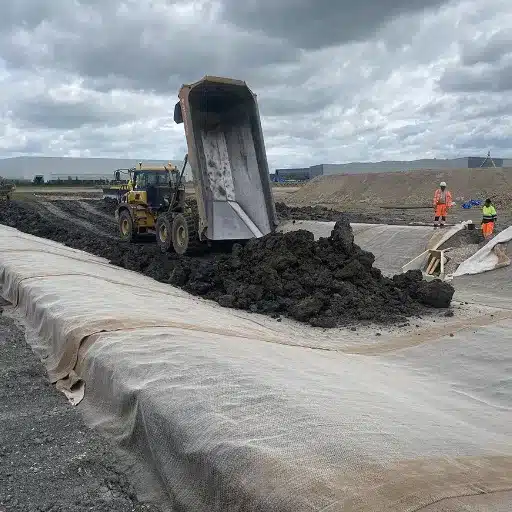
A geomembrane for landfill liner is an engineered, impermeable polymer sheet that forms the primary barrier in a composite landfill lining system. HDPE is the most common material for base liners, while LLDPE, PVC, and other polymers are often used for caps, temporary covers, and settlement-prone areas.
For project teams, selecting the right landfill liner geomembrane is a risk-management decision. One defective liner can release contaminants into groundwater for decades. Remediation costs routinely exceed the original construction budget, and regulatory penalties can shut a project down. This guide explains how to specify landfill liner projects, covering material types, geomembrane liner material selection matrices, composite system design, standards, installation best practices, failure prevention, and supplier qualification. For a broader overview of all geosynthetic options, start with our complete geomembrane selection guide.
Key Takeaways
- A geomembrane for landfill liner is the primary impermeable barrier in a composite system; HDPE dominates base liners because of its chemical resistance and strength.
- Match the polymer to the application: HDPE for base liners, LLDPE for caps and settlement zones, PVC for temporary covers, and EPDM/fPP for niche conditions.
- EPA Subtitle D requires 1.5 mm (60 mil) HDPE for municipal solid waste base liners, with 2.0 mm or more for hazardous waste.
- Composite systems combine the geomembrane with a secondary barrier, protective geotextile cushion, and leachate collection layer.
What Is a Geomembrane for Landfill Liner?
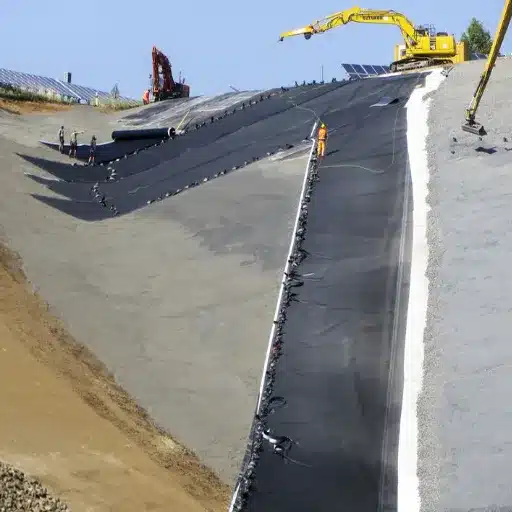
A geomembrane for landfill liner is a synthetic membrane installed below or around waste cells to block liquid and gas migration. Its main job is to stop leachate from reaching soil and groundwater.
In a typical modern landfill, the membrane does not work alone. It sits within a composite liner system that includes a prepared subgrade, a secondary barrier, a protective geotextile cushion, and a leachate collection and removal system (LCRS). You can learn how it compares to a bentonite-based alternative in our geomembrane vs GCL comparison.
Regulations vary by region. The US EPA Subtitle D sets minimum liner requirements for municipal solid waste (MSW) landfills. The EU Landfill Directive requires equivalent protection, and China GB 18599-2020 governs industrial solid waste storage. Most jurisdictions now prohibit single geomembrane liners and require a composite or double-liner system with leachate collection.
Need a landfill liner specification tailored to your waste type? Contact our engineering team for a custom quote and material recommendation.
Real-World Scenario: Municipal Cell in Southeast Asia
In early 2024, Rina Chen at GreenEarth Containment specified 1.5 mm textured HDPE for a 50,000 m² municipal cell in Southeast Asia with 3:1 slopes, a GCL, and a 300 g/m² geotextile cushion. Eighteen months after waste placement, monitoring showed no slope movement and no leachate breakthrough.
Types of Geomembrane Materials for Landfill Applications
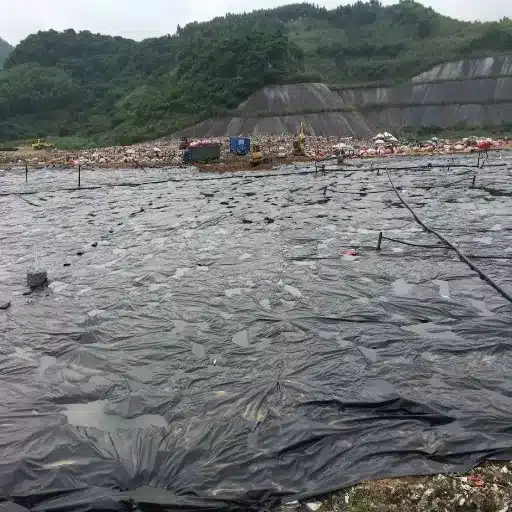
Not every polymer performs the same in a landfill. The right material depends on chemical exposure, elongation needs, temperature range, and installation geometry. The most common geomembrane liner types are HDPE, LLDPE, PVC, EPDM, and fPP/RPP.
HDPE Geomembrane
High-density polyethylene (HDPE) is the default material for landfill base liners. It offers excellent chemical resistance, high tensile strength, and outstanding durability against UV exposure and oxidation. Typical landfill-grade HDPE is supplied at 1.5 mm to 2.0 mm thickness, with textured options for side slopes. Manufacturers certify it to GRI-GM13, which sets minimum density, tensile yield, elongation, puncture resistance, and ESCR values. For a deeper look, read our HDPE geomembrane landfill liner deep dive and view our HDPE geomembrane product page.
LLDPE Geomembrane
Linear low-density polyethylene (LLDPE) is more flexible than HDPE and offers elongation at break of 600% to 800%. That flexibility makes it the usual LLDPE geomembrane landfill cap choice for closure systems and settlement-prone areas. Cap applications typically use 1.0 mm to 1.5 mm LLDPE. If you are deciding between the two polymers, our HDPE vs LLDPE geomembrane guide breaks down the trade-offs. You can also explore our LLDPE geomembrane product page.
PVC Geomembrane
Polyvinyl chloride (PVC) geomembranes are highly flexible and easy to seam with solvent or hot-air welding. They are often used for temporary covers, odor control caps, and small ponds. However, plasticizer migration and lower chemical resistance limit PVC in aggressive base-liner service. See our PVC geomembrane product page for available thicknesses and roll sizes.
EPDM and fPP/RPP Geomembranes
Ethylene propylene diene monomer (EPDM) is a synthetic rubber with extreme elasticity and a wide temperature range, used in green roofs and specialty covers. Flexible polypropylene (fPP) and reinforced polypropylene (RPP) handle high-temperature applications and some industrial waste streams. Neither is a standard choice for regulated MSW base liners, but both can be specified for niche conditions.
Material Selection Matrix by Landfill Application
Choosing the right geomembrane for landfill liner work means matching the material to the application, waste type, and geometry. The table below summarizes typical choices.
| Application | Preferred Material | Typical Thickness | Key Reason |
|---|---|---|---|
| Primary MSW base liner | HDPE | 1.5 mm (60 mil) | Chemical resistance, GRI-GM13 compliance, cost efficiency |
| Hazardous waste base liner | HDPE | 2.0 mm (80 mil) or more | Aggressive leachate, double-liner systems, higher safety factor |
| Landfill cap/closure | LLDPE or HDPE | 0.75 mm to 1.5 mm | Conformability, UV resistance, settlement tolerance |
| Side slopes steeper than 3:1 | Textured HDPE or textured LLDPE | 1.5 mm to 2.0 mm | Interface friction, slope stability |
| Leachate pond/lagoon | HDPE | 1.5 mm or more | Chemical and UV resistance, long service life |
| Temporary cover | PVC or LLDPE | 0.5 mm to 1.0 mm | Cost, flexibility, rapid deployment |
Base liners see the harshest conditions. HDPE dominates here because it resists oxidation, chemical attack, and stress cracking. For help choosing thickness, see our geomembrane thickness selection guide. For slope-specific advice, read our textured vs smooth geomembrane comparison.
Caps and closures must conform to a settling waste surface and resist UV exposure. LLDPE is often preferred because it accommodates movement without brittle failure.
Composite Landfill Liner System Design
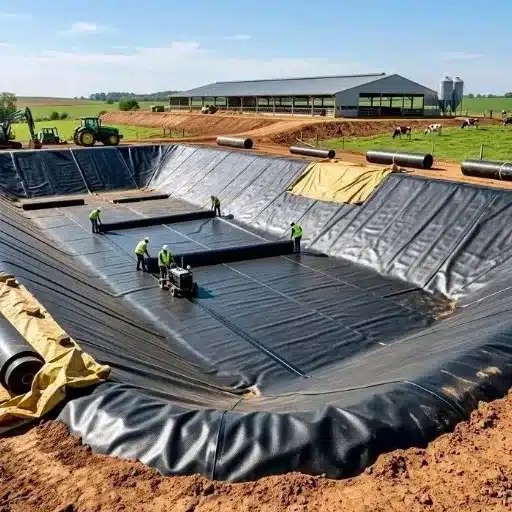
A single sheet is rarely enough for a regulated landfill. Most standards require a composite landfill liner system with multiple layers that work together. The typical bottom liner build-up from bottom to top is:
- Prepared and compacted subgrade.
- Secondary barrier: compacted clay liner (CCL, typically at least 600 mm thick with hydraulic conductivity k ≤ 1×10⁻⁷ cm/s) or a geosynthetic clay liner for composite landfill systems.
- Primary barrier: HDPE geomembrane at the specified thickness.
- Protective nonwoven geotextile cushion, usually 300 g/m² to 600 g/m².
- Drainage layer: geonet or gravel leachate collection.
- Leachate collection pipe network and sump.
The hydraulic conductivity of each barrier component should be ≤ 1×10⁻⁷ cm/s. The leachate collection system must sit above the sheet so that any liquid is removed before it can pressurize the liner. Side slopes require interface friction testing, and anchor trenches at the perimeter hold the sheet in place. A double-liner system with leak detection between the primary and secondary liners is required for hazardous waste facilities in many countries.
Geosynthetic clay liners (GCLs) are thinner and faster to install than compacted clay and have self-healing bentonite that can seal small punctures. Compacted clay liners offer proven long-term performance and lower material cost, but they require more space and longer construction time. Our geomembrane vs GCL comparison explains when to choose each option.
Real-World Scenario: Hazardous Waste Facility in the Middle East
Aisha Al-Rashid at Safeguard Geotech designed a double-liner system for a hazardous waste facility in the Middle East using 2.0 mm HDPE over a GCL with a geonet leak detection layer. After five years, zero flow and zero leaks were recorded.
Key Specifications and Standards for Landfill Geomembranes
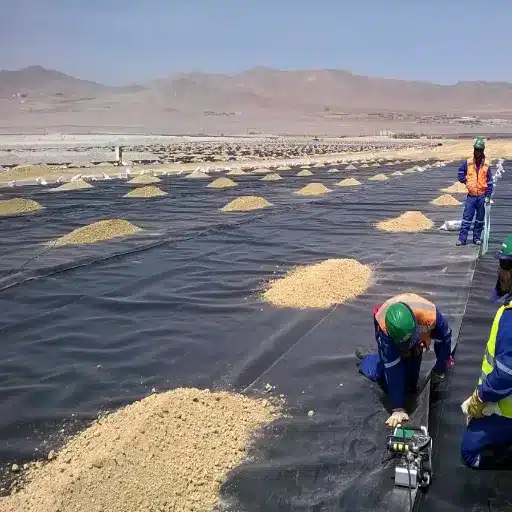
Quality standards exist because landfill liner failure is expensive and dangerous. Specifying the right test properties ensures that the membrane will perform for decades. The Geosynthetic Institute GRI-GM13 standard defines the baseline for landfill-grade HDPE.
HDPE Benchmarks (GRI-GM13 / ASTM)
- Density: ≥ 0.940 g/cm³
- Tensile yield at break (1.5 mm smooth): ≥ 22 kN/m per ASTM D6693
- Elongation at break: ≥ 400%
- Puncture resistance: ≥ 480 N per ASTM D4833
- High-pressure oxidative induction time (HP-OIT): ≥ 400 minutes per ASTM D5885
- Environmental stress crack resistance (ESCR): > 500 hours per ASTM D5397
- Carbon black content: approximately 3% for UV protection
- Seam strength: ≥ 80% of parent material per ASTM D6392
HDPE permeability is typically ≤ 1×10⁻¹³ cm/s. That is 100 to 1,000 times more impermeable than a well-constructed compacted clay liner. Service life is estimated at 20 to 30 years in exposed conditions and over 100 years when protected underground.
Regulatory Minimums
EPA Subtitle D requires a minimum 60 mil (1.5 mm) HDPE geomembrane for MSW composite base liners. Hazardous waste facilities typically require 80 mil (2.0 mm) or thicker with a double-liner system. International projects should verify local requirements, but the 1.5 mm HDPE minimum is widely accepted as the starting point for municipal waste.
Installation Best Practices for a Geomembrane for Landfill Liner
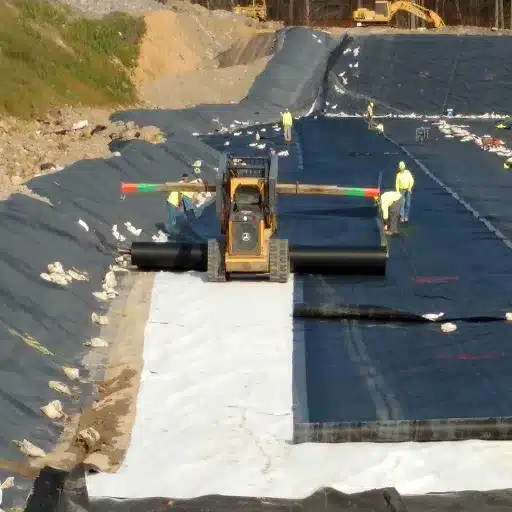
Even the best material can fail if it is installed poorly. Subgrade preparation, panel deployment, welding, and testing are the four pillars of a successful liner installation. For a full workflow, read our geomembrane installation best practices and geomembrane welding guide.
Subgrade Preparation
The subgrade must be smooth, compacted, and free of sharp stones, roots, or debris. Many specifications require a sand bedding layer or a nonwoven geotextile cushion to protect the sheet from puncture.
Panel Deployment and Welding
Large rolls are unrolled downslope to avoid wrinkles and thermal expansion loops. Field seams are made by hot wedge welding. Extrusion welding is used for repairs, details, pipe penetrations, and corners.
Testing and Quality Assurance
Non-destructive testing includes air pressure testing of dual-track seams and vacuum box testing of patches and details. Destructive peel tests are taken at specified frequencies and sent to a laboratory. Independent QA verifies material certifications on delivery, and batch records should be retained for at least five years.
Common Failure Modes of a Geomembrane for Landfill Liner
Understanding how geomembranes fail helps engineers design systems that last. Most failures are not caused by the material itself but by poor specification, installation, or subgrade preparation.
| Failure Mode | Cause | Prevention Strategy |
|---|---|---|
| Environmental stress cracking (ESC) | Poor resin quality, tensile stress, chemical exposure | Specify high-quality resin, verify ESCR > 500 hours, avoid stress concentrations |
| Puncture | Stones, debris, or sharp objects in subgrade | Install protective geotextile cushion, inspect subgrade carefully |
| Seam failure | Contaminated surfaces, poor welding technique, cold seams | Use certified welders, clean surfaces, perform air pressure and peel tests |
| Thermal expansion and wrinkles | Temperature swings during installation | Sequence panels to cover quickly, avoid excessive slack, backfill promptly |
| UV degradation | Extended exposure before waste cover | Minimize exposure time, cover geomembrane within project schedule |
| Slope sliding | Insufficient interface friction | Specify textured geomembrane, test interface friction per ASTM D5321 |
The liner is only as reliable as the details around it. Anchor trenches, pipe penetrations, and corners require careful extrusion welding and additional testing.
Selecting a Supplier for Landfill Liner Projects
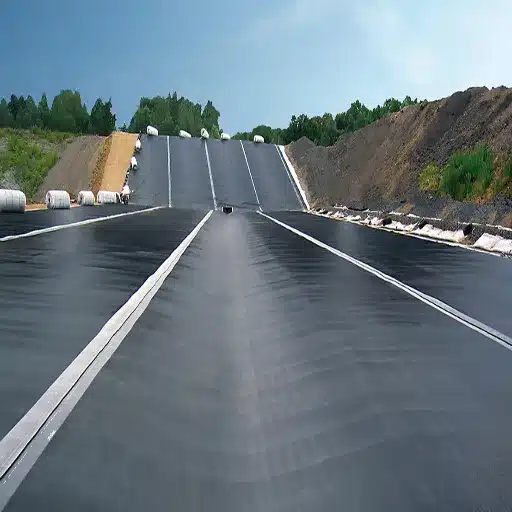
Supplier selection can be as important as material selection. Look for these qualifications when sourcing landfill liner projects.
- Manufacturing certifications: ISO9001 quality management and GRI-GM13 or GRI-GM17 compliance verification.
- Customizable specifications: Thickness from 0.1 mm to 3.0 mm, roll dimensions tailored to site access, and textured or smooth surfaces.
- Export packaging and logistics: Container loading expertise, protective wrapping, and on-time delivery for international projects.
- Technical consultation: Engineering support for material selection, thickness choice, and installation guidance.
- Sample retention and third-party reports: A 5-year minimum sample retention policy and independent laboratory reports for tensile strength, ESCR, OIT, and seam strength.
Mining and tailings projects apply similar logic. If your work includes those applications, our geomembrane mining applications guide covers the relevant material and installation requirements.
Ready to specify landfill liner supply? Request a tailored quote with your project area, waste type, and required thickness.
Frequently Asked Questions
What is the best geomembrane for landfill liners?
HDPE is the best choice for most landfill base liners because of its chemical resistance, strength, and long service life. LLDPE is often preferred for caps and settlement-prone areas.
What thickness geomembrane is used for landfill liners?
EPA Subtitle D requires a minimum 1.5 mm (60 mil) HDPE geomembrane for municipal solid waste base liners. Hazardous waste facilities typically use 2.0 mm (80 mil) or more.
What is the difference between HDPE and LLDPE geomembrane for landfills?
HDPE is stronger and more chemically resistant, making it ideal for base liners. LLDPE is more flexible and conforms better to irregular surfaces, so it is often used for caps. Our HDPE vs LLDPE geomembrane comparison explains the full trade-off.
What is a composite landfill liner system?
A composite landfill liner system combines a primary geomembrane barrier with a secondary barrier such as a GCL or compacted clay liner, a protective geotextile cushion, and a leachate collection layer.
What standards should a geomembrane for landfill liner meet?
Landfill-grade HDPE should meet GRI-GM13 and the relevant ASTM test methods for tensile strength, puncture, ESCR, and oxidative induction time.
How is a geomembrane installed in a landfill?
Installation includes subgrade preparation, panel deployment, hot wedge welding of seams, extrusion welding of details, and non-destructive and destructive testing. See our geomembrane installation guide for details.
How long does a geomembrane landfill liner last?
HDPE geomembrane can last 20 to 30 years in exposed conditions and over 100 years when protected underground.
Conclusion
A geomembrane for landfill liner is the frontline defense against groundwater contamination. Choosing the right material, thickness, and composite system configuration is what separates a reliable landfill from a future liability.
Match the polymer to the application: HDPE for base liners and ponds, LLDPE for caps and settlement zones, and PVC or fPP for temporary or specialty covers. Meet the regulatory minimums, specify GRI-GM13-compliant HDPE with verified test data, and design a composite system that includes drainage, protection, and a secondary barrier.
Start your geomembrane for landfill liner specification today. Contact our engineering team for a tailored quote, material recommendation, and delivery schedule.