HDPE geomembrane is the better choice for long-term, high-performance containment, while PVC geomembrane works best for small, flexible, or short-term installations where ease of handling matters most. The right material depends on your project chemistry, geometry, climate, and design life.
When procurement teams specify a liner, the wrong decision rarely shows up on day one. It appears five, ten, or twenty years later as seam failure, brittle cracking, or contaminated groundwater. That is why understanding the real differences between PVC vs HDPE geomembrane is not just a technical exercise; it is a risk decision.
In this guide, you will learn how each material performs across mechanical strength, chemical resistance, installation, and lifecycle cost. You will also get a practical selection framework so you can specify the right geomembrane with confidence.
Key Takeaways
- HDPE geomembrane delivers higher tensile strength, lower permeability, and longer service life, making it ideal for landfills, mining, and industrial containment.
- PVC geomembrane is more flexible and easier to install in complex shapes, but it has shorter service life and lower chemical resistance.
- HDPE dominates the global geomembrane market with roughly 46–56% share, while PVC holds about 30%.
- Standards matter: specify HDPE to GRI-GM13 and PVC to ASTM D7176 / D7408 for verifiable performance.
- Lifecycle cost often favors HDPE despite higher upfront material and installation expense.
What Is a Geomembrane and Why Material Choice Matters
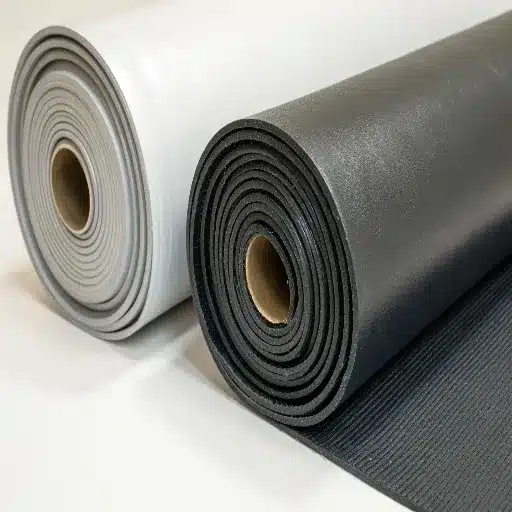
A geomembrane is a synthetic, impermeable barrier used to control fluid or gas migration in civil, environmental, and mining projects. It is the last line of defense between contaminants and soil, or between stored water and loss.
Most geomembranes are made from thermoplastic polymers. The two most common are high-density polyethylene (HDPE) and polyvinyl chloride (PVC). Both can form effective barriers, but their molecular structure, additives, and field behavior are very different.
Choosing the wrong polymer for a project can lead to premature failure, expensive repairs, and regulatory non-compliance. For example, a PVC liner exposed to aromatic hydrocarbons can soften and lose strength, while an HDPE liner folded into a complex tank corner may stress crack if not installed with care.
If you are new to geosynthetics, start with our complete guide to geomembrane products before comparing specific materials.
PVC vs HDPE Geomembrane: Composition and Structure
HDPE Composition
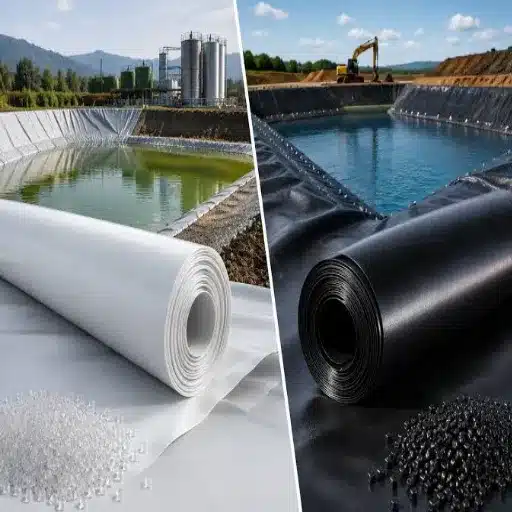
HDPE geomembrane is manufactured from high-density polyethylene resin. Carbon black is added, typically at 2–3%, to provide UV resistance. The material contains no plasticizers, so it does not migrate or evaporate over time.
This gives HDPE excellent chemical stability and long-term durability. It is also why HDPE can remain exposed to sunlight for decades without significant degradation.
PVC Composition
PVC geomembrane is made from polyvinyl chloride resin blended with plasticizers, stabilizers, and fillers. The plasticizers make the sheet soft and flexible, but they can migrate out over time, especially under heat or chemical exposure.
Because of this, PVC liners often require cover soil or protection from direct UV to reach their design life. In exposed applications, PVC may become brittle or shrink as plasticizers are lost.
Mechanical Properties Comparison
Mechanical performance is often the first specification engineers check. Here is how the two materials compare in real terms.
| Property | HDPE Geomembrane | PVC Geomembrane |
|---|---|---|
| Tensile strength | 20–35 MPa | 10–20 MPa |
| Elongation at break | 700–900% | 250–400% |
| Puncture resistance | Excellent (~356 N) | Moderate (~267 N) |
| Tear resistance | High | Moderate |
| Service life | 30–50+ years | 10–25 years |
| Cold-temperature flexibility | Flexible to ~-90°C | Becomes brittle near -40°C |
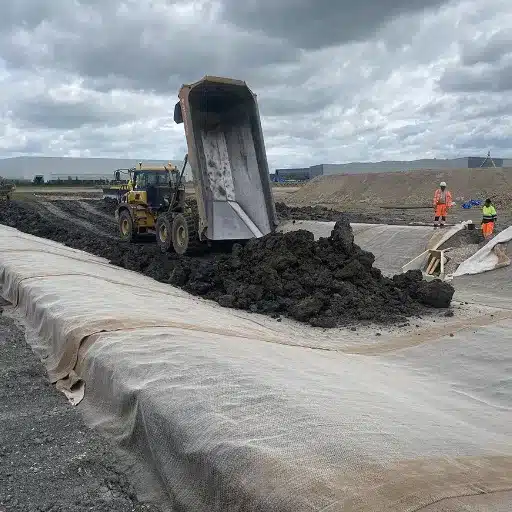
HDPE is clearly stronger and tougher. It resists puncture, tearing, and environmental stress cracking better than PVC. This is why HDPE is the default choice for landfills, mining heap leach pads, and large industrial ponds.
PVC, however, has one mechanical advantage: it is far more flexible and conformable. It can be folded into tight corners, draped over irregular subgrades, and installed in prefabricated panels with fewer field seams.
When Marcus, an environmental contractor in Alberta, lined a small aeration lagoon with a 30 mil PVC geomembrane, the material conformed easily to the lagoon’s curved walls and bottom slope. The installation crew completed the job in two days. Three years later, however, he noticed surface cracking where the liner was exposed to winter UV and freeze-thaw cycles. He replaced it with a 1.5 mm HDPE liner and has not had issues since.
Chemical Resistance and Environmental Performance
Chemical Resistance
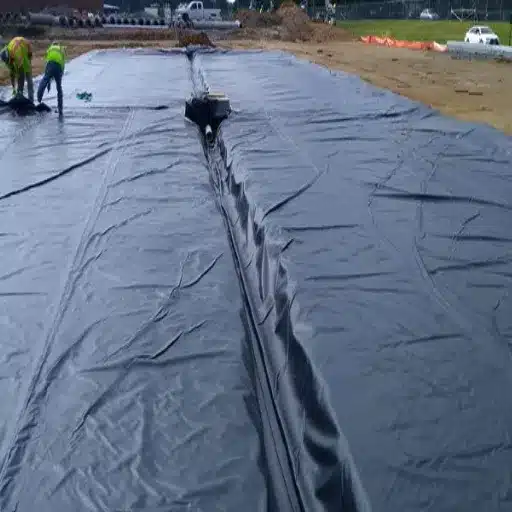
HDPE geomembrane offers excellent resistance to acids, alkalis, salts, and hydrocarbons. It is the standard material for landfill leachate containment, mining tailings, and industrial wastewater ponds.
PVC geomembrane resists many aqueous chemicals but is more vulnerable to oils, solvents, and aromatic hydrocarbons. In applications with significant hydrocarbon exposure, PVC may soften, swell, or lose mechanical properties.
UV Resistance
HDPE with carbon black stabilization performs well in exposed conditions. UV degradation occurs very slowly, which is why HDPE is trusted for exposed reservoirs and canals.
PVC requires UV stabilizers and often performs better when covered. Long-term sun exposure can degrade plasticizers and shorten service life.
Permeability
HDPE has extremely low permeability, on the order of 10⁻¹¹ cm/s. PVC permeability is roughly 100 times higher. For high-risk containment, this difference alone can determine material choice.
Need a deeper material comparison? Read our guide on HDPE vs LLDPE geomembrane to understand how polyethylene variants differ.
Installation, Welding, and Field Performance
HDPE Installation
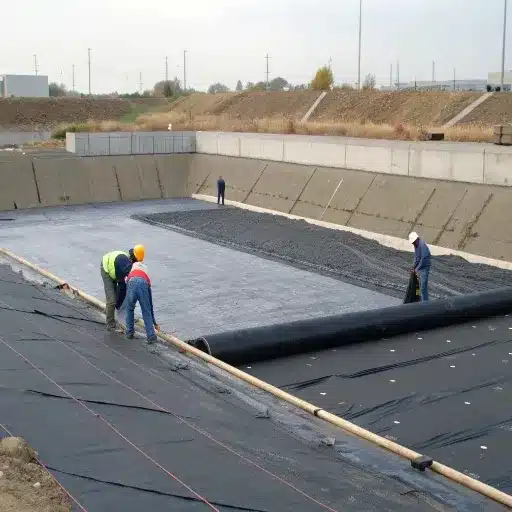
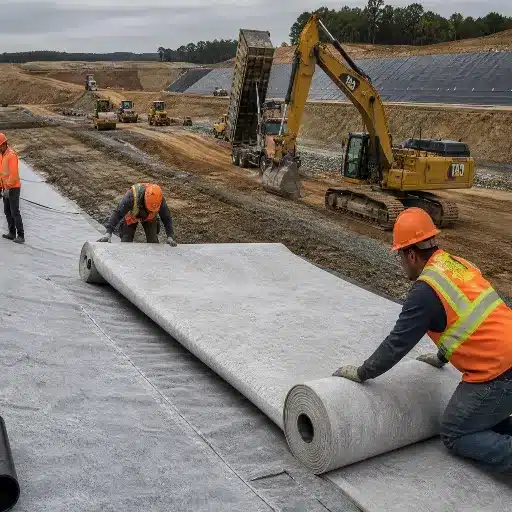
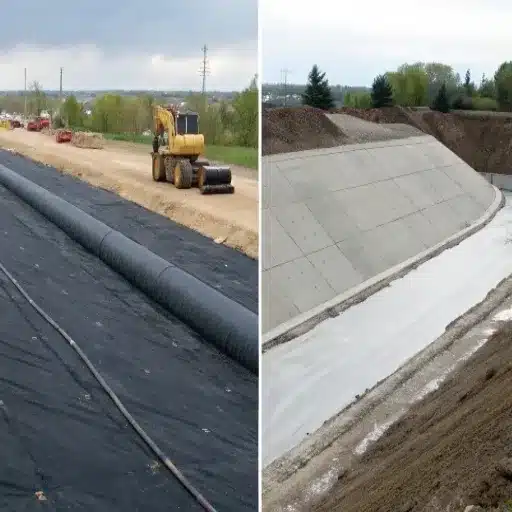
HDPE geomembrane is installed using hot-wedge or extrusion welding. Seams are strong, often matching or exceeding the parent material strength when tested properly. Field seams require trained crews and non-destructive testing.
HDPE expands and contracts significantly with temperature. Installation crews must manage thermal expansion, especially in exposed, large-area applications.
PVC Installation
PVC geomembrane can be joined by solvent welding, adhesive bonding, or hot-air welding. It is lighter and easier to handle, making it popular for small ponds, decorative water features, and prefabricated tank liners.
PVC seam strength typically reaches 80–90% of parent material. While adequate for many applications, it is generally lower than a properly welded HDPE seam.
For project teams without specialized welding equipment, PVC can reduce installation complexity. But for critical containment, the superior seam integrity of HDPE usually justifies the additional installation discipline.
Service Life, Lifecycle Cost, and Standards
Service Life
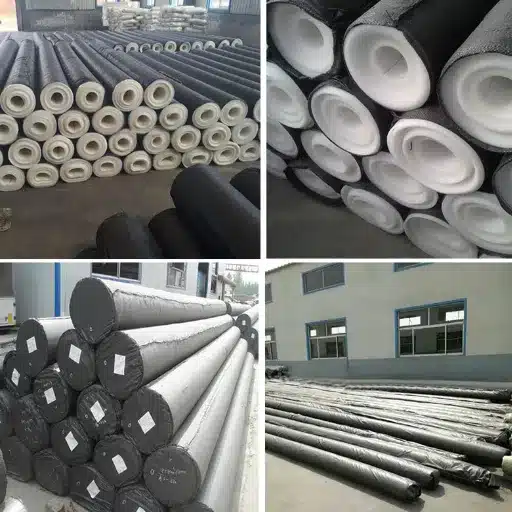
HDPE geomembrane commonly delivers 30 to 50 years of service, with some buried installations projected to last 80 years. PVC geomembrane typically lasts 10 to 25 years, depending on exposure, thickness, and chemical environment.
Lifecycle Cost
PVC often has lower upfront material and installation costs. However, replacement, repair, and monitoring costs can make it more expensive over a multi-decade project life. HDPE’s higher initial cost is usually offset by its longer service life and lower maintenance requirements.
Relevant Standards
- HDPE: GRI-GM13 is the most widely referenced specification for HDPE geomembrane. It covers density, carbon black content, oxidation induction time (OIT), and stress crack resistance.
- PVC: ASTM D7176, D7408, and D751 define material properties, seam strength, and testing for PVC geomembrane.
Specifying by standard rather than by generic product description gives engineers verifiable performance criteria. At Shanxi Shengxing, HDPE geomembranes are manufactured under ISO9001 quality systems with samples retained for traceability.
Application-Based Selection Guide
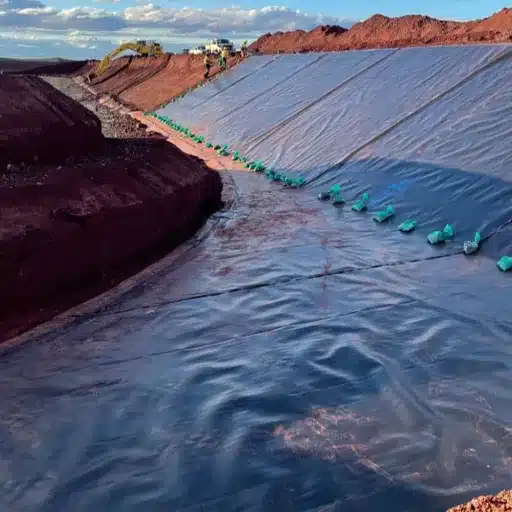
Use this framework to match material to project conditions.
Choose HDPE Geomembrane For
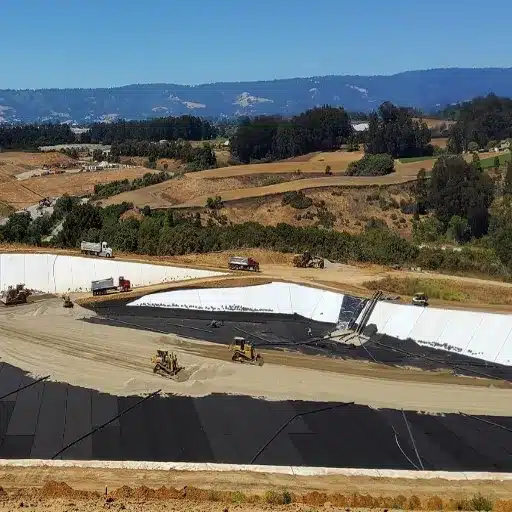
- Landfill liners and leachate ponds
- Mining heap leach pads and tailings storage
- Industrial wastewater and chemical containment
- Large exposed reservoirs, ponds, and canals
- Projects requiring 30+ year design life
- Cold climates and harsh chemical exposure
Choose PVC Geomembrane For
- Decorative ponds and water features
- Aquaculture ponds
- Complex-shaped tanks, sumps, and corners
- Temporary or short-term containment
- Buried applications protected from UV
- Projects with limited installation equipment
When the engineering team at a water treatment facility in Malaysia needed to line a 2-hectare anaerobic lagoon receiving high-strength industrial effluent, they specified a 1.5 mm HDPE geomembrane. The chemical resistance and seam strength were non-negotiable. In contrast, a landscape architect in Thailand chose a 30 mil PVC geomembrane for a hotel reflecting pond because the shape was irregular and the budget was tight.
If your project involves pond lining, our article on geomembrane pond liner selection covers thickness, subgrade preparation, and installation in more detail.
The 30 Mil PVC vs 60 Mil HDPE Debate
You may encounter the claim that 30 mil PVC geomembrane is equivalent to 60 mil HDPE. This idea comes from certain regulatory allowances for flexible membrane liners, not from a direct performance equivalence.
In practice:
- HDPE still offers superior chemical resistance, puncture resistance, and UV stability.
- PVC offers better elongation and conformance.
- The “equivalence” applies to specific compliance contexts, not to every project condition.
Do not let a regulatory shorthand replace engineering judgment. Specify the material that matches your actual containment risk.
Practical Selection Checklist for Procurement Teams
Before finalizing a specification, answer these questions:
- What chemicals will the liner contact? Aggressive leachate points to HDPE.
- What is the subgrade geometry? Complex shapes may favor PVC or reinforced prefab panels.
- Will the liner be exposed to sunlight? HDPE handles UV better over decades.
- What design life is required? Long-term containment favors HDPE.
- What is the total budget over the project life? Include replacement and maintenance.
- What welding capability does the installer have? HDPE requires hot-wedge expertise.
- What climate will the liner face? Extreme cold favors HDPE.
If your decision involves cost tradeoffs, our guide to geomembrane price factors explains what drives quotes and how to compare total project value.
A common procurement mistake is comparing material price per square meter without considering thickness, freight, installation labor, seam testing, and anticipated maintenance. A lower unit price can become the more expensive option if the liner must be replaced or repaired before the project design life ends.
Market Context: Why HDPE Leads Global Demand
The global geomembrane market was valued at approximately USD 2.5–4.1 billion in 2025–2026 and is projected to more than double by the mid-2030s, growing at a CAGR of roughly 5.5–8.5%. HDPE holds the largest material share at about 46–56%, driven by landfill, mining, and wastewater demand. PVC represents approximately 30% of the market, supported by cost-sensitive and flexible applications.
This market split reflects the engineering reality: HDPE is the default for critical containment, while PVC remains a viable option for lower-risk, shorter-life, or geometrically complex projects.
Conclusion
The PVC vs HDPE geomembrane decision comes down to risk, geometry, chemistry, and time.
HDPE is the stronger, longer-lasting, more chemically resistant choice. It dominates landfills, mining, and industrial containment for good reason. PVC offers flexibility and easier handling, making it suitable for ponds, water features, and short-term containment where installation speed and cost matter more than multi-decade durability.
Use standards-based specifications, compare lifecycle cost, and match the material to the project environment. Doing so protects not just your budget, but also your project outcomes.
Ready to specify the right geomembrane for your project? Contact our engineering team for a tailored recommendation, material datasheet, or competitive quote.