
Begin silt curtain removal only when the in-water work is complete and the required settling and release conditions are met. Recover the assembly under a reviewed method, then check cleaning needs, condition and reuse permission before packing it for another job.
A curtain can be out of the water yet remain unsuitable for redeployment. Pulling a sediment-laden skirt, losing restraint or sending wash-water back into the water can also undo careful containment work. This guide connects environmental closeout with equipment handoff, so each decision has an owner and a record.
Key Takeaways
- Base removal on the governing requirements and monitoring evidence, rather than elapsed time alone.
- Check the skirt, ballast and restraints before applying recovery loads.
- Separate routine cleaning from contamination assessment and waste handling.
- Confirm permission to reuse equipment before paying for repairs or transport.
- Keep panel identity, condition and open actions with the stored bundle.
For the wider containment context, compare this workflow with our floating silt curtain planning guide. The process below supports planning; the actual recovery method must suit the delivered system and site.
Decide When Silt Curtain Removal Can Begin
Review the controlling requirements
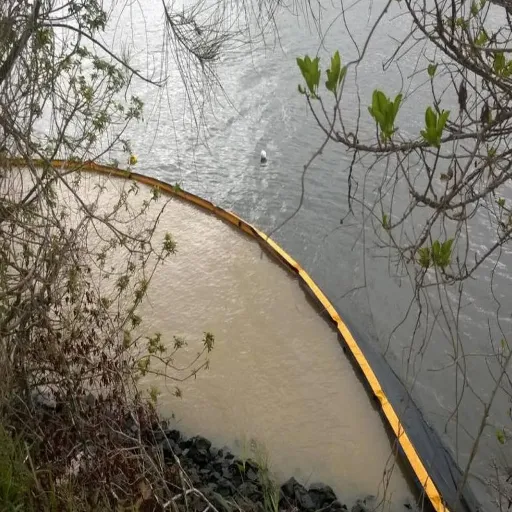
Start with the permit, environmental plan, project specification and delivered-system instructions. Identify who can authorize removal and what evidence that person needs. Confirm that remaining activities will not restart the sediment source after the barrier leaves.
Fisheries and Oceans Canada’s site-isolation procedure, section 3.5.3, connects careful curtain removal with completion of in-water work and settling of suspended sediment. Check whether this procedure applies to your project. The permit and accepted project documents determine the release requirements.
A published waiting interval cannot replace those checks. For example, Wisconsin standard 1070 combines a minimum 24-hour settling period with a water-clarity condition. Treat that as a scoped requirement where applicable, rather than a global timer. A crew booking or the end of a shift supplies no evidence about water conditions.
Record the release basis
Use the project turbidity monitoring and response plan to identify the required observations, comparison locations and response rule. Record when and where evidence was collected. Note weather, flow or nearby work that could change the decision before recovery starts.
The following go/hold table is a planning aid, not an environmental acceptance standard:
| Decision | Evidence to attach | Hold if unresolved |
|---|---|---|
| Sediment-producing work has ended | Work completion reference and remaining-work check | Another operation can disturb the area |
| Required source stabilization is complete | Applicable inspection or acceptance record | The specified condition is unconfirmed |
| Settling and monitoring conditions are met | Dated observations and required measurements | Records are incomplete or conditions changed |
| Recovery can proceed under control | Accepted method, access and restraint review | Equipment or underwater conditions differ |
| Release is authorized | Named decision-maker and approval reference | Approval is missing |
Illustrative scenario: A supervisor books retrieval for the morning, but the required final monitoring entry is blank. The environmental coordinator owns that open action. The recovery team holds at the release check instead of treating a quiet-looking surface as approval.
Keep the fate of settled bed sediment separate. Removing accumulated deposits can itself disturb them. Establish whether an authority-directed sediment-removal operation is needed before adding dredging to the demobilization scope.
Recover the Skirt, Moorings and Anchors Under Control
Prepare the route and protected landing area
Map the recovery route from the deployed curtain to the landing and cleaning areas. Identify vessel access, shoreline constraints, sharp edges and surfaces that could abrade fabric. Plan enough room to receive the actual assembly without forcing an uninspected section into a tangled pile.
Check component identifiers against the curtain anchoring layout. The ballast chain weights the skirt’s lower edge; seabed anchors and their mooring lines restrain the floating assembly. They have different roles, so the crew must know which item each recovery action affects.
Check the accepted method for equipment, crew roles, signals and handling arrangements. Identify where loads may be applied and which attachment points the supplier allows. Don’t tow or lift by an improvised fabric attachment. Use the actual system’s lifting limits and rigging plan; this guide cannot supply them.
Follow the delivered recovery sequence
Use these planning stages to review the actual method, rather than substituting them for its detailed instructions:
- Confirm readiness at the work area. Recheck the release conditions, access and weather or flow assumptions. Establish who can call a hold and how the crew will acknowledge it.
- Check that the skirt and ballast can move as intended. Review observations for fouling, bottom contact or possible burial. Surface photographs may leave these underwater conditions unresolved.
- Control and gather the skirt using its recovery provisions. Where the system has reefing or furling lines, follow the supplier’s instructions for raising and securing the skirt. Reefing means gathering the hanging fabric into a shorter bundle; it does not authorize a different lifting arrangement.
- Release restraints in the accepted sequence. Maintain the control needed to prevent unplanned drift while recovering lines, connectors and anchors. Do not assume every system permits all anchors to be detached first.
- Receive and identify recovered components. Protect fabric during landing, account for hardware and keep suspect sections separate. Continue the required observations and monitoring through the recovery activity.
Texas Boom’s retrieval guidance supports gathering the skirt while it remains in the water where its provisions and conditions allow. ABASCO also emphasizes protection from sharp and abrasive surfaces. Their methods are useful references, but neither establishes the exact restraint-release order for an unidentified system.
Pause on pinning or a new plume
ABASCO’s installation and recovery guide warns that ballast can become lodged in bottom soil and tear the skirt pocket during retrieval. Unexpected resistance needs assessment before more force is applied. Do not improvise by cutting restraints or pulling harder.
Suspected pinning, uncontrolled movement, new damage or a monitoring response should trigger the hold and response actions in the accepted plan. Record the affected location and observed condition. Resolve what changed, and obtain the required method review before restarting.
Clean Recovered Curtains Without Creating a New Discharge

Classify the recovered condition
Check the exposure history before treating every panel as ordinary dirty equipment. Record sediment, marine growth, salt-water exposure and any known oil or chemical contact. Keep unknown or contaminated sections identifiable so they do not enter a bundle marked ready for reuse.
Illustrative scenario: A recovery record notes oil contact on one panel. The cleaning team keeps that panel separate and asks the responsible reviewer to specify its assessment and waste route. A routine rinse cannot close the exposure record, even if the fabric later looks clean.
As a planning practice, choose a cleaning area where residues and wash-water can be collected and managed through an approved route. Check local waste and discharge requirements before washing starts. Assign who handles solids, liquid residues and contaminated packaging; moving dirt to the landing area does not complete environmental closeout.
Select compatible cleaning and drying
Obtain instructions for the actual fabric, coating, seams and flotation components. Establish the compatible method before selecting detergent, brushing or pressure washing. Instructions for another manufacturer’s curtain do not prove that the same chemistry is suitable for yours.
Texas Boom’s cleaning and storage instructions warn that a washer jet can damage fabric and call for inspection after cleaning. Use the delivered-system limits and method; no universal pressure or nozzle distance is established here. Obtain compatible cleaning guidance before proceeding where the instructions are unclear.
Spread equipment sufficiently to expose surfaces for cleaning and inspection under the approved arrangements. Check seams, folds and pockets rather than relying only on the visible upper face. Record any areas that could not be inspected and keep their condition open.
Complete the specified rinse and drying before packing. A clean appearance does not prove decontamination, freedom from invasive species or retained strength. For exposed equipment, compare the approved assessment, cleaning and disposal routes with replacement before authorizing more work. Do not assume that washing makes transfer lawful or economical.
Assess Reuse Permission and Component Condition
Verify reuse and transfer rules first
Treat reuse as a decision about identified equipment and a stated next use. Check origin, exposure history, permit restrictions and destination requirements before repair spending. Permission, cleanliness and physical condition are separate questions; satisfying one leaves the others open.
Wisconsin DNR standard 1070, effective September 2005, illustrates why scope matters. For its defined permeable-fabric, calm-water application, section V. B.1 prohibits fabric reuse. Section VIII. D also prohibits taking curtains to other sites and sets separate conditions for buoys and chains. It does not create a same-site fabric-reuse allowance.
Other manufacturer guidance describes storage for later reuse when appropriate. That wording cannot override a governing restriction. Confirm the applicable rule for both the recovered components and the intended destination.
Inspect and decide by component
After the specified cleaning, inspect fabric, seams, ballast pockets, floats, connectors, lines and hardware against the delivered-system acceptance criteria. Record repairs and required rechecks by component. A visual inspection cannot establish an unknown residual load capacity or justify a more demanding application.
Use this disposition table to keep unresolved items visible:
| Finding | Disposition | Evidence needed to close |
|---|---|---|
| Origin, exposure or transfer permission unknown | Hold separately | Missing history and applicable decision |
| Repairable defect within accepted instructions | Repair, then recheck | Repair method, work record and acceptance |
| Permission and condition accepted for stated use | Identify accepted scope | Reviewer, criteria and next-use reference |
| Prohibited reuse or unacceptable condition | Approved waste/replacement route | Disposal decision and component accounting |
For repair detail, use our silt curtain inspection and repair guide to prepare the defect record and recheck questions. Keep repair approval separate from next-site suitability. An accepted patch closes a particular repair item; it does not certify the whole recovered assembly for every future condition.
Dry, Pack and Store Accepted Equipment for the Next Review
Pack after the specified preparation
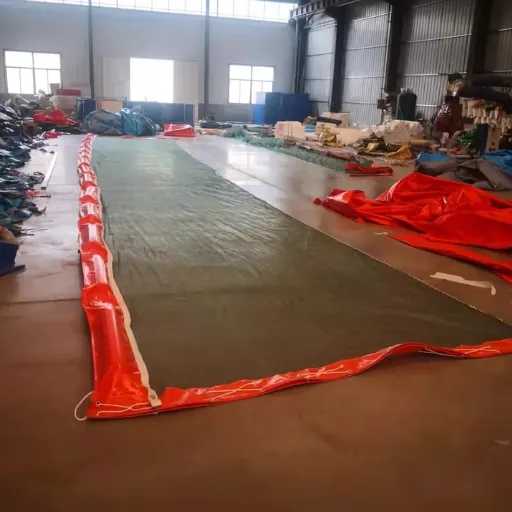
Confirm cleaning, drying and the current disposition before folding. Keep equipment awaiting assessment apart from accepted units. A mixed pallet makes it difficult for the next crew to know which panels have completed review.
Follow the delivered folding and securing method. Protect fabric from sharp hardware and handling surfaces, and retain the identity of connectors or other components assigned to each section. Check the bundle’s contents against the recovery inventory before it leaves the cleaning area.
Texas Boom calls for dry storage away from sunlight with air circulation. ABASCO likewise requires cleaning and thorough drying before storage. Check the actual supplier’s requirements for supports, covers and packing, particularly when a container or trailer is proposed. A cover should not become a substitute for completing the drying stage.
Keep inventory and storage checks together
Attach a readable record to each stored bundle:
- Panel identifiers and origin
- Condition and repair references
- Storage location and inspection due date
- Open restrictions and the person responsible
A label saying only “used curtain” gives the receiving crew no basis for deciding whether to issue it.
Set the next storage check from the applicable instructions and assign its owner. Texas Boom, for example, calls for stored curtains to be unfolded and inspected at least every six months. This is a manufacturer-specific example, not a universal interval or a stated safe storage life.
At each planned check, document what was examined and any new damage, moisture, missing hardware or identification problem. Keep findings with the equipment record, rather than resetting its status to accepted because the bundle remains in the same place.
Before dispatch, check that tags remain legible and the correct records accompany the intended panels. Storage acceptance describes the condition assessed at that review. It does not replace the receiving project’s review of system configuration, environmental conditions or reuse permission.
Close the Removal Record and Prepare the Redeployment Handoff
Environmental closeout asks whether the completed work and removal met the project’s conditions. Equipment acceptance asks whether identified components may serve a specified next use. Keep both decisions traceable without treating either as proof of the other.
Use a handoff sheet with these fields:
| Record group | Fields to complete |
|---|---|
| Identity and origin | Component ID, original site, recovered quantity |
| Removal release | Approval reference, date, monitoring record, open closeout actions |
| Condition and treatment | Defects, cleaning method, residue/waste route, repair and recheck references |
| Storage and transfer | Location, inspection due date, permission and restrictions |
| Next-use review | Proposed destination, suitability decision, reviewer/date, remaining actions |
Illustrative scenario: Stored panels match the inventory, but the file lacks acceptance for replacement connectors. The receiving supervisor lists that gap and assigns a reviewer before issuing the kit. Counting panels alone cannot establish a complete, accepted assembly.
For a reuse-versus-replacement comparison, enter actual inspection, cleaning, repair, transport and approved disposal costs. Include any needed assessment and missing components. Leave unavailable prices blank; a reusable label provides no defensible savings percentage or guaranteed cycle count.
Take the completed record to the silt curtain installation readiness review before redeployment. Close remaining permission, component and method questions there. A documented silt curtain removal gives the next team a basis for review, while keeping the destination’s acceptance decision explicit.
Silt Curtain Removal and Reuse Questions
Use these answers with the project requirements and delivered-system instructions. Assign unknown conditions to a reviewer before treating equipment as ready for the next stage.
How long should sediment settle before removing a silt curtain?
Use the applicable settling requirement together with the required observations and monitoring evidence. Published intervals differ by jurisdiction and specification. Time passing alone does not show that release conditions are met. Confirm completion of in-water work, the required water condition and authorization before beginning recovery under the accepted method.
Do you have to dredge the trapped sediment before removal?
Do not assume that every curtain enclosure must be dredged. Wisconsin standard 1070 treats removal of accumulated sediment as an authority-directed decision because it can cause resuspension. Establish the required fate of the deposits for your project and keep any approved sediment-removal operation separate from routine curtain retrieval.
Can you pressure-wash a turbidity curtain?
Only use a method compatible with the delivered curtain and its condition. Manufacturer guidance warns that washer jets can damage fabric. Confirm the cleaning instructions, manage residues and wash-water, then inspect and dry the equipment as specified. There is no pressure setting in this guide that applies to every curtain.
Can the same silt curtain be reused at another site?
Sometimes manufacturer guidance allows reuse, but permission depends on the governing rules, exposure history and destination as well as condition. Wisconsin standard 1070 prohibits fabric reuse within its scope and separately addresses other-site transfer. Confirm permission before cleaning or repairing equipment for a proposed move; visible cleanliness cannot authorize it.
Does clear water prove removal will cause no resuspension?
No. A clear-looking surface does not establish the condition of bottom deposits, hidden skirt sections or ballast. Recovery can disturb material that has already settled. Use the required readiness evidence, check unresolved underwater conditions and follow the reviewed recovery and response method. The aim is to reduce disturbance, without promising zero release.