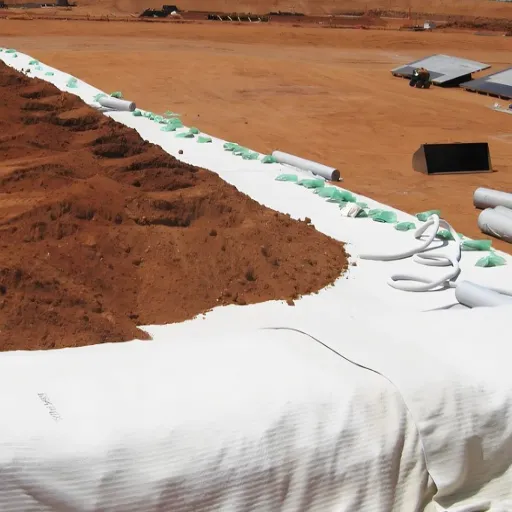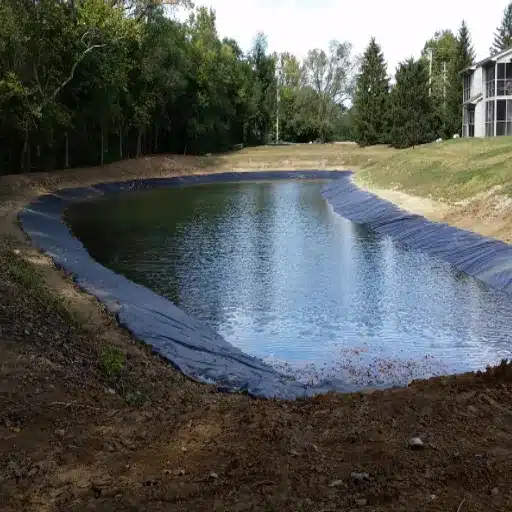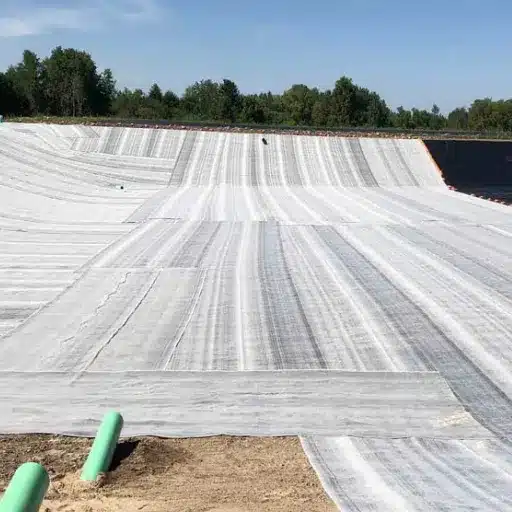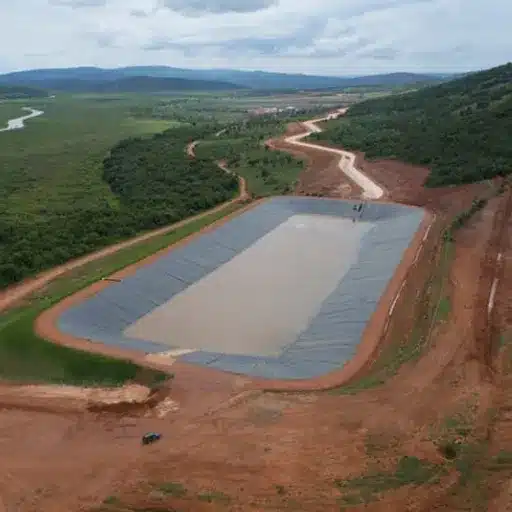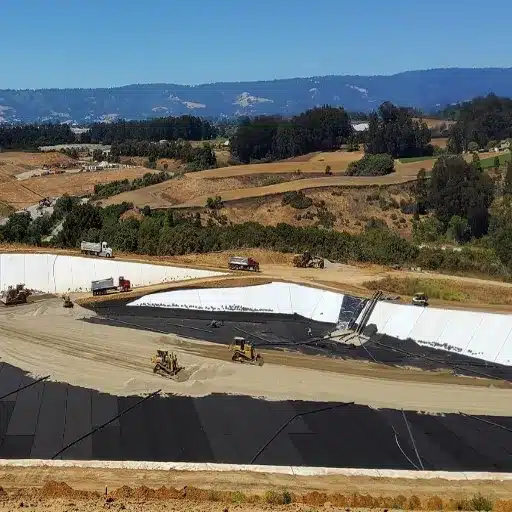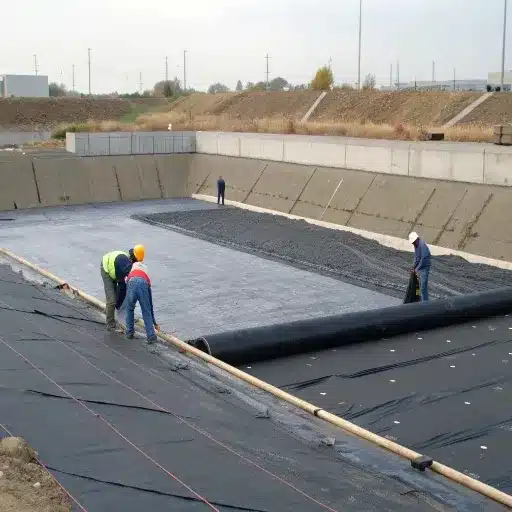
Geotextile and landscape fabric are not the same product. Geotextile is an engineered, permeable fabric built for separation, filtration, reinforcement, and drainage; landscape fabric is a low-grade consumer version of the same material, made mainly to suppress weeds. If you’re comparing geotextile vs landscape fabric for a driveway, drainage, or garden project, keep one rule in mind. Use a woven geotextile for load-bearing work, a nonwoven geotextile for drainage, and only use landscape fabric for short-term weed control in beds you’re willing to redo.
Here’s how to tell the difference, why it matters, and which one your project actually needs.
Key Takeaways
- Landscape fabric is a geotextile, just a low-grade one. All landscape fabrics qualify as geotextiles, but most geotextiles are engineered to far higher strength, flow, and durability standards.
- Driveways and patios need woven geotextile. Thin landscape fabric tears and lets gravel sink into mud under vehicle weight, leading to ruts and rework.
- French drains need nonwoven geotextile. Landscape fabric clogs quickly in drainage trenches; a needle-punched nonwoven filters water while holding back silt.
- Landscape fabric lasts 1-10 years; geotextile lasts 25-50+ years buried. Cheap fabric is a recurring cost, not a one-time saving.
- University extension research finds landscape fabric suppresses weeds for only a couple of years, then degrades and can harm soil and plant roots.
Is Landscape Fabric the Same as Geotextile?
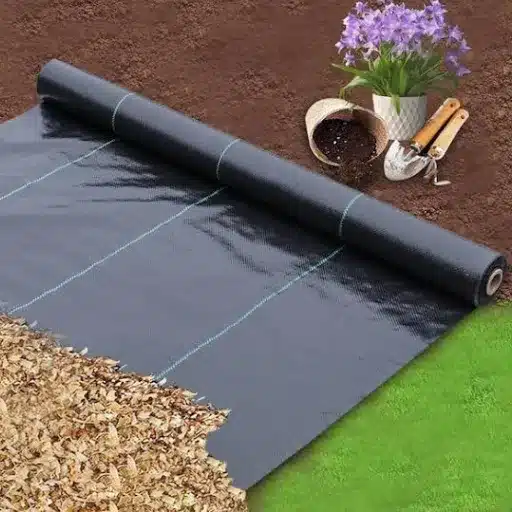
No, but they are related. Geotextile is the engineering term for a whole family of permeable synthetic fabrics used in civil construction for four core jobs: separation, filtration, reinforcement, and drainage. Landscape fabric is a consumer-facing product that sits inside that family. It is a geotextile by material, but it is built down to a weed-barrier standard rather than an engineering one.
Think of it like fasteners. A machine screw and a drywall screw are both screws. Nobody sane hangs a steel beam with a drywall screw, and nobody sane is upset that the hardware store labels both as screws. The same logic applies here. When a retailer sells you “landscape fabric” for a garden bed, you are buying a geotextile with minimal tensile strength, low weight, and little puncture resistance. When a geosynthetics supplier sells you a woven or nonwoven geotextile, you are getting a material engineered to survive being buried under a road.
That difference in intent is the whole story. Let’s break down what each product is, then compare them side by side.
Geotextile vs Landscape Fabric: Side-by-Side Comparison
| Criterion | Geotextile (engineering grade) | Landscape fabric (consumer grade) |
|---|---|---|
| Primary function | Separation, filtration, reinforcement, drainage | Weed suppression, light separation |
| Construction | Woven (slit-film/monofilament) or needle-punched nonwoven | Lightweight woven, spunbonded, or perforated plastic film |
| Weight | 100-500+ g/m² | 80-150 g/m² |
| Tensile strength | High, tested to ASTM D4632 | Low to moderate; foot traffic only |
| Water flow | Engineered permittivity (ASTM D4491) | Moderate; pores clog over time |
| Puncture resistance | High, tested to ASTM D6241 | Low; fails under aggregate and load |
| Lifespan | 25-50+ years buried | 1-10 years depending on grade and cover |
| Cost | $1.00-5.00+/sq ft, effectively permanent | $0.50-2.00/sq ft, recurring replacement |
| Best for | Driveways, roads, drains, retaining walls, erosion control | Garden beds, under mulch, light separation |
The table tells you what really separates the two: specifications. An engineering geotextile comes with numbers you can verify (tensile strength, permittivity, apparent opening size, puncture resistance). A landscape fabric comes with a brand name and a price tag. When someone tells you a product is “heavy duty” without a spec sheet, treat it as landscape fabric until proven otherwise.
What Is a Geotextile?
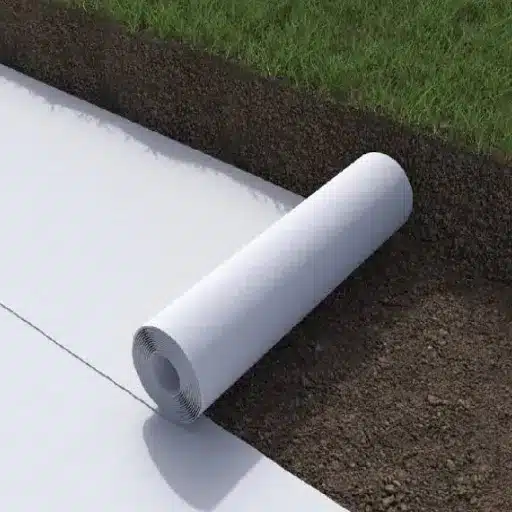
A geotextile is a permeable fabric made from polypropylene or polyester, placed in or on the ground to do one of four jobs:
- Separation. Keeps two soil layers apart so they don’t mix. This is what stops gravel from sinking into soft subgrade.
- Filtration. Lets water pass through while holding back soil particles. This is what keeps a French drain from clogging.
- Reinforcement. Adds tensile strength to soil, spreading loads across soft ground.
- Drainage. Conducts water along its own plane, often against or under a structure.
Woven vs Nonwoven Geotextile
Two manufacturing methods dominate, and they solve opposite problems:
Woven geotextiles are made by interlacing flat or round yarns, like a heavy fabric. They have high tensile strength and low elongation, which makes them the go-to for separation and reinforcement under driveways, roads, and patios. The trade-off is lower water flow.
Nonwoven geotextiles are made by needle-punching or heat-bonding random fibers into a felt-like mat. They are highly permeable and great at filtering water, which makes them the standard for drainage and filtration applications like French drains and behind retaining walls.
If you want the full engineering breakdown, our woven vs nonwoven geotextile comparison walks through the two families with specification tables and application guidance.
What Is Landscape Fabric?
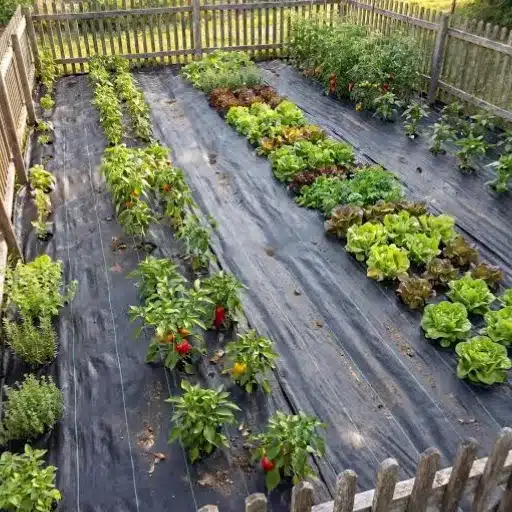
Landscape fabric is the same material family, stripped down for the retail garden market. It blocks sunlight to stop weed seeds from germinating while letting some water and air through. That is its job, and nothing more.
The products sold as landscape fabric fall into three rough categories:
- Lightweight woven polypropylene. Woven weed-block fabric, typically 1.5-3 oz per square yard.
- Spunbonded nonwoven. A soft, felt-like sheet often sold as a premium “geotextile” at garden centers.
- Perforated plastic film. Solid plastic with punched holes. Cheap, poor water flow, tears easily.
None of these are engineered for load. Their tensile strength is a fraction of a true geotextile, they puncture under aggregate, and they degrade under UV exposure.
The Evidence Against Landscape Fabric for Permanent Beds
University extension services have studied landscape fabric for decades, and the findings are remarkably consistent. Washington State University’s Dr. Linda Chalker-Scott found that fabric can reduce carbon dioxide exchange between soil and atmosphere roughly 1,000 times more than wood-chip mulch, which hurts earthworms, microbes, and roots. The University of Florida IFAS Extension documented weeds growing on top of and through the fabric, making them harder to pull. The University of Illinois Extension sums it up bluntly: fabric suppresses weeds “for a couple of years,” then does more harm than good.
That doesn’t mean landscape fabric is useless. It has legitimate short-term uses, which we’ll cover below. But it’s not a substitute for an engineered geotextile in structural work, no matter what the product label implies.
When to Use Geotextile Instead of Landscape Fabric
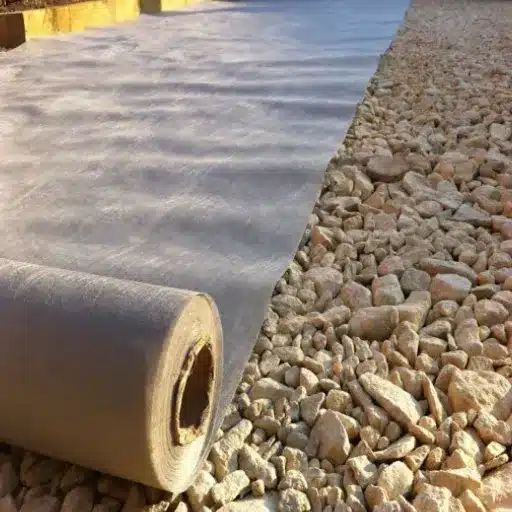
Any project with load, water flow, or long service life needs a real geotextile. Here are the four most common cases where landscape fabric fails and a geotextile is the correct call.
Under Driveways, Gravel, and Patios
This is the biggest one, and the most expensive to get wrong. Under a gravel driveway or paver patio, you need a woven geotextile for separation and reinforcement. The fabric stops the aggregate from punching into soft subgrade and spreads the vehicle load across the soil. Landscape fabric, at 80-150 g/m² with minimal puncture resistance, tears under that weight. The stone sinks, the mud pumps up, and you get ruts within one season.
For the full decision process on gravel surfaces, our guide to geotextile for gravel driveway woven or nonwoven explains the selection logic in detail. The short version: woven for load, with enough tensile and puncture strength for your heaviest expected traffic.
In French Drains and Drainage Trenches
A French drain is a water-moving system. You need a nonwoven geotextile wrapped around the pipe to filter water and hold back silt. Landscape fabric clogs in 12-18 months because its pores are too small and its structure collapses under soil pressure. Once clogged, the drain stops working and you dig it up. A proper 4-6 oz nonwoven geotextile with the right apparent opening size keeps flowing for decades.
Behind Retaining Walls
Retaining walls need two different jobs done at once: the soil behind the wall must drain, and the structure must hold back the earth. That means a nonwoven geotextile for drainage and filtration against the backfill, and sometimes a woven geotextile for reinforcement layers. Landscape fabric does neither job well.
On Slopes for Erosion Control
For slope protection and erosion control, you need a fabric with enough strength to survive installation, enough flow to relieve hydrostatic pressure, and enough UV resistance to last. Engineering geotextiles are tested for all three. Landscape fabric is not.
Need a material recommendation for your specific project? Our engineering team works through the spec requirements with you, free of charge. Contact us with your project details and get a tailored geotextile recommendation.
When Landscape Fabric Is the Right Choice
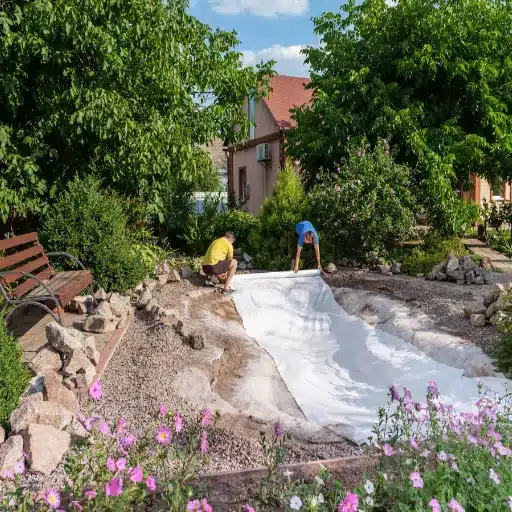
Let’s be honest about when the cheaper product is the smarter buy. Landscape fabric has a real place in the world, just not under driveways or in drains.
- Garden beds with annual plantings. If you replace plants seasonally, a fabric that suppresses the first weed flush for 1-2 years is fine. Remove it when you replant.
- Under mulch for ornamental beds, with a short horizon. Cover it with about an inch of mulch to slow UV degradation, and budget for replacement in a few years.
- Nursery and agricultural rows. Growers lay fabric seasonally, sweep it clean, and pull it up between cycles. That’s exactly what it’s built for.
If a bed is meant to be permanent, the extension-service consensus is that a thick layer of wood-chip mulch outperforms fabric entirely. It suppresses weeds, feeds the soil as it breaks down, and never has to be ripped out of your planting beds.
How to Choose: Application Decision Table
If you’re still deciding, this table maps the most common projects to the right material. When in doubt, ask a supplier for the spec sheet and check the numbers, not the label.
| Application | Recommended material | Why |
|---|---|---|
| Gravel driveway/base | Woven geotextile | Load spreading, puncture resistance, separation |
| Paver patio | Woven geotextile | Load distribution, stops base from pumping into soil |
| French drain/drainage trench | Nonwoven geotextile | Filtration, holds back silt, high water flow |
| Retaining wall | Woven (reinforce) + nonwoven (drain) | Two jobs, two fabric types |
| Gravel path/walkway | Woven geotextile or heavy landscape fabric | Foot traffic only; light woven works |
| Garden/flower bed | Landscape fabric (short-term) | Weed suppression, replace regularly |
| Slope/erosion control | Nonwoven geotextile | Filtration, hydrostatic relief, UV resistance |
One detail worth repeating: woven and nonwoven are not interchangeable, even though both are “geotextile.” If you buy the wrong type, you get the wrong result. Woven handles load; nonwoven handles water. That distinction is the core of our woven vs nonwoven geotextile selection guide, which is worth a read before you order anything.
Geotextile vs Landscape Fabric: Cost and Lifespan
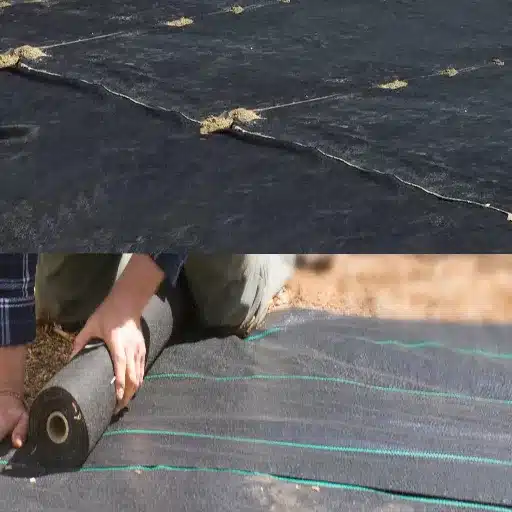
Here’s a mini-story that plays out in driveways across the country every summer. Mark, a homeowner in Ohio, decided in June 2025 to redo his gravel driveway. The local big-box store had landscape fabric on sale for about $0.40 per square foot, so he bought four rolls, laid it down, and dumped three inches of gravel on top. By October, his truck had punched two ruts through the fabric into the clay below. The stone had mixed into the mud, and the driveway was a potholed mess. He pulled up the fabric, which came apart in strips, and started over with a proper woven geotextile at roughly four times the fabric cost. The redo cost him a weekend, a rented dump truck, and several tons of fresh gravel. The “savings” on fabric ran him well over a thousand dollars.
The math on cheap fabric is simple. A landscape fabric at $0.50-2.00 per square foot fails in 1-10 years and has to be replaced, often with rework on top. An engineering geotextile at $1.00-5.00+ per square foot is effectively permanent in its intended application. When you compare total cost of ownership, the geotextile wins almost every structural project.
There’s a second way to win the cost battle: buy direct from a manufacturer. At Shanxi Shengxing, we supply woven and nonwoven geotextiles at export pricing that often undercuts retail landscape fabric per square meter, with flexible order quantities so you’re not forced into a massive roll size. The engineering-grade material can cost less than the retail “weed barrier” that would fail on you in two years.
Common Mistakes to Avoid
- Using landscape fabric under a driveway. It tears, the base mixes with soil, and you get ruts. Use woven geotextile.
- Wrapping a French drain pipe in landscape fabric. It clogs within a couple of years. Use a nonwoven geotextile with the right apparent opening size.
- Buying “geotextile” that’s actually perforated film. Check the weight (GSM or ounces per square yard) and ask for a spec sheet. If there are no numbers, it’s landscape fabric.
- Leaving fabric exposed to sunlight. UV degrades polypropylene quickly. Exposed landscape fabric can break down in as little as a year. Cover it or use a UV-stabilized geotextile.
- Assuming woven and nonwoven don’t matter. They solve opposite problems. Get the type right before you get the weight right.
For installation best practices once you’ve chosen, our geotextile installation guide covers overlapping, anchoring, and backfilling so the material performs as specified.
Frequently Asked Questions
Is geotextile the same as landscape fabric?
No. Landscape fabric is a low-grade consumer version of a geotextile. Geotextiles are engineered for separation, filtration, reinforcement, and drainage; landscape fabric is built mainly to suppress weeds.
Can you use geotextile as landscape fabric?
Yes, technically. An engineering geotextile will suppress weeds in a garden bed, though it’s often heavier and more expensive than needed. The reverse is not true: landscape fabric cannot do the structural jobs a geotextile is designed for.
How long does landscape fabric last?
It depends on grade and cover. Economy fabric can break down in as little as a year exposed to sun, mid-grade fabric lasts roughly 5-8 years under mulch, and heavy commercial woven fabric may last 15+ years under stone. Buried engineering geotextiles are rated for 25-50+ years.
Is woven or nonwoven landscape fabric better?
For load-bearing work like driveways, woven is better. For drainage and filtration, nonwoven is better. Woven landscape fabric and nonwoven geotextile solve different problems, so “better” depends entirely on the application.
Does landscape fabric let water through?
Most landscape fabrics are permeable, but water flow drops as pores clog with fine soil and decomposing mulch. Nonwoven geotextiles are engineered for high, sustained flow; perforated plastic film is the worst of the group.
Is landscape fabric worth it?
For short-term weed suppression in beds you’ll replant or redo, yes. For permanent beds, university extension research says thick wood-chip mulch beats it. For structural projects like driveways and drains, it is never the right call.
Conclusion
The geotextile vs landscape fabric question comes down to one thing: what is the material being asked to do? If your project carries load, moves water, or needs to last decades, buy an engineered geotextile and check its spec sheet. If you just need a few years of weed control in a garden bed, landscape fabric is fine, just budget for replacement.
To recap:
- Landscape fabric is a low-grade geotextile, not a different product category.
- Driveways and patios need woven geotextile for load.
- Drains and slopes need nonwoven geotextile for filtration.
- Landscape fabric’s 1-10 year lifespan makes it a recurring cost, not a saving.
- Extension research shows it suppresses weeds only short-term and can harm soil.
Choosing right the first time saves you money, time, and a redo. If you’re not sure which fabric your project needs, ask a supplier who can give you real numbers. Our woven and nonwoven geotextile products ship with full specifications, ISO9001 quality systems behind them, and flexible order terms for projects of any size.
Ready to spec your material? Request a technical quote and our team will match the right geotextile to your application, with export-ready pricing and delivery.