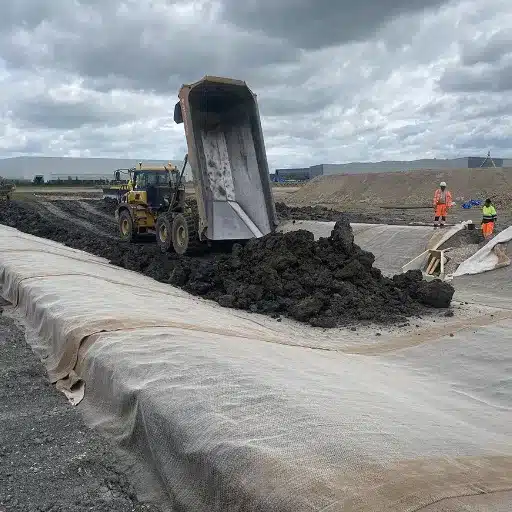
Ground protection mat thickness ranges from 10 mm (3/8 inch) light-duty panels rated for 30 tons, to 100 mm (4 inch) extreme-duty systems rated for 730+ tons. The right thickness depends on three variables: the heaviest equipment load, the ground bearing capacity, and how long the mats will stay in place.
Most buyers look at the wrong number. A site engineer named Paulo specified 12.7 mm mats for a wind farm project in Brazil because the supplier’s datasheet showed a 90-ton rating. What the datasheet did not clarify was that the 90-ton rating assumed firm, dry ground. Paulo’s site sat on compacted clay that turned to mud after the first rain. The mats deflected beyond acceptable limits under his 45-ton crane. He had to halt work, reinforce the subgrade with geotextile and 150 mm of gravel, and redeploy thicker 20 mm panels. The thickness specification was correct for the equipment but wrong for the ground conditions.
Paulo’s experience illustrates why ground protection mat thickness selection requires more than reading a load rating table. This guide explains the difference between base thickness and overall thickness, provides exact mm-to-inch conversions with load capacities, and shows how ground conditions modify every rating. For a complete overview of all mat types and applications, see our complete ground protection mats buyer’s guide.
Key Takeaways
- Ground protection mat thickness ranges from 10 mm (30 tons) to 100+ mm (730+ tons); most commercial construction uses 12.7–20 mm HDPE mats.
- Base plate thickness differs from overall thickness; a 12.7 mm base plate with 5 mm cleats per side measures 22.7 mm overall.
- Soft ground reduces effective load capacity by 30-50%; always upsize thickness or reinforce the subgrade on wet clay or saturated soils.
- The 20 mm thickness segment holds 36.8% of market share because it balances load capacity, portability, and cost for general construction.
- Thicker mats reduce container loading efficiency; a 40-foot container holds 300-350 mats at 20 mm but only 200-250 mats at 30 mm.
How Thick Are Ground Protection Mats?
Base Thickness vs. Overall Thickness
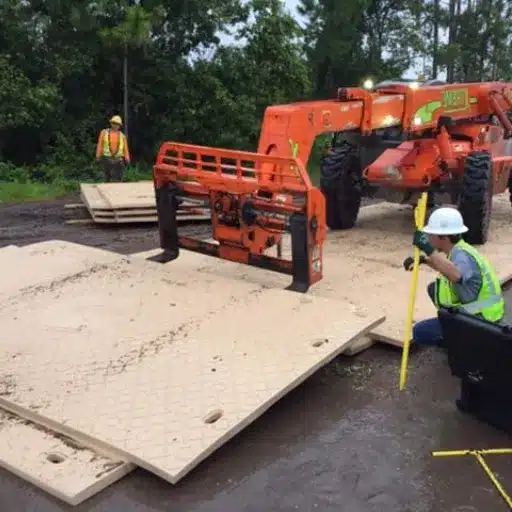
This distinction causes more specification errors than any other factor in mat procurement. The base plate thickness is the raw HDPE panel before surface molding. The overall thickness includes raised cleats, diamond tread patterns, or overlapping flanges.
A common industry example: a mat listed as “12.7 mm” often has 5 mm cleats molded on both sides, giving an overall thickness of approximately 22.7 mm. The base plate is 12.7 mm. The overall height is 22.7 mm. Both numbers matter, but for different reasons.
- Base thickness determines structural load capacity and clear-span performance
- Overall thickness affects connection compatibility, stack height during transport, and edge ramping requirements
When comparing quotes from different suppliers, always ask whether the quoted thickness refers to the base plate or the overall height. Manufacturers use different conventions, and mixing them leads to incompatible systems on-site.
Standard Thickness Range
HDPE ground protection mat thickness options span a continuous range from 10 mm to 30 mm for standard duty applications. When selecting HDPE ground protection mat thickness, engineers must balance load requirements against handling weight and freight cost. Composite and engineered systems extend to 100 mm and beyond for extreme loads. The 20 mm segment dominates commercial and industrial procurement, holding approximately 36.8% of the total market share. It represents the sweet spot where load capacity, handling weight, and cost-per-panel align for most construction projects.
Ground Protection Mat Thickness Chart
This table provides ground protection mat load capacity by thickness, matching panel thickness to equipment load and application. All ratings assume firm, dry ground conditions.
| Base Thickness | Overall Thickness | Imperial | Load Capacity | Best For |
|---|---|---|---|---|
| 10 mm | ~15-18 mm | 3/8″ | 30-50 tons | Turf protection, events, pedestrian |
| 12.7 mm | ~20-23 mm | 1/2″ | 40-90 tons | General construction, light cranes |
| 15 mm | ~23-26 mm | ~5/8″ | 60-80 tons | Medium equipment, HGVs |
| 18-20 mm | ~26-30 mm | ~3/4″ | 80-120 tons | Heavy-duty commercial, standard cranes |
| 25 mm | ~32-35 mm | 1″ | 100-130 tons | Cranes, soft ground, temporary roadways |
| 30 mm | ~38-42 mm | ~1 3/16″ | 120-140 tons | Tracked equipment, heavy plant |
| 38-40 mm | ~45-50 mm | 1.5″ | 120-160 tons | Oil rigs, semi-permanent installations |
| 50 mm+ | ~55-60 mm | 2″+ | 180-380+ tons | Heavy tracked cranes, extreme loads |
| 100 mm+ | ~110-120 mm | 4″+ | 280-730+ tons | Crane outrigger pads, heavy-haul trackways |
For detailed load calculations by machinery class, see our ground protection mats for heavy equipment guide.
What Thickness Ground Protection Mat Should I Use?
Light-Duty Applications (10–12.7 mm)
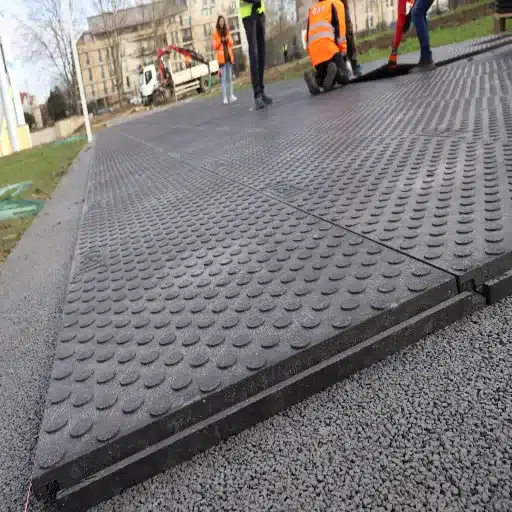
Residential lawn protection, golf course maintenance paths, stadium event flooring, and pedestrian walkways require the thinnest mats. At 10-12.7 mm base thickness, HDPE panels weigh 25-35 kg per 4×8-foot sheet. Two workers handle them easily. The 30-90 ton load rating covers light utility vehicles, small excavators, and crowd traffic without damaging root systems or turf.
A landscaping contractor named Yuki deployed 10 mm clear HDPE mats for a week-long outdoor concert in Tokyo. The mats protected the stadium turf from 15,000 attendees and light service vehicles. After removal, the turf showed zero compaction damage. For her application, 10 mm was the optimal thickness. Thicker mats would have added unnecessary cost and handling effort.
Standard Construction (15–20 mm)
This is the most commonly specified range for commercial construction. Excavators up to 40 tons, dump trucks, concrete mixers, and standard crawler cranes operate comfortably on 18-20 mm HDPE mats. The 80-120 ton rating covers the majority of wheeled and tracked construction equipment.
The 20 mm segment leads the market because it balances three priorities: sufficient load capacity for most jobs, manageable weight at 40-45 kg per panel, and competitive cost-per-square-meter. For a detailed breakdown of HDPE material specifications in this range, see our HDPE ground protection mats overview.
Heavy Equipment and Cranes (25–30 mm)
When equipment weight exceeds 80 tons or when ground conditions are marginal, step up to 25-30 mm base thickness. These panels handle 100-140 tons and provide better bridging capability over uneven terrain. The additional material thickness reduces deflection under point loads from crane outriggers and piling rig jack feet.
At 25 mm, many manufacturers integrate overlapping flanges or built-in connection systems. The extra thickness accommodates these features without reducing structural cross-section. Weight increases to 55-65 kg per panel, which is still manually portable but at the upper limit for two-worker handling.
Extreme Loads and Tracked Vehicles (38 mm+)
Tracked dozers, oil rig platforms, and heavy-lift crane operations demand 38 mm and thicker mats. At this level, buyers typically move from standard HDPE to composite or UHMWPE systems. The 120-160 ton ratings at 38-40 mm accommodate tracked vehicles that concentrate enormous pressure through narrow track pads.
For crane outrigger pads and extreme point loads, 100 mm+ composite systems rated at 600+ PSI are standard. These are not general-purpose mats. They are engineered structures designed for specific load configurations.
How Ground Conditions Affect Ground Protection Mat Thickness
Firm, Compacted Ground
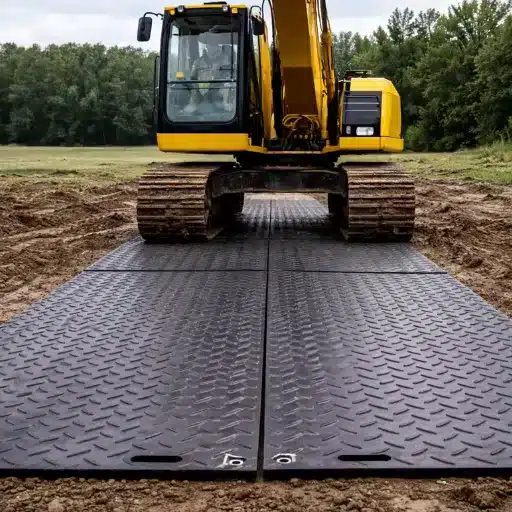
On dry, compacted gravel or asphalt, the load ratings in the chart above apply without adjustment. The subgrade supports the mat, and the mat distributes the equipment load across a wider contact area. This is the condition manufacturers assume when publishing ratings.
Soft Ground, Mud, and Wet Clay
This is where specification errors happen most often. Saturated soils reduce effective bearing capacity by 30-50% compared to dry, compacted ground. A 20 mm mat rated for 100 tons on firm soil may only support 50-70 tons on wet clay. The mat itself does not change. The ground beneath it fails first. Ground pressure from equipment tracks or tires concentrates on the mat surface, and if the subgrade cannot support that pressure, the mat sinks regardless of its thickness.
You have two engineering options when soft ground is present:
- Upsize the mat thickness: Move from 20 mm to 25 mm or 30 mm to increase stiffness and reduce deflection
- Reinforce the subgrade: Add a geotextile underlayment plus 100-200 mm of gravel working layer beneath standard-thickness mats
Option 2 is often more cost-effective. It addresses the root cause (weak subgrade) rather than treating the symptom with thicker mats.
Uneven Terrain
Mats on uneven ground experience differential loading. One edge may carry twice the design load while the opposite edge floats free. Thicker mats at 25-30 mm bridge gaps better than 12.7 mm panels. However, flexibility matters too. Rigid thick mats can crack if forced to conform to sharp contours. In these cases, narrower 2×8 mats at standard thickness often outperform rigid 4×8 panels at increased thickness.
Thickness, Weight, and Transport Economics
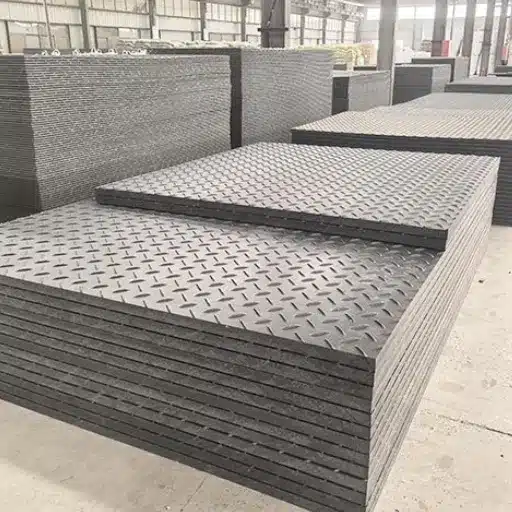
Weight by Thickness
Every additional millimeter of base thickness adds mass. For a standard 4×8-foot HDPE panel:
| Base Thickness | Approximate Weight |
|---|---|
| 10 mm | 25-30 kg |
| 12.7 mm | 32-38 kg |
| 20 mm | 40-45 kg |
| 25 mm | 55-60 kg |
| 30 mm | 65-75 kg |
The jump from 20 mm to 30 mm adds roughly 50% more weight per panel. This affects not just handling labor but also freight costs.
Container Loading by Thickness
For international buyers, thickness directly affects landed cost through container capacity:
| Base Thickness | Mats per 40ft Container |
|---|---|
| 10-15 mm | 350-400 |
| 18-20 mm | 300-350 |
| 25-30 mm | 200-250 |
| 38-40 mm | 120-150 |
A procurement manager ordering 20 mm mats instead of 30 mm for a general construction project gains 100+ extra mats per container. At typical freight rates, this can reduce per-unit landed cost by 15-25%. The lesson: specify the minimum thickness that meets your load and ground conditions. Over-specification wastes transport budget. For the complete selection framework that helps you avoid over-specification, see our How to Choose Ground Protection Mats guide.
Cost-per-mm Trade-off
Does an extra 5 mm of thickness pay for itself? The answer depends on project duration and reuse cycles.
For a one-time, three-month project on firm ground, upgrading from 20 mm to 25 mm adds cost without proportional benefit. For a multi-year infrastructure contractor deploying mats across 50+ sites, the thicker panels may last longer under repeated loading cycles. The break-even point typically occurs around 20-30 reuse cycles. Below that threshold, standard thickness is the better economic choice.
Standards and Specifications to Reference
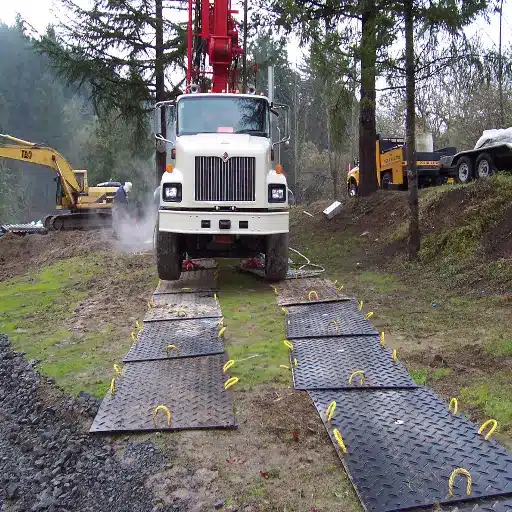
Manufacturer Ratings vs. Real-World Performance
Published load ratings assume ideal conditions: firm, dry, level ground with proper connection systems and no dynamic loading. Real sites rarely meet all these criteria. Add a 15-20% safety margin above your calculated maximum load. If your heaviest equipment is 80 tons, specify a mat rated for 96-100 tons minimum. This margin covers the variables you cannot fully measure.
Regulatory Performance Criteria
Some infrastructure specifications define minimum performance rather than prescribing a specific thickness. The New York State Department of Transportation, for example, requires a minimum compressive load bearing of 570 PSI when tested over a clear span of 2.4 meters. This performance-based approach is more reliable than thickness-only specifications because it accounts for material quality, not just dimensional height.
When evaluating suppliers, request material test documentation aligned with ASTM D4020 (UHMWPE quality), ISO 527 (tensile strength), and ASTM D695 (compressive strength). Thickness without verified material properties is an incomplete specification. Static load rating indicates the maximum stationary load a mat can support, but dynamic loads from moving equipment require higher safety margins. At Shanxi Shengxing, we retain production samples for five years and provide Certificates of Conformance with every shipment to ensure traceability.
Frequently Asked Questions About Ground Protection Mat Thickness
What is the standard thickness of ground protection mats?
The most common standard thickness for commercial construction is 18-20 mm (approximately 3/4 inch) base plate. This range handles 80-120 tons on firm ground and covers the majority of excavators, dump trucks, and standard cranes. For light-duty applications, 12.7 mm (1/2 inch) is the industry standard. For extreme loads, 38-100 mm composite systems are standard.
How thick should temporary roadway mats be?
Temporary roadway mats for mixed construction traffic should have a base thickness of 18- 25 mm. At 20 mm, HDPE mats handle standard construction equipment up to 120 tons on firm ground. For haul roads with frequent heavy truck traffic or soft subgrade conditions, specify 25 mm with interlocking connections to prevent panel separation under turning loads.
Does thicker always mean stronger?
Not necessarily. Thickness increases stiffness and load distribution, but material quality matters equally. A 20 mm panel made from high-grade HDPE with proper UV stabilization can outperform a 25 mm panel made from lower-density recycled material. Always verify both thickness and material specifications. Request ASTM D4020 compliance documentation to confirm material grade.
Can I use two thin mats instead of one thick mat?
Stacking two 12.7 mm mats does not equal the performance of one 25 mm mat. The interface between the two panels creates a slip plane that reduces load transfer and can cause separation under dynamic loads. For applications requiring increased thickness, specify a single integral panel at the required base thickness rather than layering thinner mats.
What thickness do I need for a 50-ton excavator?
On firm, dry ground, a 15-20 mm HDPE mat handles a 50-ton excavator comfortably. The static load rating for 20 mm panels is 80-120 tons, giving you a 30-70 ton safety margin. On soft or wet ground, step up to 20-25 mm to compensate for the 30-50% reduction in effective bearing capacity.
Conclusion
Ground protection mat thickness is not a standalone specification. It is one variable in an equation that includes equipment weight, ground bearing capacity, project duration, and transport logistics. The 20 mm segment dominates the market because it solves the most common construction scenario: standard equipment on reasonably firm ground. But that does not make it the right choice for every project.
Soft ground demands either thicker mats or subgrade reinforcement. Extreme point loads demand composite systems at 38 mm and above. Export buyers must factor container capacity into their thickness decision, because every extra millimeter reduces the number of mats per shipment.
The buyers who get this right specify base thickness, not just overall height. They verify material standards alongside dimensional specs. And they match the mat to the actual ground conditions, not the theoretical load rating.
Ready to specify the right thickness for your project? Browse our HDPE ground protection mat range for detailed thickness, load, and dimension specifications, or request a technical quote from our engineering team. We provide load calculations, thickness recommendations, and export-optimized container loads for construction and infrastructure projects worldwide.